
In Brief
- Clear Strategy First: A successful mobile app begins with a well-defined idea, clear business goals, and thorough market research to ensure real market demand.
- Smart Planning: Selecting essential core features, the right tech stack, and a scalable architecture keeps initial development costs down and prepares the app for future growth.
- Quality Execution: Seamless UI/UX design, an agile development flow, rigorous testing, and strong security practices ensure a reliable product that meets user expectations.
- Strategic Launch: Beyond app store submission, a successful rollout requires App Store Optimization (ASO), compliance checks, and proactive user feedback collection.
- Ongoing Evolution: Long-term success relies on continuous performance monitoring, security updates, and feature enhancements. Partnering with an experienced development partner like Markup Designs ensures your app remains secure, scalable, and market-ready.
A good mobile application begins with a great idea; however, transforming the idea into an application that is successful involves much more than programming. Every step of the development process, from identifying the target market to designing, developing, testing, and launching the application, is critical in ensuring success in the long term.
Businesses in the UK have made the country among the most innovative centers in Europe when it comes to digital innovations; companies in all sectors have been embracing mobile apps as a way to enhance customer experiences, simplify processes, and remain ahead of competition. If you are an entrepreneur coming up with an application idea, a business looking to expand digitally, or a company developing a mobile app for whatever reason, adopting a sound development process may prove useful.
This blog will take you through the entire mobile application development process in the UK, from conceptualization and validation of the idea to design, development, testing, release, and support of your application. You will get useful insights that can assist you in making the right choices during the app development process.
Understanding the Mobile App Development Market in the UK
The United Kingdom has one of the world’s most advanced and fastest-growing mobile app markets. Today, companies invest money in creating mobile applications for better interaction with customers and delivering digital services. Mobile apps are used to maintain competitiveness in a digital world.
There are several reasons for the popularity of mobile apps in the UK, including the rapid proliferation of smartphones, new customer requirements, and the increasing demand for personalized digital services. The healthcare sector, fintech, retail, education, travel, and logistics industries are among the leaders in introducing mobile apps.
Understanding the app development landscape in the UK prior to beginning development enables organizations to identify potential market opportunities and develop apps that add value. A strategy that is based on information provides a solid basis for developing an app that fulfills its purpose.
Defining Your Mobile App Idea and Business Objectives
Every mobile application must begin with a solid idea and clearly defined goal. It is crucial to understand what issue the app will resolve, who the targeted audience is, and how the project will help your company to achieve its goals. Understanding the right direction allows you to make better decisions during the development process and avoid any unnecessary changes in the future.
First of all, you need to identify your target users and their needs. After that, define the key app features, which would provide value to the users while being easy-to-use. Besides, set the business goals that would help you to measure app success.
By making sure that your app concept fits into users expectations as well as the business needs, you will be able to make a perfect start for further development work. In other words, this will ensure that your mobile application was created on purpose, and not by chance.
Conducting Market Research and Validating Your App Idea
Once you have a clear app idea, the next step is to validate it before investing in development. Through market research, you can be able to determine if there is actual demand for your app and the best way it can compete with other similar apps. Not taking this into account can result in developing unwanted features.
Investigate your potential customers to know their needs and requirements, and at the same time, investigate competitors to know what they offer and what they lack. This will help you improve your app ideas before development.
Having a validated idea for an application decreases the risk of failure for the business and increases the odds of producing a usable product. Through basing your decisions on market knowledge rather than making assumptions, you will be able to enter the development stage more confidently.
Planning App Features and Selecting the Right Development Approach
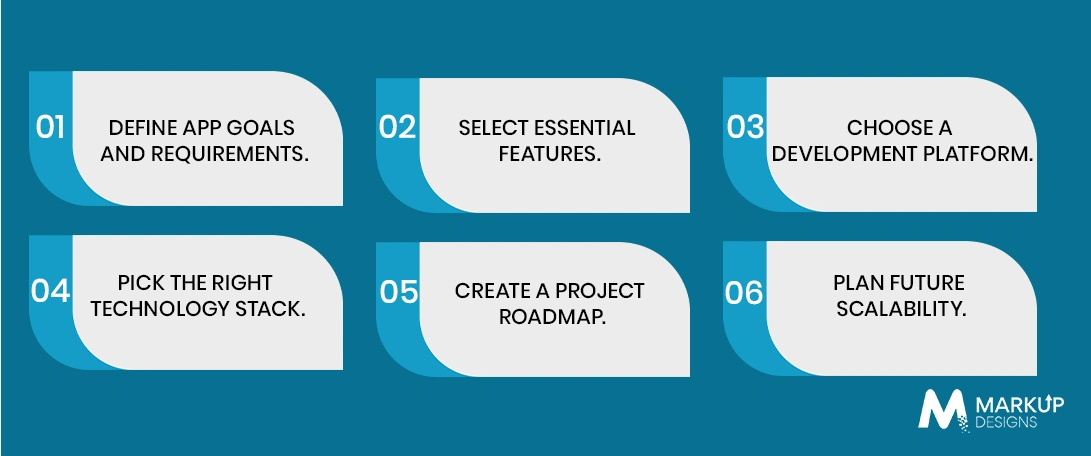
Once you have validated your application idea, now comes the turn for creating an effective development plan. This phase focuses on defining your app’s core features, selecting the development approach, and choosing technologies that maximize performance. Proper planning can save you from any delays and also from exceeding development costs within limits.
Define App Goals And Requirements.
The first step in this phase is to determine the purpose of your application. Whatever your aim may be, whether it is to improve customer experience, simplify business processes, or earn money, your application must have all its features according to these goals.
Select Essential Features.
Make a list of all the features you want to have, but only consider those that will give you maximum utility. Make sure to focus on important functions for the first release of your product rather than attempting to include all the features from the very beginning.
Choose a Development Platform.
It is time to think about which platform will be used by your application. Your choice may include either iOS or Android or both. In addition, you need to decide whether you would like to use flutter app development or cross-platform app development.
Pick the Right Technology Stack.
Make sure that the programming languages, frameworks, database management systems, and cloud services you choose are appropriate for your application complexity and its further development.
Create a Project Roadmap.
Think over a plan describing the project phases, timeframes, milestones, and responsibilities. Such a plan will help you coordinate actions of all participants and successfully develop the product.
Plan Future Scalability.
Design your application considering its future scalability. This way, you will be able to implement new functionalities, scale the application to larger volumes, use innovative technologies, etc.
Have an app idea but not sure where to begin?
At Markup Designs, we help UK businesses transform concepts into feature-rich, scalable mobile applications. From strategy and design to development and launch, our experts guide you through every stage of the mobile app development process.

Creating UI/UX Design for a User-Friendly Mobile Experience
An effectively designed mobile application is not only visually appealing but is also able to make sure the user is able to accomplish their tasks effortlessly. An effective UI/UX design increases user satisfaction and usage of the application by making it engaging and enjoyable. Before even designing the mobile application, the layout and flow of the interactions are decided.
User Expectations Research
Know how your intended users interact with apps like this. This way, you can understand what your target users expect from your app.
Wireframes and Prototyping
Create wireframes for designing the overall app and prototyping it to get the feel of navigation across various screens.
Design an Intuitive Interface
Design your app interface with emphasis on clear designs, smooth navigation, good typography, and a consistent look and feel.
Ensure Responsive Design
Design the app so that it can be used easily across varying screen sizes, devices, and operating systems without any trouble.
Testing
Carry out usability testing on your design to identify problems and improve your app’s design prior to its development.
Maintain Brand Consistency
Make sure the colors, fonts, icons, and other visual elements of your app design remain consistent with your brand’s identity.
Mobile App Development Process: From Coding to Integration
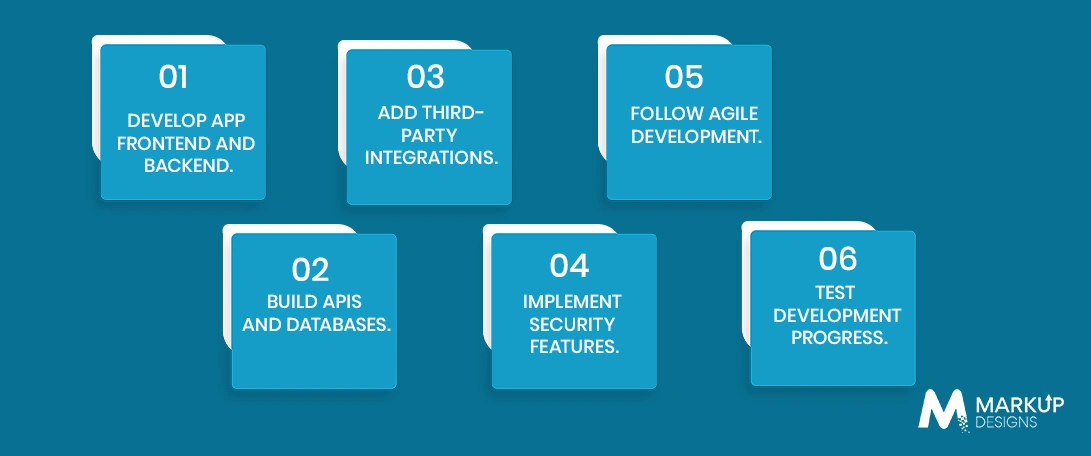
The App development process starts after finalizing the design. The developers turn the wireframes and the prototypes into a fully functional mobile app through the development of the frontend, backend, and all necessary integrations. Developers typically follow an agile approach, allowing continuous improvements throughout the project.
Develop Frontend and Backend Architecture
Build the user interface alongside the server-side code, database structures, and core features that power the app.
Build APIs and databases.
Create secure APIs and structured databases that allow seamless interaction between the app and backend.
Add third-party integrations.
Integrate any service, including but not limited to payment gateways, maps, analytics, social login, notifications, and cloud storage, depending on the requirements of the business.
Implement security features.
Ensure security of the user information by providing secure authentication and encryption.
Follow agile development.
Adopt an agile approach to the app development process with smaller iterations for testing and evaluation of every new feature.
Test development progress.
Perform continuous testing of the app development process to detect issues and ensure correct performance of all features.
Testing and Quality Assurance Before App Launch
Before your mobile app goes live, it must go through thorough testing to ensure it performs reliably in real-world conditions. QA can help detect bugs and check whether all features work fine for users. Pre-launch testing will reduce the likelihood of having a negative user experience and make the launch of your app successful.
Functional Testing
Testing that ensures the application is working properly and meets all the specified business criteria.
Performance Testing
Make sure the application performs well under various loads and usage scenarios.
Security Testing
Ensure there are no security weaknesses, and the users’ data is well-protected due to proper authentication and encryption.
Compatibility Testing
Test the application on different platforms, screen resolutions, and browsers to provide a consistent user experience.
Usability Testing
Getting feedback from actual users regarding navigation, accessibility, and usability of the application.
Fix Issues Before Launch
Make necessary changes and optimizations before the deployment of the application.
Deploying and Launching Your Mobile App in the UK Market
Upon completing the testing phase, the app is now ready to be launched. However, launching an app goes beyond just uploading it on an app store; much needs to be done before the actual release in order to comply and get ready for the big day.
Preparation for App Store Submission
Ensure that your app complies with the specifications of the Apple App Store and Google Play Store before submission.
Optimization of App Store Listing
Provide compelling information about your app through the description, screenshots, keywords, and other visuals.
Compliance Preparation
Get ready with the required documentation such as privacy policies and permissions for app approval.
Monitor the Launch
Monitor downloads, performance, crashes, and feedback from users right after the app is launched.
Mobile App Promotion
Back up your app’s launch with marketing on digital platforms like social media and email marketing.
Collect Early User Feedback
Listen to user reviews and suggestions to make quick improvements and enhance the overall app experience.
Post-Launch App Maintenance and Continuous Improvement
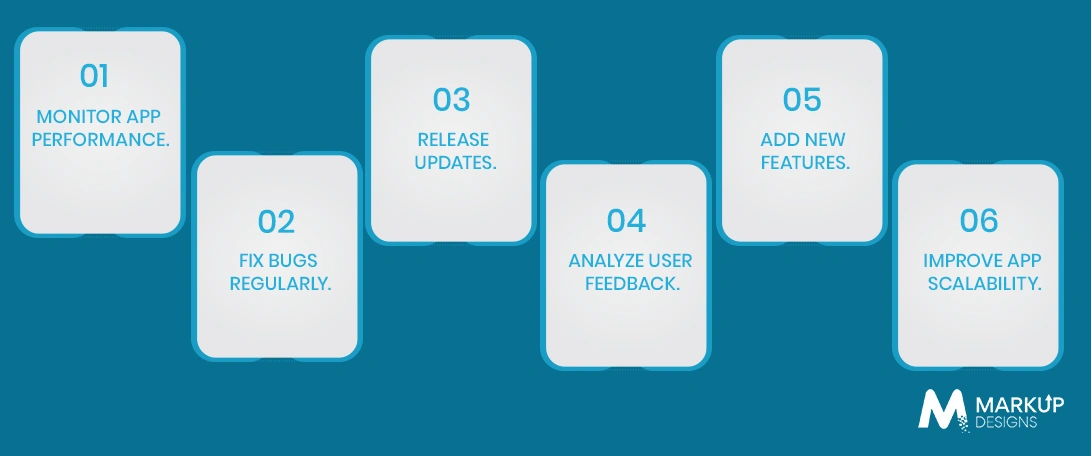
The launch of your app is not the end; it marks just the beginning of its life cycle. If you want to retain customers’ interest and remain competitive, you need to maintain and improve your app all the time. This way you will stay on top of user expectations and technology.
Monitor app performance.
Monitor performance metrics such as how fast the application runs, downtime, crashes, and user engagement. Constant monitoring will assist you in identifying issues that may affect the user experience.
Fix bugs regularly.
An application may be extensively tested, but there are some bugs that only become apparent through wider use.
Release updates.
Make sure that your app is constantly evolving and updated to be compatible with the most recent version of the operating system.
Analyze user feedback.
Be aware of what kind of user reviews, ratings, surveys, and feedback from users within the app you have. Knowing their requirements will help you prioritize changes that need to be made.
Add new features.
With the development of your company, your app should be growing as well. Add new features according to customers’ requirements, market trends, and business objectives.
Improve app scalability.
Think in advance about how you will be able to grow together with your business and design the infrastructure and architecture of your app accordingly.
How Markup Designs Helps Businesses Build Successful Mobile Apps in the UK
In order to be successful in the creation of a mobile application, it is necessary not only to know how to create it technically, but also to know what your business goals are, what requirements your customers have, and what trends exist in the market today. Markup Designs helps businesses from the UK turn their ideas into efficient and result-oriented mobile applications.
The development process in Markup Designs is organized to meet the needs at all stages of creating an application. We create secure and scalable applications for all kinds of businesses depending on what kind of application you need – consumer-facing app, enterprise app, or on-demand platform.
We provide native and cross-platform mobile app development by employing cutting-edge technology and development methodologies. In addition to developing applications, we provide our clients with maintenance, updates, and performance enhancement services.
By opting for Markup Designs as your technology partner, you can ensure you develop mobile apps that can provide your users with an amazing experience.
Ready to Turn Your App Idea into Reality?
Whether you’re starting with a new idea or looking to modernize an existing application, Markup Designs is here to help. Our experienced mobile app developers work closely with UK businesses to build innovative, scalable, and high-performing mobile applications.

Conclusion
Mobile app development is a process full of decisions, strategies, and improvements that make it possible to build an effective application meeting users’ needs and helping a business grow. The definition of the idea and market validation, design, development, testing, app launch, and its maintenance become parts of the process that creates such a product.
A mobile app development process helps minimize risks, cut down expenses, and build more confident products. Choosing an appropriate technology partner becomes necessary to gain more resources for future success.
Whether you’re a startup launching your first app or an established business expanding your digital presence, investing in a well-planned development process will help you create a mobile application that delivers lasting value.
FAQs
1. What is the process duration for mobile app development in the United Kingdom?
The time will depend on elements such as the complexity, the set of features, the platform, etc. A simple application can be developed within several months, and an enterprise app will take more time.
2. What is the cost of mobile app development in the UK?
It will depend on various elements such as the complexity of the application, its design, tech stack, platforms, etc.
3. Do I need to develop my mobile application using a native or cross-platform technology?
A native application will provide you with better performance on your platform, but a cross-platform app solution will allow you to target both iOS and Android users using the same source code. It depends on your business objectives and budget.
4. Why do I need to test my mobile application prior to its release?
Testing is necessary to find possible bugs, increase security, make sure of compatibility with various devices, and provide a high-quality user experience.
5. Why do I need to hire an experienced mobile app development company in the UK?
An experienced mobile app development partner provides technical expertise, strategic guidance, quality assurance, and ongoing support to help you build a secure, scalable, and successful mobile application.
Author's Perspective
By now, you should have a clear understanding of why a structured mobile app development process in the UK is essential for building successful digital products. From validating your idea to launching and maintaining your app, every stage plays a vital role in achieving long-term success. With this knowledge, you’ll be better equipped to make informed decisions, avoid common pitfalls, and confidently plan your mobile app development journey.
Discuss Your Project NowJupinder Singh Arora
Founder and CEO
Related Posts

How to Build a Chat App Like Arattai:...
How to Hire Mobile App Developers in the...

How Much Does It Cost to Build a...
Insights Are Valuable & Execution is Priceless
You’ve read about the digital future. Now, let’s build the infrastructure to take you there. Move your strategy from the page to the product.
Design Your Solution Now
Contact Us
Schedule The Appointment At Your Convenience Date And Time.
30 Min
Web Conference
Time Zone
Indian standard time (08:30pm)

Thanks For Getting In Touch!
You’ve Taken The First Step Toward Transforming Your Digital Presence. Our Experts Will Reach Out Shortly To Take It Forward.
Launch Your Dream Project
Provide a brief overview of your project, and our specialists will evaluate your requirements. We will connect with you to explore how the right digital solutions can help you launch faster.