
In Brief
- Selecting between iOS and Android for your app development is not based solely on market competition and but also depend on various factors, including your audience, your business objectives, your budget, and your vision of the future.
- Android is great when it comes to market expansion as it has a larger variety of devices, whereas iOS generates more revenue per user, larger customer loyalty, and a higher success rate in terms of customer satisfaction.
- The total cost of development depends on the platform, complexity, design requirements, third-party integration, and maintenance.
- Business owners in the UK will have to take into account different elements, such as monetisation strategy, safety regulations, and debt-to-asset ratio, to be able to choose the right platform.
- If you collaborate with a professional mobile app development agency, you will get to know which platform to choose, how to reduce budget, and create a successful tool.
With mobile applications shaping customer experience and digital business strategy, making the right choice of a development platform is very important for UK companies. Be it a startup testing a new idea or an enterprise establishing its online presence, the iOS vs Android choice can affect the cost of development, reach of users, potential revenue, and scalability issues. It is not only about market share; it is important to consider the alignment of a platform with a target audience and business goals.
Both iOS and Android have their pros and cons. Android has a much more significant user pool and therefore more devices, while iOS has exceptional user engagement and a high level of security that can compel customers to spend more money. The guide compares both platforms in terms of main business factors such as development cost, development time, security, monetisation possibilities, and efficiency.
Why Choosing the Right Mobile Platform Matters for UK Businesses
The decision between iOS and Android has strategic significance in business. It determines development costs, target consumers, user experience, and revenue generation capacity. The selection of the platform should be based on business objectives and consumers’ needs.
Mobile App Economy in the UK is Growing
The growth of the mobile-based economy in the UK boosts the demand for innovations in various business domains.
How Basic Platform Choice Could Affect Business Development
The chosen platform influences consumer attraction, engagement, and monetisation.
Main issues that UK companies must check before starting the process
The audience, budget, sphere of operation, model of business, and growth devices should be evaluated before making a decision.
Understanding the Features of iOS and Android
iOS and Android are different, and understanding their peculiarities will help you choose the platform better.
What Does iOS App Development Mean?
The development of applications for iPhone with an emphasis on security, speed of work, and premium experiences.
Meaning of Android App Development
Development of applications for Android, which offers more flexibility and a wider market segment.
Differences between iOS and Android
iOS provides limited control, while Android enables broader device compatibility and flexibility.
How Each Ecosystem Supports Business Growth
iOS suits premium markets, whereas Android is ideal for reaching a larger audience.
UK Mobile Market Overview: Android vs iOS
The UK mobile market includes strong user base for both platforms, making audience analysis essential before development.
Smartphone Market Share in the UK
Android leads in overall market share, while iOS maintains a strong presence among premium users.
User Demographics and Consumer Behaviour
iOS users generally spend more, while Android serves a broader customer base.
Spending Patterns Across Both Platforms
iOS users typically generate higher revenue through app purchases and subscriptions.
Which Platform Dominates Different Industries?
The preferred platform varies by industry, target audience, and business model.
iOS vs Android App Development: Complete Comparison for UK Companies
Both iOS and Android have distinct advantages. Comparing them across key business and technical factors helps UK companies choose the platform that best fits their objectives.
| Comparison Factor | iOS | Android |
| Market Reach | Strong premium user base | Wider global audience |
| Target Audience | High spending users | Broad and diverse users |
| Revenue Potential | Higher in-app spending | Higher user volume |
| Development Cost | Slightly lower | Slightly higher due to device diversity |
| Development Timeline | Faster | Longer testing cycle |
| Programming Languages | Swift, Objective-C | Kotlin, Java |
| Development Tools | Xcode | Android Studio |
| UI and UX Consistency | Highly consistent | Varies across devices |
| Device Fragmentation | Minimal | High |
| Performance | Optimised hardware and software | Depends on device specifications |
| Security and Privacy | Strong security controls | Flexible security framework |
| App Store Approval Process | More rigorous | Faster publishing process |
| Scalability | Excellent | Excellent |
| Maintenance | Easier | More complex |
| Testing Requirements | Fewer device variations | Extensive device testing |
| Third Party Integrations | Strong ecosystem support | Extensive integration options |
| AI and Emerging Technology Support | Excellent | Excellent |
| Long-Term Business Value | Better for premium markets | Better for mass market reach |
Development Cost Comparison: iOS vs Android Apps in the UK
Development costs vary based on app complexity, features, integrations, and platform-specific requirements. Understanding these factors helps businesses plan realistic budgets.
Average Development Cost by App Complexity
| App Complexity | Estimated Cost |
| Basic App | £20,000 to £40,000 |
| Medium Complexity App | £40,000 to £80,000 |
| Enterprise App | £80,000 to £200,000+ |
Cost Segmentation Across Development Steps
Costs break down through preparation, UI/UX design, development, testing, launch, and follow-up maintenance.
Factors to Determine Development Cost
The cost of development varies due to app complexity, original features, integrations, security options, technology stack, and where the development team is located.
Prospective Maintenance Costs
Companies must take into account continuous updates, bug fixes, security transitions, infrastructure, and new improvements in functions and features.
Which Platform Guarantees More ROI?
While iOS brings more ROI from apps and premium projects, Android is opt to succeed better in gaining ROI from a wider audience than iOS.
Comparison of Development Timeline
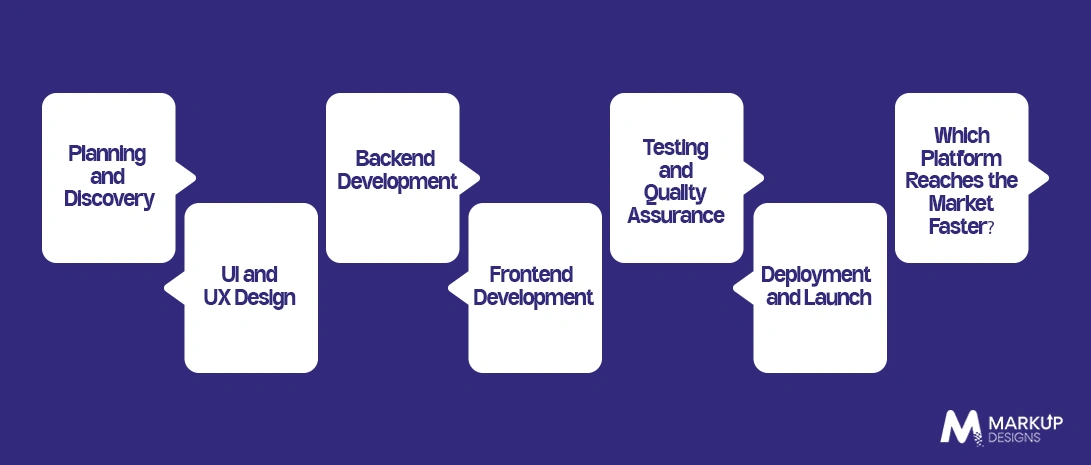
Development duration varies according to application complexity, functionality, and testing requirements. Although the process is the same on both platforms, the need for additional testing is significantly greater in Android due to its fragmented environment.
Planning and Discovery
Determine the business goals, target audience, features, and scope of the project.
UI and UX Design
Make wireframe designs, prototypes, and other user-friendly designs.
Backend Development
Develop APIs, databases, and authentication through business logic.
Frontend Development
Build responsive and platform-specific user interfaces.
Testing and Quality Assurance
Perform functional, performance, security, and compatibility testing.
Deployment and Launch
Publish the app, complete final validations, and prepare for release.
Which Platform Reaches the Market Faster?
iOS apps generally have a shorter development and testing cycle, while Android may require additional time due to device and OS variations.
Technology Stack for iOS and Android App Development
Selecting the right technology stack ensures your application remains secure, scalable, and high-performing.
iOS Development Technologies
Swift, Objective-C, Xcode, and SwiftUI.
Android Development Technologies
Kotlin, Java, Android Studio, and Jetpack Compose.
Cross-Platform Frameworks
Flutter and React Native for building apps across both platforms from a single codebase.
Backend Technologies
Node.js, .NET, Java, Python, and PHP.
Cloud Infrastructure
AWS, Microsoft Azure, and Google Cloud Platform.
Database Technologies
MySQL, PostgreSQL, MongoDB, Firebase, and Redis.
DevOps and CI/CD Tools
Docker, Kubernetes, Jenkins, GitHub Actions, and Bitbucket Pipelines.
User Experience and Design Considerations
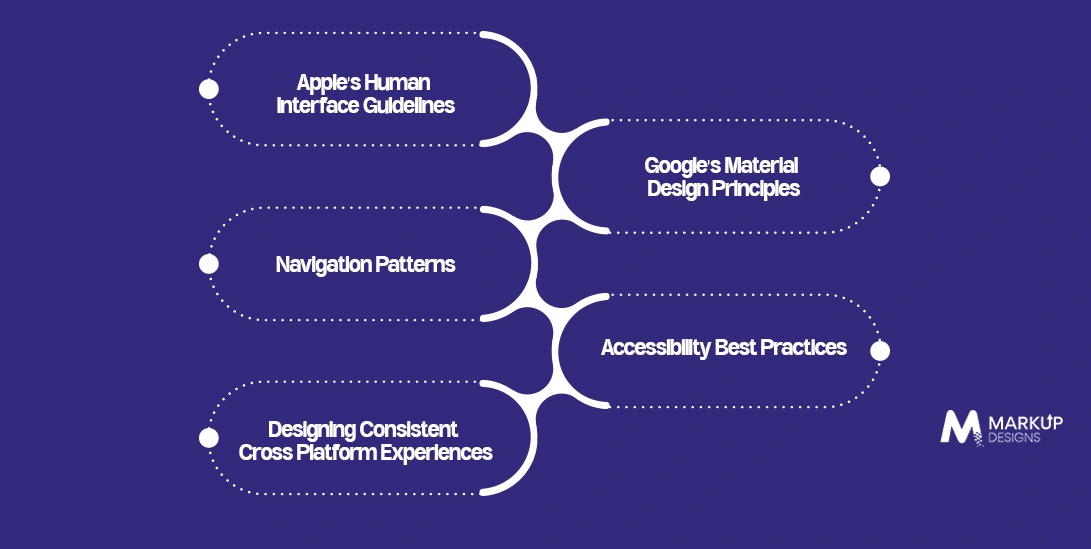
A well-designed app improves user satisfaction, engagement, and retention. Both iOS and Android follow different design standards that businesses should consider during development.
Apple’s Human Interface Guidelines
Focus on simplicity, consistency, and intuitive user experiences across Apple devices.
Google’s Material Design Principles
Emphasise flexible layouts, responsive interfaces, and interactive design elements.
Navigation Patterns
Each platform follows different navigation styles to match user expectations.
Accessibility Best Practices
Design apps that are inclusive and easy to use for all users.
Designing Consistent Cross-Platform Experiences
Maintain a consistent brand identity while respecting platform-specific design guidelines.
Security and Compliance Considerations for UK Businesses
Security and compliance are essential for protecting user data and meeting UK regulatory requirements.
Built-In Security Features of iOS
Apple provides strong privacy controls, secure app sandboxing, and biometric authentication.
Android Security Architecture
Android offers secure app permissions, encryption, and Google Play Protect.
UK GDPR Compliance
Apps must comply with UK GDPR requirements for collecting, storing, and processing personal data.
Data Protection and User Privacy
Implement encryption, secure authentication, and transparent privacy policies.
Secure Payment Integration
Use trusted payment gateways and secure transaction protocols for online payments.
Enterprise Security Best Practices
Adopt secure coding practices, regular testing, and continuous security monitoring.
App Store vs Google Play: Publishing and Approval Process
There are differences in publishing processes between Google Play and Apple App Store, with implications for timelines and approvals.
Apple App Store Review
Apple has a systematic review and approval mechanism that emphasizes quality and safety.
Google App Store Review
Generally, Google has a more efficient review process than Apple, with simpler submission guidelines.
App Rejections
Reasons that lead to rejection of applications range from security issues to incomplete applications.
Strategies for Getting Approval Quickly
Abide by the platform terms, conduct proper testing, ensure that everything is in line with the guidelines, and provide complete information.
Monetisation Opportunities on iOS and Android
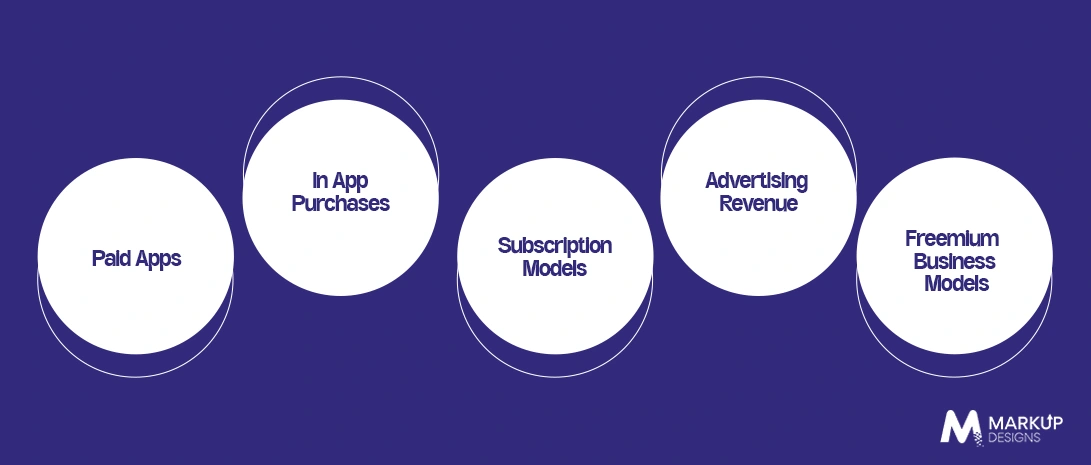
There are many ways to generate revenue for apps on both platforms. Different strategies could be effective depending on the user base and objectives of your business.
Paid Apps
Monetize through one-off application charges.
In-App Purchase
Make additional earnings through sales of digital content within the app.
Subscription Models
Earn through monthly or annual subscriptions.
Advertising Revenue
Monetize by putting ads into the application.
Freemium Business Models
Charge for advanced features while keeping some features free.
Performance, Scalability and Maintenance
Building a high-performing app requires continuous optimisation, scalability, and regular maintenance after launch.
Performance Optimisation
Optimise speed, responsiveness, and overall app performance.
Device Compatibility
Ensure the app functions smoothly across supported devices and screen sizes.
Scalability Considerations
Design the application to handle future users, features, and increased workloads.
Ongoing Maintenance
Regular updates, bug fixes, and security improvements keep the app reliable.
Version Updates and OS Compatibility
Maintain compatibility with the latest iOS and Android operating system releases.
When Should UK Businesses Choose iOS App Development?
iOS is an excellent choice for businesses targeting premium users and high-value markets.
Best Business Scenarios for iOS
Ideal for premium apps, subscription platforms, and enterprise solutions.
Industries That Benefit Most from iOS Apps
Finance, healthcare, luxury retail, professional services, and lifestyle applications.
Advantages of Launching on iOS First
Faster development, stronger security, and higher average user spending.
Potential Limitations
Smaller overall market reach and limited device ecosystem.
When Should UK Businesses Choose Android App Development?
Android is ideal for businesses focused on maximum reach and broader customer acquisition.
Best Business Scenarios for Android
Suitable for mass market consumer apps, e-commerce, education, and on demand services.
Industries That Benefit Most from Android Apps
Retail, logistics, travel, education, healthcare, and consumer services.
Advantages of Launching on Android First
Larger user base, wider device compatibility, and global reach.
Potential Limitations
Higher testing effort due to device fragmentation and operating system variations.
Should UK Companies Build for Both Platforms?
For many businesses, launching on both iOS and Android maximises market reach and customer engagement. The best approach depends on your budget, timeline, and business objectives.
Native vs. Cross-Platform Development
Native apps deliver the best performance, while cross-platform development reduces cost and development time.
Benefits of Simultaneous Launch
Reach a wider audience, strengthen brand presence, and accelerate user acquisition.
Challenges of Dual Platform Development
Higher development costs, increased testing, and ongoing maintenance across two platforms.
Choosing the Right Approach Based on Budget and Business Goals
Select native development for platform-specific performance or cross-platform for faster, cost-effective deployment.
How to Choose the Right Platform for Your Business
The ideal platform depends on your audience, budget, and long-term business strategy.
Define Your Target Audience
Identify where your customers are most active before selecting a platform.
Evaluate Your Budget
Choose a development approach that aligns with your available investment.
Consider Your Revenue Model
Match the platform with your monetisation strategy, whether subscriptions, ads, or in-app purchases.
Assess Time to Market
Consider how quickly you need to launch your application.
Plan for Future Scalability
Ensure your app can support future growth, new features, and increased users.
Decision Matrix for UK Companies
Evaluate your business goals, audience, budget, and growth plans to determine the most suitable platform.
Future Trends in Mobile App Development
Emerging technologies are shaping the next generation of mobile applications and creating new opportunities for UK businesses.
AI-Powered Mobile Applications
AI is enabling smarter, more personalised, and automated app experiences.
Super Apps
Businesses are combining multiple services into a single application for greater convenience.
Foldable Device Optimisation
Apps are being designed to deliver seamless experiences across foldable and multi-screen devices.
IoT Integration
Mobile apps increasingly connect with smart devices and IoT ecosystems.
AR and VR Experiences
Immersive technologies are enhancing retail, education, healthcare, and entertainment applications.
On Device AI and Edge Computing
Processing AI directly on devices improves performance, privacy, and real-time responsiveness.
Why Choose Markup Designs for Mobile App Development in the UK?
Markup Designs helps UK businesses build high-performance mobile applications that are secure, scalable, and tailored to their business goals. From strategy and design to deployment and ongoing support, we deliver end-to-end mobile app development services.
Native iOS and Android Development Expertise
Build feature-rich native applications that deliver exceptional performance and user experiences.
Cross-Platform Development Capabilities
Develop cost-effective applications for both iOS and Android using a single codebase.
Secure and Scalable Mobile Solutions
Create mobile apps with robust security, seamless performance, and future-ready scalability.
End-to-End Development and Post-Launch Support
From planning and development to maintenance and upgrades, we support your app throughout its lifecycle.
Build High-Performance Mobile Apps
Whether you need an iOS app, Android app, or a cross-platform solution, Markup Designs delivers secure, scalable, and feature-rich mobile applications tailored to your business goals. Our experts help you transform ideas into powerful digital products that drive long-term success.

Conclusion
There is no one-size-fits-all answer when choosing between iOS and Android app development. The right platform choice depends on your target audience, business objectives, budget, and long-term growth strategy. While iOS is well-suited for premium user experiences and higher revenue per user, Android offers broader market reach and greater accessibility.
By evaluating factors such as development cost, performance, monetisation, security, and scalability, UK businesses can make informed decisions that maximise return on investment. Partnering with an experienced app development company further ensures a successful launch and sustainable growth.
FAQs
1. Is iOS or Android app development better for UK companies?
It depends on your target audience and business goals. iOS is ideal for premium users, while Android offers a wider market reach.
2. Which platform is more cost-effective to develop?
iOS development is often slightly more cost-effective due to lower device fragmentation, while Android may require additional testing across multiple devices.
3. Should startups build an iOS or Android app first?
Startups should choose the platform where their target audience is most active. Many begin with one platform before expanding to the other.
4. Is cross-platform development a better option?
Cross-platform development is a great option for businesses looking to reduce costs, shorten development time, and launch on both platforms simultaneously.
5. How long does it take to develop an iOS or Android app?
A typical mobile app takes 3 to 9 months, depending on its complexity, features, and integrations.
6. Which platform generates higher revenue?
iOS generally generates higher revenue per user, while Android reaches a larger global audience.
7. What technologies are used for iOS and Android app development?
Common technologies include Swift, Kotlin, Flutter, React Native, Node.js, .NET, and cloud platforms such as AWS and Microsoft Azure.
8. How do I choose the right platform for my business?
Consider your target audience, budget, monetisation strategy, time to market, and long-term business objectives before making your decision.
Author's Perspective
Choosing between iOS and Android should be based on business strategy rather than platform popularity. Understanding your users, revenue model, and growth plans is essential for making the right investment. In many cases, businesses achieve the best results by starting with one platform and expanding strategically, while others benefit from launching on both platforms simultaneously through cross-platform development.
Discuss Your Project NowJupinder Singh Arora
Founder and CEO
Related Posts

How Much Does It Cost to Build a...

How to Build a Secure Payment Gateway Integration...

Cost to Build a Mobile App in Qatar...
Insights Are Valuable & Execution is Priceless
You’ve read about the digital future. Now, let’s build the infrastructure to take you there. Move your strategy from the page to the product.
Design Your Solution Now
Contact Us
Schedule The Appointment At Your Convenience Date And Time.
30 Min
Web Conference
Time Zone
Indian standard time (08:30pm)

Thanks For Getting In Touch!
You’ve Taken The First Step Toward Transforming Your Digital Presence. Our Experts Will Reach Out Shortly To Take It Forward.
Launch Your Dream Project
Provide a brief overview of your project, and our specialists will evaluate your requirements. We will connect with you to explore how the right digital solutions can help you launch faster.