

In Brief
- Mobile app development cost in Saudi Arabia typically ranges from SAR 40,000 to SAR 700,000+, depending on complexity, integrations, and business requirements.
- Factors such as feature scope, backend infrastructure, security compliance, and UI/UX expectations significantly influence final development costs.
- Platform selection including native, cross-platform, or PWA development, directly impacts budget, performance, and maintenance expenses.
- Localization requirements such as Arabic language support, RTL design, and multi-language functionality add additional planning and development effort.
- Enterprises can reduce costs through MVP development, modular architecture, cross-platform adoption, and automation practices.
- Long-term success depends not only on launch investment but also on planning for maintenance, scalability, compliance, and total cost of ownership (TCO).
Typical enterprise application discussions are not usually initiated through a strategy presentation. They are typically kick-started by small inefficiencies in the workplace, such as delayed approvals due to lack of access to one’s computer. For instance, a customer inquiry about why some services require several steps.
The general transformation of Saudi Arabia makes such conversations common. Vision 2030 has led companies to change their business operations and approach to customers through modernization. On the other hand, initiatives such as NEOM and smart cities are gradually setting the expectations. Having mobile access is no longer considered an additional service but a requirement.
When you decide to develop a mobile app in Saudi Arabia, one of the first things that comes to mind is the what is it development cost. There are many factors that affect how much you have to invest, but often, it takes the planning phase for most people to understand what these are.
This is how one avoids surprises midway through the project. This makes budgeting conversations more realistic. This blog will focus on the factors that determine the cost of developing an application in Saudi Arabia, allowing you to plan for it before proceeding with development.
Mobile App Development Cost in Saudi Arabia: Quick Cost Overview (2026)
The mobile app development cost in Saudi Arabia varies based on app complexity, features, integrations, and technology requirements. In 2026, businesses typically invest between SAR 40,000 and SAR 700,000+, depending on project scope.
Average Mobile App Development Cost in Saudi Arabia
- Basic Apps: SAR 40,000 – SAR 90,000
- Mid-Level Business Apps: SAR 90,000 – SAR 250,000
- Enterprise Applications: SAR 250,000 – SAR 500,000+
- AI-Enabled Mobile Solutions: SAR 350,000 – SAR 700,000+
Cost Snapshot Table
| App Type | Estimated Cost Range |
| Basic Mobile App | SAR 40,000 – SAR 90,000 |
| Mid-Level Business App | SAR 90,000 – SAR 250,000 |
| Enterprise Application | SAR 250,000 – SAR 500,000+ |
| AI-Enabled Advanced Solution | SAR 350,000 – SAR 700,000+ |
What Factors Affect Mobile App Development Cost in Saudi Arabia?
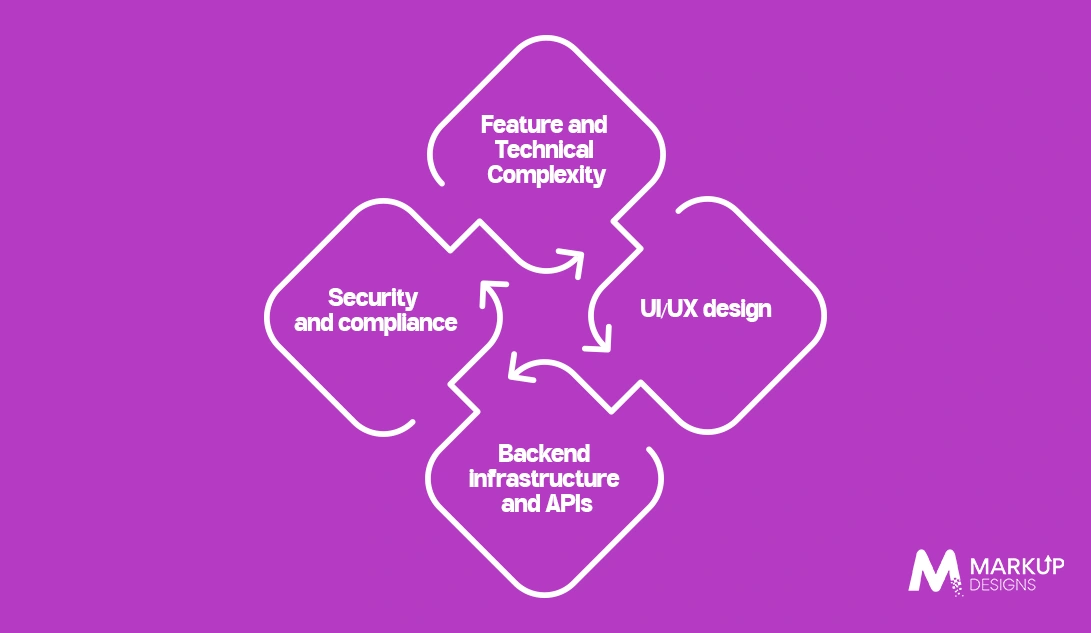
The estimated cost of developing a mobile app seems constant at first. This is until the technical aspects come into play, integration restrictions, regulatory compliance, localization issues, and infrastructure considerations. This is generally where the cost of mobile app development in Saudi Arabia starts to vary.
With the mobile app market projected to reach about $2.3 billion by 2030, investment activity is accelerating. Regional patterns show similarities with UAE app development costs, although local factors influence the final investment levels.
1. Feature and Technical Complexity
This is usually where budgets start increasing. Increased functionality requires more engineering effort, testing cycles, and backend development. In some cases, teams discover this halfway through the planning process, when prototyping features come into contact with actual data or processes.
- Real-time capabilities, such as messaging, tracking, or data streaming
- Using AI advances from regional markets for recommendations, personalization, or predictive analytics
- Local payment systems like Mada, STC Pay, or banking APIs
- Offline synchronization for field work or limited connectivity
2. Backend infrastructure and APIs
Enterprise applications seldom work in isolation and often need to integrate with some other system already in use, and this process tends to take more time than anticipated, particularly if legacy applications or disparate data are involved.
- REST, GraphQL, and event-driven API integration of CRM and ERP systems
- Middleware layer, microservices, or API gateway design
- Database clean-up, migration, or synchronization processes for legacy databases
- Identity federation, SSO, and enterprise-level authentication systems
3. Security and compliance
Security-related concerns in the projects carried out in Saudi Arabia usually arise early on. Data privacy and data hosting regulations can affect infrastructure design right away.
- PDPL-aligned data governance and privacy measures
- Local data hosting or regional cloud deployment considerations
- Solid identity management, encryption, and logging mechanisms
- Security testing, threat modeling, and compliance cycles
4. UI/UX Design Expectations
Localization is more than just translation. The structure of the interface, usability assumptions, and cultural background affect the efforts put into design. This becomes evident to many design teams once Arabic interface testing begins.
- Arabic localization with proper RTL implementation
- Navigation and content management multilingualization
- Usability and accessibility tests on different devices
Get Your App Cost Estimate
Discover the exact investment required for your mobile app idea with a customized pricing consultation. Receive a detailed cost breakdown based on features, technology stack, design complexity, and business goals.

Platform Choice and Its Impact on Development Cost
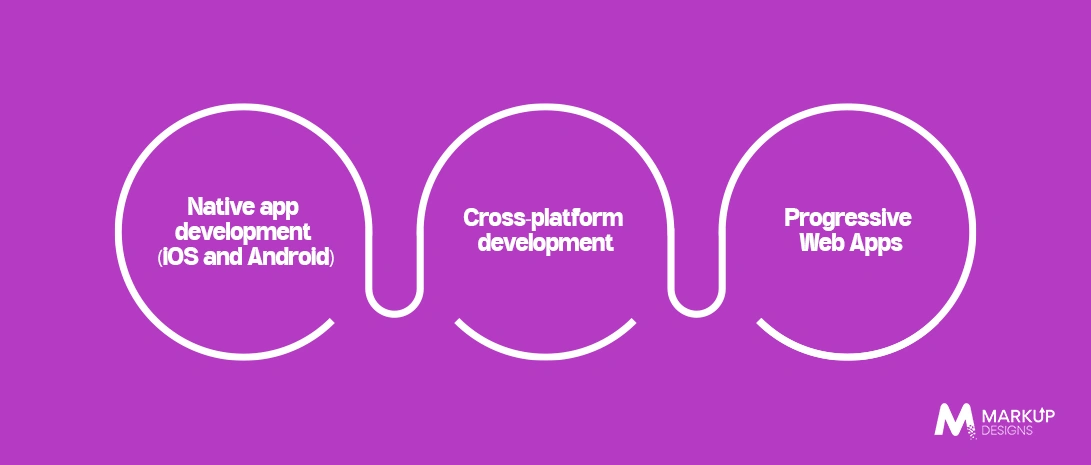
Choosing a platform may seem like a simple decision initially, but the actual impact becomes clearer once development begins. Factors such as performance expectations, maintenance requirements, security standards, scalability, and user experience all influence the final approach. Whether businesses choose native, cross-platform, or web-based solutions, each option affects development effort and overall investment differently.
1. Native app development (iOS and Android)
A native app is built individually for iOS and Android platforms using different programming languages. Such an application provides better performance, greater security, and enhanced user experience. Due to developing separate codebases for each platform, such as iOS and Android, the development of a native app usually requires higher costs.
Estimated cost: High
2. Cross-platform development
Cross-platform development enables a developer to create a program using one codebase that can run on different platforms. This makes the development process easier and faster. Companies usually opt for this approach in order to achieve both good performance and economic considerations.
Estimated cost: Moderate
3. Progressive Web Apps
PWAs integrate both web and mobile technologies via web browser applications that work like native applications. The use of PWAs eliminates the need for app store distribution, reducing the costs involved in development initially. Even though they might lack support for some of the high-end device functions, they offer a cheaper option for companies aiming at entering the market swiftly.
Estimated cost: Low
Complete Mobile App Development Cost Breakdown
As soon as a team progresses beyond the conceptualization phase, the conversation tends to take on a more practical tone in terms of costs. What does the first version really cost? How much extra will it cost to scale afterward? That’s where a mobile app development cost analysis becomes crucial. It can give you a good idea of what a mobile app development cost really is.
| Complexity Level | Estimated Cost Range (SAR) |
| MVP Development | SAR 187K – SAR 375K |
| Mid Complexity | SAR 375K – SAR 937K |
| Enterprise Grade | SAR 937K – SAR 1.87 Million |
These figures represent the common trends in the development of applications. The comparison of the expenses incurred in developing applications in Egypt can give more insight into the region. The actual number is dependent on the extent to which the application will integrate with existing systems.
Core Cost Components
There are several phases where costs occur even within a certain level of complexity. Sometimes teams only consider coding costs and later realize that there are other areas, such as design improvement and compliance issues, which are important too.
| Cost Component | Typical Cost Range (SAR) |
| Discovery and Consulting | SAR 37K – SAR 112K |
| UI/UX Design | SAR 56K – SAR 187K |
| Development and Integrations | SAR 300K – SAR 1.2 Million |
| Testing, QA, and Compliance | SAR 75K – SAR 262K |
| Deployment and Ongoing Support | SAR 37K – SAR 187K annually |
How Do Mobile App Development Costs Differ Across Saudi Cities?
Once planning moves beyond rough budgeting, location becomes a major cost factor. Availability of talent, business needs, infrastructural evolution, and industry clustering become factors. In cases when internal capacities are strained, businesses tend to hire mobile application developers in Saudi Arabia to maintain consistency and comply with local regulations.
Within the realm of mobile application development in Saudi Arabia itself, there may be differences based on cities. Below is a glimpse into three cities in Saudi Arabia where mobile application development for enterprises takes place.
Riyadh
Typical Cost Positioning: Upper end of the Saudi market
Riyadh dominates almost all of the digital efforts undertaken by enterprises in the country. Digital transformation programs initiated by the government or enterprises usually take place in Riyadh. Such a concentration often results in increased demand for experienced developers and architects.
Key Cost Drivers:
- Concentration of enterprise demand
- Established ecosystem of developers and consultants
- Higher security and compliance expectations
- Infrastructure and Integration efforts on a larger scale
Jeddah
Typical cost positioning: Balanced to moderately competitive
The commercial nature of Jeddah influences the nature of its digital initiatives. Applications related to retail, logistics, tourism, and services are common, hence making development cycles realistic and cost structure competitive relative to Riyadh.
Key Cost Drivers:
- Applications driven by commercial/trade reasons
- A competitive vendor development environment
- Heavy focus on customer applications in mobile form
- Payment/logistics/commmerce integration
Dammam
Typical cost positioning: Competitive, sector-driven
The presence of Dammam and the Eastern Province contributes to an industrial outlook. Industries within the energy, logistics, and manufacturing verticals tend to value operational applications, mobility of workers, and field data platforms. The ecosystem is evolving, allowing costs to remain competitive.
Key cost drivers:
- Mobility requirements of the industrial/energy verticals
- Operational applications for field workers and logistics
- Evolving but expanding technology ecosystem
- Integration into enterprise operational systems
Localization Cost Considerations for Saudi Businesses
Localization normally appears easy until the first design review is done. The position of a button changes due to the right-to-left orientation. The text grows in Arabic. Testing is more time-consuming than anticipated. All these small factors contribute significantly to the development cost of an Arabic mobile app, especially if the target audience comprises enterprise customers.
Here is an example of how localization generally impacts budget.
Arabic Mobile App Development Cost
Common cost positioning: Medium to high, depending on depth
There is more to app localization in Arabic than just translation. The design and testing approach will change because of the right-to-left nature of the application being localized. Most teams become aware of the implications during the design validation process.
Main cost factors and difficulties of Arabic apps:
- Right-to-left layout and engineering
- UX design according to the cultural specifics of navigation and visuals
- Voice or NLP interfaces in Arabic, if needed
- Testing of the language use cases
Multi-Language App Development Cost
Typical cost positioning: Moderate, rising with language count
The addition of multiple languages complicates the workflow. The process of updating content, maintaining versions, and testing cycles becomes cumbersome. This is more apparent in enterprise applications that require constant updates and have large user bases.
Main cost factors:
- Workflow for structured translations
- Adjustments in content management systems
- Testing cycles for all language versions
- Maintenance after launch
How Development Process and Timelines Influence App Cost

Process decisions frequently drive cost decisions as much as feature decisions. Architectural decisions, compliance, infrastructural readiness, and regulatory requirements for the region can impact budgeting. When companies intend to develop software applications in Saudi Arabia, they must consider technical and regional considerations early on to avoid mistakes.
1. Planning and Discovery Phase
Here is where the objectives, the architecture, compliance requirements, and regional deployment issues are set up before the start of development work. For Saudi projects, this step may involve data residency planning and Arabic localization scope definition.
Impact on costs:
- Upfront PDPL compliance planning eliminates future security architecture redesign
- Architecture validation avoids future scalability problems
- Regional hosting choices have an impact on hardware costs
- Integration mapping eliminates any future backend coding
- Arabic localization planning avoids future user interface redesigns
2. MVP vs. Full-Scale Development
This will define whether the product goes to market with basic functionality or with a full-fledged enterprise platform according to regional regulation requirements.
Impact on cost:
- Use of MVP reduces early cost but delays compliance
- Enterprises require upfront security, scalability, and governance
- Artificial intelligence capabilities add to cost
- Cloud architecture at this stage influences future cost
3. Scope Stability During Development
Maintaining a stable project scope during development helps keep timelines, budgets, and delivery expectations aligned. When requirements remain consistent, development progresses more efficiently with fewer disruptions. However, occasional changes such as regional compliance requirements or new integration needs may require updates that can affect the overall development process.
Effect on Cost:
- Updates to regulatory requirements result in more validation runs
- Changes to integration impact engineering time
- Feature additions result in extended test times
- Multi-language support additions affect design and QA cycles
Build or Customize? Understanding Enterprise Cost Impact
When discussing enterprise mobility, one question consistently arises: should businesses build a custom solution or customize an existing platform? While custom software development often demands greater upfront investment and planning, platform customization may appear to offer faster deployment. However, the true cost comparison becomes clearer when factors such as scalability, long-term maintenance, and seamless integration with existing enterprise systems are considered.
| Approach | Upfront Cost | Long-Term Cost | Cost Risk |
| Build (Custom Development) | Higher | Controlled | Predictable at scale |
| Customize Existing Platform | Medium | Variable | Integration and flexibility constraints |
Custom software tends to offer better control over architecture, compliance, and scalability. Custom software also permits greater integration of enterprise systems without any restrictions.
Marketplace platform cost awareness aids in the platform selection process. Customization of platforms makes deployment faster. However, problems such as flexibility issues, licensing, and integration challenges tend to arise later on.
Takeaway: Initial deployment cost savings seem attractive. But long-term cost stability is contingent upon the level of architectural control retained by your business.
Hidden and Ongoing Costs Enterprises Often Overlook
The majority of teams will calculate the resources required for launch. However, very few of them are going through in planning for the phase following actual usage. There will be an increase in traffic, strict compliance requirements, and changes in infrastructure. It is typically only then that the cost of developing a mobile application becomes clear.
Total Cost of Ownership (TCO)
Initial development costs often receive the most attention during app planning. However, the bigger financial picture emerges after launch, when users begin adopting the application, infrastructure scales, and compliance and maintenance cycles come into effect. This is where the total cost of ownership becomes more visible. When evaluating mobile application development costs in Saudi Arabia, looking beyond the initial launch phase provides a more realistic understanding of long-term investment and value.
3-Year Cost Ownership Snapshot
TCO practical approach distinguishes between the initial costs involved in building versus the continuous costs required to operate. It is thus easier for organizations to budget and plan in an orderly fashion.
- Building costs include design, architecture, and compliance preparation.
- Operating costs include hosting, security, maintenance, and optimization
- Initial costs are centered on building the product
- Late costs are centered on ensuring stability, scalability, and performance
- Organizations that consider this change early on typically do not have surprises when usage increases.
How Enterprises Optimize App Development Costs Without Increasing Risk
The modern-day enterprise aims at cutting down the costs of development without compromising the quality, security, and scalability of the application. Through proper development strategies, organizations can maximize their investments and mitigate the risks involved.
1. Minimum Viable Product Development
Developing a minimum viable product enables organizations to go to market with the basic functionalities needed to prove the demand in the market. Rather than having to invest heavily at the outset, organizations can collect feedback from users and develop additional functionalities later on.
Cost Benefit: Lower initial investment and faster time to market.
2. Modular Architecture
A modular architecture divides the application into independent components that can be developed, updated, and scaled separately. This approach reduces redevelopment efforts and enables faster enhancements without affecting the entire system.
Cost-Benefit: Reduced maintenance costs and improved scalability.
3. Adopt Cross-Platform Development
Cross-platform development enables businesses to build a single codebase for multiple operating systems, reducing duplicate development work while accelerating launch timelines.
This approach helps enterprises maintain consistent user experiences across devices while controlling overall development budgets.
Cost Benefit: Lower development and maintenance expenses.
4. Automate Testing and Deployment
Automation tools streamline testing, quality assurance, and deployment processes by reducing manual effort and minimizing human errors. Continuous testing and deployment pipelines help detect issues earlier and accelerate release cycles.
Cost-Benefit: Faster releases, improved quality, and reduced operational costs.
By combining these strategies, enterprises can manage mobile app development costs in Saudi Arabia more effectively while maintaining performance, security, and long-term business growth.
How Markup Designs Delivers Secure Development Platforms at Scale?
Our company provides secure and scalable development environments through a blend of contemporary engineering approaches and an emphasis on security. We create cloud-friendly architecture that enables organizations to grow their businesses by ensuring high speed and stability. Our developers adhere to secure coding guidelines, automate tests and deployments, and conduct proactive monitoring to minimize risks and improve the pace of the development process.
Build Your Mobile App with Experts
Turn your vision into a scalable digital product with tailored mobile app development solutions in Saudi Arabia. Collaborate with experienced developers to create a complete, high-performance application that delivers seamless user experiences.

Conclusion
Developing a mobile application in Saudi Arabia has moved beyond being just an investment in technology; it has become a business decision as a result of the process of digital transformation and changing customer expectations. Although there are many factors influencing the costs of development, such as complexities, platforms, integration, and compliance issues, a company that focuses on planning and scalability will be able to manage investment and optimize return on it. Understanding the cost factors and choosing the appropriate development strategy allows companies to create mobile applications that promote their growth and development.
FAQs
1. How much does mobile app development cost in Saudi Arabia?
Mobile app development costs in Saudi Arabia generally range between SAR 40,000 and SAR 700,000+, depending on app features, complexity, integrations, and technology stack.
2. How long does it take to develop a mobile app?
Development timelines vary by project scope. Basic applications may take 6–10 weeks, while enterprise-grade and AI-powered solutions can require 6–12 months or longer.
3. Which development approach is more cost-effective: native or cross-platform?
Cross-platform development is usually more cost-efficient because it uses a shared codebase, while native development provides stronger performance and customization capabilities.
4. What hidden costs should businesses consider?
Businesses should account for maintenance, cloud hosting, compliance updates, security testing, scaling infrastructure, and ongoing support after launch.
5. Does Arabic localization increase development costs?
Yes. Features such as RTL implementation, multilingual support, localization testing, and cultural UX adjustments can increase overall development effort and cost.
Author's Perspective
There is one thing that has been experienced while working with enterprise and digital transformation projects, which is the fact that budget allocations for apps do not depend on the coding, but rather on other factors such as architecture, integration, scalability, and future operations. Companies that have defined their requirements from the start and have approached mobile development as a strategic investment will always succeed as compared to companies that are trying to lower the costs in the beginning.
Discuss Your Project NowGaurav Goyal
Global Sales- VP
Related Posts
How to Build an App Like Yuka: Features,...

10 Key Factors to Choose the Right Mobile...
Mobile App Development in Kuwait: Cost, Process, Features...
Insights Are Valuable & Execution is Priceless
You’ve read about the digital future. Now, let’s build the infrastructure to take you there. Move your strategy from the page to the product.
Design Your Solution Now
Contact Us
Schedule The Appointment At Your Convenience Date And Time.
30 Min
Web Conference
Time Zone
Indian standard time (08:30pm)

Thanks For Getting In Touch!
You’ve Taken The First Step Toward Transforming Your Digital Presence. Our Experts Will Reach Out Shortly To Take It Forward.
Launch Your Dream Project
Provide a brief overview of your project, and our specialists will evaluate your requirements. We will connect with you to explore how the right digital solutions can help you launch faster.