
In Brief
- Legacy apps will soon prevent companies from growing, being innovative, and attaining their digital transformation goals.
- Modernisation allows a company to reduce its costs in maintaining these systems, enhance the security of its systems, and ensure compliance with laws and regulations.
- Enterprises have a variety of options regarding how they want to modernise their legacy systems, such as rehosting (moving an application), replatforming (changing the platform or operating system), refactoring (changing the code), rebuilding (creating a brand new app), and replacing (removing a system and implementing a new one).
- In Dubai, industries such as banking, healthcare, retail, and real estate are the ones leading the way in their efforts to modernise.
- A phased approach to modernisation generally provides the best balance of risk reduction and business value.
- Modernisation success is determined by focusing on business outcomes versus just the technology itself.
Dubai’s growing digital transformation is providing enterprises with new opportunities and
challenges. Government initiatives that encourage businesses to improve their technology, shifting customer expectations, and increased competition are forcing enterprises to modernise the foundation (technology) of their business to operate more effectively. While most companies have spent heavily to develop digital channels, a significant number of them still depend on outdated (legacy) applications, which were created for a different type of business altogether.
While legacy systems can continue to provide core functionalities for a business, by the same token, they can also establish barriers to innovation, efficiencies, and growth. The increasing cost of maintenance, lack of security, challenges with integration, and lack of scalability are becoming more and more difficult for companies to compete in a digital-first economy. Consequently, rather than seeing “Legacy Application Modernization” as a Technology project anymore, it has become a Business Priority.
Defining legacy applications
Legacy applications are software tools that allow companies to support core processes; however, they are still reliant on antiquated tools and processes, architectures, and infrastructures. They contain many years of business logic and data, which is why so many organisations continue to rely upon them despite their myriad limitations.
Common characteristics of legacy applications:
Monolithic architecture
Legacy applications tend to be “all-in-one” tightly connected systems, which makes updating, changing, or scaling them harder than they should be.
Outdated programming languages
Many older systems use technologies no longer being developed or maintained, which increases the number of difficulties associated with maintaining the software or finding qualified personnel to do so.
Limited cloud compatibility
Older systems were typically built for in-house operations and will likely struggle to make use of all the flexibility and scalability that today’s cloud environments provide.
High maintenance costs
Organizations typically devote a significant percentage of their overall budget on maintaining the operational costs associated with outdated infrastructures, maintaining aged systems and applications, and the specialized skill sets needed in providing this support.
Security and compliance issues
Many legacy applications do not support modern forms of security and are therefore unable to keep up with the consistent and ever-changing demands for maintaining high levels of cybersecurity or keeping up with evolving legislation surrounding cybersecurity.
Limits of Performance and Scalability
As company’s needs evolve, these types of systems can become slower, less reliable, and unable to meet growing workloads.
In addition to being adequate for performing basic tasks, those systems will typically encounter challenges when they attempt to satisfy the criteria associated with the requests of today’s organizations.
Why Legacy Systems Are An Obstacle to
Most organizations take longer than needed to undergo transformation because their systems still seem to function adequately. Hidden costs and limitations associated with legacy systems often increase, eventually impacting an organization’s operational agility, customer experience, and overall business performance.
Most frequently occurring issues include:
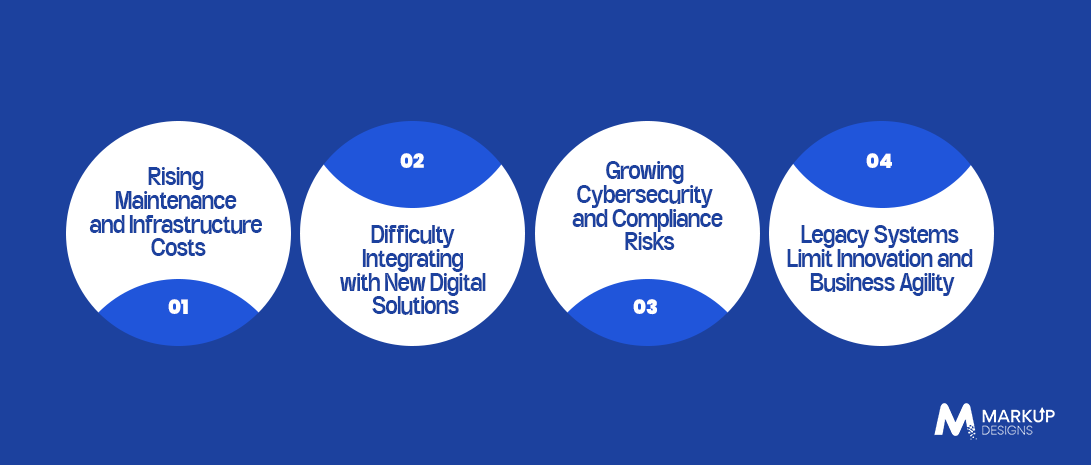
Rising Maintenance and Infrastructure Costs
As legacy systems continue to age, the amount spent on software support, hardware upgrades, license fees, and the necessary technical skill sets required to operate them typically increases.
Difficulty Integrating with New Digital Solutions
Many legacy applications do not contain the necessary APIs and architecture required to integrate seamlessly with Cloud Services,
Growing Cybersecurity and Compliance Risks
Legacy systems often cannot meet today’s modern AI Cybersecurity standards, which increases their exposure to cyber threats and diminishes their ability to satisfy ever-changing regulatory standards.
As companies grow, many legacy applications can’t keep up with increasing transaction volume, overall user traffic, or complex data processing requirements, leading to decreased performance and reliability.
Legacy Systems Limit Innovation and Business Agility
Many legacy systems make it difficult for an organization to develop new capabilities, automate business processes, or respond quickly to evolving customer needs and changing market conditions.
One of the main issues with legacy systems is their inability to respond quickly to changing markets. Organizations that are unable to efficiently bring new products to market, adopt new technologies, or enhance customer experiences usually have difficulty in today’s competitive economy.
Dubai Enterprises Fast-Tracking Modernization Initiatives
The acceleration of modernization in Dubai is being driven by several factors: market demands, customer expectations, and various government initiatives focused on digital transformation.
The creation of programs related to digital governance, smart cities, paperless workflows, and connected services is helping organizations create more agile and scalable technology ecosystems. Additionally, due to rapidly increasing customer demand, it is becoming more and more important for organizations to provide customers with seamless digital experiences, instant access to services, and personalized interactions.
Organizations that successfully modernize will be better able to innovate at a faster rate, operate at a higher level of efficiency, and take advantage of new business opportunities.
Modernization is necessary if you are still using a legacy system. However, it may not be just about upgrading, as the systems you had in the past were not built to meet today’s business requirements.
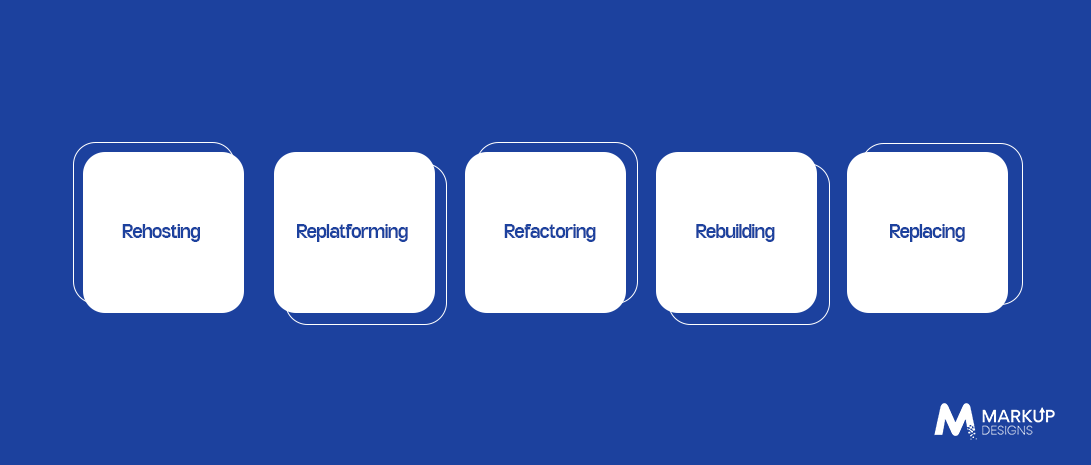
You will have several options when deciding how to modernize your legacy applications, including:
1. Rehosting
Rehosting is often referred to as the “lift and shift” method. With this method, you can take your applications from an on-premises environment to a cloud environment with very few changes. Rehosting is the most practical option to avoid a lot of the disruption involved with modernizing your application.
2. Replatforming
Replatforming allows you to make limited changes (or improvements) to the application while still keeping the application’s core functionality. Therefore, replatforming is a way for organizations to take advantage of the benefits of the cloud and/or the benefits of infrastructure without having to completely re-create the application.
3. Refactoring
Refactoring is the process of restructuring the application code to make it easier to maintain, perform better, and/or be more scalable. While refactoring is a more complex process, organizations can expect to derive more long-term benefits from refactoring than they would from rehosting or replatforming alone.
4. Rebuilding
When an organization’s current architecture does not support their future business requirements, rebuilding enables organizations to design a new application utilizing state-of-the-art technologies and development frameworks.
5. Replacing
When a legacy application has been “debt-ridden” to an extent beyond repair, replacing the entire application may provide the greatest long-term sustained benefit.
Determine Upgrade Versus Replace
A major decision in your organization’s modernization process will be to determine if you want to upgrade your legacy applications. Upgrading an existing system can improve its lifespan and reduce immediate operating costs, however it might not fix underlying architecture problems as deep as they may go.
Replacing a legacy system often requires a larger initial capital and planning investment, but will provide a more reliable technology foundation to grow over time with greater potential for scalability, flexibility and innovation. Factors to consider when deciding between upgrading or replacing a legacy system include your current level of technical debt, total cost of maintenance, goals for your organization, and your anticipated future growth.
Modernization must be considered from the business outcome perspective rather than from the technology perspective.
Use Cases from Across UAE Industries Driving Modernization Efforts
Across many different industries in UAE, organizations are undertaking modernization projects to improve operational efficiency and speed up their digital transformation.
Modernization leaders include:
Retail and E-commerce
Providing an omnichannel shopping experience, better visibility into inventory levels, and a personalized experience for customers.
Banking and Financial Services
Digital banking services, fraud prevention and detection, enhanced security, new and additional regulatory compliance requirements.
Healthcare
Support for telemedicine, better interoperability, and secure management of patient-related data.
Real Estate
Streamlined investor onboarding and improved automation of transactions and systems that are highly scalable.
Logistics and Supply Chain
Weekly real-time tracking of shipments, improved workflows, and enhanced operational visibility.
Each industry will have a different set of modernization goals; however, their long-term aim is the same: to provide a technology platform that will help support business growth.
Compliance and Security Factors When Modernizing
Across UAE, organizations are increasingly focusing on compliance as a major consideration for modernization initiatives. It is imperative for organizations to align their technology systems with new and evolving data privacy, governance, and security environments.
Many organizations rely on legacy systems, which will typically struggle to conform to modern standards of compliance since they were not constructed with today’s expectations for compliance in mind. By undertaking modernization, enterprises will enhance and strengthen security controls while improving the organization’s ability to govern and manage data, and to mitigate risks associated with the organization’s IT infrastructure and systems.
Modern enterprises today do not simply see compliance as an obligation imposed on them by regulations, they use compliance requirements as a key driver for making modernization investments.
Return on Investment Measurement of the Legacy Application Modernization Initiative
Modernization should be evaluated based on business-oriented criteria and not just enterprise architecture criteria.
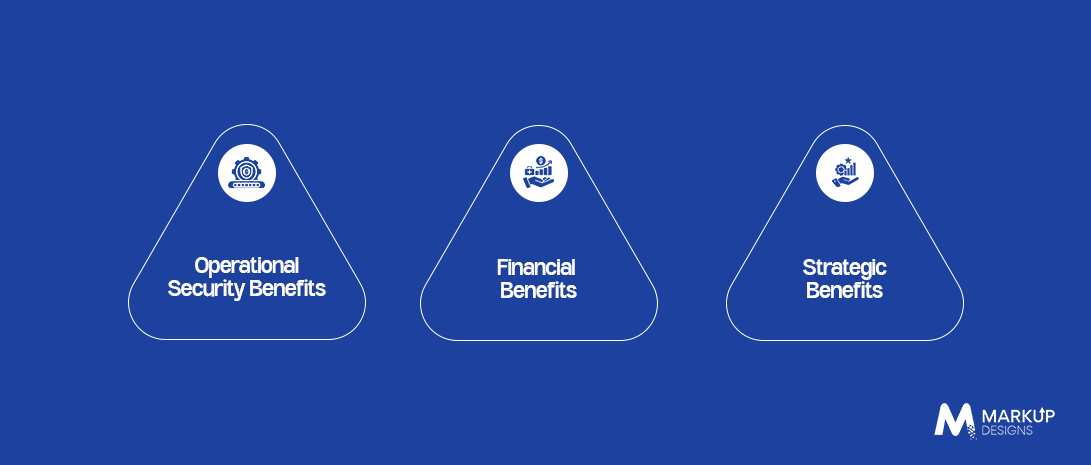
Operational/Security Benefits
It will deliver operational benefits that arise from speedier release cycles, enhanced application performance, and less downtime, thus improving the efficiency with which the organization will be able to deliver services more reliably.
Financial Benefits
Less expensive ongoing systems and maintenance costs, fewer costly capital investments in infrastructure, and improved utilization of human capital resources are examples in which this project will deliver operational efficiencies to the organization over its useful life.
Strategic Benefits
By accelerating the pace of innovation, engaging customers better, and increasing scalability, the organization will be able to respond to the needs of the marketplace quickly and with a sustainable approach over the long term.
Organizations that define clear criteria for measuring success at the outset of their modernization initiatives are usually better positioned to illustrate long-term value and substantiate investments in the modernization of their legacy applications.
Best Practices to Achieve Successful Modernization
A successful modernization programme begins with an understanding of existing systems, business objectives, and operational interdependencies.
Conduct a Complete Assessment of Current Applications
Assess current systems, technical debt, infrastructure requirements, and business dependencies; identify your modernization priorities and any significant risk to the modernization programme.
Align Modernization Objectives with the Business
Ensure the objectives of your modernization programme align with the overarching organizational objectives; i.e., improving the customer experience, increasing operational efficiencies, and preparing for future growth.
Begin Implementation in Phases
By splitting modernization into several phases, you can reduce the potential disruption of modernization, control expenses, and lessen the impact of operational risk on your organization during the modernization journey.
Embed Security and Compliance into the Entire Process
By embedding security best practices and regulatory requirements into the modernization process from the inception of the programme, you enable your organization to minimise vulnerabilities and maintain compliance.
Create Measurable Metrics to Evaluate Performance & ROI
By defining success metrics up front, you will be able to monitor the success of the modernization programme throughout its entirety; regardless of the outcome, you will have the evidence to demonstrate how successful and valuable your modernization programme was, and will enable your organization to make informed decisions.
A well-defined and structured modernization path provides organizations with the ability to balance new innovations with risk management and to maximize the business value of long-term transformation.
Make Your Enterprise Future-Proof
Modernizing legacy applications is not just about replacing out-of-date technology; it is about establishing an environment that promotes innovation, durability, flexibility, and sustainable growth long-term. Modernization strategy will open doors to new possibilities while lowering operational risk whether the organization is dealing with increasing costs for maintenance, security issues, integration issues, or limited ability to scale.

Conclusion
Legacy applications have aided many businesses for many years; however, in today’s dynamic business environment, legacy applications must be flexible, scalable, and digitally-ready. As Dubai continues to rapidly evolve via digital transformation, organizations must ensure their technology ecosystems are capable of supporting future growth and the changing expectations of their customers.
To gain a competitive advantage in an increasingly digital economy, organizations that take a proactive approach to modernization will be better prepared to improve their operating efficiency, increase their security, accelerate the development of innovation, and remain competitive.
FAQs
1. What is legacy application modernization?
Updating or converting older versions of software to enhance performance, decrease costs such as maintenance/operation, increase scaling options, improve security, and make it compatible with newer technologies is referred to as legacy application modernization.
2. Why should enterprises in Dubai pursue modernization?
Modernizing systems helps companies carry out their digital transformation plan, meet compliance requirements, improve customer service, and stay ahead of the competition in a fast-moving digital economy.
3. How do organizations select the appropriate modernization strategy?
Selecting the best strategy depends on the organization’s business goals, complexity of its systems, budget, amount of technical debt, and plans for growth in the years to come.
4. Which industries are seeing the greatest benefits from modernization?
Organizations within the banking, healthcare, retail, logistics, manufacturing and real estate industries are among those benefiting from modernization efforts.
5. Do all legacy application replacements need to take place?
No, many organizations can obtain excellent results from rehosting, replatforming or refactoring their existing applications. Typically, organizations will replace an application once they have incurred enough technical debt to warrant a replacement.
Author's Perspective
Organisations that are seeing the most success in modernising their operations are not necessarily the ones that are spending the most; rather, they are the organisations aligning their technology decisions with their business objectives. Legacy modernisation should not be viewed solely as an IT effort. It is a strategic investment that will enable innovation, enhance customer experiences, strengthen operational capacity, and prepare organisations for future growth.
For those organisations operating in the rapidly changing Dubai economy, modernisation is becoming less about keeping up with technology and more about keeping their organisations competitive in the long term.
Discuss Your Project NowAjit Kumar Jha
VP - Business Operations
Related Posts
IoT in Banking: Transforming Financial Services Through Connected...
Digital Transformation for Australian Enterprises: Strategy, Technology &...
How to Hire AI Consultants for Enterprise Digital...
Insights Are Valuable & Execution is Priceless
You’ve read about the digital future. Now, let’s build the infrastructure to take you there. Move your strategy from the page to the product.
Design Your Solution Now
Contact Us
Schedule The Appointment At Your Convenience Date And Time.
30 Min
Web Conference
Time Zone
Indian standard time (08:30pm)

Thanks For Getting In Touch!
You’ve Taken The First Step Toward Transforming Your Digital Presence. Our Experts Will Reach Out Shortly To Take It Forward.
Launch Your Dream Project
Provide a brief overview of your project, and our specialists will evaluate your requirements. We will connect with you to explore how the right digital solutions can help you launch faster.