

In Brief
- Estimates for hiring hybrid app developers remotely in 2026 vary from $20 to $150+ per hour based on the amount of experience, location, technical skills, and requirements of the project.
- Depends on the skill set of a developer, the usage of particular frameworks, the complexity of the app, the duration of the project, integration with the back-end, the security concerns, and management of remote teams.
- It is possible to choose the type of work for companies between freelancers, remote developers, staff augmentation, remote teams of developers, and fixed-price projects based on the scale of the project, budget, and competencies of the company.
- The thing to keep in mind about the full cost of the project is that there will be other things besides the hourly rates of the developer: UI/UX design, front-end and back-end development, API integrations, testing, deploying, recruiting, cloud hosting, software licenses, security, and maintenance of the application.
- Businesses may decrease the costs of the hybrid app budget by creating an MVP, choosing a framework, hiring remote developers according to the project needs, planning milestones, using ready-made APIs, and testing.
The hiring of remote hybrid app developers has become an actual solution for companies that need to develop applications for different platforms without having special development teams. Due to technologies such as Flutter and React Native, companies can create apps for iOS and Android platforms, making the development process and cost optimization much easier.
However, choosing the right developers cannot be based on comparing their hourly rates. The experience of developers, technical skills, location, demands of the project, and the model of hiring all influence the budget of the whole process. While a junior developer costs less money, a complicated project usually requires experts who have enough experience and skill set to handle it.
But what is the average price of hiring remote hybrid app developers in 2026?
In this blog post, we are going to explore the average hiring costs, pricing factors, various hiring models, and other related costs.
How Much Does It Cost to Hire Remote Hybrid App Developers in 2026?
In 2026, the price range for remote hybrid application developers would be around $20-$150+ per hour, based on the developer’s experience, location, technical abilities, and mode of engagement. Firms looking to hire developers from nations like India would be able to source cheaper talent; however, firms looking to hire developers from the USA and Western Europe would pay higher prices.
To understand the budget better, let’s look at the estimated hourly rates based on experience.
Average Hourly Rates for Remote Hybrid App Developers | |
|---|---|
| Developer experience | Estimated hourly rate |
| Junior (0–2 years) | $20–$40 |
| Mid-level (3–5 years) | $35–$70 |
| Senior (5–8 years) | $60–$100 |
| Expert/Technical Lead (8+ years) | $80–$150+ |
These are representative ranges of planning figures and not standardized industry rates. Actual quotes may vary based on the expertise of the developer, the developer’s portfolio, and the recruitment location. Benchmarks for 2026 for mobile and hybrid developers also indicate significant variance.
Factors Affecting the Cost of Hiring Remote Hybrid App Developers
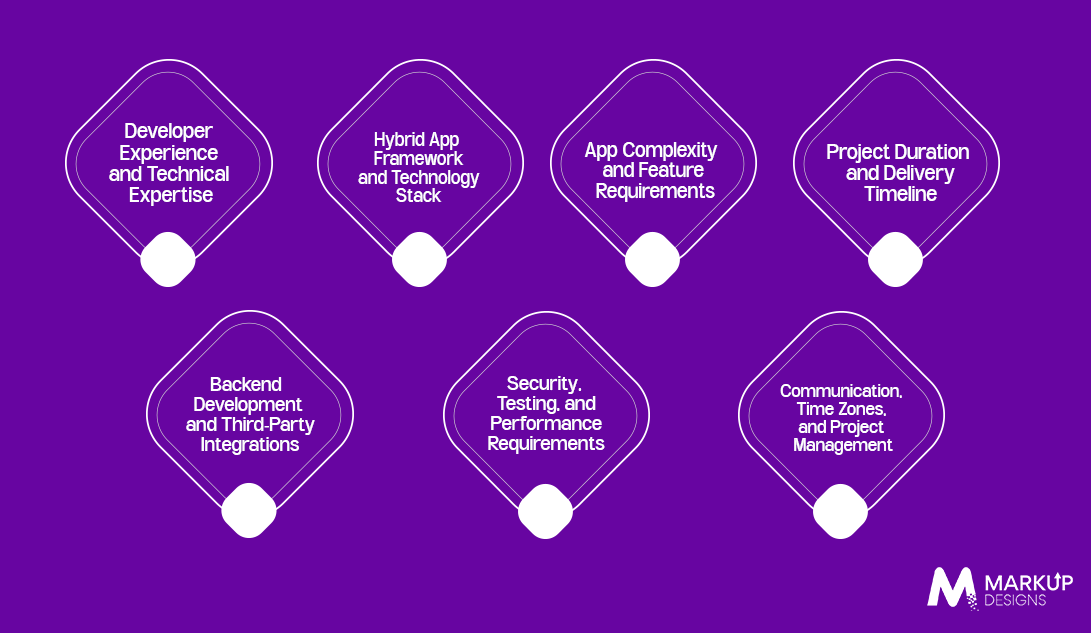
There is no standard fee for hiring remote hybrid app developers as it depends on various factors such as experience level, project requirements, technical skills, and development time. Seven key aspects to take into account in 2026 when determining the cost of hiring are listed below.
Developer Experience and Technical Expertise
Junior developers offer lower fees, whereas mid-level developers are able to handle certain features and integrations independently. Fees for senior developers and technical leads are higher due to their experience with architecture, complex applications, and performance optimization.
Hybrid App Framework and Technology Stack
Certain frameworks determine different skill sets of the developers. For example, developers who work with Flutter use Dart, React Native developers require knowledge of JavaScript or TypeScript, and Ionic developers should have knowledge of web technologies, including HTML, CSS, and JavaScript. Fees depend on the developer’s availability and the requirements of the project.
App Complexity and Feature Requirements
Basic applications that incorporate only user registration and account management typically take less time to develop than applications that include real-time communication, location services, payment processing, machine learning algorithms, video calls, or more complicated data analysis.
Project Duration and Delivery Timeline
Temporary projects can be hired on an hourly basis or upon completion of milestones, while longer projects may need a monthly hiring agreement. A tight schedule leads to increased expenses due to using more resources or extra working hours.
Backend Development and Third-Party Integrations
API development, databases, cloud services, and integration with external systems might require specific skills and knowledge, which leads to an increase in the budget.
Security, Testing, and Performance Requirements
Applications for payments or storing sensitive information need some additional measures concerning security, code review, compatibility, and performance.
Communication, Time Zones, and Project Management
Working with a remote team might involve the use of special communication tools, different time zones, and project coordination. Project coordination is done by development companies, but not by freelancers.
Cost Comparison by Hiring Model
The hiring model directly affects your development budget, level of control, and resource availability. Here are five common options for hiring remote hybrid app developers.
1. Freelance Hybrid App Developers
Most freelancers work at an hourly or per-project rate, making them ideal for small tasks. But organizations have to handle the communication process and project management by themselves.
Best for: Startup companies and projects requiring short-term development.
2. Dedicated Remote Developers
The dedicated developer is assigned to work only on your project for a set time period. Payments can be made either hourly or monthly.
Best for: Organizations requiring ongoing development services.
3. Staff Augmentation
In this case, an organization can augment its existing teams with a developer.
Best for: Organizations requiring extra technical manpower.
4. Outsourced Development Teams
In this case, a software development company would assign a team of developers to you, which may consist of developers, designers, quality assurance engineers, and project managers.
Best for: Organizations requiring development services on a large scale.
5. Fixed-Price Engagements
All the costs of a project are agreed upon upfront according to predefined requirements and deliverables. Changes in the scope of work will bring additional fees.
Best for: Projects with clearly defined requirements.
What is included in the Cost of Hiring Remote Hybrid App Developers?
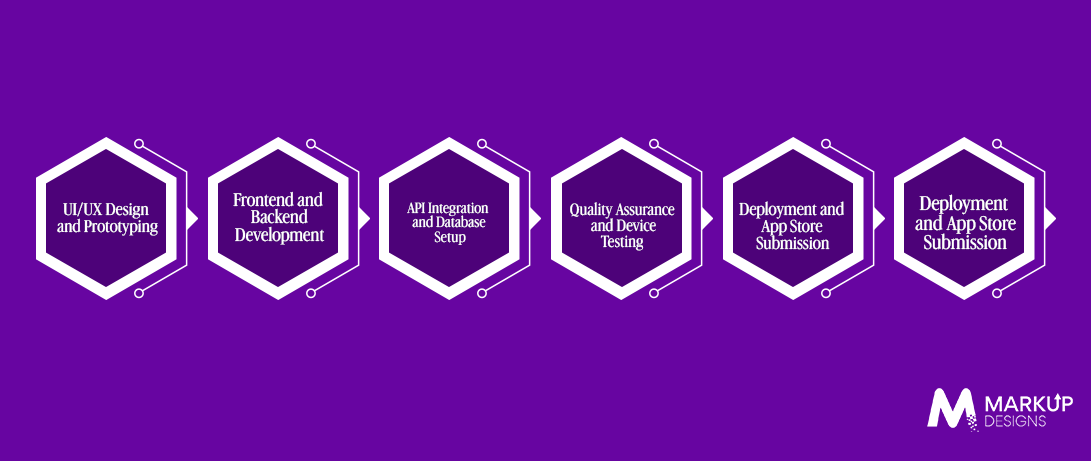
Creating a hybrid app is more than just programming. Depending on the hiring model, the developer’s cost might include a variety of activities, and other activities may be charged separately. Let us have a look at the major services you should take into account when planning your budget.
UI/UX Design and Prototyping
Wireframes, layouts, navigation, user flow, and interactive prototyping are performed for the sake of building an efficient application.
Frontend and Backend Development
Frontend development deals with the interface and user interaction, whereas backend development is responsible for databases, authentication, server-side operations, and logic.
API Integration and Database Setup
Payment gateways, maps, authentications, and various third-party API integrations are done. Database creation is needed for safe storage and access to data.
Quality Assurance and Device Testing
Testing includes functional, usability, performance, security, and cross-platform testing on iOS and Android devices.
Deployment and App Store Submission
This process includes production setup, packaging of the app, store listing preparation, and uploading the application to the Apple App Store and Google Play Store.
Project Management and Documentation
Task allocation, communication, and documentation will keep the development process organized.
Hidden Costs of Hiring Remote Hybrid App Developers
Along with calculating developer rates, organizations also need to take into account some other costs that may appear during the hiring, development, and support process. These expenses are not always included in the initial proposal for hiring.
There are seven of the most popular expenses to be considered:
1. Recruiting and Onboarding Expenses
Recruitment independently may include expenses related to job ads, candidate evaluation, technical interviews, and onboarding.
2. Collaboration Tools
If a remote team works on the project, there are expenses for project management tools, video conferences, documentation, and code sharing.
3. Scope Changes and Additional Development
New functionality or modifications of application requirements during the process of software development can lead to an increase in working hours and expenditure.
4. Software Licensing and Other Third-Party Tools
Payment services, map services, analytical platforms, and other authentication software might be licensed or subject to some usage fees.
6. Infrastructure Costs
Software server hosting, databases, storage, and other infrastructure costs might generate additional expenditure.
7. Security and Compliance Costs
Security assessment, encryption, access control systems, and even external audits may cost more money, especially when developing a secure application.
8. Maintenance and Updates Costs
Fixing bugs, updating frameworks, fixing security issues, and improving operating system compatibility costs more time and effort.
How to Calculate the Total Hiring Cost
Estimating a recruiting budget is not only about verifying the developers’ hourly rates. One needs to take into account working hours, project time, team size, and other costs involved.
1. Calculate Developer Costs Using Hourly Rates
Use this simple formula:
Developer Cost=Hourly Rate*Working Hours
For example, hiring a mid-level developer at $50 per hour for 160 hours costs $8,000 per month. For a three-month engagement, the estimated cost is $24,000.
2. Consider Project Duration
The engagement period directly affects your budget.
| Duration | Working hours | Estimated cost |
| 1 week | 40 | $2,000 |
| 1 month | 160 | $8,000 |
| 3 months | 480 | $24,000 |
| 6 months | 960 | $48,000 |
3. Include Team and Additional Expenses
For large-scale projects, factor in the cost of designers, back-end developers, testing engineers, and project managers. Don’t forget to include the cost of software licenses, cloud computing, testing, maintenance, and contingency money for unforeseen changes.
The calculation of total engagement cost allows companies to plan their expenses properly and not incur any surprise costs.
How to Reduce Hiring Costs Without Compromising Quality
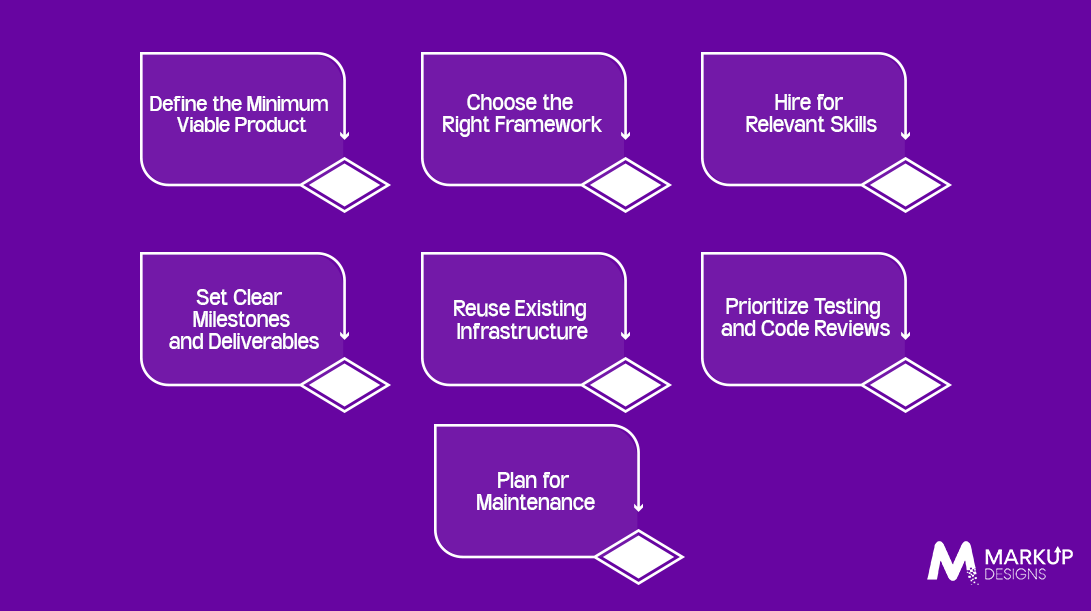
Reducing hiring costs does not imply picking the least expensive developers. Instead, companies need to concentrate on making smart hiring choices and optimizing their development resources. Below are some tips that will help to save money while ensuring high-quality application development.
Define the Minimum Viable Product
Specify the list of features necessary for the application at the initial stage. Extra features may be added later in updates, saving time and money on development.
Choose the Right Framework
Select one of the frameworks such as Flutter, React Native, or others, depending on your application needs and developer skills.
Hire for Relevant Skills
Allocate tasks according to their complexity: senior developers will take care of architecture and integration, and mid-level developers will handle feature development.
Set Clear Milestones and Deliverables
Break down the project into smaller milestones with clear responsibilities and deadlines.
Reuse Existing Infrastructure
Utilize third-party APIs and infrastructure where possible rather than building all new components. Ensure that these are evaluated in terms of licensing and long term costs.
Prioritize Testing and Code Reviews
Testing and code reviews will help in catching any problems at an early stage and save efforts on rework.
Plan for Maintenance
Discuss future maintenance and updating requirements prior to making the hiring decision.
Why Choose Markup Designs for Remote Hybrid App Development?
Choosing the right development partner is very important while hiring hybrid app developers. Apart from cost competitiveness, the business will have a partner who not only understands its requirements but will suggest the appropriate technology and provide quality solutions. The team at Markup Designs is technically proficient and helps the business to develop applications as per their performance and scalability needs.
The process begins by selecting an appropriate framework, developing applications, integrating the APIs, testing and deploying applications. Businesses can opt for flexible engagement models according to their resource availability, timeframes and budget constraints. Technical support will help in taking care of any application upgrade, security enhancement, bug fixing and improvement of the applications.
Markup Designs follows an organized development process and gives emphasis on the quality of applications to help businesses manage their development resources efficiently while developing hybrid applications.
Ready to Build Your Hybrid Application?
Connect with Markup Designs to discuss your requirements, explore the right engagement model, and get a development estimate based on your business goals.

Conclusion
Hiring remote hybrid app developers in 2026 may be an efficient solution for business organizations seeking technical expertise for building hybrid apps for a number of platforms. However, the total cost will be determined by a variety of factors, including developer experience, country of employment, framework, application complexity, and recruitment model.
Hourly rates are just the beginning of costs, which must be supplemented with project management fees, testing, third party integration, infrastructure, and maintenance.
Whether you opt for freelance, dedicated development, staff augmentation, or outsourcing will depend on your project needs and budget.
What you should do is clarify the scope of your app and then compare hiring models and technical skills in order to make an informed choice.
By carefully considering all the above aspects, businesses will not have any problems controlling their budgets and developing high-quality hybrid apps.
FAQs
1. How much does it cost to hire a remote hybrid app developer in 2026?
The estimated cost generally ranges from $20 to $150+ per hour, depending on the developer’s experience, technical expertise, location, and project requirements. Monthly and project-based costs vary according to the engagement duration and scope of work.
2. What is the average hourly rate for a remote hybrid app developer?
Hourly rates vary by experience. Junior developers may charge around $20–$40, mid-level developers $35–$70, senior developers $60–$100, and technical leads $80–$150 or more. These are indicative estimates and can vary across markets.
3. Is hiring a remote hybrid app developer cheaper than hiring in-house?
Remote hiring can reduce certain expenses associated with in-house recruitment, office space, and employee infrastructure. However, the actual savings depend on developer rates, engagement duration, management requirements, and the hiring location.
4. Which country is best for hiring remote hybrid app developers?
India, Poland, Ukraine, the United States, and other European markets offer access to hybrid app development talent. The best location depends on your budget, required technical expertise, communication needs, and time-zone preferences.
5. Is a freelancer cheaper than a hybrid app development company?
Freelancers may have lower initial costs because they generally work independently. However, development companies can provide access to multiple professionals, including designers, developers, QA engineers, and project managers. The better option depends on your project complexity and resource requirements.
Author's Perspective
Hiring remote hybrid app developers is not just about finding someone who can write code at a reasonable hourly rate. It is about finding the right technical expertise for your application and making sure the development investment delivers long-term value.
A lower hiring cost may look attractive initially, but limited experience, unclear requirements, and poor communication can increase expenses over time. Businesses should evaluate developers based on their technical capabilities, problem-solving skills, and ability to work with the required technology stack.
The focus should be on building a strong development process where costs, quality, and project expectations remain aligned. This approach helps businesses make informed hiring decisions and build hybrid applications that can grow with their changing requirements.
Discuss Your Project NowJupinder Singh Arora
Founder and CEO
Related Posts

How Much Does It Cost to Create a...

Hire Mobile App Developers in Abu Dhabi to...

How to Build a Women’s Fitness App: Features,...
Insights Are Valuable & Execution is Priceless
You’ve read about the digital future. Now, let’s build the infrastructure to take you there. Move your strategy from the page to the product.
Design Your Solution Now
Contact Us
Schedule The Appointment At Your Convenience Date And Time.
30 Min
Web Conference
Time Zone
Indian standard time (08:30pm)

Thanks For Getting In Touch!
You’ve Taken The First Step Toward Transforming Your Digital Presence. Our Experts Will Reach Out Shortly To Take It Forward.
Launch Your Dream Project
Provide a brief overview of your project, and our specialists will evaluate your requirements. We will connect with you to explore how the right digital solutions can help you launch faster.