

In Brief
- Healthcare software development in Australia can cost from AUD 70,000 to AUD 700,000+ per product, depending on software complexity, functionalities, integrations, security, technologies, and duration of development.
- The cost of development depends on the type of software, with solutions for medical appointments and practice management requiring smaller investments compared to EHR systems, hospital management software, remote patient monitoring tools, and AI solutions.
- Main features of software, including patient profiles, appointments, dashboards, payments, telemedicine, EHR, analytics, AI, and automation, impact the development cost, while security and compliance are additional requirements.
- A well-structured process that includes requirements gathering, UI/UX design, architecture, development, integration, testing, deployment, and support allows for developing secure and scalable software. Development of healthcare software can take 4-6 months for the MVP version and 10-16+ months for enterprise solutions.
- An MVP development, prioritization of features, planning of integrations, and the use of reliable APIs and technology stack will help you to reduce expenses while developing advanced software.
Digitalisation is growing in popularity in the Australian healthcare sector. With the help of software, hospitals, clinics, and other healthcare providers can speed up their operations and automate various processes such as online appointments, telehealth, and more. As software solutions become increasingly widespread in the healthcare industry, the need for custom solutions to improve the services offered by healthcare providers arises.
One of the first questions to appear while looking at the possibility of developing healthcare software in Australia is: How much does healthcare software development cost in Australia?
It depends on many things, such as the type of software, features, integrations, security standards, technology stack, and many more. An MVP of a basic healthcare software will not cost as much as a platform with all possible modern features like AI, telehealth capabilities, analytics, and multiple integrations.
In this post, we will analyse the cost of healthcare software development in Australia, look into the factors that affect it, consider the key features and technologies used, and describe the development process and timeline.
How Much Does Healthcare Software Development Cost in Australia?
The development cost of healthcare software in Australia ranges from AUD 70,000 to AUD 700,000+. The amount depends on the complexity and integration requirements of the software.
Here’s a general estimate:
| Software Type | Estimated Cost | Timeline |
| Basic MVP | AUD 70,000-150,000 | 4-6 months |
| Mid-Level Software | AUD 150,000-300,000 | 6-10 months |
| Advanced/Enterprise Software | AUD 300,000-700,000+ | 10-16+ months |
Typically, an MVP will have core features like patient profiles, scheduling capabilities, dashboards, a notification system, and rudimentary record management.
A mid-tier offering will have advanced features like telemedicine capabilities, payment options, reporting, integration capabilities, and advanced patient management.
On the other hand, a complete healthcare platform for enterprises could have machine learning capabilities, advanced analytics, remote patient monitoring, user roles, advanced integrations, and better security systems.
Healthcare Software Development Cost by Software Type
Healthcare software may be designed for various purposes; therefore, development costs may differ significantly. An appointment scheduling software demands less investment than hospital management software or medical treatment software.
| Healthcare Software Type | Estimated Cost in Australia |
| Medical Appointment Software | AUD 60,000-140,000 |
| Practice Management Software | AUD 70,000-180,000 |
| Telemedicine Platform | AUD 100,000-250,000 |
| Patient Engagement Software | AUD 80,000-200,000 |
| Electronic Health Record Software | AUD 150,000-400,000+ |
| Hospital Management Software | AUD 250,000-700,000+ |
| Remote Patient Monitoring Software | AUD 150,000-350,000+ |
| AI-Powered Healthcare Software | AUD 180,000-500,000+ |
It all depends on the actual functionality, number of users, integration needs, security, and degree of customization that is required.
Thus, for example, practice management software can specialize in managing appointments, storing patient information, billing, and reporting. A telemedicine system can also have such functions as secure video consultation, digital prescriptions, payments, and patient communication. Moreover, more sophisticated systems can offer even such features as AI and wearables.
Factors Affecting Healthcare Software Development Cost
Several factors might impact the cost of software development in the healthcare industry in Australia. Knowing them from the very beginning can help you budget your money better.
1. Software Complexity
The number of workflows, roles, modules, and requirements impacts the development efforts and cost significantly.
2. Feature Requirements
Basic features cost less to develop, but AI, telemedicine capabilities, analytics, automation, and advanced patient management features cost more.
3. UI/UX Design
A simple UI costs less than the design of a complex, highly customisable interface with multiple dashboards and user flows.
4. Third-Party Integrations
Integration of the software with payment gateways, healthcare platforms, wearables app development, accounting platforms, and other systems can also be costly.
5. Security and Compliance
Healthcare software collects sensitive data; therefore, encryption, access control, audit trails, secure APIs, and compliance are necessary and cost money.
6. Development Team
Location, experience, size, and expertise of the development team can also be a factor that impacts the cost of development.
Key Features That Impact Fitness App Development Cost
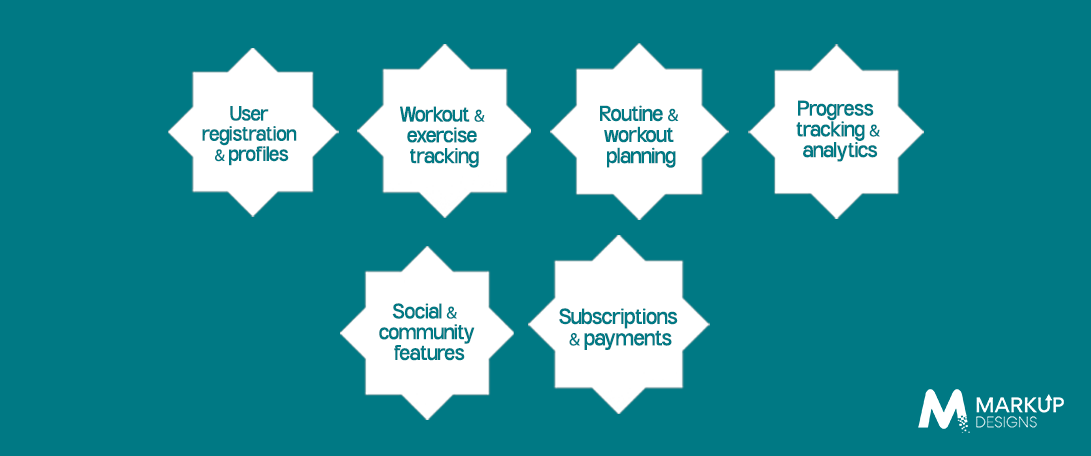
The features you include in a fitness app directly influence its development time, complexity, and overall budget. A basic app with user accounts, workout tracking, and routine planning will generally require less investment, while advanced analytics, social functionality, integrations, and payment systems can increase development requirements.
User registration & profiles
- Email, phone, or social login
- User profiles and fitness goals
- Personal information and preferences
- Fitness level and activity preferences
Workout & exercise tracking
- Exercise library
- Workout logging
- Sets, reps, weight, and duration tracking
- Calorie and activity tracking
- Exercise history
Routine & workout planning
- Custom workout plans
- Exercise scheduling
- Personalized routines
- Rest-day planning
- Workout reminders
Progress tracking & analytics
- Weight and body measurement tracking
- Performance history
- Progress charts and reports
- Goal tracking
- Fitness and activity analytics
Social & community features
- User communities and groups
- Workout sharing
- Likes, comments, and reactions
- Challenges and leaderboards
- Trainer or peer interaction
Subscriptions & payments
- Free and premium plans
- Subscription management
- In-app payments
- Payment history and invoices
- Coupons and promotional offers
The more functionality a fitness app includes, the more development, testing, integration, and maintenance it requires. Starting with a focused MVP Development containing essential features can help control the initial investment while leaving room to introduce advanced capabilities as the user base and business model grow.
Build Secure Healthcare Software for the Australian Market
Your healthcare software idea needs the right features, technology, and security from the start. Get expert guidance on development scope, cost, and the best approach for your project.

Technology Stack for Healthcare Software Development
The technology stack is very crucial when it comes to performance, security, scalability, and cost of developing healthcare software. Technology selection is influenced by the type of software to be created, platforms used, integrations, and expected load of users.
Frontend Technologies
React, Next.js, Flutter, and React Native could be used to develop responsive web and mobile applications in the healthcare sector.
Backend Technologies
Node.js, Python, and .NET are usually good choices for the development of APIs, business logic, user management, and other aspects related to healthcare.
Databases
PostgreSQL, MySQL, and MongoDB could be used to manage various types of healthcare data depending on application architecture and requirements.
Cloud Infrastructure
AWS, Microsoft Azure, and Google Cloud Platform provide options to host applications securely, store data, create backups, scale, and monitor application performance.
Security Technologies
Encryption, multi-factor authentication, role-based access control, secure APIs, and audit logging ensure the security of sensitive healthcare data.
The technology stack should be selected at the planning phase to incorporate security, integrations, scalability, and potential upgrades into the development process.
Healthcare Software Development Process
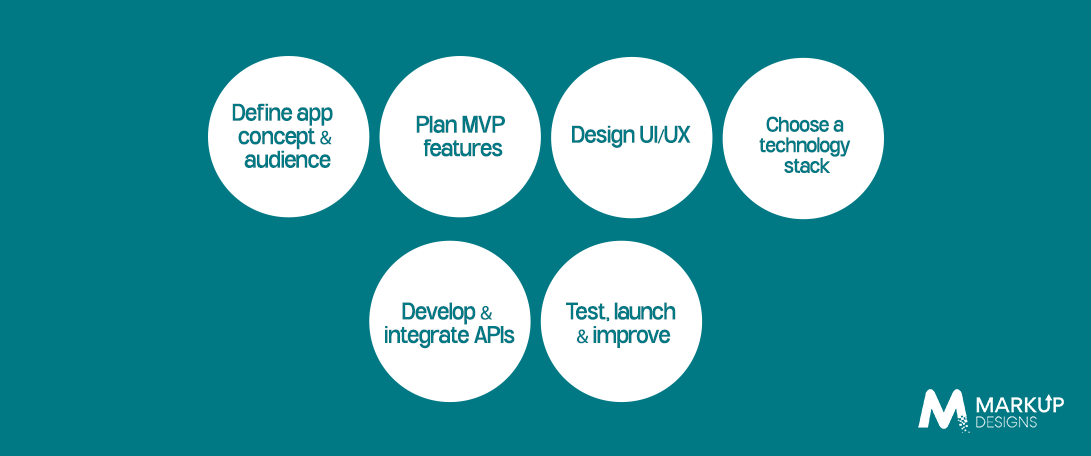
A step-by-step process of development assists in transitioning healthcare software from a conceptual stage to its fully-fledged and secure form. At each step, requirements of a technical and regulatory nature can be identified and dealt with in time, avoiding costly changes down the road.
Define App Concept & Audience
Start by defining the app’s purpose, target users, fitness goals, business model, and core value proposition. Understanding whether the app targets gym users, home exercisers, athletes, trainers, or general fitness users helps shape its features and user experience.
Plan MVP Features
Identify the essential features required for the first version, such as user profiles, workout tracking, exercise routines, progress monitoring, and payments. Prioritizing the MVP prevents unnecessary development costs while creating a foundation for future features.
Design UI/UX
Design intuitive user flows, wireframes, and interfaces that make activities such as starting a workout, recording progress, or viewing analytics simple. The design should account for different user journeys while maintaining a consistent experience across the app.
Choose a Technology Stack
Select the frontend, backend, database, cloud infrastructure management service, APIs, and other technologies based on the app’s functionality, scalability, security, and platform requirements. The technology stack should also support future integrations and feature expansion.
Develop & Integrate APIs
Develop the app’s frontend and backend while integrating required APIs and third-party services for payments, notifications, wearables, maps, fitness data, or other functionality. APIs allow the app to exchange data with external platforms and services.
Test, Launch & Improve
Test the app for functionality, performance, usability, security, and compatibility before launch. After deployment, monitor user feedback, app performance, and engagement data to identify issues and continuously improve the product.
How Long Does It Take to Develop Healthcare Software in Australia?
The development timeline depends on the software’s complexity, number of features, integrations, compliance requirements, and team size. A general timeline can be divided into three levels:
| Software Level | Estimated Timeline |
| Basic MVP | 4-6 months |
| Mid-Level Software | 6-10 months |
| Advanced/Enterprise Software | 10-16+ months |
The development of a simple MVP will take about 4 to 6 months, depending on which core features are included, such as scheduling, patient management, dashboards, and notifications.
A mid-level platform requires more time as it might contain telemedicine, payments, reporting, integration, and advanced patient management.
Development of an enterprise solution for healthcare will require 10 to 16 months or even more. Such aspects as complex integration, AI capabilities, big data migration, testing, and increased security can prolong the process.
One more point worth keeping in mind is that development and compliance should be planned at the same time. Delayed security compliance will add to development.
How to Reduce Healthcare Software Development Costs
Healthcare software may involve a considerable cost, but proper planning will help you keep the budget while making sure that security and quality standards are not compromised.
Start with an MVP
Firstly, implement essential features and introduce more advanced functionalities in future development stages.
Prioritise core features
Differentiate between critical features that are necessary for your healthcare software and features that can be implemented after launch.
Reuse proven APIs
Utilize already proven third-party APIs to save development time for other things.
Plan integrations early
In order to prevent additional costs caused by architectural adjustments, identify required integrations during the planning phase.
Choose the Right Technology
Select technologies depending on their scalability, security, and other important factors, not just because they are trendy at the moment.
Build for Scalability
Modular architecture enables adding new features and integrations one by one rather than starting all over again.
How Does Healthcare Software Make Money?
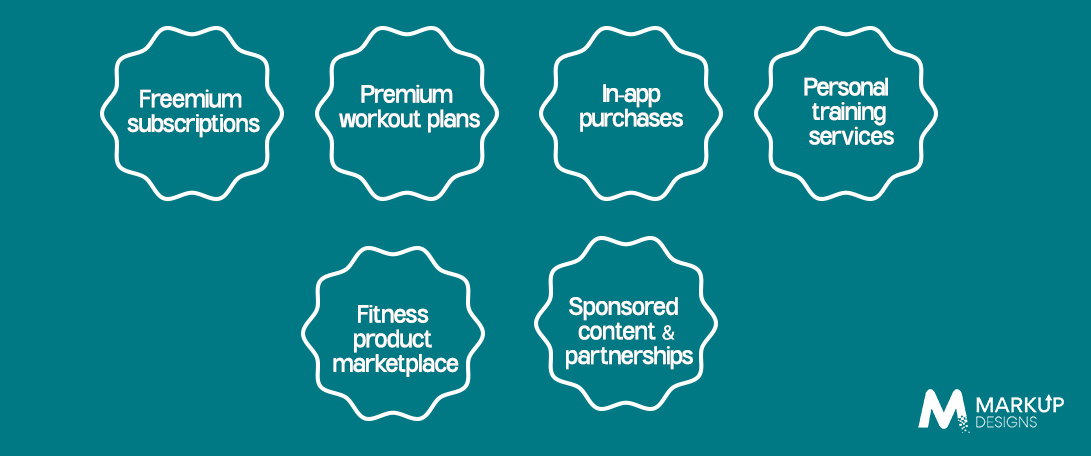
Healthcare software can generate revenue through a combination of subscriptions, premium services, consultations, transactions, and strategic partnerships. The right monetization approach depends on the software’s target audience, core functionality, and healthcare services offered.
Freemium subscriptions
Offer essential features for free while charging users or healthcare providers for advanced features, higher usage limits, premium tools, or additional services.
Premium plans
Generate revenue by offering paid features such as personalized care plans, advanced health reports, remote monitoring, specialist access, or other value-added services.
In-app purchases
Allow users to make payments for consultations, appointments, prescriptions, tests, or other healthcare services directly through the platform while generating revenue through service or transaction fees.
Telehealth consultations
Connect patients with doctors or healthcare professionals for virtual consultations and charge patients directly or earn a commission from each completed consultation.
Product marketplace
Create a marketplace where users can discover and purchase healthcare-related services, products, diagnostics, or other offerings, with the platform earning a commission on eligible transactions.
Sponsored content & partnerships
Partner with relevant healthcare brands, pharmacies, laboratories, medical providers, or wellness companies to generate revenue through sponsored content and commercial partnerships, subject to applicable privacy and advertising requirements.
Why Choose Markup Designs for Healthcare Software Development?
At Markup Designs, companies get to develop robust, scalable, and user-friendly software for healthcare solutions that match their needs. The Markup Designs team consists of experts with skills in healthcare technology, artificial intelligence, cloud services, web, and mobile software development to convert healthcare concepts into tangible software solutions.
The whole process from requirement analysis and UI/UX design to development, integration, testing, deployment, and aftercare, can be handled by the same team. Markup Designs pays attention to secure architecture, data security, API integration, and scalable infrastructure development for growing healthcare platforms.
Markup Designs has over 14 years of technology experience, over 200 experts, and experience working with over 500 companies, making it capable of assisting healthcare organizations in developing digital solutions.
Have a Healthcare Software Idea in Mind?
From MVP planning to a complete healthcare platform, the right development strategy can help you control costs while preparing your software for future growth.

Conclusion
Healthcare applications can vary in price from AUD 70,000 to AUD 700,000+, depending on their level of complexity, functionality, integrations, security, and development period.
A basic MVP could start with basic functions such as patient scheduling software, appointment booking, dashboards, and notifications. More complex products may need telehealth, electronic health record systems, AI, analytics, payment systems, etc.
Development price is not only related to the coding process. UI/UX design, security, testing, compliance, cloud-based infrastructure, AI integration services, and further support add to the total amount of money needed to develop an app.
That is why proper product scoping before starting development is crucial. The way out is to start with an MVP, focus on key features, integrate third-party applications in advance, and use a proper technology stack.
FAQs
1. How much does it cost to build a healthcare MVP?
A basic healthcare MVP can cost approximately AUD 70,000-150,000 and may take around four to six months to develop, depending on the scope.
2. What factors affect healthcare software development costs?
The main factors include software complexity, feature requirements, UI/UX design, integrations, security, compliance requirements, technology choices, team expertise, testing, and ongoing maintenance.
3. Does AI increase healthcare software development costs?
Yes. AI features such as medical documentation, chatbots, voice processing, predictive analytics, and workflow automation can increase development costs because they require additional technologies, integrations, testing, and infrastructure.
4. What compliance requirements should healthcare software consider in Australia?
Healthcare software may need to address requirements related to the Privacy Act 1988, Australian Privacy Principles, healthcare data protection, consent, access controls, and auditability. Specific requirements depend on the software, users, data, and integrations involved.
5. How can healthcare software development costs be reduced?
Starting with an MVP, prioritising essential features, using proven APIs, planning integrations early, selecting the right technology stack, and using a scalable architecture can help control development costs.
Author's Perspective
Healthcare software development requires more than a strong feature list. Security, usability, integrations, scalability, and compliance need to be considered from the planning stage itself. A clear MVP scope can help organisations understand their initial investment and avoid unnecessary development work. As the platform grows, advanced features such as AI, analytics, telehealth, and automation can be introduced based on actual user needs. A well-planned development approach can therefore create a stronger foundation for long-term healthcare software growth in the Australian market.
Discuss Your Project NowAjit Kumar Jha
VP - Business Operations
Related Posts

How to Build Compliance Software for Australian Businesses:...

How Patient Scheduling Software Improves Healthcare Operations

Software Companies in Kuwait: Smart Choices for Long-Term...
Insights Are Valuable & Execution is Priceless
You’ve read about the digital future. Now, let’s build the infrastructure to take you there. Move your strategy from the page to the product.
Design Your Solution Now
Contact Us
Schedule The Appointment At Your Convenience Date And Time.
30 Min
Web Conference
Time Zone
Indian standard time (08:30pm)

Thanks For Getting In Touch!
You’ve Taken The First Step Toward Transforming Your Digital Presence. Our Experts Will Reach Out Shortly To Take It Forward.
Launch Your Dream Project
Provide a brief overview of your project, and our specialists will evaluate your requirements. We will connect with you to explore how the right digital solutions can help you launch faster.