

Brief
- Fitness apps have developed significantly past being merely step counters to create new business opportunities involving gyms, wellness brands, healthcare providers, insurance firms, and fitness startups.
- Companies can select various app models: workout ecosystem, nutrition apps, activity trackers, personal coach apps, and integrated wellness ecosystems.
- Users want personalized services that include: wearable device integration, tracking of progress, and interactive content that motivates them towards their long-term fitness objective(s).
- The cost of developing fitness applications will depend upon the degree of complexity of the application, the number of features within the app, any required interfaces/ integration with other systems, and the duration of expected usage of each application’s current and future versions.
- Fitness companies that provide user retention, create a remarkable user experience, and implement sustainable revenue/business models will produce successful fitness technology product solutions.
Fitness apps were primarily a method to document physical activity, like counting steps and tracking calories through a fitness tracker or tracking exercise. Today, they are an integral part of millions of user’s daily lives as they use them to develop an exercise program, achieve a health goal through physical activity, enhance their nutrition, recover after exercise, or as a technique to inspire themselves toward a particular long-term fitness objective.
The alterations in how the fitness technology space now considers fitness technology have shifted.
Digital fitness platforms that were once considered “nice-to-haves” are now seen as important business opportunities for many companies. Fitness brands, gyms, wellness companies, healthcare providers, health insurers, and startups are making significant investments in these digital products to build stronger relationships with their customers and establish new areas of revenue generation.
For those businesses entering this marketplace, it isn’t enough simply to launch an app. The primary aim of any fitness-related business should be to develop a product that holds value for users long after they first access it through download.
Factors Contributing to the High Demand for Fitness App
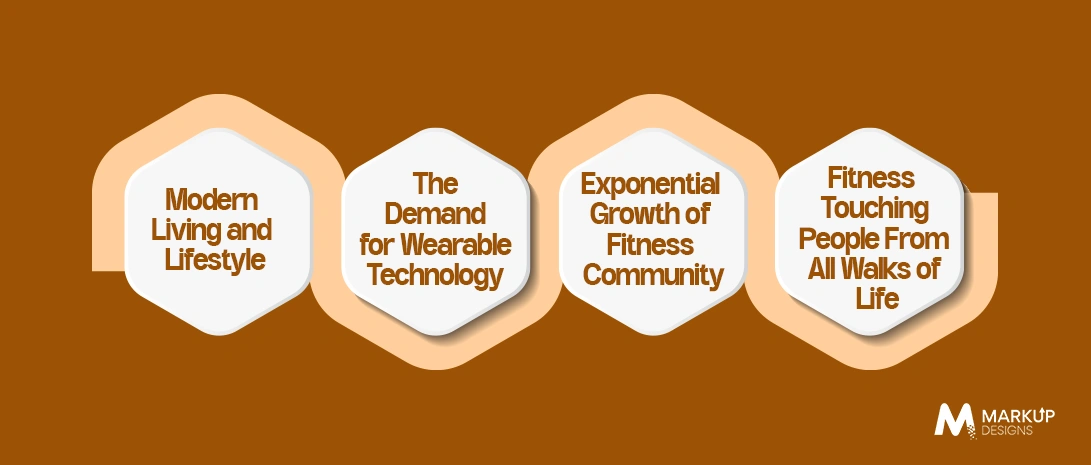
1. Modern Living and Lifestyle
The continued surge in popularity of fitness applications can be attributed to the modern way of life. People today are increasingly concerned with their physical and mental well-being while also wanting products that fit into their work commitments, family obligations, and hectic lifestyles. Mobile fitness applications allow for the ability to provide fitness support when and where it is needed most.
2.The Demand for Wearable Technology
The introduction of the wearable technology market has also been a significant contributing factor in sparking the growth and features of fitness applications. Devices such as smart watches and fitness bands collect data that includes heart rate, quality of sleep, daily activity levels, calories burned, etc., but the value of this information alone is limited. By providing users with a way to interpret this data and convert it into meaningful insights, mobile fitness applications increase the likelihood that they will use these devices over and over again.
3. Exponential Growth of Fitness Community
Another factor contributing to the growth of the fitness industry is the growing trend of hybrid fitness habits. Consumers are now moving away from relying on just one way to be fit. For example, a consumer might go to the gym a few days each week, do workouts at home on the weekend, keep track of their meals using a nutrition app, and use a smartwatch to track their activity throughout the day. These apps allow the user to connect all the different activities they are doing to stay active and healthy into one experience.
4. Fitness Touching People From All Walks of Life
Businesses also have opportunities to get involved with people who would not normally fit into a traditional fitness audience. Fitness applications today can provide fitness services to healthcare professionals, corporate wellness programs, sports organizations, rehabilitation centers, mental wellness programs, and companies focusing on healthy lifestyles. Due to the expanding markets for fitness technology, there continues to be a lot of investment coming from a number of different industries into this area.
Real-World Fitness App Success Stories and Key Business Takeaways
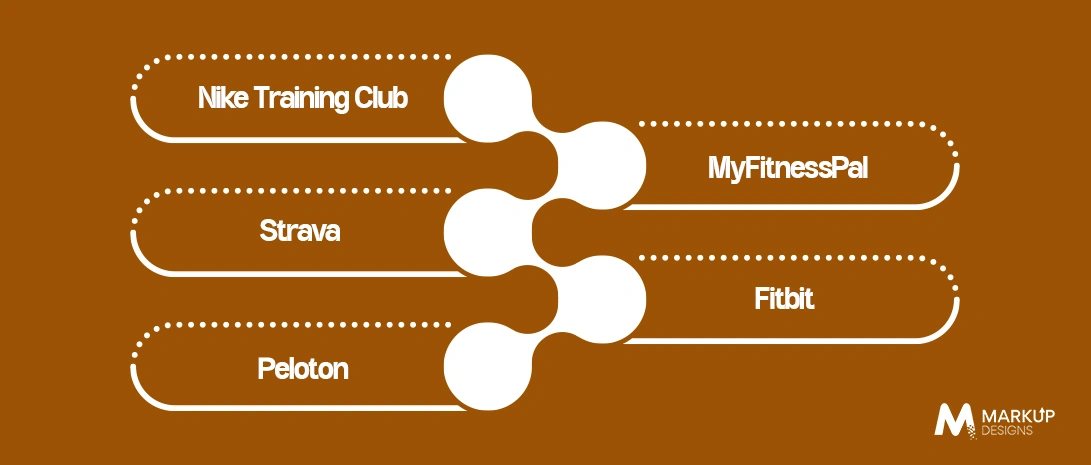
The best way to gain insight into what works within the fitness applications marketplace is to study companies that have already developed a base of loyal users. Each fitness application will serve a different purpose, but the most successful fitness applications are those that have excelled at addressing a singular need for their users before adding additional services and features.
1. Nike Training Club
The Nike Training Club brand has become one of the most respected fitness applications on the market today, thanks to its quality structured fitness programs created by certified fitness professionals.
The platform not only tracks user activity but also creates complete training journeys based on both their goals and fitness levels, making the experience more akin to working with a coach than with a typical fitness app.
Users often need help rather than just numbers, so there is much more value in using structured programs to provide them with guidance than there is in simply tracking exercise alone.
2. MyFitnessPal
MyFitnessPal’s approach has been to focus on nutrition and simplify food logging for users through an extensive, searchable food database. By using MyFitnessPal, users can understand their eating behaviours and therefore make wiser food choices.
There is a significant increase in long-term user loyalty if you can provide one solution that solves a significant problem, better than anyone else can.
3. Strava
Strava has changed the way people view fitness by transforming fitness-tracking into a social activity. Users can share their activities with each other, participate in challenges, compare their performance against others, and engage with other athletes. The social aspect of Strava is one of its strongest competitive advantages.
Community-based participation can be more effective than constantly adding new features to your solution.
4. Fitbit
Fitbit has earned its reputation by linking wearables to significant health data insights. Fitbit allows users to not only collect health-related data but also to understand the patterns in their data related to their sleep, physical activity, recovery, and overall well-being.
Data is not useful until it can be easily understood and acted upon by the user.
5. Peloton
Peloton demonstrated how community, content, and subscription services can function collectively. By offering classes with instructors, live interaction with members, and a thriving member community, they produced an experience that motivates users to come back often.
For the business as well as its members, a consistent level of engagement produces much more value than an app download that was done only once.
Taking all of these models into account, a key takeaway can be learned here. The most successful fitness apps may not necessarily have the most features. However, they are known for solving a real problem for their member or users, and providing sufficient value for members to return to them frequently.
Different Kinds of Fitness Applications
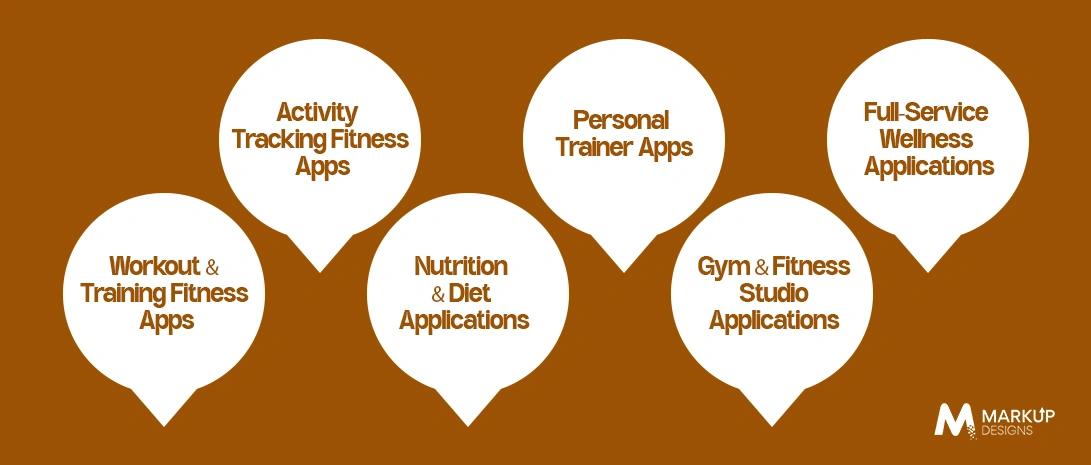
Companies should clarify the type of application they want to develop in order to establish an idea of how much development time will be required, and an estimate for the investment necessary to develop and deliver a mobile fitness application.
Workout & Training Fitness Apps:
These platforms focus on providing users with assistance to ensure that they are exercising properly. Examples include: guided exercise programs; instructional videos; schedules for workouts; exercise libraries; a method to track progress through workouts; and a means to receive personalized recommendations. This could include everything from a program for strengthening muscles to a HIIT (high-intensity interval training), yoga, or home workouts.
Activity Tracking Fitness Apps:
These applications allow users to track their movement & health metrics (e.g., steps taken, distance run, calories burned, heart rate, and quality of sleep). Activity tracking applications are often used in conjunction with a wearable device to promote healthy movement.
Nutrition & Diet Applications
Apps that cater to nutrition, such as those designed to assist individuals in tracking their diets through calorie counting, meal planners, nutrients, barcodes, hydration, and personalized dietary recommendations, are often utilized by individuals by combining with an exercise app for numerous health goals.
Personal Trainer Apps
Personal trainers can communicate directly with clients and set up personalised workout programs by using personal trainer applications, where users can set up virtual training sessions and track their progress from one centralised application. The continued growth of remote coaching has resulted in this trend of connecting trainers and clients through one app.
Gym & Fitness Studio Applications
Many gyms or fitness businesses have developed their unique gym or fitness studio application to enhance customers’ overall gym experiences; many of these applications provide multiple functions that include membership administration, class reservations, scheduling trainers, processing payments, tracking attendance, and communication with customers.
Full-Service Wellness Applications
Many companies are starting to move away from just fitness apps and are now building a complete wellness ecosystem that includes fitness, nutrition, sleep, meditation, habit tracking, and mental wellness into a single application. These types of solutions typically require a more considerable investment; however, they often create a more engaged user experience by allowing users to engage with multiple areas of their health, rather than one or two activities.
The days of using a basic workout tracking app and being satisfied are gone. Today’s fitness consumers expect their apps to not only motivate them but also assist their ability to stay on track with their health goals, and help them see their progress along the way. If an application is either too challenging to use or does not give immediate value to the user, the user will likely abandon it and switch to a competitor.
Advanced Features Helping Fitness Apps Stand Out

In recent years, artificial intelligence has made a significant impact on the fitness industry. Traditional programs provide static workout plans; current programs leverage algorithms to analyze user behaviours in order to suggest adjustments based on activity level, frequency of use, recovery patterns, and progress. As a result of these technological advancements, each user’s experience will feel more personalized and relevant than before.
Another expectation for most customers is device integration into exercise software. Smartwatches and fitness trackers are already part of many consumers’ daily activities, and the ability to synchronize data seamlessly between these devices and a fitness app allows users to access the complete set of both health and performance data from the same source.
Video continues to serve as a major driver of engagement throughout the fitness industry. From on-demand workout classes, to live classes, to basic training programs, to tutorial sessions provided by experts, video creates a more interactive experience for users, while expanding potential sources for subscription revenue.
Community-based features continue to become more valuable as well. The use of group challenges, the ability to post on social networks, community discussion, and support groups are helping users stay motivated.
Fitness App Development Cost in 2026
The estimated cost for developing the most basic types of fitness apps (which have features like registration, tracking workouts, tracking progress, and limited functionality) will be between $30k and $80k. The development of a mid-tier app (that has subscription management, integration with wearable devices, personalized recommendations, and advanced analytics) will generally cost between $80k and $180k. The total cost for developing an advanced fitness-related solution (that will utilize AI-powered coaching, have live streaming capabilities, have ways to build a community of users, offer real-time performance tracking, and have enterprise-grade infrastructure) may exceed $400k in total development cost.
Development costs are only one part of the return-on-investment equation. The primary question that needs to be answered is whether the app will be able to create ongoing revenue and value following its launch.
- Subscription-based models remain the most utilized in the fitness industry. Many successful apps provide customers access to premium workouts, advanced analytics, personalized fitness and nutrition plans, and other content via either monthly or annual subscriptions. The benefit of a subscription-based model is the reliable revenue stream created through continued purchases.
- Offering users premium services is also a very lucrative strategy. Users may be amenable to purchasing additional services, such as one-on-one coaching or customized training/regimen plans, dietary advice, or specialized training programs/ goals.
- Another opportunity for revenue generation with developing fitness apps is through Corporate Employee Wellness Programs. Numerous organizations have started investing into employee health/wellness programs and therefore require digital solutions that promote an overall healthy lifestyle. Fitness applications that cater to this market create additional revenue streams in addition to selling individual consumer products.
- In addition to selling consumer products, companies can generate income using affiliate relationships, sponsoring content/advertisements, brand partnerships, and/or in-app purchases. Companies that have successfully built platforms typically utilize very few (“if any) methods of monetization through only one revenue stream. Each will rely on multiple sources of revenue-generating activation.
Trends Affecting the Future of Fitness App Development

The fitness application technology market continues to grow rapidly; thus, there are high expectations for continued growth and new innovation over the next few years.
One of those anticipated future trends for which we will continue seeing numerous examples of continued development is the use of personalization to differentiate yourself from your competition. Local companies (destination/fitness facility) will increasingly have no algorithm/process for offering an overall recommended workout program based upon user habits, activity level, recovery habits, and goals (it will adapt over time).
The role of artificial intelligence will increase in this transformation and will be transformed from a simple recommendation tool to a virtual fitness coach providing real-time direction, individual support for exercising throughout your fitness success, and continuous guidance while you work on developing a habit of fitness.
The use of computer vision technology in fitness apps will allow the use of smartphone cameras to monitor your movements and the form used to perform a given exercise, as well as provide suggestions to improve your movements during your workout session. This suggests that you can exercise with better accuracy while decreasing your chances of being injured.
The increasing impact of collaborative and immersive technologies on the fitness industry through methods such as augmented and virtual reality is still in its infancy, but it will continue to expand its influence by enabling more engaging ways for people to experience their workout by merging fitness with an interactive digital environment.
In addition to physical fitness, we can expect that mental wellness will be taken into consideration when developing fitness platforms. As consumers continue to demand products that support all facets of well-being and not just fitness, we will likely find more commonality within fitness applications that provide information about sleep quality, mindfulness, stress reduction, and recovery.
Partner With Markup Designs
In order to build a successful fitness app, businesses must do so much more than simply possess the technical know-how to build a fitness application. Successful fitness applications require businesses to have a deep understanding of their users, the current marketplace, their objectives, and a long-term strategy for their products.
At Markup Designs, we assist companies by transforming their ideas into digital products that can be expanded on and become progressively growing. Our team works closely with businesses to gain an understanding of what their objectives are, to identify where there are gaps within the marketplace, and to develop affordable solutions that will give measurable value back to those same businesses.
Whether you are an early-stage company looking to validate a new idea or an already-established organization wanting to expand your digital presence, Markup Designs provides you with end-to-end support throughout the development life cycle.
Ready to Build the Next Big Fitness App?
Turn your fitness app idea into a scalable, user-focused digital product with expert development and future-ready technology.

Conclusion
Companies will need to have a clear understanding of their target market, create a long-term business model that will generate revenue for the company, and define the overall Product User Experience and Customer Experience in a manner that will actually help customers achieve their objectives.
While many of the top fitness apps may be very complex, most successful fitness apps create consistent value for their user and have become part of their daily routine. As the demand for digital wellness products continues to surge, companies that develop products focused on the user experience, are personalized, and promote long-term engagement will be best positioned to succeed in an increasingly competitive environment.
FAQs
1. How much will it cost to build a fitness app by 2026?
A basic-level fitness app will cost between $30,000 and $400,000 for an advanced-level application that has artificial intelligence capabilities, wearables, live streaming, and community functions. The overall amount invested will depend on scope, complexity, and business needs.
2. What is the average development time for a fitness app?
Development time is heavily reliant on the size and complexity of the project. A simple app could take 3-5 months to develop, while larger apps with more complicated functionality typically take 9-18 months or longer.
3. What are some of the most important features to include in a Fitness app?
The most popular and successful fitness apps typically have user profiles, tracking capability, goal management, progress tracking, notifications, payment processing, and basic data analytics.
Depending on the objectives of the businesses and the needs of their potential customers, there is room to add more features to fitness apps.
4. Does the wearable feature need to be integrated into your fitness application?
Adding a wearable technology integration to a fitness app is helpful for many people; however, most fitness applications do not need this option. Yet because of how popular smartwatches and fitness trackers have become and how many people rely on these devices daily, by allowing users to connect these devices to the app, you can increase user engagement and retention.
5. What is the best way to monetize a fitness app?
Many fitness applications are monetized through subscriptions; however, many companies also monetize by adding features such as premium content, coaching, corporate wellness programs, affiliate marketing, or in-app purchases.
Author's Perspective
One of the primary misconceptions about creating fitness apps is the belief that more features equal more successful apps. Customers do not generally use a fitness application due to the multitude of features available, but instead, they will use a fitness app because of how well it helps them achieve their goals.
Fitness apps are built around habits, repetition, and motivation. The technology you use to support your fitness goals should make achieving those goals easier for you, not more complicated. Companies tend to spend their time comparing features instead of genuinely understanding why consumers choose to continue using the fitness application they’re currently using.
In the next few years, personalization is projected to become a key competitive differentiator across all industries. Organizations that are able to develop an understanding of each individual’s preferences and then tailor their platforms to meet those needs will create long-lasting relationships with their clients, leading to increased loyalty and retention.
For businesses that are coming into the market, there remains a great potential for success. Companies that prioritize delivering and creating long-term value to solve real problems will have the best chances as the industry continues to change.
Discuss Your Project NowJupinder Singh Arora
Founder and CEO
Related Posts
Complete Fitness App Development Solution: Features, Cost and...
Insights Are Valuable & Execution is Priceless
You’ve read about the digital future. Now, let’s build the infrastructure to take you there. Move your strategy from the page to the product.
Design Your Solution Now
Contact Us
Schedule The Appointment At Your Convenience Date And Time.
30 Min
Web Conference
Time Zone
Indian standard time (08:30pm)

Thanks For Getting In Touch!
You’ve Taken The First Step Toward Transforming Your Digital Presence. Our Experts Will Reach Out Shortly To Take It Forward.
Launch Your Dream Project
Provide a brief overview of your project, and our specialists will evaluate your requirements. We will connect with you to explore how the right digital solutions can help you launch faster.