

In Brief
- In Australia, compliance software enables companies to aggregate all their compliance requirements, policies, audits, risks, and workflows in a single place.
- Services may include functions such as compliance monitoring, alerts, risk management, auditing, reporting, document management, and access control with regulation-wise access rights.
- The cost of creating compliance software comes down to an array of variables such as which features you would like to include, complexity, integrations required, what security level will be necessary, whether AI technologies will be used, and what software development methodology is being followed.
- Companies can reduce the workload, obtain better visibility when it comes to compliance, simplify audits, and greatly reduce compliance risks with compliance software.
- Building a solution that complies with all regulations and requirements of a specific industry is essential to ensure data security throughout the process.
Compliance is no longer something that Australian companies can do efficiently. As regulatory obligations become more complicated, the need to find an adequate mechanism of keeping track of them and performing important risk and audit management functions emerges.
Nonetheless, creating compliance software intended for the Australian market involves more than just coming up with a checklist and creating a reporting dashboard. To attract the users of a specific compliance program, it must be created specifically to meet the requirements and needs of companies in a given field of operations, taking into consideration their regulatory requirements, specifics of their workflows, security needs, and needs for integration of the compliance platform with other systems.
We will further explain how to create compliance software for Australian businesses, including the main features of the potential solution, features of the development process, important technologies in compliance software development, costs of developing compliance software for Australian companies, and benefits it provides.
What Is Compliance Software and Why Do Australian Businesses Need It?
Compliance software is a system that supports companies in complying with laws and regulations, internal rules, audits, risk assessment, and documentation. Instead of using spreadsheets and emails, companies can use compliance programs to track their obligations, who will be responsible for different tasks, how compliance goes through time, and maintain their audit-ready documentation.
For Australian businesses, compliance software can be particularly valuable as regulatory requirements vary across industries and continue to evolve. A well-designed platform helps businesses stay organised, identify compliance gaps earlier, improve accountability, and respond to audits or regulatory changes more efficiently.
What Types of Compliance Software Can Australian Businesses Build?
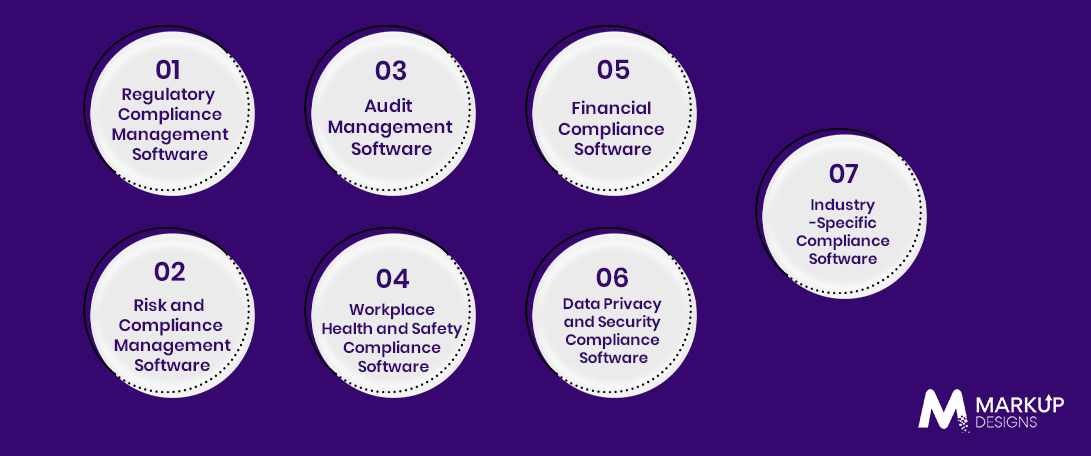
The choice of compliance software depends on the type of industry, business structure, and what standards must be met. It is possible to buy the following software:
Regulatory Compliance Management Software
This kind of program allows a company to keep an eye on its obligations, deadlines, and the actions it has to take to comply with the law.
Risk and Compliance Management Software
Risk management and compliance software integrates risk recognition, risk analysis, risk monitoring, and compliance processes into a single flow, providing a full picture of risks a company faces.
Audit Management Software
This software enables a company to prepare for audits, manage documentation, assign responsibilities for compliance failures, and keep archives of audit documentation, etc.
Workplace Health and Safety Compliance Software
This type of software assists organizations with the management of safety activities, work incidents, workplace inspections, training, and procedures in the workplace, ensuring compliance with standards of safety.
Financial Compliance Software
Financial compliance software enables finance companies to comply with the requirements of law by helping these companies monitor regulations and reporting duties.
Data Privacy and Security Compliance Software
Such software helps companies with a large number of monitoring duties and protects data.
Industry-Specific Compliance Software
Businesses can also build customised platforms around sector-specific requirements, such as healthcare, construction, finance, education, or energy.
What Are the Benefits of Compliance Software for Australian Businesses?
A well-designed compliance platform can turn compliance from a largely manual activity into a more structured and measurable process.
Centralise Compliance Activities
Bring policies, obligations, risk records, audits, documents, and compliance tasks into one system for easier management.
Reduce Manual Compliance Work
Automated workflows, reminders, and reporting reduce repetitive administrative work and minimise dependence on spreadsheets.
Improve Regulatory Visibility
Dashboards and compliance tracking give teams a clearer view of current obligations, outstanding tasks, and potential gaps.
Minimise Compliance Risks
Regular monitoring and risk assessments help businesses identify issues earlier and take corrective action before they become larger problems.
Simplify Audits and Reporting
Organised records, evidence, audit trails, and automated reports make it easier to prepare for audits and regulatory reviews.
Strengthen Data Security
Security controls such as encryption, access restrictions, and activity logs help protect sensitive compliance information.
Improve Accountability Across Teams
Businesses can assign compliance responsibilities, track progress, and see who is responsible for specific actions.
Scale Compliance Operations With Business Growth
A scalable platform can support growing teams, new locations, additional regulations, and more complex compliance requirements without increasing manual workload at the same rate.
What Features Should Compliance Software Have?
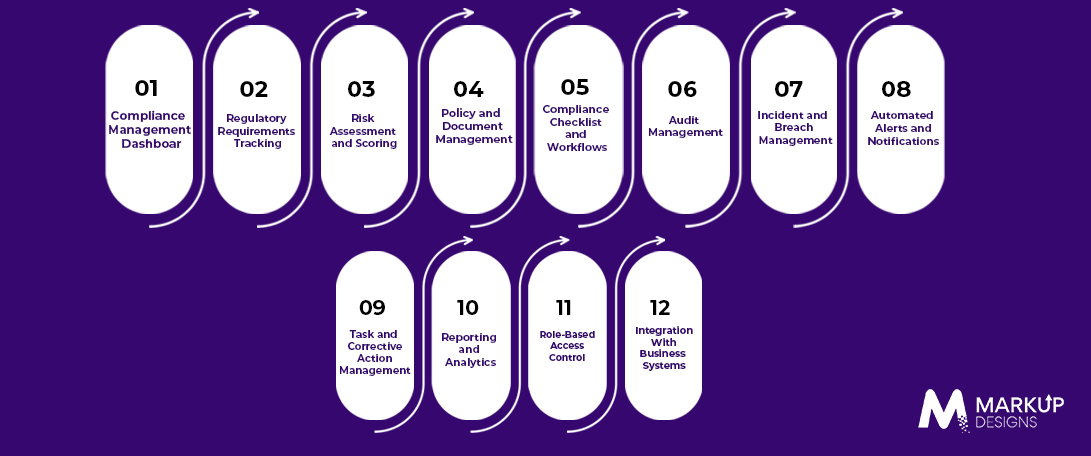
The feature set should reflect the organisation’s compliance model, but several capabilities form the foundation of a robust platform.
Compliance Management Dashboard
Provides a central view of compliance status, upcoming deadlines, open issues, risks, and outstanding actions.
Regulatory Requirements Tracking
Allows businesses to record regulatory obligations, monitor changes, and track whether required actions have been completed.
Risk Assessment and Scoring
Helps teams identify risks, evaluate their severity, assign scores, and prioritise mitigation activities.
Policy and Document Management
Provides a central repository for policies, compliance documents, evidence, and related records with controlled access and version tracking.
Compliance Checklist and Workflows
Creates standardised workflows and checklists so teams can complete recurring compliance activities consistently.
Audit Management
Supports audit planning, evidence collection, findings, corrective actions, and follow-ups within one system.
Incident and Breach Management
Allows teams to record incidents or breaches, investigate them, assign actions, and maintain an activity trail.
Automated Alerts and Notifications
Sends reminders for upcoming deadlines, overdue actions, policy reviews, audits, and other compliance activities.
Task and Corrective Action Management
Helps teams assign, monitor, and close compliance-related tasks and corrective actions.
Reporting and Analytics
Generates reports on compliance performance, risks, incidents, audits, and outstanding obligations.
Role-Based Access Control
Restricts access to sensitive information based on user roles, responsibilities, and organisational permissions.
Integration With Business Systems
Connects the compliance platform with existing HR, ERP, CRM, document management, accounting, and other business systems.
What Advanced Features Can Make Compliance Software More Powerful?
In addition to basic compliance management, modern technologies facilitate the automation of the compliance monitoring process and the efficient use of compliance data.
Compliance Monitoring Using Artificial Intelligence
Artificial Intelligence can process compliance data and uncover anomalies, weaknesses in documents, and areas needing attention.
Automatic Detection of Changes in Legislation
The tool scans relevant legislative documents and alerts teams if changes might affect their compliance responsibilities.
Predictive Risk Assessment
Artificial Intelligence and analytics can discover trends in previous compliance data to assist companies in forecasting possible threats.
Analysis of Company Policies and Documents with the Use of Artificial Intelligence
Artificial Intelligence can check compliance documents and policies, spot the information that is missing, and point out inaccuracies.
Automated Reporting on Compliance
The system can collect information and produce compliance reports without involving teams in this task.
Calculating Risk Score of Compliance
Advanced analytics can assess and update risk scores based on incidents, controls, assessments, etc.
Dashboards with Real-Time Information on Compliance
Real-time dashboards provide managers with an immediate view of compliance performance, potential risks arising, incomplete actions, and urgent issues.
What Australian Compliance Standards Should the Software Support?
Compliance software should be built around the regulations and standards that are relevant to the target business and industry. The platform may need to support requirements related to privacy, consumer protection, workplace safety, information security, and other industry-specific obligations.
Privacy Act 1988 and Australian Privacy Principles
For businesses handling personal information, the software should support processes around data collection, access, use, storage, and protection in line with applicable privacy requirements.
Australian Consumer Law
Businesses dealing with consumers may need compliance workflows for obligations related to product information, consumer rights, complaints, and business practices.
Work Health and Safety Requirements
For relevant industries, the platform can help manage safety policies, inspections, incidents, training, risk assessments, and corrective actions.
ISO 27001 and Information Security
Organisations handling sensitive information can use the software to manage security controls, policies, risk assessments, evidence, and audit activities aligned with ISO 27001.
SOC 2 Compliance
For technology and service businesses, compliance software can help organise controls, evidence, access records, monitoring, and other activities required for SOC 2 readiness.
Industry-Specific Regulatory Requirements
Healthcare, finance, construction, education, energy, and other sectors may have additional regulatory obligations. These requirements should be incorporated based on the software’s intended users and use cases.
Important: Compliance requirements are not one-size-fits-all. The software should be designed around the specific regulations, standards, and industry obligations applicable to its users rather than attempting to cover every Australian regulation.
How Much Does It Cost to Build Compliance Software in Australia?
The cost of building compliance software can range from $30,000 to $150,000+, depending on the platform’s complexity, feature set, integrations, security requirements, AI capabilities, and development approach. A basic compliance tracking platform will require significantly less investment than an enterprise solution with advanced automation, AI, multiple integrations, and complex access controls.
Basic Compliance Software Development Cost
A basic platform with compliance tracking, dashboards, document management, checklists, notifications, and reporting can typically cost around 30,000–60,000.
Mid-Level Compliance Software Development Cost
A more advanced solution with risk management, audit workflows, integrations, role-based access, analytics, and automated reporting may cost around 60,000–100,000.
Enterprise Compliance Software Development Cost
Enterprise-grade platforms with AI capabilities, extensive integrations, advanced security, custom workflows, and multi-tenant architecture can cost 100,000–150,000+.
Factors That Influence Compliance Software Development Cost
The final development cost depends on several factors, including:
- Number and complexity of features
- UI/UX and platform requirements
- Third-party integrations
- AI and automation capabilities
- Security and compliance requirements
- Cloud infrastructure
- Data migration requirements
- Testing and quality assurance
- Development team location and expertise
- Ongoing maintenance and regulatory updates
How to Build Compliance Software for Australian Businesses?
Building compliance software requires more than developing a collection of compliance features. The development process should connect regulatory requirements with actual business workflows and create a platform that can adapt as those requirements change.
Define Compliance Requirements and Business Objectives
Identify the compliance problems the software needs to solve, target regulations, business objectives, and the outcomes users expect from the platform.
Identify Target Users and Compliance Workflows
Map the roles that will use the software and understand how they currently manage compliance tasks, approvals, audits, incidents, and reporting.
Map Regulatory and Industry Requirements
Translate relevant Australian regulations and industry standards into specific software requirements, workflows, controls, and reporting needs.
Plan the Software Architecture
Choose an architecture that supports scalability, security, integrations, data management, and future regulatory or feature changes.
Design the Compliance Management Interface
Create an intuitive interface that makes complex compliance information easier to understand, monitor, and act upon.
Develop Core Compliance Features
Build essential capabilities such as compliance tracking, risk management, document management, audit workflows, notifications, reporting, and user management.
Integrate Third-Party Systems and APIs
Connect the platform with existing HR, ERP, CRM, accounting, document management, and other systems to avoid isolated compliance data.
Implement Security and Access Controls
Add encryption, authentication, role-based permissions, audit trails, and other security measures appropriate for the sensitivity of compliance data.
Test Compliance Workflows and System Performance
Test the platform for functionality, security, performance, usability, integrations, and the accuracy of compliance workflows.
Deploy and Monitor the Software
Deploy the platform using appropriate cloud infrastructure and continuously monitor performance, security, errors, and user activity.
Maintain and Update Regulatory Requirements
Regular updates are essential to keep the platform aligned with regulatory changes, new standards, evolving business requirements, and emerging security risks.
What Technology Stack Can Be Used to Build Compliance Software?
The technology stack should be selected according to the platform’s scalability, security, integration, and performance requirements.
Frontend Technologies
React, Angular, or Vue.js can be used to build responsive dashboards and compliance management interfaces.
Backend Technologies
Node.js, Python, Java, or .NET can support secure backend services, business logic, workflows, and integrations.
Database Technologies
PostgreSQL, MySQL, MongoDB, or other suitable databases can be used depending on the application’s data structure and scalability requirements.
Cloud and DevOps
AWS, Microsoft Azure, or Google Cloud can support hosting, deployment, monitoring, backups, and scalable infrastructure.
AI and Machine Learning
Python-based AI and machine learning frameworks can support risk analysis, document processing, regulatory monitoring, and intelligent automation.
Security Technologies
Encryption, identity management, authentication frameworks, secrets management, and security monitoring tools help protect sensitive compliance information.
APIs and Third-Party Integrations
REST APIs, webhooks, and secure integration frameworks can connect the platform with existing business applications and external data sources.
What Security Measures Should Compliance Software Include?
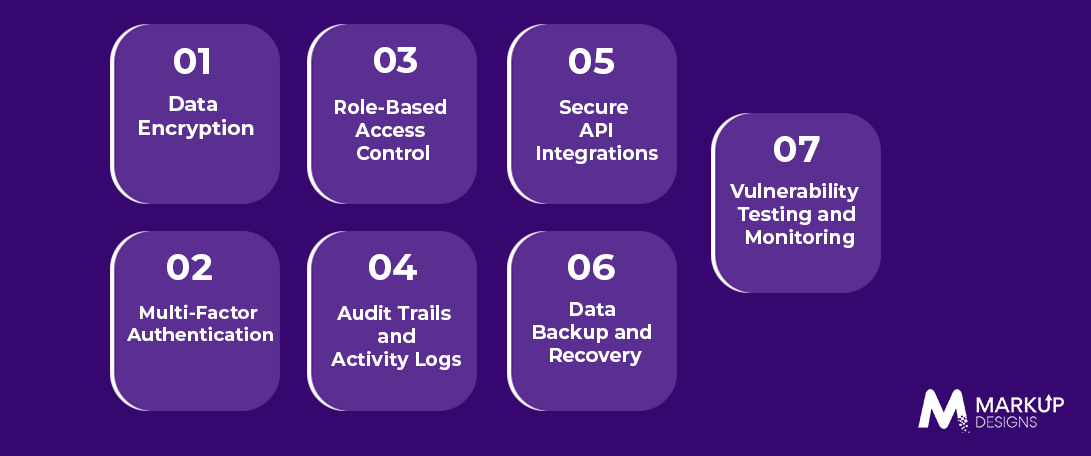
Because compliance platforms may handle sensitive business, employee, customer, and regulatory information, security needs to be considered throughout development rather than added at the end.
Data Encryption
Encrypt sensitive information both during transmission and while stored to reduce the risk of unauthorised access.
Multi-Factor Authentication
Require additional verification for user accounts, particularly for administrators and users accessing sensitive compliance information.
Role-Based Access Control
Ensure users can access only the information and functions relevant to their responsibilities.
Audit Trails and Activity Logs
Record important user actions, changes, approvals, and system events to support accountability and investigations.
Secure API Integrations
Protect integrations through authentication, authorisation, secure data transfer, and appropriate API access controls.
Data Backup and Recovery
Maintain secure backups and recovery mechanisms to reduce the impact of data loss, system failures, or security incidents.
Vulnerability Testing and Monitoring
Regular security testing and continuous monitoring can help identify vulnerabilities before they become larger risks.
What Challenges Should Businesses Consider When Building Compliance Software?
Compliance software can become difficult to maintain if the platform is designed only around today’s requirements. Businesses should consider regulatory changes, integrations, security, usability, and scalability from the beginning.
Keeping Up With Regulatory Changes
Regulations can change over time, requiring updates to the platform’s workflows, controls, and reporting capabilities.
Integrating Existing Business Systems
Connecting multiple systems can create technical and data consistency challenges, particularly for organisations with older software.
Protecting Sensitive Compliance Data
Compliance platforms can hold highly sensitive information, making strong security architecture and access controls essential.
Managing Complex Compliance Workflows
Different departments and industries may follow different approval, assessment, reporting, and audit processes, making workflow flexibility important.
Ensuring User Adoption
A technically capable platform can still fail if employees find it difficult to use. Simple navigation and intuitive workflows are critical for adoption.
Scaling the Platform
The architecture should support increasing users, data volumes, regulations, integrations, and business locations without compromising performance.
How Can Businesses Calculate the ROI of Compliance Software?
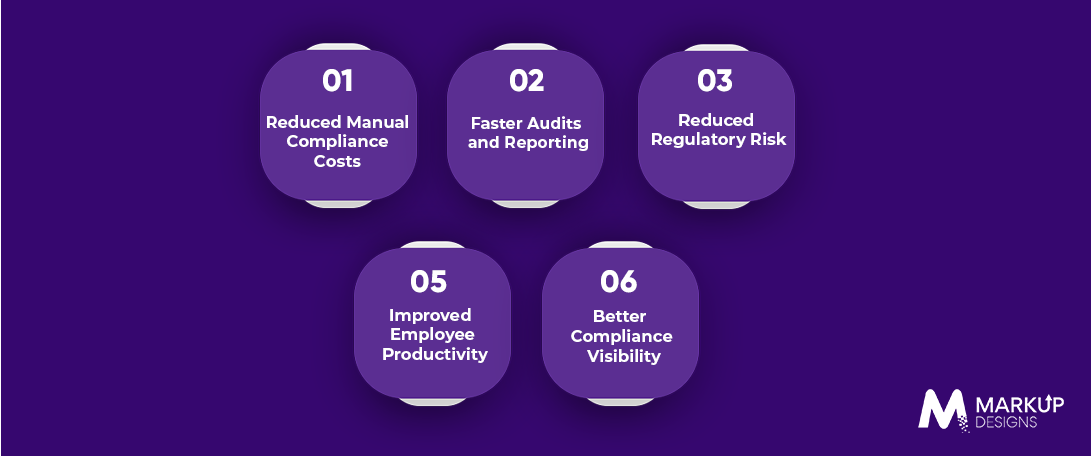
The ROI of compliance software should not be measured only through direct cost savings. Businesses should also consider the time saved, improved visibility, reduced compliance exposure, and operational efficiency created by the platform.
Reduced Manual Compliance Costs
Automation can reduce the time employees spend on repetitive tracking, documentation, reporting, and follow-ups.
Faster Audits and Reporting
Centralised records and automated reports can reduce the effort required to prepare for audits and regulatory reviews.
Reduced Regulatory Risk
Better monitoring and early identification of compliance gaps can help businesses reduce the likelihood and potential impact of compliance issues.
Improved Employee Productivity
Automating routine compliance tasks allows employees to focus more time on higher-value operational activities.e
Better Compliance Visibility
Real-time dashboards and analytics give management a clearer understanding of compliance performance, outstanding actions, and emerging risks.
Why Choose Markup Designs to Build Compliance Software in Australia?
Creating compliance software entails a partner who has an understanding of both operational and technical aspects of compliance. Markup Designs can take care of the conversion of compliance requirements into a digital solution that is safe, scalable, and suited for business purposes. Our team is capable of creating solutions based on specific workflows and industry requirements as well as core compliance processes and integrations. Regular assistance and support are also provided for you to ensure that the software is adaptable to changes in business needs and changes in regulations.
Build Compliance Software for the Australian Market
Build a secure and scalable compliance platform designed around your business requirements and Australian regulatory needs. From core compliance workflows to AI-powered automation and third-party integrations, Markup Designs can help turn your compliance vision into a reliable digital solution.
Build Compliance Software for the Australian Market
Build a secure and scalable compliance platform designed around your business requirements and Australian regulatory needs. From core compliance workflows to AI-powered automation and third-party integrations, Markup Designs can help turn your compliance vision into a reliable digital solution.

Conclusion
The use of compliance software can allow Australian companies to advance beyond tracking compliance manually and to gain more efficiency in managing regulatory obligations, risks, audits, documents, and reporting. Nevertheless, the software’s effectiveness depends on how well the solution meets the industry and company requirements. Businesses should focus on compliance management tools that are capable of addressing real operational challenges rather than introducing innovative technology just for the sake of it.
When developing a compliance platform, it is advisable to focus on the requirements of the legislation and business first, and then develop a scalable architecture solution implementing security and adaptability features throughout the process.
FAQ
1. How much does a compliance software cost in Australia?
Compliance software development is expected to cost $30,000 to $150,000+, based on functions performed, existing integrations, security requirements, AI features, and the amount of complexity involved. A simple compliance platform will require less money from a business than an advanced solution with necessary automations and integrations.
2. What is involved in the process of creating compliance software?
Developing the simplest compliance software solution might take about three to five months; however, creating a more sophisticated solution with different integrations will take about six to 12 months or even longer. The amount of time required to develop compliance software depends on the degree of complexity and size of the software.
3. What are the standard features to be included in compliance software?
Essential features could be compliance monitoring, risk assessment, data management, audit management, automated alerts, incident management, reporting, access control, and different integrations. Advanced software products may offer AI-based monitoring, predictive risk assessment, and prediction of compliance issues.
4. Is it possible to make compliance software fit my specific Australian industry?
Yes, compliance software can be tailored according to your industry requirements, functions, reporting needs, and many other actions related to different industries like banking, construction, healthcare, etc.
5. Can I include AI in compliance software?
Yes, AI can be useful in monitoring regulations, analyzing documents, assessing risks, reporting on compliance, detecting anomalies, and forecasting risks. However, the manner of using AI largely depends upon the company’s data and compliance expectations.
Author's Perspective
Compliance software should not be regarded merely as another business dashboard. Its core worth lies in its capability to convert sophisticated regulatory stipulations into transparent, measurable, and feasible workflows. It is possible for businesses in Australia to achieve easier compliance by spending money on specially crafted platforms, provided that the software is built with regard to the company’s genuine risks, sector standards, and operational processes.
Discuss Your Project NowAjit Kumar Jha
VP - Business Operations
Related Posts

How Patient Scheduling Software Improves Healthcare Operations

Software Companies in Kuwait: Smart Choices for Long-Term...

AI Software Development Cost in UAE: Complete Pricing...
Insights Are Valuable & Execution is Priceless
You’ve read about the digital future. Now, let’s build the infrastructure to take you there. Move your strategy from the page to the product.
Design Your Solution Now
Contact Us
Schedule The Appointment At Your Convenience Date And Time.
30 Min
Web Conference
Time Zone
Indian standard time (08:30pm)

Thanks For Getting In Touch!
You’ve Taken The First Step Toward Transforming Your Digital Presence. Our Experts Will Reach Out Shortly To Take It Forward.
Launch Your Dream Project
Provide a brief overview of your project, and our specialists will evaluate your requirements. We will connect with you to explore how the right digital solutions can help you launch faster.