
Agriculture App Development: Smart Farming with Technology
The agriculture industry is undergoing a massive transformation driven by digital innovation. With increasing global food demand, unpredictable climate conditions, and the need for sustainable practices, traditional farming methods are no longer enough. This is where agriculture app development plays a critical role. By integrating technology into farming operations, businesses can improve productivity, reduce costs, and make data-driven decisions.
Smart farming that is being powered by agriculture apps is enabling farmers, agribusinesses, and stakeholders to optimize every stage of the agricultural cycle, from soil preparation to harvesting and distribution. In this blog, we will explore how app development is shaping the future of farming and why businesses should invest in agritech solutions.
What is Agritech?
Agritech, or agricultural technology, refers to the use of modern tools such as mobile applications, IoT devices, artificial intelligence, and data analytics to improve agricultural processes. It bridges the gap between traditional farming practices and advanced technology, helping farmers make smarter and faster decisions.
Agritech solutions aim to:
- Improve crop yield and quality
- Optimize resource usage (water, fertilizers, pesticides)
- Reduce manual effort and operational inefficiencies
- Provide real-time insights for better decision-making
Mobile apps are at the core of agritech innovation. They serve as a centralized platform where farmers can monitor crops, access weather forecasts, manage finances, and connect with buyers.
Types of Agriculture Apps
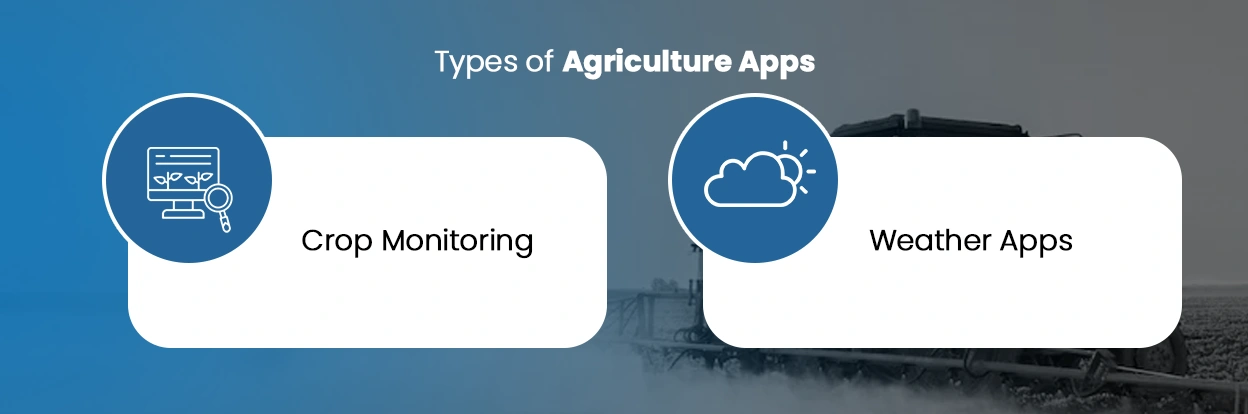
Agriculture apps can be designed for various purposes depending on the needs of farmers and agribusinesses. Below are some of the most common types:
Crop Monitoring
Crop monitoring apps help farmers track the health and growth of their crops in real time. These apps use technologies like satellite imagery, drones, and IoT sensors to provide accurate insights.
Key functionalities include:
- Soil health analysis
- Pest and disease detection
- Growth tracking and yield prediction
- Fertilizer and irrigation recommendations
With crop monitoring apps, farmers can identify issues early and take preventive measures, ultimately increasing productivity.
Weather Apps
Weather plays a crucial role in agriculture. Weather apps designed for farming provide hyper-local forecasts and alerts that help farmers plan their activities efficiently.
Features include:
- Real-time weather updates
- Rainfall predictions
- Temperature and humidity tracking
- Extreme weather alerts
These insights enable farmers to make informed decisions about planting, irrigation, and harvesting, minimizing risks associated with climate uncertainties.
Want to build a smart farming app?
Get a custom agritech solution tailored to your business.
Key Features of Agriculture Apps
To build a successful agriculture app, it is important to include features that address real-world farming challenges. Below are the key features that modern agritech apps should offer:
1. Real-Time Data Analytics
Agriculture apps should provide real-time data on soil conditions, weather, crop health, and equipment performance. This helps farmers make timely decisions.
2. IoT Integration
Integration with IoT devices such as sensors and smart irrigation systems enables automated monitoring and control of farming operations.
3. GPS and Geolocation
Location-based services allow farmers to monitor fields, track machinery, and analyze regional data.
4. Farm Management Dashboard
A centralized dashboard helps manage tasks such as planting schedules, inventory, labor, and financial records.
5. AI-Based Recommendations
Artificial intelligence can analyze data and provide actionable insights, such as the best time to plant crops or apply fertilizers.
6. Marketplace Integration
Apps can connect farmers directly with buyers, suppliers, and distributors, eliminating intermediaries and improving profitability.
7. Multilingual Support
Since agriculture involves diverse user groups, multilingual support ensures accessibility for farmers in different regions.
8. Offline Functionality
Rural areas often face connectivity issues. Offline capabilities ensure uninterrupted access to essential features.
Benefits for Farmers
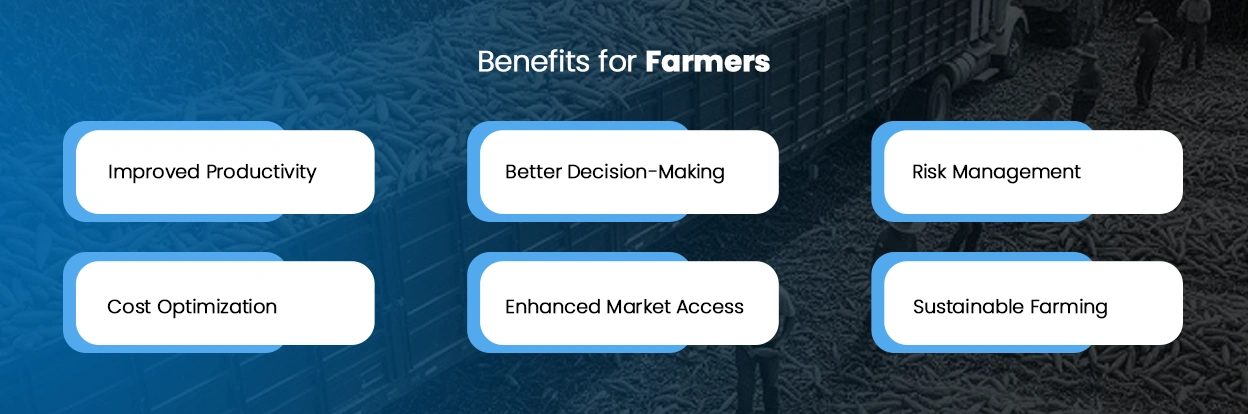
The process offers a wide range of benefits for farmers and agribusinesses. These advantages are not just limited to productivity but also contribute to sustainability and profitability.
Improved Productivity
With access to real-time data and insights, farmers can optimize their farming practices and increase crop yield.
Cost Optimization
Apps help reduce unnecessary expenses by providing accurate recommendations for resource usage, such as water and fertilizers.
Better Decision-Making
Data-driven insights enable farmers to make informed decisions, reducing risks and improving outcomes.
Enhanced Market Access
Digital marketplaces allow farmers to connect directly with buyers, ensuring better pricing and reducing dependency on intermediaries.
Risk Management
Weather alerts and predictive analytics help farmers prepare for adverse conditions, minimizing losses.
Sustainable Farming
Agriculture apps promote efficient resource utilization, reducing environmental impact and supporting sustainable practices.
Cost & Development
The cost of developing an agriculture app depends on sffeveral factors, including features, complexity, technology, and the development team’s location. Below is an estimated cost breakdown:
| App Type | Estimated Cost (USD) |
| Basic Agriculture App (MVP) | $25,000 – $50,000 |
| Mid-Level App with IoT Integration | $50,000 – $120,000 |
| Advanced Smart Farming Platform | $120,000+ |
Factors Affecting Cost
- Feature Complexity: Advanced features like AI and IoT increase development costs
- Platform Choice: Native vs cross-platform development
- UI/UX Design: Custom designs require more time and investment
- Third-Party Integrations: APIs for weather, payments, and analytics
- Maintenance and Updates: Ongoing costs for support and improvements
Investing in the right approach is a strategic decision that can deliver long-term ROI by improving operational efficiency and scalability.
Why Partner with Markup Designs?
Choosing the right development partner is critical to building a successful agriculture app. At Markup Designs, we specialize in delivering scalable and innovative agritech solutions tailored to your business needs.
Industry Expertise
We understand the challenges of modern agriculture and develop solutions that align with industry requirements. That is why we develop a strategic roadmap to deliver quality solutions.
End-to-end Development
From ideation and design to development and deployment, we handle the complete lifecycle of your application. This allows us to give you a smarter solution every time.
Custom Solutions
We build apps tailored to your specific business goals, ensuring maximum value and performance.
Advanced Technology Stack
Our team leverages the latest technologies, including AI, IoT, and cloud computing, to create future-ready applications.
Scalable Architecture
We design apps that grow with your business, while ensuring long-term sustainability.
Dedicated Support
Our commitment doesn’t end at launch. We provide ongoing support and maintenance to keep your app running smoothly. Hence, partnering with Markup Designs means investing in a reliable technology partner that understands your vision and delivers results.
Ready to transform agriculture with technology?
Partner with Markup Designs to build scalable, AI-powered farming solutions.
FAQs
1. What is agriculture app development?
It involves creating mobile or web applications that help farmers and agribusinesses manage farming operations using technology.
2. How do agritech software solutions help farmers?
They provide real-time data, weather updates, crop monitoring, and market access, enabling farmers to make informed decisions.
3. What technologies are used in agritech apps?
Common technologies include AI, IoT, GPS, cloud computing, and data analytics.
4. How long does it take to develop an agriculture app?
Development time can range from 3 to 9 months, depending on the app’s complexity and features.
5. Are agriculture apps suitable for small-scale farmers?
Yes, many apps are designed to be user-friendly and affordable, making them accessible to small-scale farmers.
6. What is the ROI of investing in agriculture apps?
The ROI includes increased productivity, reduced costs, better market access, and improved decision-making.
7. Can agriculture apps work offline?
Yes, many apps include offline functionality to ensure usability in areas with limited internet connectivity.
8. Why should businesses invest in agritech solutions?
Agritech solutions improve efficiency, enable scalability, and provide a competitive edge in the evolving agriculture industry.
Author's Perspective
From a business standpoint, agriculture app development is no longer optional; it is a necessity. The global agricultural landscape is evolving rapidly, and companies that fail to adopt technology risk falling behind.
We believe that the true power of agritech lies in its ability to simplify complex farming processes. By turning raw data into actionable insights, agriculture apps empower farmers to make smarter decisions and achieve better outcomes.
Moreover, the integration of emerging technologies such as AI and IoT is opening new possibilities for innovation. From precision farming to automated irrigation, the future of agriculture is digital.
For businesses, this presents a significant opportunity. Investing in thai not only enhances operational efficiency but also creates new revenue streams and competitive advantages.
Discuss Your Project NowGaurav Goyal
Global Sales- VP
Related Posts

How to Build an Insurance Portal with CRM,...

Custom Software Development Services in Abu Dhabi for...

Custom Software Development Cost in Bahrain: Factors, Benefits,...
Insights Are Valuable & Execution is Priceless
You’ve read about the digital future. Now, let’s build the infrastructure to take you there. Move your strategy from the page to the product.
Design Your Solution Now
Contact Us
Schedule The Appointment At Your Convenience Date And Time.
30 Min
Web Conference
Time Zone
Indian standard time (08:30pm)

Thanks For Getting In Touch!
You’ve Taken The First Step Toward Transforming Your Digital Presence. Our Experts Will Reach Out Shortly To Take It Forward.
Launch Your Dream Project
Provide a brief overview of your project, and our specialists will evaluate your requirements. We will connect with you to explore how the right digital solutions can help you launch faster.