
Manufacturing Software Development: Automating Modern Factories
The manufacturing industry is undergoing a massive transformation driven by digital innovation, automation, and data-driven decision-making. As global competition increases and customer expectations evolve, manufacturers are turning to software solutions to streamline operations, reduce costs, and improve productivity.
Manufacturing software development plays a crucial role in building smart factories where processes are automated, connected, and optimized in real time. From enterprise resource planning (ERP) systems to IoT-enabled machinery, modern software solutions are redefining how factories operate.
In this blog, we will explore the importance of manufacturing software, the different types available, how automation and IoT are shaping the industry, cost considerations, ROI benefits, and why partnering with the right development company, like Markup Designs, can make a difference.
Importance of Software in Manufacturing
Manufacturing software is no longer a luxury; it is a necessity for businesses aiming to stay competitive in today’s digital landscape. Traditional manufacturing processes often involve manual interventions, siloed systems, and inefficiencies that lead to delays and increased costs.
With the integration of software, manufacturers can:
- Improve operational efficiency by automating repetitive tasks
- Enhance visibility across the supply chain and production lines
- Reduce human errors through intelligent systems
- Enable real-time decision-making using analytics and dashboards
- Ensure compliance with industry standards and regulations
Modern manufacturing software connects various departments such as procurement, production, inventory, and logistics into a unified system. This ensures seamless communication and better coordination across the entire value chain.
Additionally, software solutions empower manufacturers to adopt predictive maintenance strategies, reduce downtime, and increase overall equipment effectiveness (OEE).
Types of Manufacturing Software
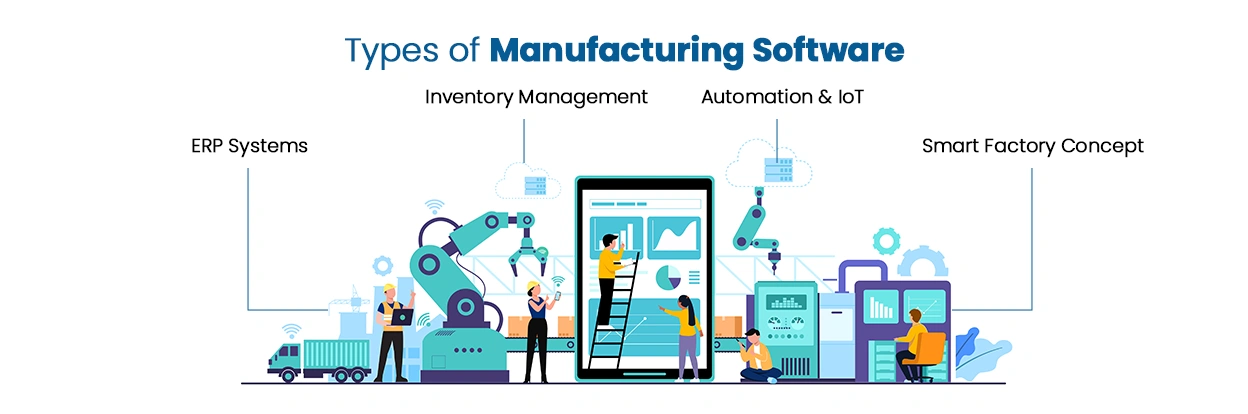
Manufacturing software comes in various forms, each designed to address specific operational challenges. Choosing the right combination of tools depends on business goals, production scale, and industry requirements.
ERP Systems
ERP Manufacturing solutions serve as the backbone of manufacturing operations. These systems integrate core business functions into a centralized platform, allowing organizations to manage resources efficiently.
Key features of ERP systems include:
- Production planning and scheduling
- Financial management and accounting
- Supply chain management
- Human resource management
- Reporting and analytics
By implementing ERP solutions, manufacturers can eliminate data silos and gain a holistic view of their operations. This leads to better forecasting, improved resource utilization, and enhanced decision-making.
ERP systems are particularly valuable for large-scale manufacturers that require coordination across multiple facilities and departments.
Inventory Management
Inventory management software is essential for maintaining optimal stock levels and avoiding disruptions in production. Poor inventory control can result in overstocking, stockouts, and increased carrying costs.
With advanced inventory management systems, manufacturers can:
- Track inventory in real time
- Automate stock replenishment
- Reduce waste and excess inventory
- Improve warehouse efficiency
- Enhance order fulfillment accuracy
Modern solutions often integrate with barcode scanning, RFID technology, and cloud-based systems to provide accurate and up-to-date inventory data. Efficient inventory management not only reduces operational costs but also ensures that production processes run smoothly without delays.
Automation & IoT
Automation and the Internet of Things (IoT) are at the core of modern manufacturing software development. Together, they enable the creation of smart factories where machines, devices, and systems communicate seamlessly.
Role of Automation
Automation reduces dependency on manual labor and enhances production speed and consistency. Key benefits include:
- Increased production output
- Improved product quality
- Reduced operational costs
- Enhanced workplace safety
Automation tools such as robotic process automation (RPA), machine learning algorithms, and AI-driven systems help manufacturers streamline complex processes and eliminate inefficiencies.
Role of IoT in Manufacturing
IoT connects machines, sensors, and devices to collect and exchange data in real time. This connectivity enables manufacturers to monitor equipment performance, detect issues early, and optimize operations.
Key applications of IoT in manufacturing include:
- Predictive maintenance
- Asset tracking
- Energy management
- Quality control
- Remote monitoring
For example, IoT-enabled sensors can detect anomalies in machinery and alert operators before a breakdown occurs. This proactive approach minimizes downtime and reduces maintenance costs.
Smart Factory Concept
The factory automation software is an advanced manufacturing environment where systems are interconnected, and processes are largely automated. Software plays a central role in enabling this transformation by integrating data from multiple sources and providing actionable insights.
Key characteristics of smart factories include:
- Real-time data analytics
- Autonomous decision-making
- Seamless system integration
- High levels of customization
Manufacturers adopting smart factory models gain a significant competitive advantage through improved efficiency, flexibility, and scalability.
Cost Breakdown
The cost varies depending on factors such as project complexity, features, technology stack, and level of customization. Below is a general cost estimate
| Software Type | Estimated Cost Range |
| Basic Manufacturing Software | $30,000 – $60,000 |
| Mid-Level System with ERP & IoT | $60,000 – $150,000 |
| Advanced Smart Factory Solution | $150,000+ |
Factors Affecting Cost
Several factors influence the overall development cost:
- Scope of the project: More features and integrations increase costs
- Customization requirements: Tailored solutions are more expensive than off-the-shelf software
- Technology stack: Advanced technologies like AI and IoT require higher investment
- Integration needs: Connecting with existing systems adds complexity
- Development timeline: Faster delivery may require additional resources
While initial investment may seem high, the long-term benefits and ROI make manufacturing software a worthwhile investment.
ROI Benefits
Investing in manufacturing software delivers measurable returns by improving efficiency, reducing costs, and enhancing productivity.
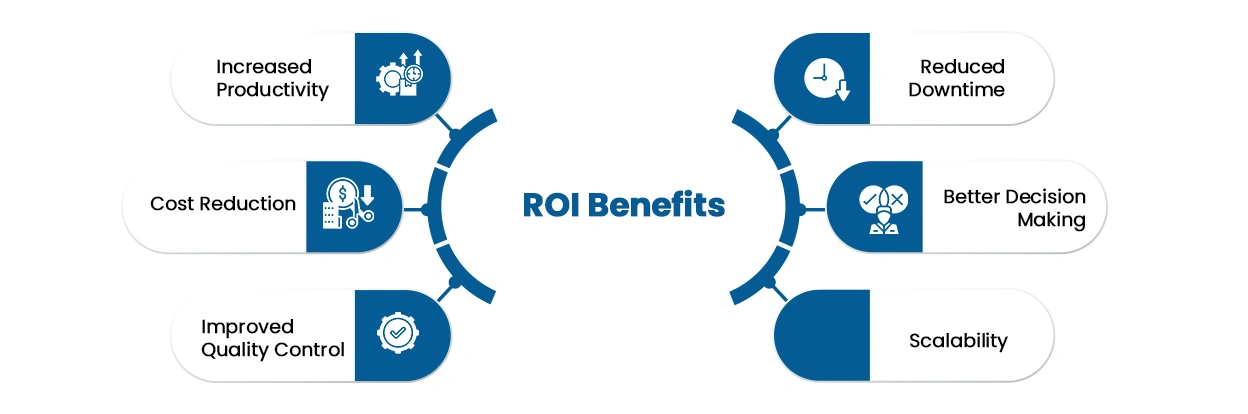
Key ROI Benefits
1. Increased Productivity
Manufacturing software significantly improves productivity by automating repetitive and time-consuming tasks such as data entry, scheduling, and reporting. With streamlined workflows and reduced manual intervention, production cycles become faster and more efficient.
Additionally, software enables better coordination between departments, ensuring that materials, labor, and machinery are utilized effectively. This leads to higher output without necessarily increasing operational costs.
2. Cost Reduction
One of the most immediate benefits of manufacturing software is cost savings. By optimizing processes and reducing inefficiencies, businesses can minimize waste in raw materials, energy consumption, and labor.
Automation reduces the need for manual work, which lowers labor costs while also decreasing the chances of costly human errors. Over time, these savings contribute to improved profit margins and better financial control.
3. Improved Quality Control
Maintaining consistent product quality is critical in manufacturing. Software systems provide real-time monitoring and quality checks throughout the production process.
With automated quality control mechanisms, defects can be identified early, preventing faulty products from reaching the market. This not only reduces rework and returns but also strengthens brand reputation and customer trust.
4. Reduced Downtime
Unplanned equipment failures can lead to significant production delays and financial losses. Manufacturing software, especially when integrated with IoT, enables predictive maintenance.
By analyzing machine performance data, the system can detect potential issues before they lead to breakdowns. This allows businesses to schedule maintenance proactively, reducing downtime and ensuring continuous operations.
5. Better Decision-Making
Modern manufacturing software provides advanced analytics and real-time dashboards that offer complete visibility into operations.
Decision-makers can access accurate data on production, inventory, and supply chain performance, allowing them to make informed and timely decisions. This reduces reliance on guesswork and improves strategic planning across the organization.
6. Scalability
As businesses grow, their operational needs become more complex. Manufacturing software is designed to scale with the organization, allowing new processes, production lines, and locations to be added without major disruptions.
This flexibility ensures that companies can expand efficiently while maintaining control over operations. Scalable systems also support long-term growth and adaptability in changing market conditions.
Why Should You Partner with Markup Designs?
Choosing the right development partner is critical for building effective manufacturing software. At Markup Designs, we specialize in delivering scalable and customized solutions tailored to your business needs.
Industry Expertise
We understand the complexities of the manufacturing sector and build solutions that align with industry standards and operational requirements.
End-to-End Development
From ideation and design to development and deployment, we manage the entire lifecycle of your software project.
Custom Solutions
We create tailored software that fits your unique business processes, ensuring maximum efficiency and usability.
Advanced Technology Stack
Our team leverages modern technologies such as AI, IoT, cloud computing, and data analytics to build future-ready solutions.
Scalable Architecture
We design systems that grow with your business, ensuring long-term sustainability and performance.
Ongoing Support
We provide continuous support and maintenance to ensure your software remains up-to-date and efficient.
Hence, partnering with Markup Designs ensures that your manufacturing software is not only functional but also innovative and aligned with your business goals.
FAQs
1. What is manufacturing software development?
It involves creating digital solutions that help automate, manage, and optimize manufacturing processes, including production, inventory, and supply chain operations.
2. Why is software important in manufacturing?
Software improves efficiency, reduces costs, enhances visibility, and enables real-time decision-making, making it essential for modern manufacturing operations.
3. What are the main types of manufacturing software?
Common types include ERP systems, inventory management software, production planning tools, and IoT-based monitoring systems.
4. How does IoT benefit manufacturing?
IoT enables real-time monitoring, predictive maintenance, and data-driven insights, helping manufacturers improve efficiency and reduce downtime.
5. What is the cost of developing manufacturing software?
Costs can range from $30,000 to over $150,000, depending on complexity, features, and level of customization.
6. How long does it take to develop manufacturing software?
Development timelines typically range from 3 to 12 months based on project scope and requirements.
7. Can manufacturing software be customized?
Yes, custom solutions can be developed to align with specific business processes and operational needs.
8. How do I choose the right development partner?
Look for a company with industry expertise, a strong technology stack, proven experience, and the ability to deliver scalable and customized solutions.
Related Posts
Oil & Gas Software Development: Digital Transformation in...
Complete Fitness App Development Solution: Features, Cost and...

Agriculture App Development: Smart Farming with Technology
Insights Are Valuable & Execution is Priceless
You’ve read about the digital future. Now, let’s build the infrastructure to take you there. Move your strategy from the page to the product.
Design Your Solution Now
Contact Us
Schedule The Appointment At Your Convenience Date And Time.
30 Min
Web Conference
Time Zone
Indian standard time (08:30pm)

Thanks For Getting In Touch!
You’ve Taken The First Step Toward Transforming Your Digital Presence. Our Experts Will Reach Out Shortly To Take It Forward.
Launch Your Dream Project
Provide a brief overview of your project, and our specialists will evaluate your requirements. We will connect with you to explore how the right digital solutions can help you launch faster.