
Oil & Gas Software Development: Digital Transformation in the Energy Sector
The oil and gas industry has long been the backbone of global energy supply. However, in today’s fast-evolving digital landscape, traditional operational models are no longer enough. Companies are under constant pressure to improve efficiency, reduce costs, enhance safety, and meet sustainability goals. This is where oil & gas software development plays a critical role.
Digital transformation is no longer optional; it is a strategic necessity. From upstream exploration to downstream distribution, technology is reshaping every segment of the energy value chain. Advanced software solutions, powered by automation, data analytics, and artificial intelligence, are helping companies make smarter decisions, optimize operations, and stay competitive in a volatile market.
In this blog, we will explore how digital transformation is impacting the oil and gas sector, the challenges companies face, key software solutions, cost considerations, future trends, and why partnering with the right development company like Markup Designs can make all the difference.
Key Challenges in the Oil & Gas Industry
The oil and gas sector operates in one of the most complex and high-risk environments. While the energy demand continues to grow, companies face several operational and strategic challenges.
1. Operational Complexity
Oil and gas operations span multiple locations, often in remote and harsh environments. Managing assets, workforce, and logistics across these sites becomes extremely challenging without digital support.
2. High Operational Costs
Exploration, drilling, refining, and distribution require significant capital investment. Inefficiencies in any stage can lead to massive financial losses.
3. Safety and Risk Management
The industry is prone to accidents, equipment failures, and environmental hazards. Ensuring safety compliance and minimizing risks is critical but difficult with traditional systems.
4. Data Silos
Large volumes of data are generated daily from sensors, machinery, and field operations. However, a lack of integration often leads to data silos, making it difficult to derive actionable insights.
5. Regulatory Compliance
Strict environmental and safety regulations require companies to maintain accurate records and reporting systems, which can be complex without automation.
6. Market Volatility
Fluctuating oil prices and geopolitical factors create uncertainty, making it essential for companies to adopt agile and data-driven decision-making processes.
Oil & Gas Software Solutions for Digital Transformation
To overcome these challenges, oil and gas companies are increasingly investing in custom software solutions tailored to their specific operational needs.
Asset Tracking & Predictive Maintenance: Reducing Downtime and Cost
Asset tracking software plays a vital role in monitoring equipment, pipelines, vehicles, and infrastructure in real time.
Key benefits include:
- Real-time visibility of assets across locations
- Predictive maintenance to reduce downtime
- Improved asset lifecycle management
- Reduced operational risks
With IoT-enabled sensors and cloud-based platforms, companies can monitor asset performance continuously and detect issues before they escalate.
Risk & Safety Management Software in Oil & Gas Industry
Risk management software helps organizations identify, assess, and mitigate operational risks. Key features include:
- Incident reporting and analysis
- Compliance tracking
- Hazard identification tools
- Emergency response planning
By centralizing risk-related data, companies can improve safety standards and ensure regulatory compliance while minimizing operational disruptions.
Advanced Digital Solutions: SCADA, ERP, AI & Supply Chain Systems
Beyond asset tracking and risk management, several other digital solutions are transforming the oil and gas sector:
- Supervisory Control and Data Acquisition (SCADA) Systems for real-time monitoring
- ERP Systems for resource planning and financial management
- Supply Chain Management Software for logistics optimization
- Data Analytics Platforms for performance insights
- Mobile Applications for Field Workforce Management
How AI & Automation are Transforming Oil & Gas Operations
Automation and artificial intelligence are at the heart of digital transformation in the energy sector.
- Predictive Maintenance: AI-powered systems analyze historical and real-time data to predict equipment failures before they occur. This reduces downtime and saves high costs.
- Process Automation: Routine tasks such as data entry, reporting, and monitoring can be automated, allowing employees to focus on strategic activities.
- Smart Exploration: AI algorithms can analyze geological data to identify potential drilling sites with higher accuracy, reducing exploration risks.
- Robotics and Drones: Robotics is increasingly used for inspection and maintenance in hazardous environments, improving safety and efficiency.
- Advanced Data Analytics: Big data analytics enables companies to process massive datasets and derive actionable insights to improve decision-making.
Automation not only improves efficiency but also enhances safety and reduces human error, making it a critical component of modern oil and gas operations.
Oil & Gas Software Development Cost
The cost of developing oil and gas software depends on various factors such as features, complexity, integrations, and technology stack. Below is an estimated cost range:
| Software Type | Features Included | Estimated Cost (USD) |
| Basic Oil & Gas App | Asset tracking, basic dashboards | $30,000 – $50,000 |
| Mid-Level Solution | IoT integration, analytics, reporting | $60,000 – $110,000 |
| Advanced Enterprise Platform | AI, automation, real-time monitoring, ERP integration | $110,000 – $300,000+ |
| Custom AI-Based Predictive System | Machine learning, predictive maintenance | $200,000 – $500,000+ |
Factors Affecting Cost:
- Project scope and complexity
- Number of features and integrations
- UI/UX design requirements
- Technology stack used
- Development team location and expertise
- Maintenance and support needs
Investing in the right software solution may seem costly initially, but it delivers long-term ROI through improved efficiency and reduced operational risks.
Future Trends in Oil & Gas Software
The future of oil and gas software development is driven by innovation and sustainability. Here are some key trends shaping the industry:
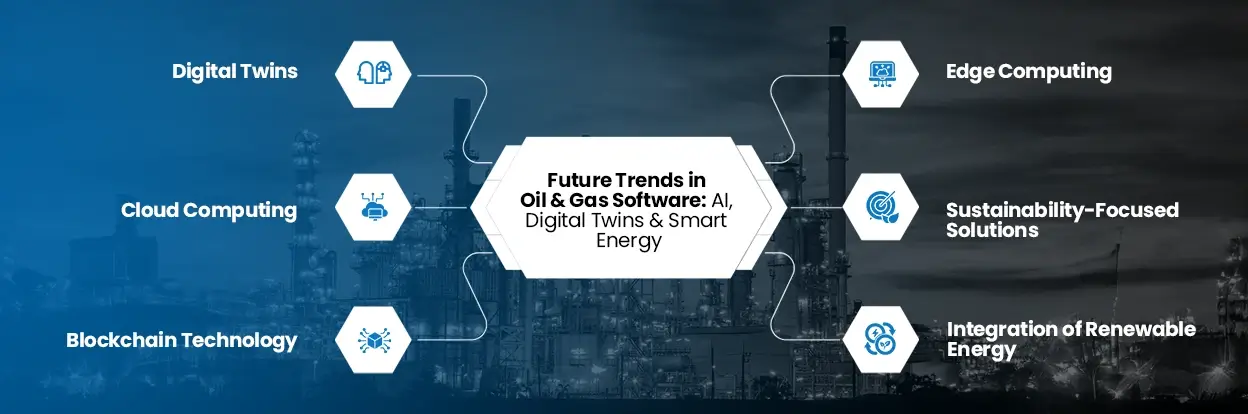
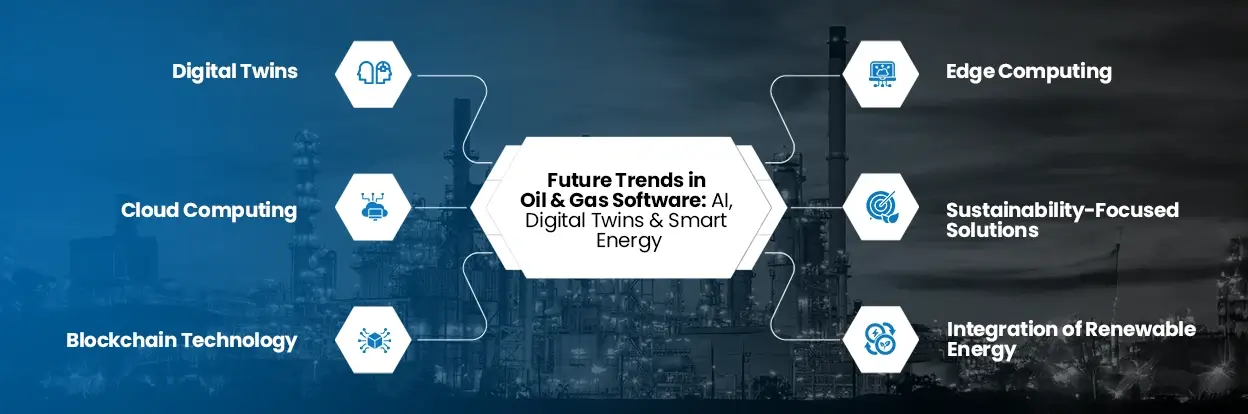
- Digital Twins: Digital twins create virtual replicas of physical assets, enabling real-time monitoring and simulation for better decision-making.
- Cloud Computing: Cloud-based solutions offer scalability, flexibility, and cost-efficiency, making them ideal for large-scale operations.
3. Blockchain Technology: Blockchain enhances transparency and security in supply chain operations and contract management.
4. Edge Computing: Processing data closer to the source reduces latency and improves real-time decision-making capabilities.
5. Sustainability-Focused Solutions: Software solutions are increasingly designed to monitor emissions, optimize energy usage, and support environmental compliance.
6. Integration of Renewable Energy: As companies diversify into renewable sources, energy sector software solutions are evolving to support hybrid energy models.
Why Choose Markup Designs for Oil & Gas Software Development?
Choosing the right technology partner is crucial for successful digital transformation. At Markup Designs, we focus on delivering scalable, secure, and industry-specific software solutions tailored to the oil and gas sector.
Industry Expertise: We understand the complexities of oil and gas operations and design solutions that address real-world challenges.
End-to-End Development: From ideation and design to development and deployment, we handle the entire lifecycle of your software project.
Custom Solutions: We don’t believe in one-size-fits-all. Our team builds tailored applications that align with your business goals and operational needs.
Advanced Technology Stack: We leverage the latest technologies, including AI, IoT, cloud computing, and data analytics, to deliver future-ready solutions.
Scalability & Security: Our solutions are built to scale with your business while ensuring high levels of data security and compliance.
Dedicated Support: We provide ongoing support and maintenance to ensure your systems run smoothly and efficiently.
Partnering with Markup Designs means gaining a strategic technology partner committed to your long-term success.
Digital transformation is reshaping the oil and gas industry, and the time to act is now. Whether you are looking to optimize operations, enhance safety, or build scalable digital systems, the right technology partner can make all the difference.
At Markup Designs, we are ready to help you lead this transformation with tailored, future-ready solutions.
Let’s build smarter energy systems together.
Get in touch with us today to discuss your project and take the first step toward digital excellence.
FAQs
1. What is oil & gas software development?
Oil & gas software development refers to building digital solutions that help manage exploration, production, refining, and distribution processes in the oil and gas industry.
2. Why is digital transformation important in the energy sector?
It helps improve efficiency, reduce costs, enhance safety, and enable data-driven decision-making.
3. How long does it take to develop oil & gas software?
Depending on complexity, it can take anywhere from 3 months to over a year.
4. What technologies are used in oil & gas software?
Common technologies include AI, IoT, cloud computing, big data analytics, and blockchain.
5. Is custom software better than off-the-shelf solutions?
Yes, custom software is tailored to your specific business needs, offering better scalability and integration.
6. How does AI benefit the oil and gas industry?
AI enables predictive maintenance, smart exploration, automation, and advanced analytics.
7. What are the risks of not adopting digital solutions?
Companies may face inefficiencies, higher costs, safety issues, and reduced competitiveness.
8. Can software help with regulatory compliance?
Yes, modern software solutions automate reporting and ensure adherence to industry regulations.
Author's Perspective
From our experience working with businesses across industries, we have seen how digital transformation can completely redefine operations in the oil and gas sector. Companies that embrace technology early gain a significant competitive advantage.
In our view, the future of this industry lies in data-driven decision-making, automation, and sustainability. Businesses that invest in intelligent software solutions today will be better positioned to handle market uncertainties, regulatory challenges, and evolving energy demands.
At Markup Designs, we believe in building solutions that not only solve current challenges but also prepare businesses for the future. Our approach is simple—understand the problem deeply, design strategically, and deliver efficiently.
Discuss Your Project NowDeepak Tripathi
Product Manager
Related Posts

How to Build an Insurance Portal with CRM,...

Custom Software Development Services in Abu Dhabi for...

Custom Software Development Cost in Bahrain: Factors, Benefits,...
Insights Are Valuable & Execution is Priceless
You’ve read about the digital future. Now, let’s build the infrastructure to take you there. Move your strategy from the page to the product.
Design Your Solution Now
Contact Us
Schedule The Appointment At Your Convenience Date And Time.
30 Min
Web Conference
Time Zone
Indian standard time (08:30pm)

Thanks For Getting In Touch!
You’ve Taken The First Step Toward Transforming Your Digital Presence. Our Experts Will Reach Out Shortly To Take It Forward.
Launch Your Dream Project
Provide a brief overview of your project, and our specialists will evaluate your requirements. We will connect with you to explore how the right digital solutions can help you launch faster.