

In Brief
- Industry-wide Adoption: Artificial intelligence is revolutionizing the banking sector, healthcare, retail industry, manufacturing, logistics, and several other sectors in Bahrain through workflow automation and service delivery improvements.
- Better Decision Making: Business decision-making is greatly enhanced using artificial intelligence through pattern recognition, forecasting, risk management, and analysis of operations.
- Enhanced Customer Experience: Chatbots, recommendation engines, and personalized services through artificial intelligence enable businesses to meet the demands of customers in a timely manner.
- Challenges in Implementation: The main issues businesses will have to consider as they integrate artificial intelligence include data privacy, integration of legacy systems, lack of skilled workers, and high costs associated with implementation.
- Strategic Implementation of AI: Businesses can get optimal results by identifying use cases, evaluating the readiness of data, conducting pilots, and putting up proper security and governance measures.
Artificial intelligence (AI) is fast emerging as an essential component in the process of business transformation in Bahrain, where businesses are working on increasing operational efficiency, enhancing customer experiences, and maximizing the value of their business data. With several applications of artificial intelligence in industries such as banking and manufacturing, organizations in Bahrain are now in a position to explore more options.
Nevertheless, the adoption of AI entails more than the application of new technologies. Businesses need to recognize appropriate use cases, develop robust data sources, integrate the technologies into existing processes and systems, as well as consider such implementation aspects as security and workforce requirements. Additionally, the business benefits of AI and implementation considerations differ from one industry to another, which makes a good understanding of its practical use crucial. In this article, I am going to talk about the use cases of AI in Bahrain, the business benefits of its application, the implementation difficulties organizations might face, and the steps that need to be taken by them to implement AI successfully in 2026.
How Is AI Transforming Businesses in Bahrain in 2026?
The use of artificial intelligence changes the way businesses in Bahrain operate, provide services, and make strategic decisions. With the help of AI-powered solutions, businesses can automate mundane processes, work with big data, identify risks, and enhance the delivery of services. Such use cases as fraud detection in finance companies or predictive maintenance in manufacturing can serve as examples of the benefits businesses receive from AI.
With Bahrain becoming more focused on digital transformation, there is an emerging chance to implement artificial intelligence. Nonetheless, the influence of the technology will largely depend on how successfully it gets integrated into the organization’s workflows, data systems, and personnel policies. Gaining insights into its practical implementations, advantages, and implementation challenges may help organizations realize how beneficial it can be.
What Are the Top 10 Industry Use Cases of AI in Bahrain?
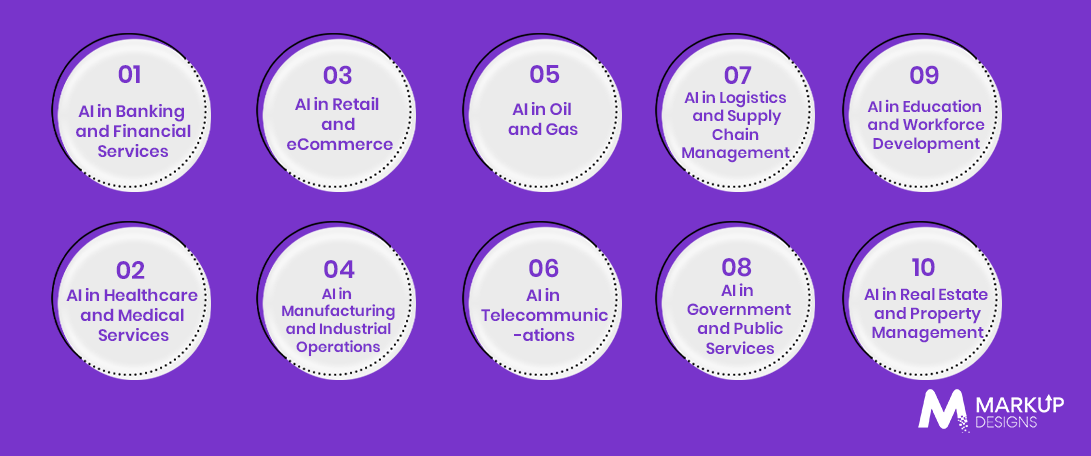
Applications of artificial intelligence differ depending on industry needs and their operational peculiarities, customer preferences and demands, and data available for analysis. Organizations in Bahrain may utilize artificial intelligence to enhance the assessment of risks, automate their workflows and operations, maximize the use of available resources, and provide customers with more personalized services. The following use cases exemplify the applications of AI in Bahrain.
AI in Banking and Financial Services
Organizations in banking and financial services can apply artificial intelligence for the purpose of enhancing fraud detection, automation of compliance checks, and credit risk assessment. Machine learning algorithms analyze transactional patterns and detect unusual patterns indicating the presence of fraud. Besides, AI-powered chatbots answer customers’ queries and facilitate service delivery. These applications can improve operational efficiency, although sensitive financial decisions require appropriate oversight, data protection, and regulatory compliance.
AI in Healthcare and Medical Services
The healthcare sector can leverage AI for analyzing medical images, scheduling patients, clinical documentation, and managing resources within hospitals. Predictive analytics can be helpful in finding operational bottlenecks, forecasting the demand for patients, and allocating the workforce and other resources appropriately. Moreover, AI-driven virtual assistants can provide assistance to patients by answering their standard questions and sending appointment reminders to them. However, clinical applications will require validation, confidentiality protection, and oversight by healthcare professionals prior to using them.
AI in Retail and eCommerce
There are a number of ways in which AI can be employed in the retail industry, such as personalization, recommendation engines, demand forecasting, and customer service. Recommendation engines help businesses understand the preferences of customers on the basis of their purchasing behavior and browsing history to offer appropriate products to them. Forecasting demand is essential for preventing overstocking of inventories and shortages because of underestimating demand. These applications will help businesses in Bahrain to manage their merchandizing and inventory better.
AI in Manufacturing and Industrial Operations
Manufacturers can use AI to monitor equipment performance, predict maintenance needs, detect product defects, and improve production planning. Predictive maintenance models analyze sensor data to identify unusual patterns that may indicate equipment failure, allowing maintenance teams to intervene before major disruptions occur. Computer vision systems can inspect products for defects, while production analytics can reveal inefficiencies across manufacturing processes. These applications can reduce downtime and improve quality when supported by reliable operational data and effective AI integration with industrial systems.
AI in Oil and Gas
Oil and gas companies can use AI to improve equipment monitoring, analyze exploration data, forecast production, and strengthen workplace safety. Predictive models can identify equipment performance issues, while analytics tools can help operators optimize maintenance schedules and resource utilization. AI-powered monitoring may also help flag abnormal operating conditions that require investigation. Given the technical and safety requirements of energy operations, these systems should be tested carefully and used alongside established engineering controls and expert decision-making.
AI in Telecommunications
Telecommunications providers can use AI to predict network congestion, detect service disruptions, automate customer support, and optimize network performance. Machine learning models can analyze network traffic and equipment data to identify emerging issues before they affect large numbers of customers. AI assistants can also manage common service requests, such as troubleshooting connectivity problems and checking account information. These applications can improve service reliability and response times, provided providers maintain appropriate controls over customer data and network security.
AI in Logistics and Supply Chain Management
Logistics companies can leverage AI in predicting the demand for shipment services, optimizing routes for shipment services, improving warehousing processes, and identifying possible disruptions in supply chains. Predictive analytics can enable businesses to predict demand changes, whereas route optimization technology can take into consideration delivery time, traffic conditions, and vehicle capacity. AI-powered warehousing technology can also be useful in tracking inventories and order prioritization. For those business entities dealing with shipment services in Bahrain and nearby Gulf states, these technologies will be quite beneficial.
AI in Government and Public Services
Governments and public service organizations can use AI in streamlining document processing procedures, improving routing services, analyzing public service demand, and making decisions related to administration. Chatbots can handle routine queries of clients, while intelligent document processing can help extract data from applications and records. Predictive analytics could assist public service agencies in better allocation of their resources. In this case, all public sector applications involving personal data or serious decisions should include transparency, access control, accountability, and human review.
AI in Education and Workforce Development
Educational organizations and training facilities could utilize AI for personalized learning, automation of certain processes, and identification of learning gaps. AI-powered learning platforms will be able to recommend learning materials for each user depending on their progress, and analytics could be used by educators to track participants’ engagement and results. Businesses will also be able to use AI-powered learning and training tools to develop the necessary skills of employees and plan workforce. The utilization of AI applications in such fields should serve to complement the work of educators and trainers and not replace their judgments in such matters as evaluation of progress and making certain educational decisions.
AI in Real Estate and Property Management
The companies from the field of real estate could apply AI for predicting the demand for properties, conducting market analysis, communicating with tenants, and managing buildings. Predictive analytics could assist in forecasting maintenance needs and energy consumption of the buildings, and AI assistants could answer simple questions of tenants. Data analysis could be used by businesses in real estate to assess their potential investment opportunities, but such predictions will always depend on the quality and relevancy of data used. Real estate companies can also use data-driven tools to evaluate potential investment opportunities, although estimates depend on the quality and relevance of the underlying data. Human assessment remains important when decisions involve property valuation, investment risk, or contractual obligations.
What Are the Key Benefits of AI Adoption for Businesses in Bahrain?
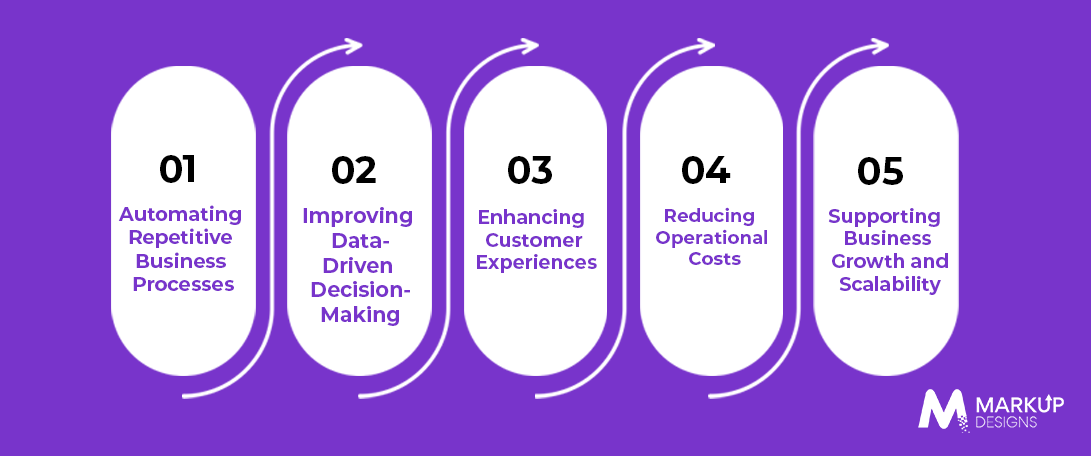
The potential uses of AI in business include increasing productivity, making smarter decisions and using available resources more effectively. Its value will depend on the choice of applications addressing actual problems and evaluating the results in relation to specific goals of business operations. Benefits in terms of savings in time, improvements in service, quality, accuracy, and scalability should be taken into account rather than adopting technologies just for the sake of following a trend.
Automating Repetitive Business Processes
By using automated tools powered by AI, businesses can automate tasks that are repetitive in nature, including sorting documents, extracting data, routing customer inquiries, and creating reports. The workload of employees will be decreased, allowing them to perform other tasks related to decision-making, communicating and solving problems. Business organizations can start with automating processes which are well-defined and measurable. Processes with exceptions, confidential data, and critical decisions still require human verification.
Improving Data-Driven Decision-Making
Through its analytics, AI is able to analyze big volumes of data finding patterns and making predictions about future demands. It can be used to identify risks and optimize business processes. Businesses can improve the planning of inventory, learn about customer behavior, and monitor their performance. Organizations should validate predictions against real outcomes and avoid treating AI recommendations as automatically correct.
Enhancing Customer Experiences
The use of AI technologies allows companies to respond to customers’ needs faster and more effectively, personalize their recommendations, and provide services through various digital communication channels. Chatbots can answer standard queries, while personalization tools can adjust product recommendations and customer service to meet individual preferences. However, it is important for the company to provide an appropriate escalation path to humans and maintain the security and privacy of customer information.
Reducing Operational Costs
Using AI tools can help in decreasing certain expenses connected to operational activities because it can automate certain processes, minimize errors that could be avoided, optimize resource consumption, detect maintenance problems, etc. For instance, predictive maintenance might lower the downtime of machines, while demand forecasting can minimize the expenditures associated with extra inventory. Nevertheless, AI usage implies additional expenses connected with the implementation process and operation.
Supporting Business Growth and Scalability
It is possible to use AI solutions to support business operations when the company faces a growing workload without developing all aspects of its business at the same pace. Businesses can also use AI insights to identify new customer needs and evaluate growth opportunities. Successful scaling requires reliable infrastructure, continuous performance monitoring, and governance practices that keep pace with changing business requirements.
What Challenges Do Businesses Face When Implementing AI in Bahrain?
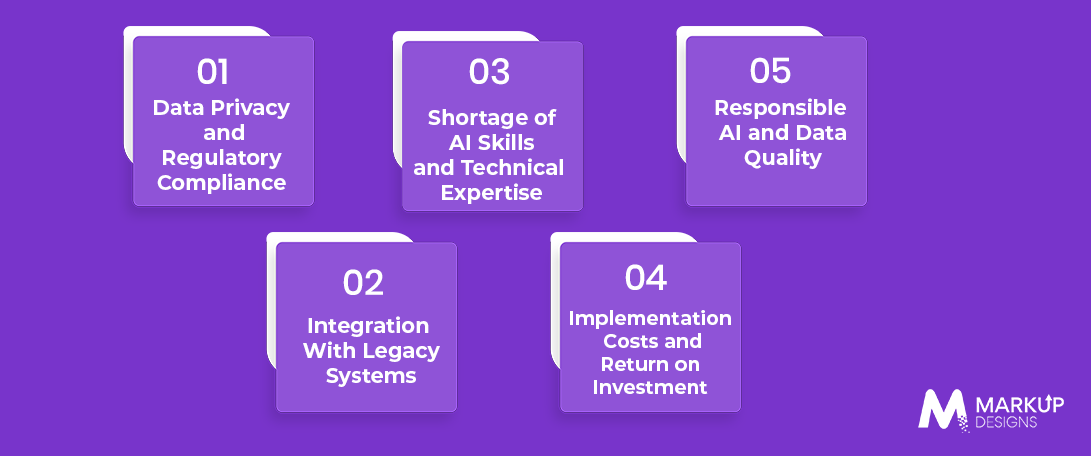
The use of AI poses operational and strategic challenges for businesses that do not have reliable data, adequate infrastructure, technical competencies, or specific objectives for the deployment of AI. At the same time, businesses need to take into account financial expenses and possible risks related to automated decision-making. Early identification of the challenges allows a business to choose feasible use cases and implement innovative technologies in a safe and accountable way.
Data Privacy and Regulatory Compliance
AI-powered systems might process customers’ personal information, employees’ data, financial information, and other kinds of business information that may raise concerns regarding data privacy and regulatory compliance. It is important for businesses in Bahrain to understand what the legal framework is related to collecting, storing, processing, and sharing information and incorporate it in the system design from the very beginning. Additional controls for access management, data retention, consent, and data transfer may be required depending on the nature of the application.
Integration With Legacy Systems
Most businesses depend on various systems, software development, databases, and operational platforms that are not equipped to support modern applications and AI tools. Poor integration can lead to inconsistent data, duplicated processes, or unreliable outputs. Businesses should assess their current technology environment before implementation and prioritize solutions that can integrate with existing systems without introducing unnecessary complexity.
Shortage of AI Skills and Technical Expertise
The application of AI requires a blend of technical knowledge, domain-specific expertise, data management, and oversight. Businesses might have challenges in acquiring or developing the requisite skill set in order to choose the right model, handle data issues, perform assessments, and mitigate risks that arise from implementing AI. This can be done by training existing staff, employing specialists, and partnering with experienced technology companies. Business teams need to be conversant with how to interpret AI outputs and when it would require human input.
Implementation Costs and Return on Investment
There are costs involved in using software tools, investing in cloud infrastructure, data prep, AI development, integrations, training, and AI maintenance. The cost of implementing AI may increase where the existing dataset is inadequate or a system upgrade is required. Companies need to set measurable goals before the start of implementation, such as a decrease in processing time, reduction in errors, or improvement in customer response times. Piloting a project initially and making comparisons with pre-existing benchmarks will help in determining value.
Responsible AI and Data Quality
AI outputs might be erroneous, skewed and inconsistent where models are trained on inadequate data sets, flawed assumptions, or incorrect objectives.
These problems can affect customer service, recruitment, financial assessments, and other business decisions. Organizations should validate training data, test models against relevant scenarios, monitor performance after deployment, and establish clear accountability for AI-assisted decisions. Human oversight is particularly important when outcomes could materially affect individuals, business finances, or public services.
How Can Businesses Successfully Implement AI Solutions in Bahrain?
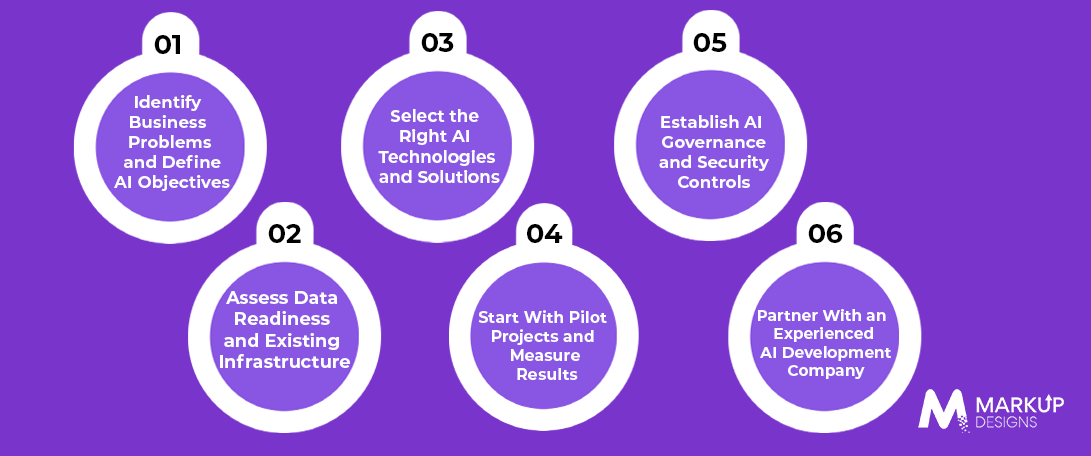
The successful implementation of AI technologies begins with a business objective, available data, and a strategy for integrating the solution into the operational process. Companies operating in Bahrain need to focus on use cases that solve tangible problems like increasing the efficiency of certain processes, improving customer support, or predicting demand. The structure helps businesses to manage the cost of implementation and mitigate risks related to its deployment and effectiveness.
Identify Business Problems and Define AI Objectives
It is essential for businesses to identify certain operational challenges in order to choose appropriate AI solutions. For instance, a retail company might need to forecast demand more accurately, and a bank needs an AI solution that would be able to detect fraud or provide automatic responses to customer questions. Setting up measurable goals will help to set up success criteria in advance to avoid deploying tools without any clear objective.
Assess Data Readiness and Existing Infrastructure
As with any AI solution, an effective solution requires accessible, relevant, and reliable data. Before implementing AI applications, companies should evaluate their databases, data quality, data integration capability, and IT infrastructure. Businesses should review their existing databases, data quality, integration capabilities, and infrastructure before beginning development. Inconsistent records, disconnected systems, and incomplete datasets can reduce model accuracy and increase implementation costs. Organizations should also evaluate access controls, data protection requirements, and infrastructure capacity to determine whether their current technology environment can support the proposed AI application.
Select the Right AI Technologies and Solutions
The choice of AI technology should reflect the business problem, available data, budget, and expected outcomes. Machine learning can support forecasting and anomaly detection, natural language processing can improve document handling and customer support, and computer vision can assist with visual inspection. Businesses should also compare custom AI development with existing platforms and ready-made solutions. The most appropriate option is the one that meets operational requirements without introducing unnecessary complexity or ongoing costs.
Start With Pilot Projects and Measure Results
A pilot project allows businesses to test an AI solution on a limited scale before investing in a wider implementation. Organizations can select one workflow, establish baseline performance, and measure results against indicators such as processing time, error rates, customer satisfaction, or operating costs. Pilot findings can reveal data gaps, integration issues, and adoption barriers that need to be addressed. Businesses should expand deployment only when the results justify the additional investment.
Establish AI Governance and Security Controls
AI governance helps businesses manage data privacy, model reliability, access permissions, and accountability throughout the implementation lifecycle. Organizations should establish policies for data usage, human oversight, model testing, incident management, and ongoing performance monitoring. They should also assess applicable Bahraini legal and regulatory requirements, particularly when processing personal, financial, or other sensitive information. These controls reduce operational risks and help ensure AI systems remain reliable as business needs evolve.
Partner With an Experienced AI Development Company
An experienced AI development company can help businesses assess feasibility, design the solution architecture, integrate AI with existing systems, and establish testing and deployment processes. When evaluating a partner, businesses should review relevant project experience, technical capabilities, data security practices, integration expertise, and post-deployment support. A clear proposal should define deliverables, timelines, ownership, maintenance responsibilities, and costs. This makes it easier to assess whether the proposed solution aligns with the organization’s business objectives.
How Is Bahrain’s Digital Transformation Strategy Supporting AI Adoption?
Bahrain’s digital transformation agenda provides a broader foundation for businesses exploring AI, supported by national digital government initiatives, technology infrastructure, and efforts to develop digital skills. The country’s Economic Vision 2030 and digital government programmes emphasize technology-enabled services, efficiency, and economic diversification. These priorities create opportunities for businesses to explore AI in areas such as financial services, public administration, healthcare, and enterprise operations. However, organizations still need to assess the specific support, infrastructure, and regulatory requirements relevant to their projects rather than assuming that every AI initiative receives direct government assistance.
How Can Markup Designs Help Businesses in Bahrain Implement AI Solutions?
Markup Designs can help businesses explore AI-driven solutions based on their operational requirements, existing technology infrastructure, and long-term growth objectives. From identifying suitable applications and defining project scope to developing custom software and integrating AI capabilities into business systems, the focus is on creating practical solutions that address specific business needs. Businesses can discuss their requirements with Markup Designs to evaluate potential use cases, technical approaches, and implementation priorities for the Bahrain market.
Ready to Explore AI for Your Business in Bahrain?
Identify the right AI opportunities for your business and plan a solution around your operational goals, technology requirements, and growth strategy.

Conclusion
AI is creating opportunities for businesses in Bahrain to automate workflows, improve decision-making, personalize customer experiences, and optimize resources across multiple industries. From banking and healthcare to manufacturing, logistics, and real estate, its applications vary according to operational needs and the quality of available data. However, successful adoption requires more than choosing an AI tool; businesses must also address integration, security, workforce readiness, and implementation costs.
Organizations should begin with clearly defined business objectives, assess their data and infrastructure, and test promising applications through measurable pilot projects. By establishing appropriate governance and selecting technology partners with relevant expertise, businesses can make more informed investment decisions and build AI solutions that support sustainable growth.
FAQ
1. How is AI being used by businesses in Bahrain in 2026?
Businesses in Bahrain can use AI for fraud detection, customer service automation, demand forecasting, predictive maintenance, document processing, and personalized recommendations. The specific applications depend on the industry, available data, and operational requirements.
2. Which industries in Bahrain benefit most from AI?
Banking and financial services, healthcare, retail, manufacturing, oil and gas, telecommunications, logistics, government, education, and real estate all have potential AI applications. The greatest benefits depend on the business problem being addressed and whether the organization has suitable data and infrastructure.
3. What are the main benefits of AI adoption for businesses in Bahrain?
AI can help businesses automate repetitive tasks, improve forecasting, identify operational risks, personalize customer interactions, and optimize resource allocation. The value should be measured against specific outcomes, such as lower processing costs, fewer errors, or improved service quality.
4. How much does it cost to implement AI solutions in Bahrain?
AI implementation costs vary depending on the solution’s complexity, data readiness, integration requirements, infrastructure, and ongoing maintenance. A ready-made AI tool may require a relatively modest investment, while a custom enterprise solution can cost substantially more. Businesses should obtain a scope-based estimate that separates development, integration, licensing, and recurring operational expenses.
5. What challenges do Bahraini businesses face when adopting AI?
Common challenges include data privacy and regulatory compliance, integration with legacy systems, limited technical expertise, implementation costs, and inconsistent data quality. Businesses can address these challenges through careful planning, employee training, pilot projects, and appropriate security and governance controls.
Author's Perspective
AI adoption in Bahrain should be driven by measurable business needs, not by the pressure to adopt emerging technology. Businesses are more likely to achieve meaningful results when they choose specific problems, prepare their data, and validate solutions before scaling them. A disciplined approach to implementation, combined with security controls and suitable technical expertise, can help organizations turn AI investments into practical operational improvements.
Discuss Your Project NowAjit Kumar Jha
VP - Business Operations
Related Posts

Enterprise AI Integration in the Middle East: A...

How to Implement Responsible AI in Australia: A...

AI Strategy Services in Dubai: Helping Enterprises Scale...
Insights Are Valuable & Execution is Priceless
You’ve read about the digital future. Now, let’s build the infrastructure to take you there. Move your strategy from the page to the product.
Design Your Solution Now
Contact Us
Schedule The Appointment At Your Convenience Date And Time.
30 Min
Web Conference
Time Zone
Indian standard time (08:30pm)

Thanks For Getting In Touch!
You’ve Taken The First Step Toward Transforming Your Digital Presence. Our Experts Will Reach Out Shortly To Take It Forward.
Launch Your Dream Project
Provide a brief overview of your project, and our specialists will evaluate your requirements. We will connect with you to explore how the right digital solutions can help you launch faster.