
In Brief
- The cost of building a BNPL application like Tabby in 2026 will be in the range of $30,000 to $150,000+, depending on the complexity of the application, its functionality, security, integration capabilities, and the development process. MVP requires lower expenses compared to a complex application.
- Features required include customer registration and verification, installment management, payment gateway integration, merchant dashboard, analytics, and AI-based fraud detection.
- The cost of development depends on the number of features, user interface/user experience design, technology stack, integration with third-party services, requirements for security and compliance, and developer expertise and location.
- The process of development includes business planning, definition of features, user interface/user experience design, frontend and backend development, integration with payment systems, security implementation, testing, launch, and further maintenance. Revenue for BNPL applications can be generated via merchant transaction fees, late payment fees, subscription fees, and additional fee-based analytics services.
- Fees can be minimized for businesses by launching an MVP, prioritizing important features, choosing a proper development approach, integrating proven third-party services, and implementing security early. Markup Designs can help with BNPL application development.
Buy Now, Pay Later (BNPL) applications have changed consumer shopping and payment habits. While buying goods or services, consumers no longer have to pay for everything at once; rather, it is possible to buy them and pay the price in several installments. Applications such as Tabby have made the payment scheme popular among customers thanks to convenient options provided through online and offline merchants. As the demand increases, many companies have started considering the creation of their BNPL apps.
Creating a Tabby-like application, however, is not only about the design of payment interfaces. There are also such components to be taken into account when designing the app, such as features, payment gateways, security system, risk assessment, and regulation. All of these aspects may affect the final cost of development.
How much does it take to develop a Buy Now, Pay Later app in 2026? In this blog post, we will consider the approximate cost of development, key features, major cost factors, revenue model, and development process.
What is a Buy Now, Pay Later App and How Does It Work?
Buy Now Pay Later (BNPL) apps are online payment systems that enable consumers to make purchases and pay for them in installments within a particular period of time. Consumers do not have to pay the full amount at once; rather, consumers opt to use the BNPL service and pay their dues in installments.
Tabby is an example of a payment system that connects consumers and merchants. This enables consumers to easily purchase goods or services while making it easier for merchants to offer better checkout processes to their consumers.
Understanding the BNPL Business Model
The BNPL business model generally involves three main parties:
- Customers: Purchase products or services and repay the amount through scheduled installments.
- Merchants: Offer BNPL as a payment option to customers and receive payments according to their agreement with the provider.
- BNPL Providers: Manage payment processing, customer eligibility, repayment schedules, risk assessment, and merchant settlements.
How Does an App Like Tabby Process a Transaction?
Steps involved in a normal BNPL transaction:
- Select the Product: A customer chooses a product and puts it into the shopping cart.
- Select the Payment Method: A customer opts for the BNPL payment method during checkout.
- Eligibility: A platform verifies the customer’s eligibility based on the available information and risk assessment tools.
- Transaction Approval: If the transaction is approved, the customer accepts the payment scheme.
- Merchant Settlement: The merchant receives the payment based on the agreed settlement terms.
- Installments: A customer pays off the installments as per the repayment plan.
This involves a range of things like payment integration, backend technology, customer management, and security, among others.
How Much Does It Cost to Build a BNPL App Like Tabby in 2026?
It would cost between $30,000 and $150,000, or even more, to develop a Buy Now, Pay Later app such as Tabby in 2026, depending on the level of complexity, integration, functionality, and security that the application needs to have. A simple BNPL app with the bare minimum features costs less than a sophisticated BNPL app with several integrations and features.
Here is an estimated cost breakdown based on three development levels:
| App complexity | Estimated development cost |
| Basic BNPL App (MVP) | $30,000–$50,000 |
| Mid-Level BNPL App | $50,000–$90,000 |
| Advanced BNPL App | $90,000–$150,000+ |
These are indicative planning estimates, not fixed market prices. The final quotation depends on the development scope, team location, technology choices, and third-party services.
Key Features That Affect BNPL App Development Cost
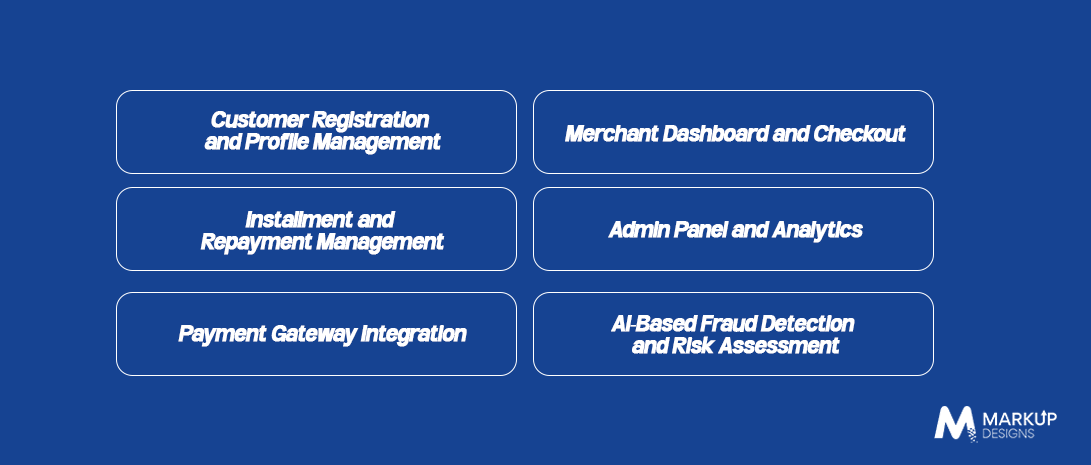
The set of features provided by a BNPL application determines its cost of development. A simple application will need customer registration and installment payments; however, a more sophisticated platform will require merchant tools, automated repayments, and a risk management system. There are six essential functionalities that one should consider when creating an application like Tabby.
Customer Registration and Profile Management
Allow customers to register for the service, log in, and manage their profiles. Functionalities will include OTP verification, KYC, and payment options.
Installment and Repayment Management
Help customers keep track of payment schedules, installments, and repay their loans. Automatic payment deduction, repayment reminders, and early repayment options may be beneficial.
Payment Gateway Integration
Integrate repayments with payment gateways and banking services in order to process the purchase and repayment of installments.
Merchant Dashboard and Checkout
Create tools for merchants to manage their orders, transactions, returns, and settlements. With checkout integration, merchants will be able to provide BNPL payment options.
Admin Panel and Analytics
The system needs an admin panel to control customers, merchants, payments, and repayments. Analytics may be used for monitoring the performance of the platform and payment patterns.
AI-Based Fraud Detection and Risk Assessment
AI algorithms will be used for detecting fraud and assessing payment patterns. In addition, it is necessary to evaluate customer eligibility.
What Factors Influence the Cost of Developing a BNPL App?
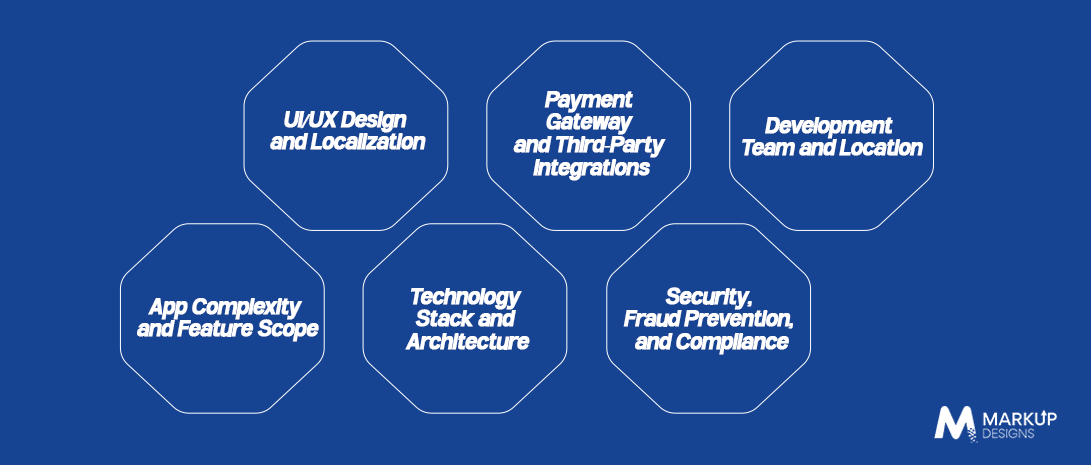
The cost of building a BNPL app is determined by many aspects other than its features. This information helps businesses make budgets for BNPL app development and prevent unwanted expenditures.
Here are six major factors that influence development costs:
App Complexity and Feature Scope
A basic app with registration, payments, and transaction history will be cheaper than an advanced platform with automated risk assessment, dashboards for merchants, and analytics.
UI/UX Design and Localization
The number of screens, designs, user journeys, and required languages impacts the price of design. The need to support English and Arabic may incur additional costs.
Technology Stack and Architecture
Programming languages, frameworks, databases, and infrastructure will impact the price of development. Different technology choices (native, cross-platform, etc.) also impact development cost.
Payment Gateway and Third-Party Integrations
Integration of payment gateways, bank solutions, identity verification, and merchant platforms will require development costs.
Security, Fraud Prevention, and Compliance
Additional development is required for encryption, authentication, fraud detection, access control, and auditing features.
Development Team and Location
The size of the development team, its location, and specialization impact the development rate. The team usually consists of a project manager, a business analyst, a UI/UX designer, frontend and backend developers, a QA engineer, and a security specialist. Fintech expertise helps to avoid technical mistakes and expensive redevelopment.
BNPL App Development Cost Breakdown by Stage
Development of a BNPL solution goes through different development stages, and all of them add to the cost of the entire project. In order to successfully develop an application, companies should allocate budgets for the following activities:
- Research and Planning: Find out the target audience, business model, customer needs, important features, and technical aspects of the solution.
- UI/UX Design: Create wireframes, prototypes, and interfaces for customers, merchants, and administrators, paying attention to easy navigation and a comfortable payment experience.
- Frontend and Backend Development: Develop applications for customers, backends for merchant dashboards, and backend solutions for management of customer accounts, transactions, installments, and payments.
- Integration of Third-Party Solutions: Integrate payment gateways, bank solutions, ID verification services, notification services, and merchant platforms.
- Security and Compliance: Apply encryption, authentication, access control, transaction monitoring, and any other relevant requirements of regulatory bodies.
- Testing and QA: Test payment workflow, calculation of installments, performance and functionality of the application, as well as its security.
- Deployment and Launch: Configure the production environment, launch the application, and provide maintenance and support after launch.
How Does a BNPL App Like Tabby Make Money?
There are several ways through which a Buy Now, Pay Later app earns income from customers, merchants, and payment providers. Customers benefit from flexible payment methods, merchants have an easy checkout process, and the BNPL companies earn from transaction processing and additional services.
Here are four common revenue models:
- Merchant Transaction Fees: Merchants pay a certain fee to BNPL providers for processing their customers’ transactions. This fee usually varies depending on the transaction value and terms.
- Late Payment Fees: There are some providers who charge late payment fees from customers in case of delayed repayment.
- Merchant Subscriptions and Added Value Services: BNPL apps can also earn from selling transaction management tools, sales reports, and optimized checkout experience services.
- Premium Analytics and Promotion Services: Providers can earn from offering merchant analytics and promotion campaigns, among others.
It is important to note that the best revenue model to adopt is determined by various factors such as the targeted market, partnerships with the merchants, costs of operations, and financial regulations.
How to Build a BNPL App Like Tabby: Step-by-Step Process
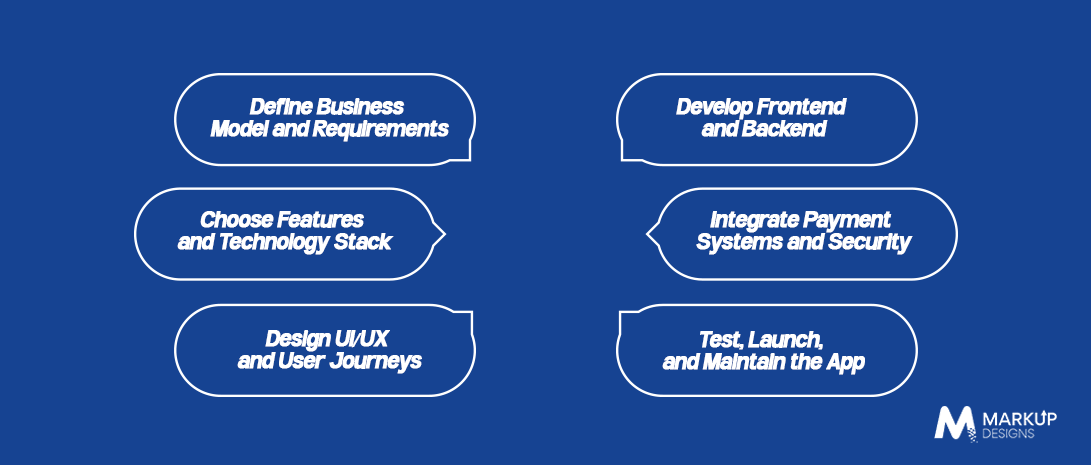
The development of an app like Tabby needs adequate planning, the right technology, and knowledge of how finance works. Businesses should be able to consider not only customer experience but also back-office payment, repayment, and transactional systems. In order to develop a BNPL app, one will have to follow six important stages listed below.
Define Business Model and Requirements
Find out your target users, merchant categories, revenue model, and target market. Define your repayment process and business objectives.
Choose Features and Technology Stack
Pick your core features, which can include registration, payments, repayments, and merchant management. Find out appropriate frameworks, databases, and cloud solutions.
Design UI/UX and User Journeys
Develop wireframes and prototypes for customer apps, merchant dashboard, and admin panel. Pay attention to the convenient navigation and check-out process.
Develop Frontend and Backend
Develop frontend and backend systems responsible for handling accounts, transactions, installments, and payments.
Integrate Payment Systems and Security
Integrate different payment gateways, banking services, and identity verification services. Apply encryption, authentication, and fraud monitoring.
Test, Launch, and Maintain the App
Check the functionality, security, and accuracy of your payment system. Track performance and fix any problems you have found.
Following these steps helps businesses develop a BNPL application with a clear development roadmap and a stronger foundation for future growth.
How to Reduce BNPL App Development Costs Without Compromising Quality
BNPL platform development requires certain technical and financial resources. Yet, businesses can manage development budgets by making the right choices during the process of planning and implementation. Specifically, the idea is to cut costs without sacrificing payment security, user experience, and platform reliability.
The following approaches may help to optimize the development budget.
- Start With Basic MVP: Start with core features such as customer registration, payments, installment plan, payment history, and merchant integration. Add advanced functionality as your platform grows.
- Focus on Business-Critical Functionality: Concentrate on functionalities such as payment processing and merchant services to manage initial development costs.
- Decide on Development Strategy: Choose between native and cross-platform development depending on your budget and performance requirements.
- Use Integration with Third-Party Services: Integrate such third-party solutions as payment gateways, customer identification services, and notification API instead of creating custom solutions for each case.
- Think about Security and Compliance Early: Consider encryption, secure customer authentication, fraud detection, and compliance with regulations when planning the development.
- Select a Professional Development Team: Opt for experienced fintech developers who know how to deal with payment integrations and other technical aspects.
The key is to invest in the right areas from the beginning. A focused development approach helps businesses control their initial budget while creating a BNPL platform that can support future improvements.
Why Choose Markup Designs for BNPL App Development?
BNPL app development is not only about technological know-how. Companies require a development partner that can understand the intricacies of the fintech workflow, payment systems, security issues, and business strategies. Markup Designs assists in transforming fintech ideas into working digital solutions via our custom mobile app and software development services.
Our team can assist in the BNPL app development via intuitive UI/UX design, customer and merchant app development, payment gateway integration, scalable back-end solutions, and quality testing. Our company can also provide support that will keep applications secure and updated.
With 14+ years of experience and 200+ experts on our team, Markup Designs focuses on creating solutions that suit business requirements. No matter if you want to develop an MVP or an advanced BNPL platform, our company can help you plan the correct development strategy considering the budget, technology, and growth plans of your business.
Ready to Build Your Own BNPL Application?
Bring your Buy Now, Pay Later idea to life with a development team that understands fintech requirements. Markup Designs can help you plan, develop, and scale a BNPL platform around your business goals.

Conclusion
The development process of the Buy Now Pay Later application, such as Tabby in 2026, will involve the use of the proper plan, technology, and knowledge of the needs of customers and merchants. The total cost of development will depend on several aspects, including app complexity, the number of features, payment solutions, security measures, and development tools.
It is recommended to pay attention to building a robust payment system without the addition of too many features while launching into the BNPL market. It will be possible to save money while developing an MVP, selecting proper technologies, and thinking about the regulatory requirements.
The choice of the developer will be essential as well. With the roadmap and proper technical support, businesses will be able to develop a scalable BNPL application.
FAQs
1. How much cost to develop a BNPL application like Tabby in 2026?
The price can vary from $30,000 to $150,000 or more, taking into account application complexity, functionalities, integrations, and required security measures. An MVP will obviously be cheaper than an advanced application.
2. How much time is needed to develop a BNPL application?
For example, development of a basic BNPL application may take about 3-5 months, and 5-8 months – mid-level one. Development of an advanced application may take 8-12 months or even more, depending on the application scope.
3. Which features are necessary for the BNPL application?
Some of the necessary features may include customer registration, identity verification, installment management, payment gateway integration, payment and repayment reminders, transaction history, merchant dashboards, and some administrative features.
4. Is it possible to develop a BNPL application with a limited budget?
Yes, you can start with an MVP with essential payment and repayment features. Other additional functionalities, including AI-powered risk assessment and analysis features, will be developed as you grow as a business.
5. What technology stack is best for BNPL app development?
The technology stack depends on your application requirements. Flutter or React Native can be considered for cross-platform development, while Node.js, Java, or Python can support backend development. Cloud platforms such as AWS and Microsoft Azure can provide infrastructure for hosting and scaling.
Author's Perspective
The BNPL market offers businesses an opportunity to create more flexible digital payment experiences. However, building a successful platform requires more than replicating the features of an existing application. Businesses need to understand customer repayment behaviour, merchant expectations, financial risks, and regulatory responsibilities.
A practical approach is to begin with a focused product, establish reliable payment workflows, and invest in security from the start. As the platform gains users and merchant partnerships, additional features can be introduced based on actual business requirements.
The long-term success of a BNPL application depends on creating a balance between customer convenience, responsible payment practices, and a sustainable business model.
Discuss Your Project NowJupinder Singh Arora
Founder and CEO
Related Posts

AI in FinTech Australia: Use Cases, Benefits &...
How Much Does It Cost to Develop a...
How Much Does It Cost to Develop a...
Insights Are Valuable & Execution is Priceless
You’ve read about the digital future. Now, let’s build the infrastructure to take you there. Move your strategy from the page to the product.
Design Your Solution Now
Contact Us
Schedule The Appointment At Your Convenience Date And Time.
30 Min
Web Conference
Time Zone
Indian standard time (08:30pm)

Thanks For Getting In Touch!
You’ve Taken The First Step Toward Transforming Your Digital Presence. Our Experts Will Reach Out Shortly To Take It Forward.
Launch Your Dream Project
Provide a brief overview of your project, and our specialists will evaluate your requirements. We will connect with you to explore how the right digital solutions can help you launch faster.