

In Brief
- Custom accounting software helps Australian businesses automate various aspects of their bookkeeping operations, invoice generation, expense management, payroll, taxation, and financial management processes.
- The cost of developing accounting software usually varies from AUD 20,000 to 50,000 for simple software, AUD 50,000 to 150,000 for middle-level software, and AUD 150,000 to 300,000 or more for complex software. Timeline estimates vary from 2-3 months for simpler solutions to 6-12 months or more for complex solutions.
- Factors influencing the cost of software development include complexity of the software, its functionality, third-party integrations such as Xero and MYOB, technology stack, security and compliance considerations, and developers’ experience. The cost estimates per feature range from AUD 3,000 for invoices and payments management to AUD 30,000 or more for AI-based automation.
- Costs associated with developing such software may be controlled through the use of MVP, requirement definition, priority of important functionality, proper APIs, proper choice of technology stack, and maintenance. The development process involves requirement analysis, UI/UX design, technology selection, development, testing, integration, deployment, and support.
- The custom accounting software provides better flexibility in terms of particular workflows and integrations, whereas the off-the-shelf solutions are less expensive for general-purpose accounting requirements. Markup Designs has 14+ years of experience, 200+ professionals, and 500+ projects done for companies, and is ready to assist in developing accounting software according to your business needs.
Financial management is an essential component of every business organization; however, doing accounting work with old technology or using various software programs may become troublesome for a company. Whether it involves managing spending, processing invoices, preparing tax statements, or controlling cash flow, companies require efficient means to manage all these processes successfully.
This is where accounting software comes into play. It enables organizations to develop unique functions depending on their accounting processes, automates routine actions, minimizes errors, and provides better visibility regarding the financial results of a business. At the same time, the price of developing such software varies from case to case, taking into account a number of parameters.
So, how much should you budget for custom accounting software development in Australia?
In this blog post, we will explore software development cost estimates, factors impacting pricing, cost distribution by features, development schedules, and budget management. Besides, we will shed light on the development process and help you figure out if custom software development is a good option for your business.
How Much Does Custom Accounting Software Development Cost in Australia?
The average cost for developing accounting software in Australia starts at AUD 20,000 and can reach more than AUD 300,000 based on software functionality. The price range varies depending on the complexity of the software to be developed. A simple one is cheaper to develop than one with AI features.
Here is an estimated cost breakdown to help you plan your budget.
| Software Complexity | Estimated Cost (AUD) | Estimated Timeline |
| Basic accounting software | $20,000–$50,000 | 2–3 months |
| Mid-level accounting software | $50,000–$150,000 | 3–6 months |
| Advanced accounting software | $150,000–$300,000+ | 6–12+ months |
Factors Affecting Custom Accounting Software Development Costs
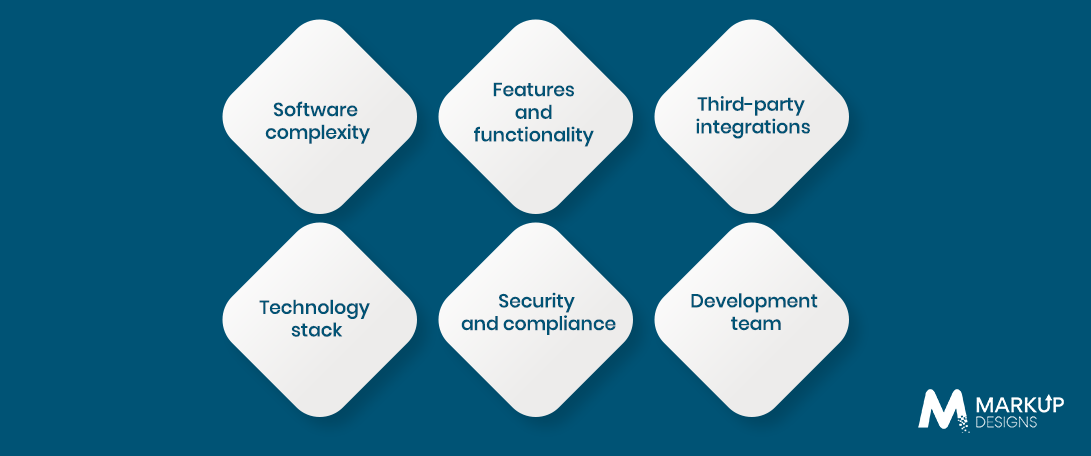
The cost for custom-built accounting software involves not only the number of features that are to be incorporated into a software solution but also other factors that impact the development process. Awareness of these issues will help to make better choices and reduce unplanned expenses.
Software complexity
Complex software solutions take more time and money to create. Simple expense tracking costs less than solutions that manage several companies, different currencies, taxes, and financial reporting.
Features and functionality
Development costs depend on the choice of features to be developed. Invoicing costs less than advanced functions such as automated reconciliation via AI, forecasting, and financial analysis.
Third-party integrations
Integration with banks, payment gateways, payroll systems, Xero, and MYOB will have an impact on development costs due to available APIs, data synchronization, and testing.
Technology stack
The technology stack impacts development costs, software performance, scalability, and maintenance. Advanced software infrastructure for handling big amount of transactions may need an additional budget.
Security and compliance
Features such as encryption, access control, audit, and backup cost money. Privacy and tax compliance regulations in Australia influence the decision.
Development team
The costs will vary depending on developer experience, size of the development team, geographic location, and engagement model. Developers with more experience can charge higher fees upfront but prevent future mistakes and rework.
Cost Breakdown by Accounting Software Features
The features you opt for will definitely affect the cost of developing your accounting software. Accounting software without automated payroll, taxation processes, and analytics will cost you much less than software with such capabilities.
Here is an indicative breakdown of what individual feature groups may cost.
| Feature | Estimated Cost (AUD) |
| Core accounting and bookkeeping | $5,000–$15,000 |
| Invoicing and payment management | $3,000–$10,000 |
| Payroll management | $5,000–$15,000 |
| Tax calculations and reporting | $5,000–$15,000 |
| Financial reporting and dashboards | $4,000–$12,000 |
| AI-powered automation | $10,000–$30,000+ |
How Long Does It Take to Develop Custom Accounting Software?
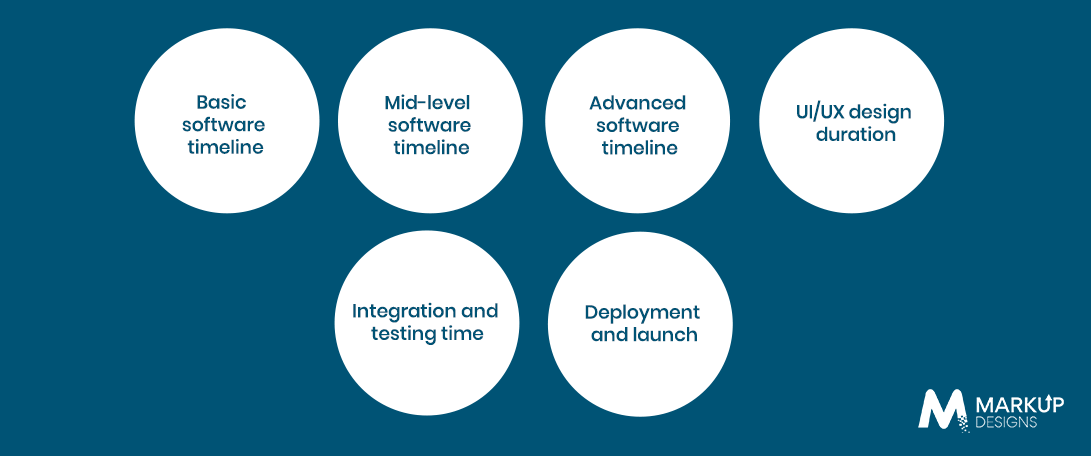
The time required for creating custom accounting software in Australia is determined by the scope of work, complexity of features, level of integration, and testing process involved. The simpler application will take a few months to build, while more complex applications can take a year or even longer to develop.
Here is a general timeline for planning your project.
| Software Type | Estimated Development Time |
| Basic accounting software | 2–3 months |
| Mid-level accounting software | 3–6 months |
| Advanced accounting software | 6–12+ months |
These are indicative planning ranges. Actual timelines depend on team size, scope, integration access, feedback cycles, and compliance testing.
Basic software timeline
A basic accounting software would require approximately 2 to 3 months, provided the requirements are clear and the functionalities required are few. These include basic accounting features, invoices, reports, testing, and deployment.
Mid-level software timeline
The development and delivery time for a mid-level software would be 3 to 6 months. This is due to the inclusion of more functionalities, roles for users, reports, and integrations with third-party systems. There could be some additional time required to validate the accuracy of the data and functionality of the integrated systems.
Advanced software timeline
Advanced software for accounting will take 6-12 months or even more. The reason is the more complicated development requirements, as well as the validation process.
UI/UX design duration
It usually takes several weeks, which depends on the number of user types, screens, and processes. Well-designed navigation and a user-friendly financial dashboard could help simplify accounting procedures for end-users.
Integration and testing time
Integration with banks, payment services, payroll systems, or accounting platforms entails the process of developing and testing integrations. The developers should validate the data, security, error handling, and behavior of the software in case the integrated service is unavailable.
Deployment and launch
Deployment includes setting up the production environment, migrating data, users’ training, and testing the performance of the software. Gradual deployment might be a good idea for those companies that want to transfer from the old software to the new one.
How to Reduce Accounting Software Development Costs
Customized accounting software development requires proper planning; however, you do not necessarily need to have a big budget for that. The trick here is to concentrate on necessary functions, use appropriate technologies, and minimize any additional development work. Here are six effective tips on how you can do it.
1. Start with a Minimum Viable Product (MVP)
Develop the most crucial functions of your business, such as billing, expense management, accounting, and reporting, at first. An MVP will allow you to test the software and make adjustments after its launch.
2. Define Your Requirements Clearly
Make a list of features, user roles, workflows, and other aspects of development before starting the process. This will help you avoid any misunderstandings and unanticipated costs.
3. Prioritize High-Value Features
Not all the features will be needed in the initial release; choose those that solve immediate problems in the accounting domain or automate some tasks. Other features could be added in subsequent iterations of development.
4. Pick the Proper Technologies
Choose those technologies that correspond to your performance, security, and scalability needs. The use of proven frameworks and cloud technologies may assist in reducing development efforts and future maintenance. Don’t buy additional services and software if you don’t need them now.
5. Take Advantage of Existing Software and APIs
The development of each new piece of software is expensive in terms of money and time. If it is possible, use available APIs and software for solving tasks such as payments, notifications, document management, etc. Consider licensing fees, integration limitations, and security aspects when picking a service.
6. Planning for Maintenance Right from the Beginning
Periodic updates, backups, monitoring, and security checks can go a long way in saving money in the future. Plan for maintenance and incorporate automated testing if possible.
The best way to keep costs under control is to manage short-term requirements along with future considerations. This is achieved by adopting a phased development strategy that makes it possible to release functional modules first and develop more capabilities only when needed.
Read Also: Digital Transformation in Financial Services: Trends, Benefits, and Strategy
Step-by-Step Process for Developing Custom Accounting Software
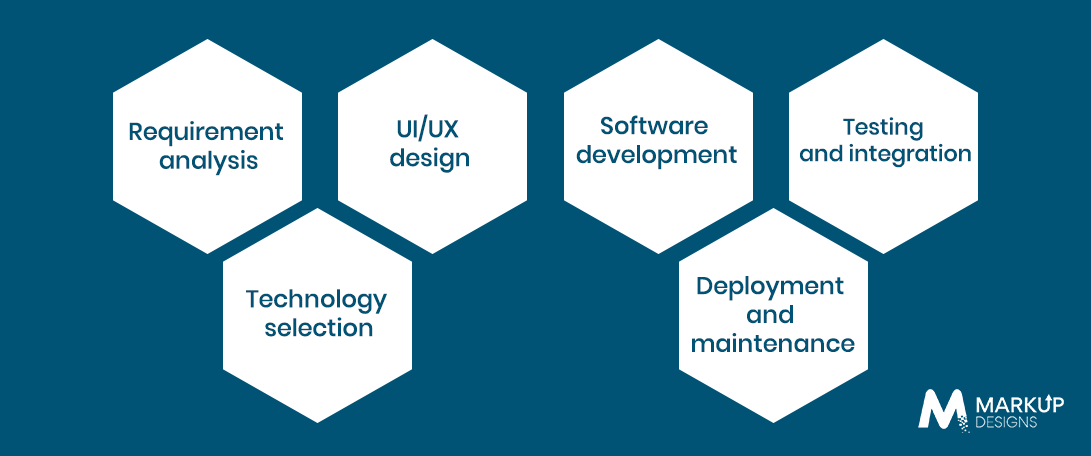
The creation of customized accounting software requires more than simply programming. You should know about your financial processes, choose appropriate technologies, protect your sensitive information, and get a reliable solution that will give you an opportunity to get correct results. The use of certain development processes will help you keep control over the process.
Here are some stages of development.
Requirement analysis
The very first step is understanding your needs in accounting, current systems, and business objectives. The developers will find out all necessary characteristics, functions, and the budget of the project.
UI/UX design
The developers will create wireframes and design basic screens, dashboards, reports, and processes to provide you with an opportunity to perform accounting work most efficiently, even if you are not an accountant.
Technology selection
In the next step, the developers choose the programming languages, frameworks, databases, and hosting infrastructure. The technology stack must support your requirements regarding features, data protection, performance, and further extension possibilities. A cloud-based architecture could fit well if your business requires remote access and scalable infrastructure.
Software development
Developers implement the accounting modules based on the agreed requirements. It may include bookkeeping, invoicing, expense management, payroll, financial reports, and access permissions. Software development is usually performed in stages in order to evaluate the development process and fix problems if there are any.
Testing and integration
The developed software is tested in order to verify calculations, transaction logging, reporting, security, and performance in general. Additionally, the team tests integration with payment gateways, banks, payroll solutions, or accounting software such as Xero and MYOB.
Deployment and maintenance
When the software passes all the tests and gets approved, it is deployed in the production environment. Developers could migrate your existing database, conduct user training, and track the initial deployment. Maintenance involves security updates, bug fixes, performance monitoring, and modifications according to changing requirements.
Following these steps helps create accounting software that meets your current needs while remaining practical to maintain and expand.
Custom Accounting Software vs. Off-the-Shelf Solutions
Businesses operating in Australia typically face two possibilities when selecting an accounting program: developing their own program or using an already available one. The correct option will depend on a number of factors, including budgetary constraints, workflow, and desired level of control.
| Comparison Factor | Custom Accounting Software | Off-the-Shelf Software |
| Initial cost | Usually higher | Usually lower |
| Features | Built around specific requirements | Based on available plans and features |
| Development time | Requires planning and development | Can often be set up quickly |
| Integrations | Can be developed for specific systems | Depends on supported integrations |
| Flexibility | Greater control over functionality | Limited by product capabilities |
| Maintenance | Your team or provider manages it | Mostly handled by the vendor |
| Scalability | Can be expanded based on requirements | Depends on the vendor’s plans and limits |
Why Choose Markup Designs for Custom Accounting Software Development?
The selection of the right software development partner is key to ensuring the successful implementation of an accounting software development project. Markup Designs has been in the market for more than 14 years, with more than 200 experts who have already worked for more than 500 clients from various industries. We know that every company has its own workflow and issues related to financial operations and reports.
Our team assists our customers in defining project requirements and creating software that will satisfy the customer’s objectives. We concentrate on developing solutions aimed at simplifying accounting tasks such as bookkeeping, invoice management, financial reporting, and integration with other systems. At the same time, we pay attention to the security, performance, and scalability of a solution.
We assist in planning features of the product, considering the client’s budget. With the help of the proper development process and technical support provided by Markup Designs, the accounting software is created to meet your requirements.
Ready to Develop Custom Accounting Software for Your Business?
Looking to simplify financial management, automate accounting tasks, and improve reporting accuracy? Markup Designs can help you plan a solution that fits your workflows, technical needs, and budget.

Conclusion
Custom-built accounting software can help organizations in Australia to keep track of their finances, automate routine tasks, and have more control over their accounting processes. Still, the development cost will depend on a range of factors, including the complexity of the software, its features, the need for integration with other systems, security requirements, and the experience of developers.
Before starting development, you should define your key requirements and select the features needed to launch the first version of the software. You should not forget about testing, maintenance, hosting, and other related expenses when developing your budget.
If pre-existing accounting software is enough for your business, custom software can give more opportunities when there is no suitable solution.
The best strategy would be to find a balance between your current requirements and long-term goals. With correct planning and a competent developer, you will be able to create a flexible accounting software that will fit your processes.
FAQs
1. How much does custom accounting software development cost in Australia?
Custom accounting software development may cost between AUD 20,000 and AUD 300,000 or more. The final price depends on the features, complexity, integrations, security requirements, and development timeline. A detailed project assessment is the best way to establish a realistic estimate.
2. How long does it take to develop custom accounting software?
A basic accounting solution may take around 2–3 months, while a mid-level platform may require 3–6 months. Advanced systems with complex integrations, enterprise features, or AI capabilities can take 6–12 months or longer.
3. What features should custom accounting software include?
Essential features may include bookkeeping, invoicing, expense tracking, financial reporting, user management, and transaction records. Depending on your requirements, you may also need payroll, tax reporting, bank integrations, automated reconciliation, and financial analytics.
4. Is custom accounting software better than off-the-shelf software?
Custom software is useful when your business needs specialised workflows, integrations, or reporting capabilities. Off-the-shelf software is often more affordable and quicker to implement for standard accounting tasks. The right option depends on your budget, requirements, and long-term plans.
5. What are the ongoing costs of accounting software?
Ongoing costs may include cloud hosting, maintenance, security updates, technical support, third-party subscriptions, backups, and future feature enhancements. These expenses vary based on the software’s architecture, usage, and support requirements.
Author's Perspective
Custom accounting software is not just a technology investment; it is a way to improve how a business manages its finances. The key is to start with clear requirements, focus on the features that solve real problems, and plan for security and maintenance from the beginning. Businesses should compare the long-term value of custom development with the flexibility and lower initial costs of ready-made tools. With the right strategy, accounting software can support more efficient workflows, better financial visibility, and future growth.
Discuss Your Project NowJupinder Singh Arora
Founder and CEO
Related Posts

How Much Does It Cost to Develop Property...

How to Build an Insurance Portal with CRM,...

Custom Software Development Services in Abu Dhabi for...
Insights Are Valuable & Execution is Priceless
You’ve read about the digital future. Now, let’s build the infrastructure to take you there. Move your strategy from the page to the product.
Design Your Solution Now
Contact Us
Schedule The Appointment At Your Convenience Date And Time.
30 Min
Web Conference
Time Zone
Indian standard time (08:30pm)

Thanks For Getting In Touch!
You’ve Taken The First Step Toward Transforming Your Digital Presence. Our Experts Will Reach Out Shortly To Take It Forward.
Launch Your Dream Project
Provide a brief overview of your project, and our specialists will evaluate your requirements. We will connect with you to explore how the right digital solutions can help you launch faster.