

In Brief
- Scheduling software for patients consolidates scheduling, availability, cancellations, rescheduling, reminders, and communication with patients for the purpose of reducing manual efforts and eliminating possible scheduling conflicts for healthcare facilities.
- Important features like online booking, real-time availability, automated reminders, patient self-service, EHR/EMR integration, and analytics can contribute to effective use of resources, productivity of employees, patient flow, and general patient experience.
- AI can add intelligence to the process of scheduling by providing appointment recommendations, automated rescheduling, predicting no-shows, managing waiting list, AI-based scheduling assistants, and schedule optimization.
- Development cost will vary based on features, integration options, security and compliance, UI/UX, platform type, and maintenance. A patient scheduling system can be developed for around $30,000 for a basic version up to $300,000+ for an advanced solution.
- A successful implementation will involve knowing current processes, determining requirements, making integration plans, testing of the system, training staff, and monitoring key metrics like booking time, no-show rate, waiting time, provider utilization, staff productivity, and patient satisfaction.
Effective management of healthcare facilities requires coordination of many moving pieces that involve managing healthcare professionals, booking patients’ appointments, arranging rooms, and schedules. When this is done manually, even the slightest problem with scheduling can cause delays, missed appointments, overworked employees, and a bad patient experience.
The use of patient scheduling software helps healthcare facilities organize all those processes in one coherent system. Patients can book appointments online, set up reminders, reschedule their visits, and choose convenient time slots, not relying solely on phone calls and front-desk personnel. In addition, healthcare professionals can keep track of their schedules, avoid scheduling problems, and increase their understanding of the work process.
However, the influence of scheduling software goes much further than just booking appointments. The right scheduling software can make providers more efficient and productive while improving the overall patient experience.
In this blog post, we’ll look at the ways in which patient scheduling software impacts healthcare facilities, the main features that it includes, the role of AI in this process, the implementation process, development costs, and the ways of measuring its impact on healthcare.
What is Patient Scheduling Software?
Patient scheduling software can be described as software that helps to manage appointments, the availability of providers, patient appointments, and schedules from one interface. It enables healthcare professionals to organize all the appointment scheduling procedures without having to use telephone calls, spreadsheets, or individual calendars.
The scheduling software helps the patients to view open slots, schedule an appointment, cancel or reschedule an appointment, and to get notifications automatically. The doctors’ schedules can also be managed together with departmental coordination to avoid conflicts like double bookings.
Modern scheduling software can do more than just help to manage appointments. It can integrate with EHR/EMR, telehealth software, payment systems, patient portals, and communication systems, among others, to make a more integrated workflow.
This software will reduce the amount of manual work for healthcare organizations and increase transparency when it comes to schedules. Patients will be provided with a simple way of managing their healthcare visits.
Therefore, patient scheduling software integrates patients, healthcare providers, staff, and other resources for managing appointments.
Why Efficient Scheduling Matters in Healthcare Operations
Scheduling is not only about booking certain appointments for clients. It influences how doctors, other employees, rooms, equipment, and other healthcare organization resources are allocated during the day. As a result, poor scheduling leads to delays and affects several appointments at once.
Manual scheduling may make it difficult to deal with cancellation and rescheduling of appointments, provider availability, and large numbers of patients. Patients will spend more time waiting, and staff will waste time talking on the phone and updating schedules.
An effective schedule allows healthcare organizations to keep their daily processes well-organized and predictable. It may help providers use available appointment time slots in a more efficient manner, avoid scheduling issues, and provide clients with more booking opportunities.
The following problems are the most common for healthcare organizations:
- Booking the same appointment twice
- Missed appointments
- Long waiting time for patients
- Underutilization of provider availability
- Large administrative workload
- Difficult coordination of several locations
This is why effective scheduling plays a significant role in providing patients with quality service and ensuring the smooth work of the organization.
How Patient Scheduling Software Improves Healthcare Operations
Patient scheduling software would be an effective tool for improving healthcare organization processes by linking scheduling activities with those of the support of providers and their clients. Instead of having it as a stand-alone activity, healthcare organizations can manage appointment availability, communications, resources, and patient interaction through the scheduling software.
Some of the benefits include:
- Easy Appointment Management
The appointment scheduling software makes it easy for both patients and healthcare professionals to book, cancel, and change their appointment times.
- Minimizes Scheduling Conflicts
By having real-time availability, healthcare organizations minimize any scheduling conflicts, such as double-booking or overlapping.
- Helps Reduce No-Shows
By sending automated SMS, email, or push notifications, organizations would be able to remind their patients to attend their appointments.
- Effective Use of Resources
Scheduling software enables healthcare professionals to coordinate and utilize their resources effectively.
- Lessen Administrative Tasks
Automated processes reduce time spent on administrative tasks related to scheduling, giving clinicians more time to help their patients.
- Provides a More Enjoyable Patient Experience
It is easier for patients to book their appointment slots, which makes the entire patient experience better.
Key Features of Patient Scheduling Software
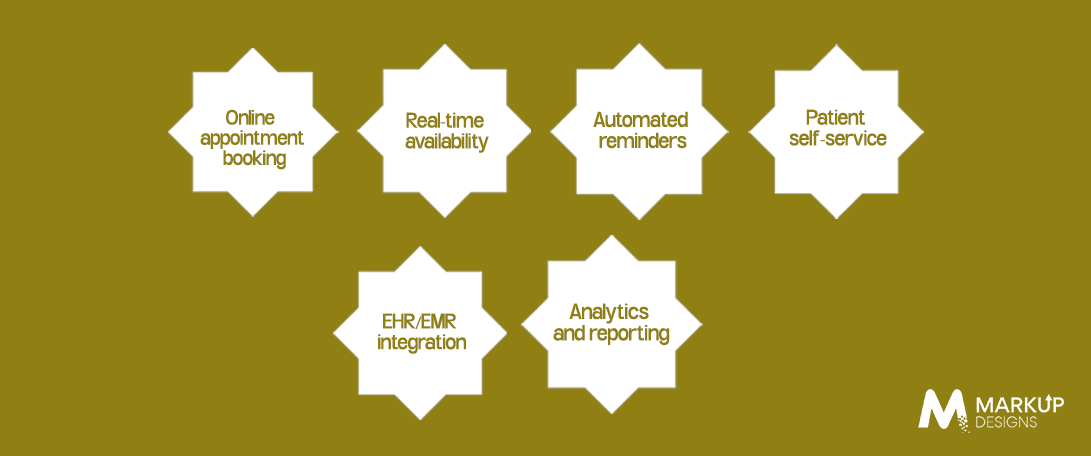
However, a patient booking application requires much more than an online scheduling tool. An ideal list of features has to assist both patients and medical practitioners as well as administrative personnel, while remaining convenient for scheduling.
- Online Appointment Booking
Patients have the possibility to see available slots and to book an appointment online without making a phone call to the clinic or contacting any administrative worker.
- Real-Time Availability
This solution shows updated schedules of practitioners, thus allowing users to choose the appropriate slot and prevent double booking of the same practitioner.
- Automated Reminders
Automated reminders by SMS, email, and/or push notifications allow notifying the patient about his/her appointment.
- Patient Self-Service
It allows patients to perform actions such as managing their appointments, canceling appointments, or rescheduling via an online portal.
- EHR/EMR integration
This feature enables synchronization between the scheduling application and the electronic health records system.
- Analytics and Reporting
Administrative personnel and healthcare practitioners can monitor such parameters as bookings, cancellations, no-shows, availability of practitioners, etc.
Make Patient Scheduling Simpler and More Efficient
Managing appointments manually can slow down your healthcare operations. A custom patient scheduling solution can help automate routine tasks, improve resource utilization, and create a smoother experience for both patients and staff.

How AI is Transforming Patient Scheduling
The introduction of AI has made the process of making appointments and schedules for patients very convenient and flexible. Using artificial intelligence, healthcare institutions would be able to make appointments, taking into consideration a variety of factors such as patterns of making appointments, availability of doctors, preferences of patients, etc.
The first possible application of the use of AI in appointments is AI-based suggestions of appropriate slots for patients. In addition, the technology will help in automated rescheduling in case of cancelled appointments or unavailability of physicians.
The next application of the technology could be related to predicting the likelihood of no-shows, which would help healthcare professionals determine which appointments for which patients need additional reminders. When a slot becomes free, Artificial intelligence will also help in matching a patient from the waiting list.
AI can also help healthcare professionals through the use of virtual schedulers that perform routine tasks related to appointments.
The most significant applications of AI in scheduling include:
- Intelligent appointment scheduling
- Automated rescheduling
- No-show prediction
- Waitlist management
- AI scheduling assistants
- Optimization of schedules and resources
Properly implemented, the technology will help minimize repetitive scheduling tasks while also enabling more efficient use of appointment capacity.
Read Also: How Digital Transformation Is Revolutionizing Healthcare
How to Implement Patient Scheduling Software
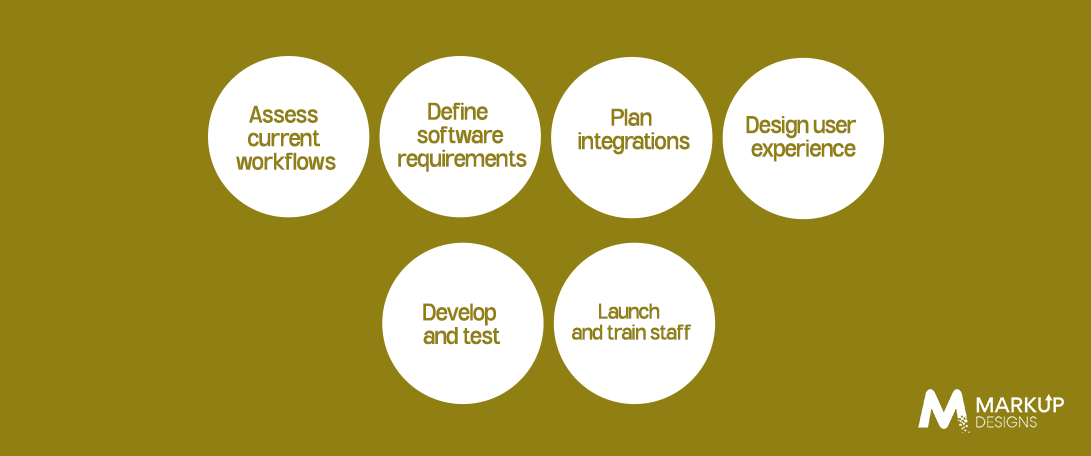
In addition to creating a software solution for booking appointments, its implementation should be aligned with the workflow of the healthcare organization, the roles of its personnel, the experience of patients, and the technology infrastructure.
Some steps of a proper implementation may include the following:
Assess current workflows
Evaluate current ways of making bookings, confirmations, cancellations, and managing appointments. Identify inefficiencies, repetitions, and scheduling holes.
Define software requirements
Choose the necessary functions of the software, e.g., booking online, reminders, self-service for patients, providers’ calendars, waitlist management, or reports.
Plan integrations
Determine the systems that will have to be integrated with the scheduling software, including EHR/EMR, telehealth, payments, communications, and patient portal systems.
Design user experience
Develop user interfaces for patients, doctors, receptionists, and other personnel depending on their scheduling specifics.
Develop and test
Create all the necessary components and test booking processes, integrations, security features, notifications, and various scheduling scenarios.
Launch and train staff
Implement the solution, train healthcare staff, observe its initial performance, and improve according to the feedback received from practice.
How Much Does Patient Scheduling Software Cost?
The cost of patient scheduling software varies depending on the type of development platform used and the degree of functionality. For example, an appointment booking solution will be cheaper than developing a customized healthcare solution that includes EHR, AI, telemedicine, and multi-location management.
For instance, based on the scope that is commonly required for healthcare scheduling platforms, development will typically fall under the following categories:
| Software Type | Approximate Development Cost |
| Basic | $30,000–$50,000 |
| Intermediate | $60,000–$150,000 |
| Advanced | $200,000–$300,000+ |
These figures are indicative rather than fixed. The final cost can vary based on the project scope and development location.
The total cost of development depends on a number of things:
- Feature complexity: Feature sets such as scheduling, AI, analytics, and automation need greater effort from the developer’s side.
- Integrations: Integrations with EHR/EMR, telehealth, payment, and communication channels will lead to extra development efforts.
- Security and compliance: Healthcare-related platforms need proper security measures and compliance.
- UI/UX specifications: The design of custom UI/UX for patients, doctors, and administrators will be additional work.
- Technology stack: There could be various technologies for building web, mobile, or cross-platform applications.
- Maintenance: Maintenance includes hosting, updating, monitoring security, and further improvements.
For a proper estimation, healthcare organizations need to define their feature set, required integrations, target audience, and workflow before development starts.
How to Measure the Impact of Patient Scheduling Software
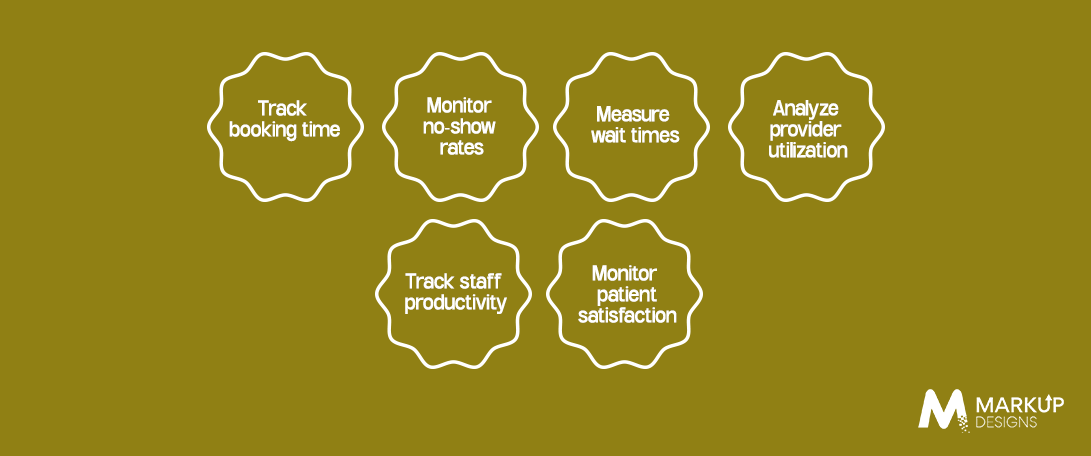
The installation of scheduling software is just the first step that must be taken in order to optimize the process. In addition to using the software, hospitals need to keep an eye on its performance and see whether there are areas where time is saved, resources are utilized more efficiently, and patients’ experience is improved thanks to the new software.
The most important metrics that need to be monitored include:
Track booking time
Calculate the time the patient or a staff member spends booking an appointment.
Monitor no-show rates
Check out how many patients miss their appointments before and after automated reminders were implemented in the process.
Measure wait times
Check out whether the scheduling software helps reduce waiting time for the patients.
Analyze provider utilization
See how well the available time of doctors and providers is utilized.
Track staff productivity
Calculate how much administrative time goes to calls, scheduling, confirmation, and rescheduling.
Monitor patient satisfaction
Ask patients to give their opinions on the convenience of appointment booking.
Why Choose Markup Designs for Patient Scheduling Software Development?
Markup Designs helps healthcare organizations build patient scheduling software around their specific operational needs, from appointment booking and provider availability to patient communication and workflow automation.
Our team focuses on creating secure, scalable, and user-friendly solutions that can integrate with EHR/EMR systems, telehealth platforms, payment gateways, and other healthcare technologies. We can also incorporate AI-powered capabilities such as intelligent scheduling, automated reminders, no-show management, and appointment optimization.
With a focus on practical functionality and long-term scalability, Markup Designs helps turn complex scheduling requirements into digital platforms that support healthcare teams while delivering a smoother appointment experience for patients.
Ready to reduce scheduling complexity and improve healthcare operations?
Create a patient scheduling platform that makes appointment management easier for your patients, staff, and providers.

Conclusion
Appointment scheduling is an essential process for all healthcare organizations. It allows teams to dedicate less time to addressing problems related to scheduling and focus more on treating patients when all processes are arranged properly.
By transferring scheduling tasks, availability management, appointment booking, communication with patients, and other elements into a unified digital tool, providers may achieve better workflows.
AI could be used to introduce advanced features like appointment suggestions, automatic rescheduling, no-show prediction, and schedule optimization. The value of the tool will depend on how well it suits existing processes in an organization.
In case healthcare organizations intend to digitalize their appointment management process, choosing a proper scheduling solution could be a crucial step to achieve organized workflows.
FAQs
1. What is patient scheduling software?
Patient scheduling software is a digital solution that helps healthcare organizations manage appointments, provider availability, patient bookings, reminders, cancellations, and rescheduling from a centralized platform.
2. How does patient scheduling software improve healthcare operations?
It can reduce manual scheduling work, minimize booking conflicts, improve provider utilization, reduce appointment no-shows, and give patients more convenient ways to manage appointments.
3. Can patient scheduling software integrate with EHR and EMR systems?
Yes. Custom scheduling platforms can integrate with EHR/EMR systems through appropriate APIs and healthcare interoperability standards, depending on the systems involved.
4. Can AI be used in patient scheduling software?
Yes. AI can support appointment recommendations, no-show prediction, automated rescheduling, waitlist management, scheduling assistants, and other workflow automation.
5. Can scheduling software support multiple healthcare locations?
Yes. Multi-location scheduling can allow organizations to manage providers, appointments, resources, and availability across different clinics or facilities.
Author's Perspective
Patient scheduling is closely connected to the efficiency of everyday healthcare operations. A well-designed scheduling platform can reduce repetitive administrative work while making appointment management more convenient for patients and providers. The real value comes from connecting scheduling with the wider healthcare workflow, including patient records, communication, resources, analytics, and automation. As healthcare organizations continue adopting digital tools, patient scheduling software can become an important part of creating more organized and responsive care delivery.
Discuss Your Project NowGaurav Goyal
Global Sales- VP
Related Posts

Software Companies in Kuwait: Smart Choices for Long-Term...

AI Software Development Cost in UAE: Complete Pricing...

How Much Does It Cost to Build CRM...
Insights Are Valuable & Execution is Priceless
You’ve read about the digital future. Now, let’s build the infrastructure to take you there. Move your strategy from the page to the product.
Design Your Solution Now
Contact Us
Schedule The Appointment At Your Convenience Date And Time.
30 Min
Web Conference
Time Zone
Indian standard time (08:30pm)

Thanks For Getting In Touch!
You’ve Taken The First Step Toward Transforming Your Digital Presence. Our Experts Will Reach Out Shortly To Take It Forward.
Launch Your Dream Project
Provide a brief overview of your project, and our specialists will evaluate your requirements. We will connect with you to explore how the right digital solutions can help you launch faster.