
In Brief
- Marketplace app development can cost anywhere from tens of thousands to several hundred thousand dollars, depending on scope, complexity, and technology requirements.
- Features such as multi-vendor management, secure payments, real-time tracking, AI, and advanced analytics can significantly affect development costs.
- The marketplace type, number of platforms, UI/UX requirements, integrations, and development team also influence the overall budget.
- A marketplace MVP can help businesses validate their business model and core features before investing in advanced functionality.
- Development costs continue after launch through maintenance, infrastructure, security updates, performance optimisation, and feature enhancements.
Marketplace apps connect buyers and sellers through a shared digital platform, allowing businesses to facilitate product sales, service bookings, rentals, transactions, or other forms of exchange. As marketplace models continue to expand across e-commerce, services, rentals, B2B, and C2C businesses, understanding the cost of building such an application has become an important part of planning a new digital venture. Unlike a standard mobile application, a marketplace typically requires separate workflows for buyers, sellers, administrators, payments, listings, orders, and communication.
The cost to develop a marketplace app in 2026 depends on several factors, including the marketplace model, feature complexity, platforms, UI/UX requirements, backend architecture, integrations, security, and the development team. A basic marketplace with essential buying and selling functionality requires a different investment from an advanced platform with AI-powered recommendations, automated payouts, real-time tracking, fraud detection, and complex vendor management. Understanding these cost drivers can help businesses define a realistic budget, prioritise features, and choose an appropriate development approach.
How Much Does It Cost to Develop a Marketplace App in 2026?
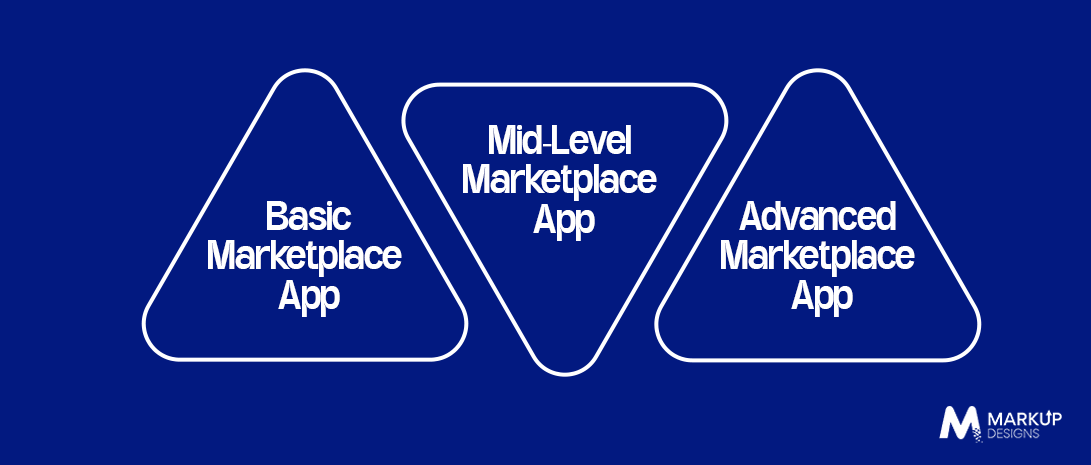
The cost of developing a marketplace app in 2026 can vary significantly based on the business model, number of users, features, platforms, integrations, and required infrastructure. As an indicative range, a basic marketplace app may cost around 40,000–70,000, a mid-level marketplace around 70,000–150,000, while an advanced marketplace can cost 150,000–400,000 or more. These are broad estimates rather than fixed prices, as the actual budget depends on the project’s technical scope and development requirements.
| Marketplace Type | Typical Cost Range | Development Scope |
| Basic | 40,000–70,000 | Core buyer/seller features, listings, search, payments, and basic admin |
| Mid-Level | 70,000–150,000 | Advanced workflows, integrations, notifications, analytics, and stronger customisation |
| Advanced | 150,000–400,000+ | Multi-vendor architecture, AI, real-time features, advanced security, analytics, and scalable infrastructure |
Basic Marketplace App
A basic marketplace typically includes user registration, seller listings, product or service search, basic filters, cart or booking functionality, payments, order management, and an admin panel. It is generally suitable for validating a marketplace concept or launching an MVP.
Mid-Level Marketplace App
A mid-level marketplace can include more sophisticated seller management, personalised experiences, multiple payment options, notifications, reviews, communication, analytics, and third-party integrations. It requires greater backend and testing effort than a basic application.
Advanced Marketplace App
An advanced marketplace may support large numbers of buyers and sellers, automated payouts, real-time tracking, AI-powered recommendations, fraud detection, advanced analytics, multiple integrations, and complex administrative controls. Such platforms require scalable architecture, stronger security, and extensive testing.
What Factors Affect Marketplace App Development Cost?
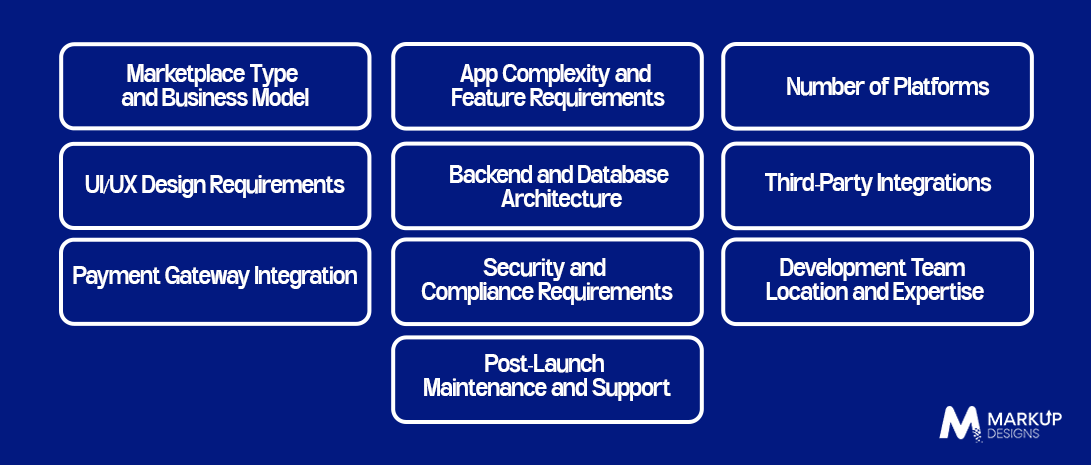
Marketplace Type and Business Model
A B2C, B2B, C2C, rental, service, or multi-vendor marketplace can require different workflows and functionality. The business model directly affects the features, user roles, transaction flow, and backend architecture.
App Complexity and Feature Requirements
The number and complexity of features have a direct impact on development effort. Basic listings and checkout require less work than real-time tracking, AI, automated payouts, advanced search, or complex seller management.
Number of Platforms
Developing for iOS, Android, and web can increase the overall development effort. Businesses need to decide whether to use native development or a suitable cross-platform approach based on their requirements.
UI/UX Design Requirements
Custom interfaces, complex user journeys, animations, accessibility, multilingual support, and separate buyer and seller experiences can increase design and development time.
Backend and Database Architecture
Marketplace apps require backend systems to manage users, listings, inventory, orders, payments, communication, and other data. A larger marketplace may also require scalable databases and cloud infrastructure.
Third-Party Integrations
Integrations with payment gateways, maps, shipping providers, CRM systems, analytics platforms, communication services, and other external tools can add development and testing requirements.
Payment Gateway Integration
Marketplaces often need to handle buyer payments, seller payouts, refunds, commissions, and transaction records. Supporting multiple payment methods or complex payment workflows can increase development effort.
Security and Compliance Requirements
Authentication, encryption, secure APIs, access controls, payment security, fraud prevention, and industry-specific compliance can require additional development and testing.
Development Team Location and Expertise
Development rates vary based on the team’s location, experience, technical specialisation, and engagement model. A team with marketplace architecture and complex integration experience may have higher rates but can provide expertise suited to larger projects.
Post-Launch Maintenance and Support
Development costs continue after launch through bug fixes, security updates, operating system compatibility, infrastructure management, performance optimisation, and feature enhancements.
Marketplace App Development Cost by Key Components
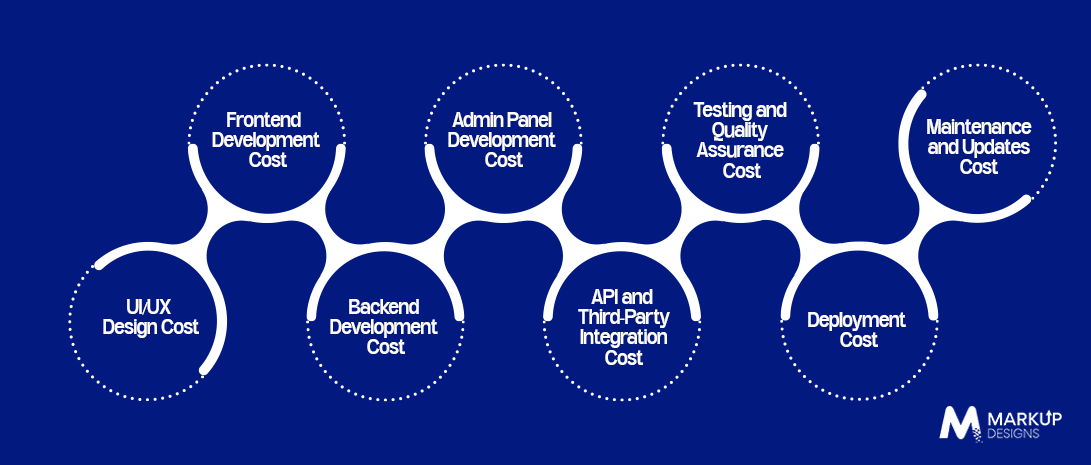
UI/UX Design Cost
Includes wireframes, user flows, interface design, prototypes, responsive layouts, and usability testing for buyer, seller, and admin experiences.
Frontend Development Cost
Covers the mobile or web interfaces through which buyers, sellers, and administrators interact with the marketplace.
Backend Development Cost
Includes APIs, business logic, authentication, databases, order management, payments, seller workflows, and other server-side functionality.
Admin Panel Development Cost
The admin dashboard manages users, sellers, listings, transactions, disputes, commissions, reports, content, and platform settings.
API and Third-Party Integration Cost
Integration work connects the marketplace with payment services, maps, shipping providers, CRM platforms, analytics tools, and other external systems.
Testing and Quality Assurance Cost
Testing covers functionality, compatibility, performance, security, usability, payments, integrations, and different user workflows before launch.
Deployment Cost
This includes preparing production infrastructure, configuring cloud services, completing app-store requirements, and deploying the marketplace to its target platforms.
Maintenance and Updates Cost
Post-launch costs include technical support, bug fixes, security patches, OS updates, infrastructure monitoring, performance improvements, and new features.
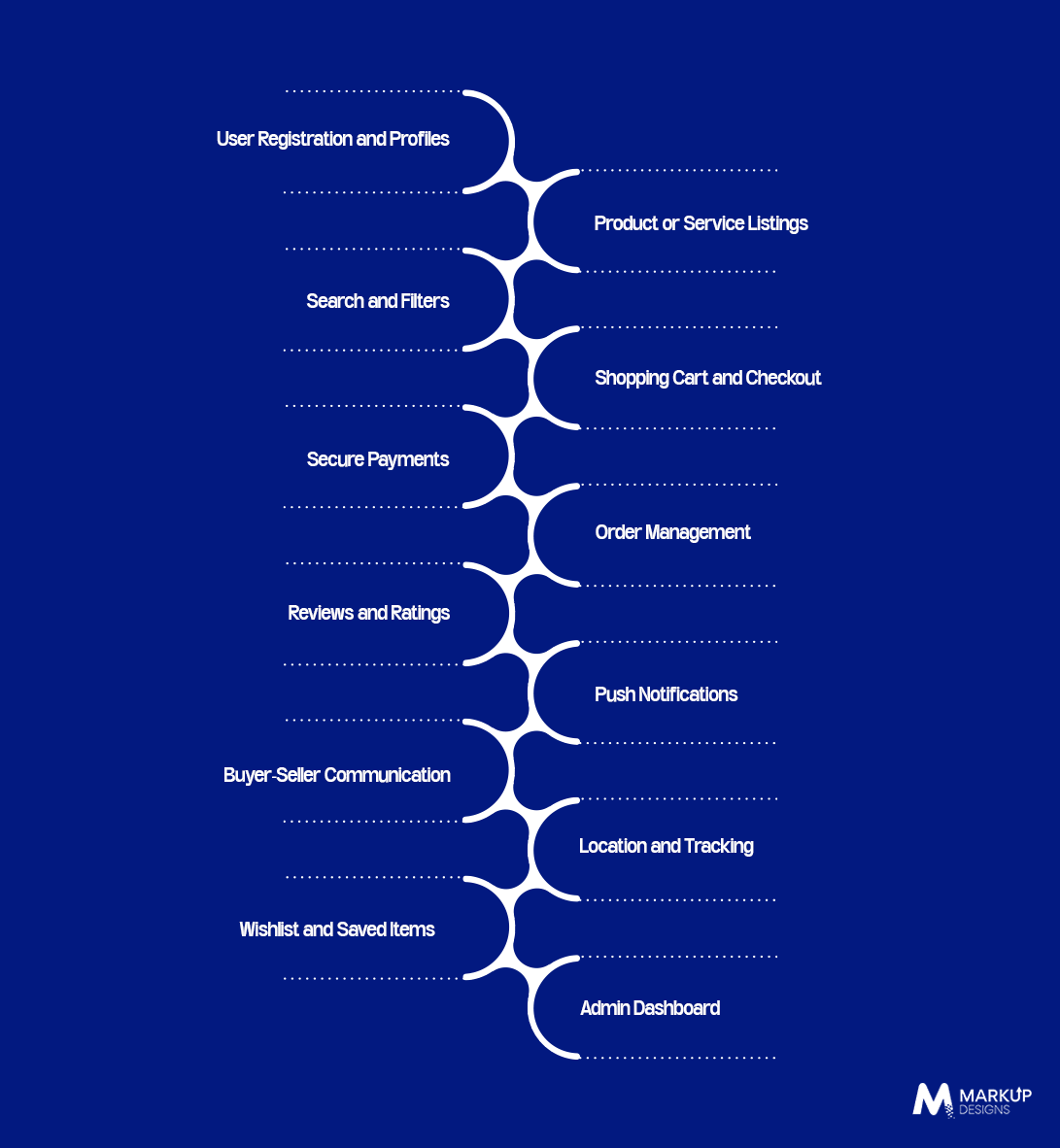
Essential Features of a Marketplace App
User Registration and Profiles
Buyers and sellers need secure accounts with relevant profile information, preferences, order history, and account settings.
Product or Service Listings
Sellers should be able to create, update, organise, and manage listings with images, descriptions, pricing, availability, and relevant attributes.
Search and Filters
Search, categories, sorting, and filters help users quickly find relevant products or services across the marketplace.
Shopping Cart and Checkout
E-commerce marketplaces require cart management and a streamlined checkout process that allows users to review and confirm their purchases.
Secure Payments
The app should support secure payment processing and, where required, refunds, transaction records, commissions, and seller payouts.
Order Management
Buyers and sellers need access to order status, confirmations, cancellations, fulfilment details, and transaction history.
Reviews and Ratings
Ratings and reviews allow customers to share feedback and help other users evaluate products, services, or sellers.
Push Notifications
Notifications can provide updates about orders, payments, promotions, messages, listings, and other important marketplace activity.
Buyer-Seller Communication
In-app messaging allows buyers and sellers to discuss products, services, orders, or other transaction-related queries.
Location and Tracking
Location-based functionality can support delivery tracking, service availability, local listings, and other marketplace use cases requiring geographic information.
Wishlist and Saved Items
Users can save products or services for later, making it easier to return to items they may want to purchase or compare.
Admin Dashboard
Administrators need centralised controls for managing users, sellers, listings, transactions, disputes, content, reports, and marketplace settings.
Advanced Features That Increase Marketplace App Development Cost
AI-Powered Recommendations
AI can analyse user behaviour and preferences to recommend relevant products, services, or listings.
Intelligent Search
AI-powered search can improve results by understanding user intent, natural-language queries, product attributes, and contextual requirements.
Personalised User Experiences
Personalisation can adapt content, recommendations, offers, notifications, and search results based on individual user activity.
Real-Time Tracking
Real-time tracking can provide live updates for deliveries, services, bookings, or other location-dependent marketplace activities.
Fraud Detection
Automated fraud detection can help identify suspicious transactions, unusual account activity, fake listings, and other potential risks.
Multi-Vendor Management
Advanced vendor management can support seller onboarding, product approvals, inventory, commissions, performance monitoring, disputes, and vendor-specific controls.
Automated Payouts and Commissions
Marketplace platforms can automate seller payouts and calculate commissions, fees, refunds, and transaction settlements according to the business model.
Advanced Analytics and Reporting
Businesses can track sales, user behaviour, seller performance, revenue, retention, transactions, and other marketplace metrics through advanced dashboards.
Chat and Customer Support Automation
AI-assisted chat and automated support can handle common customer queries, guide users through marketplace processes, and escalate complex issues to support teams.
Marketplace App Development Cost by Type
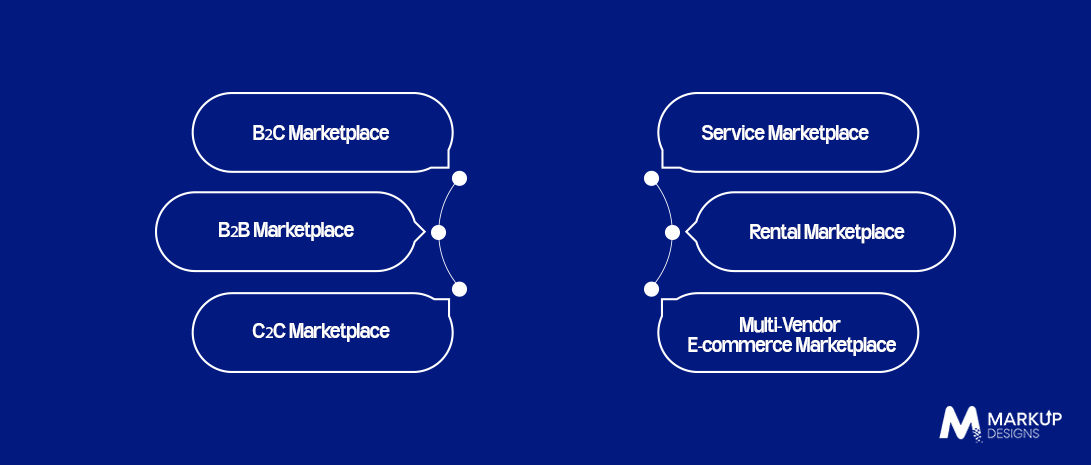
The cost of a marketplace app varies according to its business model, user roles, transaction flow, and technical requirements. A platform connecting consumers with products may require a different architecture from a B2B marketplace or a service platform with bookings and provider management.
B2C Marketplace
B2C marketplaces connect businesses or sellers directly with consumers. Development typically focuses on product discovery, shopping, payments, order management, reviews, and personalised experiences.
B2B Marketplace
B2B marketplaces support transactions between businesses and may require bulk ordering, business accounts, negotiated pricing, invoices, approval workflows, and more complex vendor management.
C2C Marketplace
C2C platforms allow individuals to buy and sell products or services to one another. Features such as seller profiles, listings, messaging, ratings, payments, and moderation are usually central to this model.
Service Marketplace
Service marketplaces connect customers with service providers. They may require provider profiles, service listings, bookings, availability management, location features, payments, and reviews.
Rental Marketplace
Rental platforms allow users to list and rent products, properties, vehicles, or equipment. They may require availability calendars, booking management, deposits, payments, location features, and return workflows.
Multi-Vendor E-commerce Marketplace
Multi-vendor marketplaces bring multiple sellers onto one platform and require advanced vendor management, commissions, product approvals, inventory, payouts, order handling, and administration.
How Much Does It Cost to Develop a Marketplace App Like Amazon?
An app similar to Amazon requires significantly more development effort than a basic marketplace because it combines extensive buyer and seller functionality with payments, logistics, recommendations, analytics, administration, and scalable infrastructure. The cost depends on which features are included and the scale the platform needs to support.
Core Features
The initial version may include user accounts, product listings, categories, search, filters, cart, checkout, payments, order management, reviews, notifications, and basic administration.
Advanced Marketplace Capabilities
A larger marketplace may add AI recommendations, personalised search, multiple payment methods, automated seller payouts, real-time tracking, fraud detection, advanced analytics, and customer support automation.
Seller and Buyer Workflows
The platform needs separate workflows for customers and sellers. Sellers may require tools for listing management, inventory, orders, pricing, promotions, and payouts, while buyers need product discovery, checkout, tracking, reviews, and account management.
Admin and Vendor Management
Administrators need controls for seller onboarding, listing approvals, commissions, transactions, disputes, users, content, reports, and platform settings.
Scalability and Infrastructure Requirements
A large marketplace requires infrastructure capable of handling increasing users, listings, transactions, API requests, and data volumes. Scalable cloud architecture, databases, caching, monitoring, and security controls can significantly influence development costs.
Technology Stack for Marketplace App Development
Mobile App Technologies
Depending on the project requirements, developers may use Swift and SwiftUI for iOS, Kotlin and Jetpack Compose for Android, or cross-platform technologies such as Flutter and React Native.
Frontend Technologies
For web-based marketplace interfaces and administration panels, technologies such as React, Next.js, Angular, or Vue.js can be used based on the application’s requirements.
Backend Technologies
Backend development can use technologies such as Node.js, Python, Java, PHP, or .NET to manage business logic, APIs, authentication, transactions, and marketplace workflows.
Databases
Marketplace applications may use relational databases such as PostgreSQL or MySQL and NoSQL databases such as MongoDB, depending on data structure, scalability, and application requirements.
Cloud and Infrastructure
Cloud platforms such as AWS, Microsoft Azure, or Google Cloud can provide computing, storage, databases, networking, monitoring, and scalability for marketplace applications.
APIs and Integrations
APIs connect the marketplace with payment gateways, shipping providers, maps, CRM and ERP platforms, analytics tools, communication services, and other third-party systems.
Payment Technologies
Marketplace payment systems need to support secure transactions and may include cards, digital wallets, bank-based payments, refunds, commissions, and seller payouts depending on the business model.
How to Develop a Marketplace App
Step 1: Define the Marketplace Business Model
Determine what will be sold or offered, who the buyers and sellers are, how transactions will work, and how the marketplace will generate revenue.
Step 2: Identify Buyers and Sellers
Define the needs, workflows, permissions, and interactions of each user group. This helps establish the required features and platform structure.
Step 3: Define Core Features
Prioritise the functionality required for the initial launch, such as listings, search, payments, orders, messaging, bookings, reviews, or vendor management.
Step 4: Create the UI/UX Design
Map user journeys and create wireframes, prototypes, and interface designs for buyer, seller, and admin experiences.
Step 5: Select the Technology Stack
Choose mobile, frontend, backend, database, cloud, payment, and integration technologies based on performance, scalability, budget, and long-term requirements.
Step 6: Develop Buyer, Seller and Admin Modules
Build the separate interfaces and workflows required by each user group, while connecting them through a common backend and database architecture.
Step 7: Integrate Payments and Third-Party Services
Connect payment gateways, shipping, maps, analytics, communication, CRM, ERP, or other services required by the marketplace.
Step 8: Test the Application
Conduct functional, usability, compatibility, performance, security, payment, and integration testing across relevant devices and workflows.
Step 9: Launch the Marketplace App
Deploy the application to the required platforms, configure production infrastructure, complete app-store requirements, and prepare monitoring systems.
Step 10: Monitor, Maintain and Scale
Track performance, user behaviour, transactions, crashes, and infrastructure usage after launch. Regular maintenance and optimisation can help the marketplace support increasing demand.
How to Reduce Marketplace App Development Costs
Start With an MVP
Launch with the core features needed to validate the marketplace concept before investing in advanced functionality.
Prioritise High-Value Features
Focus development resources on features that directly support customer acquisition, transactions, seller operations, or the primary business objective.
Choose the Right Development Approach
Select an engagement model and development approach that match the project’s scope, timeline, technical requirements, and available resources.
Use Cross-Platform Development Where Suitable
Cross-platform technologies can reduce duplicated development work when the application’s requirements do not require separate native implementations.
Plan Integrations Early
Identifying payment, logistics, CRM, ERP, and other integration requirements early can reduce redesign and development rework.
Build for Scalability From the Start
A scalable architecture can help businesses accommodate growth without requiring major technical restructuring later.
Select the Right Engagement Model
Businesses can evaluate fixed-price, time-and-material, dedicated team, or other engagement models based on project uncertainty, control requirements, and development scope.
Marketplace App Monetisation Models
Commission-Based Model
The platform charges sellers or service providers a percentage or fixed amount for completed transactions.
Subscription Model
Sellers, businesses, or customers pay recurring fees to access specific marketplace features or services.
Listing Fees
Sellers pay to publish products, properties, services, or other listings on the platform.
Advertising and Sponsored Listings
Businesses can pay for promoted products, featured listings, display placements, or other advertising opportunities within the marketplace.
Transaction Fees
The marketplace charges a fee for processing transactions, bookings, payments, or other activities completed through the platform.
Security Considerations for Marketplace Apps
Secure Authentication
Implement strong authentication and appropriate access controls to protect buyer, seller, and administrator accounts.
Payment Security
Payment processing should use secure payment infrastructure and appropriate controls for transactions, refunds, commissions, and seller payouts.
Data Encryption
Sensitive information should be protected during transmission and, where appropriate, while stored within application and backend systems.
API Security
APIs should use appropriate authentication, authorisation, validation, rate limiting, and monitoring to protect communication between the application and backend services.
Fraud Prevention
Marketplace platforms should monitor suspicious transactions, unusual account activity, fake listings, and other potential fraud indicators.
Role-Based Access Control
Different permissions should be assigned to buyers, sellers, administrators, support teams, and other user roles so that users can access only the functions and data relevant to their responsibilities.
Post-Launch Marketplace App Costs
Launching the marketplace is only the beginning of the investment. Businesses also need to budget for ongoing technical support, infrastructure, updates, optimisation, and future improvements.
Bug Fixes and Technical Support
Post-launch support helps identify and resolve functional issues, crashes, integration problems, and user-reported bugs. Regular technical support can help maintain application reliability.
Security and OS Updates
Mobile operating systems, devices, libraries, and security requirements change over time. Regular updates help keep the marketplace compatible with newer environments and address potential security vulnerabilities.
Cloud and Infrastructure Costs
Cloud hosting, databases, storage, bandwidth, monitoring, and other infrastructure services create recurring costs. These expenses can increase as the number of users, transactions, listings, and stored data grows.
Feature Enhancements
Businesses may introduce new payment methods, seller tools, loyalty features, AI capabilities, integrations, or other functionality based on user feedback and changing market requirements.
Performance Optimisation
Regular performance monitoring can identify slow-loading screens, inefficient queries, API issues, and other bottlenecks. Optimisation helps maintain a responsive experience as the marketplace grows.
Scaling Costs
A growing marketplace may require additional computing resources, database capacity, caching, load balancing, monitoring, and other infrastructure improvements to support increasing traffic and transactions.
Future of Marketplace App Development in 2026
Generative AI and AI Shopping Assistants
Generative AI can support conversational product discovery, automated recommendations, product comparisons, customer support, and AI shopping assistants that help users find relevant products or services.
AI-Powered Personalisation
AI can analyse customer behaviour and preferences to personalise search results, recommendations, promotions, and content across the marketplace.
Automated Seller Management
AI and workflow automation can assist with seller onboarding, listing reviews, product categorisation, inventory updates, pricing insights, and other vendor management activities.
Voice and Visual Search
Voice search and image-based search can provide alternative ways for users to discover products. Visual search can allow users to find similar items using an uploaded or captured image.
Social and Conversational Commerce
Marketplaces can increasingly combine social engagement, messaging, recommendations, and purchasing into connected customer journeys. Conversational interfaces can also support product discovery and customer assistance.
Advanced Fraud Detection
AI-driven monitoring can help identify unusual transactions, suspicious account activity, fake listings, and other potential fraud patterns in real time.
AR-Powered Product Experiences
Augmented reality can allow customers to visualise products in their environment before purchasing. This can be particularly useful for categories such as furniture, home décor, fashion, and other visually driven products.
Build a Scalable Marketplace App in 2026
Turn your marketplace idea into a secure, scalable, and feature-ready digital platform built around your business model, users, and growth objectives.

Conclusion
Developing a marketplace app in 2026 requires more than building a product catalogue and payment system. Businesses need to account for buyer and seller workflows, marketplace operations, payments, security, integrations, administration, scalability, and ongoing maintenance. The development cost can therefore vary significantly depending on the business model and level of functionality required.
A practical approach is to begin with clearly defined business objectives and prioritised features, build an MVP where appropriate, and expand the platform based on user feedback and business growth. Planning the architecture, security, integrations, and scalability from the beginning can also help create a stronger foundation for long-term marketplace development.
FAQs
1. How much does it cost to develop a marketplace app in 2026?
A marketplace app can cost approximately $40,000 to $400,000+, depending on its complexity, business model, features, platforms, integrations, security requirements, and scalability needs. A basic MVP will generally require a smaller investment than an advanced multi-vendor platform with AI, real-time functionality, and complex backend infrastructure.
2. How long does it take to develop a marketplace app?
Development can take around 3 to 12+ months, depending on the scope. A basic MVP may require a few months, while a complex marketplace with multiple user roles, advanced integrations, payments, analytics, and scalable infrastructure can require significantly more time.
3. What features are required in a marketplace app?
Core features typically include user registration, profiles, product or service listings, search and filters, payments, checkout, order management, reviews, notifications, buyer-seller communication, and an admin dashboard. Multi-vendor platforms may also require seller management, commissions, payouts, inventory, and moderation tools.
4. How much does it cost to develop an app like Amazon?
An app with functionality comparable to Amazon can require a substantial development investment because of its multi-vendor architecture, extensive buyer and seller workflows, payment systems, logistics, recommendations, analytics, security, and infrastructure requirements. The final cost depends on which Amazon-like capabilities are included and the scale the business intends to support.
5. What factors affect marketplace app development cost?
Major cost factors include marketplace type, feature complexity, number of platforms, UI/UX requirements, backend architecture, integrations, payment functionality, security, development team expertise, infrastructure, and post-launch maintenance.
Author's Perspective
From a development perspective, marketplace projects become expensive when businesses try to build every possible feature into the first release. A better approach is to identify the core buyer and seller journeys, prioritise the features that directly support transactions, and establish an architecture that can accommodate future expansion. This allows businesses to manage the initial investment while keeping the marketplace ready for additional functionality as adoption grows.
Discuss Your Project NowJupinder Singh Arora
Founder and CEO
Insights Are Valuable & Execution is Priceless
You’ve read about the digital future. Now, let’s build the infrastructure to take you there. Move your strategy from the page to the product.
Design Your Solution Now
Contact Us
Schedule The Appointment At Your Convenience Date And Time.
30 Min
Web Conference
Time Zone
Indian standard time (08:30pm)

Thanks For Getting In Touch!
You’ve Taken The First Step Toward Transforming Your Digital Presence. Our Experts Will Reach Out Shortly To Take It Forward.
Launch Your Dream Project
Provide a brief overview of your project, and our specialists will evaluate your requirements. We will connect with you to explore how the right digital solutions can help you launch faster.