

In Brief
- In 2026, the development of an app for a neobank will take between $50,000 and $500,000+ based on platform complexity, its functionality, connectivity with the bank, security, compliance, artificial intelligence, and target audience.
- The enterprise neobank will need certain features, such as onboarding, Know Your Customer (KYC), multi-currency payments, card and wallet management, real-time transactions, fraud detection, authentication, and administration analytics.
- The development cost will depend on multiple aspects, such as app scope, number of platforms, APIs of the bank, security aspects, AI and automation, expertise of the development team, and other considerations.
- Typical neobank development is a well-defined process that includes market research, regulatory planning, UI/UX design, backend and app development, integration with banks, security testing, deployment, and continuous improvement that may take 3-5 months in the case of a minimum viable product (MVP) and 8-15+ months for enterprise neobank solutions.
- Building a successful neobank is based on providing a secure, scalable, and user-friendly platform rather than adding numerous features to a solution. Gradual development of the product from a single product to AI technologies, automation, lending and investments, and personalized banking may be a cost-effective approach.
Neobanks have changed how businesses and people handle money. Unlike traditional banks, which heavily depend on physical infrastructure, neobanks provide financial services through a digital platform. This makes it possible for consumers to have account creation, payment processing, card processing, money transfers, and other personalized financial products via mobile/web applications.
Launching a neobank by any company has its own business advantages. However, creating a neobank that is both secure and scalable involves a lot of work compared to developing an ordinary banking application. This can increase the cost of development depending on the following factors and many others.
So, how much does it cost to develop a neobank app in 2026?
This blog will provide information on the neobank app development cost, factors that affect the price, necessary enterprise functionalities, technologies and architecture used, development process, time needed for the project, and other details. We will consider how companies may manage their investments properly while developing the platform for their customers.
What is a Neobank App?
The definition of a neobank app is a digital banking solution enabling users to use financial services via the neobank app and without visiting any physical bank offices. The neobank app provides users with the ability to perform regular banking operations such as account creation, payments, transfers, card management, and transaction tracking.
Unlike traditional banking solutions, the neobank apps may be connected via APIs to various banking infrastructure, payment systems, providers of identity verification services, card providers, and other financial organizations.
For enterprise clients, the neobank app could provide extended functionality such as multi-currency accounts, international payments, loans, financial insights, fraud prevention, AI support, and business banking.
It is crucial to evaluate the range of services for the development process, as every added banking feature increases the total cost of development.
How Much Does It Cost to Develop a Neobank App in 2026?
The neobank app development cost in 2026 will vary between $50,000 and $500,000 and even beyond, based on the platform’s complexity, the bank’s services, integrations, security demands, and the intended audience. A basic minimum viable product (MVP) might require a lower budget, whereas a neobank for enterprises with highly advanced banking products would need a bigger budget.
| Neobank Type | Estimated Cost | Development Timeline |
| Basic MVP | $50,000–$100,000 | 3–5 months |
| Mid-Level Neobank | $100,000–$250,000 | 5–8 months |
| Enterprise Neobank | $250,000–$500,000+ | 8–15+ months |
These figures represent estimated budgets and not the actual price. This budget will depend on the business model, number of platforms, integration with third parties, compliance issues, and the development team.
The enterprise should also take into consideration additional expenses besides the cost of developing the solution, like cloud infrastructure, security testing, payment services, etc. It would be better to plan these expenses upfront to avoid any unforeseen costs.
Key Factors Affecting Neobank App Development Cost
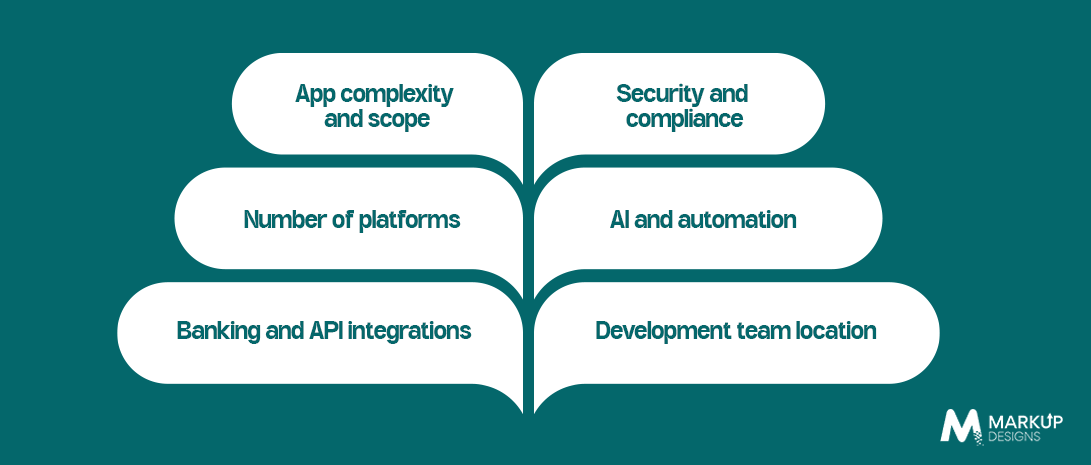
The cost of building a neobank is influenced by a number of technical and business factors. Being aware of these factors will help businesses create their budget properly.
App complexity and scope
A simple banking application with the functionality of accounts, payments, and transactions is cheaper than an enterprise-level platform with lending, investment, money transfer, and other financial services.
Number of platforms
Development of applications for different platforms such as iOS, Android, web, and administrative systems takes more time and effort.
Banking and API integrations
Integration with the bank’s backend, banking-as-a-service platforms, payment gateways, card networks, KYC platforms, and other financial APIs may greatly impact the budget.
Security and compliance
Security, authentication, encryption, fraud prevention, transaction monitoring, and regulatory requirements are important for banking apps; they may affect the development budget.
AI and automation
Fraud detection, recommendations, virtual assistants, and compliance automation using AI may add to the development budget, but provide more value overall.
Development team location
The developer’s rates depend on the location and skills. The banking knowledge and responsibilities of the development team also determine the development budget.
Essential Features of an Enterprise Neobank App
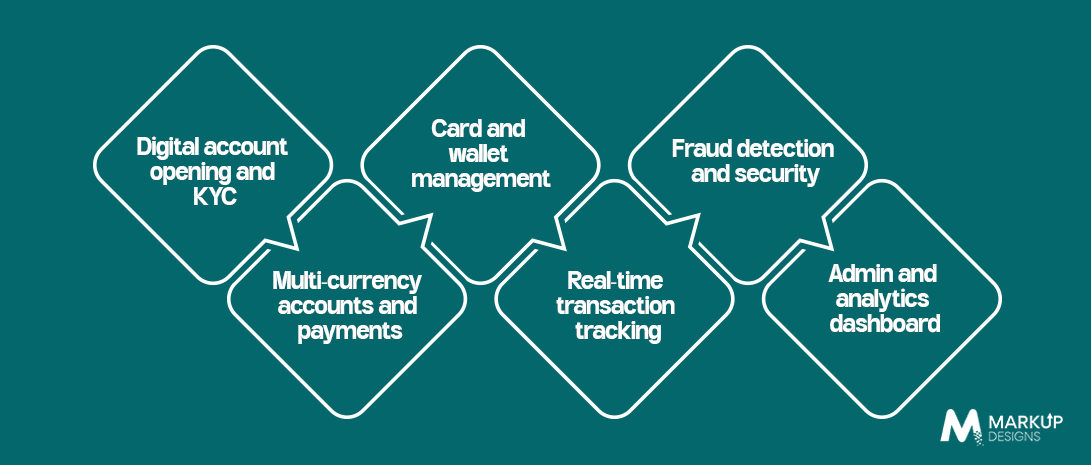
Enterprise neobanks must have something beyond simple banking services. They must possess an impressive combination of customer service, financial architecture, security, and administrative functions in order to cater to an increasing customer base.
1. Digital account opening and KYC
It must be easy for users to open their accounts digitally, upload their identity documents, verify themselves, and access their accounts without stepping into any branch.
2. Multi-currency accounts and payments
Support for multiple currencies, domestic transfers, international payments, and different payment methods can help enterprises serve customers across markets.
3. Card and wallet management
The management of physical and virtual cards, limit setting for spending, card freezing, transaction viewing, and wallet management can be performed from a single point of entry.
4. Real-time transaction tracking
Real-time updates for transactions, payment confirmations, changes to balances, and customizable alerts for finance are features customers should get.
5. Fraud detection and security
There are features like biometric authentication, multi-factor authentication, transaction tracking, and fraud detection that help keep customer accounts safe.
6. Admin and analytics dashboard
There is an enterprise dashboard that enables customer management, transaction tracking, compliance reporting, financial information, and user analytics.
Build a Secure Neobank Built for Enterprise Scale
Planning to launch a digital banking platform? Markup Designs can help you turn your neobank idea into a secure, scalable, and feature-rich solution.

Neobank Technology Stack for Enterprise Banking
The technology stack is significant in deciding the performance, security, scalability, and overall cost of building a neobank application. In case of enterprise banking, every technology used must ensure secure transactions, high availability, easy integrations, and scalability in the future.
Frontend Technologies
- Flutter or React Native: For cross-platform mobile app development.
- Swift and Kotlin: For native iOS and Android apps.
- React.js: For web-based banking and admin systems.
Backend Technologies
- Java, Node.js, or .NET: Secure and Scalable Backend Services
- Python: AI, Machine Learning, Analytics, and Automation
- Microservices: Independently Scalable Banking Functions
Database and Storage
- PostgreSQL or MySQL: For structured financial data.
- MongoDB: For flexible application data.
- Redis: For caching and fast application response.
Cloud and Infrastructure
Amazon Web Services (AWS), Microsoft Azure, or Google Cloud – for scalable cloud infrastructure and backup.
Security Technologies
API gateways, encryption, identity and access management, tokenization, multi-factor authentication, and secure key management can ensure the safety of the financial data.
The selection of the final tech stack should be based on the needs of the neobank in terms of services, regulatory landscape, and transactions per month.
Enterprise Neobank Architecture
Neobanking platform architecture is crucial for creating a trustworthy enterprise neobank. As the platform will process confidential customer data and financial transactions, the architecture should guarantee security, high performance, scalability, and always-on availability.
A typical enterprise neobank architecture can include the following layers:
1. Mobile and Web Layer
The layer through which users can access the accounts, cards, payments, transactions, and all other banking services via mobile/web applications.
2. API and Authentication Layer
An API gateway facilitates communication between the application and backend services. Authentication, authorization, multi-factor authentication, and access control will be used for securing the user accounts.
3. Banking Services Layer
This layer will handle functionalities like accounts, payments, transfers, cards, wallets, notifications, etc.
4. Integration Layer
The APIs integrate the neobank with BaaS vendors, payment networks, card issuers, KYC vendors, credit bureaus, and other financial institutions.
5. Data and Intelligence Layer
Financial analysis, fraud prevention, personalization, and business intelligence require secure databases, analytics tools, and AI/ML capabilities.
6. Security and Compliance Layer
Encryption, monitoring, logging, fraud prevention, and compliance functionality run through the architecture to secure financial data and ensure compliance with regulations.
For organizations, a modular and scalable architecture makes it more convenient to offer new banking solutions, integrate third-party services, and cope with increasing volumes of transactions without redesigning the whole platform.
Step-by-Step Neobank App Development Process
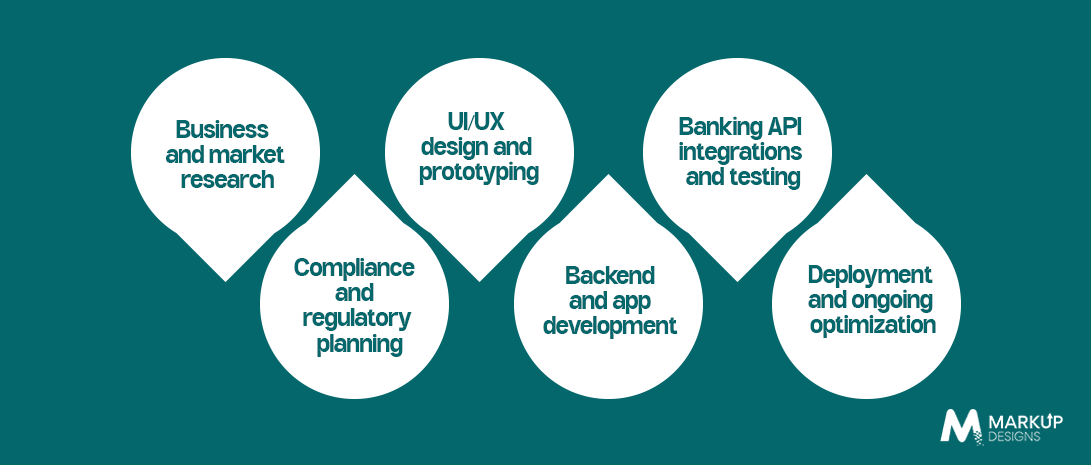
Building an enterprise neobank calls for proper planning, as the platform has to integrate all elements of banking, security, compliance, and digital experience. A proper development process allows enterprises to control costs and complexity.
1. Business and market research
Define your customer segments, banking products, business model, competing banks, and target markets right from the beginning.
2. Compliance and regulatory planning
Find out which regulatory requirements will apply in banking, KYC, AML, data privacy, payments, and security at the outset.
3. UI/UX design and prototyping
Create easy-to-use customer journeys for onboarding, payments, account management, card-related, and other key banking processes.
4. Backend and app development
Create a mobile app, website, backend, database, API, and other components according to the agreed-upon architecture.
5. Banking API integrations and testing
Integrate BaaS providers, payment gateways, card solutions, identity verification systems, and any other financial API that may be needed. Perform function, security, performance, and transaction testing.
6. Deployment and ongoing optimization
Deploy the platform after all the testing is complete and keep monitoring the performance, security, and feedback. Updates can add new services later.
How Long Does It Take to Build a Neobank App?
The duration of development of a neobank varies depending on its features, level of technical complexity, number of platforms used, integration, and compliance. It will take just several months to create a minimalistic MVP, while the creation of an enterprise-level banking system will take more than one year.
| Development Stage | Estimated Timeline |
| Business Research & Planning | 2–4 weeks |
| UI/UX Design | 3–6 weeks |
| Backend & Architecture | 6–12 weeks |
| Mobile/Web Development | 8–16 weeks |
| Banking API Integrations | 4–10 weeks |
| Security & Compliance | 4–8 weeks |
| Testing & Quality Assurance | 4–8 weeks |
| Deployment | 1–3 weeks |
These stages may occur simultaneously when multiple development teams are working at the same time, and thus the overall timeframe will not be simply determined by the sum of all the stages.
For a simple MVP of the neobank, about 3-5 months will be required. The mid-level product can be built in 5-8 months, whereas for an enterprise neobank with advanced features, AI, and multi-country support, it is going to take 8-15 months or even more.
Correct planning at the discovery stage will help detect technical dependencies early and avoid development bottlenecks.
Why Choose Markup Designs for Neobank App Development?
Choosing an appropriate partner is significant in the case of constructing a neobank due to the fact that it should have both financial features and robust security, high performance, and scalability. Markup Designs helps companies to transform complicated ideas of banking into digital reality.
The main principle of our company is to understand the business model, target audience, banking services that are needed by companies, and technical issues before development.
Markup Designs is able to provide support throughout the entire lifecycle of neobank development, including:
- Consumer and enterprise banking neobank solutions
- Banking API integration and integrations with third parties for payments, KYC, cards, and other financial services
- Integration of AI and automation for fraud detection, financial data processing, and customer service
- Scalable and secure platform architecture for high transaction volume support
- UI/UX development to deliver a convenient digital banking experience
- Maintenance to keep the platform safe and up-to-date
Whatever you plan to implement – a minimum viable product or a comprehensive digital banking ecosystem – with the right technology strategy, you will be able to save money and set yourself up for success in the future.
Ready to Build Your Enterprise Neobank?
Turn your banking vision into a secure, scalable digital platform with the right technology, architecture, and development strategy.

Conclusion
The cost of developing a neobank in 2026 cannot be determined by the number of screens and features of an app alone. There are many other factors, such as banking integrations, security, compliance, architecture, artificial intelligence, platforms, and scalability, that might affect the end price of development.
The minimum viable product for a simple neobank could have a rather small price tag, while the development of an enterprise neobank with advanced banking capabilities, complex integration options, and powerful infrastructure could cost much more. That is why businesses should know the requirements before development starts.
The correct method would be to begin with creating a clear product roadmap, prioritizing important features, and establishing a solid base that will allow further development and scaling. Enterprises could proceed to develop more sophisticated services like loans, investment opportunities, AI-driven assistance for finances, and personalized banking.
Ultimately, the successful development of neobanks does not depend on developing many features. The goal is to create a safe, reliable, and convenient banking platform.
FAQs
1. How much does it cost to develop a neobank app in 2026?
The cost can range from around $50,000 for a basic MVP to $500,000 or more for an enterprise-grade neobank, depending on scope, integrations, security, and compliance requirements.
2. How long does it take to build a neobank app?
A basic MVP may take around 3–5 months, while a more advanced or enterprise platform can take 8–15 months or longer.
3. What factors affect neobank app development cost?
Key factors include app complexity, platforms, banking integrations, security, compliance, AI features, development team location, and ongoing infrastructure requirements.
4. What features should an enterprise neobank include?
Important features include digital onboarding, KYC, payments, card management, wallets, transaction tracking, fraud detection, notifications, analytics, and administrative controls.
5. Can AI be integrated into a neobank app?
Yes. AI can support fraud detection, financial recommendations, customer service, transaction monitoring, risk assessment, and personalized banking experiences.
Author's Perspective
From an enterprise perspective, a neobank is a long-term banking investment, not just a mobile app. Businesses should prioritize security, compliance, scalability, and meaningful integrations over trendy features. Starting with a focused product and expanding gradually can help control costs and complexity. For 2026, the goal should be to build a secure foundation that supports AI, automation, personalized services, and multi-market expansion while earning customer trust.
Discuss Your Project NowJupinder Singh Arora
Founder and CEO
Related Posts

How Much Does It Cost to Develop a...

How Much Does It Cost to Develop a...

How to Build a FinTech App in the...
Insights Are Valuable & Execution is Priceless
You’ve read about the digital future. Now, let’s build the infrastructure to take you there. Move your strategy from the page to the product.
Design Your Solution Now
Contact Us
Schedule The Appointment At Your Convenience Date And Time.
30 Min
Web Conference
Time Zone
Indian standard time (08:30pm)

Thanks For Getting In Touch!
You’ve Taken The First Step Toward Transforming Your Digital Presence. Our Experts Will Reach Out Shortly To Take It Forward.
Launch Your Dream Project
Provide a brief overview of your project, and our specialists will evaluate your requirements. We will connect with you to explore how the right digital solutions can help you launch faster.