

In Brief
- Waste management software assists companies and municipalities in integrating all the above-mentioned processes into a single platform.
- Through digital waste management tools, it is possible to increase operational efficiency through optimized routes, reduction of fuel and manual expenses, real-time monitoring, improvement of fleet utilization, and faster delivery services.
- Depending on operational requirements, businesses may create various solutions such as waste collection management software, smart waste management software, waste tracking software, recycling management software, fleet management software, and municipal waste management software.
- It is necessary to have a systematic development process that will include requirements, feature planning, UI/UX design, development, technology integration, testing, implementation, and support.
- There is a need for a structured approach to develop a solution. The process involves requirement gathering, feature selection, UI/UX design, development, technology integration, testing, deployment, and maintenance of the solution.
Waste management is now much more than just collecting and disposing of waste. As urbanization continues and businesses process more waste, conventional approaches become hard to implement effectively. Missed collections, poor route planning, full containers, rising fuel prices, and lack of operational transparency may hinder productivity and service delivery.
Luckily, waste management software development allows organizations to evolve towards more efficient and integrated operations. Through a digital solution, waste collection, fleet management, scheduling, tracking, reporting, and client communication may all be integrated into one platform. Additionally, through technologies like artificial intelligence, IoT, GPS, cloud computing, and big data analysis, companies will be able to make quicker and better-informed operational decisions.
So, what exactly does waste management software include, and how can businesses take advantage of creating their own?
This blog will explain what exactly waste management software is, why businesses are turning to technology, its advantages and features, costs of development, and the entire process of development.
What is Waste Management Software?
Waste management software is an IT system that is designed to assist in managing the processes of waste management in a business or municipality from a single system. Instead of relying on Excel sheets, calls, paper, or other solutions, people can do all the tasks from one software solution.
This software solution can be responsible for various aspects of waste management, from planning and scheduling collections, routing, tracking vehicles, driver scheduling, waste tracking, requests of customers, billing, to reporting. When combined with IoT devices, GPS, and AI systems, it can also give up-to-date information on vehicle location, fill level, collection, and performance.
For example, a waste management company can leverage the technology in assigning the pickup, identifying the optimal route, tracking the collection truck, and updating the status of the service. This information can then be viewed through the centralized dashboard by the managers to pinpoint areas requiring attention.
In simple terms, waste management software connects people, vehicles, waste data, and daily workflows to make operations more organized, visible, and efficient.
Why Businesses Are Investing in Digital Waste Management Solutions
Waste management on a large scale includes many factors. Companies have to plan collection, vehicles, drivers, customers, disposal sites, and reports. Any delay in such management processes results in negative consequences, especially when all these aspects are done manually.
A digital solution for waste management will allow companies to organize these processes properly. Companies will be able to control their business from a single dashboard, automate routine operations, track vehicles, and use data for decision-making every day.
Some key reasons businesses are moving toward digital waste management include:
- More operational visibility: Managers can see collections, vehicles, and service requests in one location.
- More efficiency and cost savings: Efficient routing and improved resource allocation result in fewer unnecessary journeys and reduced fuel consumption.
- Increased speed: Automated scheduling and real-time updates allow teams to process collection requests faster.
- Insight into operations: Reports and data analysis reveal information about waste volume, fleet performance, and collection trends.
- Improved customer experience: Customers can schedule waste pickup, get notifications, and track their services online.
As waste management becomes more complex, the use of software is becoming increasingly necessary to make it smarter and more efficient.
Key Benefits of Waste Management Software Development
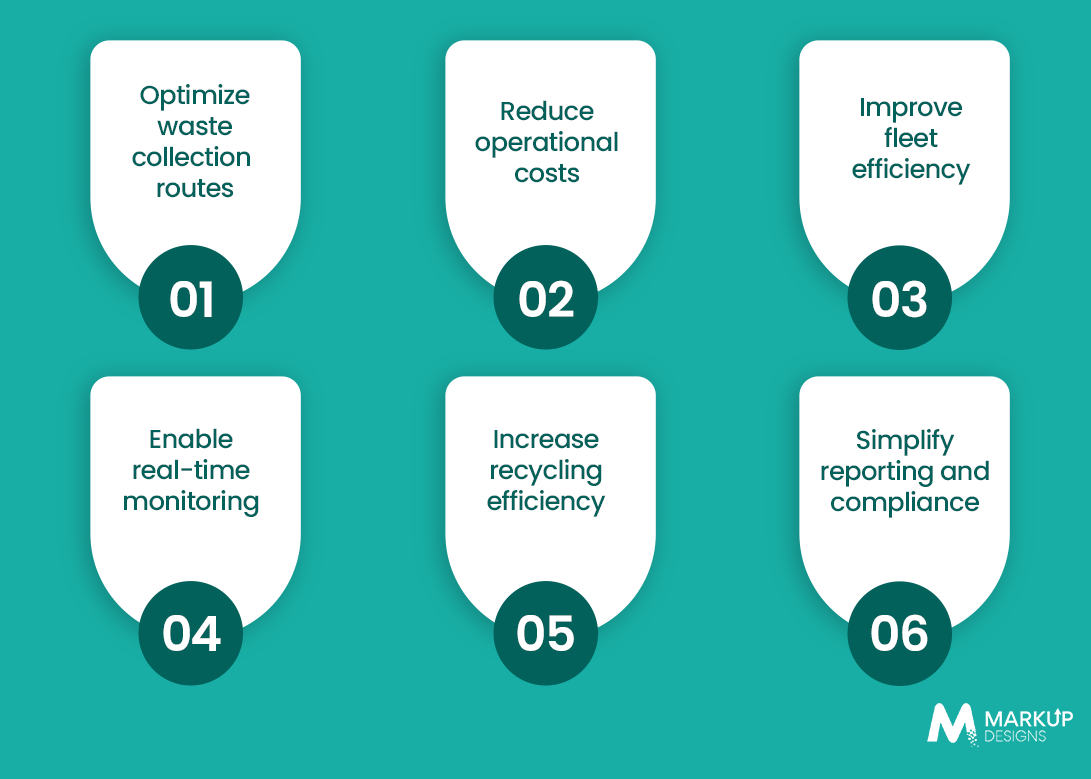
Waste management software development can provide companies with an opportunity to automate their waste management process and have control over all their operations. Starting from waste collection planning and finishing with monitoring of the fleet, everything can be done in one system.
1. Optimize waste collection routes
The GPS technology and route optimization will aid teams in planning efficient waste collection routes, eliminating unnecessary trips, and using vehicles and drivers efficiently.
2. Reduce operational costs
Scheduling, tracking, and report generation can be automated, which can minimize manual efforts, while optimized routes can minimize fuel and transportation costs.
4. Improve fleet efficiency
The business can monitor vehicle location, plan its maintenance schedules, and determine inefficient fleet utilization.
6. Enable real-time monitoring
Real-time information is possible for all the relevant processes, such as collections, movements of vehicles, and service requests by managers.
7. Increase recycling efficiency
The system would be useful to monitor and manage the different waste types and the recycling process.
8. Simplify reporting and compliance
Centralization of information and reporting would assist in performance monitoring, maintaining documentation, and compliance.
Types of Waste Management Software
The requirements for waste management could differ depending on the firm, amount of waste, mode of service, and objectives. In turn, the firms may create various types of software applications depending on the particular operations that need to be managed.
1. Waste Collection Management Software
Enables companies to manage their pick-up schedule, service requests, pick-up assignments, and other daily operations from one application.
2. Smart Waste Management Software
Deploys Internet of Things (IoT) enabled bins and sensors to monitor the level of fill and determine when waste collection is required.
3. Waste Tracking Software
Allows companies to monitor their waste from its collection through processing or recycling to final disposal.
4. Recycling Management Software
Tailored for recycling firms that need to monitor their recycling processes and materials.
5. Waste Fleet Management Software
Relates to vehicles and drivers. It may include GPS tracking, routing, fuel management, maintenance management, and driver management functions.
6. Municipal Waste Management Software
Aids the municipality in managing city-level waste collection services, request management, schedule management, fleet management, and performance reporting.
The choice of software type will be based on the organizational flow of activities and planning of the company. Some companies may require specialized software, while bigger companies can go for an integrated platform that integrates all processes such as collecting, fleet, recycling, analysis, and customer management.
Turn Waste Management Challenges into Smarter Operations
Whether you need waste collection software, recycling management solutions, or an IoT-enabled smart waste platform, Markup Designs can help you develop a solution built for efficiency, visibility, and long-term growth.

Must-Have Features of Waste Management Software
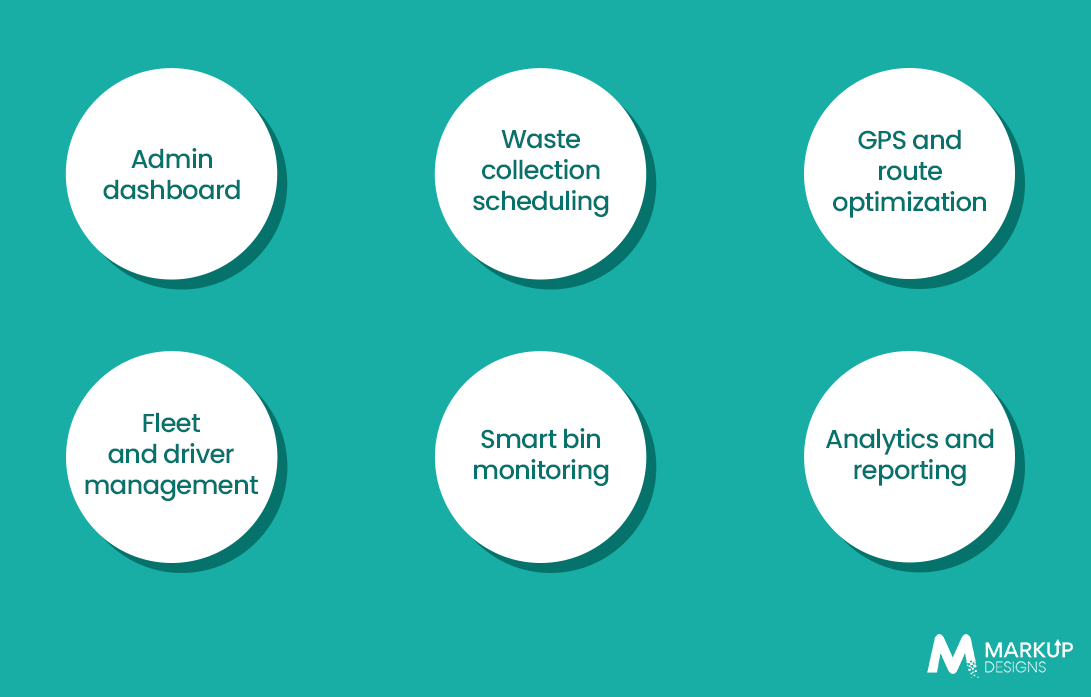
A good waste management system must not only capture data on collection. Instead, it must assist in the day-to-day management of processes and resources, communication with clients, and making better decisions. While features can differ depending on the specific company, the following list of features is critical for most contemporary systems.
Admin dashboard
An overview dashboard allows for a fast overview of collections, vehicles, requests, volumes of waste, and general performance.
Waste collection scheduling
Waste collection schedule creation, task assignment, recurring collection management and schedule modifications.
GPS and route optimization
The integration of GPStraveltates vehicle tracking, while route optimization assists drivers in taking an efficient route and avoiding unnecessary travel.
Fleet and driver management
One dashboard will facilitate the management of vehicle data, driver allocation, maintenance of the vehicle, fuel consumption, and vehicle status.
Smart bin monitoring
IoT-based sensors can monitor the fill status of the bins and trigger alerts when collection is required to avoid unnecessary collections.
Analytics and reporting
The reports may help in gaining insights into collection efficiency, waste quantity, fleet efficiency, cost analysis, recycling rate, and other operational factors.
Waste Management Software Development Cost
The cost of developing waste management software varies based on what functions the platform will have to perform, the number of users to use it, and other technologies that will need to be included in it. Naturally, a simpler software with limited capabilities and functionalities is bound to cost less than one that uses artificial intelligence.
As a general estimate, the development cost can fall into these ranges:
| Software Type | Estimated Cost |
| Basic Waste Management Software | $30,000–$60,000 |
| Mid-Level Waste Management Platform | $60,000–$150,000 |
| Advanced Smart Waste Management Solution | $150,000–$300,000+ |
Key Factors Affecting Development Cost
- Features and Complexity: Advanced features would mean more hours spent on development.
- Platforms: Development of different platforms such as web, Android, and iOS would lead to an increase in the cost of development.
- Integration of AI and IoT: The integration of smart bins, machine learning, and artificial intelligence would need custom development.
- Integration of third-party services: Integration of GPS, mapping, payment, and other enterprise systems could lead to an increased cost of development.
- UI/UX development: Custom development of a user interface for all types of users would mean more hours spent on development.
Therefore, businesses need to know the requirements and scope and estimate the budget based on that.
How to Develop Waste Management Software?
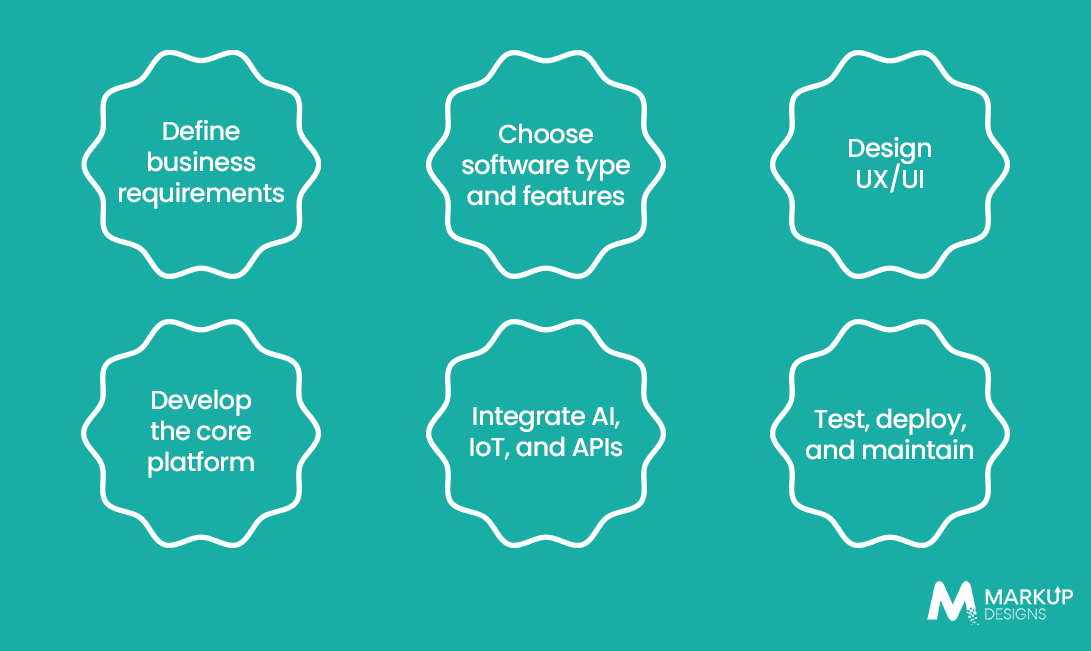
The development of the waste management software should not be limited to merely developing the application that has the feature of waste collection. The development of the waste management software should integrate with the process of your organization and have the capability of coping up with future growth in your operation.
Define business requirements
To begin with, you should learn who is going to use your application, what processes you’re related to waste management, service the area, which issues should be solved, and other similar questions.
Choose software type and features
Based on requirements, select the main features that your application needs, such as scheduling, fleet management, GPS tracking, reporting, and customer management. You may also consider AI technologies or IoT, if they are really useful for your business.
Design UX/UI
The user interface and experience of the software should be such that it is user-friendly for its administrators, drivers, field agents, and customers. It should give easy access to important data.
Develop the core platform
It would be better to develop the frontend, backend, databases, API, dashboard, and mobile application, if needed. The software design should be scalable and secure.
Integrate AI, IoT, and APIs
GPS, maps, Internet of Things (IoT), payment gateway, notification or any other business technology could be used here.
Test, deploy, and maintain
Before the deployment of the software, you have to test it properly to check whether it is working fine or not. After deployment, maintenance and updates will be needed continuously.
Build Smart Waste Management Software with Markup Designs
Waste management does not only entail waste collection and scheduling. The solution required for this process should take care of all the aspects of the company, such as operational management, vehicle management, staff members at the site, the customers, and data management. Markup Designs is ready to assist your company in developing a strategy that will integrate all these aspects.
We are eager to provide you with a full solution, which will consist of various aspects, such as waste collection scheduling, GPS tracking, route optimization, fleet management, smart bin management, dashboards, analytics, and notifications. In cases where it is necessary, modern technologies such as AI, IoT, cloud computing, and analytics can also be integrated into the process.
This includes the process of designing the architecture and interface of the software, coding, testing, and integrating the software with other software all together in one complete development process throughout the life cycle of the product.
No matter whether it is the company dealing with waste collection, recycling, commercial business, or smart city application, the concept of developing software that increases visibility and ease of use always remains the same.
Ready to Modernize Your Waste Management Operations?
Build a smart and scalable waste management solution with Markup Designs. From collection scheduling and fleet tracking to AI, IoT, and real-time analytics, our team can help turn your operational requirements into a powerful digital platform.

Conclusion
The waste management industry has seen its activities become more reliant on technology to cope with rising operational pressures. Technology is capable of streamlining various activities, from scheduling and routing to fleet management, recycling, and reporting, through a single platform.
By incorporating the appropriate features and technologies, the waste management software application can assist companies in cutting down costs where possible, optimizing the collection process, monitoring their operations in real-time, and using resources more effectively.
However, the efficiency of the implemented waste management system depends on the fit of this system to the company’s real business process. Therefore, businesses should understand their needs, select appropriate technology, and work with the professional development partner.
A properly developed system is capable of transforming waste management into a more rational and planned activity.
FAQs
1. What is Waste Management Software?
Waste management software refers to an advanced tool that aids business entities and municipalities in managing various processes related to waste collection, scheduling, vehicle tracking, route planning, recycling, reporting, customer requests and so forth.
2. What does it cost to make waste management software?
It may cost between $30,000 and $300,000+ depending on a variety of factors including the type of features, platforms, integrations, use of AI or IoT technologies, and so forth.
3. What is the duration of developing a waste management software application?
It can take between 4 months and 12 months, or longer, depending on the complexity of the project, features, integrations, and platforms.
4. What features are necessary for waste management software?
Necessary features include an administrative panel, a schedule of collection, GPS tracking, routing, fleet management, smart bin management, driver management, a notification feature, and analytics.
6. Is it possible to integrate AI into waste management software?
Yes. The AI can help with prediction of waste production, route optimization, forecasting of demand, automated scheduling, waste sorting, and predictive maintenance.
Author's Perspective
By now, it should be clear that waste management software is not simply another digital tool for managing collection schedules. It can become a central platform for connecting waste operations, vehicles, employees, customers, and data. As AI, IoT, GPS, and analytics continue to evolve, businesses have an opportunity to make waste collection more efficient, predictable, and cost-effective. The key is to start with real operational challenges and then choose the right features and technologies to solve them. A well-planned waste management solution can support smoother daily operations today while creating a stronger foundation for smarter and more sustainable waste management in the future.
Discuss Your Project NowAjit Kumar Jha
VP - Business Operations
Related Posts

Custom Software Development Cost in Bahrain: Factors, Benefits,...

How Much Does Healthcare Software Development Cost in...

How to Build Compliance Software for Australian Businesses:...
Insights Are Valuable & Execution is Priceless
You’ve read about the digital future. Now, let’s build the infrastructure to take you there. Move your strategy from the page to the product.
Design Your Solution Now
Contact Us
Schedule The Appointment At Your Convenience Date And Time.
30 Min
Web Conference
Time Zone
Indian standard time (08:30pm)

Thanks For Getting In Touch!
You’ve Taken The First Step Toward Transforming Your Digital Presence. Our Experts Will Reach Out Shortly To Take It Forward.
Launch Your Dream Project
Provide a brief overview of your project, and our specialists will evaluate your requirements. We will connect with you to explore how the right digital solutions can help you launch faster.