
In Brief
- Both web apps and mobile applications are used by businesses for improving customer experience and business processes, but each of them has its own function. Web applications are designed for accessibility and cost-effectiveness, whereas mobile apps offer enhanced user experience.
- Web applications do not require installation and can be reached via a browser, which makes them more convenient, faster to develop, and less costly. Mobile applications are downloaded to devices and are distinguished by high performance, offline capabilities, push notifications, and tight integration with smartphone services.
- The selection of a web application or a mobile app does not depend on the quality of either platform, but is driven by a set of factors like business objectives, target audience, budget, needed functionality, scalability, security, etc.
- Web applications are the most appropriate choice for businesses looking for wider reach, quick deployment, and reduced cost of mobile app development, whereas mobile applications are the preferred choice for businesses that want more customer interaction and engagement.
- The important aspect to consider is not only short-term costs but also the long-term benefits of the investment. There are situations where using both web and mobile apps together will give you the best results.
Today, businesses have more ways than ever to connect with customers through digital platforms. However, the two most preferred choices are web applications and mobile applications. While both of these can help your business in enhancing customer experience, simplifying operations, and increasing profits, each has its own distinct purpose and offers certain unique benefits. In addition to your business needs, your choice of application can be affected by a number of factors such as your target audience and budget.
With web apps, people can use services on the internet using a web browser without having to download anything, while mobile apps are those that get downloaded to the smartphone or tablet itself. It is important to know the differences between these two types before developing an app.
In this blog, we are going to compare both web applications and mobile applications in terms of their features and uses and other aspects as well from a business point of view, and by the end of the blog post, you will get to know which application is more advantageous for businesses.
Understanding Web Apps
A web application refers to software applications that operate within the web browser rather than those that are downloaded to your system. Web applications can be accessed by opening up a browser and keying in a particular URL link in order to gain access. In comparison to other applications, web applications function with all operating systems, and hence companies can market their products to a larger audience without having to create different versions for Windows, iOS, or Android.
Unlike other websites, web applications offer the ability to perform certain functions within the site, such as online shopping, project management, appointment bookings, among others. Examples of web applications are email, banking services, CRMs, and project management systems.
One of the main benefits associated with using web applications is that they are easy to maintain and upgrade. The implementation of any new functions, upgrades, and updates can be done at the server level so that all users will automatically use the latest version of the application, without needing to download anything. Web apps also cost less money to develop, making them a viable option for startups and small and medium-sized enterprises.
Understanding Mobile Apps
Mobile applications refer to software applications created specifically for smartphones and tablet computers. As opposed to web applications, mobile applications can be downloaded from app stores like Google Play and the Apple App Store. Mobile applications take advantage of the hardware and operating system of the device on which they are run to provide a more seamless user experience.
Mobile applications can use functions such as the camera, GPS location data, microphone, contacts, fingerprint recognition, and push notifications, which give companies the ability to provide highly personalized services.
Another key benefit offered by mobile apps is their functionality while being offline or having minimal internet connectivity in the case of some features only. This makes them more convenient to use and allows people to remain active despite minimal access to networks. For business organizations that require regular interaction with customers, there are good opportunities for creating loyalty programs.
Web Apps vs Mobile Apps: Key Differences
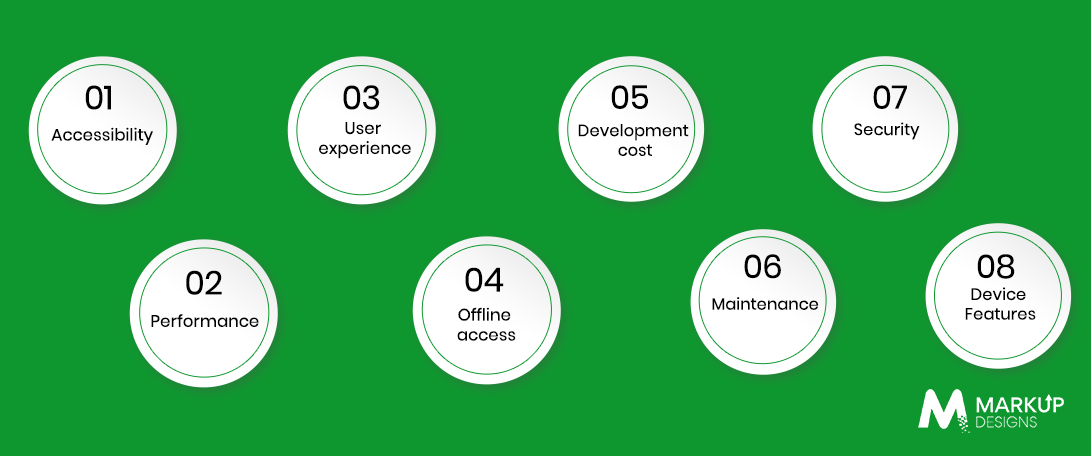
While it is true that web applications and mobile applications may share common business objectives, many aspects distinguish one from the other. This will be useful for businesses to determine which platform would suit them best.
| Factor | Web Apps | Mobile Apps |
| Accessibility | Accessible through any web browser without installation. | Must be downloaded and installed from an app store. |
| Performance | Depends on browser and internet connection. | Faster performance with optimized device integration |
| User Experience | Consistent across devices but with limited device interactions. | Offers a richer, more personalized, and intuitive experience. |
| Offline Access | Mostly requires an internet connection. | Many features may operate offline. |
| Development Cost | Generally low owing to a single source code. | More expensive, in particular when developing different apps for Android and iOS. |
| Maintenance | Updates happen immediately on the server. | Users might have to install updates from the application store. |
| Security | Secured via web security but browser dependent. | Can utilize device-level security such as biometrics and encryption. |
| Device Features | Limited availability of hardware functionality. | Complete access to GPS, camera, sensors, Bluetooth, and much more. |
Your choice should be based on the priorities of your business. If in case, accessibility and low costs of development are the top priorities for your company, then it’s better to choose web apps. However, if you attach great importance to the user experience, then you’d better opt for mobile apps.
Benefits of Web Apps for Businesses
Web apps are becoming the primary means of developing an effective Internet presence for businesses that cannot afford to invest in platform-specific software development programs. They can be run from just about any device that has a web browser and do not necessitate any specific operating system in order to operate. It’s an incredible benefit for businesses looking for flexibility and affordability.
Some of the key benefits of web apps include:
- Development Cost Savings: One web application is capable of serving several users at once without requiring additional platform development.
- Increased Access: The user is able to access the application instantly via their browser without having to download or install any application.
- Ease of Maintenance: All updates and bug fixes are made on the server, which allows all users to use the latest version of the application.
- Quicker Time to Market: Compared to desktop applications, web applications have a shorter development cycle.
- Compatibility With All Platforms: They function effortlessly on desktops, laptops, tablets, and mobile devices using the latest version of the browser.
- Easy Scalability: As the scale of your business increases, it becomes easier to add more capabilities to your web application.
For businesses that need a cost-effective, easy-to-maintain, and widely accessible digital solution, web apps offer significant long-term value.
Benefits of Mobile Apps for Businesses
Mobile applications are developed with the intention of offering a more interactive experience to their users. Because they are downloaded onto a consumer’s phone, companies can form closer bonds with their customers by creating quick interactions, personalizing content, and ensuring easy access to their offerings. This is why mobile apps are beneficial for companies that wish to improve user engagement.
Here are some of the biggest business benefits of mobile apps:
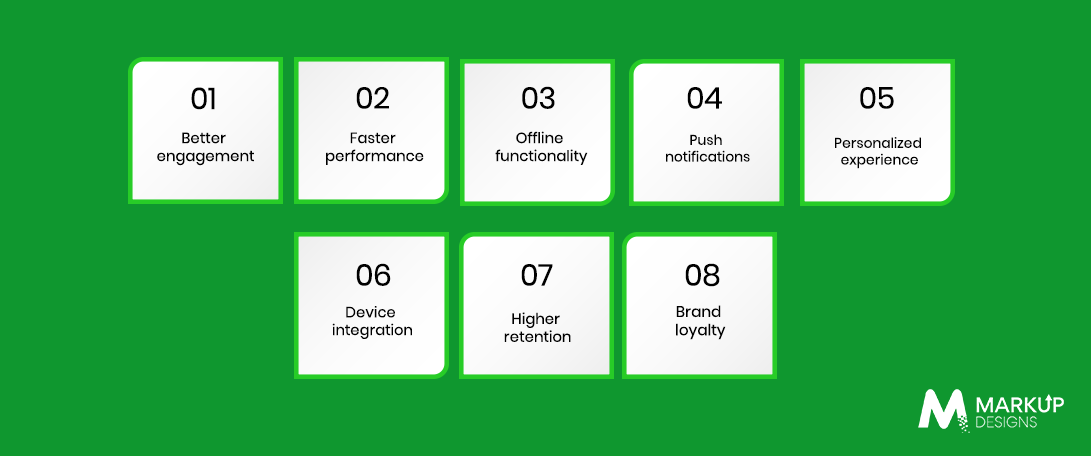
- Better Engagement: It becomes easier for consumers to engage with your brand on a regular basis using your mobile app.
- Faster Performance: These native applications are made for particular operating systems and hence offer better speed and navigation performance.
- Offline Functionality: Most of the services offered by the application work even without any internet connection.
- Push Notifications: You can send timely notifications to your customers about offers and other things that will increase customer engagement.
- Personalized Experience: An app provides personalized recommendations and experiences based on the users behavior and preferences.
- Device Integration: The use of features like GPS, camera, biometric, and others enhances the functionalities of the app.
- Higher Retention: With an app, a business will have better chances of retaining customers for its services.
- Brand Loyalty: An app increases your visibility by keeping your brand on the user’s device at all times.
In businesses where premium customer experience and loyalty are a top priority, a mobile app is definitely the way to go.
Build the Right App for Your Business
Whether you need a web app or a mobile app, our experts will help you choose, design, and develop a solution that supports your business goals and drives long-term growth.

Web Apps vs Mobile Apps: Cost Comparison
Costs associated with development are among the key considerations in choosing whether to develop a web application or a mobile application. Web app development tends to be cheaper because it can run on many platforms and thus only requires one codebase. However, mobile app development is more expensive due to the need for two different codes if both iOS and Android operating systems are targeted unless a cross-platform application development tool is used.
Here’s a general comparison:
| Factor | Web Apps | Mobile Apps |
| Initial Development Cost | Lower | Higher |
| Development Time | Shorter | Longer |
| Platform Support | Single codebase for browsers | Native or cross-platform development |
| Maintenance Cost | Lower due to centralized updates | Moderate to high depending on platforms |
| Update Process | Instant server-side updates | App store approval and user downloads |
| Long-Term Investment | Cost-effective for broad accessibility | Higher investment with greater engagement potential |
While it is true that web app development is generally cheaper and easier to maintain than mobile app development, mobile applications can create more value for mobile app development companies that require interaction, customization, and engagement from their customers. It is not wise for the company to only consider the costs when making the choice but also the possible ROI and customer requirements.
When to Choose a Web App
A web app is often the right choice for businesses that want to launch quickly, reach a broad audience, and keep development costs under control. This application allows for easy user access since it does not require any installation process and is accessed via a web browser.
Consider choosing a web app if:
- You want a quicker deployment: Web applications generally take less time to develop, which will help you hit the ground running.
- Your budget is small: You have only one codebase to maintain.
- You want access on multiple devices: The application is available to users via their desktops, laptops, tablets, and smartphones using a web browser.
- Your application requires a lot of content: Booking systems, portals, dashboards, and business management systems are good candidates for web applications.
- You plan to update your app frequently: Updates are instantaneous and don’t involve installing new versions.
- You’re developing an MVP: You can use web applications to validate your idea without having to develop a more costly mobile application.
For businesses focused on accessibility, cost efficiency, and rapid deployment, a web app can provide excellent business value while supporting future growth.
Read Also: Flutter Web App Development: Process, Benefits, and Best Practices
When to Choose a Mobile App
Mobile applications become more relevant when you need to conduct continuous customer interaction, deliver a customized experience, or utilize high-end features of a mobile device. Being installed directly onto mobile phones of users, mobile applications provide higher speed, higher functionality, and greater user engagement than web applications.
You should consider a mobile app if:
- Customer engagement is a priority: Mobile applications enable constant interaction and help develop long-lasting relationships.
- Offline capabilities are required: The application remains accessible even without an internet connection or with minimal connectivity.
- Device-specific capabilities matter: Features such as GPS, camera, biometrics, Bluetooth, and push notifications improve the user experience.
- Personalized experiences matter: Applications can provide personalized content and recommendations for the user.
- Your business is customer-facing: Many industries, including eCommerce, healthcare, finance, food delivery services, travel, and fitness, can take advantage of mobile applications.
- You aim to increase customer loyalty: A well-designed app keeps your brand within easy reach and encourages repeat usage.
A developing mobile app will provide more business value than other alternatives when the aim is to provide an excellent experience for users, retain customers, and form closer relationships with the brand.
Factors to Consider Before Choosing
The choice between a web app and a mobile application is not limited to only the cost and technology aspects. The correct choice needs to be made about the goals and objectives of the business. If you look at a few factors from the outset, you can be sure that your investment is well worth its value.
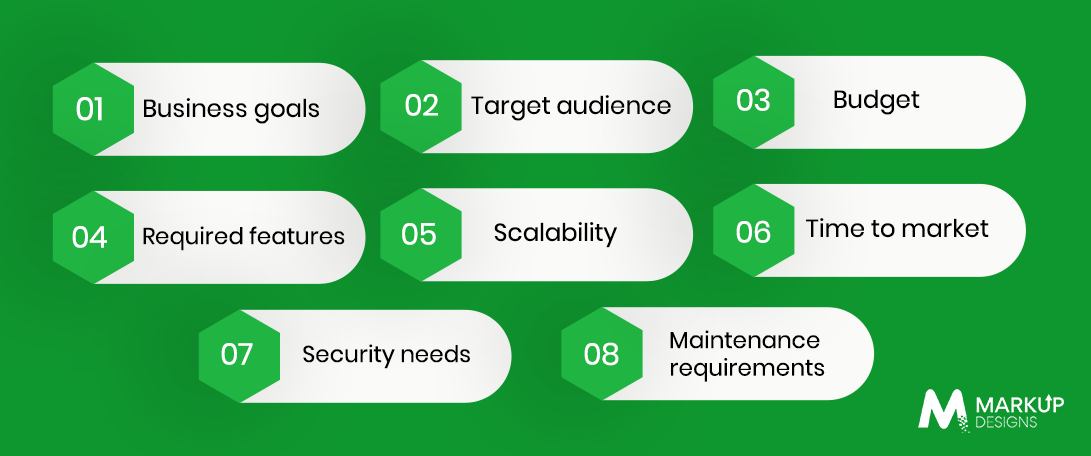
Here are the most important factors to consider:
1. Business Goals
Set out what it is you hope to accomplish with your application.
2. Target Audience
Know your audience and how they prefer to interact with your application and the devices on which they do this.
3. Budget
Think about not just the cost of developing your application but also its maintenance and any updates or future improvements.
4. Required Features
Decide on whether you require certain device-specific features such as access to GPS, camera, push notifications, or the ability to work offline.
5. Scalability
Pick an option that will enable you to scale and grow with your business.
6. Time to Market
Should getting to market quickly be important to you, then consider the development time for each option.
7. Security Needs
Decide how much security your application will require.
8. Maintenance Requirements
Consider how easy your application is to maintain and update over time.
By carefully assessing these factors, businesses can choose the platform that best meets their current needs while supporting future growth and digital transformation.
Why Choose Markup Designs for App Development
An application creation process is not limited only by programming. One needs to have a well-thought-out strategy and design as well as a proper technological platform to be able to create an application that will meet the business needs.
At Markup Designs, we help businesses implement their ideas into well-performing web and mobile applications that are both secure and scalable. Whatever kind of application development project you may have, we will support you throughout the whole process.
Our experienced developers specialize in all modern web and mobile platforms and provide you with tailored solutions based on your requirements. We aim to build intuitive UIs as well as architectures that scale for future growth.
Each application undergoes rigorous quality assurance testing as well as adhering to security best practices to deliver reliable performance. From consultation to development to implementation and post-deployment enhancements, we cater to all aspects to make sure that your business innovates and becomes more efficient.
Not sure whether a web app or a mobile app is the right fit for your business?
Let the experts at Markup Designs help you make the right decision. We combine strategy, design, and development expertise to build digital solutions that align with your goals, budget, and long-term vision..

Conclusion
Web apps and mobile apps each have unique pros, and one cannot claim superiority over the other. It all comes down to what your business wants to accomplish. Both the platform type and your objectives determine whether you should develop a mobile or web application. If your aim is wide availability, easy deployment, and cost savings, then a web app would definitely suit you well. However, should you be concerned about maximum customer interaction and personalization, a mobile app would suit you much better.
However, before making any conclusions, assess not only your present business needs but your plans too. As a rule, businesses get the best out of combining web and mobile applications into one package. With proper planning and the right development company, you will be able to create a powerful application that brings business value.
FAQs
1. What is the main difference between a web app and a mobile app?
A web app runs through a web browser without installation, while a mobile app is downloaded from an app store and installed directly on a smartphone or tablet.
2. Which is more cost-effective for businesses?
Web apps are generally more affordable to develop and maintain because they use a single codebase and don’t require app store distribution.
3. Are mobile apps faster than web apps?
Yes. Mobile apps are optimized for specific operating systems and device hardware, resulting in faster performance and smoother user experiences.
4. Can web apps work on mobile devices?
Yes. Modern web apps are responsive and can be accessed through mobile browsers, although they may not provide the same experience as native mobile apps.
5. Which option is better for startups?
For many startups, web apps are a practical choice because they require a lower initial investment and can be launched more quickly to validate business ideas.
Author's Perspective
Choosing between a web app and a mobile app depends on your business goals, budget, and customer expectations. Web apps are ideal for affordability and wider accessibility, while mobile apps offer stronger engagement and personalized experiences. Rather than focusing only on development costs, consider long-term value, scalability, and user needs. With the right strategy and development partner, you can build a solution that supports sustainable business growth.
Discuss Your Project NowAjit Kumar Jha
VP - Business Operations
Related Posts

10 Key Factors to Choose the Right Mobile...
Mobile App Development in Kuwait: Cost, Process, Features...

Navigation App Development Guide: Building GPS Apps Like...
Insights Are Valuable & Execution is Priceless
You’ve read about the digital future. Now, let’s build the infrastructure to take you there. Move your strategy from the page to the product.
Design Your Solution Now
Contact Us
Schedule The Appointment At Your Convenience Date And Time.
30 Min
Web Conference
Time Zone
Indian standard time (08:30pm)

Thanks For Getting In Touch!
You’ve Taken The First Step Toward Transforming Your Digital Presence. Our Experts Will Reach Out Shortly To Take It Forward.
Launch Your Dream Project
Provide a brief overview of your project, and our specialists will evaluate your requirements. We will connect with you to explore how the right digital solutions can help you launch faster.