

In Brief
- In Australia, the New Payments Platform (NPP) was established. It provides the option for making payment transactions in real time using various technologies like PayID and Osko.
- While designing a payment platform, businesses have to keep in mind the features of the NPP and ensure that they have all of the necessary aspects such as PayTo, ISO 20022 messaging, fraud protection, compliance, and API integration.
- Platforms equipped with NPP features offer many benefits, including making payments in real time, having improved cash flow, lowering transaction expenses, and providing a better user experience than other competing systems.
- The payments system in Australia is evolving, indicating that there will soon be little demand for the traditional system of direct bank transfers – BECS Direct Debit.
- Creating a payment solution that would be competitive in the current environment requires a combination of knowledge in the fields of cloud architecture, cybersecurity, API development, compliance, and payment scalability.
Australia is seeing a major change in how payments are processed as companies strive to meet the rising demand for speedy, secure, and 24/7 availability of payments. Building a payment solution that can compete at an enterprise level requires knowledge of cloud architecture, cybersecurity, API development, compliance, and the ability to scale payments
The New Payments Platform Australia (NPP) is at the centre of this transformation, enabling real-time account-to-account transactions, rich data exchange through ISO 20022 messaging, and innovative payment services such as PayID and PayTo. Consumers and businesses expect a seamless payment experience, and so companies are focusing on developing systems based on the NPP platform to modernize their payment operations.
With the rise of eCommerce, digital banking, fintech innovations such as embedded finance, and subscription services, the demand for advanced Digital Payment Platforms has never been greater. Companies are investing in Digital Payment Platform Development and NPP software development to build safer, more efficient, and compliant payment solutions.
Understanding Australia’s New Payments Platform (NPP)
In recent years, Australia’s payment infrastructure has undergone tremendous progress, largely driven by the introduction of the New Payments Platform (NPP), which is a modernized payment infrastructure that supports fast, secure, and information-rich payments between accounts. Unlike conventional payment systems that operate only during certain hours, the NPP allows customers to conduct payments at any time of the day or night and throughout the year.
Businesses investing in NPP payment platform development can build scalable, reliable, and efficient payment solutions that meet the evolving needs of modern consumers and enterprises.
Why was the NPP introduced?
The NPP was introduced to bring Australia’s payment systems up to date. It enables faster settlements, richer payment information, and greater flexibility, allowing businesses to deliver seamless payment experiences while supporting the country’s growing digital economy.
How Does the NPP Work?
The NPP connects participating financial institutions through a secure network that processes and settles transactions within seconds. Some of its prominent features include:
– The ability to process payments in real-time, meaning money can be transferred from one account to another without delay.
– Payments can be conducted regardless of time constraints since NPP allows such transfers 24 hours a day throughout the year, including weekends and public holidays.
-The NPP uses ISO 20022 messaging standards to enable richer payment data and improve transaction transparency.
– Instant settlement is also done via the services of the Reserve Bank of Australia FSS.
Core Components of the NPP Ecosystem
– PayID: A system that allows payment to be completed using such identifiers as mobile number, email address, or ABN instead of providing the bank account details.
– Osko: A system that allows eligible financial institutions to carry out near-instant bank transactions.
– PayTo: A system that facilitates payment agreements allowing consumers to make one-time or recurring payments.
– The Fast Settlement Service (FSS) – Ensuring payment gets processed immediately by the participating institutions.
– ISO 20022 Messaging: Standardises payment information, improving automation and reconciliation.
Key Benefits of Building an NPP Enabled Digital Payment Platform
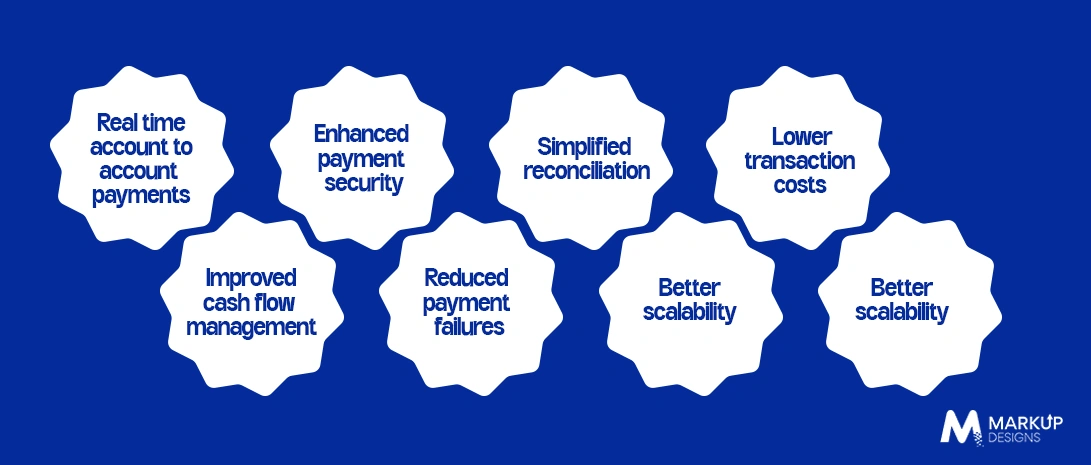
Businesses investing in NPP payment platform development gain access to a modern payment infrastructure designed for speed, security, and scalability. Beyond enabling instant transactions, an NPP-enabled payment platform helps organisations improve operational efficiency, reduce payment friction, and deliver better customer experiences.
Real Time Account to Account Payments
Process payments within seconds without relying on traditional settlement windows, improving transaction speed for both businesses and customers.
Improved Cash Flow Management
Instant settlement gives businesses quicker access to funds, helping improve liquidity and financial planning.
Enhanced Payment Security
Advanced authentication, encrypted transactions, and fraud monitoring strengthen payment security while protecting sensitive financial data.
Reduced Payment Failures
Features such as PayID validation and real time verification minimise incorrect transfers and failed transactions.
Simplified Reconciliation
Rich payment information through ISO 20022 messaging enables faster and more accurate reconciliation.
Scalable Payment Infrastructure
Support growing transaction volumes, new payment services, and expanding customer bases without compromising performance.
Lower Transaction Costs
Reduce operational overheads by automating payment processing and minimising reliance on manual workflows.
Future Ready Digital Payments
Stay prepared for emerging innovations such as PayTo, Open Banking, embedded finance, and evolving payment regulations.
Essential Features of an NPP-Enabled Digital Payment Platform
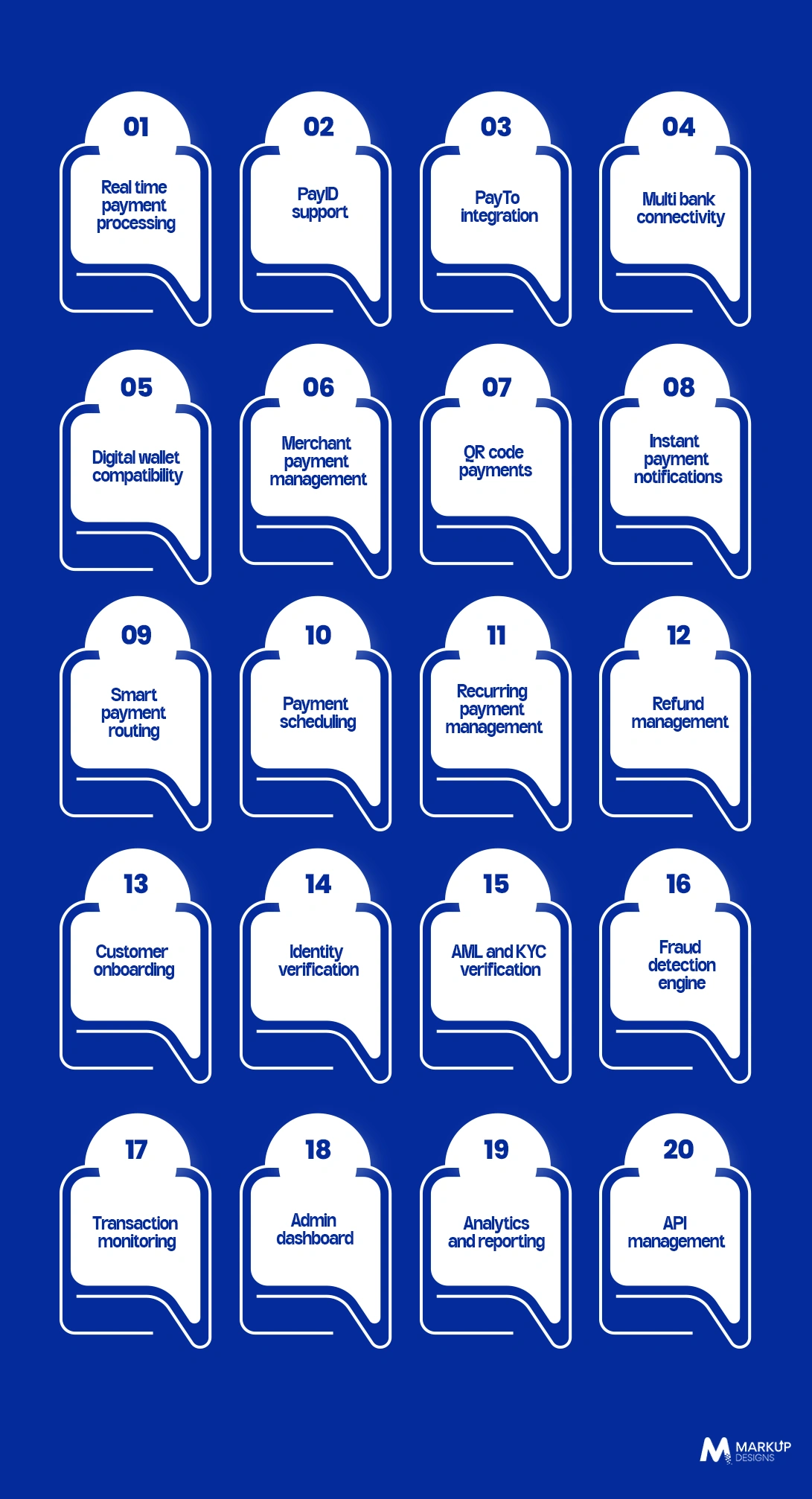
A successful payment platform powered by NPP needs to go beyond merely enabling rapid payments. The platform must include intelligent payment processing, security features, integration capabilities, and management functionalities to help businesses in Australia’s continuously changing digital payments market.
Real-Time Payment Processing
Facilitate instant A2A transfers and instant payment confirmation to ensure timely transaction execution and improve customer experience.
PayID Support
Let users process transactions by entering simple identifiers like mobile phone numbers, email IDs, or ABNs rather than relying on regular bank accounts.
PayTo Integration
Make use of PayTo integration functionalities to enhance security features in signing up for digital payments for single and periodic transactions, thus enabling customers to manage authorized payments better.
Multi-Bank Connectivity
Provide connections with many financial institutions so that payments can be accepted with higher popularity and efficiency.
Digital Wallet Compatibility
Ensure integration with the most popular digital wallets in order to enhance flexibility for users while receiving or sending money.
Merchant Payment Management
Give merchants access to a common dashboard for better management of their transactions, settlements, refunds, and customer payments.
QR Code Payments
Enable secure QR-based payments that simplify checkout experiences across retail stores, restaurants, events, and other business environments.
Instant Payment Notifications
Keep customers updated with instantaneous notifications regarding successful payments, pending transactions, and payment failures.
Smart Payment Routing
Deal with payment transaction routing to the potential channels so that the number of successful transactions is maximized.
Payment Scheduling
Give customers an opportunity to schedule future payments in advance through automated payments on a certain date.
Recurring Payment Management
Provide subscription payment services through automated debt collection systems based on PayTo.
Refund Management
Let companies give refunds fast and effortlessly, keeping an eye on every transaction and making accounting accurate.
Customer Onboarding
Deliver customers a fast registration process with little to no hassle in creating an account.
Identity Verification
Make the platform more reliable with identity verification of customers that will give them access to the service.
AML and KYC Compliance
Implement processes of Anti-Money Laundering (AML) and Know Your Customer (KYC) verification to comply with Australian legislation.
Fraud Detection Engine
Utilize advanced fraud detection mechanisms to locate suspicious transactions and to eliminate any financial risks for the customers.
Transaction Monitoring
Keep track of payment transactions on an ongoing basis to consider possible anomalies, to guarantee compliance, and to improve the security level of transactions.
Supervision Dashboard
Allowing administrators access to complete visibility of local platform operations, users’ activities, payments, and system status.
Data Analysis and Reporting
Providing clients with analytics and reporting tools to produce effective reports useful to track payment activity.
APIs Management
Creating bank-guaranteed Application Programming Interfaces to facilitate payment systems integrations.
RBA Access Management
Allowing for restricting the application of the platform’s services and restricting access to secure payment information based on user roles.
PayTo: What Is It and Why Is It a Game-Changer in the Australian Payment Landscape?
PayTo is a modern payment service based on the New Payments Platform Australia, allowing businesses and their customers to execute safe digital payment agreements related to both one-off and recurring payments, thus overcoming some limitations of traditional Direct debit, which makes it capable of offering better transparency, sped up authorization process, and enhanced empowerment of the customer.
How PayTo Works?
Agreement Creation: The business creates a digital payment agreement defining the terms and payment schedule.
Customer Authorisation: After that, the customer approves this payment agreement using a banking application.
Payment Initiation: As soon as approval is given, payments are executed as agreed.
Agreement Management: Customers can view, modify, pause, or cancel agreements without lengthy manual procedures.
PayTo – A Comprehensive Payment Solution
PayTo is a payment solution that is fundamentally different from Direct Debit. It involves real-time authorisation, enhanced payment visibility, and in-depth payment data, thus enabling a fully digital payment experience. Unlike Direct Debit, the participation of PayTo results in a more secure and flexible payment process for the customer and/or business concerned.
Advantages Of PayTo For Businesses
- Speedier and more reliable collection of funds.
- Increased control and transparency of payments.
- Reduced failed payments and administrative costs.
- Ability to conduct recurring payments seamlessly.
- Improved security of payment transactions through digital authorisation.
Subject Areas Of Interest For PayTo
Subscription Companies: Automate payment collection on a routine basis, with a wider scope of options available.
Utilities: Make bill payments easy while collecting the amounts faster.
Insurance: Ensure faster receipt of premium payments and management of policies.
Lending: Automate loan payments by means of secure authorisation from customers.
E-commerce: Enable instant payments whenever people use their cards while making purchases online.
Software as A Service: Organise recurring payments for the use of the SaaS program.
Healthcare: Streamline healthcare-related billing and financing procedures.
Government Organizations: Facilitate efficient collection of payments for public services.
Types of Digital Payment Solutions Businesses Can Build on NPP
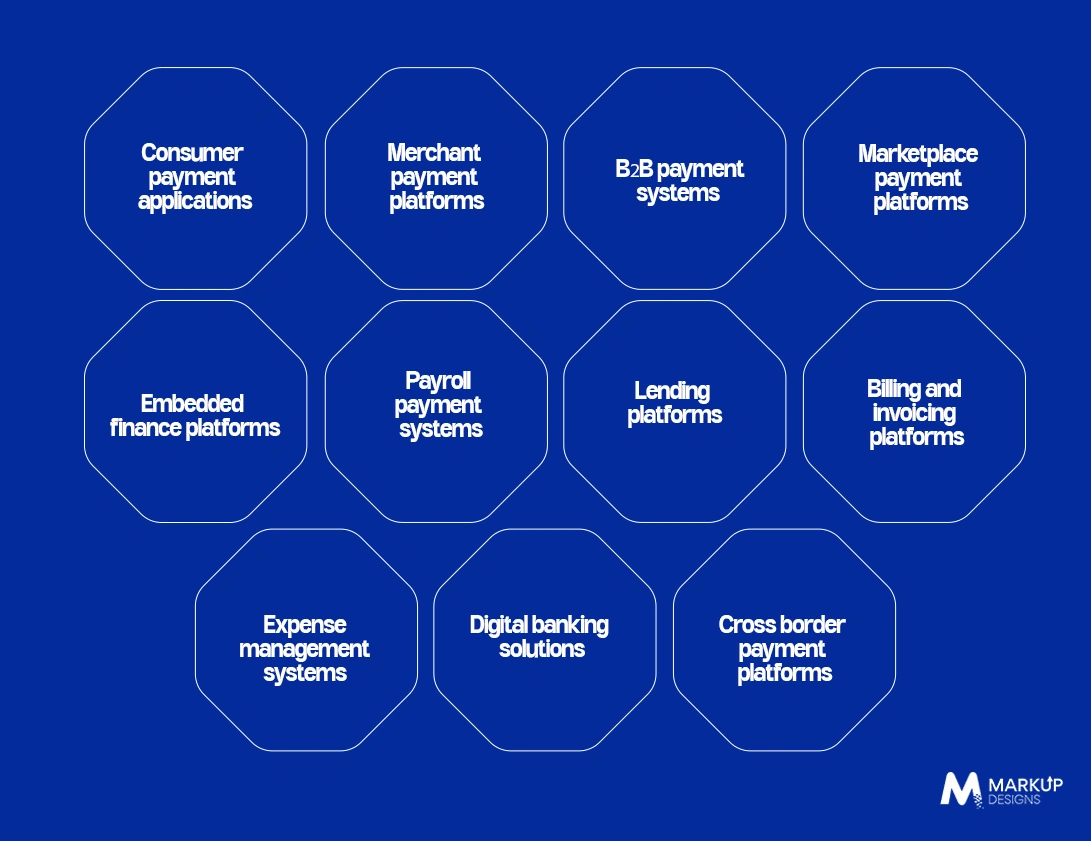
The flexible nature of New Payments Platform Australia (NPP) allows enterprises to create diverse innovative payment products suitable for various industries and applications. The NPP payment platform provides secure, instantaneous, and scalable payment solutions to businesses in various fields, including consumer, corporate, financial, and market. Businesses can create the following digital payment solutions:
Consumer Payment Applications: These are mobile applications enabling instant money transfers from account to account, including peer-to-peer money transfers and payment services.
Merchant Payment Platforms: These assist commercial enterprises in the collection, disposition, reconciliation, and settling of payments from customers.
B2B Payment Solutions: These enable business entities to pay their suppliers and settle their invoices automatically to guarantee high cash flow.
Market Payment Solutions: These platforms facilitate onboarding of merchants, payment distribution, commission processing, and automation of settlements.
Embedded Financial Services: These solutions make it possible for the provision of the services such as payment, lending, and insurance together with the use of various digital products.
Payroll Payment Services: These systems automate such activities as salary payments, contractor payments, and reimbursements for staff.
Lending Platforms: Online lending options that make the lending experience easier by offering up-to-date technologies for loan disbursement, repayment collection, and tracking payments.
Billing and Invoicing Platforms: Automated payment systems that make invoice generation, collection, and payment tracking a lot easier.
Expense Management Systems: A platform that simplifies the process of keeping track of all expenses, employee reimbursements, approval channels, and financial statements.
Digital Banking Solutions: Applications that enable banking and ensure that customers’ accounts are managed easily and securely, ensuring fund transfers and payments.
Cross-Border Payment Platforms: Payment service providers that make international money transfer more efficient for better expansion of businesses in the global market.
Technologies Powering Modern NPP-Enabled Payment Platforms
In order for the management of Digital Payment Platforms to occur in a safe and efficient manner, it requires an appropriate technology stack to implement technologies that can process continuous transactions quickly, with an increased demand for secure technologies.
Cloud Native Infrastructure
Modern payment systems need the ability to avail the service continuously so that payment technologies are effective and efficient.
Artificial Intelligence and Machine Learning
Artificial intelligence and machine learning are widely used in automating the work of fraud alerts, securing payment processes, developing customer service experience, and improving the way of making decisions.
API First and Microservices Architecture
With the help of development processes, payment technologies will be integrated into banking networks, which will ease the process of deployment.
Modern Development Technologies
Using containerisation, DevSecOps, event-driven architecture, and data analytics increases the efficiency with respect to the deployment time and effectiveness of using an effective payment system.
Blockchain for Auditability
Due to the benefits of blockchain technology, it possible to track payments easily, audit payments and make processes more transparent in real time.
Step by Step Process to Build an NPP Enabled Digital Payment Platform
Creating an NPP-based payments system necessitates a well-thought-out strategy utilizing technical knowledge and regulatory adherence alongside a robust payments system.
Define Business Requirements
Define the business goals, target audience, payment procedures, and required use cases for the platform.
Design the Platform Architecture
Establish the overall structure of the platform, select the needed technical solutions, and plan the implementation of services involving payment system integration.
Choose Your NPP Connectivity Model
There are several ways businesses can connect to the NPP according to their needs, namely:
Direct Participation: Connect to the NPP as a participant financial organization.
Indirect Participation: Access the service through another participant organization.
Payment Service Provider Partnership: Use the service of an already established payment provider.
Develop Core Payment Infrastructure
Create the processing engine, software for the customers, banking API for payments, and PayTo integration needed for instant payments.
Implement Security and Compliance
Use tools for fraud prevention, identity verification, KYC and AML checks, and make sure the payments comply with Australian requirements.
Test, Launch, and Optimise
Conduct testing of the platform and ensure its quality and reliability.
Regulatory and Compliance Requirements for Australian Payment Platforms
Compliance is of utmost importance in the process of developing a digital payment platform in Australia, ensuring that it will operate safely and meet all applicable rules and regulations.
Financial Regulations
Commercial companies are required to comply with regulations set by the Reserve Bank of Australia (RBA), the Australian Payments Plus (AP+), Australian Prudential Regulation Authority (APRA), the Australian Securities and Investments Commission (ASIC), and AUSTRAC.
Identity and Financial Crime Compliance
Payment platforms are responsible for using Anti-Money Laundering (AML) procedures, Know Your Customer (KYC) verification, and ongoing monitoring of transactions to minimize the risk of financial crimes occurring.
Privacy and Data Protection
Compliance with the Privacy Act, the Consumer Data Right (CDR), and safe practices in handling data of customers will help ensure that customers trust the companies and comply with regulations.
Security Standards
Companies are expected to comply with the expected standards such as PCI DSS, ISO 27001, and ISO 20022 messaging in order to be able to process payments directly and to comply with the rules.
Security Best Practices for NPP Enabled Payment Platforms
Since payment processors deal with sensitive financial data, it is crucial to incorporate security measures into the entire development process.
Strengthen User Authentication
Utilize multi-factor authentication, biometrics, and role-based access to secure customer accounts.
Secure Payment Infrastructure
Utilize encryption technology, tokenization, safe APIs, and robust global networks to secure online payments.
Intelligent Fraud Prevention
Integrate fraud analytics, behavioral tracking, and artificial intelligence to detect any wrongdoing before losses occur.
Build for Business Continuity
Put in place zero trust concepts and disaster recovery plans to maintain the functioning of processes and systems.
Common Challenges in Building NPP-Enabled Payment Platforms
While NPP payment platform development is advantageous, companies have to overcome numerous technical and operational difficulties.
Legacy System Integration
Connecting modern payment platforms to existing infrastructures creates many difficulties.
Meeting Regulatory Requirements
Compliance with constantly changing requirements necessitates constant monitoring of legislation and the system.
Managing Security Risks
It is of utmost importance to ensure protection of payment information from cyber threats while maintaining a smooth user experience.
Ensuring Scalability and Availability
Payment platforms must support growing transaction volumes, maintain high availability, and deliver consistent performance during peak demand.
Keeping Pace with Industry Innovation
Rapid advancements in payment technologies, Open Banking, embedded finance, and customer expectations require ongoing platform enhancements to remain competitive.
Cost of Developing an NPP-Enabled Digital Payment Platform in Australia
The cost of NPP payment platform development depends on several factors, including platform complexity, feature requirements, security standards, third-party integrations, and regulatory compliance. Businesses should evaluate both the initial development investment and the long-term operational expenses to build a scalable and future-ready payment solution.
Factors That Influence Development Cost
The overall project cost is determined by the number of features, user roles, payment workflows, banking integrations, security requirements, cloud infrastructure, and compliance with Australian financial regulations. Custom functionalities such as PayTo integration services, AI-driven fraud detection, and real-time analytics can also impact development costs.
Estimated Development Cost by Platform Complexity
| Platform Type | Estimated Cost (AUD) | Timeline |
| MVP Platform | AUD 60,000 to AUD 120,000 | 3–5 Months |
| Mid Scale Enterprise Platform | AUD 120,000 to AUD 300,000 | 6–9 Months |
| Large Fintech Platform | AUD 300,000+ | 9–15+ Months |
Actual development costs vary based on business requirements, integrations, compliance scope, and custom feature development.
Additional Costs to Consider
Beyond development, businesses should budget for cloud infrastructure, platform maintenance, regulatory compliance, security audits, third-party API integrations, payment gateway fees, and continuous product enhancements to ensure long-term scalability and performance.
Future Trends Shaping Australia’s Digital Payment Ecosystem
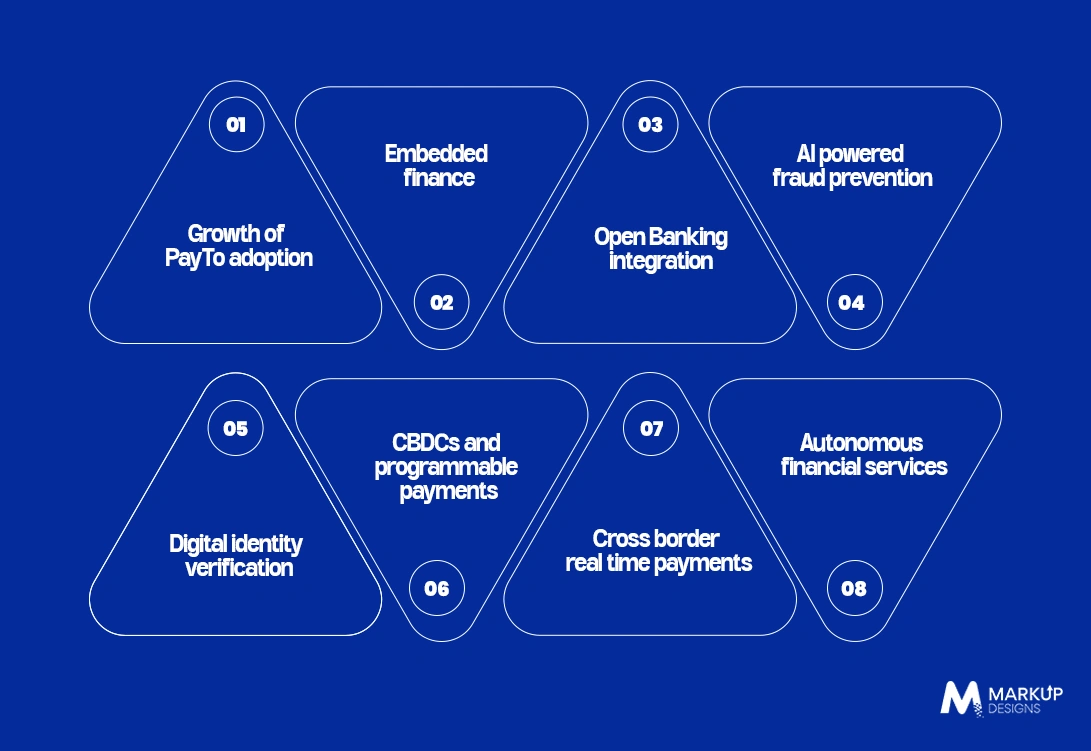
Australia’s digital payments sector is transforming at a fast pace as organizations, banks and fintech companies adopt solutions that improve payment processing. Companies working on an NPP payment platform today can expect to be able to better respond to these new trends in the future.
Growth of PayTo Adoption
PayTo is set to become the most popular payment option by offering more visibility, faster authorization and more control to customers compared to Direct Debit.
Embedded Finance
More companies are implementing their own financial services directly on their online platforms, allowing them to provide a better experience to customers without any financial applications.
Open Banking Integration
The combination of Open Banking and the New Payments Platform Australia will make it possible to share information securely, offer customized services, and create better connections among banks, fintechs and companies.
AI in Fraud Prevention
Artificial Intelligence will be more widely used in detecting fraud, assessing the risks of payments in real time, and making transactions safer through predictive analytics.
Digital Identity Verification
Cutting-edge identity verification technologies, consisting of biometric authentication and digital identity systems, will facilitate consumer onboarding efficiency and enhance payment security and compliance with regulations.
CBDCs and Programmable Payments
The birth of Central Bank Digital Currency (CBDC) and programmable payments could lead to innovative concepts of automatic transactions, smart contracts, and improved financial systems.
Cross-border Real-time Payments
Improvements in systems for cross-border payments will lead to faster, more transparent, and cheaper payments and help companies serve international clients.
Autonomous Financial Services
Artificial intelligence-driven automation will constantly change Financial Services by applying intelligent payment processes, automated decision-making, tailored payments, and minimizing possible risk occurrences.
Read Also: The Ultimate Guide to Hire Mobile App Developers in Australia
Why Choose Markup Designs for NPP-Enabled Digital Payment Platform Development?
With the ongoing changes in Australia’s payment ecosystem, businesses require more than just a development partner; they need a technology team that can handle the complexities of payment infrastructure, financial regulations, and enterprise software engineering. Markup Designs specializes in the development of NPP payment platforms and works with fintech companies, startups, banks, and businesses to create scalable, secure, and efficient payment solutions that meet their needs. From designing user experience to integration of real-time payment capabilities, our team creates solutions with a focus on reliability, flexibility, and growth.
Our expertise is not limited to application development. We merge fintech software development, API-first engineering, PayTo integration services, cloud-native architecture, and security frameworks to create digital payment platform development solutions that cover everything from beginning to end. Whether you are creating a fintech solution, operating a modern payment solution, or developing an enterprise platform for the New Payments Platform in Australia, we collaborate with you to speed up development and ensure compliance.
Build Secure, Scalable, and NPP Ready Digital Payment Platforms with Markup Designs
Design real-time payment solutions powered by NPP, PayTo, Open Banking, AI-driven fraud prevention, and cloud native architecture to transform your digital payment ecosystem.

Conclusion
Australia’s payment ecosystem is changing rapidly with a move towards real-time data-driven payment transactions, with the New Payments Platform serving as a foundation for the transition.
Businesses that invest in NPP payment platform development can deliver faster payments, stronger security, improved operational efficiency, and enhanced customer experiences while preparing for emerging innovations such as PayTo, Open Banking, and embedded finance.
Whether you are developing a consumer payment application, enterprise payment platform, digital banking solution, or fintech product, choosing the right technology partner is essential for long-term success. By combining secure architecture, regulatory compliance, and scalable engineering, Markup Designs helps organisations build future-ready NPP-enabled payment platform solutions that drive innovation and create a lasting competitive advantage in Australia’s rapidly evolving digital payments market.
FAQs
1. What is the New Payments Platform (NPP)?
NPP, New Payments Platform Australia, is Australia’s real-time payment platform, ensuring account-to-account transactions in seconds, 24/7 operation for instant payment, additional payment information with ISO 20022 message service, as well as several innovations, one of which is the PayID payment facility.
2. How is NPP different from BECS?
Unlike the Bulk Electronic Clearing System (BECS), which facilitates batch payments and may take a long time to guarantee payment processing, NPP makes instant payment possible.
3. What is PayTo?
PayTo service is based on NPP technology and aims to create digital payment agreements between customers and businesses that guarantee one-time or recurring payments. The service works by employing legal and technological compliance related to payments through Direct Debit transactions – the other mode of payment.
4. Can fintech companies use NPP?
Yes, fintech organizations can use NPP in either direct or indirect ways, through other companies’ connections or through cooperation with payment service providers.
5. What industries benefit most from NPP enabled payment platforms?
NPP-enabled payment platforms are valuable across a wide range of industries, including banking, fintech, ecommerce, retail, healthcare, insurance, lending, subscription services, logistics, utilities, government services, and enterprise software. Any organisation that requires secure, real-time payment processing can benefit from adopting an NPP-based payment solution.
Author's Perspective
Australia’s shift from legacy payment systems to the New Payments Platform Australia (NPP) marks a significant step towards a faster, smarter, and more connected digital economy. Investing in NPP payment platform development today is not just about enabling real-time payments but about preparing for the future of digital commerce through innovations like PayTo, Open Banking, and embedded finance. Businesses that modernise their payment infrastructure now will be better positioned to improve customer experiences, enhance operational efficiency, and stay competitive in an evolving financial landscape.
Discuss Your Project NowGaurav Goyal
Global Sales- VP
Related Posts

Complete Guide to Forex Trading App Development in...

Shariah-Compliant Fintech Platform Development: Complete Guide for 2026
Insights Are Valuable & Execution is Priceless
You’ve read about the digital future. Now, let’s build the infrastructure to take you there. Move your strategy from the page to the product.
Design Your Solution Now
Contact Us
Schedule The Appointment At Your Convenience Date And Time.
30 Min
Web Conference
Time Zone
Indian standard time (08:30pm)

Thanks For Getting In Touch!
You’ve Taken The First Step Toward Transforming Your Digital Presence. Our Experts Will Reach Out Shortly To Take It Forward.
Launch Your Dream Project
Provide a brief overview of your project, and our specialists will evaluate your requirements. We will connect with you to explore how the right digital solutions can help you launch faster.