

In Brief
- AI in manufacturing in Australia is becoming a key driver for improving efficiency, productivity, and operational resilience as companies shift toward smarter, data-driven production systems.
- It helps manufacturers reduce downtime, improve product quality, and optimize maintenance by analyzing large volumes of real-time and historical operational data.
- The adoption is strongly influenced by Industry 4.0 trends, rising operational costs, supply chain disruptions, and workforce shortages, pushing businesses toward automation and intelligent decision-making systems.
- Advanced technologies like machine learning, computer vision, predictive analytics, generative AI, and agentic AI are enabling more accurate forecasting, automated inspections, and autonomous decision-making across manufacturing workflows.
- Overall, AI is no longer optional but a strategic necessity for Australian manufacturers aiming to stay competitive, improve sustainability, and build future-ready, scalable operations.
Manufacturing organizations continue to face a significant gap between AI investment and measurable business outcomes. While AI adoption is increasing across industries, many manufacturers struggle to translate technology initiatives into operational improvements and financial returns. This challenge often stems from fragmented implementation strategies, limited integration with business objectives, and a lack of performance-focused deployment.
Traditional manufacturing environments are frequently impacted by production inefficiencies, quality issues, equipment downtime, and limited real-time visibility into operations. Manual processes and disconnected systems make it difficult for organizations to respond quickly to operational challenges and changing market demands.
AI is emerging as a practical solution to these challenges. By analyzing large volumes of operational and production data, AI helps manufacturers improve decision-making, optimize maintenance activities, enhance quality control, and increase overall productivity.
As technologies such as generative AI and agentic AI continue to evolve, manufacturers are gaining access to more advanced capabilities that support automation, operational intelligence, and measurable business performance.
This blog explores the benefits, use cases, implementation strategies, challenges, and future trends of AI in manufacturing Australia, helping organizations understand how intelligent technologies can drive operational efficiency, innovation, and long-term business growth.
What is AI in Manufacturing? Key Technologies Driving Industry 4.0
Artificial intelligence is transforming the manufacturing industry by enabling businesses to improve operational efficiency, enhance product quality, and make more informed decisions. It involves the use of advanced technologies such as machine learning, computer vision, natural language processing (NLP), and predictive analytics to optimize production processes, streamline workflows, and improve supply chain performance.
In Australian manufacturing environments, AI is increasingly being adopted for predictive maintenance, intelligent robotics, defect detection, demand forecasting, energy optimization, and smart factory initiatives. As manufacturers continue embracing Industry 4.0, AI is becoming a critical component of modern production strategies focused on increasing productivity and operational resilience.
Here are the AI technologies transforming the Australian manufacturing industry:
- Machine Learning: Enables systems to learn from historical and real-time data, supporting applications such as predictive maintenance, demand forecasting, anomaly detection, and process optimization.
- Computer Vision: Uses image and video analysis to automate quality inspections, identify defects, and monitor production lines with greater accuracy and consistency.
- Natural Language Processing: Helps manufacturers analyze maintenance logs, technical documentation, inspection reports, and operational records to improve knowledge management and decision support.
- Predictive Analytics: Combines statistical modeling and machine learning to forecast equipment failures, production bottlenecks, inventory requirements, and future demand patterns.
Together, these technologies form the foundation of AI-powered manufacturing, helping organizations create smarter, more efficient, and data-driven operations.
AI in Manufacturing Market Overview & Statistics
The adoption of AI in manufacturing is accelerating worldwide, and Australian manufacturers are increasingly investing in intelligent technologies to improve productivity, reduce operational costs, and strengthen business resilience. As organizations continue their digital transformation journey, AI is becoming a key enabler of smarter, more efficient manufacturing operations.
The global AI in manufacturing market was valued at USD 4.8 billion in 2024 and is projected to reach USD 22.5 billion by 2033, growing at a compound annual growth rate (CAGR) of 21.2%. This growth is being driven by the increasing demand for predictive maintenance, intelligent automation, quality inspection, supply chain optimization, and data-driven decision-making across manufacturing environments.
In Australia, manufacturers are actively exploring AI-powered solutions to address rising operational costs, workforce shortages, supply chain disruptions, and increasing pressure to improve efficiency. The growing adoption of Industry 4.0 technologies, smart factories, connected equipment, and advanced analytics is further accelerating AI implementation across the sector.
As AI capabilities continue to evolve, Australian manufacturers are expected to increase investments in generative AI, agentic AI, intelligent automation, and predictive analytics to build more agile, resilient, and future-ready manufacturing operations.
Why Australian Manufacturers are Accelerating AI Adoption
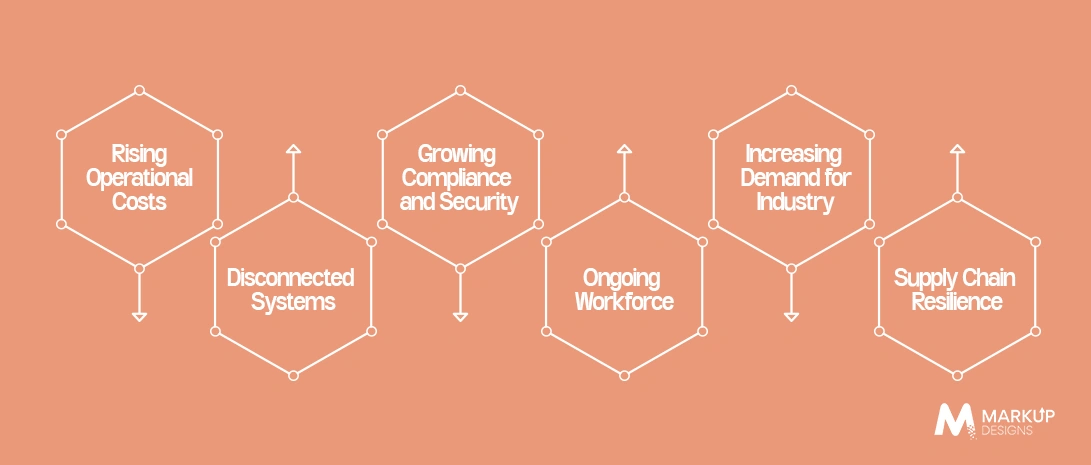
Australia’s manufacturing sector is experiencing rapid change as businesses face rising costs, supply chain uncertainty, workforce shortages, and increasing pressure to improve efficiency. In response, manufacturers are turning to AI-driven solutions to optimize operations, improve decision-making, and remain competitive in a dynamic market environment.
Rising Operational Costs and Economic Uncertainty
Manufacturers across Australia are dealing with increasing labor, energy, and production costs. AI helps organizations optimize resource utilization, reduce waste, improve productivity, and identify cost-saving opportunities across operations.
Disconnected Systems and Limited Visibility
Many manufacturing facilities still operate with legacy systems and fragmented workflows that restrict access to real-time information. AI enables better system integration, improves data visibility, and supports faster, more informed decision-making.
Growing Compliance and Security Requirements
As regulations surrounding cybersecurity, data privacy, and product traceability become more stringent, manufacturers need smarter ways to manage compliance. AI-powered monitoring and analytics can help organizations strengthen governance while maintaining operational efficiency.
Ongoing Workforce and Skills Challenges
Australia’s manufacturing sector continues to face skilled labor shortages. AI-powered automation helps businesses streamline repetitive tasks, improve workforce productivity, and allow employees to focus on higher-value activities.
Increasing Demand for Industry 4.0 Adoption
The shift toward Industry 4.0 is accelerating the adoption of intelligent technologies across manufacturing environments. AI enables real-time analytics, predictive insights, and smarter production processes that support digital transformation initiatives.
Need for Greater Supply Chain Resilience
Supply chain disruptions have highlighted the importance of visibility and proactive planning. AI helps manufacturers forecast demand, manage inventory more effectively, identify potential risks, and improve overall supply chain responsiveness.
As these challenges continue to shape the industry, AI is becoming a strategic necessity for manufacturers seeking sustainable growth, operational resilience, and long-term competitiveness.
AI in Healthcare in Australia: Transforming Patient Care and Hospital Efficiency
Strategy to hire machine learning engineers for scalable AI solutions. Explore hiring models, ML engineer skills, MLOps practices, deployment expertise, and enterprise AI development strategies.
Benefits of AI in Manufacturing
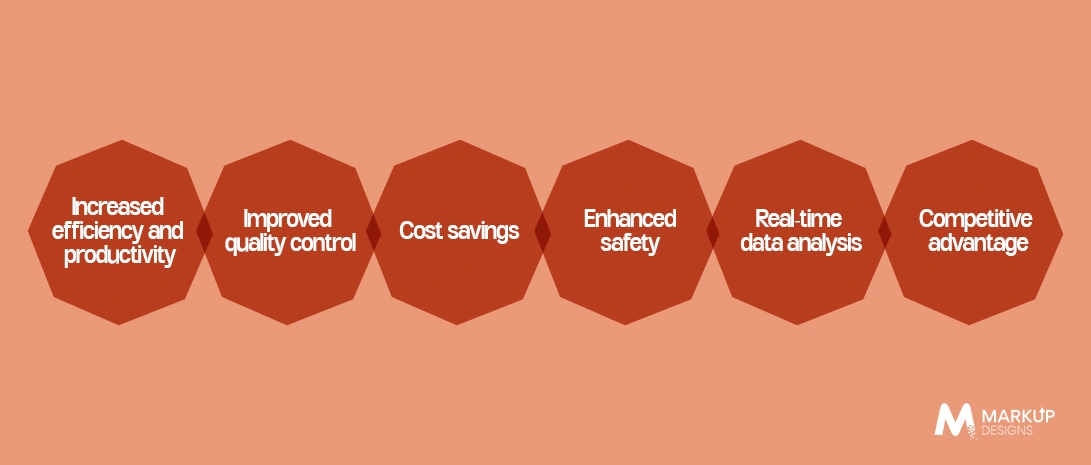
AI is a powerful tool that helps manufacturers improve the efficiency and quality of their operations. There are many potential benefits of using artificial intelligence in manufacturing, including:
Increased efficiency and productivity
AI systems can automate many routine and repetitive tasks. This allows employees to focus on more complex and value-added activities, which can lead to increased efficiency and productivity in manufacturing processes.
Improved quality control
AI-powered systems can analyse data in real time to identify any defects or anomalies in the production process. This can help manufacturers catch and correct potential issues before they become larger problems, which will result in higher-quality products.
Cost savings
By automating tasks and improving efficiency, AI can help manufacturers reduce labour costs and improve their bottom line.
Enhanced safety
AI-powered robots and machines can perform dangerous or hazardous tasks, reducing the risk of injury to workers.
Real-time data analysis
AI systems can analyse large amounts of data in real time. These analyses provide manufacturers with valuable insights and enable them to make faster and more informed decisions.
Competitive advantage
By incorporating AI into their manufacturing processes, companies can gain a competitive edge because they can produce high-quality products more efficiently and effectively.
Key Use Cases of AI in Manufacturing
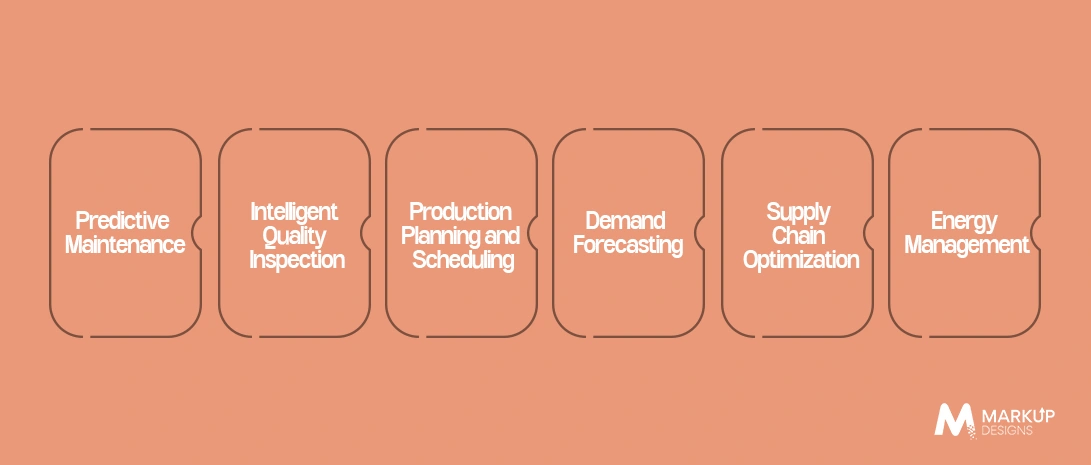
The practical value of AI lies in its ability to solve everyday operational challenges. From improving production efficiency to strengthening supply chain planning, AI applications are helping manufacturers create smarter and more responsive operations.
Predictive Maintenance
AI systems analyze equipment performance data to identify early signs of wear and potential failures. This allows maintenance teams to address issues before they result in unexpected downtime.
Intelligent Quality Inspection
Computer vision models can inspect products during production and identify defects with a level of consistency that is difficult to achieve through manual inspections alone.
Production Planning and Scheduling
AI helps optimize production schedules by evaluating available resources, order volumes, and manufacturing capacity to improve workflow efficiency.
Demand Forecasting
Advanced forecasting models analyze historical sales data, customer behavior, and market trends to support more accurate production planning.
Supply Chain Optimization
Manufacturers use AI to improve inventory management, identify supply risks, and increase visibility across supplier networks.
Energy Management
AI-powered monitoring systems help identify inefficiencies in energy consumption and recommend adjustments that reduce operational costs.
Real World Example
AI-Powered Smart Factory: Priestley’s Gourmet Delights (Australia)
One notable example of AI adoption in Australian manufacturing is Priestley’s Gourmet Delights (PGD), a Queensland-based food manufacturing company. The company invested in a $53 million AI-powered smart factory that uses autonomous vehicles, intelligent robotics, and advanced automation technologies to improve production efficiency and operational performance.
By integrating AI into manufacturing workflows, PGD has been able to increase production capacity, streamline factory operations, and support more sustainable manufacturing practices through energy-efficient systems. The initiative demonstrates how Australian manufacturers are using AI not only to improve productivity but also to build more scalable and future-ready production environments.
Business Impact:
- Increased production capacity
- Improved operational efficiency
- Reduced manual intervention in repetitive processes
- Enhanced sustainability through modern manufacturing systems
How to Implement AI in Manufacturing
Implementing AI in manufacturing requires a strategic approach that aligns technology investments with business objectives. Rather than attempting large-scale transformation projects, manufacturers should focus on solving specific operational challenges where AI can deliver measurable value.
Assess Current Operations
Begin by identifying inefficiencies, production bottlenecks, quality issues, maintenance challenges, or supply chain gaps. Understanding these pain points helps determine where AI can have the greatest impact.
Evaluate Data Readiness
AI systems rely on accurate and accessible data. Manufacturers should assess existing data sources, improve data quality, and integrate information from production systems, equipment, ERP platforms, and IoT devices.
Prioritize High-Value Use Cases
Focus on practical applications such as predictive maintenance, quality inspection, demand forecasting, or inventory optimization. Starting with targeted initiatives reduces risk and accelerates ROI.
Launch a Pilot Project
Implement a small-scale AI solution to validate performance, measure outcomes, and gather feedback from operational teams before expanding deployment.
Train Teams and Encourage Adoption
Successful implementation requires employee involvement. Providing training and promoting collaboration between technical and operational teams helps improve adoption and long-term success.
Scale and Continuously Optimize
Once proven results are achieved, manufacturers can expand AI across additional processes and facilities while continuously monitoring performance and identifying new improvement opportunities.
How Much Does AI Implementation Cost in Manufacturing?
The cost of AI implementation in manufacturing varies widely depending on the scale of operations, complexity of use cases, and level of digital maturity within the organization. Small pilot projects can start with limited investment, while enterprise-wide AI transformation requires a significantly higher budget due to infrastructure, integration, and ongoing optimization needs. Typically, costs are driven by data readiness, software development, cloud infrastructure, and workforce training requirements.
Most manufacturers begin with a focused use case such as predictive maintenance or quality inspection, which helps control initial investment and deliver measurable ROI before scaling AI across operations. Over time, costs shift from setup to maintenance, model tuning, and system expansion.
Key Cost Components in AI Implementation
- Data preparation and integration (ERP, IoT, MES systems)
- AI model development and deployment
- Cloud infrastructure and computing resources
- System integration with legacy manufacturing tools
- Employee training and change management
- Ongoing maintenance and optimization
Estimated AI Implementation Cost in Manufacturing
| Scale of Implementation | Type of Deployment | Estimated Cost Range |
| Small Scale | Pilot project (single use case) | $10,000 – $50,000 |
| Mid-Level | Department-level AI integration | $50,000 – $250,000 |
| Enterprise Level | Full-scale smart factory deployment | $250,000 – $1M+ |
Overall, AI investment should be viewed as a long-term operational upgrade rather than a one-time expense, as it directly contributes to efficiency gains, cost reduction, and improved production performance.
Key Barriers to AI Adoption in Manufacturing and Ways to Overcome Them
AI offers significant opportunities for manufacturers, but successful implementation requires addressing several operational, technical, and organizational challenges. Understanding these barriers and developing the right strategies can help organizations maximize the value of their AI investments.
Challenge 1: Poor Data Quality and Data Silos
Manufacturing data is often spread across multiple systems, departments, and facilities. Inconsistent, incomplete, or inaccurate data can reduce the effectiveness of AI models and limit decision-making accuracy.
Solution:
- Centralize data from ERP, MES, IoT, and production systems
- Establish data governance policies
- Standardize data collection and management processes
- Invest in data cleansing and validation initiatives
Challenge 2: Legacy Infrastructure and Integration Complexity
Many manufacturing facilities still operate on older systems that were not designed to support AI-powered applications. Integrating AI with legacy infrastructure can be time-consuming and complex.
Solution:
- Modernize systems in phases
- Use APIs and middleware to connect existing platforms
- Start with small-scale AI deployments
- Prioritize high-impact integration opportunities
Challenge 3: Workforce Resistance and Skills Shortages
Employees may be hesitant to adopt AI due to concerns about job displacement or a lack of technical expertise. Additionally, finding skilled AI professionals remains challenging for many manufacturers.
Solution:
- Provide AI training and upskilling programs
- Promote AI as a tool that supports employees rather than replaces them
- Encourage collaboration between technical and operational teams
- Partner with experienced AI development and consulting providers
Challenge 4: High Implementation Costs
AI initiatives often require investment in technology infrastructure, software development, data preparation, and ongoing maintenance, making cost a common concern.
Solution:
- Focus on high-value use cases with measurable ROI
- Launch pilot projects before large-scale deployment
- Use cloud-based AI solutions to reduce infrastructure costs
- Scale investments based on proven business outcomes
Challenge 5: Cybersecurity and Data Privacy Risks
As AI systems process large volumes of operational and business data, manufacturers face increased cybersecurity and compliance requirements.
Solution:
- Implement strong cybersecurity frameworks
- Encrypt sensitive data across systems
- Conduct regular security audits and risk assessments
- Ensure compliance with industry regulations and standards
Challenge 6: Difficulty Scaling AI Across Operations
Many organizations achieve success with AI pilots but struggle to replicate results across multiple production lines, facilities, or business units.
Solution:
- Develop a clear enterprise-wide AI strategy
- Create standardized implementation frameworks
- Build scalable cloud and data architectures
- Continuously monitor and optimize AI performance
Challenge 7: Lack of Clear Business Objectives
AI projects often underperform when they are driven by technology trends rather than specific business goals and operational requirements.
Solution:
- Align AI initiatives with measurable business KPIs
- Identify operational bottlenecks before implementation
- Define success metrics from the outset
- Continuously evaluate performance against business outcomes
Best Strategies to Hire Machine Learning Engineers for AI Solutions
Strategy to hire machine learning engineers for scalable AI solutions. Explore hiring models, ML engineer skills, MLOps practices, deployment expertise, and enterprise AI development strategies.
Future Trends of AI in Manufacturing
As Australian manufacturers continue their digital transformation journeys, AI is expected to play a much bigger role in improving efficiency, resilience, and operational intelligence. The next wave of innovation will focus on creating connected, data-driven manufacturing environments that adapt to changing business demands in real time.
Generative AI-Powered Manufacturing Assistants
Generative AI can help engineers access technical documentation, generate maintenance recommendations, summarize production reports, and accelerate decision-making through natural language interactions.
Agentic AI for Autonomous Decision-Making
Manufacturers are beginning to explore agentic AI systems that can analyze data, make decisions, and execute tasks with minimal human intervention. These systems can help manage production schedules, maintenance workflows, and supply chain activities more proactively.
Expansion of Digital Twin Technology
Digital twins are becoming increasingly valuable for simulating factory operations, testing production scenarios, and identifying performance improvements before implementing changes on the shop floor.
Growth of Edge AI Applications
By processing data closer to machines and equipment, edge AI enables faster insights and real-time decision-making, reducing delays associated with cloud-based processing.
AI-Powered Sustainable Manufacturing
Sustainability goals are driving the adoption of AI solutions that optimize energy consumption, reduce material waste, and improve resource utilization across production facilities.
Intelligent Human-AI Collaboration
Rather than replacing workers, future AI systems will function as intelligent assistants, helping employees make faster decisions, solve operational problems, and improve productivity.
Smarter and More Resilient Supply Chains
AI-driven forecasting, inventory optimization, and risk monitoring will help manufacturers respond more effectively to market fluctuations and supply chain disruptions, creating greater operational agility.
Still unsure how much AI implementation would cost for your manufacturing setup?
Get a clear, practical breakdown based on your operations, goals, and scalability needs to make informed investment decisions.

Conclusion
AI is rapidly transforming the manufacturing landscape in Australia, helping businesses improve operational efficiency, enhance product quality, reduce downtime, and make more informed decisions. From predictive maintenance and intelligent quality control to supply chain optimization and production planning, AI is enabling manufacturers to address longstanding operational challenges while creating new growth opportunities.
As technologies such as generative AI, agentic AI, and digital twins continue to evolve, their impact on manufacturing will only increase. Organizations that take a strategic approach to AI adoption, focusing on high-value use cases and measurable outcomes, will be better positioned to build resilient, future-ready operations and maintain a competitive advantage in an increasingly dynamic industrial environment.
FAQ’s
1. How is AI used in manufacturing?
AI is used in manufacturing to improve production efficiency, automate repetitive tasks, monitor equipment performance, detect product defects, forecast demand, optimize inventory, and support data-driven decision-making across operations.
2. What are the key benefits of AI in manufacturing?
Some of the major benefits include reduced downtime, improved product quality, lower operational costs, better resource utilization, enhanced workplace safety, and faster decision-making through real-time insights.
3. What is predictive maintenance in manufacturing?
Predictive maintenance uses AI and machine learning to analyze equipment data and identify signs of potential failures before they occur. This helps manufacturers minimize unplanned downtime and reduce maintenance expenses.
4. What challenges do manufacturers face when implementing AI?
Common challenges include poor data quality, legacy systems, workforce skill gaps, cybersecurity concerns, integration complexity, and difficulties in scaling AI initiatives across operations.
5. What is the future of AI in manufacturing?
The future of AI in manufacturing includes agentic AI, digital twins, edge AI, intelligent automation, sustainable production practices, and stronger human-AI collaboration to improve operational performance and business resilience.
Author's Perspective
AI is no longer an emerging technology for manufacturers-it is becoming a practical business tool for improving efficiency, productivity, and operational resilience. However, successful adoption requires more than implementing new technology. Manufacturers that focus on solving specific operational challenges, building strong data foundations, and aligning AI initiatives with measurable business goals will be better positioned to generate long-term value and maintain a competitive edge in Australia’s evolving industrial landscape.
Discuss Your Project NowGaurav Goyal
Global Sales- VP
Related Posts

How AI is Revolutionising Industrial Automation in Australia

How UK Enterprises Can Build an Effective AI...

AI Voice Agent for Real Estate: Features, Benefits,...
Insights Are Valuable & Execution is Priceless
You’ve read about the digital future. Now, let’s build the infrastructure to take you there. Move your strategy from the page to the product.
Design Your Solution Now
Contact Us
Schedule The Appointment At Your Convenience Date And Time.
30 Min
Web Conference
Time Zone
Indian standard time (08:30pm)

Thanks For Getting In Touch!
You’ve Taken The First Step Toward Transforming Your Digital Presence. Our Experts Will Reach Out Shortly To Take It Forward.
Launch Your Dream Project
Provide a brief overview of your project, and our specialists will evaluate your requirements. We will connect with you to explore how the right digital solutions can help you launch faster.