
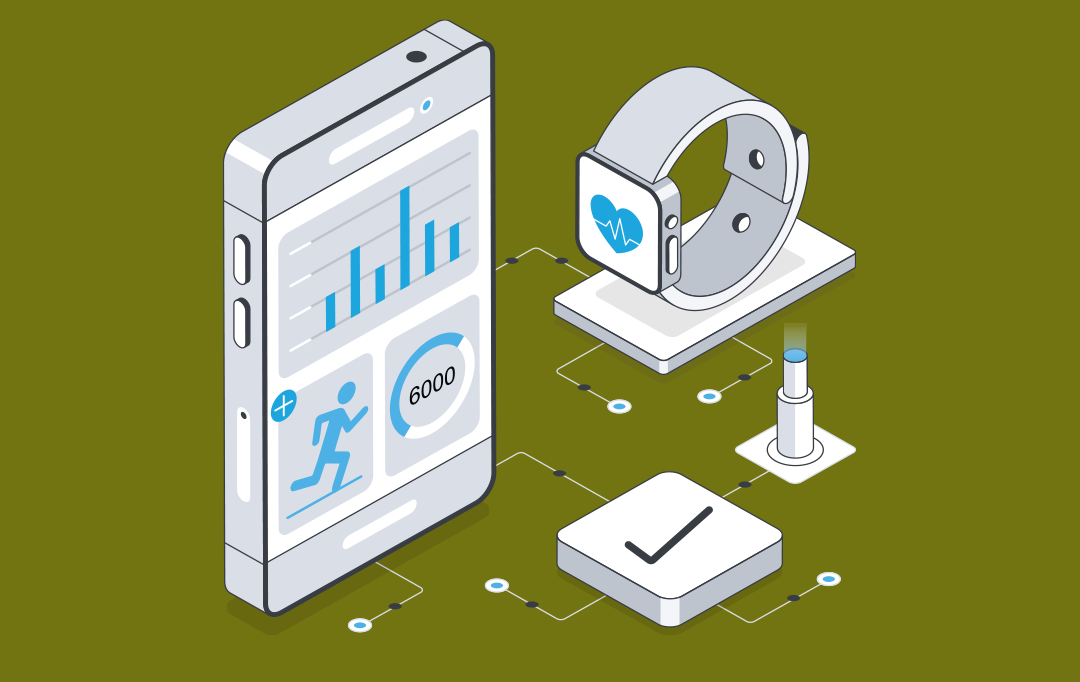
In Brief
- The development of wearable apps allows businesses to create applications compatible with fitness bands, smartwatches, medical equipment, smart glasses, and other types of wearable devices.
- Among the advantages of wearable app development are the ability to monitor data in real time, create personalized dashboards, improve user engagement, and facilitate communication between devices.
- The main features of wearable apps are synchronization of data, health control, notifications, GPS navigation, compatibility with other devices, and reliable security.
- The wearable app development process includes market research, platform selection, UI/UX design, software development, testing, launch, and ongoing maintenance.
- The cost of developing wearable apps is determined by the complexity of the application, the set of features, device compatibility, technology used, integration, and security requirements.
Wearable technologies are changing the ways people engage with technology, keep an eye on their health, track their activities in real-time, and access useful information from anywhere. These technologies comprise smart wedding bands and fitness trackers, medical wearable devices, and smart glasses. There are various opportunities to create effective digital products for businesses through these wearable technologies. Wearable app development is becoming a major investment for entrepreneurs as these technologies are used more widely across industries, including healthcare, fitness, retail, and more.
However, designing such an application requires more than just reducing the size of an already existing mobile application. Companies are obliged to check device compatibility, battery drain, data processing in real time, end-user experience, and data security before choosing the right technologies and features for their application. A comprehensive understanding of the development process, benefits, and vital features of the developed applications, in addition to the costs of the development process, can help businesses create wearable applications that will satisfy their customers.
What Are the Benefits of Wearable App Development?
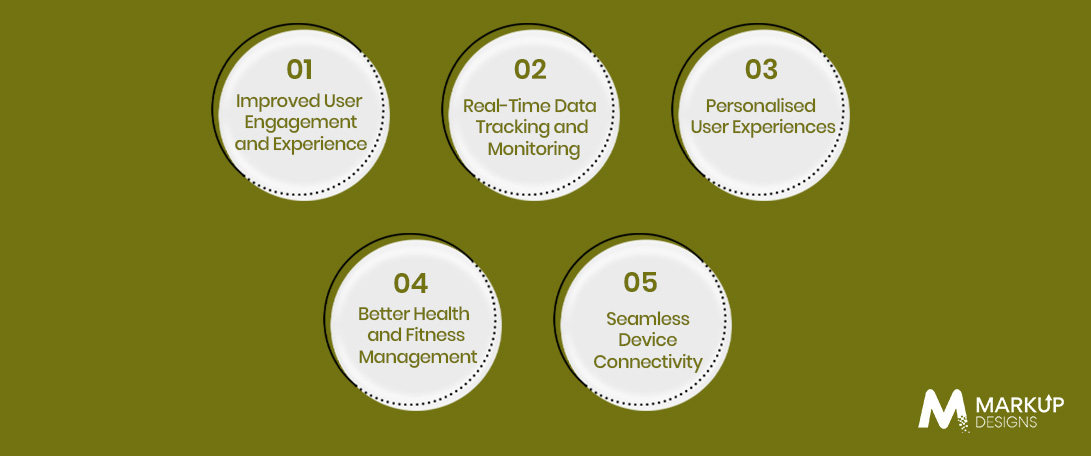
The innovation of wearable app development has introduced new ways for businesses to enhance customer experiences, provide real-time analytics, and link their digital services with the activities of the day-to-day life of buyers. The advantages are useful for many fields, including healthcare, fitness, retail, manufacturing, etc.
Improved User Engagement and Experience
Wearable applications permit users to monitor relevant information directly from the device they are wearing. Instant notifications, updates on activities, and user-friendly controls remove the necessity to check the smartphone all the time. This convenience enhances constant app use and thus increases engagement.
Real-Time Data Tracking and Monitoring
Wearable gadgets are capable of collecting various information, for example, about heart rate, steps, sleep, location, physical activities, etc. Applications use this information to provide timely notifications and important insights. This real-time data can be employed to promote fitness tracking, remote patient monitoring, workplace safety, etc.
Personalised User Experience
Wearable applications can apply the gathered data to provide customised features and suggestions based on the preferences of users and their activity. For instance, a fitness application solutions can suggest necessary levels of activity based on one’s history of training, while a smartwatch app can customise notifications according to user settings. This personalisation makes the experience more relevant to individual needs.
Better Health and Fitness Management
Wearable apps help users monitor daily activity, exercise routines, sleep patterns, and selected health indicators through compatible devices. Healthcare applications can also support remote monitoring by sharing relevant readings with authorised healthcare professionals. Medical-grade monitoring and diagnostic capabilities depend on the device, its sensors, and applicable regulatory approvals.
Seamless Device Connectivity
Wearable applications can connect with smartphones, cloud platforms, fitness equipment, and other IoT devices to exchange data and coordinate activities. This connectivity helps users access information across devices without repeatedly entering it manually. For businesses, it creates opportunities to build connected digital ecosystems and integrate wearable data into existing services.
What Are the Different Types of Wearable Apps?
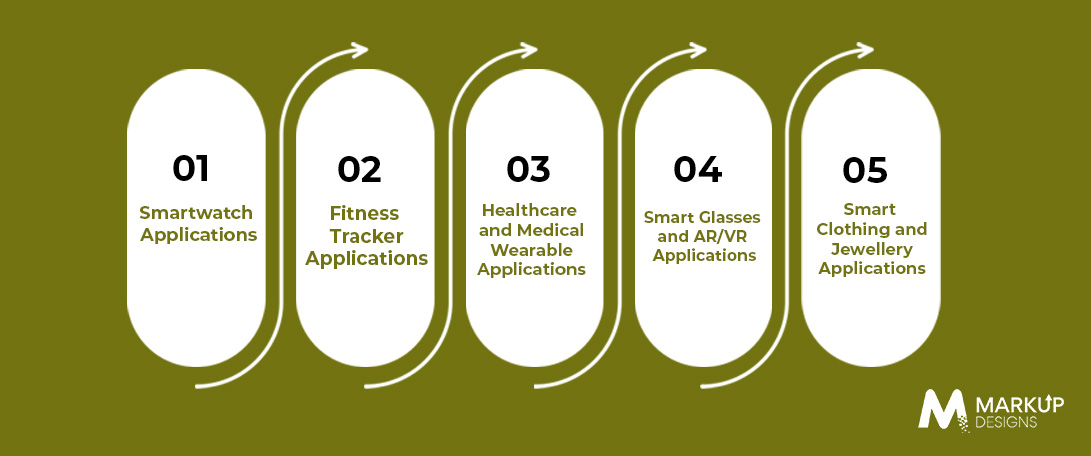
Wearable apps vary according to the devices they suit and the problems they address. Some focus on everyday enjoyment and fitness tracking, while others can serve health monitoring, immersive experiences, or connecting devices.
Smartwatch Apps
The watch apps perform tasks such as message notifications, calendar reminders, navigation, contactless payments, and activity tracking. They are designed for quick interaction and can function either as standalone applications or as companions to smartphone apps. The most popular include watchOS and Wear OS.
Fitness Tracker Apps
Depending on the device in use, fitness tracker apps monitor physical activity such as steps taken, distance covered, calories burned, workout duration, or sleep pattern analysis. They produce performance trends and reports, allowing users to monitor their fitness goals. Many integrate with smartwatches, heart rate monitors, and other fitness devices.
Healthcare and Medical Wearable Apps
Healthcare wearable applications utilize compatible devices to monitor selected health indicators such as heart rate, blood oxygen levels, and any supported measurements. They help users track their health trends and enable remote patient monitoring when integrated with appropriate healthcare systems. Clinical applications may require added validation, privacy protections, and regulatory compliance.
Smart Glasses and AR/VR Applications
Smart glasses and augmented or virtual reality applications deliver digital information through visual overlays or immersive environments. They support use cases such as hands-free instructions, remote assistance, interactive training, navigation, and product visualisation. These applications require careful consideration of display capabilities, motion tracking, interaction methods, and processing requirements.
Smart Clothing and Jewellery Applications
Smart clothing incorporates sensors into garments to track metrics such as movement, posture, or selected physiological signals. Smart jewellery, including connected rings and bracelets, can support activity tracking, sleep monitoring, notifications, and other functions. Their capabilities depend on the sensors, connectivity options, and data-processing features available in the connected product.
What Are the Key Features of Wearable App Development?
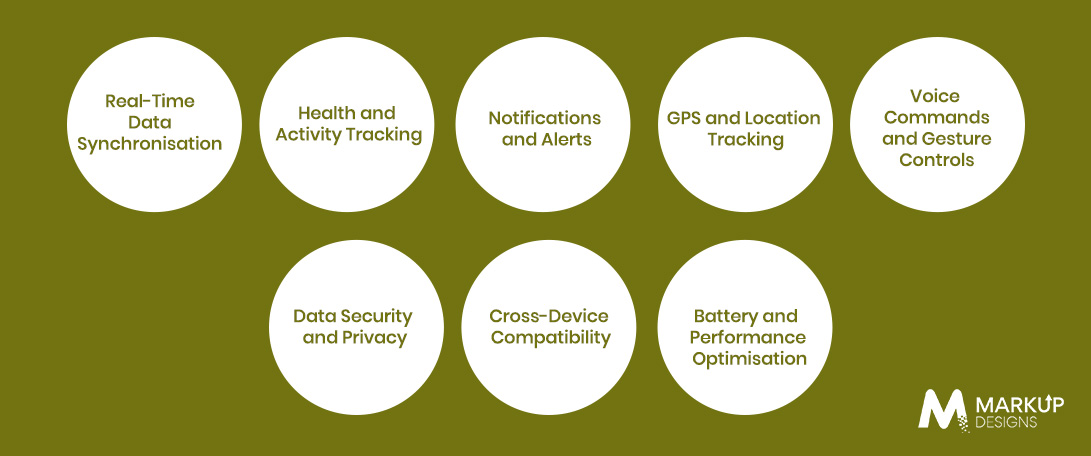
The specific features play an important role in how well wearable app development works for users on supported devices. While the needs vary across industries, there are some common requirements for most wearable apps: reliable data management, ease of use, satisfactory performance, and security.
Real-Time Data Synchronisation
This feature helps ensure that data is consistent between wearable devices, mobile phones, and cloud services. As a result, users can always see the most up-to-date information about their activities, personal data, and other aspects in all connected devices. However, developers should account for problems related to sporadic connectivity, background synchronization, and data-related challenges.
Health and Activity Tracking
This feature makes it possible to track health and the activities of users by capturing metrics, such as steps, pulse rate, exercise time, and sleep patterns. The user can see their results in the form of trends and summaries. The efficiency of these features depends on device sensors and permissions granted by the user.
Notifications and Alerts
In this part of the app, users get notifications about reminders, messages, activity achievements, updates, etc. Wearable apps should prioritise relevant alerts and allow users to customise their preferences. Clear, concise notifications help users understand important information without requiring lengthy interactions on a small screen.
GPS and Location Tracking
Location services enable navigation, route tracking, distance measuring, and location sharing when permitted. They can come in handy in the fields of fitness, travel, logistics, and field service. Developers should bear in mind location accuracy, battery usage, connectivity needs, and user consent when developing location services.
Voice Commands and Gesture Controls
Developers are able to provide users with the ability to interact with wearable apps through voice commands and gestures. For example, people may commence a workout, execute supported commands, or navigate the interface using gestures. This is a very useful feature when a hands-free operation is needed but may not be available on all devices and/or operating systems.
Data Security and Privacy
Wearable applications may deal with sensitive information when collecting health, location, or personal activity data. Among the safety measures are encryption, secure authentication, sound access control, and protected data transmissions. Developers should also reduce unnecessary data collection, acquire informed consent, and comply with privacy legislation.
Cross-Device Compatibility
Compatibility across devices allows the wearables to work properly with specific devices, operating system versions, and smartphones. Developers have to consider the differences in hardware, screens, sensors, and API providers.
Battery and Performance Optimisation
Wearable applications should have a balance between the function they offer and the power provided and computing resources. Background processes, unnecessary sensor checkups, and endless connections may lead to increased battery drain. Proper programming, improved data synchronization, and reasonable usage of sensors will help improve reaction speed and increase battery life.
How to Develop a Wearable App: Step-by-Step Process
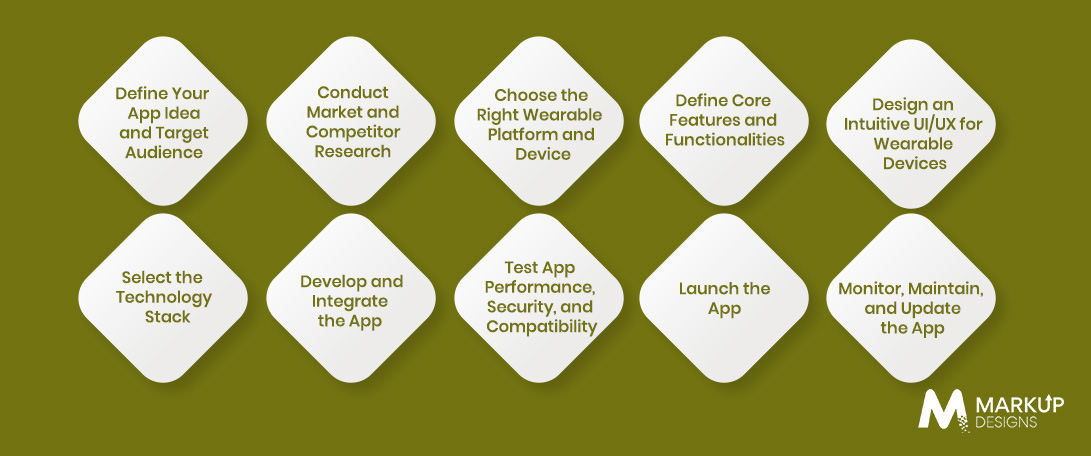
Creating a wearable application requires a systematic approach that takes into account business goals and device possibilities, as well as expectations of users. Each step in the development process, from research to the maintenance stage, ensures that the application has a meaningful function, provides reliable performance, and works correctly across all devices.
Step 1: Define Your App Idea and Target Audience
Start by defining the problem that your wearable application will resolve, as well as the people who will use it. Try to find out whether the application will provide fitness solutions, healthcare issue tracking, productivity at the workplace, navigation, or something else. Identifying the target users, app goals, and required results will help in forming a roadmap for your future development.
Step 2: Conduct Market and Competitor Research
Analyze available wearable solutions in the industry to determine user expectations, key features, and market gaps. Evaluate the competitor’s offerings, online reviews, pricing plans, and functioning platforms to look for differentiation opportunities. The study serves as a basis for validating the idea and makes it easier to establish the importance of each feature.
Step 3: Choose the Right Wearable Platform and Device
Choose a wearables model and OS that will satisfy your target audience’s needs along with the application requirements. The following options can be taken into consideration: Apple watch, Wear OS devices, fitness trackers, and medical wearable devices. Before making a final decision, analyze various hardware features, sensors, available tools for development, compatibility requirements, and platform limitations.
Step 4: Define Core Features and Functionalities
Determine the essential features necessary for the specific purpose of the app. Such features may include activity tracking, notifications, GPS, sync of info, voice control, and integration with healthcare systems. It is important to identify the necessary functions for the minimum viable product instead of making the app overloaded with additional features that will complicate the development process.
Step 5: Design an Intuitive UI/UX for Wearable Devices
Wearable interfaces must clearly display data on tiny displays while supporting prompt interaction. This means you need to use concise text, readable layouts, simple navigation, and easily accessible controls. You should take into account various types of interactions, be it touch, voice, or gestures, but still ensure that users don’t have to exert a lot to perform crucial tasks.
Step 6: Select the Technology Stack
Choose programming languages, frameworks, databases, and development tools depending on the platform of your choice and the functionality needed. For example, watchOS apps typically employ the Swift language, while Wear OS development could involve Kotlin. It might also require the use of cloud and backend technologies for user verification, storing and managing business data, analytics, and data synchronisation.
Step 7: Develop and Integrate the App
Create the wearable interface, app logic, and back-end components. Make sure your software connects to the necessary device sensors, APIs, cloud systems, and mobile devices. Be attentive to data flow and interactions between all systems throughout the development, and make sure that it can overcome potential connectivity issues or device limitations.
Step 8: Test App Performance, Security, and Compatibility
Test your app with the recommended devices in order to find out functionalities, usability, performance, and compatibility issues. Test your battery usage, how accurate the sensors are, and how synchronisation is performed, depending on the type of connections used. The tasks must also include checking the authentication method, permissions, and encryption.
Step 9: Launch Your App
Make the app ready for launch by going through the required steps, confirming all permissions, and submitting the app to the appropriate store. Make sure that the information about the app is presented accurately – your description, screenshots, and disclaimers have to correspond absolutely to the app’s work. A small launch will allow you to find out what problems there are before people hear about it.
Step 10: Monitor, Maintain, and Update the App
After the app is launched, you should monitor its performance, crashes, and usage statistics. Launching updates will improve the stability of the app and make sure that the app complies with the latest requirements of a new device or OS.
What Technologies Are Used in Wearable App Development?

The creation of wearable applications integrates mobile development frameworks, hardware technology, backend infrastructure, and data-processing tools. The selection of the right technology stack depends on the targeted devices and needs of the application.
Wearable Operating Systems and Platforms
The hardware configurations determine how the application interfaces with hardware, sensors, notifications, and system services. The most popular platforms include watchOS for Apple Watches and Wear OS for smartwatches. Other smartwatches may possibly use software developed by the manufacturers or special operating systems, making platform selection an important step in the process.
Programming Languages and Frameworks
Programming languages and frameworks are responsible for the creation of the application interface and establishing the business logic, and accessing the device functions. The programming language that is the most widespread for watchOS application development is Swift, while Kotlin is widely used for Wear OS applications. Depending on the device and the requirements of the project, developers may also use some other programming languages such as Java, C++, and others.
Cloud Computing and Backend Technologies
Cloud computing and backend technologies provide capabilities of data storage, user interface operations, data synchronization, notifications, and analytics. Services such as Firebase and AWS can help manage these functions without requiring every component to be built from scratch.
AI, IoT, and Data Analytics Integration
With the support of AI and data analytics, wearable apps could discover trends, provide personalised advice, and decipher the data they gathered. In turn, IoT technology facilitates exchanges of information between wearable devices, mobile phones, connected devices, and other systems. Such functionality proves necessary for advanced fitness forecasting, connected workspace applications, and selected remote patient monitoring solutions.
APIs and Third-Party Integrations
Wearable apps can exchange information with the services of the devices, mobile apps, cloud services, and third-party software thanks to APIs. Depending on the needs, the integration may encompass health systems, payment services, location services, and corporate systems. It is vital for developers to check information about the APIs and make sure of their availability, permissions, formats used, and privacy considerations when deploying them.
How Much Does Wearable App Development Cost?
Development costs shall vary depending on the degree of complexity, functionality, supported devices, and integrations the app has. A basic app showing notifications or logging basic activities usually might not require as much effort as one involving real-time healthcare data access, AI-driven analysis, or cloud solutions.
The most reliable way to estimate the budget is to define the minimum viable product (MVP), identify the target platforms, and document the essential features before requesting development estimates. Businesses should also account for testing, device access, third-party service fees, ongoing maintenance, and future upgrades rather than budgeting only for the initial build.
Key Factors Affecting Wearable App Development Cost
An array of factors contribute to the overall amount of financial resources needed to create a wearable application:
Application complexity and functionality: Advanced data analysis, real-time communication, and offline functionality require additional technological input.
Wearable platform and compatibility with devices: Supporting many operating systems, devices, and types of sensors means additional testing and development.
User interface and user experience design: Interfaces designed for different screens, movements, and usage contexts may increase interface design and development costs.
Backend infrastructure and connection to third-party systems: Cloud storage, authorization, APIs, and external connections influence overall costs.
Cybersecurity and legislation compliance: Encryption, methods of access, protection of personal information, and compliance with specific requirements related to different industries may require additional validation and expertise.
Testing and implementation: Device evaluation, submission to Google Play and App Store, troubleshooting, and cybersecurity updates are all included in the cost calculation.
What Are the Challenges of Wearable App Development?
Creating applications for wearables introduces a set of constraints that can be considered quite different from those of traditional mobile applications. The developers need to reach the right balance between the functionality and the various limitations caused by the hardware of different devices and the necessity of safeguarding almost any sensitive data. The needs and problems associated with these issues need to be resolved at the planning and development stages in order to reduce the number of problems connected with reliability after the product has been launched.
Limited Size of the Screen and Interaction Options
Wearables do not offer the same size screen as the mobile phone, which may result in difficulties in navigation and in the use of information-heavy interfaces. Developers have to pay attention to the information that is needed, to clarify the user journey as well as to make controls fit the small size of the screen.
Battery Life and Consumption of Power
When there is continuous use of the sensors, regular data sending, GPS tracking, and background processes, the battery starts running low very quickly. Testing under realistic usage conditions helps identify features that consume excessive power.
Data Security and User Privacy
Wearables may collect personal information, location records, and health-related data, increasing the consequences of security failures. Weak authentication, excessive permissions, or insecure data transmission can expose users to privacy risks. Secure data handling, clear consent mechanisms, encryption, and regular security testing are essential safeguards.
Device Fragmentation and Compatibility
Wearable devices differ in screen dimensions, hardware capabilities, operating system versions, sensors, and supported APIs. An application that works well on one device may behave differently on another. Defining a supported device range and testing across representative configurations helps minimise compatibility problems.
Real-Time Data Processing and Connectivity
Wearable applications may need to process and transmit data while operating under intermittent connectivity or limited computing resources. Delays in synchronisation can affect user experience, particularly for time-sensitive monitoring and alerts. Developers can address these issues through efficient data processing, local storage where appropriate, and reliable synchronisation and recovery mechanisms.
What Are the Best Practices for Wearable App Development?
Adhering to standard practices of development ensures that companies can create relevant, reliable, and easy-to-maintain wearable applications. The work should start with understanding the problem the user is trying to solve without losing sight of the technical limitations of the device.
Prioritise Essential Features
The app development process should start with the functions that directly contribute to the main goal of the app without overloading the first release with additional features and complicating the design, increasing consumption of energy, and prolonging development. Insights from users can help promote the development of new functions based on user feedback and actual usage statistics.
Design for Quick and Intuitive Interactions
Users of wearable gadgets typically expect to do everything in a few seconds, sometimes when they are moving, walking, or doing something else. Therefore, it is important to have concise screens, clear labels, and a minimal number of tasks for many routine activities.
Optimise Battery and App Performance
Make effective use of the device’s resources by decreasing unnecessary background processes, controlling the usage of sensors, and limiting unnecessary data transmission.
Efficient processing and selective synchronisation can improve responsiveness without sacrificing essential functionality. Performance should be evaluated throughout development, not only before release.
Implement Strong Data Protection Measures
Take into account the privacy and security aspects when designing the application from scratch. Do not gather data that is not required for the functioning of the app. All the information collected should be protected while being transmitted and stored. Ensure that the user understands how their data is being used.
Ensure Cross-Platform Compatibility
If the app works on many wearable devices, keep in mind that there are crucial differences in the types of operating systems, hardware, and platforms used for development. Try to utilize the common business logic across different applications, but make sure that all interface and device-familiar functions have been designed according to every platform’s app design standards. Have a compatibility checklist used for both development and testing purposes.
Test Across Real-World Usage Scenarios
Make sure to check the app in realistic conditions (e.g., being on the move or having a low battery). Check how the sensors work, how notifications are created, how data is synchronized, and how the system can recover from failures. Testing on real devices is crucial because simulators may not give the required results.
What Are the Future Trends in Wearable App Development?
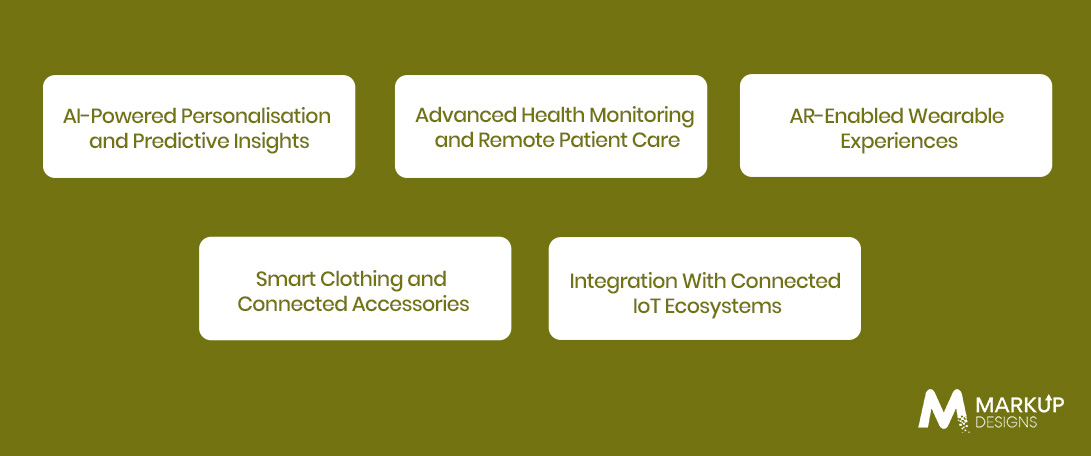
Wearable devices are progressing from just tracking activity and notifications to achieving better connected, more intelligent, and context-aware experiences for users. The evolution of sensor technology combined with AI, connected devices, and wearable devices opens up new avenues in various areas like healthcare, fitness, business, and consumer product applications.
AI-Driven Personalisation and Predictive Insights
Artificial intelligence allows analysis of data patterns in wearable devices to gain insights to make client recommendations, as well as detect tendencies in their behavior and foresee their needs. For instance, fitness applications will have the means to refine training plans, while productivity applications will notify users.
Advanced Health Surveillance and Remote Patient Care
Wearable devices are becoming widely used for health tracking and reviewing data through compatible sensors and connected solutions. The application enables patients and medical staff to gather needed information without taking it in traditional medical environments, but their practical significance depends on the accuracy of measurements.
AR-Enabled Wearable Experiences
Wearable devices equipped with augmented reality tools allow information to be superimposed on the user’s view of the physical world, which can be used in maintenance, training, navigation, and retail solutions. Developers must balance visual clarity and responsiveness with hardware limitations, user comfort, and privacy considerations.
Smart Clothing and Connected Accessories
Smart clothing and connected accessories can capture movement and other sensor-based measurements through garments, rings, and specialised devices. Applications can convert this information into activity summaries, performance insights, or other useful feedback. As the hardware evolves, developers will need to account for sensor accuracy, device interoperability, and efficient data processing.
Integration With Connected IoT Ecosystems
Wearable apps can become part of larger IoT ecosystems that connect personal devices, smart environments, industrial equipment, and enterprise platforms. This integration can support use cases such as worker safety alerts, connected healthcare services, and context-aware automation. Reliable communication, consistent data formats, and strong access controls will remain important for these connected systems.
How Can Markup Designs Help You With Wearable App Development?
Markup Designs helps businesses turn wearable app ideas into functional digital solutions aligned with their operational needs and customer expectations. From initial planning and UI/UX design to application development, API integration, and testing, our team focuses on building applications that work effectively within the technical constraints of wearable devices.
Whether you are planning a fitness tracking app, a healthcare monitoring solution, or a connected wearable platform, we can help you define the right features, select suitable technologies, and plan a scalable architecture. Our approach prioritises usability, performance, device compatibility, and data security to support long-term product growth.
Build Your Next Wearable App With the Right Technology
Turn your wearable app idea into a practical digital solution with the right features, technology stack, and development strategy. Partner with Markup Designs to plan and develop a wearable application around your business goals.

Conclusion
Wearable app development opens a variety of opportunities for businesses to offer connected, personalized, and data-driven digital experiences. Fitness trackers, smartwatches, healthcare wearables, and devices powered by AR can help improve customer experience and facilitate real-time monitoring and extend digital services.
However, successful wearable applications can be built only with thorough consideration of compatibility with devices, the user experience, battery efficiency, security measures, and development costs. By setting clear objectives and considering the necessary features, technologies, and maintenance processes, companies can design applications that cater to user expectations and fit technology needs.
FAQs
1. What is the duration of making a wearable application?
The duration of wearable application production varies according to its complexity, devices it will be used on, accompanying features, and integration features. In the case of a simple app, the time could be measured in weeks, while a complex wearable application may take months to create. A clarified scope of development helps to have time frames in mind.
2. What is the price of a wearable application?
The price of a wearable application depends on the level of complexity of features, selection of platform, UI design, backend development, price for third-party software, and testing. In the case of a simple wearable application, the cost will be lower than in the case of a multi-platform application with advanced functionality. Possible developers should have an MVP and understand the project budget before starting the development.
3. What are the most popular platforms for wearable applications?
The choice of platforms will depend on the target audience, device requirements and functionalities of the application. Specialised wearables may require manufacturer-specific development tools or APIs. Platform selection should consider device reach, available sensors, development resources, and integration needs.
4. Can wearable apps be integrated with existing mobile apps?
Yes. Wearable apps can seamlessly integrate with existing mobile apps using frameworks, APIs, and synchronisation channels that are compatible with the platform. This allows users to access data on different devices, manage preferences, and share activity records, as per the conditions set. The process of integration varies as per the OS, architecture of the mobile app used and the requirement for data exchange.
5. What measures are put in practice to maintain data security in wearable apps?
Data security is achieved through encryption, secure authentication, careful management of access rights, protected communication through APIs, and proper management of permissions. Developers should collect only the required information from the users, obtain their consent to use the data, and ensure that they follow the law. Regular security tests will make it possible to check the safety of apps after a certain time period as technologies progress.
6. In what areas can the use of the technology be beneficial?
Wearable technology can be useful in healthcare, sport, manufacturing, transport, trade, education and any spheres related to enterprise services. Healthcare providers can support remote monitoring, fitness businesses can offer personalised activity insights, and industrial organisations can use wearables for hands-free workflows and worker safety. The value depends on how effectively the application addresses a specific industry need.
Author's Perspective
When developing a wearable application, it is best to start by thinking about a clear use case, not a series of features. Companies need to figure out what users need to achieve with the help of a wearable gadget, and what information should be obtained. With this understanding, the complexity of mobile app development can be reduced, as it will be focused on practical results.
Great wearable solutions provide intuitive interaction and performance, along with data reliability and safety. Companies that tend to consider these issues are more likely to develop useful applications that will integrate with wearable technologies.
Discuss Your Project NowJupinder Singh Arora
Founder and CEO
Related Posts
How to Hire Mobile App Developers in the...

How Much Does It Cost to Build a...
How to Build a Secure Payment Gateway Integration...
Insights Are Valuable & Execution is Priceless
You’ve read about the digital future. Now, let’s build the infrastructure to take you there. Move your strategy from the page to the product.
Design Your Solution Now
Contact Us
Schedule The Appointment At Your Convenience Date And Time.
30 Min
Web Conference
Time Zone
Indian standard time (08:30pm)

Thanks For Getting In Touch!
You’ve Taken The First Step Toward Transforming Your Digital Presence. Our Experts Will Reach Out Shortly To Take It Forward.
Launch Your Dream Project
Provide a brief overview of your project, and our specialists will evaluate your requirements. We will connect with you to explore how the right digital solutions can help you launch faster.