

In Brief
- Saudi Arabia is rapidly modernizing its education ecosystem through large-scale digital transformation initiatives aligned with Vision 2030.
- Educational institutions are increasingly investing in mobile learning platforms, AI-powered education systems, virtual classrooms, and cloud-based student management infrastructure.
- Modern EdTech platforms are improving student engagement, remote accessibility, personalized learning, administrative efficiency, and educational scalability.
- AI-driven learning systems are transforming how institutions analyze student performance, automate assessments, and deliver adaptive educational experiences.
- The rise of EdTech platforms in Middle East markets is accelerating demand for intelligent learning applications designed for schools, universities, coaching institutes, and enterprise training ecosystems.
- Cloud-based infrastructure is becoming essential for scalable digital education systems capable of supporting hybrid and remote learning environments.
- Educational institutions are increasingly adopting analytics-driven systems to monitor engagement, identify at-risk students, and improve learning outcomes.
- Mobile-first learning environments are becoming increasingly important as smartphone adoption and digital accessibility continue expanding across Saudi Arabia.
- Institutions that invest early in scalable educational technology ecosystems are positioning themselves for stronger long-term operational and academic advantages.
The education sector in Saudi Arabia is undergoing one of the largest digital transformations in the region. Traditional classroom models are no longer sufficient to support the evolving expectations of modern students, educational institutions, parents, and workforce development programs. The rapid growth of digital infrastructure, mobile connectivity, AI-driven technologies, and cloud ecosystems is reshaping how education is delivered, managed, and experienced across the country.
Education today is no longer limited to physical classrooms, printed materials, or fixed schedules. Students increasingly expect flexible, interactive, mobile-accessible, and personalized learning experiences that align with modern digital lifestyles. At the same time, educational institutions are under growing pressure to improve operational efficiency, learning outcomes, scalability, and accessibility while managing large student populations and rapidly changing educational demands.
To meet these expectations, schools, universities, coaching institutes, and corporate training organizations across Saudi Arabia are heavily investing in education app development and intelligent EdTech ecosystems.
Modern educational applications are helping institutions deliver remote and hybrid learning experiences while improving administrative efficiency, student engagement, academic performance tracking, accessibility, communication workflows, and personalized learning journeys through centralized digital ecosystems.
This shift is being accelerated by Saudi Arabia’s Vision 2030 initiative, which strongly emphasizes digital innovation, technology adoption, smart infrastructure, and knowledge-based economic development.
Why Digital Education Is Growing Rapidly in Saudi Arabia
Saudi Arabia’s education ecosystem is experiencing rapid modernization due to several major factors:
- Increased internet penetration
- Rising smartphone usage
- Government-backed digital initiatives
- Expansion of remote learning
- Growing demand for flexible education
- Workforce digitalization
- Expansion of eLearning programs
The pandemic accelerated digital learning adoption globally, but Saudi Arabia continued investing heavily in educational technology even after traditional classrooms reopened.
This is because institutions realized that digital education systems improve far more than remote accessibility.
Modern education platforms help institutions improve operational efficiency, learning flexibility, student retention, administrative scalability, and data-driven academic decision-making while creating more connected and manageable educational environments.
Traditional educational systems often struggle with fragmented academic data, delayed communication, manual administrative workflows, limited accessibility, static learning structures, and poor visibility into engagement, making scalability and operational efficiency increasingly difficult.
Education apps solve many of these inefficiencies through centralized and intelligent digital ecosystems.
The Rise of Smart EdTech Ecosystems
Modern education is shifting away from isolated online classrooms toward connected educational ecosystems.
Modern digital learning platforms now combine virtual classrooms, assessments, analytics systems, AI-powered personalization, cloud infrastructure, communication tools, and centralized student management capabilities into unified educational ecosystems designed for scalability and accessibility.
The rapid expansion of EdTech Platforms in Middle East markets is pushing educational institutions in Saudi Arabia to modernize traditional learning environments.
Educational institutions increasingly require scalable systems capable of supporting large student populations, multi-device accessibility, interactive content delivery, automated grading workflows, real-time collaboration, analytics-driven performance monitoring, and streamlined parent-teacher communication.
Instead of treating education as static content delivery, modern EdTech ecosystems focus on creating adaptive and interactive learning experiences.
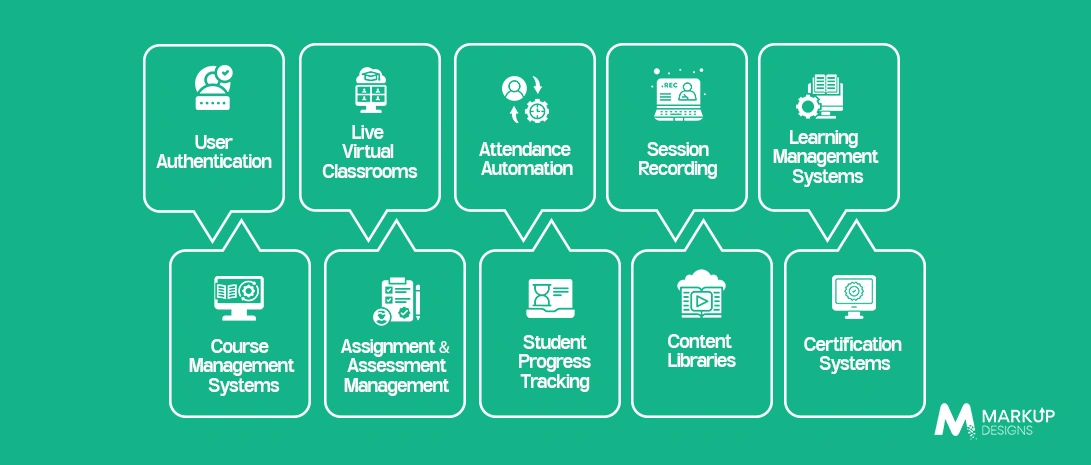
Successful education applications today require far more than recorded video lectures and basic online quizzes. Modern learners expect highly interactive, personalized, mobile-friendly, and intelligent digital learning experiences that feel seamless across devices and learning environments.
At the same time, educational institutions require platforms capable of handling academic operations, student management, analytics, communication, assessments, and scalability within one connected ecosystem.
This is why modern education app development focuses heavily on combining learning experience design, cloud infrastructure, AI-powered personalization, operational automation, and engagement engineering into a unified EdTech platform.
High-performing education applications are designed not only to deliver educational content but also to improve student retention, simplify administration, personalize learning journeys, and support long-term educational scalability.
Below are the most important features shaping modern education app ecosystems in Saudi Arabia and across the global EdTech industry.
1. User Authentication & Role-Based Profiles
Educational platforms serve multiple user groups simultaneously, including:
- Students
- Teachers
- Parents
- Administrators
- Academic coordinators
- Trainers
- Institutional management teams
Each user group requires different access permissions, workflows, and interfaces.
This is why modern education apps rely on role-based authentication systems and personalized dashboards.
For example:-
Student Dashboards Include:
- Course enrollment
- Learning progress tracking
- Assignments
- Attendance records
- Assessment schedules
- Certifications
- Notifications
- Performance analytics
Teacher Dashboards Include:
- Student monitoring tools
- Assignment creation
- Attendance management
- Live classroom controls
- Grading systems
- Communication tools
- Performance reports
Parent Dashboards Include:
- Student progress reports
- Attendance updates
- Academic notifications
- Fee payment systems
- Teacher communication access
Administrator Panels Usually Manage:
- User management
- System permissions
- Institutional reporting
- Academic scheduling
- Platform analytics
- Content moderation
Role-based access systems improve:
- Security
- Data protection
- Workflow efficiency
- Operational organization
- Personalization
- Administrative control
Without proper role architecture, educational systems quickly become disorganized and difficult to scale.
2. Live Virtual Classrooms
Virtual classrooms have become one of the most important components of modern educational ecosystems.
Students increasingly expect real-time online learning experiences that closely replicate physical classroom interaction while offering greater flexibility and accessibility.
Modern virtual classroom systems support:
- Live HD video sessions
- Interactive discussions
- Real-time Q&A
- Digital whiteboards
- Screen sharing
- File sharing
- Breakout rooms
- Polling systems
- Collaborative activities
Advanced virtual classroom infrastructure often includes:
3. Attendance Automation
The system automatically tracks:
- Student login activity
- Session participation
- Duration attended
- Engagement behavior
4. Session Recording
Students can replay lectures later for:
- Revision
- Self-paced learning
- Clarification
- Accessibility support
Interactive Whiteboards
Teachers can:
- Draw diagrams
- Explain formulas
- Annotate content
- Collaborate visually with students
Live Chat & Communication Tools
Real-time communication improves:
- Students’ Participation
- Clarification
- Engagement
- Classroom interaction
Multi-Device Accessibility
Modern virtual classrooms must function seamlessly across:
- Smartphones
- Tablets
- Laptops
- Desktop systems
This flexibility is essential for hybrid and remote learning environments.
5. Learning Management Systems (LMS)
A Learning Management System acts as the operational backbone of modern educational platforms.
Without a strong LMS infrastructure, educational ecosystems become fragmented and difficult to manage efficiently.
Modern LMS platforms centralize:
- Course management
- Assignments
- Assessments
- Student records
- Learning resources
- Certifications
- Scheduling
- Communication
into one connected ecosystem.
6. Course Management Systems
Administrators and instructors can:
- Create courses
- Upload learning materials
- Organize modules
- Structure lesson plans
- Manage prerequisites
7. Assignment & Assessment Management
Teachers can:
- Create quizzes
- Schedule exams
- Upload assignments
- Evaluate submissions
- Provide feedback
- Automate grading workflows
8. Student Progress Tracking
Institutions can monitor:
- Completion rates
- Learning milestones
- Performance trends
- Attendance
- Engagement levels
This improves academic visibility significantly.
8. Content Libraries
Educational content can include:
- Videos
- PDFs
- Interactive presentations
- Live recordings
- Reading materials
- Downloadable resources
Centralized content systems improve accessibility and organization.
9. Certification Systems
Modern LMS platforms often include:
- Digital certifications
- Course completion badges
- Skill verification systems
This is especially important for professional training ecosystems and enterprise learning platforms.
AI-Powered Learning Recommendations
Artificial intelligence is fundamentally changing how educational experiences are delivered.
Traditional learning systems typically provide the same educational structure to every student regardless of:
- Learning speed
- Engagement patterns
- Subject understanding
- Performance trends
- Behavioral differences
Modern AI-powered education systems create adaptive learning environments tailored to individual learners.
AI systems analyze:
- Academic performance
- Quiz results
- Subject interaction
- Study behavior
- Completion rates
- Learning pace
- Engagement consistency
to personalize learning experiences automatically.
Personalized Content Recommendations
Students receive:
- Suggested lessons
- Practice exercises
- Revision modules
- Topic recommendations
based on their performance and learning behavior.
Intelligent Learning Pathways
AI systems dynamically adjust:
- Lesson difficulty
- Content sequencing
- Practice intensity
- Learning pace
to improve learning outcomes.
Predictive Performance Analysis
AI models can identify:
- At-risk students
- Learning gaps
- Performance decline
- Low engagement patterns
before academic problems escalate. This allows institutions to intervene proactively.
AI Tutoring Systems
Modern educational platforms increasingly integrate AI tutors capable of:
- Answering questions
- Explaining concepts
- Providing revision support
- Guiding students interactively
This creates more accessible learning support environments.
While AI-powered systems improve personalization and learning intelligence, student engagement remains one of the biggest challenges in digital education. Even advanced learning platforms can struggle with low participation and poor course completion if learners are not consistently motivated to interact with the platform.
To address this challenge, modern EdTech platforms are increasingly integrating gamification systems that make learning more interactive, rewarding, and engaging.
Gamification Systems
One of the biggest challenges in digital education is maintaining student engagement.
Many learners lose motivation in static educational environments that lack interaction or progression psychology.
Gamification solves this problem by introducing reward-driven engagement systems into educational platforms.
Modern gamified education platforms integrate reward-driven engagement systems such as achievement badges, progress tracking, competitive challenges, learning streaks, leaderboards, and milestone-based rewards to improve motivation, participation, and long-term learning consistency.
These features significantly improve:
- Motivation
- Participation
- Course completion
- Retention
- Learning consistency
Achievement-Based Learning
Students receive rewards for:
- Completing lessons
- Scoring well
- Maintaining streaks
- Participating actively
This creates positive reinforcement loops.
Competitive Learning Environments
Leaderboards and rankings encourage:
- Healthy competition
- Increased participation
- Higher engagement
particularly among younger learners.
Progress Visualization
Visual progress systems help students:
- Track achievements
- Understand milestones
- Stay motivated
This improves long-term engagement.
Gamification is especially effective in:
- K-12 education
- Language learning
- Skill development
- Early learning ecosystems
Analytics Dashboards & Educational Intelligence
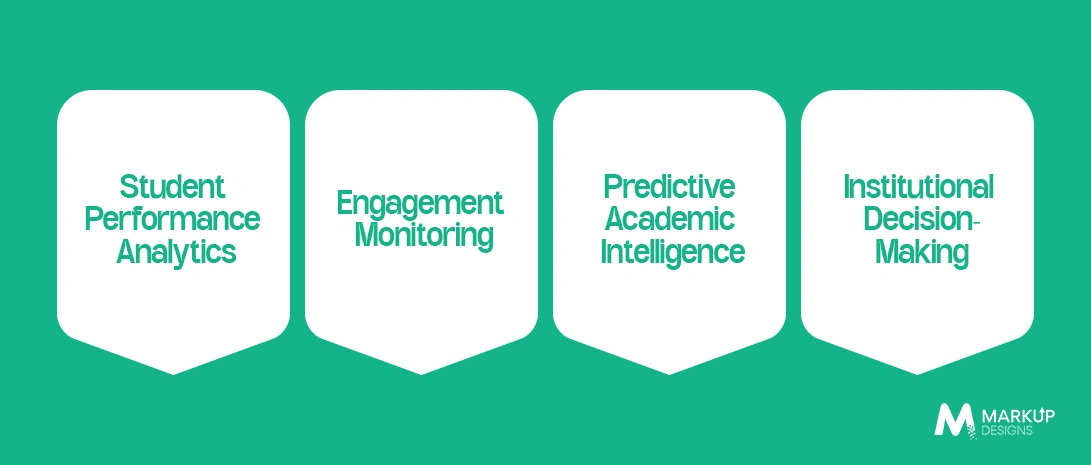
Modern education systems are becoming increasingly data-driven.
Educational institutions no longer rely solely on traditional academic reporting.
Advanced analytics dashboards now help institutions monitor and optimize educational performance in real time.
Modern educational analytics platforms monitor attendance, engagement patterns, assessment performance, learning behavior, participation trends, course effectiveness, and instructor performance to help institutions improve academic outcomes and operational decision-making.
Student Performance Analytics
Institutions can identify:
- Weak subject areas
- Learning gaps
- Academic improvement trends
- High-performing students
This supports personalized intervention strategies.
Engagement Monitoring
Analytics systems track:
- Session participation
- Platform activity
- Assignment completion
- Time spent learning
This helps institutions understand engagement quality.
Predictive Academic Intelligence
AI-powered analytics systems can forecast:
- Dropout risks
- Performance decline
- Engagement reduction
- Learning challenges
before serious issues emerge.
Institutional Decision-Making
Educational leaders use analytics to improve:
- Curriculum planning
- Resource allocation
- Academic strategies
- Teacher performance evaluation
This creates more intelligent educational ecosystems.
Beyond analytics and performance tracking, effective communication has become a core component of modern digital learning ecosystems.
Communication & Collaboration Systems
Modern educational ecosystems depend heavily on real-time communication infrastructure.
Students, teachers, parents, and administrators require continuous interaction across multiple workflows.
Modern education applications increasingly integrate messaging systems, collaborative learning tools, academic announcements, group discussions, push notifications, and email-based communication infrastructure to improve coordination and engagement across educational ecosystems.
Teacher-Student Communication
Direct communication improves:
- Clarification
- Academic support
- Assignment coordination
- Student confidence
Parent Communication Systems
Parents increasingly expect:
- Real-time updates
- Attendance notifications
- Performance tracking
- Academic alerts
Group Collaboration Tools
Collaborative learning systems allow students to:
- Work on projects
- Share resources
- Participate in discussions
- Build teamwork skills
Strong communication systems significantly improve engagement and operational efficiency.
Modern educational ecosystems must also ensure uninterrupted learning accessibility across different environments and connectivity conditions.
Offline Learning Accessibility
Internet accessibility can still vary across regions and environments.
Modern education platforms increasingly support offline learning functionality.
Students can:
- Download lessons
- Save resources
- Access assignments offline
- Continue learning without constant connectivity
Once the device reconnects, the platform synchronizes progress automatically.
Offline functionality improves:
- Accessibility
- Learning continuity
- Educational flexibility
particularly for remote learning environments.
As digital learning platforms expand across diverse user groups and regions, accessibility alone is no longer sufficient. Educational applications must also deliver culturally relevant and region-specific user experiences that improve usability and adoption.
Multi-Language & Localization Support
Educational applications in Saudi Arabia must prioritize localization and accessibility.
Educational applications in Saudi Arabia increasingly prioritize Arabic language support, RTL interface optimization, localized educational experiences, and culturally adapted platform design to improve accessibility, usability, and regional adoption.
Strong localization improves:
- User comfort
- Platform adoption
- Parent engagement
- Learning accessibility
Poor localization often creates friction even when educational systems are technically advanced.
Modern educational platforms increasingly support paid courses, subscriptions, and premium learning services, making secure financial infrastructure an essential component of EdTech ecosystems.
Secure Payment & Subscription Systems
Many educational platforms include:
- Paid courses
- Subscription models
- Certification programs
- Premium content
Secure payment infrastructure is therefore essential.
Modern educational platforms increasingly integrate secure payment gateways, subscription management systems, in-app purchases, and fee tracking infrastructure to support monetized learning ecosystems and improve operational reliability.
This is particularly important for:
- Coaching institutes
- Online academies
- Enterprise learning platforms
- Certification ecosystems
Secure financial systems improve operational reliability and trust.
Beyond secure infrastructure and operational management, modern education platforms must also maintain continuous interaction with learners to improve participation and learning consistency.
Push Notifications & Engagement Systems
Push notifications help maintain:
- Student engagement
- Assignment reminders
- Attendance alerts
- Course updates
- Examination schedules
Smart notification systems improve:
- Participation
- Course completion
- Learning consistency
However, overuse creates fatigue.
Modern systems increasingly use AI-driven notification optimization to improve relevance and timing.
AI Is Transforming Educational Experiences
Artificial intelligence is becoming one of the most important technologies in modern education app development.
Traditional learning systems deliver identical educational experiences to every student regardless of learning speed, engagement patterns, or performance differences.
AI-driven systems change this completely.
Modern educational platforms now integrate adaptive learning systems, AI-powered tutoring, predictive analytics, automated assessments, intelligent student support, and personalized learning pathways to create more responsive and data-driven educational experiences.
AI systems can identify:
- Struggling students
- Performance decline
- Engagement gaps
- Learning preferences
- Completion risks
before academic problems become severe.
This allows institutions to intervene proactively.
AI-powered educational systems increasingly automate repetitive academic and administrative tasks including assignment grading, attendance tracking, scheduling, content recommendations, and institutional communication workflows, significantly improving operational efficiency. This reduces operational workload while improving efficiency.
The rise of AI chatbots in Middle East educational ecosystems is also helping institutions provide 24/7 student assistance and automated support services.
Mobile Learning Is Reshaping Student Expectations
The way students consume education has fundamentally changed over the last decade. Traditional classroom dependency is rapidly being replaced by mobile-first learning ecosystems where students expect educational access anytime, anywhere, and across multiple devices.
Today’s learners no longer want to remain tied to desktop systems, fixed schedules, or physical classrooms. Smartphones and tablets have become primary learning tools for millions of students globally, including across Saudi Arabia and the wider Middle East.
This shift is especially strong among younger generations who are already highly accustomed to mobile-driven digital experiences through:
- Social media platforms
- Streaming applications
- Short-form content
- Real-time communication apps
- Interactive digital ecosystems
As a result, students now expect educational platforms to deliver the same level of convenience, responsiveness, personalization, and accessibility they experience in other digital applications.
Mobile-first learning is no longer an optional enhancement for educational institutions. It has become a core operational requirement.
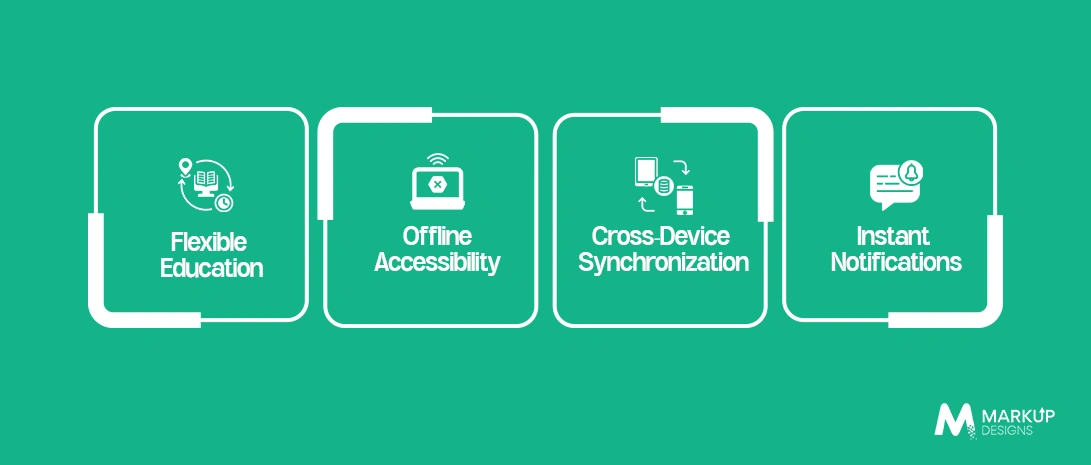
Modern learners increasingly expect educational platforms to deliver flexible, on-demand, and highly personalized learning experiences with seamless cross-device accessibility, offline functionality, interactive engagement systems, instant communication, and real-time academic updates comparable to other modern digital applications.
Read Also: Practical Guide to Developing Your First Mobile Apps
Educational institutions that fail to adapt to these expectations often struggle with:
- Low student engagement
- Reduced retention rates
- Poor course completion
- Weak platform adoption
- Limited scalability
This is one of the major reasons mobile-first education app development is accelerating rapidly across Saudi Arabia.
The Rise of Mobile-First Learning Ecosystems
Traditional educational systems were built around fixed learning structures where students had to adapt to institutional schedules.
Modern mobile learning completely reverses this model.
Today, educational platforms are increasingly adapting to student lifestyles instead of forcing students to adapt to rigid institutional systems.
Students now expect the flexibility to access lectures, assignments, notes, virtual classrooms, and academic notifications seamlessly across devices and environments without interruption to their learning experience.
This flexibility has significantly changed learning behavior.
Educational accessibility is no longer measured only by classroom availability. It is now measured by:
- Device accessibility
- Platform responsiveness
- Mobile usability
- Content flexibility
- Learning convenience
Educational institutions that successfully optimize mobile learning experiences often achieve stronger student engagement, improved participation, higher course completion rates, better learning consistency, and increased overall satisfaction.
Reason 1- On-Demand Learning & Flexible Education
One of the biggest reasons mobile learning is reshaping education is the growing demand for flexibility.
Students increasingly prefer learning environments that fit around:
- Work schedules
- Personal commitments
- University timing conflicts
- Skill development goals
- Remote learning requirements
Unlike traditional learning systems, mobile education platforms allow students to learn:
- At their own pace
- During preferred hours
- From any location
- Across multiple environments
This is especially important for:
- University students
- Working professionals
- Remote learners
- Corporate training programs
- Skill development platforms
Microlearning is also becoming increasingly popular in mobile education ecosystems.
Modern mobile learning ecosystems increasingly rely on short-form educational content, interactive modules, quick assessments, and microlearning experiences designed to improve retention, engagement, and learning consistency.
This improves:
- Retention
- Attention span management
- Learning consistency
- Engagement levels
Modern education apps are increasingly designed around these mobile consumption behaviors.
Reason 2- Offline Accessibility Is Becoming Essential
Internet access may be widespread, but uninterrupted high-speed connectivity is still not guaranteed in every environment.
Students increasingly expect educational platforms to support offline functionality so learning does not stop when connectivity becomes unstable.
Modern education platforms increasingly support offline accessibility by allowing students to download lectures, save notes, access assignments, and continue course progress without uninterrupted internet connectivity.
Once connectivity is restored, systems automatically synchronize:
- Learning progress
- Assessment updates
- Activity tracking
- Course completion data
Offline accessibility significantly improves:
- Learning continuity
- Platform reliability
- Student convenience
- Educational inclusivity
This is particularly important for:
- Remote learners
- Traveling students
- Low-connectivity environments
- Field training programs
Educational platforms that fail to provide offline functionality often create unnecessary friction for mobile learners.
Reason 3 – Cross-Device Synchronization & Seamless User Experience
Modern students rarely use only one device throughout their educational journey.
A learner may:
- Start a lecture on a smartphone
- Continue learning on a laptop
- Submit assignments through a tablet
- Review notes on another device later
This is why seamless cross-device synchronization has become a critical feature in modern educational ecosystems.
Modern learners increasingly expect real-time synchronization, unified dashboards, cloud-based accessibility, and seamless transitions between devices throughout their educational journey.
Poor synchronization creates:
- Learning interruptions
- Frustration
- Lost progress
- Reduced engagement
Cloud-based educational infrastructure now plays a major role in ensuring smooth multi-device experiences.
Modern education systems increasingly rely on:
- Cloud storage
- Real-time data synchronization
- API-based integrations
- Centralized learning environments
to maintain consistent user experiences across platforms.
Reason 4- Instant Notifications & Real-Time Academic Communication
Mobile learning ecosystems also change how students interact with educational institutions.
Students increasingly expect instant academic communication through real-time notifications, assignment reminders, attendance alerts, examination updates, class announcements, and integrated messaging systems.
Real-time communication significantly improves:
- Participation
- Academic responsiveness
- Assignment completion
- Student accountability
For institutions, notification systems help reduce:
- Missed deadlines
- Communication delays
- Administrative inefficiencies
AI-powered notification systems are also becoming more common.
These systems intelligently personalize:
- Reminder timing
- Notification frequency
- Engagement triggers
based on student behavior patterns.
This helps improve notification effectiveness without overwhelming users.
Why Cross-Platform Apps in Middle East Development Are Becoming Critical
Educational institutions today cannot afford to build learning platforms that function well on only one operating system or device type.
Students use highly fragmented device ecosystems that include:
- Android smartphones
- iPhones
- Tablets
- Laptops
- Web browsers
- Smart TVs
- Hybrid classroom devices
This is one reason why Cross-platform Apps in the Middle East are becoming increasingly important in educational technology.
Educational institutions increasingly require cross-platform applications capable of delivering consistent performance and user experiences across Android, iOS, web platforms, tablets, and connected smart devices.
Without compromising:
- Performance
- User experience
- Security
- Scalability
Cross-platform development allows educational businesses to maintain:
- Consistent interfaces
- Faster updates
- Unified infrastructure
- Simplified maintenance
Rather than managing completely separate systems for different operating systems.
The Growing Role of Flutter App Development in Middle East Ecosystems
The rise of modern cross-platform frameworks is significantly accelerating education app development across Saudi Arabia and the wider Middle East.
In particular, Flutter App Development in the Middle East ecosystems is gaining major traction because of its ability to support:
- Faster development cycles
- High-performance interfaces
- Shared codebases
- Scalable mobile experiences
- Cost-efficient deployment
Flutter allows developers to build applications for:
- Android
- iOS
- Web
- Desktop environments
using one unified framework.
For educational institutions, this creates major operational advantages.
Instead of investing separately in multiple native development teams, organizations can:
- Reduce development costs
- Accelerate deployment timelines
- Simplify maintenance
- Improve scalability
- Launch updates faster
This becomes especially important for:
- Universities
- Online academies
- Enterprise training platforms
- EdTech startups
- Government educational initiatives
where rapid scaling and long-term platform sustainability are critical.
Why Mobile Learning Will Continue Dominating Education
Mobile learning is no longer a temporary trend created by digital transformation or remote education demand. It is becoming the default educational behavior for modern learners.
As technologies such as:
- AI-powered learning
- cloud infrastructure
- 5G connectivity
- personalized education systems
- immersive learning environments
continue evolving, mobile education ecosystems will become even more intelligent and adaptive.
Educational institutions that prioritize:
- mobile-first experiences
- scalable cross-platform infrastructure
- personalized learning
- real-time accessibility
- seamless usability
Will be significantly better positioned to compete in the future EdTech landscape.
The institutions that continue relying heavily on outdated desktop-centric educational systems will increasingly struggle to meet modern student expectations.
Personalized Learning Is Becoming Essential
Traditional one-size-fits-all education models often fail to address individual learning differences. Modern EdTech ecosystems increasingly prioritize personalized education.
AI-powered educational systems analyze:
- Student engagement
- Assessment results
- Learning pace
- Subject interaction
- Completion behavior
to create adaptive learning journeys.
This helps students:
- Learn at comfortable speeds
- Focus on weak areas
- Improve retention
- Stay more engaged
Predictive educational analytics also help institutions identify:
- Dropout risks
- Low engagement patterns
- Performance decline
- Behavioral trends
This allows earlier intervention and better academic outcomes.
Gamification Improves Student Engagement
One major problem with traditional digital learning systems is low engagement.
Students often lose interest in static learning environments. Gamification helps solve this problem.
Modern educational apps increasingly integrate:
- Achievement systems
- Progress tracking
- Rewards
- Challenges
- Leaderboards
- Interactive activities
Gamified learning improves:
- Participation
- Motivation
- Retention
- Completion rates
This is particularly effective for:
- K-12 learning
- Language learning
- Skill-based education
- Early education programs
Cybersecurity is Critical in Educational Systems
Educational institutions manage highly sensitive information, including:
- Student records
- Financial data
- Examination systems
- Communication logs
- Identity information
As digital education expands, cybersecurity risks increase significantly.
This makes Cybersecurity in Apps in Middle Eastern educational ecosystems critically important.
Educational institutions must protect systems against:
- Data breaches
- Unauthorized access
- Ransomware attacks
- Identity theft
- Academic fraud
Modern educational platforms increasingly rely on secure authentication protocols, encrypted databases, cloud security frameworks, access management systems, and threat monitoring infrastructure to protect sensitive academic and institutional data.
Without a strong cybersecurity infrastructure, educational systems become vulnerable to operational and reputational risks.
Challenges in Education App Development
Despite the opportunities, building scalable educational systems comes with major challenges.
User Engagement
Many educational apps fail because they focus heavily on content while ignoring experience design.
Poor usability reduces retention quickly.
Scalability Issues
Educational systems often experience sudden traffic spikes during:
- Examinations
- Admissions
- Live classes
Weak infrastructure creates system failures.
Content Management Complexity
Managing:
- Courses
- Assessments
- Certifications
- User roles
- Learning paths
requires a strong backend architecture.
Data Privacy Concerns
Educational systems process highly sensitive student data.
Institutions must prioritize:
- Compliance
- Secure storage
- Access control
Technology Adoption Resistance
Teachers and institutions sometimes struggle to adapt to new workflows and digital systems.
Successful implementation requires proper onboarding and support.
The Role of Analytics in Modern Education
Modern educational systems are becoming increasingly data-driven.
Institutions now rely heavily on analytics to improve:
- Academic performance
- Operational efficiency
- Student retention
- Learning quality
Analytics systems help institutions monitor:
- Attendance trends
- Engagement levels
- Course completion
- Assessment performance
- Behavioral patterns
This enables smarter academic decision-making. Predictive analytics can also identify:
- Students at risk of dropping out
- Performance decline trends
- Engagement reduction patterns
before major issues occur.
Future Trends in Saudi Arabia’s EdTech Industry
The future of educational technology in Saudi Arabia is moving toward highly intelligent and connected ecosystems.
Emerging trends include:
- AI-powered tutoring systems
- Immersive virtual classrooms
- AR/VR-based learning
- Predictive academic analytics
- Blockchain-based certifications
- Smart campus ecosystems
- IoT-connected classrooms
- Voice-enabled learning systems
The growth of IoT Solutions in the Middle East ecosystems is expected to improve:
- Smart classroom management
- Attendance automation
- Device synchronization
- Campus operational intelligence
At the same time, educational institutions are increasingly investing in scalable digital ecosystems that support lifelong learning and workforce reskilling.
Why Choosing the Right EdTech Development Partner Matters
Education app development is far more complex than building standard mobile applications.
Successful EdTech systems require:
- Scalable architecture
- High-performance infrastructure
- User-centered design
- AI integration
- Security frameworks
- Analytics systems
- Cloud scalability
Poorly developed education platforms often struggle with:
- Low engagement
- Technical instability
- Weak scalability
- Security vulnerabilities
- Poor retention
This is why educational institutions increasingly prefer experienced technology partners capable of aligning technical execution with learning outcomes and operational goals.
Why Businesses and Institutions Choose Markup Designs
Markup Designs helps educational institutions build scalable, intelligent, and future-ready EdTech ecosystems tailored to modern learning environments.
From AI-powered learning systems and cloud-based educational infrastructure to mobile learning platforms and student engagement technologies, the company focuses on creating educational experiences that improve accessibility, operational efficiency, scalability, and long-term digital growth.
With expertise across:
- EdTech Platforms in the Middle East
- AI-driven learning ecosystems
- cloud-based education systems
- mobile-first application development
- analytics infrastructure
- educational UX design
Markup Designs supports institutions looking to modernize education delivery and create high-performing digital learning ecosystems aligned with Saudi Arabia’s rapidly evolving educational landscape.
Enterprise Education Transformation Roadmap
Phase 1: Educational Infrastructure Assessment
Institutions evaluate:
- Existing systems
- Learning gaps
- Infrastructure limitations
- Scalability challenges
Phase 2: Platform Architecture & Cloud Integration
This stage includes:
- LMS architecture
- Cloud deployment
- API integration
- Data infrastructure
Phase 3: AI & Personalization Integration
Educational platforms integrate:
- Predictive analytics
- Adaptive learning
- AI tutoring systems
- Automation workflows
Phase 4: Optimization & Scaling
Institutions continuously optimize:
- Engagement
- Performance
- Accessibility
- Learning outcomes
- Infrastructure efficiency
Build Scalable EdTech Solutions for the Future of Learning App
Transform educational experiences with intelligent, secure, and scalable education applications designed for modern learners and institutions.From AI-powered learning systems and virtual classrooms to cloud-based educational infrastructure and mobile learning platforms, build future-ready EdTech ecosystems designed for long-term growth.

Build Scalable EdTech Solutions for the Future of Learning App
Transform educational experiences with intelligent, secure, and scalable education applications designed for modern learners and institutions.From AI-powered learning systems and virtual classrooms to cloud-based educational infrastructure and mobile learning platforms, build future-ready EdTech ecosystems designed for long-term growth.
Conclusion
Education app development in Saudi Arabia is rapidly evolving from simple digital learning platforms into intelligent educational ecosystems designed to improve accessibility, engagement, scalability, and academic performance.
As educational institutions modernize operations and adapt to changing student expectations, technologies such as AI-powered personalization, cloud infrastructure, predictive analytics, mobile learning, and smart educational systems are becoming critical components of modern learning environments.
The institutions that succeed in the coming years will not simply digitize classrooms. They will build scalable, intelligent, and connected educational ecosystems capable of supporting long-term innovation, personalized learning, and operational efficiency.
As Saudi Arabia continues accelerating its digital transformation journey under Vision 2030, education technology will play a central role in shaping the future of learning across the region.
FAQs
1. Why is education app development growing rapidly in Saudi Arabia?
Education app development is growing due to increasing digital transformation initiatives, smartphone adoption, remote learning demand, and Saudi Arabia’s Vision 2030 focus on technology-driven education.
2. What features are essential in modern education apps?
Modern education apps typically include virtual classrooms, AI-powered personalization, analytics dashboards, gamification systems, learning management systems, assessments, and cloud-based collaboration tools.
3. How does AI improve educational platforms?
AI improves education through adaptive learning, predictive analytics, intelligent tutoring, automated grading, student performance monitoring, and personalized learning pathways.
4. Why is cloud infrastructure important for EdTech platforms?
Cloud infrastructure improves scalability, remote access, system reliability, data synchronization, operational flexibility, and real-time collaboration across educational ecosystems.
5. Why is localization important in Saudi education apps?
Localization improves accessibility, cultural relevance, usability, and engagement by supporting Arabic interfaces, RTL design systems, and region-specific educational experiences.
Author's Perspective
Many educational institutions still approach digital learning as a temporary operational layer instead of treating it as a long-term educational infrastructure. That mindset creates weak systems focused only on content delivery rather than student engagement, scalability, personalization, and operational intelligence.
The future of education will not be controlled by institutions with the most content. It will belong to organizations capable of building intelligent learning ecosystems that continuously adapt to student behavior, automate operational complexity, and improve educational outcomes through data-driven decision-making.
Modern EdTech success depends heavily on architecture quality, usability engineering, AI integration, cloud scalability, and engagement psychology. Institutions that fail to modernize strategically will increasingly struggle to retain learners in an environment where digital expectations continue to rise aggressively.
Discuss Your Project NowGaurav Goyal
Global Sales- VP
Related Posts

Cost to Build a Mobile App in Qatar...

How Much Does It Cost to Build an...

How to Build a Car Wash App: Development...
Insights Are Valuable & Execution is Priceless
You’ve read about the digital future. Now, let’s build the infrastructure to take you there. Move your strategy from the page to the product.
Design Your Solution Now
Contact Us
Schedule The Appointment At Your Convenience Date And Time.
30 Min
Web Conference
Time Zone
Indian standard time (08:30pm)

Thanks For Getting In Touch!
You’ve Taken The First Step Toward Transforming Your Digital Presence. Our Experts Will Reach Out Shortly To Take It Forward.
Launch Your Dream Project
Provide a brief overview of your project, and our specialists will evaluate your requirements. We will connect with you to explore how the right digital solutions can help you launch faster.