
In Brief
- Mobile apps have become essential for eCommerce startups because they improve customer engagement, offer personalized shopping experiences, and help businesses stay connected with users anytime and anywhere.
- Unlike websites, mobile apps provide faster browsing, push notifications, better customer retention, real-time engagement, and stronger brand visibility through continuous presence on users smartphones.
- Features like secure payments, AI-based recommendations, wishlists, order tracking, and easy navigation help improve customer satisfaction, conversions, and repeat purchases.
- A successful eCommerce mobile app requires proper planning, market research, UI/UX design, feature integration, testing, and continuous performance monitoring for long-term scalability and growth.
Markup Designs helps startups build scalable and high-performing eCommerce applications with modern technologies, secure architecture, personalized experiences, and end-to-end development support.
In today’s digital era, mobile applications play a crucial role in helping businesses build stronger connections with their customers. eCommerce mobile apps enable organizations to understand user behavior better by offering round-the-clock access and seamless interaction. This allows entrepreneurs to engage with customers anytime and anywhere.
As smartphone usage continues to grow rapidly, mobile devices have become the primary medium for accessing the internet, replacing traditional desktop usage. With this shift, businesses are increasingly adopting eCommerce app development services to stay competitive and relevant in the market.
Additionally, the rise of mobile wallets and digital payment solutions has made smartphone-based transactions more common and convenient for users. As a result, investing in a mobile eCommerce application has become essential for startups aiming to enhance customer experience, improve engagement, and drive long-term growth.
Why Every eCommerce Startup Needs a Mobile Application
Every startup that enters into ecommerce has to ensure that its eCommerce app development is top-notch because a mobile application has become mandatory. Modern customers prefer shopping via mobile devices due to the convenience of fast browsing, seamless navigation, and personalized experiences. A well-structured eCommerce app development process is essential for startups as it enables them to effectively engage their target audience and improve customer interaction.
Mobile applications can help startups foster customer loyalty due to push notifications and personalized messages among other ways used by businesses to encourage loyalty in consumers. Mobile applications offer faster performance than websites, resulting in a smoother and more enjoyable browsing experience for users. Through eCommerce app development, startups can also gain valuable insights into customer behavior and market trends, enabling more informed business decisions.
Finally, startups will find it easier to establish strong brand recognition through mobile app development.This is primarily because the app icon remains visible on the user’s mobile screen, ensuring continuous brand presence and daily engagement. With stiff competition in ecommerce currently, startups must develop mobile applications to ensure that they remain competitive.
Why Mobile Apps are Replacing Website-Only Strategies
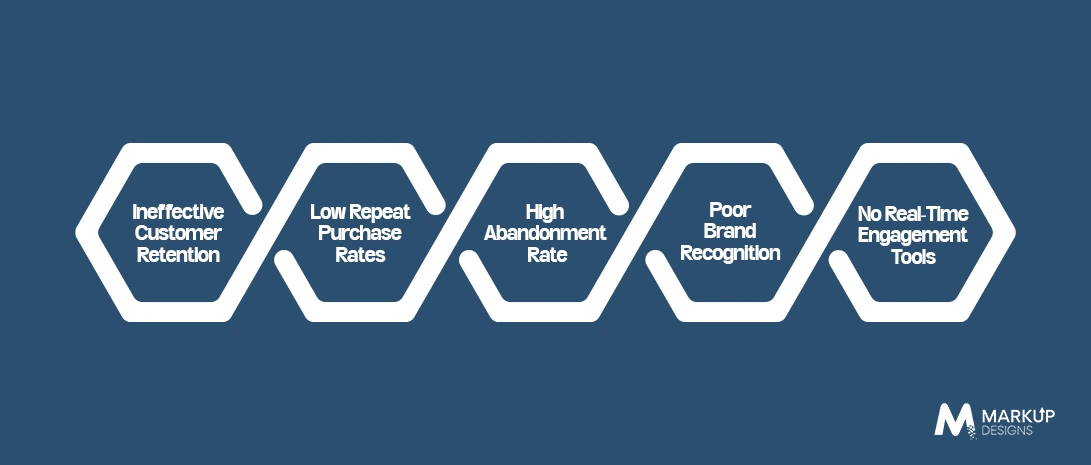
However, despite their importance, relying heavily on websites leads to several limitations that can restrict rapid business scaling and growth.
- Ineffective Customer Retention
Websites largely depend on ads, SEO, and social media traffic to attract users. Once a customer leaves the site, the brand loses visibility unless additional marketing efforts are made to re-engage them.
- Low Repeat Purchase Rates
MSMEs often struggle to drive repeat purchases due to the absence of real-time communication channels, relying mainly on email, which limits instant customer engagement.
- High Abandonment Rate
People shopping on websites get easily distracted by different things, including notifications from other tabs and even slow loading screens.
- Poor Brand Recognition
Online, customers are just a single click away from competitor brands. Without a visible app icon on their smartphones, businesses often struggle to stay memorable and retain user attention.
- No Real-Time Engagement Tools
Unlike websites, mobile apps allow businesses to instantly engage users through real-time notifications about offers, flash sales, price drops, back-in-stock products, and abandoned cart reminders, helping improve customer retention and conversions.
How Mobile Apps Solve Modern eCommerce Challenges
With the mobile app, a brand becomes a constant companion for customers. In other words, rather than relying on customers revisiting the website, the mobile app itself serves as a convenient channel for purchasing.
With a contemporary app developed using a single eCommerce platform, users can enjoy:
- Increased loading speed
- One-click purchase
- Individual recommendations
- Unlimited notifications
- Wish list and easy reordering options
- More efficient browsing capabilities
- Enhanced loyalty-building functions
- Exclusive app-based products and discounts
This transforms the entire buying journey from passive to active.
Key Advantages of eCommerce Mobile Applications
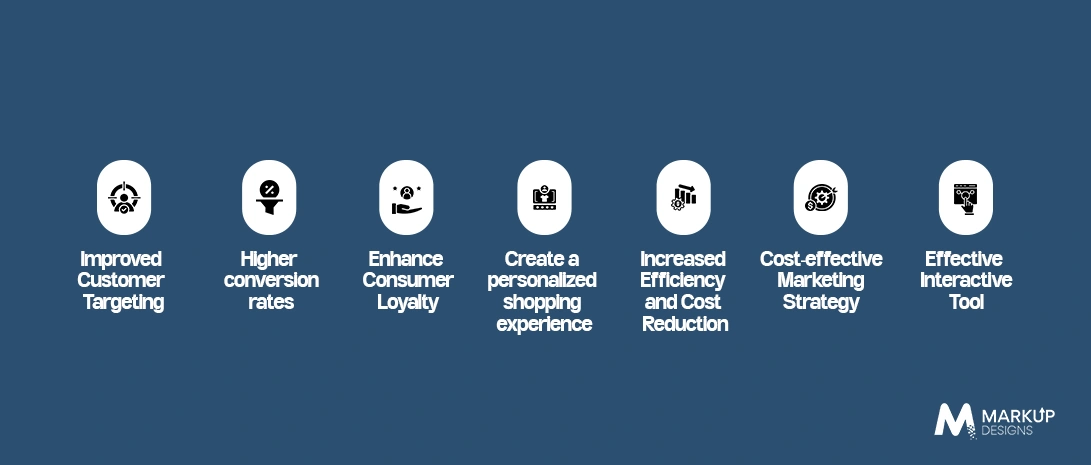
- Improved Customer Targeting
AI-Powered Mobile apps provide quick and convenient access to online stores, allowing users to create accounts and stay logged in without repeated sign-ins. They also deliver a faster and smoother shopping experience compared to web pages, making them more effective in today’s mobile-first world.
Additionally, mobile apps help build stronger customer trust and provide valuable user data, enabling businesses to analyze behavior and create more targeted and effective marketing campaigns.
- Higher conversion rates
Higher accessibility, better usability, and strong design in mobile apps lead to improved conversion rates compared to websites. Users tend to spend more time engaging within apps due to smoother navigation and seamless browsing experiences.
This increased engagement encourages repeat usage, enhances customer satisfaction, and ultimately drives higher sales and long-term business growth.
- Enhance Consumer Loyalty
Mobile eCommerce applications help strengthen customer loyalty by delivering highly personalized shopping experiences. By leveraging analytics and user data, businesses can offer targeted recommendations, customized promotions, and relevant deals. This approach enhances customer satisfaction, encourages repeat visits, and fosters long-term engagement with the brand.
- Create a personalized shopping experience
Customer expectations are rising, and users prefer brands that offer personalized deals and recommendations. eCommerce businesses use customer data to understand their audience better and improve app features for a more engaging experience.
Personalized campaigns, push notifications, cart reminders, and recommendations help build stronger connections, encourage repeat visits, and deliver more meaningful value-driven customer experiences.
- Increased Efficiency and Cost Reduction
Mobile applications help businesses quickly build a strong user base while reducing overall marketing costs. They simplify communication between employees, vendors, and customers by providing a centralized platform with shared access to resources and updates.
This ensures better coordination and real-time awareness of products and customer needs. Additionally, direct engagement with users helps reduce advertising expenses, while integrated social media features further enhance brand visibility and online reach.
- Cost-effective Marketing Strategy
A mobile application enables direct communication with consumers and acts as a highly cost-effective marketing tool. Businesses can instantly share promotions, offers, and new product updates through push notifications, reducing the need for expensive marketing campaigns while improving customer engagement.
- Effective Interactive Tool
M-commerce applications help organizations reduce costs by providing an efficient and interactive communication channel for reaching niche markets. They also improve customer satisfaction by offering fast connectivity, a wide range of products, and a simple, user-friendly experience.
Core Features Every Startup eCommerce App Requires
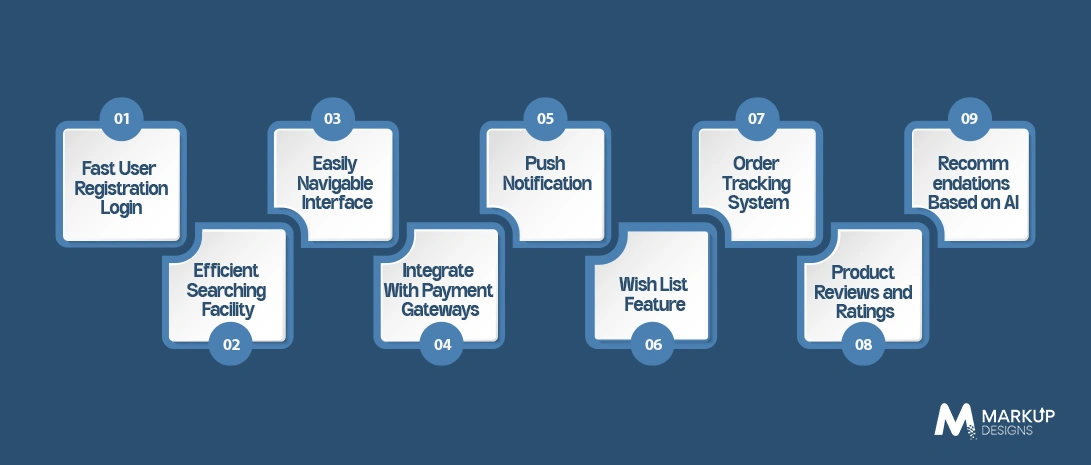
In terms of developing an eCommerce application, it is necessary that one concentrates on convenience, security, and usability. In the process of designing the eCommerce app, there are many features which can help enhance the sales.
Key Features To Consider:
- Fast User Registration/Login
Make it convenient for customers to log in using emails, mobiles or social media accounts.
- Efficient Searching Facility
Use an intelligent searching facility along with filters to make searches easier.
- Easily Navigable Interface
An easy-to-use interface ensures smooth navigation.
- Integrate With Payment Gateways
Offer multiple payment modes including credit cards, wallet and UPI.
- Push Notification
Alert customers on special offers or abandoned carts.
- Wish List Feature
Allow customers to save preferred products for future purchases, enhancing convenience and shopping experience.
- Order Tracking System
Enables customers to monitor their orders in real time, ensuring transparency and improved satisfaction.
- Product Reviews and Ratings
Builds trust and supports informed purchase decisions through authentic customer feedback and ratings.
- Recommendations Based on AI
Personalized product recommendations may raise the average order value.
eCommerce Mobile App Development Process Explained
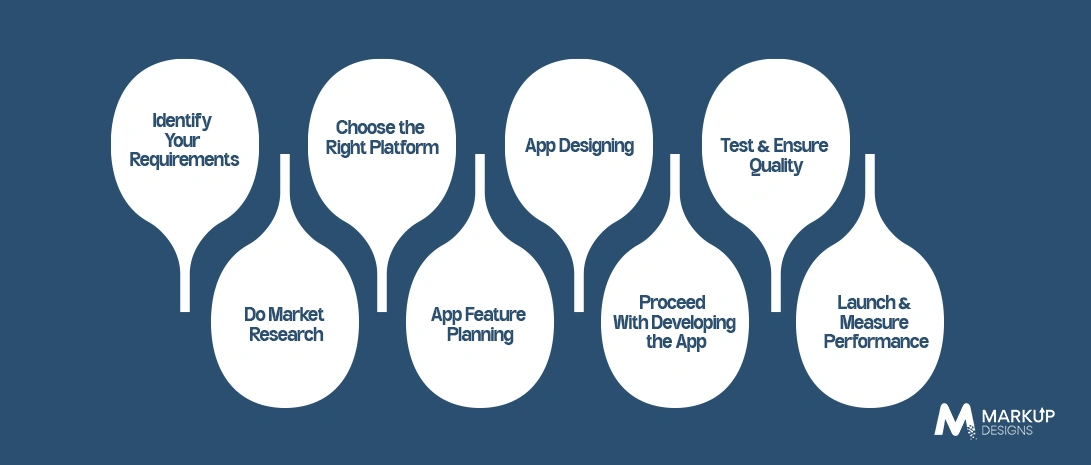
Creating a working eCommerce application is a complicated process requiring careful planning and design.
Steps for Creating an Online Shopping Application
- Identify Your Requirements
Define your target audience, business goals, product categories, and customer expectations to create a clear development roadmap and ensure the application aligns with business objectives.
- Do Market Research
Analyze competitors, customer behavior, and industry trends to identify market gaps, understand user demands, and build features that provide a competitive advantage.
- Choose the Right Platform
Select between native or cross-platform development based on your budget, target audience, scalability requirements, performance expectations, and long-term business growth plans.
- App Feature Planning
List essential features such as payment integration, product search, notifications, wishlists, and order tracking to ensure smooth functionality and improved customer experience.
- App Designing
Develop an intuitive UI/UX design that offers easy navigation, faster browsing, attractive visuals, and a seamless shopping experience across multiple devices.
- Proceed With Developing the App
Build the front-end and back-end architecture while integrating APIs, databases, payment gateways, and security features for smooth and reliable app performance.
- Test & Ensure Quality
Perform detailed testing to identify bugs, improve speed, ensure device compatibility, and verify application security before releasing the app to users.
- Launch & Measure Performance
Publish the app on app stores, track user behavior, analyze performance metrics, gather customer feedback, and continuously optimize the application for growth.
This strategy-based approach to developing online shopping apps will help startups create scalable applications for future growth.
A Complete Guide to eCommerce Apps Development: Trends, Costs & Strategies in 2026
Ecommerce apps are becoming essential for businesses in 2026 because customers now prefer fast, mobile-based shopping experiences instead of traditional websites

Successful eCommerce Brands Powered by Mobile Apps
Many eCommerce startups have achieved rapid growth and stronger customer engagement through mobile applications. These success stories highlight how the right app strategy can improve sales, user retention, and overall business performance.
- Amazon: 42% of all Amazon users shop via the eCommerce mobile app, drawn by features like personalized deals, AR product visualization, and real-time shipment tracking.
- Starbucks: Their app drives higher-order values and visit frequency through personalized offers, loyalty points, and location-based promotions.
- Myntra: Leveraged chatbots, AI-powered recommendations, and virtual try-ons through its app to build brand loyalty and market leadership.
- MageNative Clients: Shopify merchants report higher engagement and sales from day one after launching custom Shopify mobile apps for eCommerce businesses, helping them create seamless, high-performing mobile storefronts.
Grow Your Startup with Markup Designs eCommerce App Development Services
By providing solutions for building scalable and feature-packed eCommerce applications, Markup Designs enables startups to grow digitally over the long term. Having experience in eCommerce application development, Markup Designs specializes in developing mobile applications that foster customer interaction, enhance shopping experiences, and boost conversion rates.
With its team of professional developers, Markup Designs provides its customers with full-cycle assistance in developing their apps. In addition, Markup Designs’ developers employ cutting-edge technologies to develop robust and user-friendly applications.
How Markup Designs Supports Startup Growth:
- Custom mobile app development for Android and iOS
- Scalable architecture for future business expansion
- Secure payment gateway and API integration
- AI-driven personalization and smart recommendations
- Fast-performing and responsive application design
- Ongoing maintenance and performance optimization
- Expertise in ecommerce marketplace app development
- End-to-end support for complete eCommerce software development
Through merging their technological knowledge with business-minded approaches, Markup Designs enables startups to launch competitive eCommerce applications, offering better customer experiences and sustainable business growth.
Want to Build a Successful eCommerce Startup App?
Launch a feature-rich and scalable mobile application that improves customer experience, increases engagement, and supports long-term business growth with expert eCommerce app development solutions.

Conclusion
The need for mobile apps is now one of the key factors of success for every modern eCommerce business start-up. Not only do they enhance customer interaction and make the shopping process much simpler, but also they help to ensure better branding of the product or service. When done professionally, application development can be one of the keys to a successful future business.
FAQs
1. Are mobile apps only for large eCommerce brands?
Platforms like Shopify and Magento make it easy and affordable for businesses of all sizes to launch robust eCommerce mobile apps.
2. How do mobile apps impact conversion rates?
Mobile apps can achieve significantly higher conversion rates than mobile websites due to better user experience, personalization, and a streamlined checkout process. This directly enhances eCommerce conversions through mobile applications.
3. What about security?
Mobile apps support secure payment methods, encryption, and authentication features like fingerprint or face ID, demonstrating the importance of mobile apps in eCommerce for trusted transactions.
4. How do apps help with customer retention?
Features like push notifications, loyalty programs, and personalized offers are powerful mobile shopping app benefits that keep users engaged and returning.
5. Can mobile apps help startups compete with bigger brands?
Yes, a well-designed mobile app helps startups offer personalized shopping experiences, faster communication, and smooth checkout processes, allowing them to compete effectively with established eCommerce businesses.
Author's Perspective
In today’s competitive digital market, startups need more than just a website to attract and retain customers. Mobile applications provide convenience, personalization, and faster access that modern shoppers expect. Businesses investing in strategic ecommerce app development are better positioned to improve customer loyalty, increase sales, and scale efficiently. A well-developed eCommerce app can become one of the strongest growth-driving assets for any startup business.
Discuss Your Project NowGaurav Goyal
Global Sales- VP
Related Posts
How Much Does It Cost to Develop a...
Insights Are Valuable & Execution is Priceless
You’ve read about the digital future. Now, let’s build the infrastructure to take you there. Move your strategy from the page to the product.
Design Your Solution Now
Contact Us
Schedule The Appointment At Your Convenience Date And Time.
30 Min
Web Conference
Time Zone
Indian standard time (08:30pm)

Thanks For Getting In Touch!
You’ve Taken The First Step Toward Transforming Your Digital Presence. Our Experts Will Reach Out Shortly To Take It Forward.
Launch Your Dream Project
Provide a brief overview of your project, and our specialists will evaluate your requirements. We will connect with you to explore how the right digital solutions can help you launch faster.