

In Brief
- The Student Management System (SMS) provides Australian educational institutions such as schools, colleges, universities, and training centers with the ability to centralize students’ profiles, admissions, attendance, academics, payment, communication, and reports.
- Such a system will have the following functionalities: Student profile management, Digital admissions & enrollments, Attendance tracking, Academic and assessment management, Fee and payment management, Reporting & analytics, Dashboards for students, teachers, parents, and administrators.
- Australian costs for the development of such a solution vary from about $70,000 to $700,000+ based on functionality, complexity, integrations, security needs, user base, UI/UX, mobile applications, AI and analytics.
- To successfully develop an SMS, it is necessary to define requirements, design the user experience, choose proper technology & architecture, build core modules, integrate learning management systems (LMS), payment, accounting, and communication platforms, and perform testing, deployment, training, maintenance, and enhancements.
- Educational institutions may use pre-designed and customizable SMS solutions or develop custom systems. Pre-designed software is better to use for common requirements and fast deployment, whereas custom development allows more flexibility, integrations, scalability, and security.
Student information management for the purposes of admissions, attendance, academic management, fee processing, communication, and reporting may become challenging when educational organizations use disconnected or manual systems. As educational organizations in Australia are increasingly implementing digital solutions, a Student Management System will allow consolidating all these processes onto a single system.
Using an advanced solution, educational organizations are able to manage student information, automate administrative tasks, increase efficiency in terms of communication, and make data available to staff faster. Furthermore, an advanced Student Management System is able to integrate with other education or business solutions.
However, developing such a system requires more than just adding some digital capabilities. One should pay attention to functionality, integration, security, scalability, implementation needs, and the cost of development.
In this blog post, we will discuss the key features of a student management system, important integrations, the cost of development in Australia, main cost components, the process of development, and the difference between custom and off-the-shelf software. We will also explain how selecting a reliable software development company can impact the scalability, security, and future growth of the product.
What is a Student Management System?
Student Management System (SMS) refers to a computerized system that is meant to control and organize all the activities that revolve around student data management and academic administration. Instead of using student information in spreadsheets, paperwork, emails, and other software, the information can be brought together in one system.
The student management system can be used by various institutions, including schools, colleges, universities, and vocational institutions, among others. The system assists in managing student profiles, admission, enrollment, attendance, academic data, fees, communication, and documentation, among others.
The system may also allow access through different dashboards and permission levels for students, teachers, parents, administration, and other staff. This ensures that everyone is able to access the information that is pertinent to them.
For Australian organizations, an effective SMS system will also assist with data management, reporting, integrations, and compliance-related processes. As organizations grow, they may expand their system with mobile applications, analytics, automation, and AI features to enhance education management processes.
Why Invest in Student Management System Development in Australia?
Educational organizations in Australia handle vast amounts of data related to students on a daily basis, including admissions, enrollment, attendance, performance, payments, and communications. It is difficult and prone to mistakes when handling such operations using disjointed methods. The student management system organizes all these operations into one coherent process.
The following are some of the important reasons for institutions to develop student management systems:
- Centralized student data: The system allows the staff to retrieve student information, academic records, attendance, and other documents.
- Reduced paperwork: Repetitive processes like attendance updates, fee reminders, and report creation can be automated.
- Effective communication: Communication can take place via portals, notifications, emails, and messaging services between students, parents, teachers, and administrative staff.
- Decision-making becomes easier: Dashboard and report creation allow institutions to get a real-time understanding of attendance, enrollment, and other important metrics.
- Scalability of processes: A good system can handle an increasing number of students as well as multiple departments/campuses.
- Improved data handling: Role-based access, secure data handling, audit trails, and restricted permissions can allow organizations to better handle sensitive information about their students.
Overall, the adoption of an updated SMS system is beneficial for educational establishments in Australia in terms of increased efficiency and improved connectivity.
Key Features of a Student Management System
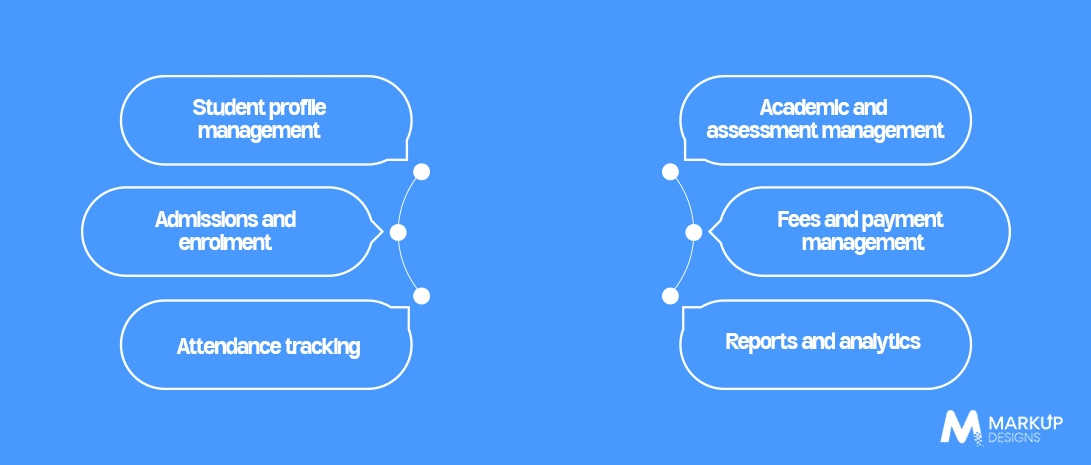
A student management system does not have to be limited to holding the personal data of students. Instead, a student management system needs to allow the institution to handle its critical academic and administrative functions from a single platform. While the requirements may differ depending on the nature of the institution, the following features are usually necessary:
1. Student Profile Management
Collect student data like personal information, contact information, academic records, documents, enrollment details, and emergency contacts under a single student profile.
2. Admissions and Enrollment
Manage applications, submission of documents, approval of applications, course selection, enrollment, and admissions through a digital process.
3. Attendance Tracking
Enable the faculty and staff to manage attendance, track absenteeism, create attendance reports, and issue automatic notifications whenever necessary.
4. Academic and Assessment Management
Control courses, subjects, schedules, assessments, grades, exams, and academic performance in one unified interface.
5. Fees and Payment Management
Monitor fee structure, invoices, payments, pending amounts, receipts, and payment reminders automatically.
6. Reports and Analytics
Create reports on attendance, academic performance, enrolment, fees, and other important activities.
Essential Integrations for a Student Management System
Most student management systems do not exist in isolation. Schools may have separate systems for learning, payments, communications, accounting, and identification. Integration of these systems can help avoid the entry of duplicate information and lead to better workflow.
Some important integrations include:
- Integration with LMS: The integration of SMS with LMS will ensure that all course details, enrollments, payments, and academic details are automatically synchronized.
- Integration with Payment Gateways: It will be possible for students and parents to make payments online.
- Integration with Accounting Software: Integration of financial information with accounting software will facilitate invoicing and financial management.
- Communication Tools: The integration of emails, SMSs, and push notifications for announcements and reminders, attendance notifications, etc.
- SSO & Identity Management: User access to several education-related platforms using one set of credentials.
- Video Conferencing and Collaboration Tools: Connect platforms used for online classes, virtual meetings, and student collaboration.
The correct ones are based on the institution’s existing technology landscape, user base, requirements, and its growth plans for the future. A modular API architecture would make it easier to incorporate or modify integrations according to these changing requirements.
Looking to build a secure and scalable student management system in Australia?
Managing student data across multiple platforms can make everyday education operations more complicated than they need to be. A well-designed student management system can bring these processes together, automate repetitive tasks, and give institutions better control over their data.

How Much Does It Cost to Develop a Student Management System in Australia?
The cost of developing a student management system in Australia largely depends on various aspects like system requirements, integration, complexity, security, and the number of users. An entry-level platform for managing students and administrators would definitely be cheaper compared to an enterprise-level student management system.
Here is the estimated cost of student management system development: AUD $70,000 to $700,000+. And it could be subdivided into the following levels:
| System Type | Estimated Cost | Development Scope |
| Basic/MVP | AUD $70,000–$150,000 | Core student records, admissions, attendance, and basic reporting |
| Mid-Level | AUD $150,000–$350,000 | Advanced academic management, portals, payments, integrations, and analytics |
| Enterprise | AUD $350,000–$700,000+ | Multi-campus support, complex integrations, mobile apps, AI, advanced security, and analytics |
For instance, the addition of custom dashboards, artificial intelligence-based automation, integration with third-party applications, sophisticated reporting, or extensive data migration may push up the total development cost. In a similar way, designing different mobile applications for students, faculty members, and parents will further add to the development cost as well as time. Thus, the institution needs to determine its basic needs and develop the application in different phases.
Factors Affecting Student Management System Development Cost
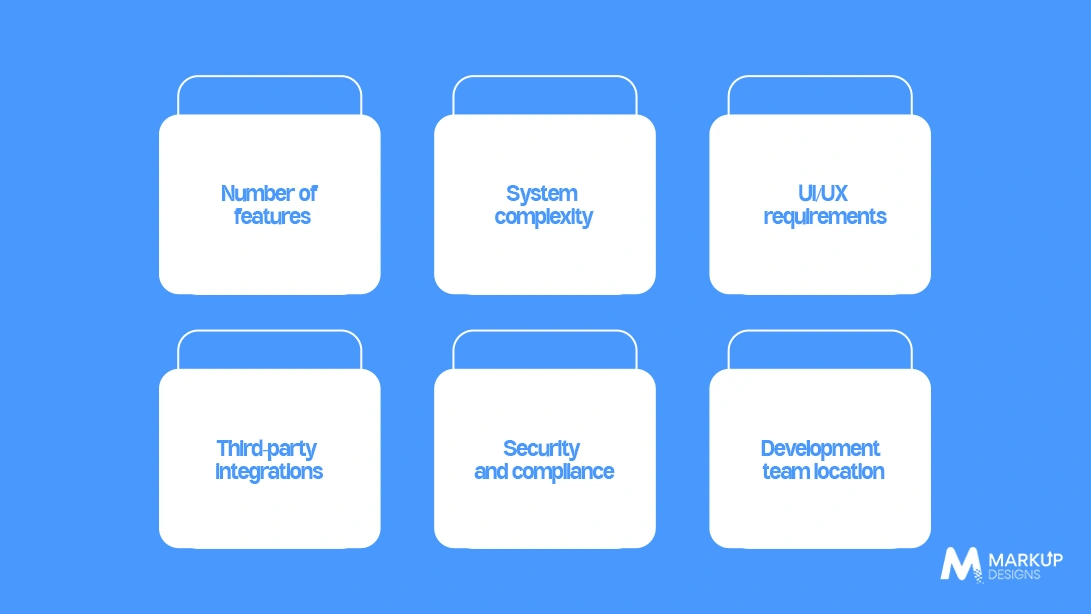
The cost of developing a student management system varies from one organization to another. It all depends on the requirements of the software, its target users, and integration capabilities. Here are some of the primary factors influencing the cost of development:
Number of features
The fewer features your student management software has – whether it is just student profiles and attendance or admissions, payments, assessment, analytics, communication, and automation – the lower the cost of development will be.
System complexity
Workflow, user roles, dashboards, administration processes, etc., might increase or decrease the cost of development.
UI/UX requirements
Simple web interface would need less number of resources, but customized dashboards, mobile-friendly design, and dedicated interfaces for students, parents, teachers, and administrators would demand additional efforts to be put in.
Third-party integrations
Integration with payment gateways, LMS solutions, accounting software, communication tools, Single Sign-On, and other services can add to the cost of development depending on the level of integration needed.
Security and compliance
Student systems process sensitive data; thus, factors like role-based access control, encryption, authentication, auditing, backup, and compliance considerations may affect the total budget.
Development team location
Developer costs depend on their location and level of expertise. Required experience, duration of the project, and the number of developers may also impact the total price.
How to Develop a Student Management System in Australia?
Developing an efficient student management system entails much more than creating various modules. It is important that the new system corresponds to the institution’s workflow while staying secure, scalable, and user-friendly. Proper planning of the development process can ensure smooth operation and help to avoid various risks and problems.
1. Determine the Requirements
First of all, one must understand the institution’s problems and needs, as well as define the target users, required modules, and workflow. This will help determine what functionality must be implemented at the first stage.
2. Plan the User Interfaces
Design intuitive user interfaces for administrators, teachers, students, parents, and other users. The idea is to make commonly performed actions easily accessible.
3. Choose Technology and Architecture
Decide on technology and architecture that will suit the number of users, integration needs, scalability, and maintenance.
4. Develop the Core System
Develop key modules like student profiles, admissions, enrollment, attendance, academic administration, fees, communication, and reporting.
5. Integration
Integrate the software with third-party LMSs, payment gateways, accounting applications, communications, identity solutions, and other external systems.
6. Testing, Implementation, and Maintenance
Do functional, security, performance, and user acceptance testing before implementation. Post-implementation, conduct training for staff, monitor performance, and fix bugs and make improvements according to the needs of the institution.
Custom Student Management System vs Ready-Made Software
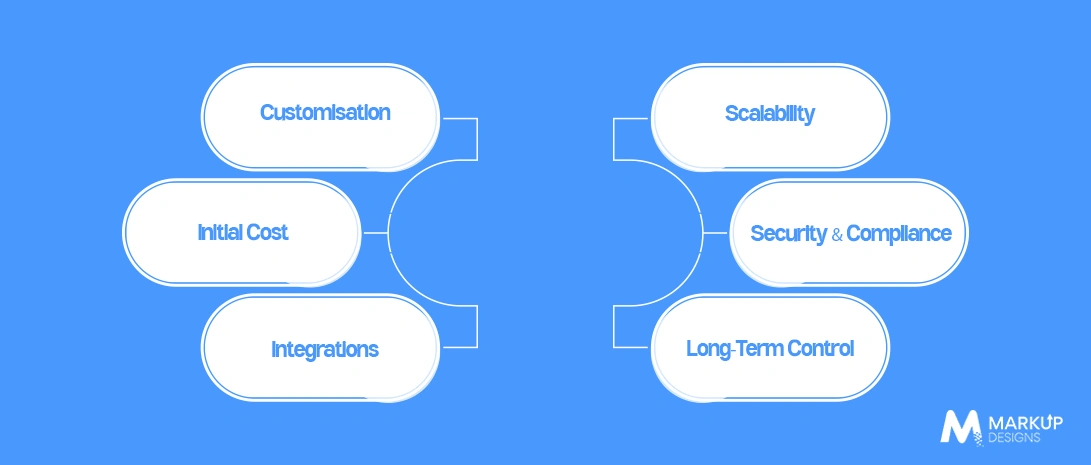
While both customized and ready-to-use student management systems can help educational establishments, they are different in terms of flexibility, price, and long-term control.
| Factor | Custom Student Management System | Ready-Made Software |
| Customisation | Built around specific institutional workflows | Limited to available features |
| Initial Cost | Higher development investment | Usually lower upfront cost |
| Integrations | Flexible API and system integrations | Depends on vendor support |
| Scalability | Can grow with the institution | Depends on platform limitations |
| Security & Compliance | Controls can be designed around requirements | Based on vendor capabilities |
| Long-Term Control | Greater control over features and roadmap | Dependent on software provider |
When to Opt for a Custom Solution?
- When no software fits your process
- When there is a need for complicated integration
- When the institution requires multi-campus capabilities
- When advanced analytics or AI is needed
- When data and functionality control is essential
- When scalability is important
When is Ready-Made Software Better?
- When speed is the goal
- When standard features are adequate
- When budget is a concern at first
- When customization is not needed
- When software is maintained by the vendor
- When operations of the institution are simple
Why Choose a Student Management System Development Company in Australia?
Selection of an appropriate development partner would also prove to be an important factor in ensuring that the quality, security, and performance of the student management system are at their best. In fact, an experienced developer would first be able to understand workflows, requirements, existing software solutions, as well as plans of the organization. This would make it possible to develop a solution that fits the exact requirements.
In addition, a skilled developer would also help with UI/UX design, system architecture, integration, data migration, testing, deployment, and post-launch support. At the same time, Australian institutions need to work with a developer who is familiar with the local legislation.
Lastly, an appropriate partner would always provide scalability, which would be able to accommodate an increasing number of students, integration of other campuses, other integrations, and even emerging technologies like AI and analytics.
Read Also: How to Build a Student Management Software System in Australia– Explore the complete
Looking to simplify student administration and improve operational efficiency?
Partner with our experts to develop a secure, scalable, and user-friendly student management system designed around your institution’s needs.

Conclusion
The development of the management system for students in Australia appears to be a key moment for those educational organizations that seek to improve their administrative processes and get better performance from students.
However, the achievement of such a goal cannot be done by simply selecting functionalities to implement. There is much more to consider before developing such solutions, including workflow, user needs, integrations, security issues, scalability, and many other things. The right approach is to start with basic functionality and then include advanced features such as analytics, automation, mobility, and even artificial intelligence.
It does not matter whether an organization chooses a customized solution or some off-the-shelf software; in any case, the aim is to create a system that will help manage students easily and efficiently.
FAQs
1. What is the cost to build a student management system in Australia?
Development costs may vary between AUD $70,000 and $700,000+ based on the functionality, the scope, the number of integrations and security measures required, the number of users, and customisation.
2. What is the development time of a student management system?
The development time varies depending on the scope of the project itself. An MVP version can take several months, while enterprise-level software with multiple integrations can take much more time.
3. What are the core features of a student management system?
Commonly included features are student profile management, admission, enrollment, attendance, academic management, fee management, communications, document management, and reporting.
4. Is there a possibility for a student management system to be integrated with an LMS?
Yes. The SMS can be integrated with an LMS in order to exchange information related to student enrollment, courses, assessments, grades, etc., according to the particular platforms used.
5. Which solution should be chosen by an educational institution – custom or ready-made student management software?
It all depends on the requirements of the institution. Sometimes ready-made software will do, and sometimes custom development will work better.
Author's Perspective
By now, you have a clear idea of how student management system development in Australia can simplify education administration. From student records and attendance to automation, integrations, and analytics, the right system can improve daily operations. However, success depends on selecting the right features, technology, and development approach. With a reliable development partner and a clear understanding of institutional needs, you can build a secure, scalable solution prepared for long-term growth.
Discuss Your Project NowJupinder Singh Arora
Founder and CEO
Related Posts

Custom Software Development Cost in Bahrain: Factors, Benefits,...

How Much Does Healthcare Software Development Cost in...

How to Build Compliance Software for Australian Businesses:...
Insights Are Valuable & Execution is Priceless
You’ve read about the digital future. Now, let’s build the infrastructure to take you there. Move your strategy from the page to the product.
Design Your Solution Now
Contact Us
Schedule The Appointment At Your Convenience Date And Time.
30 Min
Web Conference
Time Zone
Indian standard time (08:30pm)

Thanks For Getting In Touch!
You’ve Taken The First Step Toward Transforming Your Digital Presence. Our Experts Will Reach Out Shortly To Take It Forward.
Launch Your Dream Project
Provide a brief overview of your project, and our specialists will evaluate your requirements. We will connect with you to explore how the right digital solutions can help you launch faster.