

In Brief
- With IT solutions, businesses in Kuwait are able to become more efficient, automate processes, and decrease manual workloads.
- Cloud computing, AI, cybersecurity, and enterprise software allow businesses to scale up operations and adapt to changing demands in the market.
- Sector-specific IT solutions contribute to digital expansion in the banking, oil and gas, healthcare, retail, and logistics industries of Kuwait.
- Integration of new technologies into existing ones, management of cybersecurity threats, and implementation cost control become major adoption barriers.
- The right choice of an IT solutions provider can ensure that businesses align their technological investments with their goals and strategies.
Businesses in Kuwait are increasingly relying on technology to streamline operations, build stronger customer relationships, and compete effectively in the digital environment. Whether through process automation or improved employee access to and analysis of business data, IT solutions help businesses address operational challenges and make data-driven decisions. The digital transformation efforts of Kuwait under Vision 2035 provide many opportunities for businesses in various industries to use technology and increase their efficiency and flexibility.
But merely using technology is not enough to ensure business development. Companies need solutions that address their specific problems, are compatible with their current infrastructure, protect sensitive data, and allow room for future growth. The use of cloud computing, artificial intelligence, cybersecurity solutions, business intelligence, and enterprise software development can each be useful for this purpose, depending on how well the solution was implemented and chosen. Understanding what the technology does and what benefits it brings could assist companies in Kuwait in using technology to achieve business results.
Why Are IT Solutions Becoming Essential for Businesses in Kuwait?
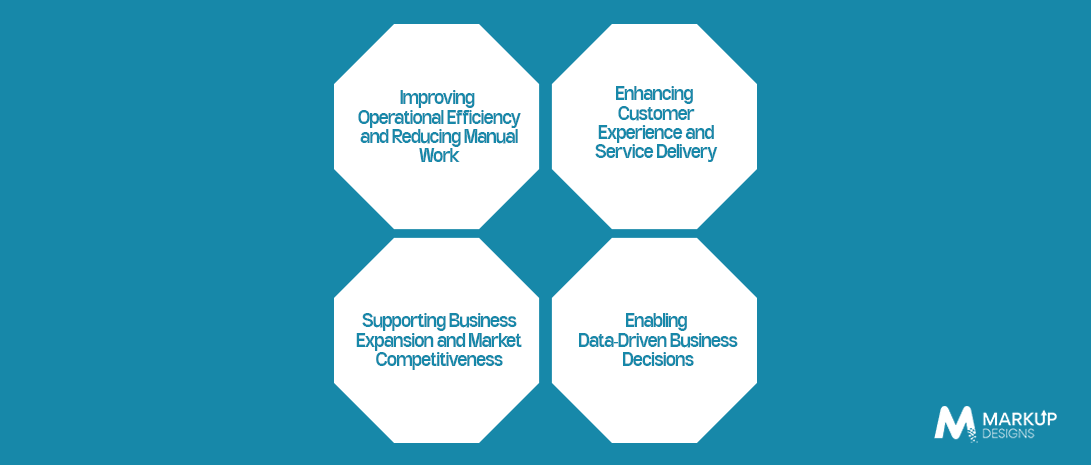
In the process of adjusting to the changes in customers’ needs and increased competition, companies in Kuwait started including technology in their regular operations and strategy. IT solutions allow companies to improve their processes, manage information better and meet the demands of the business, using not only manual labor. Benefits from the implementation of these technologies go further and include such aspects as improved customer services, making decisions and growing business.
Improving Operational Efficiency and Reducing Manual Work
Manual labor can be slow, error-prone, and take up the time of employees. IT solutions such as workflow automation, enterprise software, and cloud-based collaboration tools help businesses automate repetitive tasks, standardise processes, and improve coordination between departments. For companies in Kuwait managing multiple teams, locations, or service operations, these technologies can reduce administrative workloads and allow employees to focus on higher-value activities.
Enhancing Customer Experience and Service Delivery
Customer expectations have been growing towards fast service, convenient digital solutions, and availability of support via all possible channels of communication. CRM solutions, self-service portals, chatbots, and customer support systems will assist companies to better process requests, log communications, and solve problems faster. Using these solutions will help organizations in Kuwait to increase consistency in their services, learn about customers’ preferences, and create better relationships.
Supporting Business Expansion and Market Competitiveness
Any company expansion implies new requirements for IT infrastructure, coordination of its staff, and information management. Scalable IT solutions will provide companies with opportunities for growth, introduction of digital services, and handling of higher load without the necessity of repeated reconstruction of their IT environment. Cloud platforms, custom business applications, and enterprise systems can help in company expansion and adaptation to changing conditions in the market.
Enabling Data-Driven Business Decisions
Business decisions become more accurate when based on information. Data analytics and business intelligence will provide consolidation of information obtained from various sources and visualization through reporting, dashboards, and key performance indicators.
Businesses can use these insights to identify operational inefficiencies, monitor sales trends, understand customer behaviour, and evaluate financial performance. This helps decision-makers in Kuwait identify opportunities and allocate resources based on evidence rather than assumptions.
What IT Solutions Are Driving Business Growth in Kuwait?
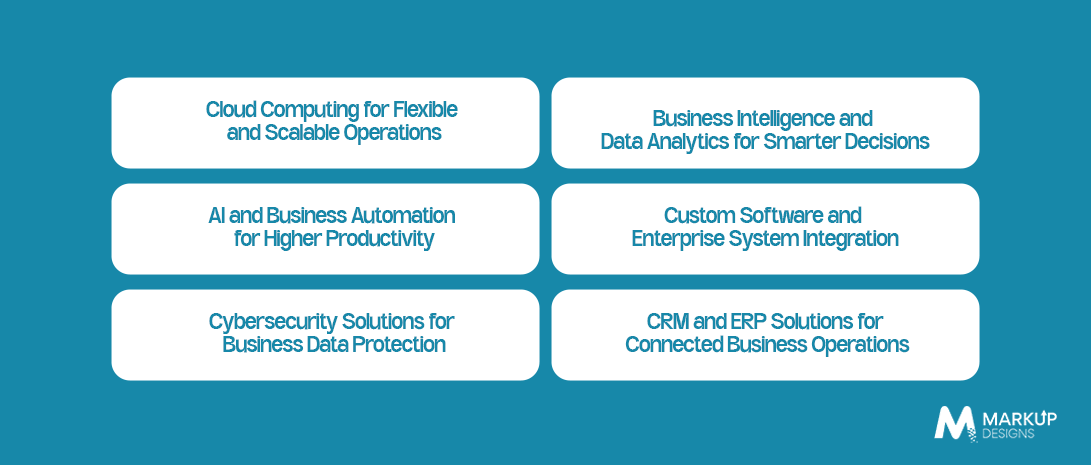
Not all technologies have the same business needs, and success will depend on their relevance to the business’s objective. While some technologies seek to improve infrastructure and security, others help automate operations, integrate business systems, and gain insights from them. Knowledge of such technologies enables the business to identify what is relevant.
Cloud Computing for Flexible and Scalable Operations
Cloud computing is a technology that allows businesses to use computing power, applications, and even data storage using the internet rather than through the organisation’s own premises. Resources can be scaled according to demand; businesses can collaborate remotely while reducing the need to manage all their resources within the business premises. Properly designed cloud platforms can even be used for backup and disaster recovery. In selecting cloud providers for businesses in Kuwait, businesses should consider factors such as data residency, security measures, connectivity, and availability of local support.
AI and Business Automation for Higher Productivity
Artificial intelligence (AI) and automation technologies assist organisations in performing repetitive tasks, processing information, and making routine decisions. Such applications range from automated document processing, customer service chatbots, demand forecasting, and intelligent workflow management, among other applications. These capabilities can reduce processing time and free employees to concentrate on tasks requiring human judgement. However, businesses should assess data quality, integration requirements, and the reliability of AI-generated outputs before deploying these technologies in critical workflows.
Cybersecurity Solutions for Business Data Protection
With the increasing dependency on digital systems, it is vital for organisations to protect business information and maintain service availability. The application of cybersecurity solutions like endpoint protection, firewalls, identity and access management, encryption, multi-factor authentication, and continuous monitoring helps in reducing exposure to cyber threats. Security assessments, awareness training of employees, and incident response planning will complement the above-mentioned cybersecurity solutions. Organisations that are engaged in regulated industries need to make sure that they comply with all the security solutions that are required by the Kuwaiti laws.
Business Intelligence and Data Analytics for Smarter Decisions
The business intelligence (BI) and data analytics solutions convert operational data to information that management can use in their planning and performance measurement. With the help of business intelligence solutions, information is collected from different systems related to sales, finances, inventory, and customer service and helps organisations to see any pattern and identify areas that need improvement. For instance, retailers can use data analytics solutions to better plan inventory, and service providers can use them to check response time.
Custom Software and Enterprise System Integration
Commercial software solutions might not cover the entire workflow of each company, especially if the business has some peculiarities in its processes and uses different, separate systems. Developing custom software helps businesses develop applications according to their needs, and integrating enterprise systems increases the efficiency of communication between them. This solution is helpful because it saves time by eliminating duplicate data entry, improves process visibility, and creates more uniform processes. Before developing any new software, the company should consider the possibility of reconfiguration or integration of the tools already used.
CRM and ERP Solutions for Connected Business Operations
Customer relationship management (CRM) software systems allow companies to organize information about customers, conduct sales processes, interact with customers, and follow up with them. Enterprise resource planning (ERP) systems integrate functions such as finance, procurement, inventory, human resources, and operations in one common platform. In case of successful implementation, these solutions increase the availability of information and eliminate the necessity of keeping duplicate records in different departments. Companies in Kuwait should choose the appropriate systems for them.
How Are IT Solutions Transforming Key Industries in Kuwait?
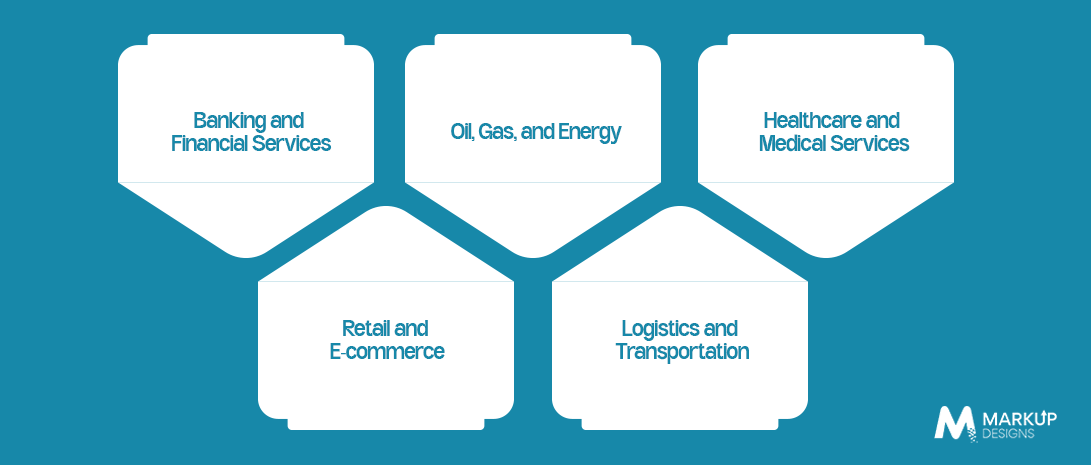
The impact of IT solutions varies across industries because each sector has distinct operational priorities, customer expectations, and regulatory requirements. From managing financial transactions to monitoring industrial assets, technology is helping organisations improve visibility, automate processes, and deliver services more efficiently.
Banking and Financial Services
Banks and financial service providers use digital platforms to support online transactions, mobile banking, customer onboarding, fraud monitoring, and regulatory reporting. AI-assisted analytics can help identify unusual transaction patterns, while identity verification tools can strengthen customer authentication processes. Secure digital services also give customers more convenient ways to access financial products and manage their accounts. However, financial institutions must implement these capabilities with appropriate safeguards, audit trails, and compliance controls.
Oil, Gas, and Energy
Kuwait’s oil, gas, and energy sector can benefit from IT solutions that improve asset monitoring, maintenance planning, operational visibility, and data management. Industrial sensors and connected systems can provide information about equipment performance, while predictive maintenance tools can help identify potential failures before they cause major disruption. Data analytics can also support production planning and resource utilisation. Given the importance of operational technology in this sector, digital initiatives must account for industrial safety, system reliability, and the separation of critical operational networks from less trusted environments.
Healthcare and Medical Services
Healthcare providers can use IT solutions to manage electronic medical records, appointment scheduling, billing, diagnostic information, and communication between departments. Integrated hospital management systems can reduce administrative duplication and improve access to relevant patient information for authorised staff. Telehealth platforms and patient portals can also make certain services more accessible. Since healthcare information is highly sensitive, these systems require strong access controls, secure data handling, reliable backups, and compliance with applicable healthcare and privacy requirements.
Retail and E-commerce
Retailers can use e-commerce platforms, inventory management systems, CRM software, and analytics tools to connect online and offline operations. These technologies help businesses monitor stock levels, process orders, understand purchasing patterns, and provide more relevant customer experiences. Automated inventory alerts can reduce the risk of stockouts, while integrated order management can improve fulfilment coordination. For retailers in Kuwait, supporting preferred payment methods, mobile-friendly shopping, and reliable delivery processes can further strengthen the digital customer experience.
Logistics and Transportation
Logistics companies rely on accurate information about shipments, vehicles, inventory, and delivery schedules. Fleet management platforms, GPS tracking, warehouse management systems, and route optimisation tools help businesses monitor movement, coordinate deliveries, and identify operational delays. Integration between these systems can improve shipment visibility and communication with customers. By analysing delivery performance and resource utilisation, logistics providers can identify inefficiencies, improve planning, and make better use of their fleets and warehouse capacity.
What Challenges Do Businesses in Kuwait Face When Adopting IT Solutions?
While IT solutions can enhance efficiency and facilitate growth, implementation itself can pose several obstacles that need to be recognized. Technical, financial, security and organizational issues can hinder the process of implementation. Understanding these obstacles allows organizations to come up with realistic plans for implementation and not waste resources on ineffective solutions.
Integration of New Technologies into Existing Infrastructures
A lot of businesses work with outdated software that still plays a significant role in their daily operations. Combining such infrastructures with new software can be problematic due to incompatible data formats, interfaces, and even technologies. As a result, there may be issues with duplicated information or interruptions of services. Businesses should evaluate their current infrastructure and determine dependencies between various systems. It is also a good idea to test any integration before implementing it.
Handling Cybersecurity Risks and Data Privacy Issues
The incorporation of new applications, cloud computing services, and connected devices creates cybersecurity risks, which arise from insufficient access control and monitoring. Businesses should understand what kind of information they are dealing with, where it is stored and how secure it is.
They should establish appropriate security policies, conduct risk assessments, and verify the requirements applicable to their industry and operations in Kuwait. Data protection should be considered during solution selection and system design rather than treated as a final implementation step.
Controlling Implementation Costs and Technical Complexity
IT projects run over budget due to the uncertainty of requirements, underestimation of integration, and costs of future support and maintenance. In addition to the cost of development and licensing, there are other expenses related to IT project execution such as migration, learning, support, upgrades, security monitoring, etc. The business case needs to describe the problem that needs to be solved, expected benefits, implementation scope, and success criteria. It is advisable to start with a limited implementation and to expand if the result is evaluated.
Addressing Digital Skills Gaps and Change Management
The usage of technology solutions depends on the employee’s ability to understand how to use them correctly and benefit from the new processes. Lack of training, lack of clarification of responsibilities, and reluctance to adopt changes can make even the best solution useless. Businesses need to include employees responsible for the implementation of technologies in the process of planning and explain what impact the solution will have on their work.
How Can Businesses Choose the Right IT Solutions Provider in Kuwait?
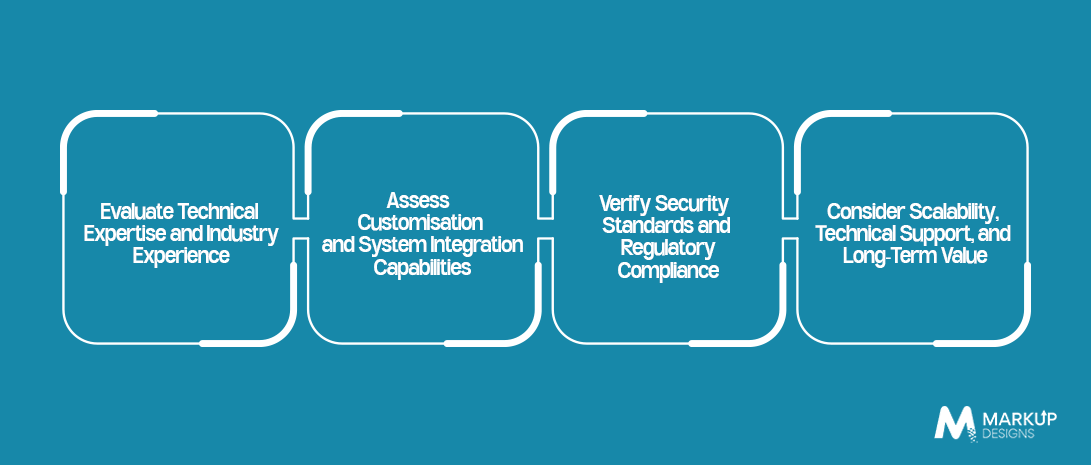
Selecting an IT solutions provider requires more than comparing service prices or reviewing a list of technologies. Businesses should look for a partner that understands their operational priorities, can deliver the required technical capabilities, and offers a practical approach to security, implementation, and long-term support.
Evaluate Technical Expertise and Industry Experience
Review the provider’s experience with the technologies, systems, and business challenges relevant to your organisation. Case studies, project references, technical certifications, and previous implementation experience can help establish whether the provider has the required capabilities. Industry knowledge is particularly important for businesses operating in regulated or technically complex sectors. Ask how the provider would approach your specific requirements rather than relying solely on broad claims about expertise.
Assess Customisation and System Integration Capabilities
A suitable provider should be able to explain how its proposed solutions will work with your current applications, data, and workflows. Evaluate its approach to APIs, data migration, software configuration, testing, and future system changes. Customisation should address genuine business requirements without creating unnecessary complexity or making the organisation excessively dependent on a single vendor. A clear integration plan helps establish what will be delivered, which systems will be affected, and how the transition will be managed.
Verify Security Standards and Regulatory Compliance
Before engaging a provider, review its security practices, access controls, incident response procedures, backup arrangements, and approach to data handling. Ask for relevant evidence of certifications or independent assessments where applicable, and confirm which responsibilities belong to the provider and which remain with your business. Requirements may differ by industry, data type, and service arrangement, so compliance should be assessed against the rules applicable to the specific organisation rather than assumed from a generic security claim.
Consider Scalability, Technical Support, and Long-Term Value
The right IT solution should meet current requirements while allowing the business to adapt as its operations expand. Evaluate the provider’s support arrangements, service-level commitments, maintenance process, upgrade policy, and ability to handle increasing workloads. Total cost of ownership is also important: licensing, infrastructure, support, training, and future changes can affect the overall investment. A provider that defines measurable outcomes and maintains clear communication throughout the engagement is better positioned to support long-term business objectives.
How Can Markup Designs Help Businesses in Kuwait Accelerate Growth With IT Solutions?
Markup Designs helps businesses turn technology requirements into practical digital solutions aligned with their operational goals and growth plans. From custom software development and AI-powered applications to cloud solutions and enterprise system integration, the focus is on building technology that addresses specific business challenges. By understanding existing workflows, infrastructure, and future requirements, businesses can identify suitable solutions to improve efficiency, strengthen data management, and support expansion. A structured development approach also helps organisations prioritise essential features, plan implementation, and build systems that can evolve with changing business needs.
Accelerate Your Business Growth With the Right IT Solutions
Looking to modernise operations, improve efficiency, or build scalable digital solutions for your business in Kuwait? Partner with Markup Designs to identify the right technology approach for your business goals.

Conclusion
IT solutions are increasingly becoming an important catalyst for growth of business in Kuwait, as they aid in making businesses become efficient in their operations, improving customer experiences and decision-making. Technologies like cloud computing, AI, cybersecurity, business intelligence, and enterprise software present many ways to transform and meet new market requirements. However, one needs to plan well and understand business needs to achieve success.
A business that considers its digital transformation strategically will be able to leverage its technological investment and create an adaptable business model. Identifying existing problems, choosing the right solutions, and partnering with a capable technology provider can help businesses create solid ground for further growth.
FAQ
1. How do IT solutions assist in growing businesses in Kuwait?
IT solutions allow businesses in Kuwait to automate redundant tasks, collaborate, process data, and improve customer experience. They also allow for business expansion with scalable infrastructure, system integration, and data analysis.
2. What are the best IT solutions for businesses in Kuwait?
The best solutions differ depending on the size of business, the industry and requirements of business. Some popular options are cloud computing, cybersecurity, AI automation, CRM, ERP, business intelligence, and custom software development.
3. How expensive is IT in Kuwait?
The expenses associated with IT in Kuwait vary depending on the kind of technology, the complexity of the project, requirements for customisation, integration, security, and support. An implementation of basic software can require an initial small investment, but a major enterprise system or platform requires much more. It is important to calculate the total cost of ownership and make sure to include all the necessary expenses.
4. How can small businesses benefit from IT in Kuwait?
A small business can use cloud computing, digital payment technologies, CRM software, accounting and workflow automation, and other types of solutions to minimise administrative tasks and offer better customer service. Starting with solutions addressing their current challenges will help small companies to control expenses.
5. How can IT increase business efficiency and productivity?
IT solutions increase efficiency by automating routine tasks, minimising human errors, integrating business processes, and providing employees with easy access to information. Thus, people have more time to focus on more important things. Managers get more insights into the performance of the company.
Author's Perspective
The most important thing about IT solutions is that they must solve definite business problems. For companies based in Kuwait, the first step to take is to understand where bottlenecks are, where automation might be possible, and to improve their security. A well-developed and measured implementation strategy will allow firms to avoid unnecessary risks and prove their ROI. As the level of digitalization increases, companies that consider their business goals will be able to keep up and compete successfully.
Discuss Your Project NowGaurav Goyal
Global Sales- VP
Insights Are Valuable & Execution is Priceless
You’ve read about the digital future. Now, let’s build the infrastructure to take you there. Move your strategy from the page to the product.
Design Your Solution Now
Contact Us
Schedule The Appointment At Your Convenience Date And Time.
30 Min
Web Conference
Time Zone
Indian standard time (08:30pm)

Thanks For Getting In Touch!
You’ve Taken The First Step Toward Transforming Your Digital Presence. Our Experts Will Reach Out Shortly To Take It Forward.
Launch Your Dream Project
Provide a brief overview of your project, and our specialists will evaluate your requirements. We will connect with you to explore how the right digital solutions can help you launch faster.