
How to Select the Best Managed IT Partner for Your Business
There comes a point in every growing business where technology either becomes a growth engine or a silent bottleneck. You start with basic IT support. Systems work fine. Issues are manageable. But as the business scales, cracks begin to appear. Systems slow down during peak operations. Security concerns start surfacing. Your internal team spends more time fixing issues than driving innovation. And your IT vendor? They respond, but they don’t guide.
This is a common problem most of the time for enterprises. Many organizations don’t fail because of poor technology. They struggle because they chose the wrong IT partner, one that reacts to problems instead of preventing them, that delivers services instead of delivering outcomes.
Selecting the right managed IT service partner is not about outsourcing tasks. It is about choosing a partner who understands where your business is today and where it needs to go tomorrow.
Understanding the Role of a Managed IT Partner
What Does a Managed IT Service Partner Actually Do?
It ensures that the entire IT ecosystem will run smoothly and efficiently across the operations. The main value lies in modern MSP, which is far beyond maintenance. When we talk about the foundational level, it is to manage the infrastructure, monitor the ecosystems,m and handle all the support requests efficiently.
The main difference is critical to learn about, which is the basic provider that keeps the system running always. A string provider will help you to move the business forward.
The Reasons Behind Companies’ Transition to Managed IT Services
The greater complexity of the technical environment is the primary cause of the significant shift towards IT managed services. As compared to ten years ago, it is now more complicated. A single business infrastructure must learn about a variety of topics that require ongoing attention and optimisation.
Developing and sustaining the level of knowledge is typically more expensive. Businesses can concentrate on what they do best and run as efficiently as possible because of the providers’ specialised knowledge, organised procedures, and scalable delivery methods.
Key Considerations for Selecting the Best MSP
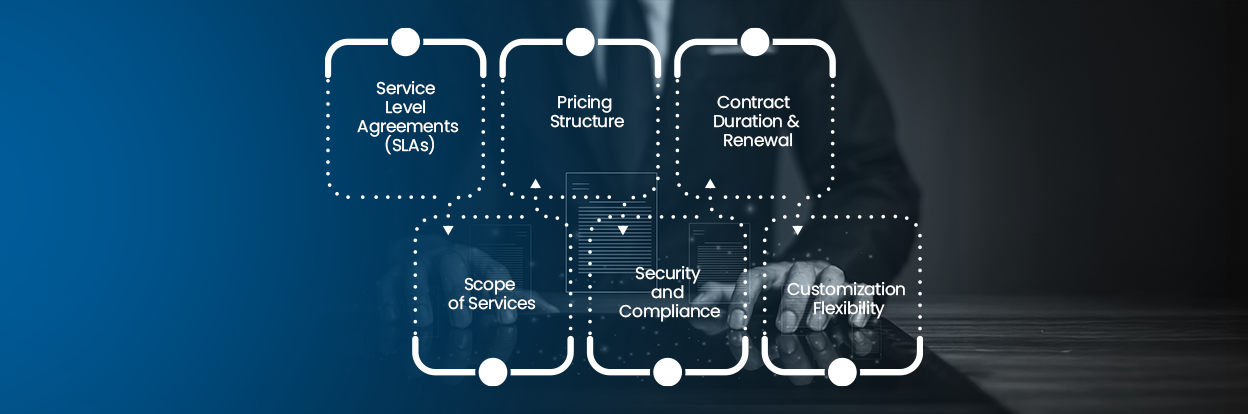
Alignment and Business Objectives
When choosing a partner, the degree to which a vendor understands our business is a crucial factor that many of us ignore. For instance, if you select a provider who solely concentrates on managing IT infrastructure, they will always operate independently of you; while their work, such as resolving tickets and maintaining hardware, will increase the operational efficiency of your business, it won’t facilitate its expansion.
For instance, if you select a provider who solely concentrates on managing IT infrastructure, they will always operate independently of you; while their work, such as resolving tickets and maintaining hardware, will increase the operational efficiency of your business, it won’t facilitate its expansion.
Proactive Vs Reactive Methodology
Stability and disruption are frequently the key distinctions between a reactive and proactive MSP. Reactive providers work in a response cycle. When anything breaks, they fix it. In the near term, this could appear enough, but over time, it leads to problems and unanticipated expenses.
In contrast, a proactive MSP emphasises prevention. They keep an eye on systems, spot possible threats, and fix problems before they affect operations. As a result, there is less downtime, better performance, and a more stable IT environment. Predictability is crucial for an expanding company. On shaky grounds, you cannot grow.
Flexibility and Scalability
Everything is altered by growth, particularly your technological needs. Your systems must manage more people, more data, and more intricate procedures as your company grows. An MSP will eventually become a barrier if it is unable to grow with you.
Adding resources is only one aspect of scalability. It involves creating systems that can change without causing problems. This includes the capacity to incorporate new technologies as needed, adaptable infrastructure, and cloud readiness.
Flexibility is also crucial. Since every company is unique, inflexible service models are rarely effective in dynamic settings. Instead of pressuring you into predetermined frameworks, the appropriate provider will modify their services to meet your needs
The Significance of Scalability
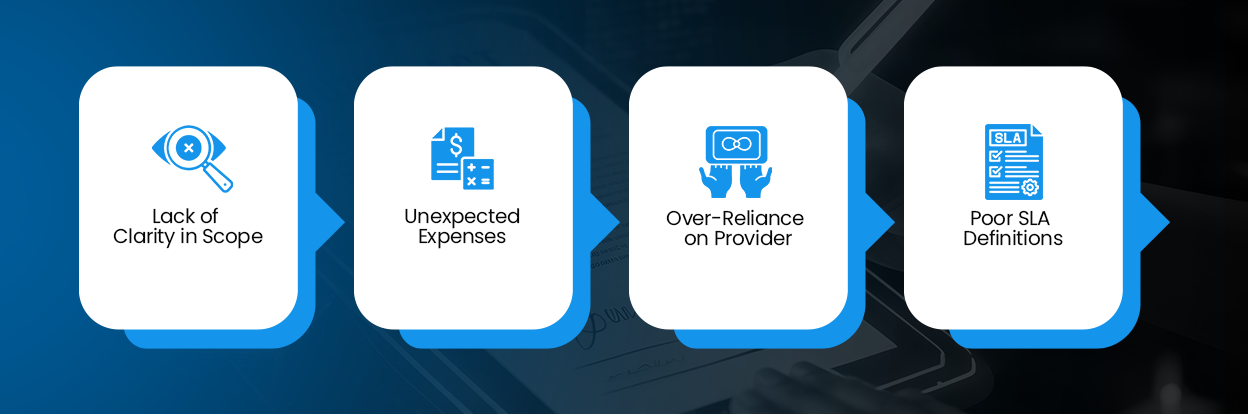
Businesses that lack a suitable IT infrastructure are likely to experience problems with security, performance, and operational inefficiencies. These problems will worsen with time, even though they might not be noticeable at first.
The scalability required to support your company’s expansion will be provided by the appropriate type of MSP. It will enable you to sustain dependability and performance levels for the duration of your company’s existence.
Adaptability in Your Offerings
When company goals and business requirements change, flexibility allows you to adjust your IT strategy. With little to no disturbance, a skilled MSP can help you scale up and expand capacity during times of growth or reduce capacity and optimise costs during slower development.
Cloud-Based Development and Digital Transformation
These days, growth is frequently linked to how businesses employ technology to add value for their clients. As a result, companies today cannot afford to overlook the necessity of digitisation or the numerous advantages of digital transformation, like adopting cloud services, automation, and data-driven decision-making.
In addition to supporting your digital transformation project, a strong MSP will be essential to your successful use of technology. In order to minimise the risk of data breaches or failures during the transition period, the MSP should assist you in implementing new technology in a way that aligns with your company’s long-term business strategy.
Connectivity With Your Current Systems
The majority of companies already have systems in place to help them run their company. It would not be economical to replace everything. A skilled MSP will help you integrate any new solutions with your current systems, minimise disruptions to your regular business operations, and assure you that your company will continue to run normally even with the introduction of new technology.
Proficiency in Security and Compliance
Security is now a business priority rather than a technological one. Regulations are getting more stringent, and cyber dangers are getting more complex. Financial loss can harm one’s reputation, and legal issues might result from a poor security posture.
A trustworthy MSP approaches security holistically. They put in place robust security measures, keep an eye on risks in real time, and guarantee adherence to pertinent laws. More significantly, they view security as a continuous process, as opposed to a one-time setup.
Service Level Agreements (SLAs) and Support Quality
What you can anticipate from your MSP is outlined in Service Level Agreements (SLAs) and Support Quality SLAs. However, beyond the numbers, they show the provider’s dedication to responsibility. Consistency is just as crucial as quick reaction times and transparent resolution procedures. You need a spouse who can effectively resolve problems and is there when it matters. Critical moments are frequently when support quality becomes apparent. This is where the distinction between mediocre and outstanding providers becomes evident.
Experience and Industry Knowledge
Context is brought about by experience. An MSP with experience in the field is aware of the particular difficulties you encounter. They are knowledgeable about typical hazards, legal requirements, and business procedures. They can offer more pertinent and useful answers as a result.
Even technically proficient providers could find it difficult to produce significant results without this experience.
Costing Structure of Managed IT Services (USD)
Cost is always a factor, but it should be viewed in the context of value rather than expense.
Here is a general overview of how managed IT services are priced:
| Service Type | Monthly Cost (USD) | Description |
| Basic IT Support | $20 – $50 per user | Includes proactive monitoring, security, and backup solutions |
| Advanced Managed Services | $75 – $150 per user | End-to-end IT management with strategic support |
| Fully Managed IT Services | $150 – $300 per user | Depends on infrastructure size and cloud complexity |
| Cloud Management Services | $500 – $5,000+ per month | Comprehensive threat detection and compliance management |
While lower-cost providers may seem attractive initially, they often lack the depth required for long-term growth. Investing in the right MSP reduces risks and delivers better returns over time.
Analysis of Competitors: Current Market Offerings
Advantages of Top MSPs
The best managed IT partners have changed dramatically. Many provide robust cybersecurity frameworks, sophisticated monitoring systems, and worldwide distribution capabilities. To increase productivity and efficiency, they are making investments in automation and using data.
The industry’s general level of service has increased as a result.
Typical Weaknesses in Offerings
There are still gaps in spite of these developments. The use of standardised solutions is a prevalent problem. Many companies offer set packages that are difficult to modify to meet specific business requirements. As a result, there is a gap between the actual company needs and the services that are provided.
What This Means for Your Business
These gaps highlight an important point: technical capability alone is not enough. The right MSP must combine technical expertise with strategic thinking, customization, and strong communication. This combination is what drives long-term value.
Why Partner with Markup Designs
A Methodical Approach to IT Management
Managed IT services are approached by Markup Designs with an emphasis on business results. They present IT as a growth engine rather than a support function. Understanding your company’s objectives, difficulties, and possibilities is the first step in their approach. This enables them to create solutions that are both strategically and technically sound.
Customised Solutions for Actual Business Requirements
Their focus on customisation is one of the main differentiators. Markup Designs creates solutions specifically for each client, as opposed to providing generic packages. This guarantees that every facet of the IT strategy is in accordance with the particular requirements of the company. Proactive Innovation and Continuous Improvement.
Proactive management and ongoing development are their top priorities. This entails finding areas for optimisation, implementing new technology, and making sure that systems continue to be effective and safe over time. This forward-thinking strategy aids companies in maintaining their competitiveness in a setting that is changing quickly.
A Model of True Partnership
Their dedication to collaboration may be the most crucial factor. Working directly with clients, Markup Designs upholds transparency, offers strategic direction, and concentrates on quantifiable results. This cooperative strategy guarantees long-term success and fosters trust.
Author’s Viewpoint: The Choice That Determines Your Development
Selecting a Managed IT Service Partner is a strategic and technical choice. All too frequently, companies prioritise short-term cost savings and urgent needs. Without taking into account the difficulties of the future, they select suppliers who can handle today’s issues.
But forethought is necessary for growth. In addition to supporting your ongoing operations, the ideal MSP should help your business get ready for the future. They ought to question your presumptions, present fresh opportunities, and assist you in creating a more robust and resilient company. Your IT partner becomes an extension of your leadership team in many respects. Pick a partner rather than merely a supplier.
FAQ
What is the most important factor when choosing an MSP?
The most important factor is alignment with your business goals. Without this, even strong technical services may not deliver meaningful results.
How can I evaluate an MSP’s proactive capabilities?
Look at their monitoring processes, reporting structure, and how they handle risk prevention rather than just issue resolution.
Is cost a reliable indicator of quality?
Not always. Lower costs often mean limited services, while higher-value providers focus on long-term outcomes.
How does an MSP support business growth?
By ensuring system reliability, enabling scalability, improving security, and guiding technology adoption.
Can MSPs handle industry-specific requirements?
Yes, but only if they have relevant experience and expertise in your domain.
How often should I review my MSP relationship?
Regular reviews, ideally quarterly, help ensure alignment and continuous improvement.
The Final Thoughts
Choosing the ideal managed IT service provider is about more than just outsourcing IT; it’s about laying the groundwork for long-term success. A robust MSP guarantees stability and security, facilitates ongoing innovation, and matches technology with your business plan. They prevent issues and provide opportunities in addition to solving them.
The proper IT partner may be a potent growth catalyst in a world that prioritises digitalisation. You can be silently held back by the wrong person. In the end, the decision determines your course.
Author's Perspective
Many businesses look to outsource their IT services as a cost savings opportunity, but the most successful companies use outsourcing as a strategic lever for growth instead. The real difference comes from moving from the question “How can I save money by outsourcing?” to the question “How can I use my outsourced provider to create new capabilities?” It is when you change your focus from cost savings to capability creation that your outsourced IT provider will deliver the value you want to achieve.
In my experience, the biggest difference between successful companies that outsource and those that do not is the degree to which they are clear about the goals they wish to achieve through outsourcing, whether that’s accelerating product development, enhancing their cybersecurity capabilities, or enabling scalable infrastructures. Successful companies tend to create effective outsourcing partnerships, while companies that outsource without a strategic plan are more likely to encounter issues with alignment and a lack of results.
Discuss Your Project NowAjit Kumar Jha
VP - Business Operations
Related Posts

Why Businesses in Dubai are Investing in Managed...

Managed IT Services Pricing: What It Really Costs...

How Remote Managed IT Services Help Businesses Scale...
Insights Are Valuable & Execution is Priceless
You’ve read about the digital future. Now, let’s build the infrastructure to take you there. Move your strategy from the page to the product.
Design Your Solution Now
Contact Us
Schedule The Appointment At Your Convenience Date And Time.
30 Min
Web Conference
Time Zone
Indian standard time (08:30pm)

Thanks For Getting In Touch!
You’ve Taken The First Step Toward Transforming Your Digital Presence. Our Experts Will Reach Out Shortly To Take It Forward.
Launch Your Dream Project
Provide a brief overview of your project, and our specialists will evaluate your requirements. We will connect with you to explore how the right digital solutions can help you launch faster.