
A Practical to Guide Developing Your First Mobile Application
Nowadays, when the world is increasingly dominated by digitization, mobile applications are vital for any company that seeks to engage its clients, improve internal processes, and maintain its position in the market. If you are an entrepreneur who wants to introduce a novel idea or an experienced firm that needs to strengthen its online business, the development of an application becomes necessary. However, the development of a mobile application is a complex process that encompasses not only technical issues but also strategic decision-making and efficient planning. This guide will help you navigate the mobile application development process from start to finish.
Step 1 – Validate Your App Idea Before Development
However, before starting its development, it is important to make sure that your application idea is really worthy of development. You will be able to reduce risks, avoid unnecessary costs, and prove the demand for your application through validation.
Identify the Problem Your App Solves
Any great application begins with a clearly stated aim. Therefore, think about what problem your application is supposed to solve and what benefits it offers to users. The more relevant and topical the problem is, the greater the possibility that your application will become popular.
Market Research and Competitor Analysis
After you have determined the problem, it is necessary to conduct an analysis of the current market situation. In this way, you can find out whether any competitors offer applications that solve the same problems. In addition, it will help you find the advantages and disadvantages of such applications and their competitive edge.
Defining Your Target Audience
Understanding your audience is one of the first steps when building an application that will be popular among its users. Find out who the app will be used by, focusing on their demographics and behavior patterns. Knowing about your audience, you’ll be able to build an app according to their expectations.
Validation with MVP or Surveys
Before making large investments in the project, validate your app idea among users. For this purpose, it is possible either to develop an MVP with basic functionality or to conduct surveys with the help of feedback forms. By validating an idea, you make sure that the app is really needed in the market.
Step 2 – Choosing the Right Development Approach
Making the right choice regarding development approaches will affect the future success of the application. At this stage, it is crucial to consider various factors related to technologies and platforms.
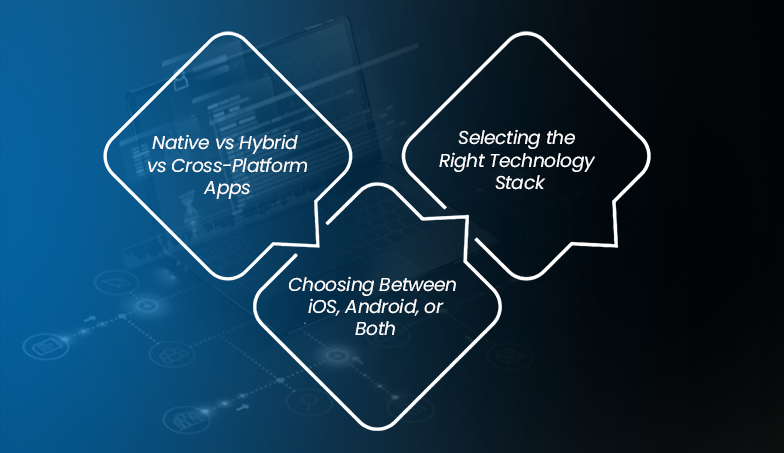
Native vs Hybrid vs Cross-Platform Apps
The first type of mobile app is the native application, which means it was specifically developed for one particular platform only, e.g., iOS and Android, with programming languages unique to each platform, Swift and Kotlin, respectively. These types of apps are the fastest, most responsive, and use all device capabilities fully. However, developing a native application for each particular platform separately is quite costly.
The hybrid application represents web technologies inside the shell of a native app. These types of apps are not very costly and can be created rather quickly, but they will be a little less responsive than native ones.
Cross-platform mobile applications are developed using cross-platform solutions, like React Native and Flutter, meaning that developers create only one codebase to deploy the app across several operating systems.
Choosing Between iOS, Android, or Both
Ultimately, what platform you pick is up to your market and audience. Being more widespread globally, Android would be preferable in terms of audience reach, even more so in emerging markets. Meanwhile, iOS tends to have a more affluent user base that can help monetize your application.
Of course, if you have the budget to launch on two platforms from the get-go, that will provide you with even better reach. Otherwise, you may consider starting on a single platform that is tailored to your specific audience demographics and gradually expanding afterward.
Read This: iOS or Android : Which App Launch First?
Selecting the Right Technology Stack
The tech stack you pick is critical in determining how good your application will be and whether it will be scalable going forward. The technology stack consists of programming languages, frameworks, back-end architecture, and databases. All these factors need to be considered.
Consultation with professional developers will help find the optimal technology stack for your specific needs.
Step 3 – UI/UX Design: Building a User-Centric Experience
Designing a good application is not only about looking good; rather, designing an application means providing users with a pleasant experience when using the app. UI & UX designs are very important aspects to keep in mind because these aspects decide the level of interaction of the app and its future use by users. User-friendly designs make an app more attractive and easy to use.
Importance of Wireframing and Prototyping
Creating a successful app begins with wireframing. Wireframing refers to building a skeleton that determines the structure and flow of an application without paying too much attention to looks.
Prototypes take this concept a notch higher through the incorporation of interactivity. This is an important phase because it allows one to see what an application will be like.
Best UX practices for engaging users
The first and most important thing that you have to take care of is simplicity, speed, and consistency. Avoid overcomplicating your design by creating cluttered interfaces, and make sure that the navigation through your app is not confusing, but rather quite intuitive. Using consistent elements, such as colors, fonts, and button sizes, is an integral part of making the design more familiar and user-friendly.
In addition to that, make sure that your application loads fast and works without any lags or delays; personalization options, onboarding processes, and well-defined calls to action can significantly improve user engagement and retention. Remember that designing for the user should always be your number one priority.
Tools Used (Figma, Adobe XD)
Current technology enables designers to come up with better, more streamlined app designs that are easy to create, develop, and prototype. One such tool is Figma. It has become common because of its collaborative capabilities. On the other hand, the reason why Adobe XD is widely accepted is because of its user-friendly interface and ability to develop prototypes.
With these tools, it becomes easy to come up with better user interface designs that can be shared with others.
Step 4 – Mobile App Development Process Explained
When the final design of your app is created, its actual development will take place. It means that you can start turning your ideas into reality with coding, integration, and workflows. The development of your application usually consists of several elements that should work together for the successful and proper performance of the product.
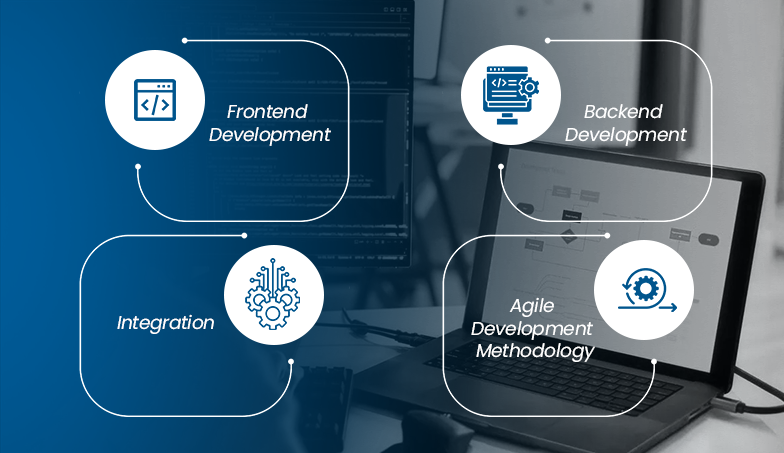
Frontend Development – Backend Development – Integration – Mobile app
Frontend Development
The frontend development is aimed at creating all the elements that users will interact with while using your application. Such aspects as layout, button styles, navigation, and responsive design play an essential role in the process. For the conversion of a UI/UX design into a functioning interface, developers apply technologies related either to specific platforms or to the creation of cross-platform applications.
Backend Development
The backend development is responsible for ensuring all the functionalities necessary for the proper operation of the application. Its main tasks include such processes as server configuration, data storage, and other technical and functional tasks required by the app. The backend development provides security and scalability for your application.
Integration
APIs stand for Application Programming Interfaces. APIs are helpful when you want to incorporate your app with other systems and services outside your app. Integrating your app with payment services, social logins, mapping applications, and third-party tools is possible through APIs. Your app will gain additional features without developing them from scratch.
Agile Development Methodology
The Agile methodology is the most popular approach used during software and mobile application development nowadays. The whole process of development consists of sprints. In this way, developers can test their apps regularly during development and make necessary improvements before moving forward. They will be able to fix problems earlier and adjust to changing requirements in order to create a more efficient final product.
Step 5 – Testing & Quality Assurance
Prior to rolling out your application, testing is very important for ensuring that your app will work properly and provide your users with a great experience. QA testing will allow you to fix any bugs, increase performance, and make sure that your app meets all of its necessary functional requirements. If your app does not go through this process, it could negatively impact users’ impressions.
Functional Testing
The purpose of functional testing is to test each individual feature of the app for proper functionality. This includes user workflows such as logging in, navigating around the app, filling out forms, and other functionalities that your app provides. Functionality testing checks if all buttons, hyperlinks, and other functions are working properly.
Performance Testing
Performance testing is carried out to find out the performance of your application under various scenarios. It is important to test factors such as loading times, speed, and reliability in case your application experiences more than one connection at a go. Performance problems like slower or sluggish applications have the effect of driving away your customers, hence the need for optimizing your application.
Security Testing
Security testing is essential for ensuring that your application has no vulnerabilities and threats. It entails testing aspects like secure encryption of user data, secure authentication of users and also preventing any unauthorized use. In the current times, when user data security and privacy are becoming increasingly critical, it is important to ensure the security of your app.
Read Also: Complete Guide for Businesses to Mobile App in 2026
Step 6 – App Launch: From Development to App Store
Having completed development and testing, the next important stage would be the release of your application. The success of its launch lies not only in the successful publication of your app, but also in the correct targeting of its users, meeting all the platform requirements, and ensuring its visibility.
App Store Optimization (ASO)
The purpose of ASO (app store optimization) is to increase the visibility of an application in the store by improving its chances of being seen by potential users. ASO consists in optimizing such aspects of your application as title, description, keywords, icons, screenshots, and other things. In order to get the best results, you need to create an attractive description and use suitable keywords.
Google Play & Apple Guidelines
These two platforms have rigorous policies for app submission which should be strictly adhered to. These policies include the app having good performance and security measures in place among other things. It is thus important to review these policies before launching your app to avoid any rejection. All required documentation including the app description, policies, and images need to be in place prior to submission.
Launch Strategy
It is crucial to create an effective launch strategy for your application to succeed. Launching your app without fanfare might not get you anywhere. You should try launching your app through a beta launch while also doing social media marketing and e-mail promotions before launch. You can also choose to create hype about your app before launching it to boost its performance.
Step 7 – Post-Launch Growth & Marketing
However, the launch is not an end point; rather, a good post-launch strategy would ensure that your app receives adequate exposure and users. App marketing strategies will play a crucial role in achieving these goals.
Marketing Your App
The market is crowded, and to have your app noticed, you need to implement both paid and organic marketing tactics. These include content marketing, social media marketing, and influencer partnerships. You can pay to advertise through app install ads and search ads. Consistent content updates and improvements in functionality will make users come back.
Acquiring Users
Selecting the most suitable platform or channels for acquiring users would play a critical role in your success. There are various sources from which you can acquire users, including Facebook, Instagram, and Google AdWords. Other sources would include app stores, referral networks, email marketing, and partner channels.
Analytics & Performance Monitoring
It’s crucial to monitor the performance of your application to ensure its long-term success. Services such as Google Analytics and Firebase Analytics can help you track your users’ actions, their retention rate, and overall level of engagement with your app. Based on this information, you’ll be able to understand what works, what doesn’t, and how you can improve the app.
How Much Does Mobile App Development Cost?
The cost of developing a mobile application largely depends on its complexity and other factors, including the features that you want to have in it, whether you decide to hire freelance developers or a dedicated team, etc. While developing a simple application is likely to cost you relatively little, building an advanced and scalable app will probably take more resources.
Cost Estimation (Design, Development, Testing)
Costs usually get split into three main phases. In design, the focus is on creating the UI/UX designs, wireframes, and prototypes to make sure that the application looks good and is easy to use. Development is the most resource-heavy phase, including coding on the frontend and backend sides, setting up the databases, etc. Testing/QA ensures that everything works fine without bugs. All the phases are important; otherwise, the product may suffer.
Factors Affecting Cost
- Complexity of the App: The more complex the application is, the higher its price will be. Simple applications with basic functions are cheaper, while advanced applications, such as those that support real-time tracking, use artificial intelligence, or contain payment processing functionality, will cost you more.
- Target Platform(s): The number of target platforms significantly impacts the price. Single-platform (either iOS or Android) development is cheaper than cross-platform development.
- Complexity of UI/UX Design: Designing something custom, interactive, and visually appealing would take more time and resources and increase the total cost. Design with minimum design elements and functions is more economical.
- Approach to Development: The choice between native, hybrid, and cross-platform approaches may affect not only the development process but also the budget and time. Native applications are more expensive because they require different coding.
- Third-Party Integrations: Integration of third-party APIs for payments, maps, authentication, etc. may influence the total costs of your project based on their complexity and required licensing costs.
- Back-end Infrastructure: Apps requiring back-end infrastructure, cloud storage or real-time database synchronization will involve more complex development and higher maintenance costs.
- Development Team and Its Location: Employing experienced developers or using development agencies based in more expensive regions will raise the cost of software development.
- Maintenance and Updation: Costs related to post-development activities should also be taken into account when making a budget estimate for mobile app development.
Why Hire a Mobile App Development Agency?
Working with an app development agency provides several advantages over doing things alone or engaging only with freelance workers.
Benefits Over Freelancers
- Full Team In-House: Having access to a full team of designers, developers, testers, and project managers.
- Higher Reliability: More structured processes minimize risks of any issues that may arise during development.
- Better Final Product: The quality of apps will be higher since all efforts will be put into developing it.
- Quick Delivery: Work can be done faster since many people will collaborate on it.
End-to-End Development Support
- One-Stop Solution: All aspects from initial ideation to deployment will be covered in-house.
- Easy Collaboration: It will be easier to communicate with one single company.
- Quality Consistency: Processes will be aligned throughout the entire development process.
- Expert Recommendations: Working with professionals guarantees good recommendations for you.
Scalability & Long-Term Maintenance
- Flexible Resource Management: Your team is capable of adjusting depending on the requirements of your project.
- Constant Support: The process of updating, maintenance, and optimization is handled effectively.
- Future-Proofing: Your agency will assist in modernizing your app according to technological developments.
- Sustainable Relationship: Constant interaction guarantees that your app remains competitive.
Common Mistakes to Avoid in App Development
- No Idea Validation: No validation of the idea may cause underperformance because there would be low demand for the app.
- Failure to Consider UX: A poorly designed UI can chase potential users away, despite the presence of cool features.
- Overuse of Features: Including too many features simultaneously might increase the development cost and make the app too complicated.
- No Target Users: Without target users in mind, it’s hard to come up with an appropriate app.
- Wrong Development Methodology: The incorrect platform or technology might influence the performance of the app.
- Insufficient Testing: Lack of testing may cause technical problems and bad reviews from users after launch.
- Failure to Adhere to the Guidelines of App Stores: This can bring problems like rejection and postponement of publishing.
- Lack of Marketing Strategies: Even if the app is amazing, nobody will use it unless it’s marketed effectively.
- Insufficient Financial Management: Not taking into account extra expenses will cause financial difficulties.
- Neglecting Post-Launch Support: Updating and maintaining an app are vital for its long-term performance.
Working with an experienced mobile app development agency helps you avoid costly mistakes
FAQs
How long does mobile app development take?
The development process may vary depending on many factors such as app complexity, functions, and design. For example, a relatively simple app will be developed within 2-4 months, whereas a complicated one with advanced functions might take up to 6 months and even longer.
What is the average cost of mobile app development?
Depending on the application complexity, its development cost varies considerably and ranges from a couple of thousands to tens of thousands of dollars on average.
Should I build a native or cross-platform app?
There are pros and cons to both of these approaches. So you need to decide which one suits you better based on your needs, expectations, and budget.
Do I need technical knowledge to build an app?
It is not necessary to have them. It would help if you collaborated with the team of professionals in mobile app development to bring your idea to life.
How can I make my mobile app successful after launch?
Effective marketing strategies and user engagement, updates of the mobile application, monitoring of its performance, as well as listening to users’ suggestions and constantly improving the app should be considered among measures that can contribute to success.
Conclusion
The process of developing a mobile app requires more than just coding. From initial ideas’ verification and selection of an appropriate development method through creating a convenient and functional interface and adequate testing until app deployment and further promotion of the application, every aspect deserves thorough consideration. With the right strategy, team, and tools at hand, your app idea can become a valuable product providing benefits for users. Additionally, post-deployment marketing efforts and constant improvements are key components of the success formula.
From my perspective, custom blockchain development is not just about adopting a modern technology trend; it’s about making strategic decisions that create real business impact. Many organizations rush into blockchain adoption without clearly defining their objectives, which often leads to underutilized solutions.
The key lies in understanding where blockchain truly adds value. Not every system needs decentralization, but for processes involving multiple stakeholders, trust gaps, or data integrity concerns, blockchain can be transformative.
Ultimately, the success of any blockchain initiative depends on balancing innovation with practicality. With the right strategy, technology, and development partner, businesses can unlock the full potential of blockchain and drive long-term growth.
Discuss Your Project NowDeepak Tripathi
Product Manager
Related Posts

How eCommerce AI Chatbots Turn Customer Conversations Into...

Best Strategies to Hire Machine Learning Engineers for...
Insights Are Valuable & Execution is Priceless
You’ve read about the digital future. Now, let’s build the infrastructure to take you there. Move your strategy from the page to the product.
Design Your Solution Now
Contact Us
Schedule The Appointment At Your Convenience Date And Time.
30 Min
Web Conference
Time Zone
Indian standard time (08:30pm)

Thanks For Getting In Touch!
You’ve Taken The First Step Toward Transforming Your Digital Presence. Our Experts Will Reach Out Shortly To Take It Forward.
Launch Your Dream Project
Provide a brief overview of your project, and our specialists will evaluate your requirements. We will connect with you to explore how the right digital solutions can help you launch faster.