
In Brief
- The metaverse in healthcare consists of a number of technologies like VR, AR, MR, AI, and digital twins for creating interactive medical experiences and training patients, educating them, and collaborating remotely.
- The most common implementations are immersive telehealth, medical training in virtual reality, assistance in treatment planning through AR, digital twins, 3D imaging, rehabilitation using immersive technologies, and collaborative virtual healthcare environments.
- Immersive technologies can help increase patients’ comprehension, improve rehabilitation practices, facilitate personalized treatment, assist in medical training, and facilitate collaboration between specialists remotely.
- The main obstacles to adoption include issues of patient data privacy, cybersecurity, high cost of development, compatibility with healthcare systems, clinical validation, accessibility, and regulatory compliance. Development costs will be determined by the complexity of the platform, the technologies used, its integrations, security, and maintenance.
- Effective implementation implies defining the goals of healthcare, selecting proper technologies, designing user-friendly platforms, testing them carefully, and performing regular maintenance. Markup Designs has 14+ years of experience and 200+ specialists who can assist in developing personalized healthcare software solutions with special attention to security and scalability.
The healthcare industry is transforming itself through introducing innovative technologies, making access to healthcare services convenient, interactive, and effective. Starting from remote doctor’s visits to AI diagnostics, digital technology is providing great potential for improving the services provided by the healthcare sector. Today, the metaverse for healthcare creates new opportunities due to immersive experiences within the domain.
By applying such technologies as virtual reality (VR), augmented reality (AR), and digital twins, healthcare specialists have an opportunity to explore new ways of training healthcare workers, explaining therapy, conducting rehabilitation, collaborating with other specialists, and many others. Such technologies may be helpful both for patients and doctors in understanding the state of health and visualizing the data on the matter.
However, the implementation of the metaverse in the field of healthcare is associated with challenges in terms of data security, implementation costs, and clinical safety.
In this blog post, we are going to analyze the influence of the metaverse on the patient experience, its main uses, technologies, costs of implementation, and challenges.
What is the Metaverse in Healthcare?
A metaverse in healthcare means an immersive digital environment where patients, doctors, and other healthcare specialists can interact, learn, or cooperate. The metaverse can be created by using various technological approaches, such as VR, AR, MR, and digital twins, in order to develop interactive environments for medical purposes.
Doctors may use 3D images to better understand complicated anatomical structures, while patients can visit virtual worlds for rehabilitation purposes or therapy. Students who study medicine can use immersive environments for practice before applying their skills to real patients.
It means that metaverses will make it possible to visualize information and take part in some healthcare activities in an interactive way, but the level of interactivity will depend on the platform and technology.
The main objective is not to substitute for doctors or hospitals, but rather to supplement medical services, such as medical training, treatment planning, patient education, or cooperation. The effectiveness of the metaverse in healthcare will depend on clinical evidence and patient safety.
Key Applications of the Metaverse in the Healthcare Industry
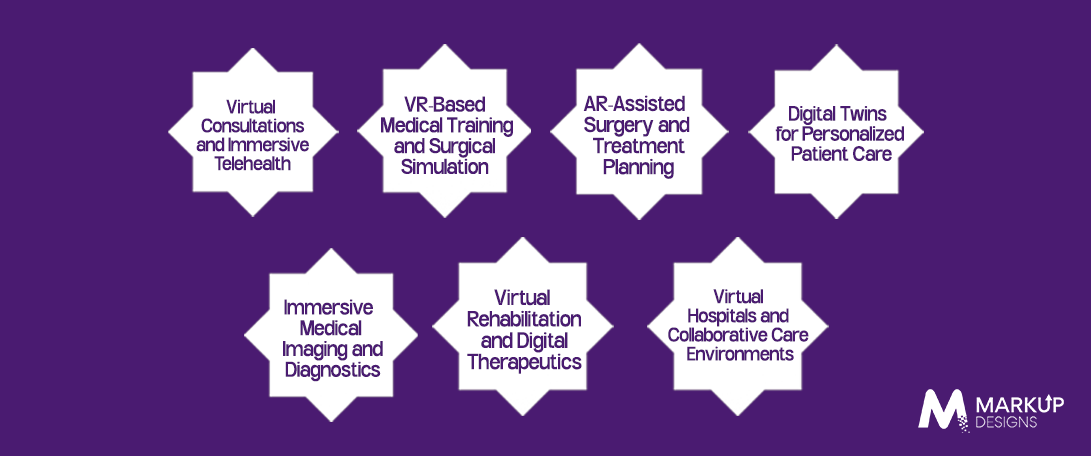
The metaverse opens up new opportunities for healthcare professionals to provide services, train medical professionals, and interact with patients. Healthcare professionals will be able to experiment with new methods of interaction with patients by integrating immersive technologies into their medical processes.
Here are some key applications of the metaverse in the healthcare industry.
Virtual Consultations and Immersive Telehealth
Remote consultations in virtual healthcare settings could become more immersive. Physicians would use 3D visuals to demonstrate the nature of diseases and discuss treatment options, helping their patients understand the issues with their health. Such technologies could add value to regular telehealth offerings, even though some procedures will still need to be done in person.
VR-Based Medical Training and Surgical Simulation
Medical students and surgeons could learn how to do surgeries and other procedures through virtual reality. They could experiment in many scenarios, repeating certain steps until they get a sufficient skill set without using real patients.
AR-Assisted Surgery and Treatment Planning
In augmented reality, clinicians could see a layer of digital information over the real-life setting. For example, during the treatment planning process, the surgeon could use 3D product models to understand anatomy better and get prepared for surgeries.
Digital Twins for Personalized Patient Care
A digital twin is an online representation of a physical object or system, which includes some of the features of the human body or physiological processes. They could be used by researchers and practitioners for simulating certain scenarios and exploring treatment options if they have relevant data to build upon.
Immersive Medical Imaging and Diagnostics
Immersive 3D imaging allows healthcare providers to view medical imaging from various perspectives. They could facilitate the examination of difficult anatomical structures, cooperation between specialists, and patient education. Such applications should be an addition to diagnostic methods, validated scientifically, not a replacement thereof.
Virtual Rehabilitation and Digital Therapeutics
The use of VR for the purpose of rehabilitation allows the patient to engage in interactive exercises under controlled conditions. They could be useful for recovering from physical illnesses, managing pain, and some mental diseases. It could be encouraged in the patient’s treatment plan.
Virtual Hospitals and Collaborative Care Environments
Virtual medical settings provide opportunities for doctors, specialists, and patients to communicate remotely. Medical teams can use virtual settings to consult about patients, their treatment, and other issues. However, virtual clinical environments are supposed to be complementary to traditional hospital services; nevertheless, there should be some reliable technical support.
How Immersive Technologies Improve Patient Care
Immersive technology can increase interactivity and comprehension in the sphere of healthcare. Utilizing VR, AR, and 3D visualization, one will be able to come up with innovative approaches to patient education, treatment process, and increasing involvement of patients in the process of their healthcare management.
Let us discuss the potential advantages of immersive technology.
- Better Patient Education: Visualization of diseases, treatment options and procedures can become more comprehensible with the use of 3D models and virtual environments.
- Increased Engagement in Rehabilitation Process: VR can make the process of rehabilitation more interactive and help patients participate in their rehabilitation plans.
- Enhanced Treatment Preparation: AR and 3D visualization of the structure of organs and tissues can assist doctors during the preparation for complex procedures.
- Personalization of Healthcare Experience: Individual patient data and digital simulations can assist healthcare specialists in exploring treatment options for particular patients.
- Remote Collaboration: Immersive technologies can help specialists from distant locations collaborate by reviewing the case and discussing the treatment plan.
- Assistance in Medical Training: Simulations in virtual reality can assist healthcare professionals in practicing particular procedures.
While these technologies offer promising opportunities, their benefits depend on clinical validation, accessibility, data security, and how effectively they fit into existing healthcare practices.
Technologies Powering the Healthcare Metaverse
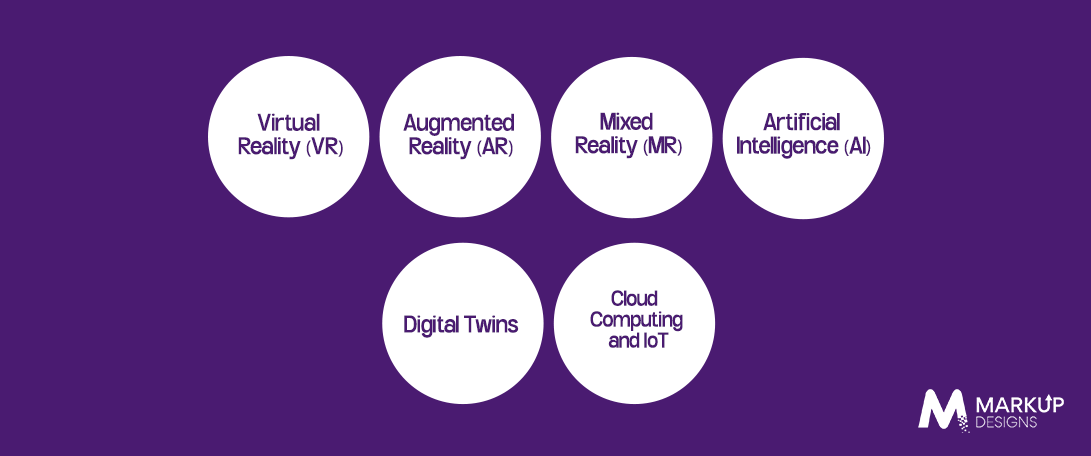
The healthcare metaverse is made up of various technologies and creates an interactive experience for the health sector. The technologies include those used by health professionals in visualizing, training, treating, and engaging with patients.
Virtual Reality (VR)
Creates simulated worlds to be used in training, therapy, and certain treatments.
Augmented Reality (AR)
Creates digital information superimposed on the real environment to enhance visualizations and treatments.
Mixed Reality (MR)
Combines digital and physical worlds in order to be able to interact with virtual medical models.
Artificial Intelligence (AI)
Helps with analysis, virtual assistants, and digital personalization depending on its right application.
Digital Twins
Create digital copies of patients, organs, and medical systems to make simulations and treatment plans.
Cloud Computing and IoT
Manage healthcare data and connect medical devices, which will provide access to information.
The technologies, when applied properly, can help healthcare institutions come up with immersive solutions for their particular clinical needs.
Challenges of Adopting the Metaverse in Healthcare
Even though the use of the metaverse is presenting various possibilities related to treatment and care, implementing such solutions in the field of healthcare involves some planning. There are numerous technical, financial, and clinical issues that need to be addressed prior to implementing immersive technologies in the field.
- Data Security Issues: Since immersive technologies have the capability of working with personal medical data, proper access and privacy should be ensured.
- Expensive Implementation: The process of developing an immersive platform may imply considerable costs associated with hardware, modeling, and software development.
- Compatibility Issues: Integrating immersive applications with other clinical systems (like electronic health records or hospital management systems) may prove to be difficult.
- Clinical Validity and Safety: Healthcare devices need to be tested to prove that they are reliable and appropriate for their intended uses. Immersive technologies should not supplant conventional techniques without the necessary validation.
- Availability and Adaptation: Not everyone is accustomed to the use of immersive technologies such as VR headsets. This may hinder the deployment of the technology for several reasons.
- Privacy Laws and Other Regulatory Issues: Healthcare facilities will have to take into consideration the various regulations that govern the development and implementation of these healthcare technologies.
Addressing these challenges early can help healthcare organizations introduce immersive technologies more responsibly and build solutions that meet patient needs.
How to Develop a Metaverse Healthcare Platform
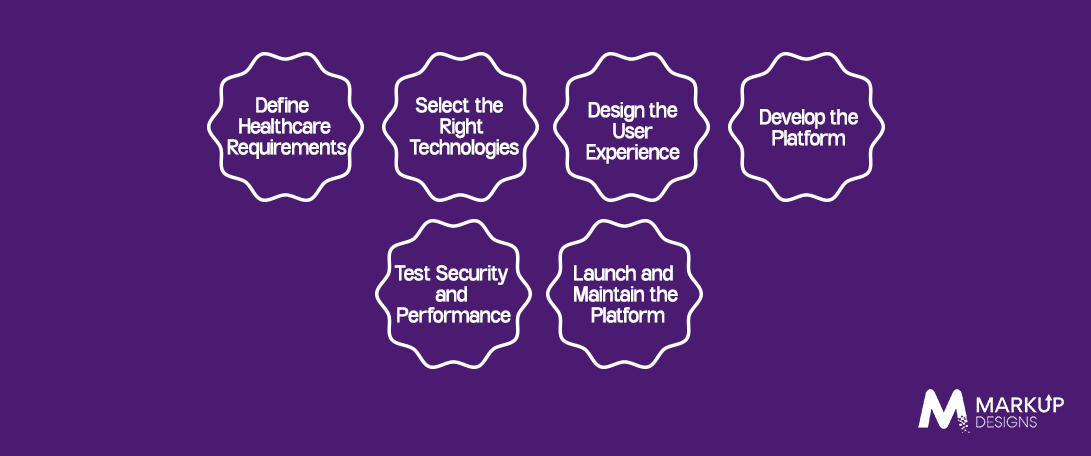
Metaverse health solutions’ development presupposes knowledge about the clinical requirements, user requirements, and technical issues in their implementation. A proper development process enables health organizations to develop efficient platforms which would be safe, reliable, and easy to use.
Define Healthcare Requirements
It is vital to begin with the definition of the purpose of the platform – whether it is going to provide rehabilitation, education, consulting, or medical training. It is necessary to identify the target audience, the set of required features, and the expected outcome.
Select the Right Technologies
It is vital to choose appropriate technologies according to the requirements of the project. They can be VR, AR, MR, AI, digital twins, cloud computing, and others. The key factor is the applicability of the technologies.
Design the User Experience
User interfaces for patients, physicians, and healthcare management should be created. Convenience in using and navigating the interface is crucial for the users.
Develop the Platform
Develop the frontend, backend, immersive environments, and integration if necessary. The platform might need to be integrated into electronic health records, appointment systems, medical equipment, or patient management systems, depending on the application use case.
Test Security and Performance
Conduct testing for the functionality, usability, performance, security, and compatibility of the platform in regard to all of the devices it has to be supported in. The clinical healthcare applications would have to undergo validation and safety testing.
Launch and Maintain the Platform
Deploy the platform in a proper environment and receive feedback from healthcare professionals and patients. Maintain the platform by updating and reviewing it if necessary to keep it reliable with changing requirements.
What is the Cost of Developing a Metaverse Healthcare Platform?
The cost of developing a metaverse healthcare platform depends on the features, immersive technology, integrations, and security that need to be put in place. A simple VR medical training application will usually have a different cost compared to a platform that incorporates digital twins and AI.
Here are the key factors that influence development costs:
- Platform Complexity: Platforms that use complex environments with several users and interactions require some improvements to be developed.
- Technology Implementation: The usage of VR, AR, MR, AI, digital twins, and other technologies might imply additional costs due to their complexity of implementation.
- Design: The creation of an accessible and comfortable experience for two user categories requires specific expertise.
- Integration: Integration into electronic health records, management systems of hospitals, and medical equipment will require additional time and resources.
- Security and Compliance: Data protection, access control, testing, and compliance are needed to create a proper healthcare platform.
- Maintenance and Support: Hosting, software updates, technical support, and other security-related measures will incur costs over time.
The budget estimation should be done after determining the priorities and needs of the healthcare organization. An MVP is the starting point in this case.
Why Choose Markup Designs for Healthcare Software Development?
Markup Designs helps companies create healthcare software solutions as per their needs. With a team that focuses on expertise, users, and implementation, the company makes sure that the healthcare software solutions are created from the digital solutions of the business.
It entails the process of creating custom solutions, incorporating technologies such as AI and cloud computing, designing interfaces for patients, doctors, and managers, as well as securing information throughout the entire process. Scalable architectures ensure that the healthcare platforms can scale in accordance with the changing needs and requirements.
Markup Designs takes care of all the stages involved in the development process, which includes requirement analysis, UI/UX design, development, testing, deployment, as well as maintenance. Markup Designs boasts of more than 14 years of experience as well as 200+ specialists who help businesses create custom digital solutions.
Whether it is a healthcare platform, a patient engagement application or an immersive healthcare solution, Markup Designs helps businesses choose the right technology as well as create solutions accordingly.
Ready to explore immersive technology for your healthcare business?
Markup Designs helps you build customized healthcare software that aligns with your goals, supports patient engagement, and improves digital experiences. Let’s discuss your project and identify the right approach for your needs.

Conclusion
Through the metaverse, there is the creation of new opportunities within the healthcare sector through immersive technologies such as VR, AR, AI, and digital twins. These technologies could help to advance medical training, treatment, rehabilitation, and education, among others.
However, success in implementing these technologies will require careful consideration of privacy of data, clinical safety, accessibility, system integration, and cost of development, among other considerations.
First of all, healthcare businesses should try to identify some of the actual clinical needs that could be addressed using the chosen technology. With proper planning and working with a development partner, businesses can develop a tailored digital healthcare platform. Markup Designs helps businesses develop software based on their healthcare technologies.
FAQs
1. What is the metaverse in healthcare?
The metaverse in healthcare refers to the use of immersive digital environments and technologies such as VR, AR, and digital twins for medical training, patient education, rehabilitation, treatment planning, and collaboration between healthcare professionals.
2. How is the metaverse changing patient care?
The metaverse can make selected healthcare experiences more interactive through 3D medical visualization, virtual rehabilitation, immersive patient education, and remote collaboration. Its impact depends on the application, clinical evidence, and how well the technology fits existing care practices.
3. What are the main applications of the metaverse in healthcare?
Key applications include virtual medical training, AR-assisted surgical planning, immersive telehealth, digital twins, 3D medical imaging, VR-based rehabilitation, and virtual collaboration environments for healthcare professionals.
4. What technologies are used to develop a metaverse healthcare platform?
Healthcare metaverse platforms may use virtual reality, augmented reality, mixed reality, artificial intelligence, digital twins, cloud computing, and connected medical devices. The technologies selected depend on the platform’s intended purpose and requirements.
5. What challenges do healthcare organizations face when adopting the metaverse?
Common challenges include patient data privacy, cybersecurity, high implementation costs, integration with existing healthcare systems, clinical validation, accessibility, and regulatory compliance.
Author's Perspective
The metaverse in healthcare offers new ways to support medical training, treatment planning, rehabilitation, and patient education. Its value depends on how effectively immersive technologies address real healthcare needs.
Healthcare organizations should focus on practical applications that fit existing workflows and meet patient safety and data protection requirements. Starting with a clear goal, testing results, and expanding gradually can help ensure these technologies provide meaningful benefits and complement existing medical services.
Discuss Your Project NowJupinder Singh Arora
Founder and CEO
Related Posts

AI in Telemedicine: 11 Use Cases, Benefits &...

Healthcare Data Security: Challenges, Best Practices & Compliance...

What Is Fueling Investor Excitement In Healthtech?
Insights Are Valuable & Execution is Priceless
You’ve read about the digital future. Now, let’s build the infrastructure to take you there. Move your strategy from the page to the product.
Design Your Solution Now
Contact Us
Schedule The Appointment At Your Convenience Date And Time.
30 Min
Web Conference
Time Zone
Indian standard time (08:30pm)

Thanks For Getting In Touch!
You’ve Taken The First Step Toward Transforming Your Digital Presence. Our Experts Will Reach Out Shortly To Take It Forward.
Launch Your Dream Project
Provide a brief overview of your project, and our specialists will evaluate your requirements. We will connect with you to explore how the right digital solutions can help you launch faster.