

In Brief
- The costs of developing enterprise software in Saudi Arabia in 2026 will be as follows – basic software development will cost SAR 30,000-SAR 80,000, while the costs of developing complex enterprise software will be in the range of SAR 400,000-SAR 900,000 and above, depending on the features, integrations, security, and the level of complexity of the project.
- Different types of software, like CRM, ERP, HR management, inventory, supply chain, business intelligence, and enterprise solutions powered by AI, have their unique development costs.
- Country-specific requirements include localization, ZATCA invoicing (where necessary), PDPL compliance, and payment gateway integrations with local banks and government systems.
- Hidden costs could be software licensing fees, cloud hosting, migration of data, training of employees, maintenance and support services, and upgrade costs. Companies could mitigate their expenses through the creation of an MVP, choosing critical features, setting requirements, and making use of existing systems that meet the requirements.
- Selecting the right developer should include assessment of industry expertise, technical competence, regulatory requirements, pricing transparency, security processes, and post-production support. Markup Designs assists companies in developing enterprise software that meets their needs and expectations.
Enterprise software allows businesses to handle their daily operations, organize the flow of information, automate business processes, and make decisions based on analysis. In Saudi Arabia, many companies choose to invest in modern software to help them optimize their operations and develop sustainably. However, before the development process can be started, there is one critical question to answer: how much will it cost to develop enterprise software in 2026?
The exact amount of money needed to develop an enterprise solution depends on many aspects, such as software type, features needed, system integrations, security concerns, and many others. The simple internal management system requires fewer investments, while the complex enterprise solution can cost more.
In addition, the development of enterprise software in Saudi Arabia implies that there are specific requirements related to language support, ZATCA invoicing integration, and data protection.
This blog will discuss enterprise software development costs in Saudi Arabia in 2026, their influencing factors, typical hidden costs, and various budget management approaches for developing software that will help you achieve your goals.
How Much Does Enterprise Software Development Cost in Saudi Arabia in 2026?
Costs of enterprise-level software development in Saudi Arabia vary depending on the project’s scale, complexity, functionality, and integration needs. Development of a system for a small number of users will always be cheaper than a big enterprise-level solution integrating several departments, processing massive amounts of data, and providing high-level security.
Potential business clients need to consider the following numbers as estimation indicators rather than established market average costs.
Estimated Cost by Project Complexity
| Enterprise software complexity | Estimated cost (SAR) |
| Basic internal business system | 30,000–80,000 |
| Mid-level enterprise application | 80,000–200,000 |
| Integrated ERP or CRM platform | 150,000–400,000 |
| Large, complex enterprise platform | 400,000–900,000+ |
A basic system may handle a few internal workflows, while a complex platform can connect multiple departments, automate approvals, and integrate with existing business applications.
Factors Affecting Enterprise Software Development Costs
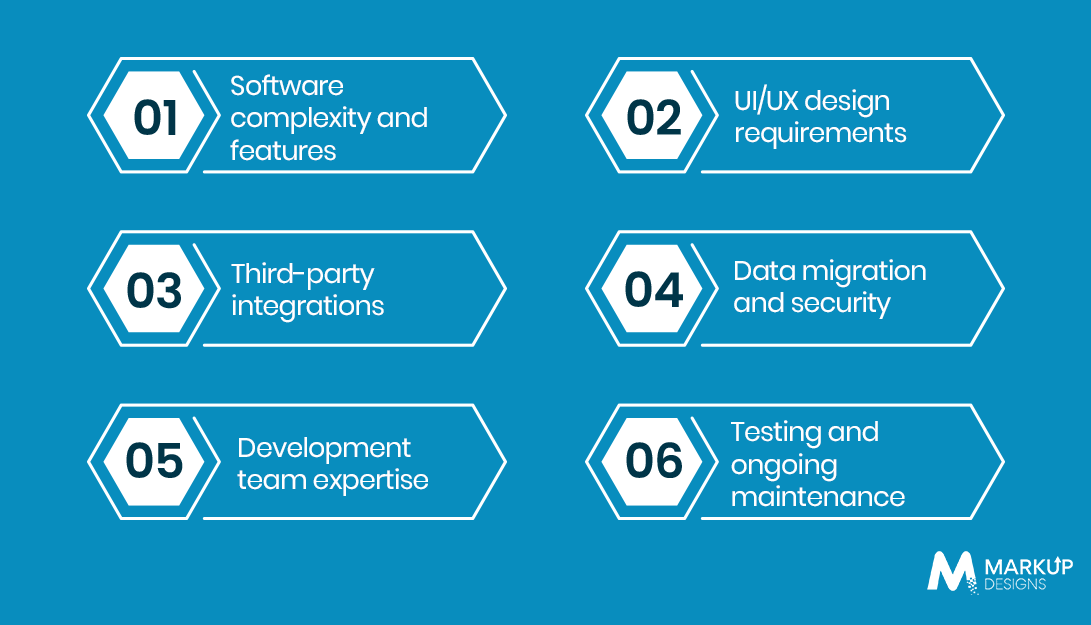
Costs involved in enterprise software development are determined not only by the initial list of features. Features related to how the software is designed, its interaction with the current infrastructure, data protection, and scalability will also influence the total budget for the project. Below you will find a description of some important factors to consider when making an estimate.
Software complexity and features
Simple workflows have lower development costs compared to more complex systems with automation, analytical capabilities, and different user roles.
UI/UX design requirements
Custom dashboards, intuitive interface, and support of Arabic-English language pairs add additional costs during design and development.
Third-party integrations
Integration with ERP solutions, payment gateways, CRMs, or any other third-party application will involve extra integration costs.
Data migration and security
Costs can be influenced by transferring existing data, controlling access, and securing the solution.
Development team expertise
If the project requires specific skills and experience in dealing with enterprise-level software, a bigger budget is necessary.
Testing and ongoing maintenance
Cost drivers include functional and performance testing, as well as bug fixes and updates.
Considering these factors before development begins helps businesses define realistic budgets, prioritize essential features, and reduce unexpected expenses during implementation.
Enterprise Software Development Cost by Software Type
Enterprise software pricing in Saudi Arabia is also influenced by the nature of the solution you need. Every system has its own use and role, including managing employees, customers, tracking inventory, and performance analysis.
Software with a typical workflow might not involve much expenditure, but enterprise software that involves several departments or processes might be a bit expensive.
Estimated Cost by Software Type
| Software type | Estimated cost (SAR) |
| Custom CRM software | 25,000–100,000 |
| ERP software | 30,000–200,000+ |
| HR management system (HRMS) | 30,000–120,000 |
| Inventory and supply chain software | 40,000–150,000 |
| Business intelligence platform | 40,000–150,000 |
| AI-powered enterprise software | 80,000–300,000+ |
What Influences the Cost of Each Solution?
- ERP software: The cost is affected by the number of modules, departments, financial processes, and integrations.
- CRM software: The custom sales pipeline, customer migration, reporting, and automation have an effect on the price.
- HRMS: Payroll process, attendance, employee files, and integrations with third-party HR services affect the development time.
- Inventory and supply chain management: Warehouse management, tracking, forecast calculations, and multi-site functionality may affect costs.
- Business intelligence platforms: The number of data sources, dashboards, reports, complexity, and analytical tools determine the investment amount.
- AI-powered systems: Intelligent automation, predictive analytics, data preparation, and AI model integration require extra development time.
Before choosing a solution, identify the business problems it needs to solve and the systems it must connect with. This will help you compare costs more accurately and invest in features that deliver practical value.
Saudi Arabia-Specific Factors Affecting Enterprise Software Costs
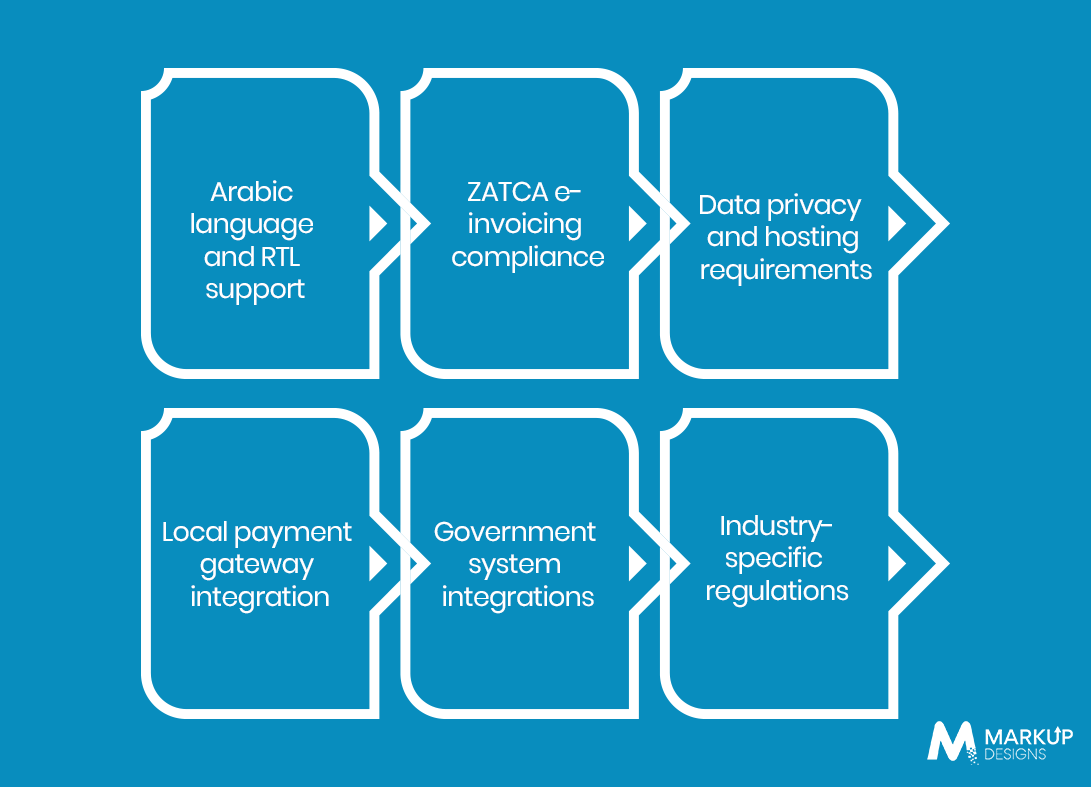
Developing enterprise software in the Saudi market goes beyond developing the desired functions. There could be other requirements in terms of preferred language, compliance, data protection, and integration with regional services. Such requirements would have an impact on the development period, complexity, and total cost.
Arabic language and RTL support
If the software needs Arabic interfaces, RTL layout, bilingual capabilities, as well as date and number formatting according to Saudi standards, additional design and testing will be required.
ZATCA e-invoicing compliance
Companies required to issue electronic invoices in Saudi Arabia may need software that would create such invoices and integrate with ZATCA’s Fatoora service when needed. Implementation of the requirement depends on the business and its stage.
Data privacy and hosting requirements
Any software that handles personal data needs to comply with the Personal Data Protection Law (PDPL) of Saudi Arabia and relevant regulations concerning data transfers.
Local payment gateway integration
When the company processes online transactions, payment gateways and regional payment methods need to be considered.
Government system integrations
Linking enterprise software to government systems or other business functions could necessitate API integrations, authentication, and testing.
Industry-specific regulations
Software used by healthcare firms, financial institutions, retailers, or logistics firms will have unique requirements for software architecture, security, compliance, and deployment costs.
Considering these requirements during the planning stage helps businesses estimate costs more accurately and reduces the risk of expensive changes later in development.
Hidden Costs of Enterprise Software Development
The initial development cost does not always cover the total amount spent on enterprise software development. Enterprises sometimes need to purchase extra services, infrastructure, training, and support even after the implementation of the software. This way, companies can avoid any budget surprises in the future.
- Software Licenses and Third-Party Plugins: There might be paid API services, plugins, databases, or other types of software to be paid.
- Cloud Hosting and Infrastructure: There are ongoing costs of hosting server space, storage, backups, monitoring, and recovery.
- Software Maintenance and Technical Support: It includes maintenance, regular updates, fixing bugs, and improving performance and security.
- Employee Training: Staff may need training sessions and documentation to use the new system effectively.
- Data Migration: The process of migrating information from existing systems, getting rid of duplicates, and validating data will take more time and effort.
- Future Changes and Scalability: Incorporating new functionality, serving more users, or incorporating more systems will cost you more as your business expands.
In order to control the costs associated with this issue, it is necessary to obtain an estimated cost breakdown from your development company. Knowing both the upfront and ongoing costs will allow you to determine the total cost of ownership.
How to Reduce Enterprise Software Development Costs
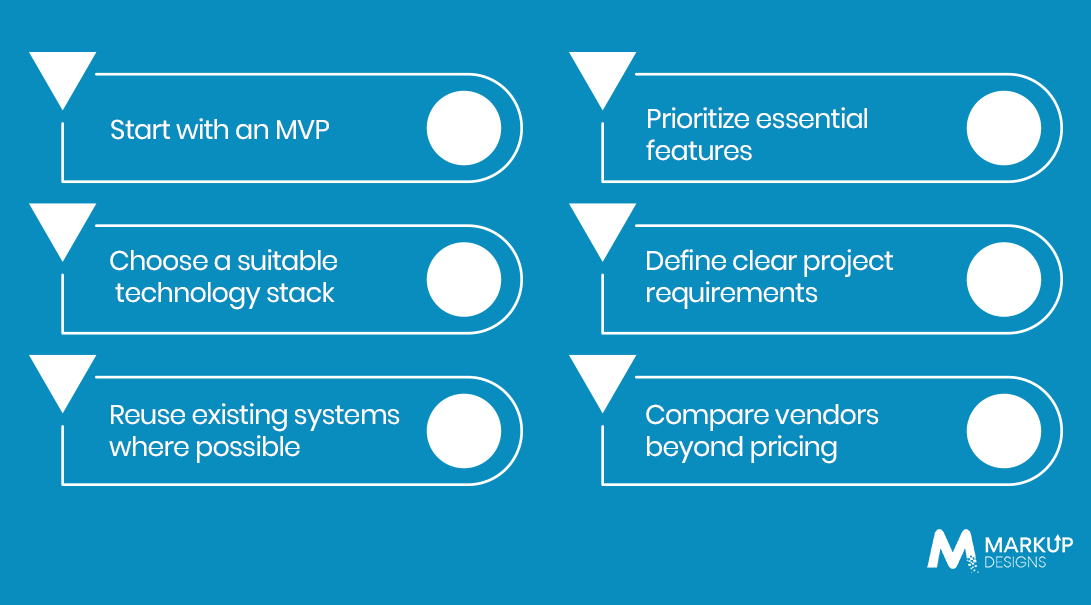
Reducing enterprise software development costs isn’t about working with the cheapest software vendor and sacrificing vital functions. You should allocate funds properly and create software products that will perform the necessary business tasks. Having a proper strategy, applying proper technologies, and setting priorities can ensure cost optimization.
- Start with an MVP
Start with the most critical functionality and add more as the need arises. It will help you control costs at the beginning.
- Prioritize essential features
Differentiate between critical and optional functionality. It is the best way not to waste time on developing unnecessary functions.
- Choose a suitable technology stack
Choose a set of technologies that match your requirements, budget, integrations, and future maintenance.
- Define clear project requirements
Specify your workflows, roles of users, integrations, and anticipated outcomes before development. Well-defined requirements eliminate the need for rework.
- Reuse existing systems where possible
Leveraging the appropriate systems or components may save you time compared to having to develop all functions from scratch.
- Compare vendors beyond pricing
Compare technical skills, timeframes, security measures, communications, and post-deployment support rather than choosing a vendor based solely on price quotes.
This way, companies can make smart choices regarding their development efforts and save money at the same time. A phased strategy also gives teams a chance to evaluate outcomes and improve their solution.
How to Choose an Enterprise Software Development Company in Saudi Arabia
Selecting the appropriate enterprise software development firm plays a crucial role in ensuring that you meet your budgetary requirements and accomplish your business objectives. Ideally, a suitable firm should be knowledgeable about your business, technological challenges, and even the Saudi Arabian market. Furthermore, the firm should offer reasonable cost estimations and go beyond the software’s launch.
Here are some key factors to consider when selecting a development partner:
- Industry Experience: Find out about the company’s experience in developing solutions for the same kind of enterprises as yours.
- Technical Expertise: Assess its ability to work in such areas as cloud computing, system integration, data management, cybersecurity, and modern software development.
- Knowledge of Local Requirements: Make sure that the company knows about all the specific requirements relevant to your country, including Arabic localization, ZATCA integration, if necessary, and data protection.
- Transparent Costs: Ask for a detailed description of costs associated with the development of your solution, time frames, and potential additional costs.
- Security and Testing: See the company’s approach to testing, access control, data security, and performance assessment.
- Post-Launch Support: Make sure the company will provide you with further maintenance, technical support, updates, and improvements.
Before agreeing on cooperation, discuss your project, its goals, budget, and time frame with the company. Get a clear proposal from it explaining what is included in the cost and how changes will be handled during development.
A reliable development partner will help you make practical technology decisions, control costs, and build enterprise software that can adapt as your organization grows.
Looking to develop enterprise software that fits your operational needs and budget?
Markup Designs helps businesses build customized software solutions that streamline workflows, connect systems, and support long-term growth. Discuss your requirements with our team to plan your next project.

Conclusion
Factors determining the costs of enterprise software development in Saudi Arabia in 2026 include the complexity of the solution, its features, integrations, security, and maintenance costs. Additionally, some other factors may impact the total cost of development – such as local factors like Arabic language support, ZATCA, and data protection rules.
Firstly, you need to establish the goals and prioritize required features before proceeding with development. You may also consider comparing the development partners based on technical skills, transparent pricing, and post-deployment support in order not to spend money on unnecessary expenses.
The phased development process will make your investment more manageable and will let your software evolve together with your business.
The main thing here is to focus on long-term value and not only on the lowest price of software development. With proper requirements and budget planning, your company can develop effective enterprise software.
FAQs
1. What is the average cost of enterprise software development in Saudi Arabia in 2026?
Enterprise software development may cost from tens of thousands of SAR for a basic system to several hundred thousand SAR or more for a complex platform. The final price depends on features, integrations, security, and project scope.
2. How much does custom ERP software cost in Saudi Arabia?
Custom ERP development can range from approximately SAR 30,000 to SAR 200,000 or more for different project scopes. Large-scale ERP systems with multiple modules, legacy integrations, and advanced reporting may require a higher investment.
3. How long does enterprise software development take?
A basic enterprise application may take a few months, while a complex platform can take six months to a year or longer. Timelines depend on requirements, integrations, testing, and stakeholder approvals.
4. What factors increase enterprise software development costs?
Complex features, third-party integrations, data migration, advanced security, Arabic localization, regulatory requirements, and ongoing maintenance can increase development costs.
5. Is custom enterprise software better than off-the-shelf software?
Custom software is useful when a business needs specific workflows, integrations, or greater control over functionality. Off-the-shelf software may be more suitable when existing features meet operational needs and faster implementation is a priority.
Author's Perspective
Enterprise software development requires careful planning and a clear understanding of business needs. Instead of focusing only on the initial cost, businesses should consider software quality, scalability, maintenance, and future requirements.
Prioritizing essential features, setting a realistic budget, and defining project requirements early can help avoid unnecessary expenses. Choosing the right development approach also makes it easier to manage resources and timelines.
With proper planning and the right technical support, businesses can develop reliable software that streamlines operations, adapts to changing needs, and delivers long-term value.
Discuss Your Project NowJupinder Singh Arora
Founder and CEO
Related Posts

How Much Does Software Development Cost in Australia...

Custom Biometric Software Development: A Complete Guide for...

Custom Warehouse Management System Development: Features, Process, and...
Insights Are Valuable & Execution is Priceless
You’ve read about the digital future. Now, let’s build the infrastructure to take you there. Move your strategy from the page to the product.
Design Your Solution Now
Contact Us
Schedule The Appointment At Your Convenience Date And Time.
30 Min
Web Conference
Time Zone
Indian standard time (08:30pm)

Thanks For Getting In Touch!
You’ve Taken The First Step Toward Transforming Your Digital Presence. Our Experts Will Reach Out Shortly To Take It Forward.
Launch Your Dream Project
Provide a brief overview of your project, and our specialists will evaluate your requirements. We will connect with you to explore how the right digital solutions can help you launch faster.