
In Brief
- AI in telemedicine makes use of various technologies like machine learning, natural language processing, computer vision, and generative AI in carrying out remote consultations, patient data analysis, automation, and clinical decision-making without replacing the role of physicians.
- Use cases of AI in telemedicine include AI-based symptom checkers, patient triaging, clinical decision support, remote patient monitoring, personalized care programs, automated medical documentation, medical image analysis, medication reminders, mental health screening, predictive analytics, and automation of workflows.
- Advantages of AI in telemedicine include increased healthcare access, efficiency of clinical workflows, enhanced personalization, effective monitoring of chronic diseases, decreased administrative burden, and increased operational efficiency.
- Some of the implementation challenges are the privacy of patient information, the accuracy of AI, the bias of algorithms, the implementation with current healthcare technology systems, and adherence to regulations. Best practices involve proper data management, clinical validation, staff training, and constant monitoring.
- The future trends will be generative AI assistants, multimodal AI, connected wearables, and predictive virtual care. Markup Designs helps healthcare companies implement AI-based telemedicine services focusing on security, integration, scalability, and patients’ needs.
Telemedicine has increased access to healthcare through remote consultations with healthcare specialists, receiving medical guidance, and managing one’s health without frequent trips to hospitals. Nonetheless, as patient expectations rise, there is a need for innovative solutions that can make care delivery more efficient, timely, and personalized. Artificial intelligence (AI) technology is the solution in this case.
In telemedicine, AI allows healthcare providers to analyze patient data, automate processes, monitor health status, and support clinical decision-making. Examples of such tools include AI-powered virtual health assistants and remote patient monitoring.
Adopting AI technology not only allows for increasing efficiency in operations but also for developing advanced digital health solutions. Nevertheless, the implementation of such solutions requires appropriate planning and proper clinical guidance.
In this blog, we will explore 11 use cases of AI in telemedicine, its key benefits, implementation challenges, and future trends. We will also discuss how healthcare businesses can implement AI to deliver better virtual care experiences.
What is AI in Telemedicine?
AI in telemedicine is described as the application of AI technologies in the delivery of healthcare remotely. The AI tools allow healthcare professionals to interpret patient data and symptoms, automate routine tasks, and improve virtual consultations. In order to avoid using solely manual methods for information management and patient care, healthcare professionals can apply AI technologies.
There are various types of AI technologies used in telemedicine for different purposes. For instance, machine learning can be useful for finding patterns in patients’ data, natural language processing (NLP) for understanding text and speech, computer vision for analysis of medical images, and generative AI for consultation summaries and question answers.
As another example, an AI-driven telemedicine system could collect a list of symptoms from the patient prior to the consultation and structure the data for the doctor to analyze. In addition, connected devices could generate health metrics that will enable the clinicians to observe the condition of the patient outside of consultations.
AI is not intended to take the place of a doctor or his/her clinical decision-making. Rather, it assists doctors in making their jobs easier.
11 Use Cases of AI in Telemedicine
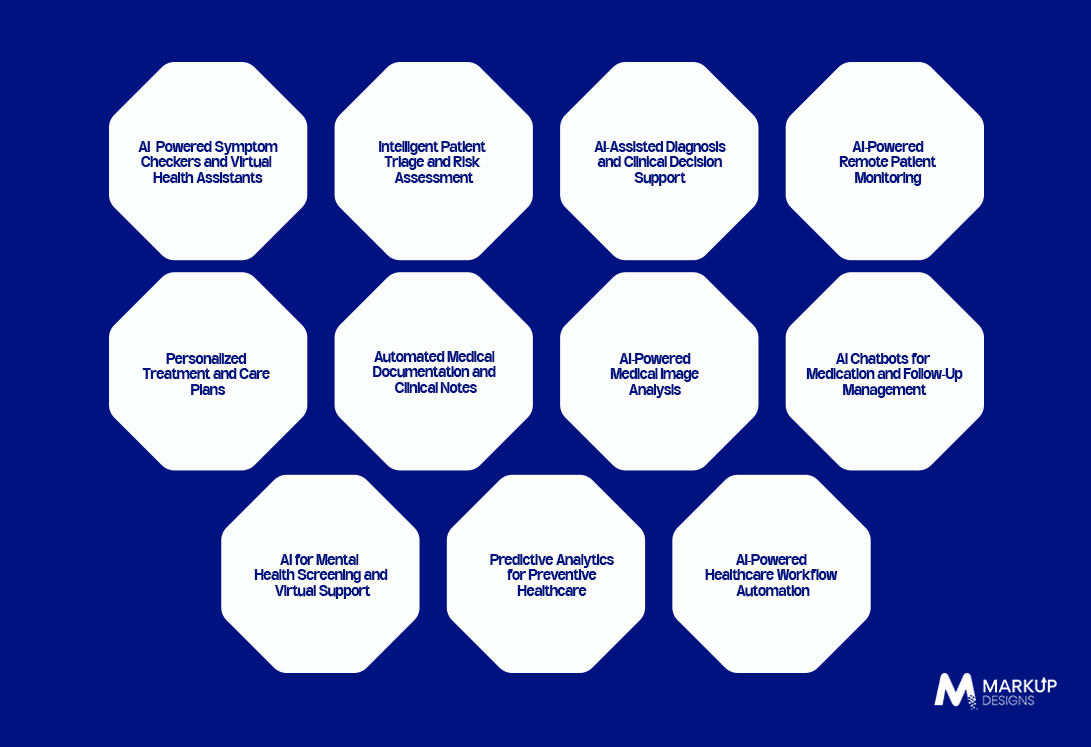
AI assists in enhancing telemedicine consultations, tracking the health of patients, and managing everyday activities. Here are 11 examples of how AI can be used in telemedicine.
AI-Powered Symptom Checkers and Virtual Health Assistants
Symptom checker applications utilize patients’ reported symptoms for the purpose of initial consultation. The virtual assistant may assist the patient in answering questions, scheduling appointments, and providing reminders to take medications.
Intelligent Patient Triage and Risk Assessment
With the help of AI, it is possible to consider the symptoms and data on patients’ health to prioritize them. This can be done by identifying patients who might need an urgent evaluation, but it will not affect the decision-making of health care specialists and their provision of assistance in emergencies.
AI-Assisted Diagnosis and Clinical Decision Support
It is possible for AI to conduct a review of a patient’s history, symptoms, and examination outcomes to find patterns. This will help doctors to assess possible diagnoses and make decisions in an efficient way.
AI-Powered Remote Patient Monitoring
AI is capable of interpreting data related to health that is collected using connected devices such as blood pressure monitors and other wearable devices.
Personalized Treatment and Care Plans
AI may facilitate organizing patient histories, progress in treatment, and health data to create a personalized treatment program. The technology may be used for follow-up and treatment compliance tracking as well.
Automated Medical Documentation and Clinical Notes
AI-powered systems may prepare drafts of consultation summaries and organize data for electronic health records. Clinical specialists must verify information in these notes prior to using them in medical records.
AI-Powered Medical Image Analysis
Using AI-powered systems, one can analyze images provided by patients and identify patterns that are subject to clinical assessment. These systems support assessments but cannot be regarded as an alternative to diagnoses made by professionals.
AI Chatbots for Medication and Follow-Up Management
Chatbots can deliver care instructions approved by medical practitioners, provide medication reminders, and schedule follow-up appointments. Questions related to medications must be directed to healthcare professionals.
AI for Mental Health Screening and Virtual Support
AI can help in performing structured mental health screening, recording symptom information provided by patients, and providing authorized virtual content. Some cases may need human intervention and proper escalation measures.
Predictive Analytics for Preventive Healthcare
AI can examine patient records to find certain patterns that can help clinicians identify health problems at an early stage and understand whether preventive measures should be undertaken or additional testing is required.
AI-Powered Healthcare Workflow Automation
AI can help automate many processes like appointment scheduling, answering patient questions, and sending reminders. This will help healthcare professionals save time and make telehealth processes easier to organize.
Overall, all of these use cases show how AI can help with various steps in virtual care provision, starting from patient screening and ending with process automation.
Key Benefits of AI in Telemedicine
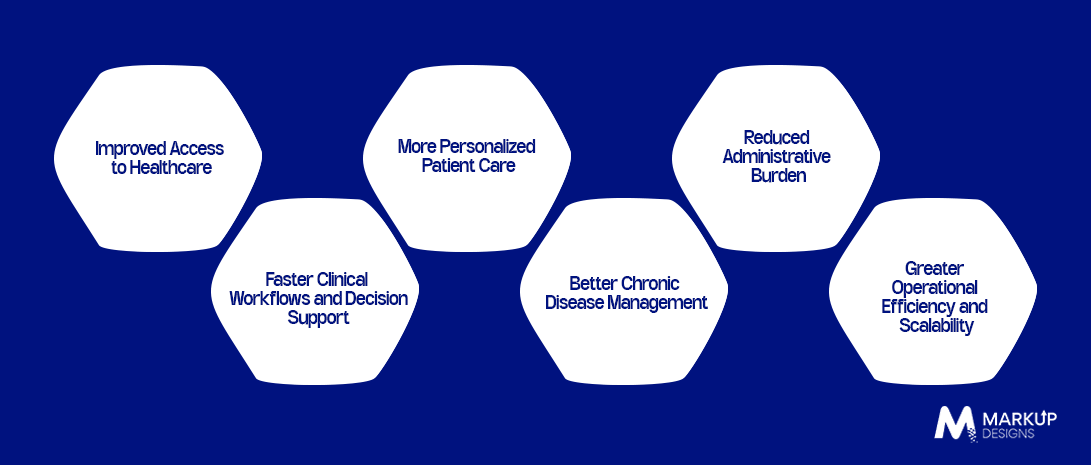
AI brings a number of advantages to healthcare specialists and patients in terms of enhancing the delivery of virtual health services, minimizing repetitive activities, and informing decision-making processes. Here are the major advantages that are associated with the integration of AI into telemedicine services.
- Improved Access to Healthcare
Virtual assistants based on artificial intelligence can assist patients in looking for information and booking an appointment with healthcare professionals remotely. It will contribute to improved accessibility of some basic health care assistance, especially for individuals living in remote regions.
- Faster Clinical Workflows and Decision Support
AI can facilitate the organization of patient data and provide information about the consultation summary and the presence of certain clinical patterns in the patient’s case.
- More Personalized Patient Care
With analysis of pertinent patient history and health-related information, AI would be able to assist clinicians in coming up with appropriate care plans for individual patients. It would also be able to remind clinicians about follow-ups and communication with patients.
- Better Chronic Disease Management
AI-assisted remote monitoring would facilitate the identification of any anomalies in patients’ health parameters between the doctor’s visits. As a result, patients’ health status could be assessed, and additional tests could be recommended.
- Reduced Administrative Burden
Using AI to automate routine tasks like documentation, scheduling, and patient communications would minimize administrative burden, giving healthcare professionals more time to devote to actual medical procedures.
- Greater Operational Efficiency and Scalability
Telemedicine services could use AI to manage patient requests, streamline workflows, and organize information. The right integration would enable them to scale up operations effectively without resorting solely to human resources.
Overall, AI can make telemedicine more accessible, organized, and responsive. However, the actual benefits depend on the quality of implementation, the healthcare setting, and appropriate clinical supervision.
Challenges of Implementing AI in Telemedicine
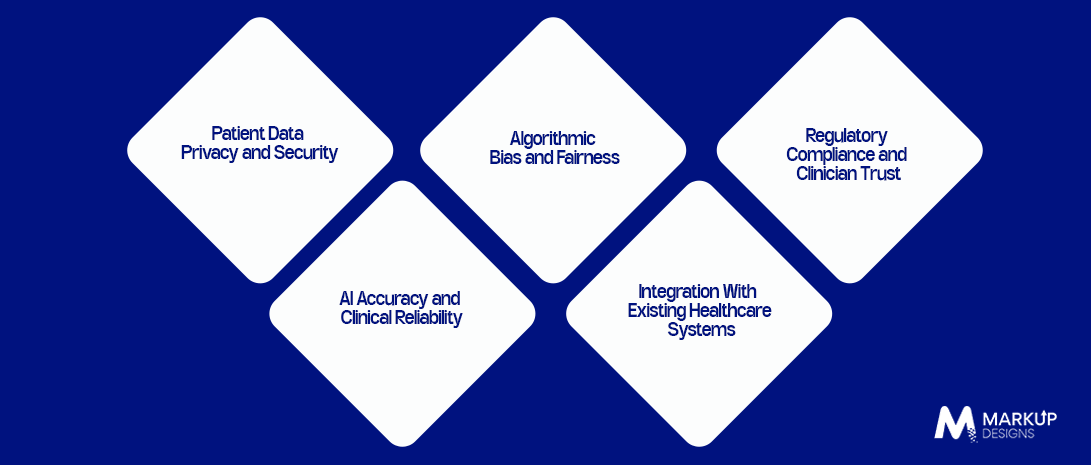
However, despite the potential benefits brought by AI in virtual healthcare, there are still some concerns that need to be addressed to ensure patient safety, protect personal information, and provide reliable service.
Patient Data Privacy and Security
The telemedicine platforms deal with confidential data such as patients’ medical history, consultation records, and health measurements. The AI applications should provide security of personal information through proper encryption and data management techniques.
AI Accuracy and Clinical Reliability
In cases of incorrect information or insufficient data, AI-based applications may give false or erroneous conclusions. The validation of AI applications and the verification of their insights by clinicians are required.
Algorithmic Bias and Fairness
AI tools may behave in different ways in relation to various patient populations if there is not enough diversity in the training data used. Testing in the target patient populations and monitoring the performance of the system may help prevent discrimination.
Integration With Existing Healthcare Systems
Integrating AI solutions with EHRs, telehealth solutions, and devices can be complicated because healthcare institutions have to possess a proper infrastructure and data flow system to eliminate fragmentation and duplication of information.
Regulatory Compliance and Clinician Trust
Healthcare institutions are supposed to know which rules are applicable to their specific AI solution in terms of security, privacy, and medical devices. They also have to clarify how AI tools work and ensure accountability.
Addressing these challenges early helps healthcare providers introduce AI more responsibly and build telemedicine services that prioritize patient safety, data protection, and care quality.
Future Trends of AI in Telemedicine
With constant development, AI is opening new doors to enhancing the effectiveness of virtual consultations and healthcare provision in general. Here are some trends that might define the future of remote healthcare provision.
Generative AI and Healthcare Assistant
Generative AI is useful in creating a consultation report, answering routine patient inquiries, and improving healthcare communication. Future virtual assistants will provide better contextual support in accordance with clinician-approved guidelines.
Multimodal AI for Virtual Consultations
Multimodal AI works with various data types, including text, voice, pictures, and healthcare metrics. It can help clinicians analyze information about patients coming from different sources during virtual consultations.
AI-driven Wearables and Telehealth
Medical wearables and connected devices have the capability to monitor the vital health signs of a patient even when not in the clinic environment. Such health readings can be analyzed by AI to detect any health signs that need action.
Predictive and Preventive Telecare
AI’s predictive capability can allow healthcare providers to recognize possible health threats through predictive analysis of the health data available for patients.
How to Implement AI in a Telemedicine Platform
The adoption of AI in telemedicine involves having an effective strategy, using the correct technology, and understanding patient needs and those of the healthcare providers. The following are the crucial steps.
Identification of Appropriate Use Cases
First, one needs to determine what the telemedicine solution has to achieve. This can be anything from automation of appointments and remote monitoring to documentation.
Selection of the Right AI Technologies
Select appropriate AI technologies according to the needs of your project. Machine learning can facilitate data analysis, while natural language processing is useful in communication. Generative AI can provide summaries and answer inquiries.
Ensuring Data Security and Regulatory Compliance
Put in place the right measures to protect patients’ information through encryption and access control. Determine the privacy and regulations of the healthcare sector for your target market.
Integration into Current Healthcare Infrastructure
Ensure that the AI solution integrates with your telemedicine application, electronic health records, and applicable medical equipment. Successful integration will ensure access to consistent data throughout the process by healthcare professionals.
Testing and Validation of the Solution
Perform evaluations of the performance, usability, accuracy, and safety of the solution before implementing it on a large scale. In case of clinical solutions, involve licensed healthcare specialists in testing and validation.
Monitoring and Improvement of System Performance
Monitor the performance of the system, its errors, users’ feedback, and results of operations after implementation of the solution.
Following these recommendations allows healthcare organizations to implement an AI solution systematically and minimize any potential risks during the process.
What is the Future of AI in Telemedicine?
In the future, the application of AI in telemedicine will center around increasing virtual healthcare’s connectivity, proactivity, and accessibility. With improved technologies in the field, healthcare practitioners will be able to manage the analysis of patients’ data, remote monitoring, and simplified workflow in the clinic.
Generative AI assistants, connected medical devices, and predictive analytics can become some of the key instruments for these improvements in the field. Such technologies can help healthcare practitioners organize information, monitor changes in the health condition of patients, and coordinate follow-ups. AI may also contribute to the creation of personalized virtual healthcare experiences for each particular patient.
Still, these developments would require quality data, clinical validation, high-level privacy protection, and appropriate implementation in the sphere. Healthcare organizations need to make sure that AI works to benefit medical specialists and not replace their decisions independently.
In the healthcare industry, the right kind of AI investment will provide chances for enhancing patient experience and improving digital health solutions. The important thing to consider is to think about what is needed in practice and implement solutions that add value and keep patients safe.
Develop Your AI-Powered Telemedicine Platform
Markup Designs helps businesses build customized software solutions that support digital healthcare delivery, intelligent automation, and connected patient experiences. Work with our team to explore the right development approach for your telemedicine platform.

Conclusion
AI is creating new opportunities for telemedicine by supporting virtual consultations, remote patient monitoring, clinical documentation, and patient communication. These applications can help healthcare providers manage routine tasks, organize patient information, and deliver more connected care.
However, adopting AI requires more than choosing the right technology. Healthcare organizations must also address data privacy, system integration, clinical accuracy, and regulatory requirements. Human oversight remains essential to ensure that AI-generated insights are used responsibly.
In the healthcare industry, the right kind of AI investment will provide opportunities for enhancing patient experience and improving digital health solutions. The important thing to consider is to think about what is needed in practice and implement solutions that add value and keep patients safe.
FAQs
1. What is AI in telemedicine?
AI in telemedicine involves using artificial intelligence to support remote healthcare services. It can help analyze patient information, assist with virtual consultations, monitor health readings, automate documentation, and support communication between patients and healthcare providers.
2. What are the main use cases of AI in telemedicine?
Common use cases include AI-powered symptom checkers, patient triage, clinical decision support, remote patient monitoring, personalized care planning, medical documentation, image analysis, mental health screening, predictive analytics, and workflow automation.
3. How does AI improve telemedicine services?
AI can help organize patient information, automate repetitive tasks, support remote monitoring, and provide clinicians with relevant insights. These capabilities may improve workflow efficiency and patient communication when implemented appropriately.
4. Can AI replace doctors in telemedicine?
No. AI can support healthcare professionals by analyzing information and assisting with routine tasks, but it cannot replace the full scope of clinical judgment, patient interaction, and medical responsibility. Diagnosis and treatment decisions should remain under appropriate professional supervision.
5. What are the challenges of using AI in telemedicine?
Key challenges include protecting patient data, ensuring AI accuracy, reducing algorithmic bias, integrating with existing healthcare systems, and meeting applicable regulatory requirements. Healthcare providers must address these issues before deploying AI solutions.
Author's Perspective
AI can make telemedicine more effective by improving patient communication, organizing health information, and reducing repetitive tasks. However, successful adoption requires more than adding advanced features. Healthcare businesses should identify clear goals, protect patient data, and involve medical professionals throughout implementation.
At Markup Designs, we believe digital healthcare solutions should address real operational challenges and patient needs. With the right strategy, reliable technology, and proper clinical oversight, AI can help healthcare providers deliver more efficient and connected virtual care experiences.
Discuss Your Project NowAjit Kumar Jha
VP - Business Operations
Related Posts
Healthcare Data Security: Challenges, Best Practices & Compliance...
What Is Fueling Investor Excitement In Healthtech?
Healthcare 4.0 Explained: Technologies Driving the Next Era...
Insights Are Valuable & Execution is Priceless
You’ve read about the digital future. Now, let’s build the infrastructure to take you there. Move your strategy from the page to the product.
Design Your Solution Now
Contact Us
Schedule The Appointment At Your Convenience Date And Time.
30 Min
Web Conference
Time Zone
Indian standard time (08:30pm)

Thanks For Getting In Touch!
You’ve Taken The First Step Toward Transforming Your Digital Presence. Our Experts Will Reach Out Shortly To Take It Forward.
Launch Your Dream Project
Provide a brief overview of your project, and our specialists will evaluate your requirements. We will connect with you to explore how the right digital solutions can help you launch faster.