

In Brief
- Mobile apps help businesses in Bahrain improve customer engagement, accessibility, and service delivery.
- Businesses can use mobile apps to streamline operations, automate routine processes, and connect digital services.
- Personalised experiences, mobile payments, and loyalty features can support customer retention and sales.
- Mobile apps provide businesses with customer insights that can support data-driven decisions and service improvements.
- Secure, scalable mobile applications can help Bahraini businesses adapt to changing digital and customer expectations.
Mobile applications have become an important channel for businesses to connect with customers, deliver services, and support digital operations. For businesses in Bahrain, a well-designed mobile app can provide customers with faster access to products and services while creating a direct digital channel for communication, transactions, bookings, and support. This makes mobile apps relevant across sectors such as retail, banking, healthcare, hospitality, logistics, and professional services.
The benefits of mobile app development extend beyond customer-facing services. Businesses can use mobile applications to automate processes, integrate payment and business systems, collect useful customer data, and deliver more personalised experiences. However, the value of an app depends on how well it addresses specific business and user requirements. With the right technology, security measures, features, and development approach, businesses in Bahrain can build mobile applications that support both immediate operational needs and long-term digital growth.
Why Mobile Apps Are Important for Businesses in Bahrain
Growing Mobile-First Customer Behaviour
Customers increasingly expect businesses to provide convenient digital access to products, services, information, and support. A mobile app gives Bahraini businesses a direct channel through which customers can interact with the brand, complete transactions, make bookings, track services, and receive updates from their smartphones.
Digital Transformation Across Bahraini Businesses
Mobile applications are becoming part of broader digital transformation initiatives across industries in Bahrain. Businesses can connect mobile apps with cloud platforms, CRM systems, payment gateways, analytics tools, and other enterprise systems to create more connected digital operations.
Increasing Demand for Convenient Digital Services
Customers value services that are quick, accessible, and easy to use. Mobile apps can bring multiple services into one platform, allowing users to browse products, make payments, schedule appointments, request services, or access account information without relying on traditional channels.
Key Benefits of Mobile App Development for Businesses in Bahrain
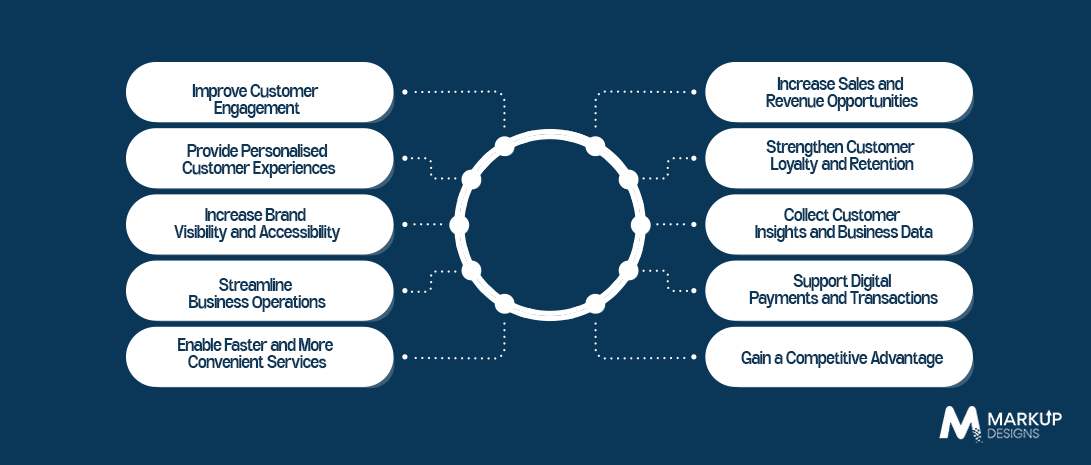
Improve Customer Engagement
A mobile app creates a direct communication channel between a business and its customers. Features such as push notifications, personalised content, offers, in-app messaging, and service updates can encourage users to interact with the business more regularly.
Provide Personalised Customer Experiences
Businesses can use customer preferences, purchase history, browsing behaviour, and app activity to deliver more relevant experiences. Personalised recommendations, targeted offers, saved preferences, and customised services can make the app more useful to individual customers.
Increase Brand Visibility and Accessibility
An app keeps a business accessible from a customer’s smartphone and provides another digital touchpoint alongside a website and social media channels. A consistent mobile experience can also help businesses maintain brand visibility throughout the customer journey.
Streamline Business Operations
Mobile applications can digitise processes such as bookings, order management, field service requests, customer communication, and internal approvals. Connecting these workflows with backend systems can reduce manual processes and improve operational coordination.
Enable Faster and More Convenient Services
Customers can access services directly through an app without depending on physical locations or lengthy communication processes. Features such as online booking, digital forms, order tracking, and self-service options can reduce friction across common customer interactions.
Increase Sales and Revenue Opportunities
Mobile apps can create additional channels for product sales, bookings, subscriptions, service requests, and digital transactions. Businesses can also use app-based promotions, recommendations, loyalty programmes, and personalised offers to support additional purchase opportunities.
Strengthen Customer Loyalty and Retention
Loyalty programmes, rewards, personalised offers, convenient account access, and timely notifications can encourage customers to return to the app. A useful and consistent mobile experience can support longer-term customer relationships.
Collect Customer Insights and Business Data
Mobile apps can generate useful data around customer interactions, preferences, transactions, and feature usage. Businesses can analyse this information to identify customer behaviour patterns, improve services, personalise experiences, and support business decisions.
Support Digital Payments and Transactions
Businesses can integrate secure payment solutions into their mobile applications to support convenient transactions. Depending on the business model, apps can facilitate purchases, bill payments, subscriptions, bookings, and other digital transactions.
Gain a Competitive Advantage
A mobile app can help businesses differentiate their digital experience by providing services and features that are convenient and tailored to their customers. For businesses competing in digitally active sectors, a well-designed app can also complement existing websites and digital channels.
How Mobile Apps Support Different Industries in Bahrain
Banking and FinTech
Banks and fintech businesses can use mobile apps for account access, digital payments, money transfers, financial management, notifications, and customer support. Security, authentication, transaction monitoring, and regulatory requirements are particularly important for these applications.
Retail and E-commerce
Retailers can provide mobile product catalogues, personalised recommendations, shopping carts, digital payments, order tracking, promotions, and loyalty programmes. Apps can also connect online shopping with physical store experiences.
Healthcare
Healthcare applications can support appointment booking, teleconsultations, patient information, prescription management, reminders, and communication with healthcare providers. Applications handling sensitive information require appropriate security and data protection measures.
Hospitality and Tourism
Hotels, travel businesses, and tourism providers can use mobile apps for reservations, digital check-in, service requests, itinerary management, offers, and customer communication. Location-based features can also support visitors during their travel experience.
Logistics and Transportation
Logistics and transportation businesses can use apps for booking, delivery tracking, driver communication, route information, shipment updates, and customer notifications. Real-time data integration can improve visibility across logistics operations.
Real Estate
Real estate applications can allow users to search properties, view listings, schedule visits, contact agents, submit enquiries, and receive property recommendations based on their preferences.
Education
Educational institutions can use mobile apps to provide access to learning resources, schedules, assignments, notifications, attendance information, and communication between students, teachers, and administrators.
Government and Public Services
Government and public-sector applications can bring selected services into a digital platform, allowing users to submit requests, access information, make payments, track applications, and receive official notifications through mobile devices.
Mobile App Features That Deliver Business Value
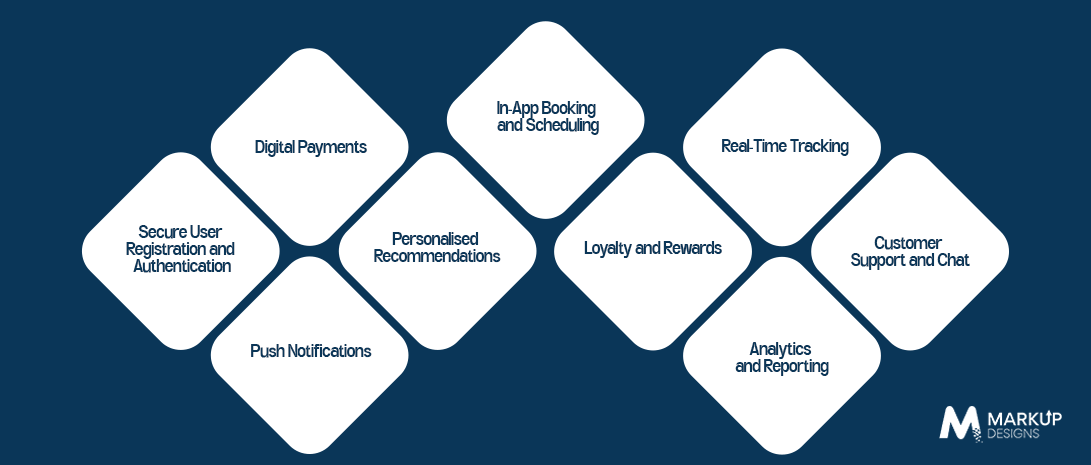
Secure User Registration and Authentication
Secure registration and authentication allow businesses to control access to user accounts and protect application data. Depending on the use case, apps may support passwords, multi-factor authentication, biometrics, or other secure authentication methods.
Digital Payments
Payment integration allows customers to complete transactions directly through the application. Businesses can connect suitable payment gateways and transaction systems based on their operational and security requirements.
Push Notifications
Push notifications allow businesses to communicate timely information such as order updates, appointment reminders, promotions, service alerts, and account notifications directly to users.
Personalised Recommendations
Recommendation features can use customer activity and preferences to present relevant products, services, content, or offers. This can make the application more useful while supporting targeted engagement.
In-App Booking and Scheduling
Booking and scheduling features allow customers to reserve appointments, services, rooms, deliveries, or other offerings directly through the application while helping businesses manage availability.
Loyalty and Rewards
Digital loyalty programmes can allow businesses to provide points, discounts, rewards, membership benefits, or personalised offers while giving customers an incentive to continue using the application.
Real-Time Tracking
Real-time tracking can provide visibility into deliveries, transportation, service requests, bookings, or other location-dependent activities. It can improve transparency for both customers and business teams.
Customer Support and Chat
In-app support can provide customers with direct access to help through chat, FAQs, service requests, or support tickets. Integrating support into the application can reduce the need to move between different communication channels.
Analytics and Reporting
Analytics features help businesses understand how users interact with the application. Data on engagement, transactions, retention, feature usage, and customer journeys can support product and business decisions.
How Mobile Apps Help Bahraini Businesses Improve Customer Experience
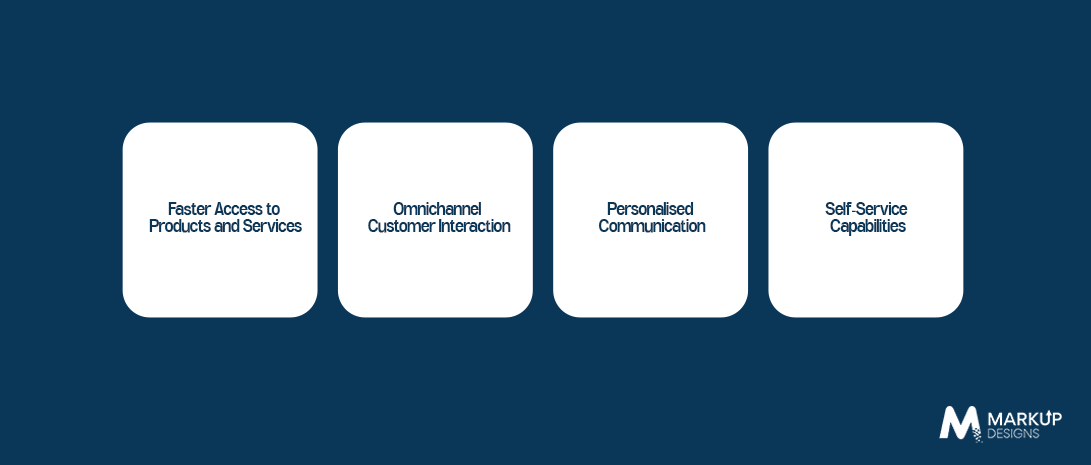
Faster Access to Products and Services
Mobile apps bring commonly used services into a single interface, allowing customers to complete tasks without repeatedly navigating different channels. This can make routine interactions faster and more convenient.
Omnichannel Customer Interaction
An app can work alongside websites, physical locations, social media, customer support, and other channels. Integrating these touchpoints can help businesses provide a more consistent customer journey across digital and offline interactions.
Personalised Communication
Businesses can use customer preferences and interaction data to deliver relevant messages, recommendations, reminders, and offers. This allows communication to be more closely aligned with individual customer needs.
Self-Service Capabilities
Features such as account management, bookings, payments, order tracking, FAQs, and service requests allow customers to complete routine tasks independently. This can also reduce the volume of repetitive requests handled by customer support teams.
How Mobile Apps Can Improve Business Operations
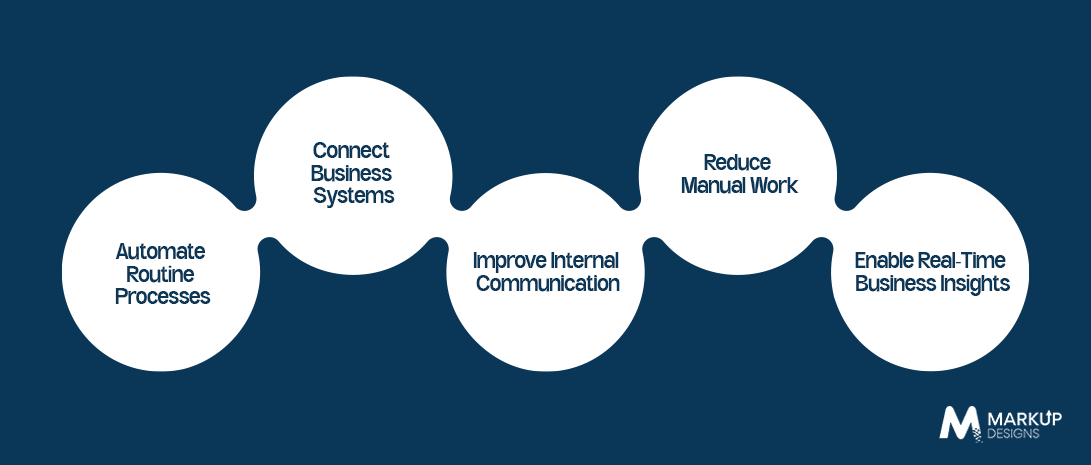
Automate Routine Processes
Mobile apps can automate activities such as bookings, notifications, order updates, data collection, and service requests. Automation can reduce repetitive manual work and improve process consistency.
Connect Business Systems
Applications can integrate with CRM, ERP, payment, inventory, booking, analytics, and other backend systems. These integrations allow information to move between systems and help businesses manage digital operations from a connected environment.
Improve Internal Communication
Business-specific mobile applications can support communication between employees, field teams, managers, and other stakeholders. Teams can access updates, submit information, and respond to operational requests from their mobile devices.
Reduce Manual Work
Digital forms, automated workflows, online approvals, and direct system integrations can reduce dependency on paper-based or manually managed processes. This can help employees spend more time on higher-value activities.
Enable Real-Time Business Insights
Mobile applications can feed operational and customer data into analytics platforms, allowing businesses to monitor activity, transactions, service usage, and other relevant metrics. These insights can support faster operational and management decisions.
Mobile App Development Considerations for Businesses in Bahrain
Native vs Cross-Platform Development
Businesses need to select a development approach based on their target platforms, performance requirements, features, budget, and long-term maintenance needs. Native development can provide platform-specific optimisation, while cross-platform frameworks can support multiple platforms from a shared codebase.
Security and Data Protection
Mobile applications should incorporate appropriate security measures for authentication, data transmission, storage, APIs, payments, and access control. The requirements can vary significantly depending on the type of data and industry involved.
Scalability and Performance
The application should be designed to handle increasing users, transactions, data volumes, and feature requirements. A scalable architecture can reduce the need for major technical changes as the business grows.
Third-Party Integrations
Many business apps depend on external services such as payment gateways, maps, CRM platforms, ERP systems, communication tools, and analytics platforms. Integration requirements should be identified early to avoid technical and cost-related issues during development.
Arabic and English Language Support
Businesses serving Bahrain may need applications that support both Arabic and English. This involves more than translating text; interfaces should also account for Arabic’s right-to-left layout, typography, navigation, and overall user experience.
Ongoing Maintenance and Updates
Mobile applications require ongoing maintenance after launch to address bugs, security issues, operating system updates, device compatibility, performance, and new business requirements. A long-term maintenance plan helps keep the application reliable as the technology environment changes.
How Much Does Mobile App Development Cost in Bahrain?
The cost of developing a mobile app in Bahrain depends on the application’s complexity, features, platforms, technology stack, design requirements, integrations, security needs, and development team. A basic app with a limited feature set generally requires less development effort than an advanced application involving real-time functionality, payment systems, third-party integrations, AI, or complex backend infrastructure.
Businesses should also consider costs beyond initial development, including UI/UX design, testing, cloud infrastructure, app-store deployment, security updates, maintenance, and future feature enhancements.
Factors Affecting Mobile App Development Cost
Several factors can influence the overall development budget:
- App complexity: Advanced workflows and features require more development and testing.
- Number of platforms: Developing separately for iOS and Android can increase development requirements.
- Features and functionality: Payments, real-time tracking, chat, AI, booking, and analytics add development effort.
- UI/UX requirements: Custom interfaces, animations, accessibility, and user testing can increase design and development time.
- Backend development: APIs, databases, authentication, and server-side functionality contribute to the overall cost.
- Third-party integrations: Payment gateways, maps, CRM, ERP, and other external services require additional integration work.
- Security requirements: Applications handling financial, healthcare, or other sensitive information may require additional security controls and testing.
- Maintenance: Post-launch monitoring, bug fixes, OS compatibility updates, and new features create ongoing costs.
Basic, Mid-Level and Advanced App Development
| App Type | Typical Characteristics | Relative Development Effort |
| Basic App | Limited screens, standard UI, basic user accounts, simple content or service features | Low |
| Mid-Level App | User authentication, APIs, payments, dashboards, notifications, database integration | Moderate |
| Advanced App | Real-time functionality, complex backend, AI, advanced analytics, multiple integrations, high security requirements | High |
These categories are useful for initial budgeting, but the actual cost should be estimated after defining the application’s features, platforms, integrations, and technical requirements.
Ways to Optimise Development Costs
Businesses can manage development costs by clearly defining requirements before development begins and prioritising features based on business value. Building an MVP can help validate the core concept before investing in a larger feature set.
Choosing an appropriate technology approach, reusing suitable components, selecting the right engagement model, planning integrations early, and avoiding unnecessary custom functionality can also reduce development effort. However, cost optimisation should not come at the expense of application security, performance, usability, or scalability.
How to Develop a Mobile App for a Business in Bahrain
Step 1: Define Business and User Requirements
Start by identifying the business problem the application needs to address, the target users, key use cases, and expected outcomes. Clear requirements provide a foundation for defining features, technology, budget, and development priorities.
Step 2: Identify Core Features
Determine the features required for the initial version of the application. These may include user accounts, search, payments, bookings, notifications, tracking, communication, analytics, or industry-specific functionality.
Step 3: Choose the Technology Approach
Select the appropriate development approach based on the target platforms, application complexity, performance requirements, budget, and future scalability. Businesses can evaluate native technologies such as Swift and Kotlin or cross-platform frameworks such as Flutter and React Native.
Step 4: Design the User Experience
Design the application’s information architecture, navigation, interfaces, and user flows before development. For businesses serving Bahrain, the design may also need to account for Arabic and English interfaces, including appropriate right-to-left support.
Step 5: Develop and Integrate the App
Develop the frontend, backend, APIs, database, and required integrations according to the approved specifications. Payment systems, CRM, ERP, maps, analytics, and other third-party services should be integrated based on the application’s requirements.
Step 6: Test Security, Performance, and Usability
Test the application across relevant devices and operating systems to identify functional, performance, compatibility, and usability issues. Security testing should also cover authentication, APIs, data handling, access controls, and other application-specific risks.
Step 7: Launch and Monitor
After testing and final validation, deploy the application to the relevant app stores and production environment. Post-launch monitoring can help businesses track application performance, user behaviour, crashes, transactions, and other important metrics.
Step 8: Maintain and Improve the App
Mobile app development continues after launch. Businesses should regularly address bugs, security updates, operating system changes, performance issues, and user feedback while introducing new features based on evolving business requirements.
Future of Mobile App Development in Bahrain
AI-Powered Mobile Experiences
AI can support mobile applications through personalised recommendations, intelligent search, virtual assistants, predictive features, automated customer support, and other use cases. Businesses can select AI capabilities based on their customer and operational requirements.
Mobile Payments and Digital Commerce
Mobile applications will continue to support digital transactions, online purchases, subscriptions, bookings, and other commerce activities. Secure payment integration can help businesses provide more convenient transaction experiences.
IoT-Connected Applications
Mobile apps can act as interfaces for connected devices and IoT systems. Businesses can use mobile applications to monitor equipment, receive alerts, access sensor data, or control connected services where the use case requires it.
Advanced Analytics and Personalisation
Analytics can help businesses understand customer behaviour, application usage, transactions, and engagement. Combining these insights with personalisation capabilities can support more relevant content, recommendations, and customer experiences.
Cloud-Native Mobile Applications
Cloud-based backend infrastructure can provide the scalability, availability, storage, APIs, and processing capabilities required by modern mobile applications. Cloud-native architectures can also support integration with analytics, AI, and other digital services.
AR/VR Experiences
Augmented and virtual reality can support selected use cases in sectors such as retail, real estate, tourism, education, and training. Businesses can use these technologies where interactive or immersive experiences provide practical value.
Build a Mobile App for Your Business in Bahrain
Turn your business requirements into secure, scalable, and user-focused mobile applications designed around your customers, operations, and growth objectives.

Conclusion
Mobile app development can help businesses in Bahrain create more accessible customer experiences, streamline operations, support digital transactions, and build stronger connections with their customers. From banking and retail to healthcare, hospitality, logistics, and real estate, businesses can use mobile applications to address specific customer and operational requirements.
The value of a mobile app depends on more than the number of features it offers. Businesses need to consider usability, security, scalability, integrations, platform requirements, and long-term maintenance when planning development. A structured approach to mobile app development can help businesses build applications that support current requirements while providing a foundation for future digital growth.
FAQ
1. Why should businesses in Bahrain develop a mobile app?
A mobile app can provide businesses with a direct digital channel for customer engagement, service delivery, transactions, communication, and support. It can also help automate processes, collect customer insights, and integrate digital services with existing business systems.
2. How can a mobile app help Bahraini businesses increase sales?
Mobile apps can support sales through digital storefronts, personalised recommendations, targeted offers, loyalty programmes, convenient payments, subscriptions, and direct customer engagement. The specific impact depends on the business model, customer base, and quality of the mobile experience.
3. Which industries in Bahrain benefit from mobile apps?
Mobile apps can support businesses across banking and fintech, retail and e-commerce, healthcare, hospitality and tourism, logistics and transportation, real estate, education, and government services. The features and integrations required vary according to each industry’s operational and customer needs.
4. How much does it cost to develop a mobile app in Bahrain?
Mobile app development costs vary according to complexity, features, platforms, design, backend requirements, integrations, security, and development resources. Basic applications generally require less investment than advanced applications with real-time functionality, payment systems, AI, or complex integrations. A detailed estimate requires a defined project scope and technical requirements.
Author's Perspective
From a development perspective, businesses should view a mobile app as part of their broader digital ecosystem rather than as a standalone product. The most effective approach is to begin with a clear business objective, identify the features that directly support that objective, and then select the technology and development approach accordingly. This helps avoid unnecessary functionality while creating an application that can evolve with changing customer expectations and business requirements.
Discuss Your Project NowAjit Kumar Jha
VP - Business Operations
Related Posts

Complete Guide to Hiring Mobile App Developers in...

How to Build an App Like Yuka: Features,...

10 Key Factors to Choose the Right Mobile...
Insights Are Valuable & Execution is Priceless
You’ve read about the digital future. Now, let’s build the infrastructure to take you there. Move your strategy from the page to the product.
Design Your Solution Now
Contact Us
Schedule The Appointment At Your Convenience Date And Time.
30 Min
Web Conference
Time Zone
Indian standard time (08:30pm)

Thanks For Getting In Touch!
You’ve Taken The First Step Toward Transforming Your Digital Presence. Our Experts Will Reach Out Shortly To Take It Forward.
Launch Your Dream Project
Provide a brief overview of your project, and our specialists will evaluate your requirements. We will connect with you to explore how the right digital solutions can help you launch faster.