
In Brief
- An NDA covering software development protects sensitive information related to business, intellectual property, and technical documents before the start of the development.
- With the help of an NDA in place before sharing any project information, the number of legal, monetary, and competitive risks is reduced.
- It is important for the NDA to explicitly state the definition of confidential information, ownership rights, obligations, exceptions, and consequences of breach.
- There are different types of NDAs, including unilateral, mutual, and multilateral, that may be suitable for different cases in the software development industry.
- Working with a responsible software development company that respects confidentiality will allow for long and trustful cooperation.
Any successful software product originates from an idea. However, before this idea turns into a functioning application, there are many occasions when confidential information is shared with developers, designers, consultants, and IT partners. This is done in discussions about the product roadmap, business model, technical requirements, customer data, and innovative ideas before the beginning of development. If there are no legal safeguards in place, such confidential data may be disclosed and used in an unacceptable way, which can lead to the loss of competitive advantage and intellectual property.
A Non-Disclosure Agreement (NDA) creates a confidential arrangement that guarantees that companies and software development companies can work peacefully together. It defines how company products will be treated, outlines obligations that each party has, and ensures that no information is leaked during the project. Whether you are developing a personalized enterprise platform, SaaS application, mobile app, or AI program, signing a well-prepared NDA before work begins is the best way to protect your information and to establish a reliable cooperative partnership.
What is a Non-Disclosure Agreement (NDA) in Software Development?
An NDA is a legal document that helps keep secret the information between a client and a software company. It guarantees that the ideas, technical details, and the know-how will not be disclosed until the end of the project. NDA assures that the information cannot be disclosed prior to starting development, but by signing it, both parties can work together without any fear.
Definition of an NDA
An NDA is a confidentiality agreement that obliges parties to keep information secret. When we talk about the software and app development process, it is aimed at providing important principles concerning the protection of sensitive information from disclosure.
Why NDAs Matter in Modern Software Development
Everyone involved in software projects must share the project idea, technical specifications, work plans, and business plans before starting the actual development process. An NDA ensures that such information can be exchanged securely so that the parties can cooperate freely without fear of revealing secret information.
Who Signs the NDA During a Software Project?
Many people might need to sign an NDA, among those:
- The client – owner of the idea
- The software developer
- Software programmers and consultants
- UI UX designers
- Any third-party agencies acting as subcontractors and getting access to confidential data
What Information Does an NDA Protect?
With an NDA, several things are protected, namely:
- The software idea
- Technical documents concerning the software
- Software source code
- Wireframes and UI UX designs
- Business strategies and financial information
Why Every Software Development Project Should Start with an NDA
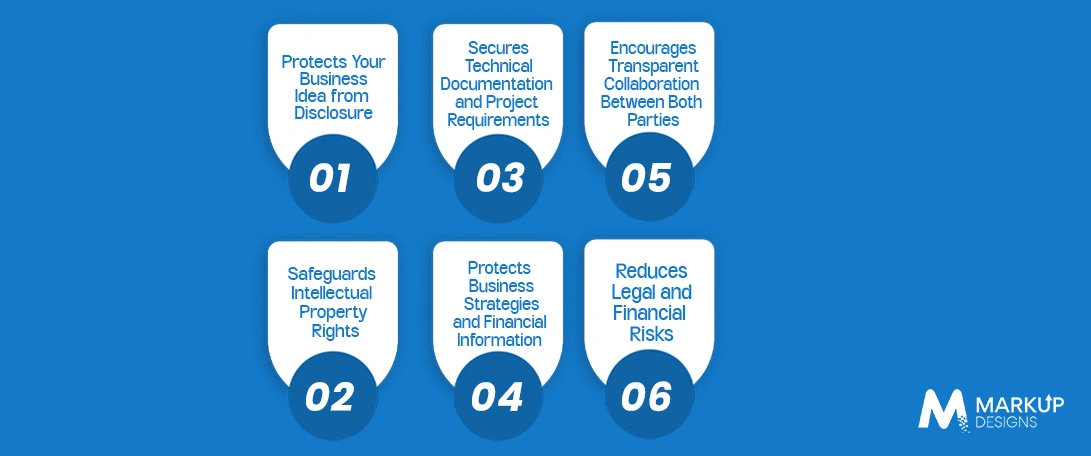
An NDA is a legal document, ensuring the safety of valuable information and trustworthy cooperation among business parties long before the actual development starts.
Protects Your Business Idea from Disclosure
The NDA prevents your software idea from being revealed or utilized. Competitors will not take advantage of your idea, and it will guarantee you a competitive edge at the planning stage.
Safeguards Intellectual Property Rights
The NDA protects original ideas, software features, proprietary technologies, and clarifies the ownership of the IP created on behalf of the project.
Secures Technical Documentation and Project Requirements
Requirement specifications, workflows, APIs, architecture documentation – all these documents can contain confidential information, which must be protected by an NDA.
Protects Business Strategies and Financial Information
Business plans, pricing structures, customer insights, or company strategies are important assets of the business. An NDA can ensure that this information is kept confidential.
Encourages Transparent Collaboration Between Both Parties
Once confidentiality is provided, clients may openly discuss the requirements of the project. Thus, the team will be able to provide better service.
Reduces Legal and Financial Risks
A properly written NDA outlines obligations that must be performed, and the consequences in case of breach of the agreement.
Read Also: 7 Phases of Software Development Every Enterprise Should Know
What Should a Strong Software Development NDA Include?
A well-written NDA must specify the type of protected information, obligations of the parties, and consequences of violation.
Definition of Confidential Information
The NDA must list what information is to be kept confidential, such as product ideas, source code, technical documentation, business plans, customer information, and financial data.
Obligations of Both Parties
The document must indicate the duties of both parties in protecting confidential information, limiting access to it, and using it solely for the purpose agreed in advance.
Scope of Confidentiality
This clause explains how to use confidential information and who can access it during the software development process.
Duration of the Agreement
The NDA must state the duration of the confidentiality obligations both during and after the completion of work on the project.
Exclusions from Confidential Information
Not all information is regarded as confidential. For instance, publicly available information, knowledge created independently, and legally received information are normally exempted from the confidentiality clause.
Ownership of Intellectual Property
The contract must indicate that all intellectual property, including software code, design, and project deliverables, belongs to the party as specified in the agreement.
A well-written NDA must specify the type of protected information, obligations of the parties, and consequences of violation.
Types of NDAs Used in Software Development
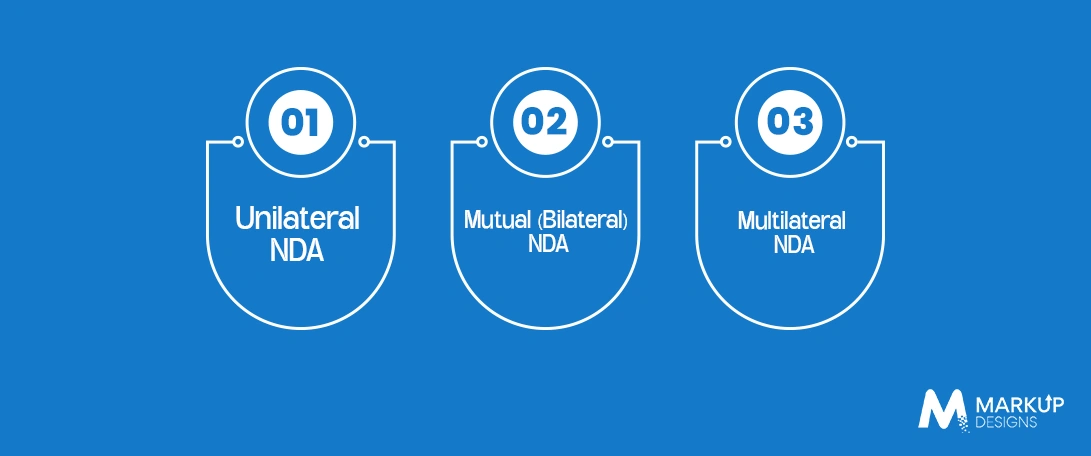
Not all software development projects require the same type of Non Disclosure Agreement (NDA). The right NDA depends on how confidential information is shared and how many parties are involved. Below are the three most common types of NDAs used in software development projects.
Unilateral NDA
A unilateral NDA is a one way confidentiality agreement in which only one party shares sensitive information. It is commonly used when a client discloses an app idea, software requirements, business strategy, or technical documentation to a software development company before development begins. The receiving party is legally required to keep the information confidential and use it only for the agreed purpose.
Mutual (Bilateral) NDA
A mutual NDA protects confidential information exchanged by both parties. It is suitable when the client and software development company share proprietary business or technical information throughout the project.
Multilateral NDA
A multilateral NDA involves three or more parties who need to exchange confidential information under a single agreement. It is commonly used for large projects involving multiple vendors, consultants, or technology partners.
Which NDA is Best for Software Development Projects?
There is no one-size-fits-all approach. A unilateral NDA is suitable when only one party shares confidential information, while a mutual NDA is the preferred choice for most software development projects where both the client and development partner exchange sensitive business and technical information. Multilateral NDAs are best suited for complex projects with multiple stakeholders.
When Should You Sign an NDA in a Software Development Project?
The optimal moment to sign a non-disclosure agreement is prior to the discussion of any confidential information. This way, your ideas, business information, and technical assets are kept safe at the first step.
Before Sharing the Product Idea
If your software idea seems competitive, it is a good idea to sign a nondisclosure agreement before approaching developers or partners in technology sharing.
Before Technical Discovery Sessions
The discovery workshops are often comprised of discussions about the goals of the business and some information regarding the system architecture and other requirements of the project. NDA covers these aspects.
Before Sharing Wireframes, UI UX Designs, or Prototypes
Designs and prototypes show how your product would work, but the NDA has a function of preventing the creation of duplicates.
Before Providing Business Documents or Customer Data
Financial information, or any documents concerning the company processes, should be provided only after confidentiality is established.
Before Sharing APIs, Source Code, or Proprietary Technology
APIs, code, and any other technologies represent valuable materials that need protection from unauthorized processing.
Situations Where an NDA May Not Be Necessary
Even though NDAs are necessary for most software projects, there are some situations when it is not required. Such as
Publicly Available Information
Generally, it suffices to describe information in the public domain.
Open Source Projects
A project utilizing all data that is publicly available may not require the signing of a non-disclosure agreement (NDA) in certain cases, e.g., when it does not include sensitive commercial information.
Discussions About General Capabilities
Communication concerning the services of the company and its operations usually does not raise any legal issues.
Information Already Protected Through Other Agreements
If confidentiality is already guaranteed by a more comprehensive agreement, the signing of a separate NDA might not be needed.
Common Mistakes Businesses Make with Software Development NDAs
The poorly drafted NDA undermines the protection of necessary information. Take care and avoid these common errors to perfect your agreement.
Signing Generic NDA Templates
Utilization of standard templates fails to reflect all the unique features of your business and technical requirements.
Defining Confidential Information Too Broadly or Too Narrowly
Identify with particularity what should remain confidential and avoid confusion as well as the lack of protection.
Ignoring Intellectual Property Ownership
The NDA complements agreements defining the ownership of software, source codes, and other deliverables of the project.
Missing Time Limit Clauses
The clauses that mention the duration for which confidentiality obligation is to be followed in the end of the project should have been there.
Not Including Third Party Vendors or Subcontractors
Confidentiality obligations should be made applicable to everyone with the access to confidential information.
Delaying the NDA Until Development Begins
Delaying the signing of the NDA until discussions are going on may lead to the disclosing of confidential information before it is protected by law.
Benefits of Signing an NDA Before Software Development Begins
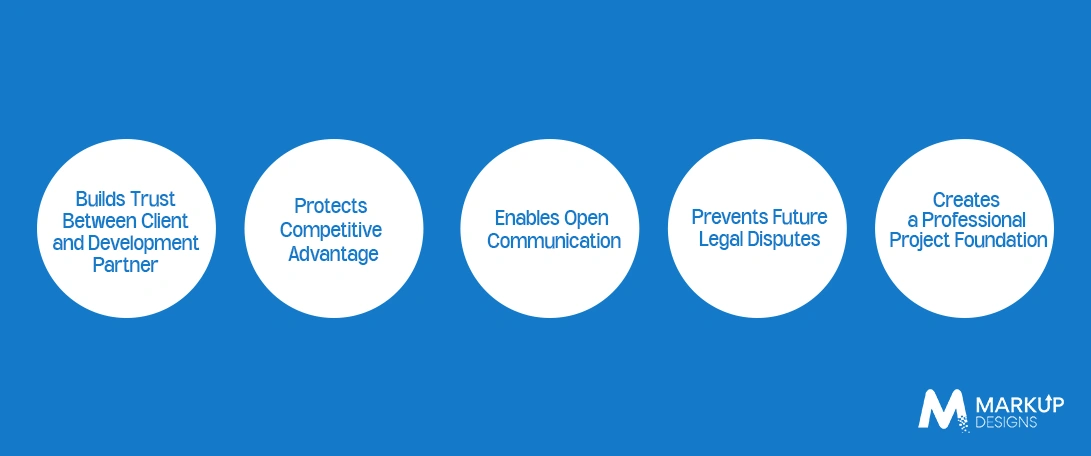
Having a good NDA ensures a safe environment for secure collaboration as it is beneficial for both individuals involved in the project.
Builds Trust Between Client and Development Partner
The confidentiality agreements are good evidence of professionalism and inspire friendly working relationships.
Protects Competitive Advantage
The business strategies and project ideas remain safe for us.
Enables Open Communication
Clients can provide necessary information and human solutions to developers enabling them to develop products that meet business expectations.
Prevents Future Legal Disputes
Having clear confidentiality obligations leads to fewer misunderstandings and enables legal protection in case of breach.
Creates a Professional Project Foundation
An NDA establishes clear expectations from the start, helping both parties collaborate with confidence throughout the software development lifecycle.
How Markup Designs Ensures Complete Confidentiality Throughout the Development Process
At Markup Designs, confidentiality is a core part of our software development process. We implement secure practices from the first discussion to the final project handover, ensuring your business information and intellectual property remain protected at every stage.
NDA Signed Before Project Discussions
We are happy to sign an NDA before discussing your project, allowing you to share your ideas and business requirements with complete confidence.
Secure Requirement Gathering Process
Our team follows a structured discovery process where project requirements, technical documentation, and business information are handled securely.
Controlled Access to Project Assets
Access to project files, source code, and confidential documents is restricted to authorised team members directly involved in development.
IP Ownership Protection
We ensure clear agreements regarding intellectual property ownership, giving you complete clarity over your software, source code, and project deliverables.
Enterprise Grade Security Practices
We follow industry-standard security measures to safeguard sensitive project information throughout the software development lifecycle.
Transparent and Legally Compliant Development Workflow
From signing agreements to project delivery, our processes are transparent, professionally managed, and aligned with legal and confidentiality requirements.
Protect Your Software Idea Before Development Starts
Your software idea deserves complete protection from the very first conversation. Partner with Markup Designs for secure software development backed by robust NDAs, transparent processes, and trusted technical expertise.

Final Thoughts
A strong NDA is one of the most important steps to take before starting any software development project. It protects your ideas, business strategies, technical information, and intellectual property while creating a trusted environment for collaboration.
At Markup Designs, we believe successful software development starts with confidence and transparency. By combining legally sound confidentiality practices with expert development services, we help businesses turn innovative ideas into secure, scalable, and high-quality digital solutions.
FAQs
1. Is an NDA legally enforceable in software development?
Yes. A properly drafted and signed NDA is legally enforceable in most jurisdictions, provided it complies with applicable laws and clearly defines the obligations of both parties.
2. Should I sign an NDA before sharing my app or software idea?
Yes. Signing an NDA before discussing your app or software idea helps protect confidential information and reduces the risk of unauthorised disclosure.
3. What information should be covered in a software development NDA?
An NDA should cover product ideas, technical documentation, source code, business strategies, customer data, financial information, designs, and other proprietary information relevant to the project.
4. Who owns the source code after project completion?
Ownership depends on the terms of your development agreement. Most custom software development contracts specify that the client owns the source code and project deliverables after completion and payment.
5. How long should a software development NDA remain valid?
The duration varies depending on the project and the sensitivity of the information. Many NDAs remain effective throughout the project and continue for a specified period after completion.
Author's Perspective
A Non-Disclosure Agreement is more than a legal safeguard. It creates the trust needed for businesses and development teams to collaborate openly from day one. Protecting confidential information before coding begins not only reduces risk but also strengthens the foundation for successful software development. At Markup Designs, confidentiality is built into every stage of our process, ensuring your ideas remain protected while we transform them into reliable, scalable software solutions.
Discuss Your Project NowAjit Kumar Jha
VP - Business Operations
Related Posts

Case Management Software Development: Enterprise Features & Implementation...
Farm Management Software Development in Australia: Features, AI...

Knowledge Management System Development in Australia: Building AI-Ready...
Insights Are Valuable & Execution is Priceless
You’ve read about the digital future. Now, let’s build the infrastructure to take you there. Move your strategy from the page to the product.
Design Your Solution Now
Contact Us
Schedule The Appointment At Your Convenience Date And Time.
30 Min
Web Conference
Time Zone
Indian standard time (08:30pm)

Thanks For Getting In Touch!
You’ve Taken The First Step Toward Transforming Your Digital Presence. Our Experts Will Reach Out Shortly To Take It Forward.
Launch Your Dream Project
Provide a brief overview of your project, and our specialists will evaluate your requirements. We will connect with you to explore how the right digital solutions can help you launch faster.