

In Brief
- Costs associated with creating a cryptocurrency exchange application, such as Coinbase, generally fall within the range of $30,000 to $300,000 and can increase depending on the platform and features required, safety concerns, regulations to comply with, and third-party software to integrate into the application.
- Several essential functions, including the creation of a multi-currency wallet system and real-time trading functions, KYC compliance, payment processing integration, and effective use of security measures to safeguard the trading process, impact the total budget and timelines.
- The development of a secure and efficient cryptocurrency exchange demands adherence to various rules and regulations in the field of KYC, AML, GDPR, and PCI DSS, as well as the use of strong encryption and anti-fraud measures.
- The business needs to choose the right tech ecosystem and development vendor to achieve its objectives at lower costs in the long run.
- Launching a cost-effective cryptocurrency exchange platform can become a great source of profit as the exchange platform can charge transaction fees, provide premium services for users, list payment tokens, and, of course, make money from the exchange operations.
As more individuals and institutions embrace cryptocurrencies for trading and investment, businesses are exploring opportunities to launch secure, feature-rich platforms that can compete with established players such as Coinbase. However, developing a cryptocurrency exchange is far more complex than building a conventional mobile application. It requires advanced security, regulatory compliance, real-time transaction processing, scalable infrastructure, and seamless user experiences to gain user trust and ensure long-term success.
The cost of developing a cryptocurrency exchange application such as Coinbase starts from $30,000 for a basic platform and goes up to $300,000 for an enterprise-level solution, which comes down to different factors, including the app’s complexity, supported platforms, blockchain features, and security. In this extensive blog, we will discuss factors that influence the cost of making a cryptocurrency exchange application, main features, tech stack, the process of app development, issues that may arise during development, and effective ways to help businesses make the right decision regarding the amount of money necessary for building a successful crypto-exchange platform.
Cryptocurrency Exchange Market Overview
The cryptocurrency market has been developing actively during recent years, due to the uptake of virtual assets, blockchain technologies, and the confidence of investors in this type of trading. Nowadays, exchanges are the core of this digital ecosystem, as thousands of people are involved in trading every day, providing reliable sales and purchases, as well as managing assets.
For companies, the launch of a cryptocurrency exchange represents a unique chance to enter a significant fintech market, but success depends on the ability to create a secure, scalable, and regulated platform that meets all the necessary criteria for providing a seamless trading experience.
Why Are Cryptocurrency Exchange Apps Growing So Fast?
The popularity of cryptocurrency continues to rise and creates the need for reliable trading platforms. The growth of institutional investments, the wider adoption of blockchain technology, and the emergence of decentralized finance (DeFi) contribute to the involvement of more users in the cryptocurrency ecosystem.
Modern users expect exchanges to provide them with advanced features such as real-time market data, secure e-wallets, different options for payment, staking capabilities, and portfolio management. Therefore, companies are putting their money into building exchanges with plenty of features.
Coinbase as a Successful Example and Major Indicators of Its Business
Coinbase is one of the biggest cryptocurrency exchanges in the world, thanks to its focus on security, regulation, and user-friendliness. Its success indicates how much people need trusted trading platforms.
Coinbase, in the first quarter of 2024, reported about 8 million active users who perform transactions each month. The total amount of assets under custody of Coinbase reached approximately $334.71 billion, while the amount of money exchanged in trading reached nearly $312 million. All this shows how effective a well-developed cryptocurrency exchange can be in terms of scalability and revenue generation.
At present, many companies are entering the cryptocurrency exchange business. Indeed, cryptocurrency exchanges have several revenue sources, such as trading fees, withdrawal fees, token listings, subscriptions, staking, lending, etc.
Getting into cryptocurrency exchanges allows a company to have more control over its finances and be ready for the growth of the blockchain and the digital asset market.
How Much is Needed for the Development of a Cryptocurrency Exchange like Coinbase?
The cost to develop a cryptocurrency exchange app like Coinbase typically ranges from $30,000 to $300,000+, while a fully featured web and mobile platform may exceed $500,000, depending on its complexity, security requirements, integrations, and compliance needs.
Factors such as platform type, feature set, blockchain integration, and scalability directly influence the overall investment. Understanding these variables helps businesses plan a realistic budget and choose the right development approach.
Estimated Development Cost Based on Project Complexity
| Project Complexity | Timeline | Estimated Cost |
| Basic Exchange | 4 to 6 months | $30,000 to $50,000 |
| Medium Complexity Exchange | 6 to 9 months | $50,000 to $120,000 |
| Enterprise Grade Exchange | 9 to 12+ months | $120,000 to $300,000+ |
The final cost depends on the number of supported cryptocurrencies, advanced trading features, security measures, and third-party integrations.
Development Timeline for a Crypto Exchange App
Creating a cryptocurrency exchange includes many tasks, such as planning, design, development, blockchain integration, implementing security measures, testing, and launching the platform. Depending on the type of cryptocurrency exchange, overall development time ranges from four months for a simple exchange to over a year for a sophisticated enterprise-level platform.
Cost Distribution by Development Process
Development costs are divided into several parts, including business planning, UI/UX design, frontend and backend development, blockchain integration and security implementation, testing, and deployment.
The cryptocurrency exchange platform will also require other costs related to cloud hosting, security updates, maintenance, and compliance.
Read Also: How Much Does It Cost to Build a Crypto Exchange App Like BitOasis?
Factors That Affect the Final Price of Cryptocurrency Exchange App Development
There are several factors that define the overall cost of developing a cryptocurrency exchange app, including the choice of platform, set of features, requirements for security and compliance, and technology stack used.
1. Choice of Platform (Android, iOS, Web, Cross-Platform)
Choosing the right platform influences development costs and market reach.
2. Kind of Cryptocurrency Exchange
Various exchange types come with different complexity levels.
3. Centralized Exchange (CEX)
Operated by a single authority, offering high liquidity, quick transactions, and easy management.
4. Decentralized Exchange (DEX)
Utilizes blockchain and smart contracts to facilitate peer-to-peer trading without intermediaries.
5. Hybrid Exchange
Merges the benefits of centralized and decentralized platforms, while enhancing security and efficiency.
6. Peer to Peer (P2P) Exchange
Provides peer-to-peer trading opportunities, while the platform conducts secure transactions through escrow.
7. Complexity of Features
Simple trading functionalities lower the costs of development, while advanced features add to development expenses.
8. User Interface and User Experience Design
Good UI translates into great user experience, but requires additional design and development efforts.
9. Blockchain Network Integration
Integration of one or multiple blockchains leads to higher complexity and affects the budget significantly.
10. Security and Data Protection
Different systems for data protection must be introduced to ensure users’ safety. Compliance with Regulation (KYC, AML, GDPR, PCI DSS, FATF). Achieving compliance comes with a cost, but ensures users’ trust.
12. Integrations with Third-Party APIs
Integrating with payment gateways, blockchain service providers, and market data providers adds to functionality and increases the cost of software development.
13. Technology Stack
The choice of programming languages, databases, cloud infrastructure, and frameworks influences scalability, performance, and maintenance.
14. Location of the Development Team
Development costs may vary based on the location and skills of the development team.
15. Testing, Deployment, and Support
Regular testing and monitoring are key to platform stability after launch.
Main Features of a Cryptocurrency Exchange App
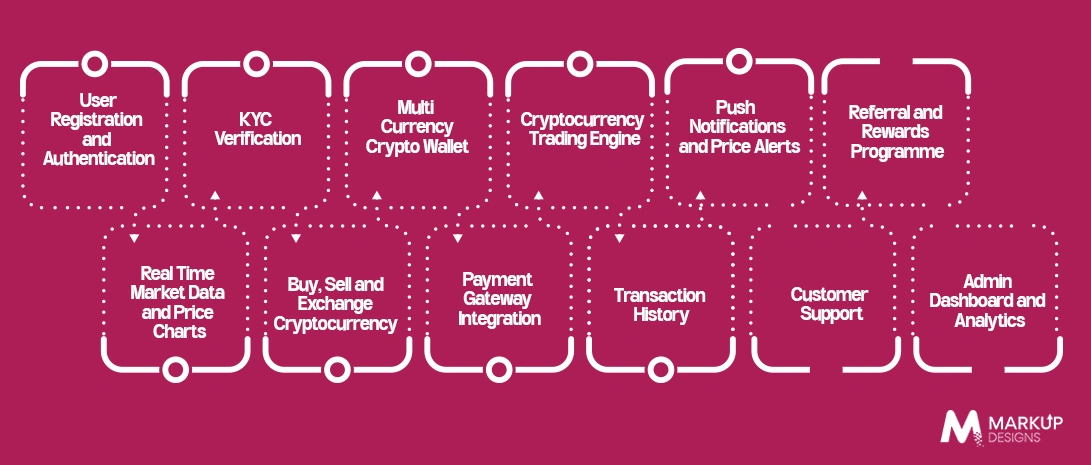
The cryptocurrency exchange app has to include the following features to provide a smooth transaction experience.
User Registration and Authentication
This feature allows creating an account and authenticating users.
KYC Verification
This feature is used to validate user identity.
Multi-Currency Cryptocurrency Wallet
Users can store many types of cryptocurrency in this wallet.
Cryptocurrency Trading Engine
The engine processes and matches the buy and sell orders.
Real Time Market Data and Charts
The user can view live price and market data created by cents and other tools.
Buy, Sell, and Exchange Cryptocurrency
Allows users to trade cryptocurrencies quickly and securely.
Payment Gateway Integration
Supports deposits and withdrawals through multiple payment methods.
Transaction History
Displays complete records of trades and account activity.
Push Notifications and Price Alerts
Keeps users updated with market movements and account notifications.
Customer Support
Assists live chat, tickets, or help centres.
Referral and Rewards Programme
Encourages user acquisition through referral incentives.
Admin Dashboard and Analytics
Helps administrators manage users, transactions, compliance, and platform performance.
Advanced Features That Increase Development Cost
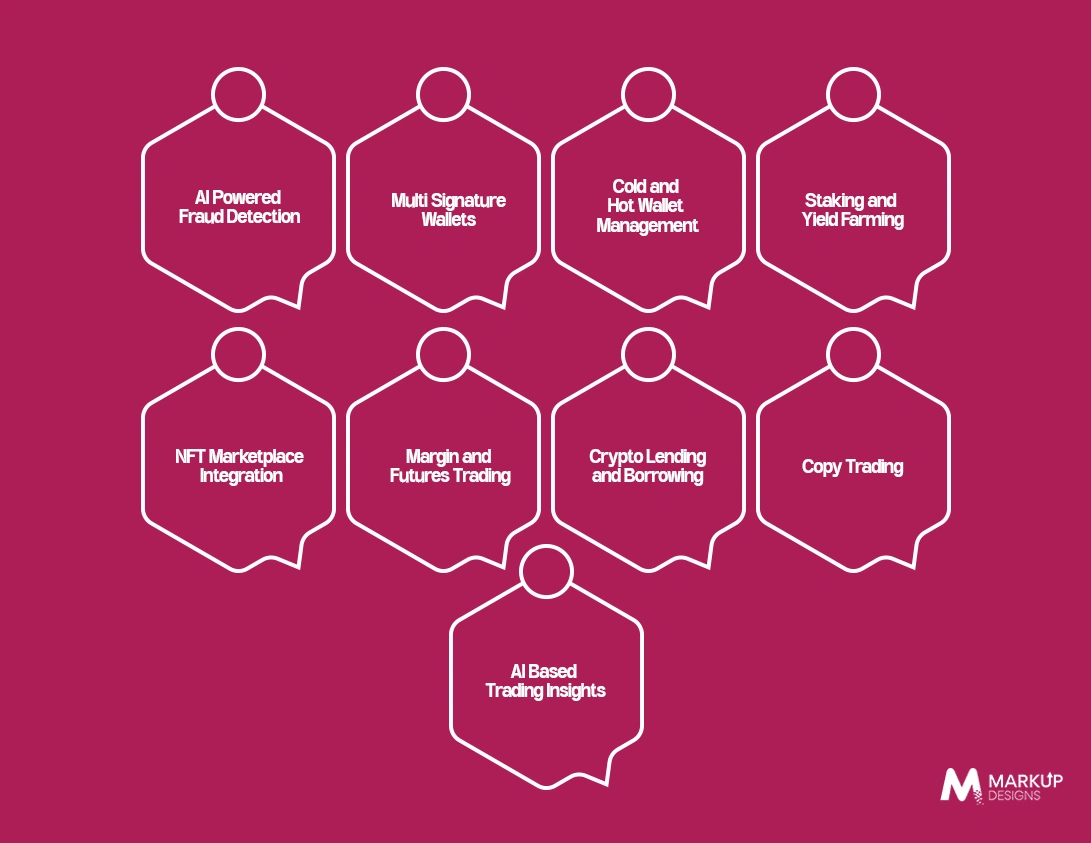
Advanced features improve security, functionality, and user engagement but also require additional development time and specialised expertise, increasing the overall project cost.
AI-Powered Fraud Detection
Uses artificial intelligence to detect suspicious transactions and minimise fraudulent activities in real time.
Multi-Signature Wallets
Adds an extra layer of security by requiring multiple approvals before transactions are executed.
Cold and Hot Wallet Management
Balances security and accessibility by storing assets in both offline and online wallets.
Staking and Yield Farming
Allows users to earn rewards by staking cryptocurrencies directly through the platform.
NFT Marketplace Integration
Enables users to buy, sell, and trade NFTs within the exchange ecosystem.
Margin and Futures Trading
Supports leveraged trading and derivatives for experienced investors.
Crypto Lending and Borrowing
Allows users to lend digital assets or borrow funds against their crypto holdings.
Copy Trading
Let’s users automatically replicate the trading strategies of experienced traders.
AI-Based Trading Insights
Provides AI-driven market analysis, trend predictions, and personalised trading recommendations.
Technology Stack Required for Cryptocurrency Exchange App Development
Choosing the right technology stack is essential for building a secure, scalable, and high-performance cryptocurrency exchange.
Frontend Technologies
React, Angular, Vue.js, Flutter, and React Native for responsive web and mobile applications.
Backend Technologies
Node.js, Python, Java, .NET, and Go for handling business logic and high-volume transactions.
Blockchain Technologies
Ethereum, Bitcoin, Solana, Polygon, Binance Smart Chain, and smart contract frameworks.
Databases
PostgreSQL, MySQL, MongoDB, and Redis for secure and efficient data management.
Cloud Infrastructure
AWS, Microsoft Azure, and Google Cloud for scalability, storage, and high availability.
Security Technologies
SSL encryption, Two-Factor Authentication (2FA), Multi-Signature Wallets, Firewalls, and DDoS protection.
Third Party APIs
Payment gateways, market data APIs, liquidity providers, KYC services, and blockchain explorer APIs.
Step-by-Step Cryptocurrency Exchange App Development Process
Building a cryptocurrency exchange requires a structured approach to ensure security, scalability, and regulatory compliance.
Market Research and Business Planning
Identify the target audience, business model, competitors, and regulatory requirements.
Define Features and Project Scope
Finalise the core and advanced features based on business goals and budget.
UI and UX Design
Create intuitive user journeys, wireframes, and responsive interface designs.
Backend Development
Develop the server architecture, APIs, database, and trading engine.
Frontend Development
Build responsive web and mobile interfaces for seamless user interaction.
Blockchain and Wallet Integration
Integrate blockchain networks, crypto wallets, and smart contracts wherever required.
Security Implementation
Implement encryption, authentication, fraud prevention, and compliance measures.
Testing and Quality Assurance
Conduct functional, security, performance, and usability testing before launch.
Deployment
Launch the application on web, Android, and iOS platforms after final validation.
Maintenance and Future Updates
Provide continuous monitoring, security updates, bug fixes, and feature enhancements to keep the platform competitive.
Common Challenges in Cryptocurrency Exchange App Development
Developing a cryptocurrency exchange involves technical, regulatory, and operational challenges. Addressing these issues early helps build a secure, scalable, and reliable trading platform.
Ensuring Platform Security
Protecting user funds and sensitive data requires strong encryption, secure authentication, and continuous security monitoring.
Achieving High Performance and Scalability
The platform should handle high trading volumes and growing user traffic without affecting performance.
Regulatory Compliance Across Different Regions
Meeting regulations such as KYC, AML, GDPR, and other regional requirements is essential for legal operations.
Liquidity Management
Maintaining sufficient liquidity ensures smooth trade execution and a better user experience.
Building User Trust
Transparent operations, reliable security, and responsive customer support help establish long-term user confidence.
Managing Market Volatility
The platform should process transactions efficiently during periods of rapid price fluctuations and heavy trading activity.
Monetisation Strategies for a Cryptocurrency Exchange App
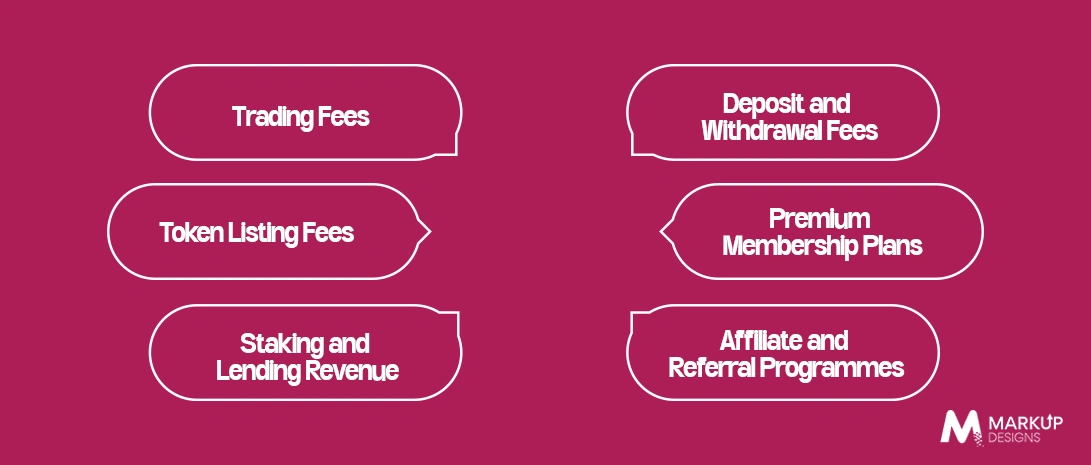
A cryptocurrency exchange can generate revenue through multiple business models, creating sustainable long-term income.
Trading Fees
Charge a percentage or fixed fee on every successful trade.
Deposit and Withdrawal Fees
Earn revenue from processing deposits and withdrawals.
Token Listing Fees
Charge cryptocurrency projects to list their tokens on the platform.
Premium Membership Plans
Offer exclusive features and lower trading fees through subscription plans.
Staking and Lending Revenue
Generate income by providing staking and crypto lending services.
Affiliate and Referral Programmes
Reward users for referring new customers while expanding the platform’s user base.
How to Reduce Cryptocurrency Exchange App Development Costs Without Compromising Quality
Businesses can optimise development costs by making strategic decisions without sacrificing performance or security.
Start with an MVP
Launch with essential features first and expand based on user feedback.
Choose Cross-Platform Development
Develop a single codebase to reduce development time and costs.
Use Ready-Made APIs Where Appropriate
Leverage trusted third-party APIs instead of building every feature from scratch.
Prioritise High-Value Features
Focus on features that deliver the greatest business impact during the initial launch.
Partner with an Experienced Development Company
An experienced app development company helps minimise risks, optimise resources, and accelerate project delivery.
Why Choose Markup Designs for Cryptocurrency Exchange App Development?
Markup Designs builds secure, scalable, and feature-rich cryptocurrency exchange platforms tailored to diverse business requirements. From strategy and design to development and post-launch support, we deliver end-to-end blockchain solutions that drive long-term growth.
End-to-End Blockchain Development Expertise
Comprehensive development services covering strategy, design, blockchain integration, and deployment.
Enterprise-Grade Security Solutions
Advanced security measures to safeguard digital assets, transactions, and user data.
Custom Scalable Exchange Platforms
Tailor-made cryptocurrency exchanges designed to support business growth and increasing user demand.
Proven Experience in FinTech and Blockchain Development
Extensive expertise in delivering secure, high-performance fintech and blockchain solutions for global businesses.
Build a Secure and Scalable Cryptocurrency Exchange with Markup Designs
Whether you’re launching a startup exchange or developing an enterprise-grade crypto trading platform, Markup Designs delivers end-to-end blockchain development services tailored to your business goals. Our experts build secure, compliant, and high-performance cryptocurrency exchange solutions that help you stay ahead in the evolving digital asset market.

Conclusion
Developing a cryptocurrency exchange app like Coinbase requires careful planning, robust security, regulatory compliance, and the right technology stack. While development costs typically range from $30,000 to $300,000+, the final investment depends on factors such as platform complexity, features, blockchain integrations, and compliance requirements.
By understanding the key cost drivers, essential features, and development process, businesses can make informed decisions and build a secure, scalable exchange that delivers long-term value. Partnering with an experienced cryptocurrency exchange app development company ensures a smooth development journey while reducing risks and accelerating time to market.
FAQs
1. How much does it cost to develop a cryptocurrency exchange app like Coinbase?
The development cost typically ranges from $30,000 to $300,000+, depending on the platform, features, security requirements, blockchain integrations, and regulatory compliance.
2. How long does it take to build a crypto exchange app?
A basic cryptocurrency exchange generally takes 4 to 6 months, while an enterprise-grade platform with advanced features may require 9 to 12 months or longer.
3. Which type of crypto exchange is best for a startup?
A Centralised Exchange (CEX) is often the preferred choice for startups due to its simpler management, better liquidity, and user-friendly trading experience.
4. What security features should every crypto exchange include?
Essential security features include Two Factor Authentication (2FA), end-to-end encryption, multi-signature wallets, KYC verification, AML compliance, fraud detection, and secure wallet management.
5. What technologies are used to develop a cryptocurrency exchange platform?
A cryptocurrency exchange typically uses technologies such as React, Flutter, Node.js, Python, PostgreSQL, Ethereum, Solana, AWS, and secure blockchain APIs, depending on project requirements.
6. How does a cryptocurrency exchange make money?
Cryptocurrency exchanges generate revenue through trading fee, deposit and withdrawal charges, token listing fees, premium subscriptions, staking services, lending solutions, and affiliate programmes.
Author's Perspective
The cryptocurrency industry continues to evolve, creating new opportunities for businesses to launch innovative digital asset platforms. However, building a successful cryptocurrency exchange goes far beyond implementing trading functionality. Security, compliance, scalability, and user experience are equally important for earning customer trust and sustaining long term growth.
Businesses should focus on developing a platform that not only meets current market demands but is also prepared for future advancements in blockchain technology and digital finance. With the right development strategy and technology partner, a cryptocurrency exchange can become a scalable and profitable business in an increasingly competitive market.
Discuss Your Project NowJupinder Singh Arora
Founder and CEO
Related Posts

Crypto Trading Bot Development: Architecture, Features & Cost...

How to Build a Secure Crypto Payment Gateway...

How Much Does It Cost to Build a...
Insights Are Valuable & Execution is Priceless
You’ve read about the digital future. Now, let’s build the infrastructure to take you there. Move your strategy from the page to the product.
Design Your Solution Now
Contact Us
Schedule The Appointment At Your Convenience Date And Time.
30 Min
Web Conference
Time Zone
Indian standard time (08:30pm)

Thanks For Getting In Touch!
You’ve Taken The First Step Toward Transforming Your Digital Presence. Our Experts Will Reach Out Shortly To Take It Forward.
Launch Your Dream Project
Provide a brief overview of your project, and our specialists will evaluate your requirements. We will connect with you to explore how the right digital solutions can help you launch faster.