

In Brief
- Get to know how Business Intelligence is redefining present-day manufacturing through data-driven technology.
- Find out what the key advantages of establishing BI across manufacturing, supply chain, quality, and operations are.
- Get in touch with real-life implementations of increasing efficiency, reducing costs, and enabling more informed decisions.
- Understand which best practices and pitfalls exist for implementing BI solutions.
- Learn about trending future trends affecting the development of intelligent manufacturing.
Manufacturers continue to evolve toward data-driven methods as they adopt Industry 4.0, Industry 5.0, and new technologies, including the Industrial Internet of Things (IIoT), Artificial Intelligence (AI), and automation.
Every manufacturing process generates substantial amounts of valuable real-time data from production equipment/sensors to inventory systems/supply chain/vending systems. This data can be used to turn into actionable insights in order to drive performance, improve product quality, and increase the profitability of manufacturing.
BI brings different sources of data together into one place and creates a visualization of that information via interactive dashboards and report visuals, making it easy for manufacturers to view operational data in real-time, spot inefficiency, predict future trends, and make quicker, data-driven business decisions.
According to Statista, the global Business Intelligence (BI) software market is experiencing rapid growth as businesses increasingly turn to their manufacturing analytics platforms to facilitate digital transformation efforts and achieve operational excellence. As the amount of business-generated data continues to grow, so does the necessity and demand from all sectors and industries to enable intelligent decision-making.
This blog will help readers understand what BI means in manufacturing, how it works, why it is critical for today’s manufacturing environments, and the significant benefits it provides to manufacturers.
What is BI in Manufacturing?
What is Business Intelligence?
Business Intelligence refers to the technologies, processes, and tools that are used to collect, integrate, analyse, and visually represent business data. BI platforms convert vast amounts of operational data into dynamic reporting structures such as dashboards, reports, and performance metrics that help users make informed decisions as opposed to relying on spreadsheet or manual reporting methods.
In manufacturing, BI allows for the integrated view of all critical aspects of the manufacturing process, combining data from the production line, machine, inventory system, supply chain, finance, quality management, and enterprise applications to give manufacturers a complete picture of their business performance. This capability enables them to quickly identify problems, maximise their operations, and respond proactively to changes in market conditions.
How BI Works in Manufacturing
The process of BI transforms raw manufacturing data into useful information as it progresses through a range of established steps-
Collecting Data
The first step of data collection starts with retrieving data from various sources, such as production equipment, Internet of Things (IoT) sensors, Enterprise Resource Planning (ERP) systems, Manufacturing Execution Systems (MES), quality assurance software, warehouse software, and Supply Chain Management software.
Data Integration
After data is collected, it is merged at one consolidated location so that it can be standardized and ready for use from the same location, eliminating data silos.
Data Warehousing
Once the data is integrated, it is then stored in a secure location (data warehouse) that serves as the data source (single version of the truth) for reporting, historical analysis, and long-term business intelligence.
Analysis
Once the data warehousing stage is complete, advanced analysis of the data will identify areas such as trends, production bottlenecks, quality issues, equipment performance, and operational issues that would not be easily identified through conventional reporting.
Dashboards and Visualization
Dashboards provide managers with interactive visualizations of their key business metrics in the form of charts, graphs, and real-time reports so that they can easily monitor their operations and how well their company is performing.
Actionable Insights
The end goal (final phase) of the analytical process is to provide actionable insight from the analysis of data that enables more timely and accurate decision-making, continuous improvement, and strategic planning.
Importance of Business Intelligence for Manufacturers
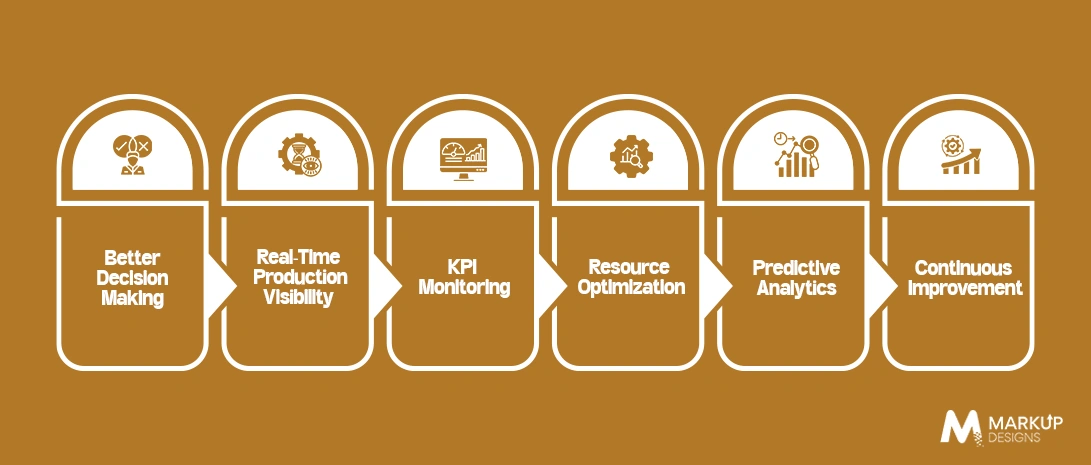
Manufacturing companies today are competitive in nature; productivity, quality, cost control, and customer satisfaction are all drivers of the success or failure of any manufacturing business. Business Intelligence provides a manufacturer with the visibility needed to track all stages of the manufacturing process and allows manufacturer to make more accurate, timely, and informed decisions based on up-to-date and accurate information.
Better Decisions Making
Leaders can make decisions faster with the help of Business Intelligence (BI) because it provides real-time insights instead of just making a guess or an assumption.
Real-Time Production Visibility
Manufacturers have a centralized dashboard that allows them to see all the production lines, performance of machines, levels of inventory, and the status of the operation, so they can catch issues prior to them disrupting productivity.
Key Performance Indicators (KPIs) Monitoring
Business intelligence allows businesses to track important metrics for manufacturers such as Overall Equipment Effectiveness (OEE), output, downtime, defect rate, cycle time, inventory turnover, and on-time delivery so organizations are able to track performance over time.
Resource Optimization
BI assists manufacturers in effectively using their labor, machines, raw materials, and production capacity. As a result, companies can reduce waste resources and improve the efficiency of their operations.
Using Predictive Analytics
Utilizing both historical data and real-time data, BI helps manufacturers to predict when equipment would fail, anticipate business demand and stock levels, and reduce the risk associated with production before they happen.
Continuous Improvement Culture
BI supports continuous improvement efforts by providing measurable insight into the performance of a manufacturer’s operations so they can identify inefficiencies, assess whether/how they can fix it, and achieve long-term operational excellence.
Major Components of Manufacturing BI
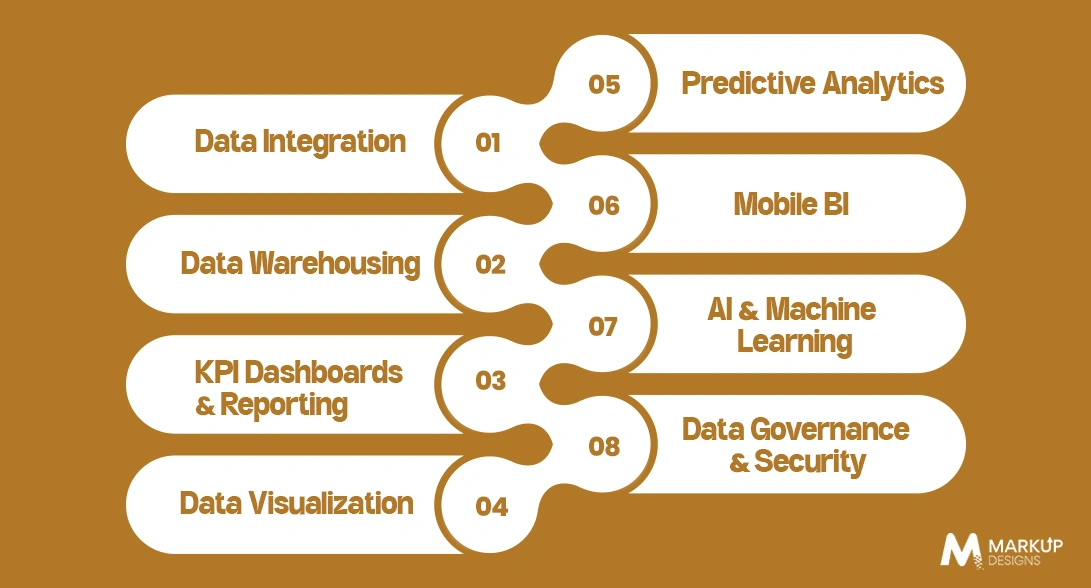
An effective Business Intelligence solution will have several technologies that are used to create, analyze, and present all types of manufacturing data. Using these components will provide you with the information needed to make informed decisions based on a comprehensive view of the overall manufacturing operation.
Data Integration
The integration of data occurs within Business Intelligence from various corporate systems such as ERP and Other Manufacturing Systems (MES); Internet of Things Devices (IoT); Customer Relationship Management (CRM) Software; etc., into one centralised system, this provides one version of the truth and eliminates data silos by providing a single place for recording information.
Data Warehousing
The data warehouse is a repository designed for storing both historical and current operational data in a secure manner to create a solid basis for reporting; analytical purposes; and long-term business planning.
KPI Dashboards and Reporting
Dashboards that display key performance indicators (KPIs) such as production output, downtime (machine), overall equipment effectiveness (OEE), on hand inventory (levels), and quality metrics, provide managers with the ability to easily monitor their operations.
Data Visualisation
With the use of charts, graphs, heat maps, etc, data visualisation simplifies the discovery of trends and operational insight .
Predictive Analytics
Using historical data combined with live real-time operational data, predictive analytics in manufacturing can help predict equipment failure; production demand; maintenance schedules and required inventory before issues arise.
Mobile BI
Mobile BI provides managers and decision-makers the ability to have access to dashboards and reports from either a smart phone or tablet, providing visibility anytime and anywhere.
AI and Machine Learning
Analytics powered by AI automatically identify patterns; detect deviations from normal operating behaviour and create intelligent recommendations that help facilitate proactive decision making.
Data Governance and Security
Effective data governance policies allow for consistent and compliant data that can be securely accessed, allowing organizations to confidently rely on BI-generated insights.
Key Integrations of Business Intelligence in Manufacturing
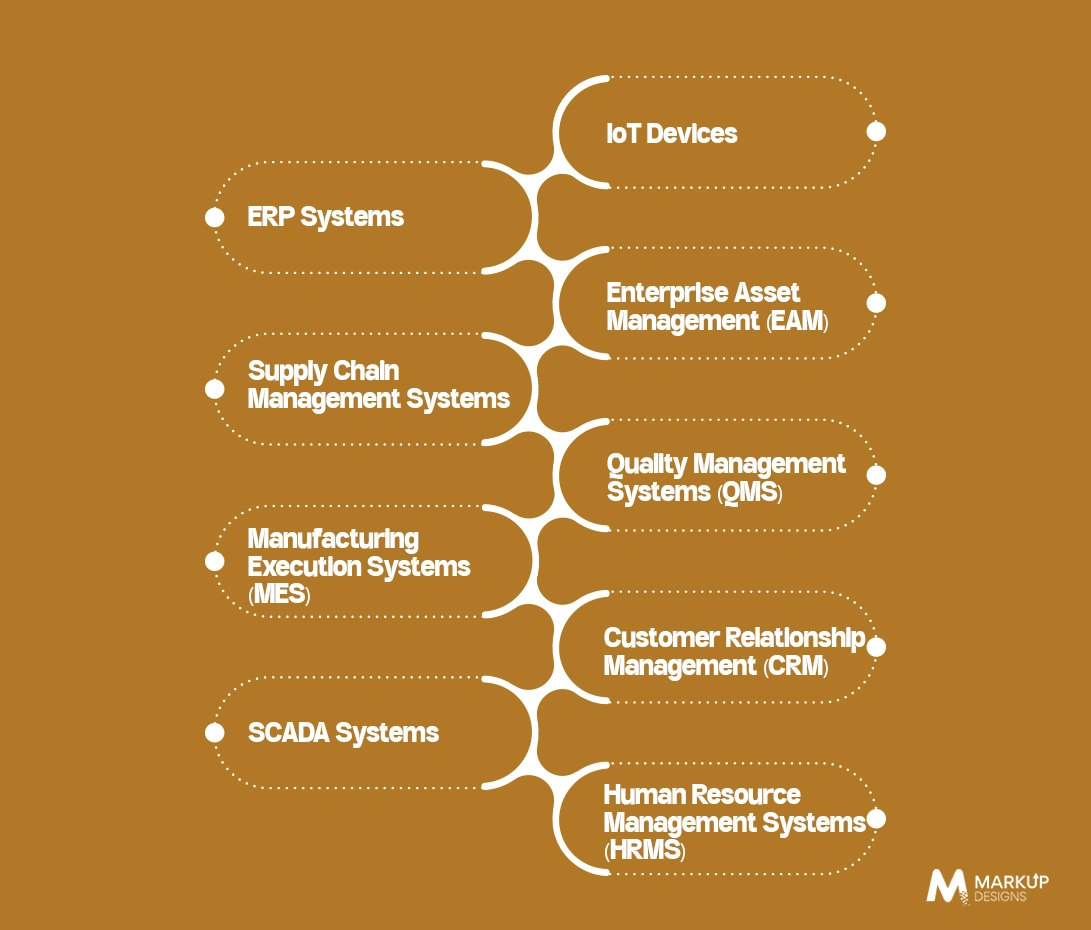
The greatest benefit of implementing business intelligence alongside existing manufacturing platforms is that it creates a unified view of the business while eliminating redundant data sources.
Enterprise Resource Planning System
An enterprise resource planning integration aggregates all of the data within a company in one comprehensive view (production, purchasing, finance, inventory, sales). This integration allows for complete visibility into business performance.
Supply Chain Management System
Business intelligence allows for analysis of supplier performance, logistical performance, purchase order activities, and inventory movement. This type of analysis facilitates improvements to supply chain efficiency and reduces supply chain disruptions.
Manufacturing Execution System (MES)
Integrating with a manufacturing execution system allows for real-time tracking of production activity (including machine utilization, work orders, and performance of the shop floor).
Supervisory Control and Data Acquisition (SCADA) System
By integrating business intelligence with a SCADA system, manufacturers can create an automated environment to track equipment and production lines as well as monitor the entire industrial process with real-time operational data.
Internet-of-Things (IoT) Devices
Industrial sensors collect data on machine usage, environmental conditions, and equipment health, giving manufacturers access to real-time analytics and enabling predictive maintenance of machinery.
Enterprise Asset Management
Through integrating enterprise asset management with business intelligence, manufacturers can gain valuable insights about asset usage (utilization rates), maintenance schedules, equipment performance, and total ownership costs to optimize operational reliability.
Quality Management System (QMS)
Integration of business intelligence with a quality management system provides manufacturers with visibility into tracking defects, compliance, quality trends, and product consistency.
Customer Relationship Management (CRM)
Integrating customer relationship management systems with business intelligence gives manufacturers valuable insights into customer demand, historical order details, and feedback, which in turn, help manufacturers align production to meet market demands.
Human Resources Management System (HRMS)
HRMS integration supports workforce planning by analyzing labor productivity, attendance, training, and resource allocation.
Benefits of Business Intelligence in Manufacturing
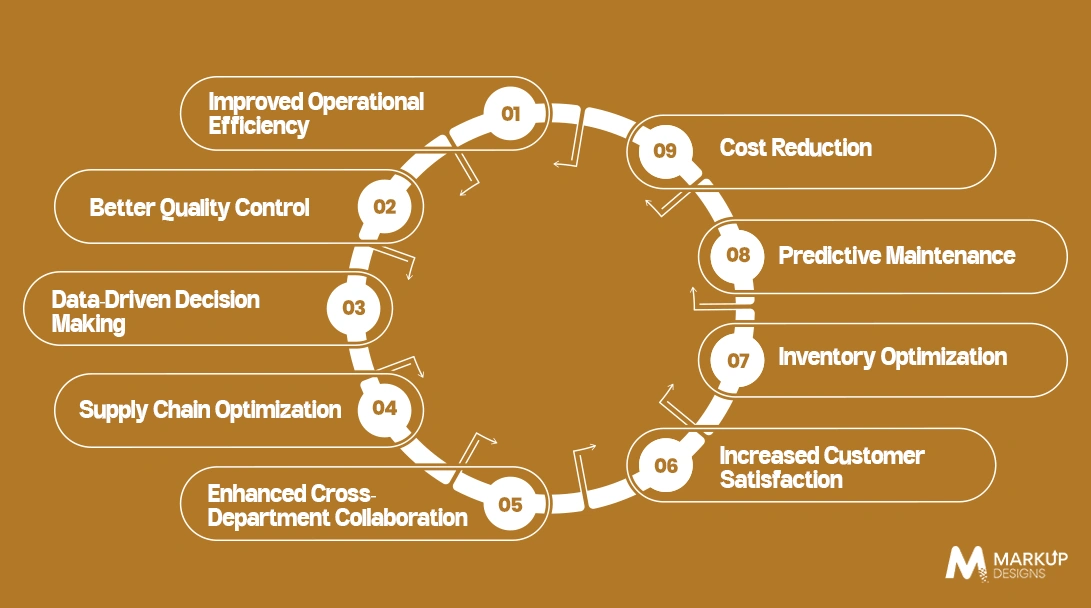
By leveraging the power of Business Intelligence (BI), manufacturers can make informed and rapid decisions based on data to increase efficiency, reduce costs, and improve operating performance as a whole.
Improved operational performance
The ability to gather real-time data will allow for the identification of production bottlenecks, the reduction of downtime from issues, the streamlining of workflows, and ultimately improved productivity across the entire manufacturing environment.
Better quality control
The use of BI will enable manufacturers to monitor production quality metrics throughout the production process, which will lead to the early detection of defects and ultimately continuous improvement in their quality.
Data-driven decision-making process
Having real-time access to accurate data will enable management personnel to make decisions based on data rather than assumptions or by relying upon data from manual reports.
Supply chain optimization
BI provides visibility to manufacturers’ supply chains, which includes tracking inventory levels, supplier performance, procurement activities, and logistics. This improves supply chain performance by reducing delays and optimizing the inventory process.
Enhanced Cross-department collaboration
Having access to the same BI data source/BI platform will improve collaboration and improve overall alignment between production, finance, procurement, quality, and operational teams.
Costs Reducing
By identifying inefficiencies, eliminating waste, optimizing how resources are utilized, and detecting when equipment would fail with the help of BI, manufacturers can reduce costs by improving the overall efficiency of their operations.
Predictive maintenance
BI leverages both historical and real-time data for equipment to predict when that piece of equipment will fail and schedule maintenance accordingly. This minimizes unplanned downtime and significantly increases the total life expectancy of the equipment.
Inventory optimization
BI enables manufacturers to assess statistical demand of their products, track inventory levels, and develop statistical forecasts to develop an optimal inventory solution while at the same time minimizing inventory carrying costs.
Increased Customer Satisfaction
Improved production planning, better quality control, and on-time deliveries enable manufacturers to meet customer expectations consistently, strengthening trust and long-term relationships.
Real-World Use Cases of Business Intelligence in Manufacturing
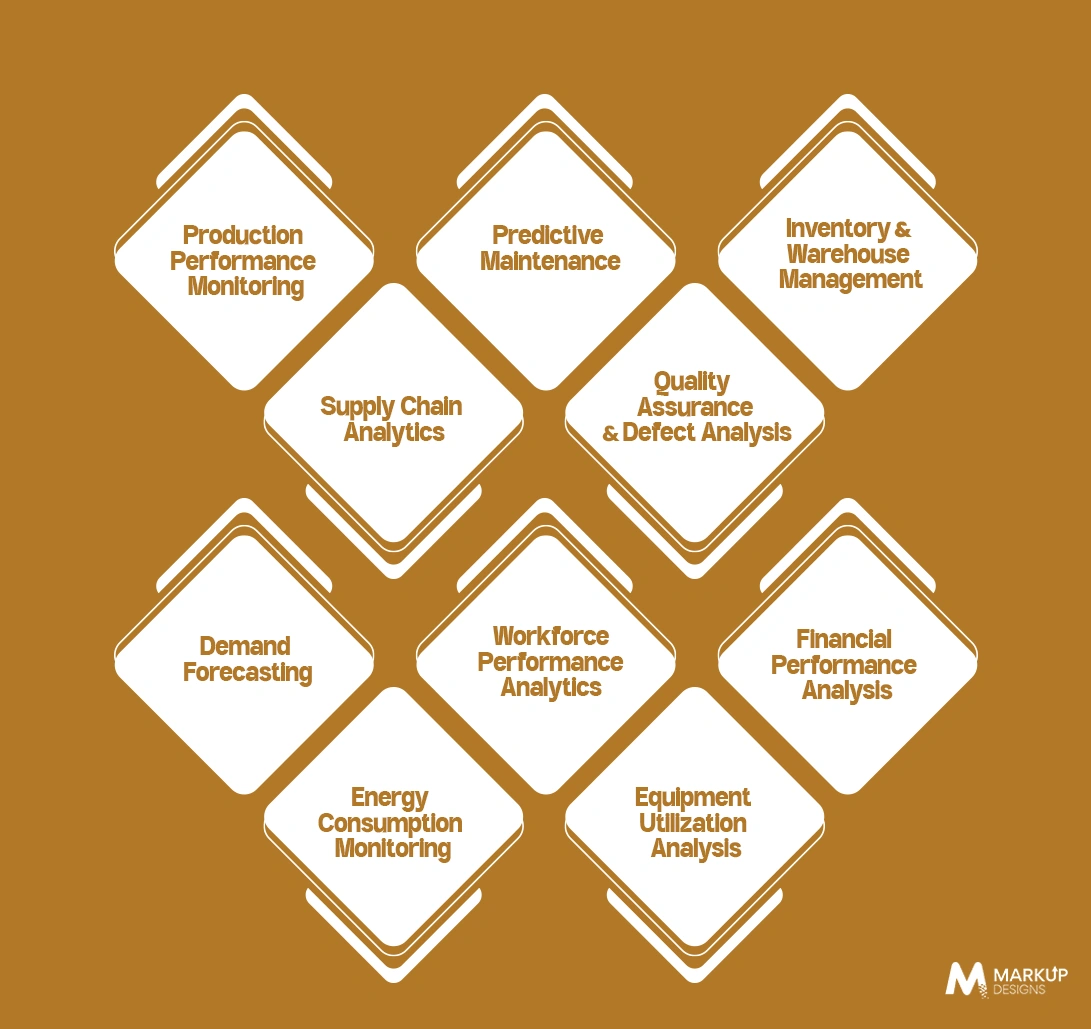
Manufacturers are using Business Intelligence to use operational data to form better data-driven decisions throughout the entire production process, as described below.
1. Production Performance Monitoring – BI has been used to measure production performance via production output, machine availability, cycle time, downtime, and Overall Equipment Effectiveness (OEE). Through this information, managers have been able to identify production bottlenecks and improve shop production performance.
2. Predictive Maintenance – As manufacturers analyze equipment maintenance history and equipment data via Business Intelligence, they can better predict when a piece of equipment is likely to fail and take appropriate action by scheduling maintenance before an unexpected failure occurs.
3. Inventory/Warehouse Management – Business Intelligence provides real-time visibility into inventory levels, stock movements, and warehouse operations, allowing manufacturers to better manage their inventory levels to prevent stock outs while reducing excess inventory.
4. Supply Chain Analytics – Utilizing these capabilities enables manufacturers to monitor supplier performance, when and how materials will be procured, how logistics operate, and how fast deliveries occur.
5. Quality Assurance & Defect Analysis – Using the analytics provided by BI, manufacturers can identify quality trends, produce recurring defects, and evaluate production inconsistencies that will support better quality manufactured products and reduce operational waste.
6. Demand Forecasting – Analyzing historical sales data, along with market trend and customer purchase behavior, will allow manufacturers to forecast more accurately how much product will be needed and plan better how much inventory to maintain.
7. Workforce Performance Analytics – The use of workforce analytics provides information on workforce productivity, labour utilization, attendance, and shift performance, which helps improve workforce planning and increased operational efficiency.
8. Financial Performance Analysis- Analyzing a company’s financial performance includes monitoring both the costs associated with producing products, as well as determining how much profit those products are generating, how much it costs to operate (operational expenses), and if there are any trends with regards to revenue that may affect future financial decision-making for a company.
9. Energy Consumption Monitoring- Monitoring the consumption of energy used by equipment and production facilities through Business Intelligence (BI) enables companies to identify energy-related savings and opportunities for reduction of energy costs; assisting in achieving their sustainability goals.
10 Equipment Utilization Analysis- By monitoring how often machines are being utilized, manufacturers can assist in maximizing their use of their assets, thereby improving their production capabilities while also increasing their return on investment in the equipment.
Best Practices for Implementing Business Intelligence
The section clearly defines that appropriate planning, quality data, and continued improvements will provide greater long-term value to a business with BI.
Create/ Establish Clear Business Objectives
Measurable Goals that relate BI Activities to Operational/Strategic Priorities.
Select KPI that are Critical
Specific Key Performance Indicators (KPIs) like OEE, Production, Defect Rates, Inventory Turnover, and Delivery Performance.
Involve Key Stakeholders
Combining team members from production, operations, finance, quality, and information technology increases the level of collaboration by providing everyone with a stake in the achievement of business success.
Ensure Quality of Data
High-quality data collected from reputable sources will provide the most reliable insights into performance.
Select BI Platform
Choose a scalable BI Platform that supports manufacturing, provides for real-time reporting, has AI analytics capabilities, and easily integrates with other system
Integrate Current Manufacturing Systems
Link ERP, MES, IOT, SCADA, and other enterprise applications to make a single source of operational data.
Launch a Pilot to Start
Implementing BI on a limited basis will create a baseline for evaluating results, getting feedback to improve the system, and also minimizing risks of failure prior to rolling out enterprise-wide.
Provide User Training
Users need to receive the level of training required to feel confident in using the dashboards, reading reports, and making data-based decisions.
Measure Performance & Keep Improving
The measurements across the KPI’s must be reviewed consistently, along with obtaining user feedback to continually improve the dashboards, in order to get the most long-term value out of Business Intelligence.
Implementation Issues with Business Intelligence
While the benefit of manufacturing BI solutions has been well documented, manufacturers will have many challenges implementing them and need to strategically plan for implementation as well as the correct technology approach.
Data Integration Challenges
Manufacturing data is commonly stored in multiple locations requiring time to create one “complete” picture of the business.
Solution: Integrate ERP, MES, SCADA, IoT, and other enterprise systems with centralized data platforms using standardised connections.
Data Quality Issues
Having incomplete, inaccurate or inconsistent data will reduce the overall reliability of the reports and business intelligence.
Solution: Implement best practices for data governance, automate validation of data entered, and have consistent standards for data throughout the organisation.
User Adoption & Change Management
Many employees will resist adapting to a new BI tool or changing an established workflow process.
Solution: Provide extensive training to them, involve stakeholders early in the process and show measurable business value to promote the adoption of BI tools.
Legacy Systems
Many older systems are incompatible with new manufacturing BI solutions, which restricts access to data from those systems.
Solution: Gradually modernize legacy systems’ infrastructure or utilise middleware solutions to connect legacy systems to new BI platforms without causing operational disruptions.
High Initial Investment
To implement new BI, organisations will incur expenses related to purchasing new software, deploying the necessary infrastructure, integrating new software into existing systems and training employees on the new business intelligence (BI) tools.
Solution: Identify impactful use cases for BI tools and implement them first, while also scaling implementation gradually, to maximise the return on investment.
Cybersecurity & Data Privacy
As manufacturers begin collecting and analysing larger amounts of operational data, the need to safeguard sensitive business information has become critical.
Solution: To protect manufacturing data, organisations need to establish best-practice security measures, such as implementing encryption methods, using role-based access controls, employing continuous monitoring programs and utilising industry-standard security measures.
Future Trends in Manufacturing Business Intelligence
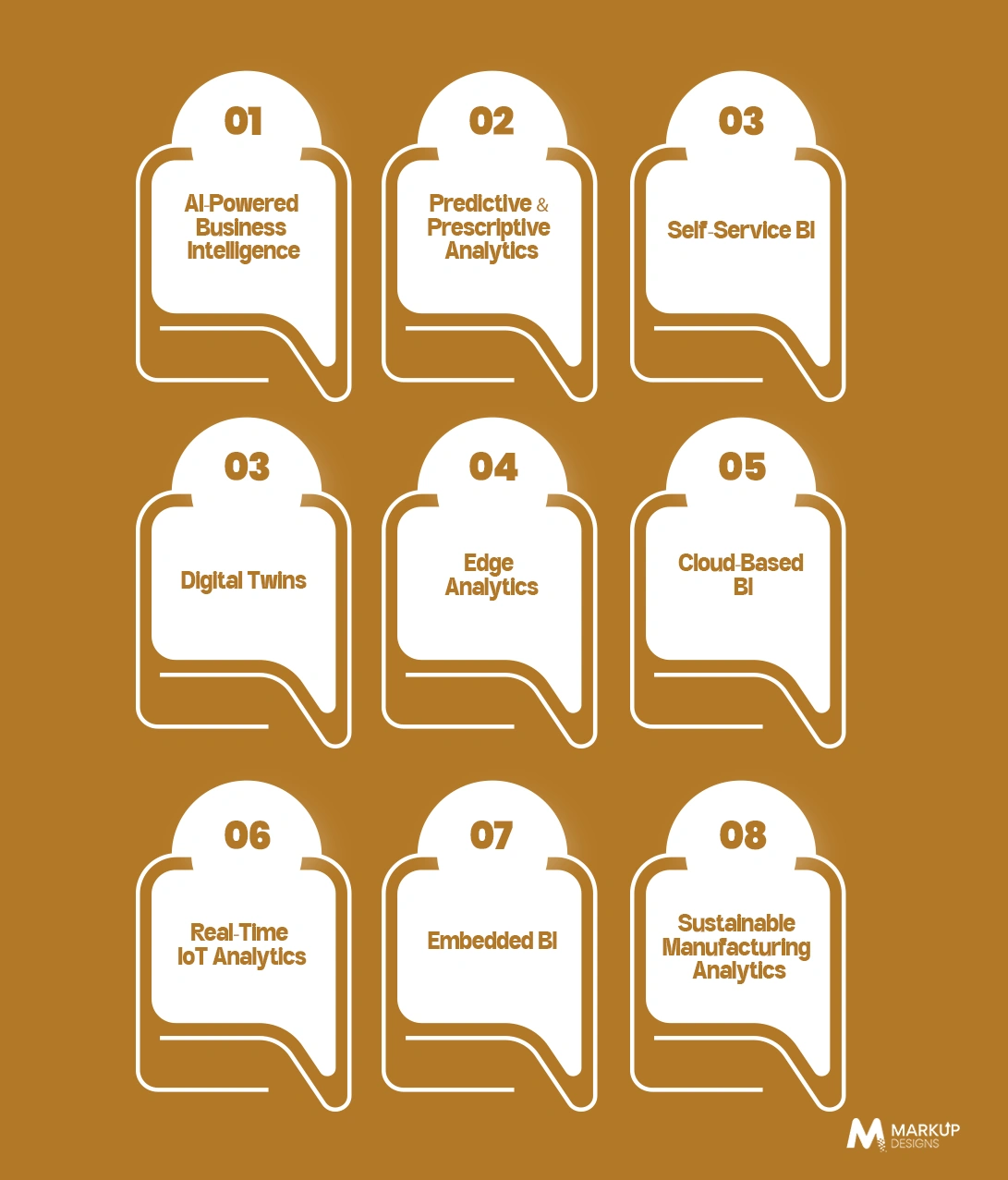
As manufacturers continue to undergo digital transformation, the evolution of BI technology will allow for faster, smarter and more predictive insights as compared to traditional reporting methods.
Artificial Intelligence Powered Business Intelligence
Artificial intelligence enables organisations to automate their analysis of data, discover patterns, and make recommendations based on the insights gained, resulting in quicker and better-informed operational decisions.
Predictive & Prescriptive Analytics
Forecasting is not the only way that modern business intelligence platforms help businesses. They also provide best way to improve production efficiency and reduce downtime by offering prescriptive analytics.
Self-Service BI
A self-service analytics tool allows business users with little or no experience to create reports and analyze their data without having to depend on IT personnel for support.
Digital Twins
Digital twin technology is a way for manufacturers to create virtual replicas of their production lines and the machines that they use in the production process. This allows them to simulate processes, monitor performance, and increase operational efficiency.
Edge Analytics
Using edge analytics means analyzing data close to where it is being generated, which allows for faster insights, lower-latency, and real-time decision-making on the production floor.
Cloud-Based Business Intelligence
Cloud-based business intelligence platforms offer organizations greater scalability, remote access to analytics, and cost-effectiveness, while supporting collaboration across multiple production facilities.
Real Time IoT Analytics
Using continuous analysis of data collected from industrial sensors, analytics allows manufacturers to assess the health of their equipment, identify anomalies, and improve their production processes in real time.
Embedded BI
Manufacturers are embedding analytics directly into their enterprise resource planning systems, MES systems, and other enterprise resource planning systems, allowing users to access insights without switching from one system to another.
Sustainable Manufacturing Analytics
Using business intelligence tools help organizations to monitor and report on energy-use, emissions, waste, and resource-use in order to support manufacturing sustainability initiatives and to comply with environmental, social and governance (ESG) reporting requirements.
Why Choose Markup Designs for Manufacturing BI Solutions
At Markup Designs, we help unlock the full value of your operational data through tailored manufacturing Business Intelligence solutions. Our experts design scalable BI platforms that integrate seamlessly with an existing manufacturing systems, providing real-time visibility and actionable insights.
Our services include BI strategy and consulting, custom dashboard development, ERP, MES, SCADA, and IoT integration, AI-powered analytics, interactive data visualization, predictive analytics, and continuous support to ensure your BI platform evolves alongside your business.
Turn Manufacturing Data into Smarter Business Decisions
Empower your operations with intelligent Business Intelligence solutions that improve productivity, optimize performance, and drive sustainable growth.

Conclusion
Business Intelligence has become an essential capability for modern manufacturers seeking greater efficiency, improved quality, and data-driven decision-making. By integrating data across production, supply chain, finance, and operations, BI provides the visibility needed to optimize processes, reduce costs, and respond quickly to changing business demands.
As technologies such as AI, IoT, cloud computing, and predictive analytics continue to advance, Business Intelligence will play an even greater role in shaping the future of smart manufacturing. Organizations that invest in scalable BI solutions today will be better positioned to improve operational performance, enhance customer satisfaction, and maintain a competitive advantage.
FAQs
1. What is Business Intelligence in manufacturing?
Business Intelligence (BI) in manufacturing involves collecting, integrating, analyzing, and visualizing production and business data to improve operational performance and support informed decision-making.
2. What are the benefits of BI in manufacturing?
Business Intelligence for manufacturing helps improve operational efficiency, product quality, supply chain visibility, predictive maintenance, inventory management, cost control, and overall business performance.
3. How is BI different from ERP?
ERP systems manage daily business operations and transactions, while BI analyzes data from ERP and other systems to generate insights, reports, and performance dashboards for decision-making.
4. Which BI tools are best for manufacturers?
Popular BI platforms include Microsoft Power BI, Tableau, Qlik Sense, SAP BusinessObjects, and IBM Cognos Analytics. The ideal choice depends on an organization’s size, infrastructure, and reporting requirements.
5. How long does BI implementation take?
Implementation timelines vary based on project scope, system complexity, and integrations. Small deployments may take a few weeks, while enterprise-wide implementations can take several months.
6. Is Business Intelligence suitable for small and medium manufacturers?
Yes. Modern cloud-based BI solutions provide affordable, scalable manufacturing analytics that enable small and medium manufacturers to improve visibility, optimize operations, and make data-driven decisions without significant infrastructure investments.
Author's Perspective
Business Intelligence is no longer just a reporting tool but it has become a strategic asset for modern manufacturers. As production environments become increasingly connected through IoT, AI, and automation, the ability to transform raw operational data into actionable insights is critical for maintaining efficiency and competitiveness. Manufacturers who invest in scalable BI solutions can move beyond reactive decision-making, optimize resources in real time, improve product quality, and build more resilient, future-ready operations. Ultimately, Business Intelligence empowers organizations to make faster, smarter decisions that drive sustainable growth and long-term success.
Discuss Your Project NowJupinder Singh Arora
Founder and CEO
Related Posts

How Artificial Intelligence Is Changing Mobile Game Development

How to Build Production-Ready Applications with AI Coding...

Cost, Benefits & Business Impact: Generative AI vs....
Insights Are Valuable & Execution is Priceless
You’ve read about the digital future. Now, let’s build the infrastructure to take you there. Move your strategy from the page to the product.
Design Your Solution Now
Contact Us
Schedule The Appointment At Your Convenience Date And Time.
30 Min
Web Conference
Time Zone
Indian standard time (08:30pm)

Thanks For Getting In Touch!
You’ve Taken The First Step Toward Transforming Your Digital Presence. Our Experts Will Reach Out Shortly To Take It Forward.
Launch Your Dream Project
Provide a brief overview of your project, and our specialists will evaluate your requirements. We will connect with you to explore how the right digital solutions can help you launch faster.