
In Brief
- AI is transforming online shopping by delivering personalized recommendations, intelligent search, AI chatbots, fraud detection, and predictive analytics, helping businesses create faster, smarter, and more engaging customer experiences.
- Businesses can use AI to improve sales, customer engagement, inventory management, fraud prevention, customer support, and data-driven decision-making while reducing operational costs and increasing efficiency.
- Key technologies such as machine learning, natural language processing (NLP), computer vision, generative AI, predictive analytics, and recommendation engines power modern AI-driven eCommerce platforms.
- Successful AI implementation requires clear business goals, the right AI use cases, quality data, seamless integration with existing systems, continuous monitoring, and regular optimization to maximize ROI.
- Although AI development costs vary with project complexity and features, investing in AI helps businesses enhance customer satisfaction, automate operations, increase conversions, and gain a competitive advantage in the evolving eCommerce market.
The scope of shopping online is no longer just browsing through the list of products and making purchases. Nowadays, customers demand personalized recommendations, prompt assistance, smooth navigation, and fast deliveries-along with safe and easy shopping experience. Meeting these standards has become difficult for online sellers with respect to this ever-increasing competition in the eCommerce marketplace. Therefore, the role of Artificial Intelligence becomes truly important.
From suggesting products based on browsing history to predicting customer preferences and offering automated help through smart chatbots, the application of AI technology is revolutionizing each step of the online shopping process.
AI is changing the experience of online shopping today. In this blog, we will discuss how AI transforms online shopping, the technology used, business advantages of AI-based shopping, its implementation, cost of development, problems, and the future of AI in online shopping.
If you are about to start a new online shopping website or improve your existing one, this blog will be fruitful for you.
Why AI is Transforming Online Shopping
The online shopping industry has become more competitive than ever. Nowadays, it’s not only about prices, customers require personalized recommendations, fast replies, safe payments, and an overall pleasant shopping experience on any device they choose to use. Many companies find it difficult to achieve those goals and fail to attract customers and grow their sales.
Artificial Intelligence helps online sellers overcome these challenges by extracting valuable insights from massive amounts of customer and business data. Through AI agent development for eCommerce, businesses can automate decision-making, deliver highly personalized shopping experiences, provide intelligent customer support, and optimize operations across the entire online shopping journey.
Now that we’ve explored why AI is reshaping online shopping, let’s look at the key benefits it offers to both businesses and their end users.
Key Benefits of AI in Online Shopping
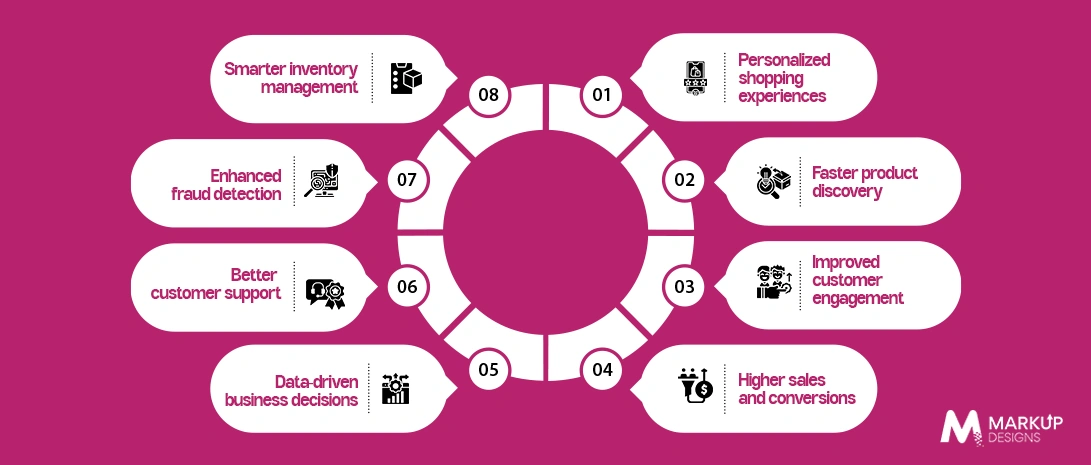
AI is transforming both the customer experience and the way businesses manage their online stores. From delivering personalized online shopping experiences to improving operational efficiency, AI helps retailers make smarter decisions, enhance customer satisfaction, and drive better business outcomes. Below are some of the major advantages of using AI for online shopping.
Personalized Shopping Experiences
Customers have their own tastes, preferences, and behaviors when it comes to purchasing products. AI uses customer’s browsing history, their purchase and search behavior to offer them product recommendations that suits them.
This type of customization not only makes shopping more interesting but also ensures higher customer engagement and repeat visits. There is no need to give the same offer to all customers.
Faster Product Discovery
It is difficult for customers to find a suitable product out of thousands of products listed. Such an intelligent search engine knows about the intentions of the users and does not depend only on the matching keywords. Additionally, it can work even on voice search and visual search.
As a result, the customers will spend less time searching and more time buying.
Improved Customer Engagement
AI-driven chatbots and AI shopping assistants respond immediately to all customer inquiries. These assistants can respond to inquiries about products, suggest appropriate products, track orders, and handle any issues without human assistance at all.
It allows customers to get immediate help anytime, making their shopping experience more engaging and smooth.
Higher Sales and Conversion Rates
AI’s greatest strength is its potential to affect purchases using recommendations and offers. Through AI, it is possible to make intelligent suggestions about complementary products, time-based deals, and discounts that would be of interest to the consumer. This makes consumers buy more from the shopping cart and ultimately leads to increased sales and revenues.
Smarter Inventory Management
Optimal management of inventory is very important for all eCommerce companies. Using AI, past sales history, seasonality, and demand from customers are analyzed in order to determine future needs of inventory.
This prevents organizations from experiencing stockouts and over-stocking and enables availability of best-selling goods. Inventory management also helps to lower storage costs and increase efficiency.
Enhanced Fraud Detection
Cybercrime remains a significant threat to both retailers and consumers. The system uses AI algorithms to monitor purchases and detect any abnormal purchase patterns that may lead to fraud. The monitoring of such activities in real time ensures that companies do not suffer any monetary losses as well as secure sensitive consumer information.
Better Customer Support
Apart from being able to respond to basic queries, artificial intelligence also assists in providing proactive support for clients. This is achieved by having the software which offers direct customer support, give personalized responses, and even analyze customer complaints to detect recurring problems. This makes customer experience more efficient and enables customer support staff to focus on other productive tasks.
Data-Driven Business Decisions
Artificial Intelligence manages customer, sales, and operational information much better as compared to the manual handling of data. The process helps reveal meaningful information on customer preferences, product performance, prices, and trends.
These insights enable businesses to make informed decisions, optimize marketing campaigns, improve product offerings, and identify new growth opportunities with more confidence.
Top Ways AI Is Revolutionizing Online Shopping Experiences
The application of AI affects every phase of online shopping, right from the time a customer discovers a product to providing post-purchase support services. Below are some of the most transformative impacts of AI in eCommerce.
Personalized Product Recommendations
Through analysis of consumer behavior, purchase behavior, and browsing patterns, AI recommends products to consumers in a manner that increases sales and enables customers to find relevant products.
AI-Based Search and Visual Search
The new generation of AI search engines can comprehend consumer intent and not just search based on keyword searches. The visual search function also makes it possible for consumers to upload an image and find similar products.
Intelligent Chatbots and Virtual Shopping Assistants
AI-based chatbots offer 24/7 customer support and answer queries about products, offer recommendations, and help track orders.
Dynamic Pricing and Personalized Offers
AI looks at customer behavior, market trends, and competitor prices to set the right product prices and offer personalized discounts.
Predictive Inventory Management
With the help of AI, retailers can make predictions about future demand and ensure that the inventory is well stocked without overstocking and unnecessary costs.
Transaction Monitoring and Fraud Prevention
The transaction monitoring capability of AI ensures safe and secure payments by analyzing and detecting any malicious activity.
Voice Commerce and Smart Shopping
AI voice technology allows customers to search for products, compare prices, and make purchases using their voice only.
AR-Powered Virtual Try-Ons
The use of AI, combined with augmented reality, helps customers try out products like clothing, eyewear, cosmetics, and furniture even before buying them.
All these capabilities of AI help businesses offer faster and smarter shopping experiences.
AI Technologies Powering Modern Online Shopping
The process of smart shopping is underpinned by various forms of AI technologies, which allow enterprises to optimize their operations, know their customers needs, and make smarter decisions. The combination of these technologies enhances customer experience and business performance simultaneously.
Machine Learning (ML) technology allows webshops to evaluate consumer behavior, forecast purchases, and provide better AI product recommendations based on the analysis of new information.
NLP technology helps AI to interpret and answer customers’ queries written in natural language. This technology is used to build chatbots, voice search engines, and automated customer support services.
Computer Vision technology allows shoppers to find products via pictures rather than through text. It also allows virtual try-ons, recognizing pictures and automatic tagging of products.
Generative AI generates personalized product descriptions, marketing texts, customer responses, and shopping recommendations.
Predictive Analytics uses both historical and current data to predict future demands of customers, optimize inventory, and identify buying trends.
Recommendation Engines use customer preferences, browsing and buying behavior to offer recommendations of products in order to engage and convert visitors into customers.
Together, these AI technologies create intelligent online shopping platforms that provide personalized experiences, automate routine tasks, improve decision-making, and help businesses stay competitive in an evolving digital marketplace.
Unlock the Power of AI for Your Online Store
Want to create personalized shopping experiences, automate operations, and boost sales with AI? Markup Designs builds custom AI-powered eCommerce solutions tailored to your business goals, helping you stay ahead in today’s competitive online marketplace.

How to Implement AI in an Online Shopping Platform
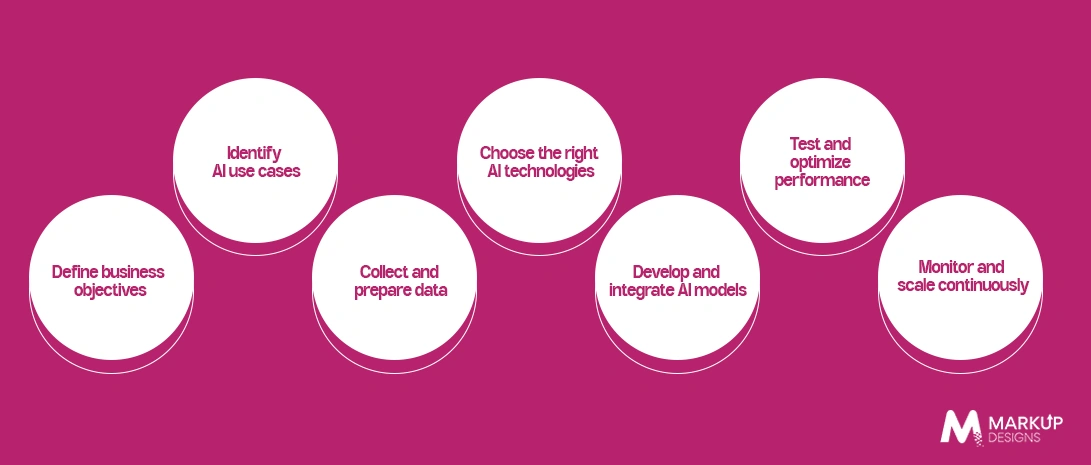
Successful deployment of AI cannot be achieved just by incorporating new technology into the existing systems. Companies should adopt a methodical approach in order to get tangible results from using AI.
Define Business Objectives
Identify the issues that require an AI solution, which can be anything from enhancing the customer experience, driving up sales, minimizing cart abandonment, to efficient inventory management.
Identify AI Use Cases
Choose the AI solutions that deliver maximum value to the business, such as personalization, chatbots, fraud detection, prediction, or dynamic pricing.
Collect and Prepare Data
Data is the foundation of AI models, and hence, it must be gathered, ensuring that it is clean and correct, as well as adhering to privacy regulations.
Choose the Right AI Technologies
Choose the required technology to be used, such as machine learning, natural language processing, computer vision, or generative AI, depending on your business needs and requirements.
Develop and Integrate AI Models
Integrate the artificial intelligence development solution into your existing eCommerce system, payment services, CRM, and inventory management systems to achieve seamless operations.
Test, Monitor, and Optimize
After deployment, continuously monitor AI performance, measure business outcomes, retrain models with new data, and refine algorithms to improve accuracy and deliver better shopping experiences over time.
Cost of Implementing AI in eCommerce Applications
The cost of integrating AI in the eCommerce system depends on what kind of AI technologies are required, the volume of your online shop, and the complexity of the whole process. A simple AI system with some basic functions will cost you less investment than an enterprise solution with all the necessary features.
Despite the initial investment that is required, AI is going to bring you an additional value in terms of increased sales, higher customer satisfaction levels, lower operational costs, and automation of processes.
| Project Type | Estimated Cost | Suitable For |
| Basic AI Integration | $15,000-$35,000 | Small businesses adding chatbots, product recommendations, or basic search features. |
| Mid-Level AI Solution | $35,000-$80,000 | Growing eCommerce businesses implementing predictive analytics, personalized marketing, and inventory optimization. |
| Enterprise AI Platform | $80,000-$200,000+ | Large retailers require dynamic pricing, fraud detection, demand forecasting, computer vision, and multiple AI integrations. |
Factors Affecting AI Development Costs
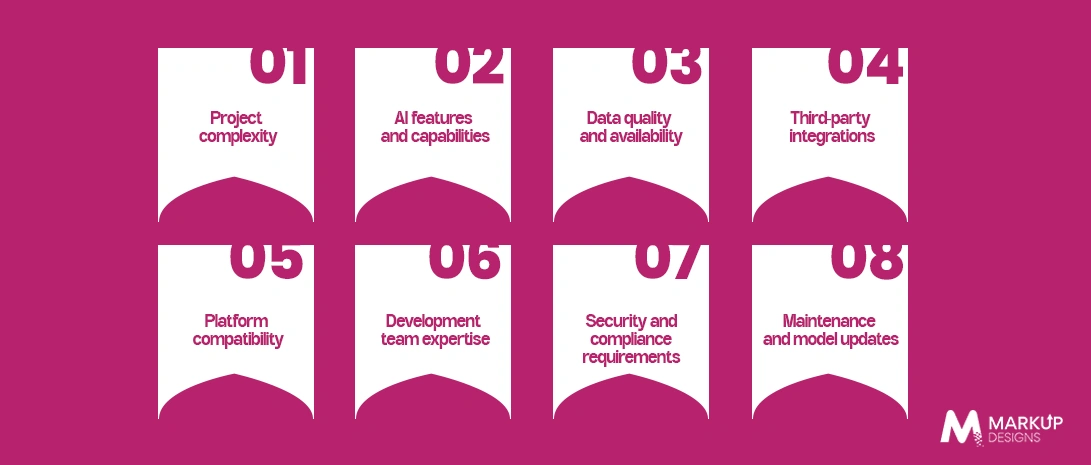
The overall cost of developing AI-powered online shopping solutions varies depending on several technical and business factors.
Project Complexity
Basic AI functions like chatbots entail lower costs in comparison to advanced AI solutions that include recommendation engines, predictive analysis, and use multiple AI models.
AI Features and Capabilities
The quantity and complexity of AI capabilities will determine how long and costly the development process is. More complex capabilities, including visual search, voice commerce, fraud detection, and dynamic pricing, demands more effort during development.
Data Quality and Availability
Clean and structured data will help AI applications function effectively. If businesses have to collect, structure, and clean big data, extra development time and resources will be required.
Third-Party Integrations
Integrations with payment gateway systems, CRM platforms, ERP, inventory management software, marketing services, and logistics platforms add to project complexity and development efforts.
Platform Compatibility
Creating AI solutions that will function effectively on different web-based platforms, Android, iOS applications, and omnichannel commerce environments takes more effort and time.
Development Team Expertise
Employing professional AI engineers, data scientists, and eCommerce developers might increase costs of the project but improve its quality and shorten the development period.
Security and Compliance Requirements
To ensure data protection and compliance with regulations such as GDPR, PCI DSS, or even region-specific privacy laws, extra measures of security and development are needed.
Maintenance and Model Updates
The AI systems must be constantly monitored, retrained, optimized, and enhanced to remain accurate amid changing customer behavior and market situations.
Understanding these cost factors helps businesses plan realistic budgets and prioritize AI investments that deliver the highest return.
Best Practices for Successfully Adopting AI in Online Shopping
The successful use of AI requires planning and continuous upgrades. Rather than applying AI to all processes within your business, you need to focus on processes where it will deliver real results.
First of all, state your business goals and choose the AI applications that will be solving the problems of your customers. You need to make sure you possess the latest data, as the workability of any AI model depends on the data used.
Choose scalable AI models that will integrate easily into your existing eCommerce system, CRM, and inventory management solutions. Do not forget to test your AI models before implementing them.
Customer privacy must be taken into account at all times in the process of AI implementation. You need to comply with all relevant laws and protect your customers’ data, as well as let them know how their data is used by the AI.
Finally, monitor the work done by AI according to various business metrics such as conversion rate, customer satisfaction, average order value, and retention rates.
Why Choose Markup Designs for AI-Powered eCommerce Development
Markup Designs helps businesses build smart eCommerce solutions that combine advanced AI with seamless user experiences.We develop secure and customized AI-powered platforms to cater to specific business needs.
We develop AI-powered recommendations and AI chatbots, predictive analytics, inventory management, and intelligent automation, among other applications, to enhance user engagement and optimize business processes.
Our development process includes defining your business needs, determining which AI functionality should be integrated, seamless integration of the AI technology with your business systems, and ensuring that the solution is scalable in the long run.
If you want to develop a new online store or improve your current eCommerce platform with AI, our AI experts can provide the necessary assistance.
Transform Your Online Store with AI-Powered Shopping Experiences
Ready to deliver personalized shopping experiences, automate operations, and increase conversions? Partner with Markup Designs to build intelligent eCommerce solutions powered by the latest AI technologies.

Conclusion
AI is revolutionizing online shopping by enhancing the speed, intelligence, and personalization of customer experiences. Through product suggestions, AI chatbots, fraud detection, and predictive analysis, AI assists companies in improving customer satisfaction and improving their efficiency.
With rising customer expectations, AI is now a necessity for all eCommerce companies. It helps in increasing sales, lowering costs, building customer relations, and making sound business decisions.
With the adoption of the right AI technologies and continuous optimization of the same, a seamless shopping experience can be created.
FAQs
1. Where is AI used in online shopping?
AI can be utilized for personalized recommendations, intelligent search, chatbots, fraud detection, demand forecasting, dynamic pricing, inventory management, and customer analysis.
2. Is AI suitable for small eCommerce businesses?
Yes. AI tools are now affordable, so even small eCommerce businesses can start using them without spending a lot of money. Chatbots, recommendation engines, and marketing automation could be implemented first, then followed by more advanced AI.
3. Will AI enhance the customer’s experience?
Yes. AI will make shopping experiences personalized, fast, convenient, and relevant, which will increase customers’ satisfaction level.
4. How long does the process of AI implementation take?
It depends on the complexity of the project and on what AI technologies need to be implemented. Basic implementations take several months, and enterprise-level take more time to develop.
5. Which industries could get the benefits of AI-powered online shopping?
Industries like retail, fashion, grocery, electronics, healthcare, beauty, furniture, automotive, luxury goods, and B2B eCommerce businesses can implement AI into their online shopping.
Author's Perspective
AI is no longer a futuristic technology in the e-commerce industry; in fact, it has emerged as a valuable business asset that enables organizations to provide enhanced customer experience while optimizing their operations. The organizations that are achieving success through AI technology are those that have embraced it to address their end users’ problems instead of following the trend.
The organizations that will make efforts to invest in scalable and customer-centric AI solutions now, will definitely find themselves well prepared to meet future market needs, establish strong customer loyalty, and grow sustainably in a highly competitive environment of e-retail.
Discuss Your Project NowGaurav Goyal
Global Sales- VP
Related Posts

How Artificial Intelligence Is Changing Mobile Game Development
How to Build Production-Ready Applications with AI Coding...
Cost, Benefits & Business Impact: Generative AI vs....
Insights Are Valuable & Execution is Priceless
You’ve read about the digital future. Now, let’s build the infrastructure to take you there. Move your strategy from the page to the product.
Design Your Solution Now
Contact Us
Schedule The Appointment At Your Convenience Date And Time.
30 Min
Web Conference
Time Zone
Indian standard time (08:30pm)

Thanks For Getting In Touch!
You’ve Taken The First Step Toward Transforming Your Digital Presence. Our Experts Will Reach Out Shortly To Take It Forward.
Launch Your Dream Project
Provide a brief overview of your project, and our specialists will evaluate your requirements. We will connect with you to explore how the right digital solutions can help you launch faster.