
In Brief
- UAE is working on its aspiration of establishing itself as a global leader in utilizing artificial intelligence for the delivery of government services, including immigration and processing of visas, as the top priority of digital transformation.
- The increase in the volume of applications for issued visas is a result of the growth of tourism, expansion of businesses, and movement of skilled labour to UAE.
- Due to the increase in volume of applications for issued visas, there is a need to have the processing of visas done faster and more efficiently than ever before.
- Historically, the processing of visas has been handled manually, with verification of documents and many sequential approvals; repetitive administrative functions that result in delays in making decisions have been standard practice in the processing of visas.
- Artificial intelligence is augmenting visa processing through automated document verification and biometric identification of the applicant, detection of fraudulent activity, and intelligence-driven automation of processes, which in turn enhances the security of the visa process.
- This blog discusses how artificial intelligence is transforming visa processing in UAE, including its benefits, application, challenges to its implementation, planned trends, and the need for continued investment in AI-based solutions for immigration.
As a global leader in the digital governance space, UAE will continue to implement the use of artificial intelligence to improve its public services and consequently improve the delivery of services in terms of efficiency, safety, and experience for UAE citizens. An example of the application of artificial intelligence to improve the processing of visas is the use of online systems for processing applications. There are literally millions of tourists, businessmen and women, foreign investors, and skilled work professionals entering UAE each and every year. At the same time, immigration authorities have a similar volume of applications for issued visas that are being processed. The immigration authorities must have advanced intelligent systems that can process this ever-increasing volume of applications consistently with accuracy, efficiency, compliance with regulations, and national security.
According to industry estimates, the global AI-powered visa processing market is expected to grow at a compound annual growth rate (CAGR) of nearly 45% through 2030, driven by increasing international travel and governments’ shift toward digital immigration systems.
Through digitization and automation, AI is helping government agencies transform their entire visa lifecycle (from application submission to approval) from one that is largely manual to one that leverages technologies including machine learning, Natural Language Processing (NLP), Optical Character Recognition (OCR), Biometric Verification and Predictive Analytics will allow for a visa ecosystem that is faster, more transparent, and has greater security than ever before. This blog post will discuss the positive impacts AI has had on the visa processes in UAE, along with how UAE immigration process will be improved with AI, what challenges were present before AI implementation, how to implement AI into the visa process, the future of the visa process, and how organisations can develop AI-powered solutions.
Understanding the Traditional Visa Processing Challenges in UAE
Prior to the widespread use of AI technologies, the way in which visas were processed within UAE was primarily based on manual workflows and repetitive administrative functions. With the continued growth of the tourism market in Dubai, the influx of foreign investors and business owners, the need for skilled labour continues to grow, and the demand for timely processing of visa applications has also increased.
Time-Consuming Manual Processing
Traditional visa processing methods typically consist of paperwork, manual data entry, and multiple stages of document verification, which can lead to an extended amount of time to receive an approval decision, particularly during peak travel periods or when there is an increase in applicants submitting their applications at once.
Human Errors and Inconsistent Decision-Making
Due to the nature of manual processing, there is a greater risk of data entry error, incomplete document checks, and inconsistencies in verification results. The applicant assessment will rely heavily on the individual doing the assessment, leading to issues with having a consistent process when assessing the different applicants, as there are thousands of applicants entering requests for visas.
Fraudulent Applications and Security Risks
Immigration authorities must be vigilant in the fight against fraudulent documents, identity fraud, and forgery. Traditional verification methods may not be able to detect many of the sophisticated methods of fraud that are happening today, making it very difficult to identify a high-risk application quickly.
Limited Transparency for Applicants
Most applicants have very limited visibility as to the current status of their visa application. Due to the lack of real-time updates on their visa application status and delays in communication creates uncertainty, increased levels of inquiry, and negatively impacts the overall user experience.
Rising Visa Volumes and Operational Pressure
The continued growth of UAE as a global tourism, business, and investment hub is increasing the volume of visa applications. In addition to this is also the growth of skilled migration, which puts additional operational strain on government departments to process visa applications promptly without compromising quality.
How AI is Transforming Visa Processing in UAE
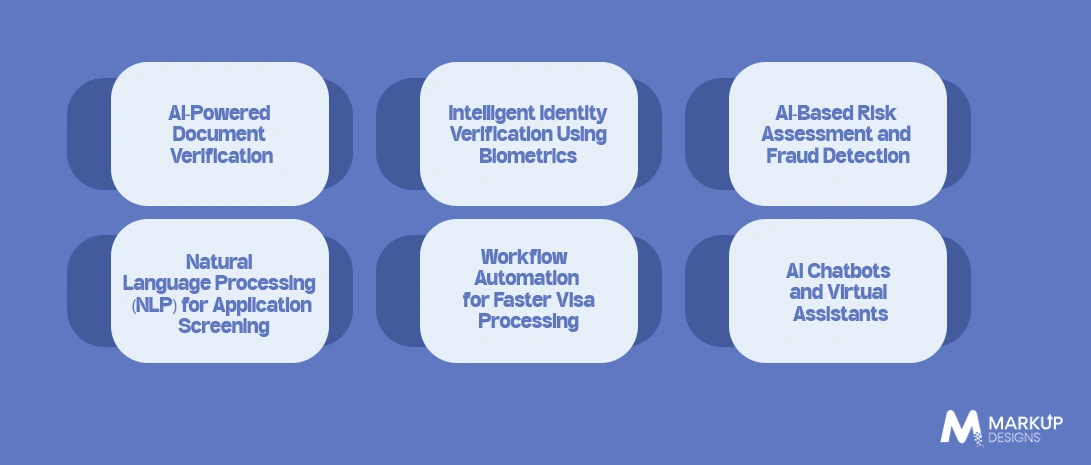
Artificial intelligence is redefining how visa applications are processed in UAE by replacing time-intensive manual tasks with intelligent automation. From verifying documents and authenticating identities to detecting fraud and assisting applicants, AI enables immigration authorities to deliver faster, more secure, and more accurate visa services.
AI-Powered Document Verification
AI uses Optical Character Recognition (OCR) technology to extract information from passports, visas, and supporting documents within seconds. It automatically validates submitted documents, identifies missing information, and detects forged or altered records, reducing manual effort while improving accuracy.
Intelligent Identity Verification Using Biometrics
Biometric technologies such as facial recognition and fingerprint authentication help verify an applicant’s identity with greater precision. By matching biometric data with passport information and official records, AI strengthens identity verification while enhancing border security.
AI-Based Risk Assessment and Fraud Detection
Machine learning algorithms analyze application data to identify unusual patterns and assign risk scores to applications. This allows authorities to detect fraudulent submissions more efficiently, prioritize high-risk cases for further review, and strengthen overall immigration security.
Natural Language Processing (NLP) for Application Screening
Natural Language Processing (NLP) enables AI to extract key information from application forms and supporting documents while validating submitted content for completeness and consistency. This minimizes processing errors and helps speed up application reviews.
Workflow Automation for Faster Visa Processing
AI streamlines visa operations by automatically routing applications to the appropriate departments, managing approval workflows, and directing complex or exceptional cases to immigration officers when human review is required. This intelligent workflow automation reduces manual intervention, accelerates decision-making, and improves overall operational efficiency.
AI Chatbots and Virtual Assistants
AI-powered chatbots provide round-the-clock assistance by answering common visa-related questions, offering multilingual support, tracking application status, and guiding applicants throughout the submission process. This improves accessibility while reducing the workload on customer support teams.
Key Benefits of AI in UAE Visa Processing
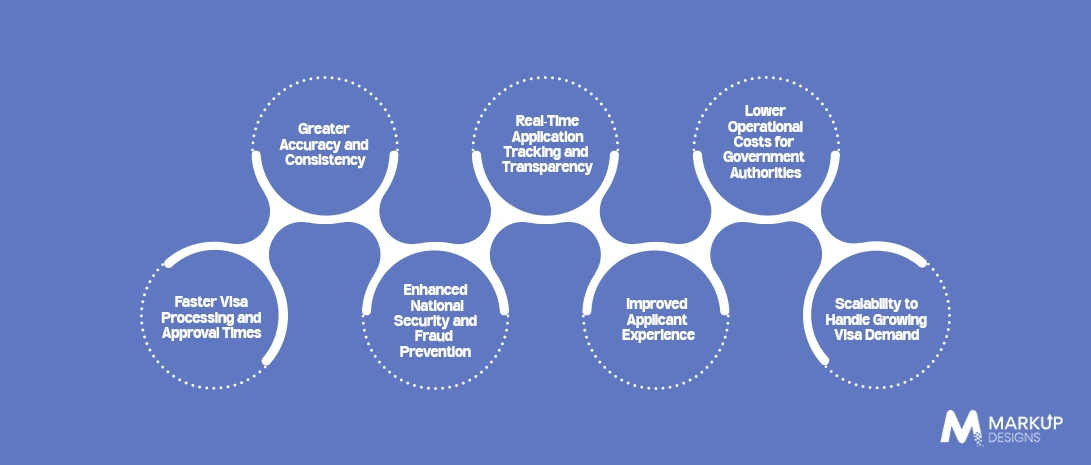
Artificial intelligence is helping UAE modernize its immigration system by making visa processing faster, more secure, and more efficient. By automating routine tasks and improving decision-making, AI benefits both government authorities and applicants while supporting the country’s vision of delivering world-class digital public services.
Faster Visa Processing and Approval Times
AI automates document verification, data validation, and initial application screening, significantly reducing the time required to process visa requests. Faster approvals help meet the growing demand from tourists, business travelers, investors, and skilled professionals.
Greater Accuracy and Consistency
By minimizing manual intervention, AI reduces data entry errors and ensures applications are evaluated using standardized criteria. This leads to more accurate, consistent, and reliable decision-making throughout the visa process.
Enhanced National Security and Fraud Prevention
AI enhances national security by identifying forged documents, detecting suspicious application patterns, and verifying identities through biometric authentication and intelligent risk analysis. These capabilities strengthen border security while helping authorities prevent fraudulent activities more effectively.
Real-Time Application Tracking and Transparency
AI-powered platforms provide applicants with real-time visa status updates, automated notifications, and improved communication throughout the application journey. Greater transparency reduces uncertainty, minimizes support inquiries, and enhances applicant confidence in the overall process.
Improved Applicant Experience
From intelligent chatbots to streamlined digital application processes, AI makes applying for a visa quicker and more convenient. Applicants receive instant assistance, multilingual support, and faster responses, resulting in a smoother overall experience.
Lower Operational Costs for Government Authorities
By automating repetitive administrative tasks, AI reduces manual workloads, optimizes resource allocation, and improves workforce efficiency. This enables immigration authorities to process more applications while lowering operational costs and maintaining high service standards.
Scalability to Handle Growing Visa Demand
As UAE continues to attract visitors, investors, entrepreneurs, and global talent, AI enables immigration systems to process increasing application volumes without compromising speed, accuracy, or security. This scalability supports the country’s long-term economic growth and digital transformation goals.
Real-World Applications of AI Across UAE Visa Journey
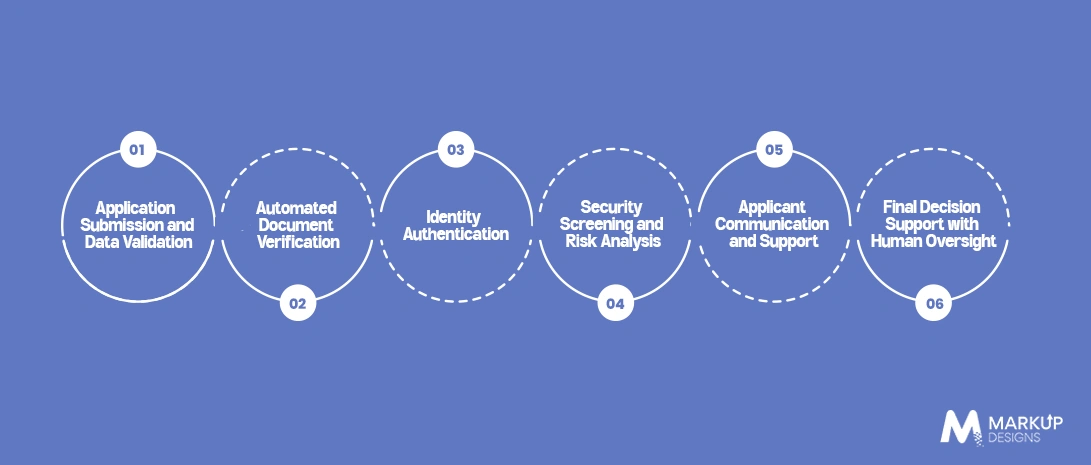
AI is transforming every stage of the visa process, from the moment an application is submitted to the final approval. By combining automation with intelligent decision-making, UAE is creating a faster, more secure, and applicant-friendly immigration ecosystem while allowing human officers to focus on complex cases.
Application Submission and Data Validation
AI simplifies the application process by automatically validating submitted information, checking for missing fields, and identifying inconsistencies before an application moves forward. This helps reduce errors and prevents delays caused by incomplete submissions.
Automated Document Verification
Using Optical Character Recognition (OCR) and intelligent document analysis, AI quickly verifies passports, identification documents, and supporting records. It can detect forged or altered documents while ensuring all required documentation is complete.
Identity Authentication
Biometric technologies, including facial recognition and fingerprint verification, enable AI to accurately authenticate an applicant’s identity by matching biometric data with passport details and official government records.
Security Screening and Risk Analysis
Machine learning models analyze application data to identify unusual patterns, assess potential risks, and flag suspicious cases for further investigation. This strengthens fraud detection while supporting more effective border security.
Applicant Communication and Support
AI-powered chatbots and virtual assistants provide instant responses to common queries, offer multilingual guidance, share real-time application updates, and assist applicants throughout the visa process, improving both accessibility and user experience.
Final Decision Support with Human Oversight
AI assists immigration authorities by automating routine assessments and recommending outcomes based on predefined criteria. However, complex, high-risk, or exceptional cases continue to be reviewed by experienced immigration officers, ensuring fairness, transparency, accountability, and regulatory compliance through a human-in-the-loop approach.
Read Also: How Much Does It Cost to Build an AI Chatbot in UAE?
Global Examples of AI in Visa and Immigration Processing
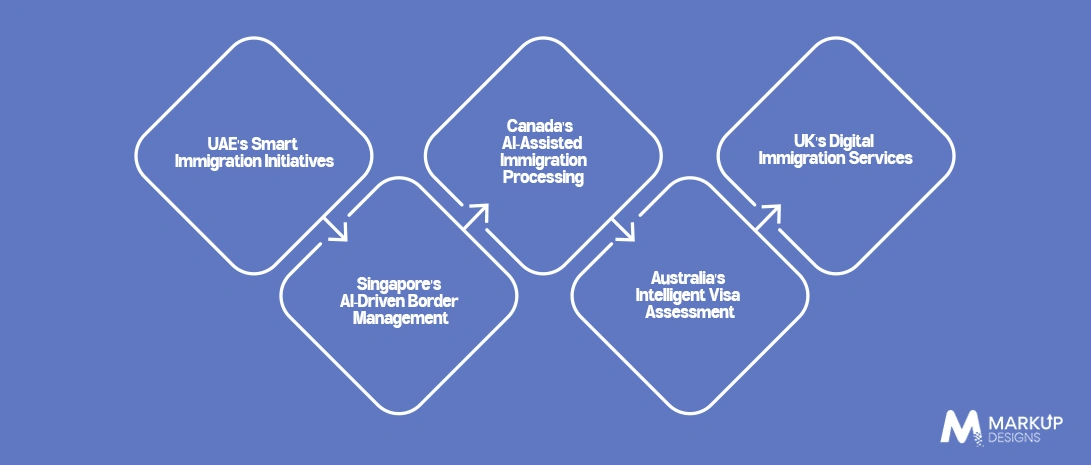
Governments worldwide are leveraging artificial intelligence to modernize visa processing, strengthen border security, and improve the overall travel experience. From automated document verification to biometric identity checks and intelligent risk analysis, these initiatives demonstrate how AI is reshaping immigration systems while enhancing efficiency and security.
UAE’s Smart Immigration Initiatives
UAE is at the forefront of digital government transformation, integrating AI into immigration services to automate document verification, biometric identity authentication, and application processing. Smart immigration systems help reduce processing times, improve security, and deliver a seamless experience for tourists, investors, and skilled professionals entering the country. UAE has introduced AI-enabled immigration services such as Smart Gates for biometric border clearance and the Salama AI platform, which allows eligible users to renew visas online in under two minutes, showcasing the country’s commitment to frictionless digital immigration.
Singapore’s AI-Driven Border Management
Singapore has implemented AI-powered border management systems that combine facial recognition, biometric authentication, and automated immigration checkpoints. These technologies enable faster traveler clearance while maintaining high levels of security and operational efficiency.
Canada’s AI-Assisted Immigration Processing
Canada uses AI to support immigration officials by assisting with document reviews, application screening, and risk assessment. Intelligent automation helps manage large application volumes more efficiently while allowing officers to focus on complex cases that require human judgment.
Australia’s Intelligent Visa Assessment
Australia leverages AI and advanced analytics to streamline visa assessments, identify potential risks, and improve decision-making. By automating routine verification processes, immigration authorities can process applications more quickly without compromising compliance or security.
UK’s Digital Immigration Services
The UK continues to modernize its immigration system through digital services that incorporate AI, biometric verification, and automated identity checks. These technologies simplify visa processing, strengthen border control, and provide applicants with a faster and more secure immigration experience.
Challenges of Implementing AI in UAE Visa Processing
While AI offers significant advantages for visa processing, its successful implementation requires careful planning and governance. From safeguarding sensitive data to ensuring ethical and transparent decision-making, government agencies must address several challenges to maximize the benefits of AI while maintaining public confidence and regulatory compliance.
Protecting Personal Data and Privacy
Visa applications contain highly sensitive personal information, including identity documents and biometric data. Strong cybersecurity measures, secure data storage, and compliance with privacy regulations are essential to protect applicant information and prevent unauthorized access.
Integrating AI with Existing Government Infrastructure
Many immigration systems still rely on legacy technologies that may not seamlessly support modern AI solutions. Successfully integrating AI requires infrastructure upgrades, system interoperability, and effective coordination across multiple government departments.
Building Public Trust in AI-Based Decisions
Applicants need confidence that AI-powered systems make fair, transparent, and reliable decisions. Clearly defining the role of AI and maintaining human oversight for complex cases can help strengthen public trust and improve acceptance of automated processes.
Addressing Ethical Concerns and Algorithmic Bias
AI systems must be designed to minimize bias and ensure equal treatment for all applicants. Regular monitoring, transparent algorithms, and responsible AI practices are essential to promote fairness, accountability, and explainable decision-making.
Maintaining Regulatory Compliance
AI-powered immigration systems must comply with evolving legal, security, and data protection requirements. Continuous monitoring and regular updates help ensure that AI applications remain aligned with government policies and international compliance standards.
Keeping Pace with Rapid AI Advancements
Artificial intelligence continues to evolve rapidly, requiring governments to regularly upgrade technologies, improve AI models, and invest in ongoing innovation. Coping up with emerging AI capabilities ensures visa processing systems remain efficient, secure, and prepared for future demands.
The Future of AI in UAE Visa Processing
UAE’s long-term AI vision is supported by initiatives such as the launch of Falcon, an open-source large language model developed by Abu Dhabi’s Advanced Technology Research Council, reinforcing the country’s ambition to become a global AI innovation hub.
As UAE continues to advance its digital transformation agenda, AI is expected to play an even greater role in shaping the future of visa and immigration services. Emerging technologies will enable faster processing, smarter decision-making, and more personalized experiences while helping immigration authorities manage increasing travel demand with greater efficiency and security.
Hyper-Personalized Visa Experiences
Future AI systems will deliver tailored visa experiences by providing personalized eligibility assessments, document recommendations, and application guidance based on an individual’s travel purpose and profile. Intelligent virtual assistants will further simplify the application process with customized support.
Predictive Analytics for Immigration Planning
AI-powered predictive analytics will help authorities forecast visa application trends, seasonal travel demand, and resource requirements. These insights will enable better workforce planning, faster processing during peak periods, and more efficient allocation of government resources.
Real-Time Compliance Monitoring
AI will continuously monitor visa validity, detect potential overstays, and identify compliance risks through automated alerts and intelligent monitoring systems. This proactive approach will help improve regulatory compliance while reducing manual oversight.
AI-Assisted Decision-Making with Human Oversight
As AI becomes more advanced, it will handle routine application assessments and provide data-driven recommendations for visa approvals. However, experienced immigration officers will continue to review complex or exceptional cases, ensuring decisions remain fair, transparent, and accountable.
Smarter Border Management and Digital Immigration Ecosystem
The future of UAE immigration lies in a fully connected digital ecosystem where AI integrates with biometric verification, smart border control, and automated immigration services. This seamless approach will enhance security, reduce waiting times, and support UAE’s vision of delivering world-class, AI-powered public services for travelers, businesses, and residents alike.
Read Also: Best Strategies to Hire Machine Learning Engineers for AI Solutions
Why Companies Need to Team Up with an AI Developer for Immigration Solutions
An AI Developer can work alongside organizations to develop secure, scalable, and intelligent immigration solutions that simplify the visa processing workflow while ensuring ongoing compliance and performance over time.
Creating Secure and Compliant AI Platforms
AI Developers are skilled to develop AI solutions that meet strict security, data protection, and regulatory compliance standards, thereby protecting sensitive information about the applicant.
Create Custom AI Solutions for Government and Enterprise Customers
After determining the custom needs of each client (Governmental Agencies or Enterprise Customers), Custom AI Solutions may be developed to include Document Verification, Biometric Verification and Validation, Fraud Detection and Prevention, and Workflow Automation.
Complete Development and Integration of AI Systems
The AI consulting servcies provides an umbrella service for the entire project, from initial strategy and development through implementation and system integration to ongoing scalability of the solution.
Automate Visa Processing with Advanced AI Solutions
Create intelligent, automatically processed immigration systems using artificial intelligence that are secure, strengthen fraud identification, and provide applicants and authorities with a faster and more efficient manner to complete their process.

Conclusion
Artificial Intelligence is making great strides in how Visa Processing Works in UAE today and the future uses of AI-based technologies for Immigration Functions.
From automated document verification and biometric identity checks to fraud detection and intelligent workflow automation, AI is helping modernize every stage of the visa journey while enhancing the experience for both applicants and government authorities.
As UAE continues to invest in digital innovation, AI-powered immigration solutions will play an increasingly important role in supporting growing travel demand and strengthening border security. Organizations looking to develop secure, scalable, and future-ready visa processing systems can benefit from partnering with an experienced AI development company to accelerate digital transformation and deliver smarter immigration services.
FAQs
1. How is AI improving visa processing in UAE?
AI automates document verification, identity checks, and application screening, enabling faster processing, greater accuracy, and enhanced security.
2. Which AI technologies are commonly used in visa processing?
Common technologies include Artificial Intelligence (AI), Machine Learning (ML), Natural Language Processing (NLP), Optical Character Recognition (OCR), biometric authentication, and predictive analytics.
3. Is AI making UAE visa approvals faster?
Yes. By automating repetitive tasks and streamlining workflows, AI significantly reduces processing times while allowing officials to focus on complex applications.
4. How does AI help detect fraudulent visa applications?
AI analyzes documents, verifies identities using biometrics, and identifies suspicious patterns or inconsistencies that may indicate fraud.
5. Can AI completely replace human visa officers?
No. AI supports decision-making by handling routine tasks, but human officers remain essential for reviewing complex cases and making final decisions.
6. What does the future of AI-powered visa processing look like in UAE?
The future includes personalized visa services, predictive immigration planning, smarter border management, and AI-assisted decision-making backed by human oversight.
Author's Perspective
AI is no longer a futuristic concept for immigration—it’s becoming a practical necessity. As UAE continues to strengthen its position as a global business and travel hub, adopting AI-powered visa processing will be essential for managing growing application volumes without compromising security or efficiency. The future lies in combining intelligent automation with human expertise to build immigration systems that are faster, more transparent, and ready to meet evolving global mobility demands.
Discuss Your Project NowGaurav Goyal
Global Sales- VP
Related Posts

How to Build Production-Ready Applications with AI Coding...

Cost, Benefits & Business Impact: Generative AI vs....

Enterprise AI Agents: Practical Use Cases Driving Business...
Insights Are Valuable & Execution is Priceless
You’ve read about the digital future. Now, let’s build the infrastructure to take you there. Move your strategy from the page to the product.
Design Your Solution Now
Contact Us
Schedule The Appointment At Your Convenience Date And Time.
30 Min
Web Conference
Time Zone
Indian standard time (08:30pm)

Thanks For Getting In Touch!
You’ve Taken The First Step Toward Transforming Your Digital Presence. Our Experts Will Reach Out Shortly To Take It Forward.
Launch Your Dream Project
Provide a brief overview of your project, and our specialists will evaluate your requirements. We will connect with you to explore how the right digital solutions can help you launch faster.