
In Brief
- The development of healthcare chatbots is revolutionizing how patients in the area of UAE interact with healthcare providers.
- The use of a chatbot-type assistant can provide healthcare organizations with upgraded capacity for engaging patients, managing appointments, performing triage-related activities, and providing patients with support in the post-care phase.
- Healthcare organizations based in UAE also need to be highly focused on meeting the requirements set forth by law relating to data privacy, regulatory compliance, the security of proprietary and protected health information, as well as enabling interoperability of different chatbots and their related technology.
- In addition to providing an organization with a chatbot that is easy to implement, the implementation of a custom-built healthcare chatbot will allow organizations to be able to build a very flexible, scalable, and fully compliant solution for their patients.
- To assist in supporting the ABO (AI-based Operations) of the chatbots, modern healthcare chatbots are developed using advanced technologies such as Natural Language Understanding (NLU) and Retrieval-Augmented Generation (RAG), AI response engines, secure integrations, and access management solutions.
Building a healthcare chatbot in the region of UAE will have different costs associated with the level of complexity, the integrations that are needed, the AI capabilities of the bot, and the required compliance measures. Therefore, strategic planning at the onset of the development process will prove to be vital in developing the best-quality and best-cost product possible for healthcare organizations in UAE.
The healthcare sector in UAE has begun its journey toward digital transformation through various solutions such as smart hospitals, telemedicine platforms, and AI-based diagnostics. Increased usage of innovative technologies continues to improve patient-oriented service delivery and operational efficiency for healthcare providers.
Healthcare chatbots are defined as providing patient service using AI-generated, virtual assistant-type service and providing healthcare organizations with the tools to automate and streamline patient interactions, decrease time-consuming administrative tasks, while increasing the accessibility of healthcare services 24×7 for patients.
Booking appointments, responding to medical concerns, and providing assistance to patients while they navigate their healthcare experience have all been made much easier through the introduction of chatbots into the healthcare ecosystem. These automated systems provide valuable service to hospitals, clinics, telehealth providers, insurance companies, and startups, as it is imperative for these organisations operating within UAE to be able to build secure, compliant, and scalable healthcare chatbots. This document will provide healthcare organisations throughout UAE with everything they need to know about developing healthcare chatbots.
Healthcare Chatbot Types within UAE
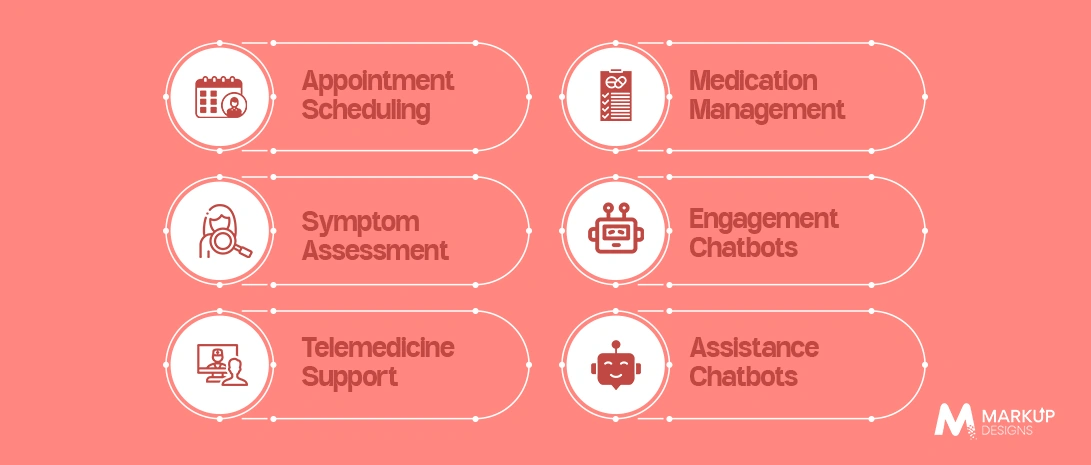
Healthcare chatbots exist for many different purposes and are all developed specifically based on the needs of the healthcare provider, patient, insurance provider, and telemedicine platform that is using the chatbot solution. As digital healthcare within UAE continues to grow, more and more organisations will begin to use specialised chatbot solutions, which will improve operational efficiencies, patient engagement, and access to services. Understanding the various types of healthcare chatbots available will help healthcare organisations determine the best solution for their needs.
Appointment Scheduling
Of all the different types of healthcare chatbots available today, appointment-scheduling chatbots are by far the most widely used across UAE. The appointment scheduling chatbots are virtual assistants for automating the appointment management process in a conversational manner, allowing patients the opportunity to schedule, reschedule, or cancel their appointments quickly and easily.
Patients now have the ability to book appointments by using a chatbot, instead of waiting for the phone or going through the complicated online appointment process. Another benefit is that many chatbots can automate appointment reminders, which may lower the number of patients who miss their appointments, thus increasing a clinic’s ability to see patients. They also have real-time information available to them about doctor availability, hours of operation, and specialist schedules. By using a chatbot to schedule an appointment, healthcare providers will be able to reduce the administrative burden of scheduling and will therefore be able to focus on higher-value patient interactions and provide a better experience for their patients.
Symptom Assessment
The Symptom Assessment Chatbot allows consumers to evaluate their symptoms before seeing a medical professional. The Symptom Assessment Chatbot uses Conversational AI and established clinical protocols to ask patients questions about their symptoms, how long they have had them, the severity of their symptoms, and their past medical history in order to give consumers the best possible recommendations.
The Symptom Assessment Chatbot is not intended to replace medical professionals; rather, it is intended to help consumers understand how urgent their symptoms are and guide them in seeking the appropriate type of healthcare. For example, if a person completes the chatbot’s questionnaire and has answered that they have had a high fever for the past 5 days, the chatbot will probably recommend that they schedule an appointment with a physician, visit an urgent care center, or go to the nearest emergency room.
Telemedicine Support
As telehealth services continue to expand throughout UAE, telemedicine support chatbots have become an important component of virtual healthcare delivery. These chatbots streamline various stages of the telemedicine journey by conducting pre-consultation screenings, gathering patient medical histories, verifying insurance information, and preparing relevant documentation before virtual appointments.
By automating these administrative tasks, telemedicine support chatbots allow healthcare professionals to spend more time focusing on patient care during consultations. They also enhance the patient experience by reducing waiting times and simplifying access to virtual healthcare services. Many telemedicine providers utilize these chatbots as the first point of interaction, ensuring patients receive timely and efficient support throughout the consultation process.
Medication Management
Medication management chatbots play a critical role in improving treatment adherence and patient outcomes. These chatbots provide personalized medication reminders, helping patients take prescribed medications according to schedule. They can also notify patients when prescription refills are due and provide important dosage instructions or medication-related information.
For patients managing chronic conditions, medication adherence is often a significant challenge. Medication management chatbots address this issue by delivering consistent reminders and educational support that encourage compliance with treatment plans. Healthcare providers benefit from improved patient adherence rates, while patients gain greater confidence and convenience in managing their medications effectively.
Engagement Chatbots
Chatbots that Facilitate Ongoing Conversations Between Patients & Healthcare Providers Beyond Just Clinical Care Are Known As Patient Engagement Chatbots. These Offer Personalized Health Content, Wellness Resources, Preventative Care Information, & Health Education Material That Meets The Specific Needs Of Individual Patients.
Patient Engagement Chatbots Can Also Be Used By A Provider To Survey Patients, Capture Feedback, and Measure Patient Satisfaction Levels. Consistent Communication With Patients Will Also Result In Improved Patient Relationships, Increased Retention Rates, & Better Long-Lasting Health Outcomes. As The Health Care Environment Becomes More Competitive, Patient Engagement Chatbots Provide A Way For Organizations To Offer More Personalized And Proactive Health Care Experiences.
Assistance Chatbots
Assistance Chatbots Simply Allow for Interaction between Patients, Healthcare Providers, and Insurance Companies. They Are Designed To Help Patients With Commonly Asked Questions About Their Insurance, How To Verify Coverage, What Their Policy Covers & How To Ask About Claims.
Most Patients Find Health Insurance To Be Complicated And Time-consuming. The Insurance Assistance Chatbot Provides Patients With Instant Access To Necessary Information, Thus Reducing Frustration & Increasing Customer Satisfaction. Insurance Companies Benefit From Decreased Demand On Their Support Staff and More Rapid Responses From Their Support Staff. As UAE Healthcare Sector Continues To Blend Insurance Services & Digital Healthcare Platforms, Insurance Assistance Chatbots Will Continue To Play An Important Role In Streamlining Insurance Operations.
Step-by-Step Healthcare Chatbot Development Process
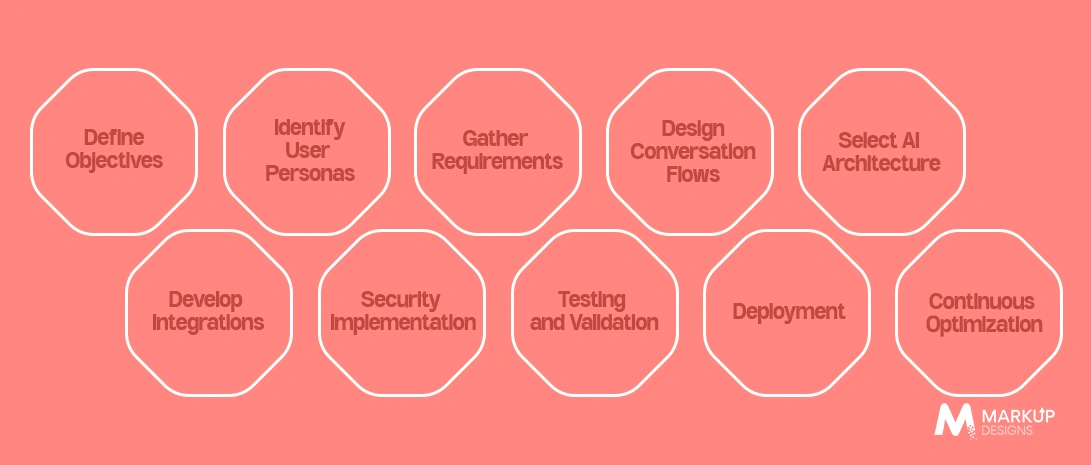
Developing a healthcare chatbot requires a structured approach that balances user experience, clinical accuracy, security, and regulatory compliance. Healthcare organizations must carefully plan each stage of development to ensure the chatbot delivers reliable support while meeting the strict requirements of the healthcare industry.
Step 1: Define Objectives
The first stage of healthcare chatbot development involves establishing clear objectives and identifying the primary problems the chatbot is expected to solve. Different healthcare organizations may have different goals depending on their operational requirements and patient needs.
Step 2: Identify User Personas
Once objectives have been established, organizations must identify the primary users who will interact with the chatbot. Healthcare chatbots often serve multiple audiences, including patients, physicians, nurses, administrative staff, and insurance customers.
A patient may require simple, user-friendly interactions, while healthcare professionals may need access to more detailed clinical information. Proper persona analysis ensures that chatbot conversations remain relevant, intuitive, and effective for every user group.
Step 3: Gather Requirements
Requirement gathering is one of the most critical phases of chatbot development. During this stage, organizations define functional requirements, security requirements, compliance obligations, and integration needs.
Developers must understand these requirements early to create an architecture capable of supporting both current operations and future scalability. Regulatory and privacy requirements should also be incorporated from the beginning to avoid costly redesigns later in the project.
Step 4: Design Conversation Flows
A healthcare chatbot’s effectiveness largely depends on the quality of its conversational design. During this phase, developers create detailed conversation flows that map how users will interact with the chatbot in various scenarios.
These flows account for user intents, possible responses, follow-up questions, escalation pathways, and exception handling.
Step 5: Select AI Architecture
Choosing the appropriate AI architecture is a crucial technical decision. Modern healthcare chatbots often combine multiple technologies, including Natural Language Processing engines, Large Language Models, Retrieval-Augmented Generation systems, and rule-based workflows.
The selected architecture should align with the chatbot’s intended use cases, accuracy requirements, security needs, and compliance obligations.
Step 6: Develop Integrations
Healthcare chatbots rarely operate as standalone systems. Instead, they must integrate with a wide range of healthcare technologies and databases. Common integrations include Electronic Medical Records (EMR), Hospital Information Systems (HIS), appointment scheduling platforms, telehealth solutions, laboratory systems, and insurance databases.
Successful integrations enable the chatbot to access real-time information, automate workflows, and provide personalized responses based on patient records and healthcare data.
Step 7: Security Implementation
Security is a fundamental requirement for any healthcare chatbot. Given the sensitive nature of patient information, organizations must implement comprehensive security measures throughout the development process.
This includes data encryption, secure authentication mechanisms, role-based access controls, audit logging, and continuous monitoring systems. Security considerations should be incorporated into every layer of the chatbot architecture to ensure patient information remains protected from unauthorized access or cyber threats.
Step 8: Testing and Validation
Before deployment, healthcare chatbots must undergo rigorous testing and validation procedures. Functional testing verifies that chatbot features operate as intended, while security testing identifies vulnerabilities and weaknesses.
Compliance testing ensures adherence to regulatory requirements, and user acceptance testing evaluates the overall user experience. Healthcare organizations cannot afford inaccuracies or failures in patient-facing systems, making thorough testing an essential step in delivering a reliable and trustworthy chatbot solution.
Step 9: Deployment
Once testing is complete, the chatbot can be deployed across relevant digital channels. Depending on organizational needs, deployment may include websites, mobile applications, patient portals, messaging platforms, or telemedicine environments.
A successful deployment strategy includes performance monitoring, user onboarding, staff training, and technical support processes. Organizations should also establish contingency plans to address potential operational issues during the initial rollout phase.
Step 10: Continuous Optimization
Healthcare chatbot development does not end after deployment. Continuous optimization is necessary to maintain performance, accuracy, and user satisfaction over time.
Organizations should regularly monitor chatbot interactions, analyze user feedback, track performance metrics, and update medical content as healthcare guidelines evolve. Ongoing optimization ensures that the chatbot remains effective, compliant, and aligned with changing patient expectations and organizational objectives.
Build vs Buy: Which Option Should Healthcare Providers Choose?
When healthcare organizations decide to implement a chatbot solution, one of the first strategic decisions they face is whether to purchase a ready-made chatbot platform or invest in developing a custom solution from the ground up. Both approaches offer unique benefits and challenges, and the right choice often depends on an organization’s long-term goals, regulatory obligations, operational complexity, and digital transformation strategy for healthcare.
While ready-made chatbot platforms can help organizations get started quickly, healthcare providers in UAE must carefully consider factors such as patient data privacy, compliance requirements, integration needs, and future scalability before making a decision.
Buying a Ready-Made Solution
Ready-made healthcare chatbot platforms are pre-developed solutions that can be configured and deployed with relatively minimal customization. These platforms are typically offered as Software-as-a-Service (SaaS) products and come with a set of predefined features designed to support common healthcare use cases.
One of the biggest advantages of purchasing a ready-made solution is speed. Since the core platform is already developed, healthcare organizations can deploy the chatbot much faster than building a custom solution.
Another benefit is the lower initial investment. Since development costs are distributed across multiple customers, organizations can access chatbot functionality without committing to a large upfront development budget. Many vendors also provide ongoing technical support, updates, and maintenance services, reducing the burden on internal IT teams.
Despite these advantages, ready-made solutions often come with significant limitations. Customization options may be restricted, making it difficult to tailor workflows to specific organizational requirements. Healthcare providers may also become dependent on vendors for updates, feature enhancements, and compliance adjustments. Integration capabilities can be limited, particularly when connecting with specialized Electronic Medical Records (EMR), Hospital Information Systems (HIS), or insurance platforms.
How AI-Powered Healthcare in UAE is Transforming Patient Care
See how healthcare providers in UAE are leveraging AI to improve accuracy, streamline workflows, and deliver better patient experiences. Explore the transformation shaping the future of healthcare.

Building a Custom Healthcare Chatbot
Custom chatbot development involves designing and building a chatbot specifically for a healthcare organization’s unique requirements, workflows, and compliance needs. Although this approach requires greater investment and planning, it provides significantly more flexibility and control.
One of the primary advantages of a custom chatbot is complete ownership. Healthcare providers maintain full control over the chatbot’s functionality, architecture, data management policies, and future development roadmap.
Custom development also enables extensive personalization. Organizations can design workflows that align perfectly with their patient journeys, operational processes, and service delivery models.
Security
Security is another major advantage. Organizations can implement custom security frameworks, encryption protocols, authentication systems, and access controls that align with internal governance policies and regulatory obligations.
Custom healthcare chatbots also offer superior integration capabilities. They can seamlessly connect with existing healthcare infrastructure, including EMR systems, telemedicine platforms, laboratory systems, insurance databases, and patient portals.
However, custom development is not without challenges. The initial investment is typically higher than purchasing a ready-made solution. Development timelines can also be longer, particularly for enterprise-grade healthcare chatbots that require advanced AI capabilities and multiple integrations. Additionally, organizations need access to skilled development teams with expertise in healthcare technology, artificial intelligence, cybersecurity, and regulatory compliance.
Why Building a Custom Healthcare Chatbot Is Often the Better Choice
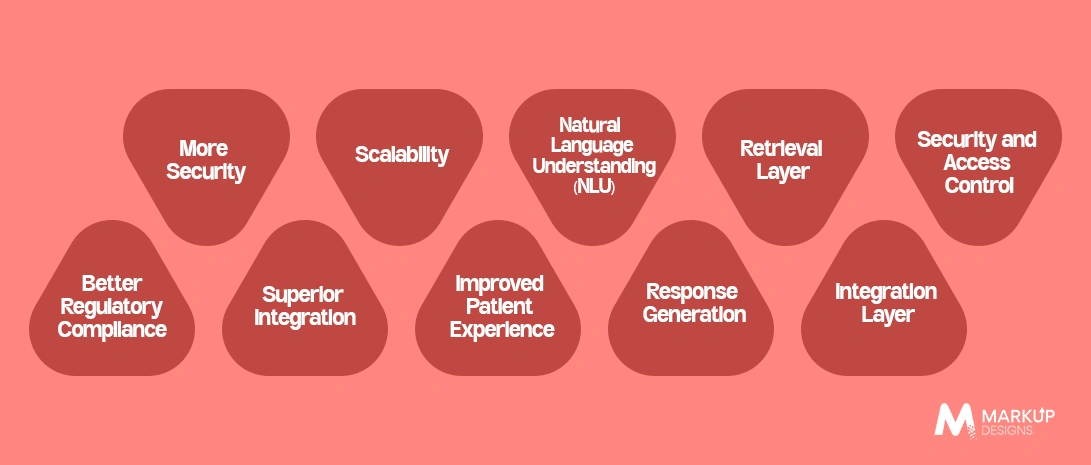
Healthcare organizations operate in one of the most regulated and sensitive industries in the world. Patient information must be protected, clinical interactions must be accurate, and digital systems must comply with strict regulatory requirements. As a result, many healthcare providers find that custom chatbot development delivers greater long-term value than purchasing generic solutions.
Better Regulatory Compliance
Regulatory compliance is a fundamental requirement for healthcare technology solutions. Healthcare providers in UAE must ensure that patient information is collected, processed, stored, and shared in accordance with applicable healthcare and data protection regulations.
Custom healthcare chatbots allow organizations to incorporate compliance requirements directly into the system architecture from the beginning. Development teams can implement specific data handling policies, consent management mechanisms, audit logging capabilities, and security controls that align with organizational governance frameworks and regulatory expectations.
Rather than adapting organizational processes to fit a third-party platform, healthcare providers can design the chatbot around their existing compliance requirements, reducing operational risk and improving regulatory readiness.
More Security
Patient trust depends heavily on the ability of healthcare organizations to safeguard sensitive medical information. Security breaches can have serious financial, operational, and reputational consequences.
Custom healthcare chatbot development provides complete control over security architecture. Organizations can determine where data is stored, how information is encrypted, and who can access patient records. Advanced authentication mechanisms, role-based permissions, continuous monitoring systems, and detailed audit trails can be implemented according to specific organizational requirements.
This level of control helps healthcare providers create highly secure environments capable of protecting patient information while supporting safe and efficient digital healthcare delivery.
Superior Integration
Modern healthcare ecosystems rely on a wide range of interconnected systems. Patient records, appointment scheduling platforms, laboratory systems, telemedicine applications, insurance databases, and customer relationship management tools must often work together seamlessly.
Custom healthcare chatbots are designed with integration flexibility in mind. Developers can create secure connections between the chatbot and existing healthcare technologies, enabling real-time data access and workflow automation. This allows patients to receive more personalized support while reducing manual administrative tasks for healthcare staff.
Strong integration capabilities also improve data consistency across systems, minimizing errors and enhancing overall operational efficiency.
Scalability
Healthcare organizations rarely remain static. Patient volumes increase, service offerings expand, regulatory requirements evolve, and new technologies emerge. Organizations need digital solutions that can grow alongside their business objectives.
Custom-built healthcare chatbots offer exceptional scalability because they are designed specifically for the organization’s long-term vision. New features, integrations, languages, and AI capabilities can be added as requirements change. Rather than being limited by a vendor’s product roadmap, organizations maintain the flexibility to innovate and adapt continuously.
This scalability ensures that chatbot investments continue delivering value as healthcare operations become increasingly digital and patient expectations continue to evolve.
Improved Patient Experience
Healthcare is fundamentally centered around patient care. Every digital interaction contributes to the overall patient experience and can influence satisfaction, engagement, and trust.
Custom healthcare chatbots enable organizations to create highly personalized patient experiences that reflect their brand, services, and care philosophy. Chatbots can be tailored to support specific patient journeys, deliver contextual recommendations, and provide seamless transitions between automated and human-assisted interactions.
By designing conversations around patient needs rather than generic templates, healthcare providers can improve engagement, increase satisfaction, and strengthen long-term patient relationships.
Core Technologies Behind Healthcare Chatbots
Healthcare chatbots rely on multiple advanced technologies working together to deliver intelligent, accurate, and secure interactions. Understanding these technologies helps healthcare organizations make informed decisions when planning chatbot development initiatives.
Natural Language Understanding (NLU)
Natural Language Understanding serves as the foundation of conversational healthcare systems. This technology enables chatbots to interpret human language, understand user intent, and extract meaningful information from patient conversations.
When a patient describes symptoms, requests an appointment, or asks a healthcare-related question, the NLU engine analyzes the language to determine what the user is trying to accomplish. It identifies key entities such as symptoms, medications, dates, physician names, or healthcare services while maintaining contextual awareness throughout the conversation.
Response Generation
Once a chatbot understands a patient’s request, it must generate an appropriate response. Response generation systems determine how the chatbot communicates information, asks follow-up questions, and guides users toward desired outcomes.
Healthcare chatbots often utilize a combination of rule-based workflows and AI-powered language models. Rule-based systems ensure consistency and compliance for critical healthcare interactions, while AI models enhance conversational flexibility and personalization.
Retrieval Layer
The retrieval layer plays a critical role in ensuring that healthcare chatbots provide trustworthy and evidence-based information. Rather than relying solely on generated responses, the chatbot can access verified medical knowledge sources and organizational databases when responding to patient inquiries.
This layer retrieves information from healthcare knowledge bases, clinical guidelines, treatment protocols, FAQs, policy documents, and patient education resources. By grounding responses in approved content, healthcare organizations can improve accuracy and reduce the risk of misinformation.
Integration Layer
The integration layer acts as the bridge between the chatbot and the broader healthcare technology ecosystem. Without integrations, chatbots function primarily as standalone communication tools. With integrations, they become powerful workflow automation platforms.
Through the integration layer, chatbots can access patient records, retrieve laboratory results, schedule appointments, verify insurance eligibility, and facilitate telemedicine consultations. Common integrations include Electronic Medical Records, Hospital Information Systems, laboratory information systems, insurance databases, telemedicine platforms, and customer relationship management systems.
These integrations enable healthcare organizations to create seamless digital experiences while reducing administrative workload and improving operational efficiency.
Security and Access Control
Security and access control are essential components of healthcare chatbot architecture. Because chatbots frequently process sensitive patient information, robust security measures must be implemented across every layer of the system.
Identity management systems verify user identities before granting access to protected information. Multi-factor authentication adds additional security by requiring multiple verification methods during login processes. Role-based access controls ensure that users can only access information relevant to their responsibilities, reducing the risk of unauthorized data exposure.
Read Also: The Future of GCC Healthcare with AI-Powered Smart Hospital Systems
Healthcare Chatbot Development Cost in UAE
Development costs vary depending on complexity and requirements.
| Chatbot Type | Estimated Cost (AED) |
| Basic Appointment Chatbot | AED 25,000 – AED 60,000 |
| AI Patient Support Chatbot | AED 60,000 – AED 150,000 |
| Advanced Healthcare Assistant | AED 150,000 – AED 400,000+ |
| Enterprise Multi-System Chatbot | AED 400,000 – AED 1,000,000+ |
Cost Breakdown
| Phase / Component | Cost Estimate |
| Discovery and Planning | AED 5,000 – AED 25,000 |
| UI/UX Design | AED 10,000 – AED 40,000 |
| AI Development | AED 30,000 – AED 200,000+ |
| System Integrations | AED 20,000 – AED 150,000+ |
| Security and Compliance | AED 15,000 – AED 100,000+ |
| Testing and Deployment | AED 10,000 – AED 50,000+ |
| Maintenance | 15%–25% of annual development cost |
Essential Features of Healthcare Chatbots in Dubai, UAE
A healthcare chatbot should include:
- Appointment scheduling
- Patient registration
- Multi-language support (Arabic and English)
- Symptom assessment
- Telemedicine integration
- Medication reminders
- Insurance verification
- Medical knowledge assistance
- Secure patient authentication
- Analytics and reporting
- Escalation to human agents
UAE Healthcare Compliance and Data Regulations
Healthcare chatbot development must align with UAE regulatory requirements.
Key considerations include:
Patient Data Privacy
Healthcare organizations must protect sensitive patient information through secure storage and processing mechanisms.
Data Security
Organizations should implement:
- End-to-end encryption
- Access control policies
- Continuous monitoring
Consent Management
Patients should be informed about:
- Data collection
- Usage purposes
- Retention policies
Audit and Monitoring
Healthcare systems should maintain detailed activity logs for compliance verification.
Healthcare Authority Requirements
Organizations must ensure chatbot operations align with applicable healthcare authority guidelines and internal governance policies.
Challenges in Healthcare Chatbot Development
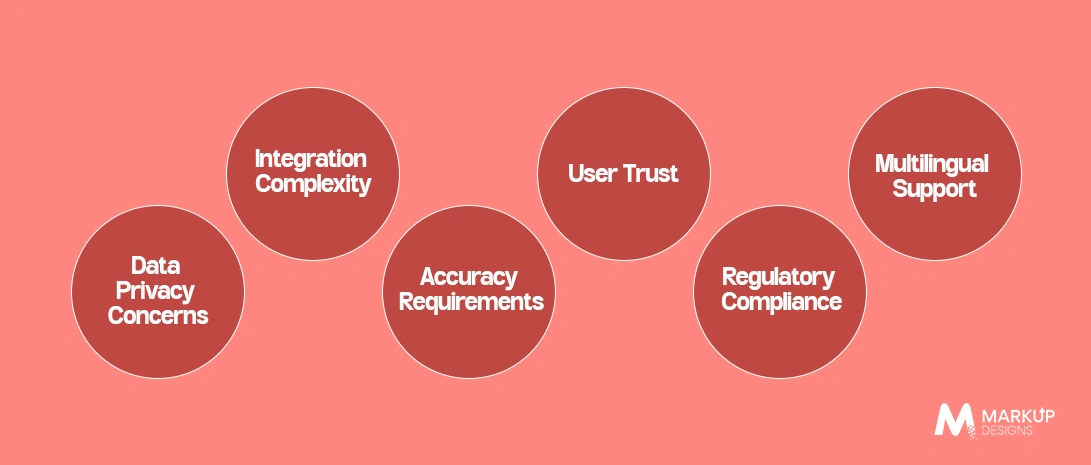
Despite the benefits, several challenges exist.
Data Privacy Concerns
Healthcare chatbots process highly sensitive patient information, including medical histories, personal details, and treatment records. Ensuring robust data protection, encryption, secure storage, and controlled access is essential to prevent data breaches and maintain patient trust.
Integration Complexity
Most healthcare organizations rely on multiple systems such as Electronic Medical Records (EMR), Hospital Information Systems (HIS), telemedicine platforms, laboratory systems, and insurance databases. Integrating a chatbot seamlessly across these diverse and often legacy systems can be technically complex and time-consuming.
Accuracy Requirements
Unlike general-purpose chatbots, healthcare chatbots must provide accurate, reliable, and contextually appropriate information. Even minor inaccuracies can lead to misunderstandings, reduced trust, or potentially impact patient decisions, making rigorous testing and validation essential.
User Trust
Patients are often cautious when discussing health concerns with AI-powered systems. Healthcare providers must ensure chatbot responses are transparent, consistent, and supported by credible medical information to build confidence and encourage adoption.
Regulatory Compliance
Healthcare organizations operate within strict regulatory frameworks that govern patient data handling, privacy, security, and consent management. As regulations continue to evolve, chatbot solutions must be designed with compliance in mind and regularly updated to meet changing requirements.
Multilingual Support
UAE’s diverse population requires healthcare services that are accessible across multiple languages, particularly Arabic and English. Developing chatbots that can accurately understand, process, and respond in different languages while maintaining medical accuracy presents an ongoing challenge.
The Future of Healthcare Chatbots
Healthcare chatbots are rapidly evolving beyond simple conversational interfaces and are expected to become an integral part of the future healthcare ecosystem. Advances in artificial intelligence, machine learning, and natural language processing are enabling chatbots to deliver more intelligent, personalized, and proactive healthcare experiences. Future healthcare chatbots will function as AI-powered clinical assistants capable of supporting healthcare professionals with patient information and workflow management, while also providing predictive healthcare recommendations that help identify potential health risks before they become serious concerns.
Voice-enabled healthcare assistants will make healthcare services more accessible by allowing patients to interact naturally through speech, while personalized patient engagement capabilities will enable chatbots to deliver tailored health advice, treatment reminders, and wellness recommendations based on individual needs. Integration with wearable devices and connected health technologies will allow chatbots to analyze real-time health data, supporting remote patient monitoring and continuous care management. Additionally, generative AI-powered healthcare experiences will create more natural, context-aware conversations that improve patient satisfaction and engagement. Advanced multilingual healthcare support will further enhance accessibility, enabling healthcare providers in Dubai, UAE to effectively serve diverse patient populations.
As these technologies continue to mature, healthcare chatbots will become increasingly intelligent, proactive, and deeply integrated into patient care ecosystems, helping healthcare organizations improve efficiency, enhance patient outcomes, and deliver more connected and personalized healthcare experiences.
Markup Designs, Your Healthcare Chatbot Development Partner?
Healthcare chatbot development requires expertise across healthcare operations, AI technologies, security, compliance, and enterprise integrations.
Markup Designs helps healthcare organizations build scalable and secure AI-powered healthcare solutions tailored to their unique requirements.
Whether you are a hospital, clinic, healthcare startup, or insurance provider, Markup Designs can help transform patient engagement through intelligent healthcare chatbot solutions.
Ready to Build a Secure Healthcare Chatbot?
Enhance patient experiences, automate healthcare workflows, and improve operational efficiency with a custom AI-powered healthcare chatbot. Talk to Markup Designs today and discover how intelligent healthcare automation can accelerate your digital transformation journey.

Conclusion
Healthcare chatbots are becoming a strategic asset for healthcare providers across UAE. From appointment scheduling and patient engagement to telemedicine support and medication management, these AI-powered solutions help organizations improve efficiency while delivering better patient experiences.
While ready-made chatbot platforms may offer a quicker route to deployment, custom healthcare chatbot development provides greater flexibility, stronger compliance capabilities, enhanced security, and long-term scalability. By leveraging advanced technologies such as Natural Language Understanding, AI response engines, retrieval systems, and secure integrations, healthcare organizations can build intelligent digital assistants that support both patients and healthcare professionals.
As AI adoption continues to accelerate across UAE healthcare sector, organizations that invest in healthcare chatbot development today will be better positioned to deliver smarter, more accessible, and more personalized healthcare services in the future.
FAQs
1. How long does healthcare chatbot development take?
A basic healthcare chatbot may take 6–10 weeks, while enterprise-grade AI healthcare assistants can require 4–8 months, depending on complexity and integrations.
2. Can healthcare chatbots integrate with hospital management systems?
Yes. Modern healthcare chatbots can integrate with EMR, EHR, HIS, CRM, laboratory systems, telemedicine platforms, and insurance databases.
3. Are healthcare chatbots secure?
When developed correctly, healthcare chatbots can implement enterprise-grade security measures such as encryption, role-based access control, audit logging, and multi-factor authentication.
4. Do healthcare chatbots support Arabic language interactions?
Yes. Most UAE healthcare organizations require bilingual support, and modern AI chatbots can effectively handle both Arabic and English conversations.
5. What is the average cost of healthcare chatbot development in UAE?
Depending on complexity, healthcare chatbot development costs typically range from AED 25,000 for basic solutions to over AED 1 million for enterprise-grade AI healthcare platforms.
Author's Perspective
Healthcare chatbot development is no longer just a technology initiative, it has become a patient experience strategy. Across UAE, healthcare providers are under increasing pressure to improve accessibility, reduce administrative workload, and deliver personalized care at scale. AI-powered chatbots provide a practical solution to these challenges by creating always-available digital touchpoints that support patients throughout their healthcare journey.
However, successful healthcare chatbot implementation requires much more than deploying an AI model. Healthcare organizations must carefully balance innovation with patient safety, data privacy, compliance requirements, and clinical accuracy. The most successful implementations are those that treat chatbots as integrated healthcare systems rather than standalone customer service tools.
Discuss Your Project NowAjit Kumar Jha
VP - Business Operations
Related Posts
Healthcare 4.0 Explained: Technologies Driving the Next Era...
Hiring an AI Development Partner in the UK:...
Healthcare IT Outsourcing: A Strategic Guide for Modern...
Insights Are Valuable & Execution is Priceless
You’ve read about the digital future. Now, let’s build the infrastructure to take you there. Move your strategy from the page to the product.
Design Your Solution Now
Contact Us
Schedule The Appointment At Your Convenience Date And Time.
30 Min
Web Conference
Time Zone
Indian standard time (08:30pm)

Thanks For Getting In Touch!
You’ve Taken The First Step Toward Transforming Your Digital Presence. Our Experts Will Reach Out Shortly To Take It Forward.
Launch Your Dream Project
Provide a brief overview of your project, and our specialists will evaluate your requirements. We will connect with you to explore how the right digital solutions can help you launch faster.