

In Brief
- Mobile app development involves multiple stages such as planning, design, development, testing, and deployment, where proper strategy and execution are essential for building a successful app.
- Businesses must choose the right development approach, such as native or cross-platform app development, based on their budget, performance needs, target audience, and business goals.
- Key challenges in mobile app development include battery optimization, maintaining app simplicity, ensuring smooth performance, and effectively marketing the application after launch.
- Best practices for mobile app development include conducting market research, selecting appropriate technologies, implementing Agile, prioritizing security, and building a robust testing strategy.
- Developing an MVP (Minimum Viable Product) helps businesses validate app ideas, collect user feedback, improve security, and refine features before building the final product.
- Common mistakes during app development include ignoring market demand, using incompatible technologies, building overly complex features, weak backend planning, and hiring the wrong app development partner.
Mobile app development is a step-by-step process where every stage contributes to building a successful digital product. Since multiple tasks are involved throughout the development cycle, occasional errors and inefficiencies can naturally arise.
If you’re a startup, you may already know that app development is far more complicated than it appears. Building a mobile app requires planning, technical know-how, creative design, and constant testing. But the rewards of creating a high-performing app and delivering an engaging user experience make it all worthwhile.
If you are an aspiring developer, you may be interested in the best practices used by a professional mobile app development company. In this blog, we will look at some of the best mobile app development practices for developers. While these are must-do practices, it is important to understand that app development also involves several other approaches and methodologies depending on the project requirements.
Major Challenges While Developing a Mobile Application
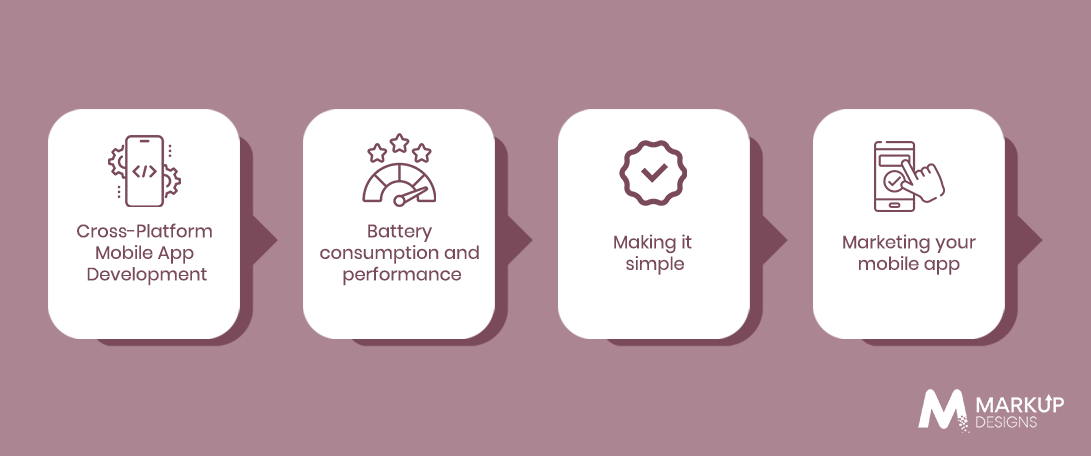
Cross-Platform Mobile App Development
Businesses today need to build applications that work smoothly across different devices, operating systems, and screen sizes. Choosing the right development approach depends on business goals, target audience, budget, and performance requirements.
Native app development is ideal for businesses that require high performance, advanced features, and a highly optimized user experience for a specific platform like Android or iOS. On the other hand, cross-platform development is suitable for businesses looking to reduce development costs, launch applications faster, and maintain a single codebase across multiple platforms.
Battery consumption and performance
Battery consumption and performance are both necessary aspects in developing mobile applications. The best app is an app that consumes minimal battery and still performs perfectly. To this end, you may develop a beta version of your application and conduct extensive tests until it performs perfectly without consuming much battery life.
Making it simple
One of the biggest challenges in mobile app development is maintaining simplicity. Users prefer applications that are easy to navigate, intuitive to use, and free from unnecessary complexity. Developers should focus on creating a clean interface, smooth functionality, and a user-friendly experience to ensure better engagement and satisfaction.
Marketing your mobile app
Developing a mobile application is only one part of the journey. Without proper marketing, even a high-quality app may struggle to reach its target audience. Businesses need effective promotion strategies such as app store optimization, social media marketing, and user engagement campaigns to increase visibility, attract downloads, and ensure long-term success.
Proven Mobile App Development Techniques in the Market
Creating a mobile application is a complex process that involves multiple stages, smaller tasks, and constant decision-making. Even small mistakes or elements that are missed can impact the performance, usability, and success of a mobile app.
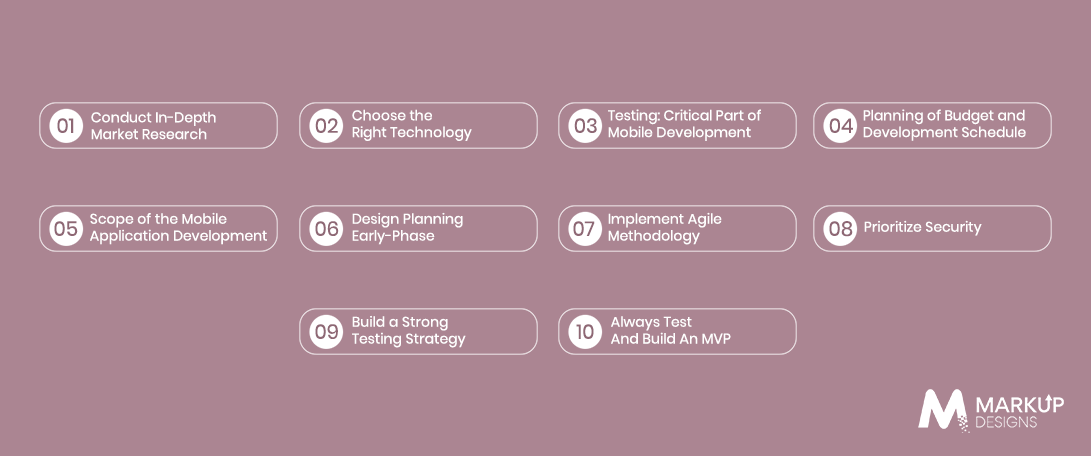
The following are the proven development practices throughout the process. It is important to build a reliable and high-performing app. Now, let’s discuss some of the best practices for mobile app development.
Conduct In-Depth Market Research
It’s important to do some initial research before you start building a mobile app. In a highly competitive industry, you need to know your target market, define your product’s unique advantages, and analyse the needs of your audience to compete well. Doing proper research before development results in better planning and decision-making. It also helps businesses prepare for potential challenges and risks during the app development journey.
Choose the Right Technology
Not all mobile applications are developed the same way. Before starting the development process, it is important to find out if the app will be native, hybrid, cross-platform, or web-based. Each development methodology has its own advantages and disadvantages and has a different process to follow. The choice of method depends on the specific requirements and goals of the application you are building.
Testing: Critical Part of Mobile Development
Testing is critical and is considered the best practice in mobile app development. This helps to ensure the application works well and meets quality standards before it is released. One round of testing is not enough. You need several testing phases to find and fix bugs, improve performance, and make sure the app is fully ready for end users.
Planning of Budget and Development Schedule
Setting up a budget and estimated schedule is an important part of mobile application development for startups. As we all know, creating an application can be a complex and resource-heavy project, which makes budgeting and scheduling vital.
Even though you will have to spend quite a lot of money and time during the development process, an excellent mobile application will bring you great benefits in the future. Choosing the right strategy to follow based on your budget and goals can help get even more out of your project.
Scope of the Mobile Application Development
One important rule is to clearly define and set the scope of the application up front. This includes deciding what type of app to build, which framework to use, how to measure success, who the target audience is, and what resources will be needed to develop it.
At this stage, it is also important to analyze the competitors in detail to understand their strategies in the market. A poorly executed launch of an application can result in wasted time, effort, and resources due to inadequate planning.
Design Planning Early-Phase
Design should be considered from the beginning of the development process. Developers and designers have different approaches. Developers handle the technical implementation, and designers focus on creativity and user experience. A balanced approach is applied in the development of a successful mobile app, because the best results can be reached when both design and technical aspects are aligned from the beginning.
Implement Agile Methodology
Split the entire project into smaller, manageable phases using Agile methodologies like UI design, frontend development, API integration, testing, etc. Take regular feedback from users as it allows for constant iteration and improvement. It also enables teams to respond quickly to changes and improve overall development efficiency.
Prioritize Security
You need to implement strong data protection and privacy measures to secure user information and maintain your brand’s credibility. Security needs to be built at every stage of development, not tacked on later. A strong app also builds user confidence and reduces the risk of data leaks and vulnerabilities.
Build a Strong Testing Strategy
Test well on different devices, screen sizes, and operating systems before the final release. Beta testing helps to find bugs, performance problems, and usability issues early. This will provide a stable, reliable, and smooth experience for the user at launch.
Always Test And Build An MVP
When you come up with an application, the best way is to build a minimum viable product with only the bare-bones features and have the users test it.
Developing an MVP does not take much time and provides development teams with invaluable user feedback directly. This feedback doesn’t just help them to identify the features they need in the application; the feedback guides the choice made about the mobile app development strategy for the final product.
These tests also help developers find improvement areas in their security features. This can also help find ways to improve user experience with the use of the user data in the application.
Frequent Mistakes During Mobile App Development

Not Knowing the Market Demands
The common mistake in mobile app development is to start a project without a proper understanding of market demand. Investing in an app idea without proper research can lead to poor user adoption & waste of resources.
Before you start the development, you need to do the market analysis, find out the pain points of users, and learn what features they really expect from the app. Surveys, feedback, and concept validation can give an idea if the app idea has real potential. It’s a way of de-risking, while also giving you confidence that there’s an actual audience for your product.
Improper Use of Technology
Even after following the best practices while developing a mobile app, the wrong use of technology can lead to serious problems in the development process. Here are some problems commonly faced by developers in this regard:
- Complicated Application Features: A mobile application should always provide an easy user experience. But to differentiate their application from other apps, the developers tend to introduce overly complicated and excessive features, which complicate the use of the application for the end-user.
- Selecting an Incompatible Operating System: Development of the application in relation to a legacy or non-supported version of the operating system is bound to result in various performance and compatibility problems. Many advanced functions will be affected when using such a strategy since most features might not perform correctly.
- Inefficient Backend Infrastructures: Using an inefficient backend could easily result in app malfunctions, crashes, and performance problems. The backend of any app should be developed efficiently in order to ensure that all app functions run smoothly.
A lot of companies ignore the significance of finding a competent app development partner. It is essential to find the right software development firm that will provide you with quality services. In order to hire an experienced developer, it is crucial to analyze their experience, customer feedback, project history, and technical skills.
Want to build a secure, scalable, and high-performing Mobile App?
Our expert mobile app developers help startups and enterprises transform ideas into feature-rich Android, iOS, and cross-platform applications for business growth.

Conclusion
The development of a successful mobile application involves a lot of aspects, including proper planning, a good choice of technologies, testing, and design considerations, as well as continuous improvements. All these stages have to be handled properly, from market research to designing a scalable application, which will ensure its success.
Nevertheless, there is also a list of things one should avoid doing while developing mobile apps. These include bad backend planning, skipping tests, selecting the wrong development company, etc. By following the rules and taking care not to do some things, it is possible to develop highly performing mobile applications.
FAQs
1. Why is market research important before mobile app development?
Market research helps businesses understand user expectations, identify competitors, and validate app ideas before investing time and resources into development.
2. What is the best technology for mobile app development?
The best technology depends on the project requirements. Businesses can choose between native, hybrid, cross-platform, or web-based development depending on performance, budget, and target audience.
3. Why is testing important in mobile app development?
Testing helps identify bugs, performance issues, and usability problems before launch, ensuring the application works smoothly across different devices and operating systems.
4. What is an MVP in mobile app development?
An MVP (Minimum Viable Product) is a basic version of an application built with essential features to test the concept, collect user feedback, and improve the final product.
5. How can businesses improve mobile app security?
Businesses can improve security by implementing data encryption, secure authentication, regular updates, and strong backend protection throughout the development process.
Author's Perspective
Mobile apps are continually changing due to advancements in technology and changes in users’ needs and requirements. Success in app development goes beyond just adding complex functions; the application has to be both reliable and convenient for the users. Those organizations which are engaged in thorough research and constant improvements have better chances to succeed.
Discuss Your Project NowGaurav Goyal
Global Sales- VP
Related Posts

How Much Does It Cost to Build a...

How to Build a Secure Payment Gateway Integration...

Cost to Build a Mobile App in Qatar...
Insights Are Valuable & Execution is Priceless
You’ve read about the digital future. Now, let’s build the infrastructure to take you there. Move your strategy from the page to the product.
Design Your Solution Now
Contact Us
Schedule The Appointment At Your Convenience Date And Time.
30 Min
Web Conference
Time Zone
Indian standard time (08:30pm)

Thanks For Getting In Touch!
You’ve Taken The First Step Toward Transforming Your Digital Presence. Our Experts Will Reach Out Shortly To Take It Forward.
Launch Your Dream Project
Provide a brief overview of your project, and our specialists will evaluate your requirements. We will connect with you to explore how the right digital solutions can help you launch faster.