
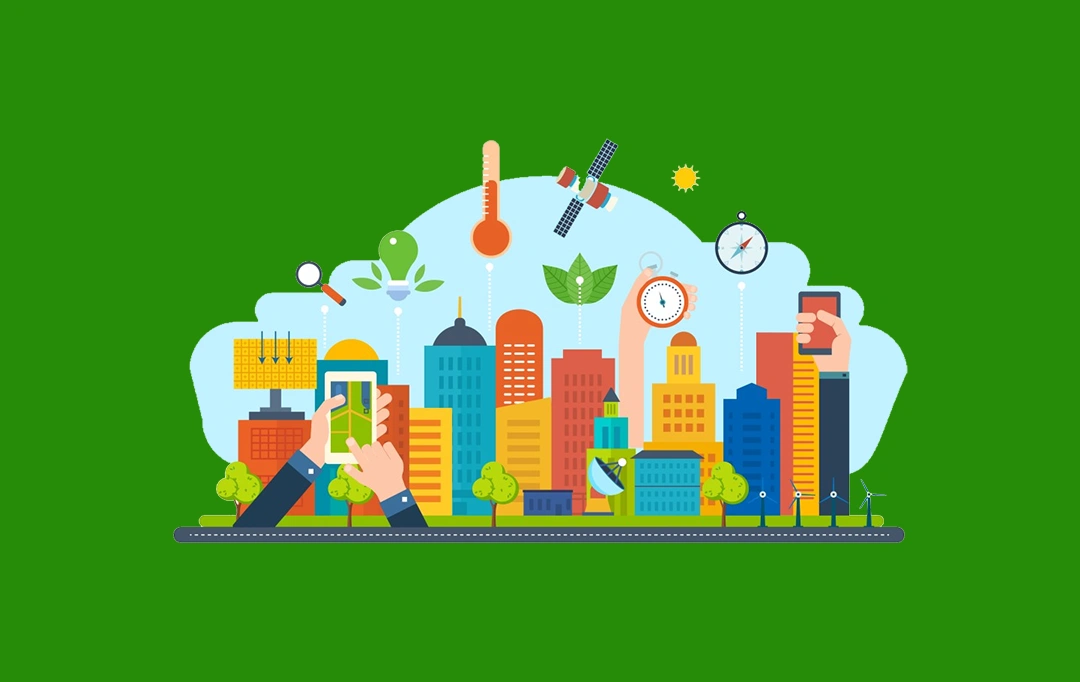
In Brief
- Innovative technologies (e.g., artificial intelligence [AI], Internet of Things [IoT], digital twins, and intelligent building management systems [i.e., smart buildings]) have enabled property developers to enhance energy efficiency, cut operational expenses, and minimize carbon footprint.
- UAE’s smart city development initiatives, along with their sustainability objectives, are accelerating the use of technology-based real estate solutions across all types of development (e.g., residential, commercial, and mixed-use).
- Utilising intelligent building automation, predictive maintenance, renewable energy integration, and real-time monitoring enables the development of more efficient and environmentally conscious buildings.
- Investing in PropTech solutions will provide added value to properties, improve tenant experience, meet compliance obligations, and support long-term operational sustainability.
- By partnering with an experienced technology development company to assist in bringing digital solutions to market, businesses can develop scalable solutions that enable innovation while complying with sustainability/Environmental, Social and Governance (ESG) goals.
UAE has become a global leader in sustainable urbanization due to comprehensive efforts to promote smart cities, enact green building codes, and develop long-term strategies to protect the environment. Technology is becoming the catalyst driving sustainable real estate development as developers implement methods that conserve energy, efficiently utilise resources, and create viable communities. With AI building management systems, IoT infrastructure, and digital twin technologies providing developers with better decision-making ability and greater efficiencies when managing properties, technology will be a major component in continuing to continue improving the built environment.
Sustainability in modern real estate extends far beyond eco-friendly construction materials. It requires intelligent digital ecosystems that continuously monitor energy usage, automate building operations, optimize water consumption, and enhance occupant experiences. By integrating advanced technologies into every stage of the property lifecycle, developers can improve operational efficiency, reduce environmental impact, increase property value, and align with UAE’s vision for a smarter and more sustainable built environment.
The Growing Need for Technology in Sustainable Real Estate Development in UAE
Real estate in UAE is undergoing transformation driven by sustainability combined with digital advancements. The use of digital technologies such as artificial intelligence (AI), the internet of things (IoT), digital twins, smart building management systems, and machines to help create energy-efficient communities and build more intelligent structures is growing. These technologies will improve operational efficiency while reducing carbon footprint, optimizing resource consumption, and supporting the long-term sustainability goals of UAE.
Vision of UAE for Sustainable and Smart Urban Development
With national strategies focused on achieving net-zero emissions, smart cities and green infrastructure, UAE has launched many initiatives that promote the development of environment friendly, advanced technological cities through the use of intelligent technologies. Developers continue to be pushed towards the adoption of smart technologies to improve energy efficiency, resource management, and urban resilience due to evolving regulations regarding sustainability and the central role that technology is playing in achieving these ambitious goals through real estate projects.
Increasing Demand for Smart, Energy-Efficient Buildings
The building’s energy efficiency, connectivity, and sustainability are becoming more important to businesses, investors, and residents. By using smart technologies to automate lighting, HVAC, occupancy sensors, and energy monitoring, buildings can utilize less energy resources while improving occupant comfort.
As demand for sustainable properties grows, technology has become a key differentiator in UAE’s competitive real estate market.
Why Digital Transformation is Essential for Sustainable Real Estate
Sustainability of a building takes more than building with sustainability in mind; it involves monitoring the building constantly, using automation and making decisions using data throughout the lifecycle of that building. As part of the digital transformation of the industry, developers are now collecting operational data about the building in real-time, predicting maintenance requirements, optimising energy use and improving the overall performance of the building through the use of advanced software and technology. Developers can take advantage of integrated advanced software solutions, and IoT devices to not only reduce the operating costs of buildings but also to improve the overall value of their assets and develop developments that will be ready for the future and in line with the sustainability objectives set forth by UAE.
Core Technologies Available to Support Sustainable Development of Real Estate in UAE
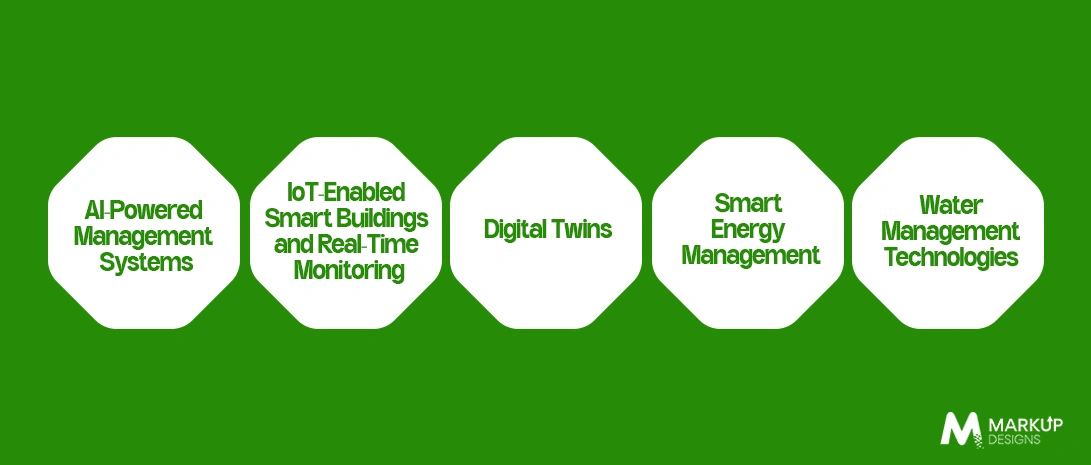
The “core” technologies of sustainable development of real estate in UAE are the technologies that allow developers to design and build smarter, more efficient, safer and high-performing buildings. These technologies, which include AI, the Internet of Things, Digital Twins and Intelligent Energy Management Systems, will be able to develop and build properties or developments with a focus on optimising resource consumption, reducing operational costs and improving the environmental performance of the project throughout the life of the project.
Artificial Intelligence and the use of Machine Learning-based Building Management Systems (BMS)
Artificial intelligence in BMS’s is used to automate the monitoring and optimisation of key operational processes in building such as lighting, HVAC, Security, and occupancy management. Through real time operational data analysis, AI-based BMS will be able to detect operational inefficiencies and predict when maintenance is needed. AI will also allow for the automatic adjustment of the building’s systems to reduce energy usage while improving the comfort of the building’s occupants.
IoT-Enabled Smart Buildings (Monitors Performance Using Real-Time Data)
By utilizing IoT devices and networked sensors, building operators can continuously monitor their facilities to evaluate how well they perform (e.g., energy use, indoor air quality, occupancy levels, water usage, and equipment condition). This ability to view data in real-time allows building management personnel to proactively address issues when they arise or before they develop into major issues.
Using a Digital Twin to Assist with Sustainable Building Development
Developers can create a digital twin or virtual model of a building or complex of buildings. Using the digital twin, developers can simulate how a new facility will operate and perform in the real world during construction and after completion. The digital twin allows developers to evaluate how effectively they have reached desired building metrics, and the digital model can act as a tool for making data-driven decisions throughout the facility’s life cycle.
Using Smart Energy Management Software to Support Energy Efficiency Through Renewables
Smart energy management systems track and report on a facility’s electrical consumption, which helps automate the allocation of power across different building loads, thus maximizing renewable energy resources (e.g., solar power). In conjunction with smart batteries and smart load balancing, these technologies reduce electricity waste, lower operating costs, and help buildings achieve higher levels of sustainability.
Water Management Technologies for Smart Metering
Advanced water management systems include IoT-enabled smart sensors, leak detection systems, and automated monitoring to provide building operators with real-time data about water consumption.
By utilizing these technologies, we can pinpoint where we are inefficient with our use of water, develop strategies to conserve more, and prevent wasting water, all while promoting the ongoing need for sustainable resource management, both residentially and commercially.
Real Examples of how Technology is Used in UAE Sustainable Real Estate Developments
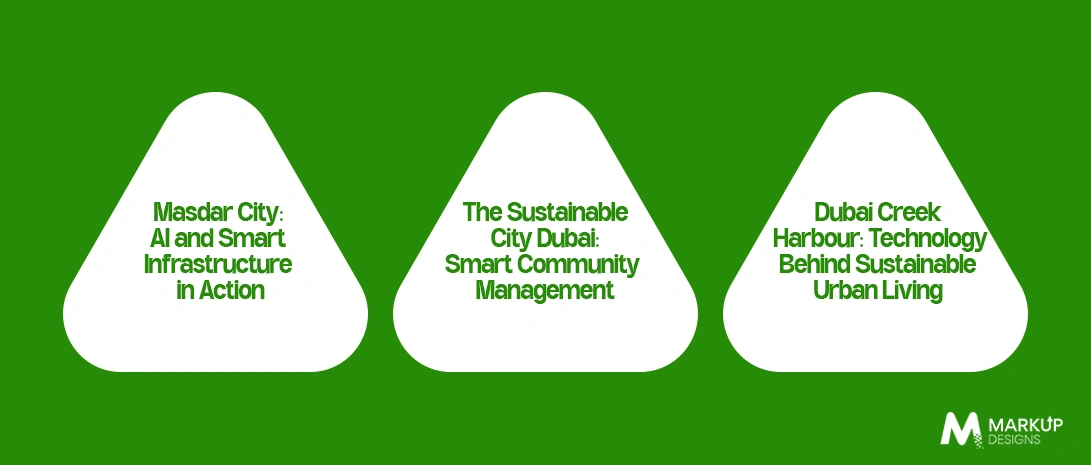
With some of the most advanced and forward-thinking real estate developments in the world, UAE has embraced technology to create smarter, greener, and more efficient urban environments. These landmark developments illustrate how AI, IoT, automation and intelligent infrastructure enhance sustainability while increasing operational performance and improving the quality of life for the occupiers of the development.
Masdar City: AI and Smart Infrastructure in Action
One of the leading examples of sustainable development driven by technology is Masdar City. Masdar City uses an AI powered building management system, an IoT-based infrastructure, renewable energy, and smart mobility systems to maximize energy efficiency and reduce carbon emissions. Using real-time monitoring and intelligent automation to manage resources efficiently, Masdar City is a model of how smart urban sustainability can be achieved.
The Sustainable City Dubai: Smart Community Management
The Sustainable City in Dubai integrates state-of-the-art digital technologies with environmentally responsible design to create a completely self-sufficient community. Implementing systems such as smart energy management, solar energy generation, water recycling technologies, and connecting building automation systems has contributed to maximizing efficiency and minimizing the impact on the environment.
Digital technologies enable residents and facility managers to surveil energy use and how well the community operates in real-time.
Dubai Creek Harbour: Technology Behind Sustainable Urban Living
Integrating smart technology into Dubai Creek Harbour has made it a model for large-scale sustainable urban development. Intelligent building systems, IoT (Internet of Things) infrastructure, predictive maintenance, smart transit systems and energy-efficient utilities work together for the benefit of optimizing daily operational needs and improving the overall experience of living in urban environments. The integration of luxury with innovation and technology demonstrates how technology can create environmentally sustainable communities that will be ready for the future.
Business Advantages of Technology-Driven Sustainable Real Estate Development
Developments that use sustainable technologies provide measurable business value beyond just being environmentally friendly. By incorporating intelligent digital technology solutions into real estate, developers and property owners have the ability to increase their operational efficiencies, reduce long-term expenditures, boost tenant satisfaction, and develop assets that are ready for the future. All of these advantages not only enhance profitability but also help to create a competitive edge in the fast-evolving real estate market of the United Arab Emirates.
Lower Cost of Operations Through Smart Automation
Smart building systems operate automatically on the basis of real-time occupancy and ambient conditions, controlling items such as lighting, HVAC systems, security, and overall facility management. As a result, there is less waste of energy, less need for manual control, decreased maintenance costs and increased overall operational efficiency.
Improved Energy Efficiency and Carbon Reduction
AI-driven analytics, IoT sensors, and smart energy management systems continuously monitor and optimize resource consumption. These technologies help reduce electricity and water usage, lower carbon emissions, and enable developers to meet sustainability targets while reducing operating costs.
Enhanced Occupant Experience with Smart Technologies
Modern occupants expect connected, comfortable, and secure living and working environments. Features such as automated climate control, smart access systems, indoor air quality monitoring, and mobile-enabled building services improve convenience, well-being, and overall tenant satisfaction.
Increased Property Value Through Digital Innovation
Properties equipped with advanced smart technologies are more attractive to investors, tenants, and buyers seeking sustainable, future-ready developments. Intelligent building management systems, energy-efficient infrastructure, and digital services increase asset value, improve occupancy rates, and strengthen long-term return on investment.
Step-by-Step Guide to Implementing Technology for Sustainable Real Estate Development
Successfully integrating technology into sustainable real estate requires a well-planned strategy that aligns business objectives with environmental goals. By following a structured implementation process, developers can adopt the right technologies, improve operational efficiency, and create smart, future-ready properties that deliver long-term value.
Step 1: Assess Sustainability Goals and Digital Readiness
Begin by defining your sustainability objectives and evaluating your current digital capabilities. Assess factors such as energy efficiency targets, existing infrastructure, operational challenges, and regulatory requirements to identify where technology can deliver the greatest impact.
Step 2: Identify Smart Technologies for Your Development
Select technologies that best support your project’s sustainability goals. Solutions such as AI-powered building management systems, IoT sensors, digital twins, smart energy platforms, and water management systems should be chosen based on the property’s size, purpose, and operational requirements.
Step 3: Build a Digital Transformation Strategy
Develop a roadmap outlining how smart technologies will be implemented across the project lifecycle. The strategy should include technology integration, data management, cybersecurity, scalability, implementation timelines, and long-term maintenance planning.
Step 4: Partner with a Real Estate Technology Development Company
Collaborating with an experienced technology partner ensures the successful design, development, and deployment of smart real estate solutions. A specialized development company can build customized software platforms, integrate enterprise systems, and ensure seamless interoperability across multiple technologies.
Step 5: Integrate Smart Building Platforms and Enterprise Systems
Connect building management systems with enterprise platforms such as ERP, CRM, energy management, facility management, and security solutions. A unified digital ecosystem enables centralized monitoring, streamlined operations, and better decision-making through real-time data.
Step 6: Monitor, Analyze, and Optimize Building Performance
Use real-time analytics, AI, and IoT data to continuously monitor energy consumption, water usage, occupancy patterns, equipment performance, and environmental conditions. Ongoing optimization helps reduce operational costs, improve sustainability metrics, and maximize building efficiency.
Step 7: Scale Smart Real Estate Operations with Future-Ready Technology
As your real estate portfolio grows, expand your digital infrastructure with scalable cloud platforms, AI-powered automation, predictive analytics, and emerging technologies. A future-ready technology foundation ensures long-term adaptability, supports evolving sustainability standards, and enables continuous innovation across multiple developments.
Challenges in Implementing Technology for Sustainable Real Estate in UAE
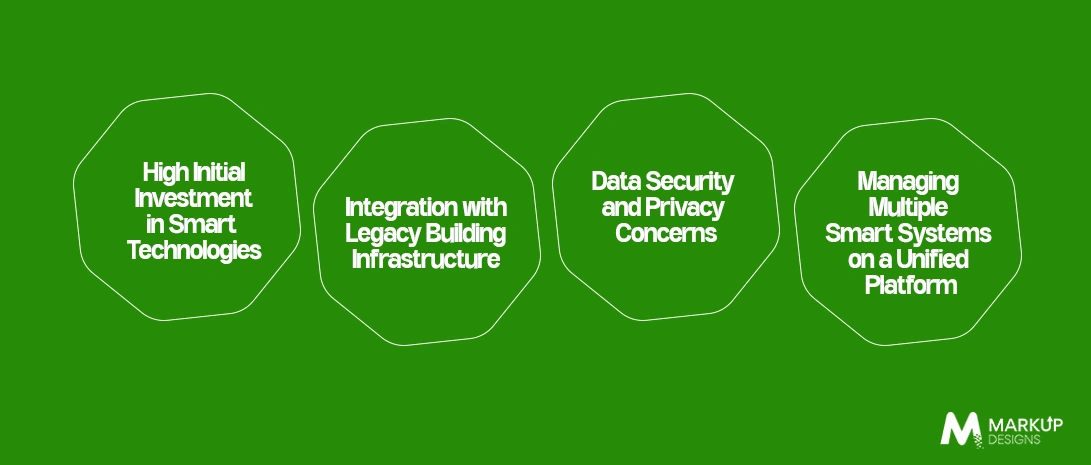
While smart technologies are transforming sustainable real estate development, their implementation presents several technical, operational, and financial challenges. Successfully overcoming these obstacles requires careful planning, the right technology strategy, and experienced implementation partners to ensure long-term performance and scalability.
High Initial Investment in Smart Technologies
Deploying technologies such as AI-powered building management systems, IoT infrastructure, digital twins, and renewable energy solutions often requires significant upfront investment. Although the initial costs can be substantial, these technologies deliver long-term returns through lower energy consumption, reduced maintenance expenses, and improved operational efficiency.
Integration with Legacy Building Infrastructure
Many existing buildings were not designed to support modern smart technologies, making integration a complex process. Connecting new digital systems with legacy HVAC, lighting, security, and facility management infrastructure may require customized solutions to ensure seamless interoperability without disrupting ongoing operations.
Data Security and Privacy Concerns
Smart buildings continuously generate and exchange large volumes of operational and occupant data, making cybersecurity a critical priority. Organizations must implement robust encryption, secure access controls, regular security audits, and compliance with data protection regulations to safeguard sensitive information and maintain stakeholder trust.
Managing Multiple Smart Systems on a Unified Platform
Sustainable buildings often rely on multiple technologies, including energy management, IoT sensors, security systems, water monitoring, and predictive maintenance platforms. Without proper integration, these systems can operate in silos, reducing efficiency and limiting visibility. A centralized management platform enables seamless communication, real-time analytics, and more informed decision-making across the entire property ecosystem.
How Markup Designs Helps Build Technology Solutions for Sustainable Real Estate
As sustainable real estate continues to evolve, success depends on more than adopting smart technologies, it requires building an integrated digital ecosystem that improves efficiency, enhances occupant experiences, and supports long-term sustainability goals. At Markup Designs, we develop intelligent software solutions that enable real estate developers, property managers, and enterprises to accelerate their digital transformation while creating smarter, more sustainable properties.
Our Expertise in Smart Real Estate Software Development
Our team specializes in designing and developing custom PropTech solutions tailored to the evolving needs of the real estate industry. From AI-powered building management systems and IoT-enabled monitoring platforms to digital twins, energy management software, predictive maintenance solutions, and enterprise integrations, we deliver scalable applications that optimize operations and improve sustainability. By combining innovative technologies with user-centric design and secure, cloud-based architectures, Markup Designs helps businesses build future-ready real estate ecosystems that drive efficiency, reduce operational costs, and support UAE’s vision for sustainable urban development.
Build Smarter, Sustainable Real Estate Solutions with Markup Designs
Transform your real estate projects with AI-powered software, IoT-enabled platforms, digital twins, and intelligent building management solutions. Markup Designs helps you develop scalable PropTech solutions that improve operational efficiency, reduce environmental impact, and support UAE’s vision for smarter, more sustainable communities.

Conclusion
Technology is redefining sustainable real estate development in UAE by enabling developers to create smarter, more efficient, and environmentally responsible properties. Innovations such as AI, IoT, digital twins, and intelligent energy management systems are helping optimize resource consumption, reduce operational costs, and enhance occupant experiences while supporting the country’s long-term sustainability vision. As demand for green buildings and smart communities continues to grow, integrating advanced digital solutions is becoming a strategic necessity rather than a competitive advantage.
By adopting the right technologies and partnering with an experienced real estate software development company, businesses can accelerate digital transformation, improve asset performance, and build future-ready developments that deliver long-term value.
FAQs
1. How does technology support sustainable real estate development in UAE?
Technology enables developers to optimize energy and water consumption, automate building operations, monitor resource usage in real time, and reduce carbon emissions. Solutions such as AI, IoT, digital twins, and smart building management systems help create more efficient, sustainable, and cost-effective properties that align with UAE’s smart city and sustainability initiatives.
2. What technologies are most commonly used in sustainable real estate projects?
Some of the most widely adopted technologies include AI-powered building management systems, IoT-enabled sensors, digital twins, smart energy management platforms, renewable energy integration, predictive maintenance, water management systems, cloud-based property management software, and data analytics tools for real-time decision-making.
3. How do AI and IoT improve building sustainability?
AI analyzes operational data to automate lighting, HVAC, and energy management, helping reduce unnecessary resource consumption. IoT sensors continuously monitor occupancy, equipment performance, indoor air quality, water usage, and energy consumption, enabling real-time optimization, predictive maintenance, and improved operational efficiency.
4. What are the biggest challenges in implementing smart real estate technologies?
Organizations commonly face challenges such as high initial investment costs, integrating modern technologies with legacy infrastructure, ensuring cybersecurity and data privacy, managing multiple connected systems, and finding skilled technology partners. Careful planning and a scalable implementation strategy help overcome these obstacles.
5. Why should businesses partner with a technology company for sustainable real estate development?
An experienced technology partner can design, develop, and integrate customized smart real estate solutions that align with your sustainability and business goals. They provide expertise in AI, IoT, cloud platforms, system integrations, cybersecurity, and scalable software development, helping businesses accelerate digital transformation while maximizing long-term operational efficiency and return on investment.
Author's Perspective
Sustainable real estate is no longer driven solely by eco-friendly construction practices—it’s increasingly powered by intelligent technology. As UAE continues to invest in smart cities and green infrastructure, technologies such as AI, IoT, digital twins, and advanced analytics are becoming essential for improving building performance, reducing operational costs, and achieving long-term sustainability goals. Businesses that embrace digital innovation today will be better equipped to meet evolving regulations, enhance property value, and deliver superior occupant experiences. Investing in technology-enabled sustainable real estate is not just about staying competitive; it’s about building resilient, future-ready developments that create lasting economic and environmental value.
Discuss Your Project NowJupinder Singh Arora
Founder and CEO
Related Posts
Cost of Building a Real Estate App Like...
Insights Are Valuable & Execution is Priceless
You’ve read about the digital future. Now, let’s build the infrastructure to take you there. Move your strategy from the page to the product.
Design Your Solution Now
Contact Us
Schedule The Appointment At Your Convenience Date And Time.
30 Min
Web Conference
Time Zone
Indian standard time (08:30pm)

Thanks For Getting In Touch!
You’ve Taken The First Step Toward Transforming Your Digital Presence. Our Experts Will Reach Out Shortly To Take It Forward.
Launch Your Dream Project
Provide a brief overview of your project, and our specialists will evaluate your requirements. We will connect with you to explore how the right digital solutions can help you launch faster.