
Construction App Development: Managing Projects Efficiently
The construction industry is evolving rapidly, driven by increasing project complexity, tighter deadlines, and rising client expectations. Traditional project management methods—manual tracking, spreadsheets, and fragmented communication are no longer sufficient to keep up with modern demands. This is where construction app development plays a crucial role.
A well-designed construction app helps businesses streamline operations, improve collaboration, reduce costs, and deliver projects on time. From real-time task tracking to budget monitoring and resource management, digital solutions are transforming how construction companies operate.
In this blog, we will explore the key challenges in the construction industry, how software solutions address them, essential features of construction apps, cost considerations, and why partnering with the right development company like Markup Designs can make all the difference.
Problems in the Construction Industry
Despite being one of the largest global industries, construction still faces several persistent challenges:
- Lack of Real-Time Communication: Construction projects involve multiple stakeholders—contractors, engineers, architects, and clients. Miscommunication between these parties often leads to delays and costly errors.
- Poor Project Visibility: Project managers often struggle to get real-time updates on progress. Without accurate insights, decision-making becomes reactive rather than proactive.
- Budget Overruns: Unplanned expenses, inefficient resource allocation, and lack of cost tracking tools frequently push projects beyond budget.
- Inefficient Resource Management: Managing labor, materials, and equipment manually can result in underutilization or shortages, impacting productivity.
- Document Mismanagement: Construction projects generate a large volume of documents—blueprints, contracts, permits, etc. Without a centralized system, managing these becomes chaotic.
- Safety and Compliance Issues: Ensuring adherence to safety standards and regulatory compliance is critical but often difficult to track without digital support.
Software Solutions
The process addresses these challenges by introducing digital efficiency into every stage of the project lifecycle.
Centralized Project Management: A construction app acts as a single source of truth where all stakeholders can access project updates, documents, and timelines.
Real-Time Data Access: With mobile accessibility, team members can update and access information instantly from the site, improving transparency and reducing delays.
Automation of Processes: Tasks like reporting, scheduling, and cost tracking can be automated, reducing manual effort and minimizing errors.
Enhanced Collaboration: Integrated communication tools such as chat, notifications, and file sharing ensure everyone stays aligned.
Data-Driven Decision Making: Analytics dashboards provide actionable insights, helping managers make informed decisions quickly.
Key Features
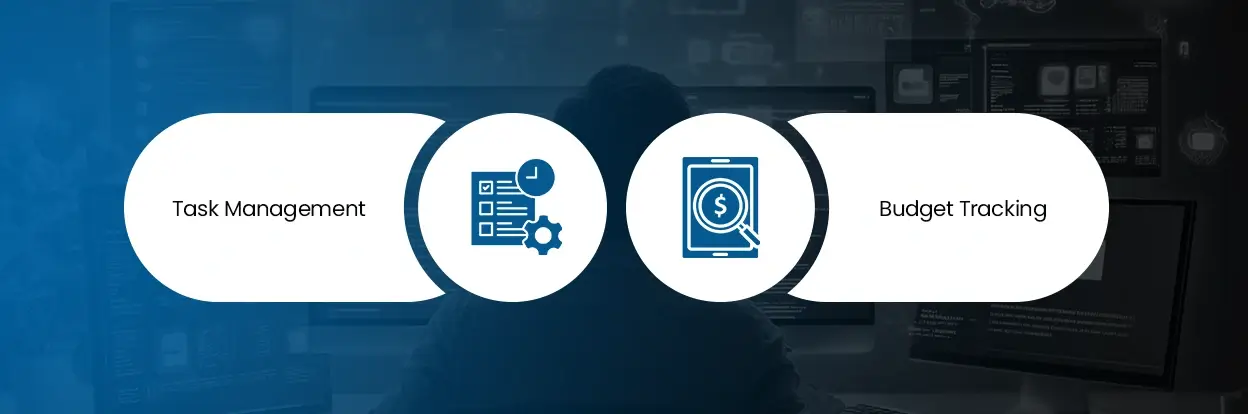
A successful construction app must include features that directly address industry challenges while enhancing productivity.
Task Management
Task management is the backbone of any construction app. It ensures that every activity is planned, assigned, and tracked efficiently.
- Create and assign tasks to team members
- Set deadlines and priorities
- Track progress in real time
- Receive notifications for updates and delays
This feature improves accountability and ensures that work progresses as planned.
Budget Tracking
Budget tracking is essential to keep projects financially viable.
- Monitor project expenses in real time
- Compare planned vs. actual costs
- Generate financial reports
- Track invoices and payments
With accurate budget tracking, companies can avoid overspending and maintain profitability.
Additional Essential Features
Document Management: Store and organize all project-related documents in one place. Easy access reduces time wasted searching for files.
Time Tracking: Track employee working hours to ensure accurate payroll and productivity analysis.
Resource Management: Efficiently allocate labor, materials, and equipment to avoid shortages or wastage.
GPS and Location Tracking: Monitor site activities and workforce movement for better coordination.
Safety Compliance Monitoring: Track safety protocols and ensure regulatory compliance to minimize risks.
Reporting and Analytics: Generate reports on project progress, financial performance, and workforce efficiency.
Cost Breakdown
The cost of developing a construction app depends on multiple factors such as features, complexity, platform, and integration requirements. Below is an estimated cost range in USD:
| App Type | Features Included | Estimated Cost (USD) |
| Basic Construction App | Task management, basic reporting, document storage | $20,000 – $40,000 |
| Mid-Level App | Budget tracking, real-time updates, team collaboration, notifications | $40,000 – $90,000 |
| Advanced Construction App | AI analytics, IoT integration, GPS tracking, advanced reporting, automation | $90,000 – $180,000+ |
| Enterprise-Level Solution | Custom integrations (ERP, CRM), cloud infrastructure | $180,000+ |
Factors Affecting Cost
- Number of features and complexity
- Platform (iOS, Android, or both)
- UI/UX design quality
- Third-party integrations
- Development team location
- Maintenance and updates
Investing in the right solution ensures long-term ROI by improving efficiency and reducing operational costs.
Benefits
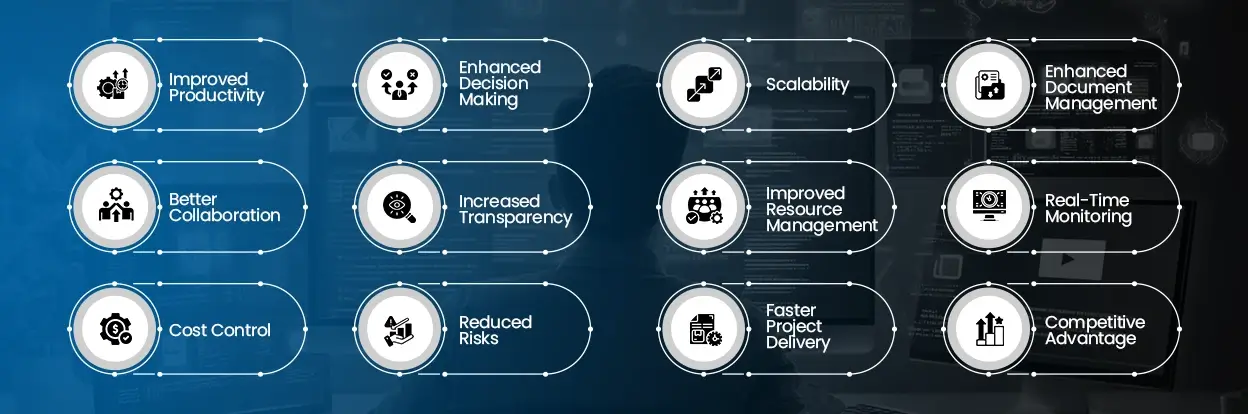
The application development for construction delivers far more than just operational convenience; it creates a strong foundation for long-term business growth, efficiency, and competitive advantage. By digitizing core processes, these apps help construction companies stay agile in a demanding and fast-paced environment.
Improved Productivity
Construction apps significantly reduce manual work by automating routine tasks such as scheduling, reporting, and updates. Teams no longer need to rely on paperwork or constant back-and-forth communication. Real-time updates ensure that everyone is working with the latest information, reducing downtime and increasing overall efficiency. As a result, projects move faster, and teams can accomplish more in less time.
Better Collaboration
Construction projects involve multiple stakeholders working across different locations. A centralized platform ensures seamless communication between contractors, engineers, project managers, and clients. Features like instant messaging, shared dashboards, and document access eliminate communication gaps. This leads to better coordination, fewer misunderstandings, and smoother project execution.
Cost Control
One of the biggest challenges in construction is managing costs effectively. With built-in budget tracking and expense monitoring, construction apps provide complete financial visibility. Businesses can track every expense, compare planned vs. actual costs, and identify areas of overspending early. This proactive approach helps in maintaining financial discipline and improving profit margins.
Enhanced Decision Making
Data-driven insights are a game-changer for construction businesses. With access to real-time analytics, project managers can monitor performance, identify bottlenecks, and make informed decisions quickly. Instead of relying on assumptions, decisions are backed by accurate data, leading to better outcomes and improved project success rates.
Increased Transparency
Transparency is critical for building trust among stakeholders. Construction apps provide real-time visibility into project progress, timelines, and financials. Clients and stakeholders can access updates anytime, which reduces the need for constant follow-ups. This openness not only improves client satisfaction but also strengthens professional relationships.
Reduced Risks
Risk management becomes more efficient with digital tools. Construction apps help track safety protocols, monitor compliance requirements, and identify potential risks before they escalate. Features like incident reporting and safety checklists ensure that teams adhere to industry standards. This reduces the likelihood of accidents, legal issues, and project delays.
Scalability
As construction businesses grow, managing multiple projects becomes increasingly complex. A scalable construction app can adapt to growing needs, whether it’s handling more users, larger datasets, or multiple project sites. This flexibility ensures that the technology continues to support the business as it expands, without requiring a complete overhaul.
Improved Resource Management
Efficient allocation of resources—labor, materials, and equipment—is crucial for project success. Construction apps provide real-time insights into resource availability and usage. This helps managers allocate resources effectively, avoid shortages, and minimize wastage, leading to optimized operations.
Faster Project Delivery
With streamlined workflows, automated processes, and better coordination, projects are completed more quickly. Delays caused by miscommunication, lack of information, or manual errors are significantly reduced. Faster project delivery not only improves client satisfaction but also allows businesses to take on more projects.
Enhanced Document Management
Managing large volumes of documents becomes effortless with a centralized digital system. Blueprints, contracts, permits, and reports are stored securely and can be accessed instantly. This reduces the risk of lost or outdated documents and ensures that everyone is working with accurate information.
Real-Time Monitoring
Project managers gain complete control over ongoing activities through real-time dashboards. They can track progress, monitor team performance, and address issues immediately. This level of control ensures that projects stay on track and within scope.
Competitive Advantage
Adopting the right approach sets businesses apart from competitors who still rely on traditional methods. It demonstrates a commitment to innovation, efficiency, and quality. Companies that leverage technology are better positioned to win more contracts and build a strong market reputation.
Why Partner with Markup Designs?
Choosing the right development partner is critical to the success of your construction app. Markup Designs stands out as a trusted partner for delivering high-quality and efficient digital solutions.
Industry Expertise: With deep experience in developing enterprise-grade applications, we understands the unique challenges of the construction industry.
Customized Solutions: Every construction business is different. The team focuses on building tailored solutions that align with your specific needs and workflows.
User-Centric Design: The apps are designed with usability in mind, ensuring easy adoption by on-site teams and management.
End-to-End Development: From product ideation & design to development and deployment, Markup Designs offers complete support throughout the project lifecycle.
Advanced Technology Stack: Leveraging the latest technologies such as AI, IoT, and cloud computing, the company ensures future-ready solutions.
Post-Launch Support: Continuous maintenance and updates ensure your app remains efficient and up-to-date.
FAQs
1. What is construction app development?
This involves creating digital solutions (mobile or web apps) that help manage construction projects efficiently. These apps streamline tasks like scheduling, budgeting, communication, and reporting.
2. How can a construction app improve project efficiency?
It enhances efficiency by automating workflows, enabling real-time updates, and centralizing all project data. This reduces delays, minimizes errors, and improves team coordination.
3. What are the essential features of a construction app?
Core features include task management, budget tracking, document management, real-time reporting, team collaboration tools, and resource allocation. Advanced apps may also include AI and IoT capabilities.
4. How much does it cost to develop a construction app?
The cost typically ranges from $20,000 to $180,000+, depending on the app’s complexity, features, integrations, and platform requirements.
5. How long does it take to build a construction app?
Development time varies based on complexity:
- Basic app: 2–4 months
- Mid-level app: 4–7 months
- Advanced app: 7–12+ months
6. Can the app be customized according to my business needs?
Yes, construction apps can be fully customized to match your workflows, project size, and operational requirements, ensuring maximum efficiency and usability.
7. Are construction apps secure?
Yes, they are built with security features like data encryption, secure login systems, and role-based access to protect sensitive project data.
8. Can a construction app integrate with existing tools?
Yes, it can integrate with ERP systems, CRM platforms, accounting tools, and other third-party software to ensure seamless data flow and improved productivity.
Conclusion
Construction app development is transforming how projects are managed—from planning and execution to monitoring and completion. By addressing key challenges such as communication gaps, budget overruns, and inefficiencies, these apps enable businesses to deliver projects faster, smarter, and more cost-effectively.
Whether you are a small contractor or a large enterprise, investing in a construction app can significantly enhance your operational efficiency and competitive advantage.
Partnering with an experienced development company like Markup Designs ensures that your app is not only functional but also scalable, secure, and aligned with your business goals.
The future of construction lies in digital transformation, and the time to embrace it is now.
Author's Perspective
From a content and industry standpoint, developing construction applications is no longer a luxury, it is a necessity. Businesses that rely on outdated processes risk falling behind in an increasingly competitive market.
What stands out the most is how digital tools are shifting the industry from reactive to proactive management. Instead of dealing with delays and cost overruns after they happen, companies can now predict and prevent them.
Another key observation is the growing importance of mobile-first solutions. Construction teams operate on-site, not behind desks. Apps that are intuitive, fast, and accessible on mobile devices are driving real change.
Lastly, the integration of technologies like AI and IoT is opening new possibilities. From predictive maintenance to smart resource allocation, the future of construction is deeply connected with digital innovation.
Discuss Your Project NowGaurav Goyal
Global Sales- VP
Insights Are Valuable & Execution is Priceless
You’ve read about the digital future. Now, let’s build the infrastructure to take you there. Move your strategy from the page to the product.
Design Your Solution Now
Contact Us
Schedule The Appointment At Your Convenience Date And Time.
30 Min
Web Conference
Time Zone
Indian standard time (08:30pm)

Thanks For Getting In Touch!
You’ve Taken The First Step Toward Transforming Your Digital Presence. Our Experts Will Reach Out Shortly To Take It Forward.
Launch Your Dream Project
Provide a brief overview of your project, and our specialists will evaluate your requirements. We will connect with you to explore how the right digital solutions can help you launch faster.