
Mobile App Development: Complete Guide for Businesses
With the current state of affairs in a mobile-centric environment, your app is not just a piece of digital product; it’s your biggest business asset. The transformational effect of mobile applications on doing business cannot be underestimated – from contacting customers immediately to optimizing all aspects of your business processes, apps have made the difference. However, developing an app takes a lot more than just writing code; you also need an excellent strategy and technical expertise to make sure that your efforts pay off. This guide will give you all the knowledge needed for developing your own app.
Mobile App Market Statistics and Industry Outlook
Mobile applications have become the foundation of modern digital experiences, enabling businesses to engage customers, streamline operations, and create new revenue streams. As smartphones become the primary way people access digital services, organizations across industries are investing in mobile-first strategies to remain competitive.
The global mobile app market continues to experience strong growth, driven by increasing smartphone adoption, cloud technologies, artificial intelligence, and changing consumer behavior. According to recent industry reports, there are more than 7.4 billion smartphone subscriptions worldwide, creating an opportunity for businesses to reach out users through mobile applications.
The mobile economy also continues to expand at an impressive pace:
- Global consumer spending on mobile apps reached approximately $155.8 billion in 2025, representing a 21.6% year-over-year increase, largely fueled by subscriptions and in-app purchases.
- Despite a mature market, users still downloaded over 106.9 billion mobile apps across Apple App Store and Google Play in 2025, highlighting the continued demand for mobile experiences.
- Mobile engagement continues to rise, with users spending around 3.6 hours per day in mobile applications and accumulating more than 5.3 trillion hours of app usage globally in 2025.
- Artificial intelligence is rapidly transforming the app ecosystem. AI-powered applications have become one of the fastest-growing categories, driving increased user engagement, personalization, and subscription revenue across industries.
- Cross-platform frameworks such as Flutter and React Native continue to gain popularity, helping businesses reduce development costs while accelerating product launches across both Android and iOS platforms.
These trends demonstrate that mobile applications are no longer optional, they are strategic business assets that support customer acquisition, operational efficiency, brand loyalty, and long-term digital growth. Whether you’re building an MVP, modernizing enterprise operations, or launching a customer-facing platform, investing in mobile app development has become essential for maintaining a competitive advantage.
As mobile technologies continue to evolve with AI, 5G, cloud computing, and immersive experiences, businesses that embrace innovation today will be better positioned to meet tomorrow’s customer expectations.
What is mobile app development? and why it matters for your business
Before diving into the mobile app development process, let’s first understand what mobile app development actually means.
Simply put, mobile app development is the process of creating applications that run on smartphones, tablets, and other mobile devices. It involves much more than writing code. From planning the app idea and designing an easy-to-use interface to developing features, testing performance, and launching the app on the Google Play Store or Apple App Store, every step plays an important role in building a successful mobile application.
Businesses develop mobile apps for many purposes, such as selling products, offering services, managing operations, improving customer support, or increasing brand visibility. Depending on your goals, you can build a native, hybrid, or cross-platform application that best suits your business needs.
Now, let’s talk about why mobile app development matters.
Today, customers expect businesses to be available anytime and anywhere. A mobile app makes it easier for people to connect with your brand, make purchases, book services, receive instant updates, and get personalized experiences directly from their smartphones.
For businesses, mobile apps help increase customer engagement, strengthen brand loyalty, improve operational efficiency, and create new revenue opportunities. Whether you’re a startup or an established enterprise, investing in mobile app development can help you stay competitive, reach more customers, and support long-term business growth in an increasingly digital world.
Basic Mobile Application Types
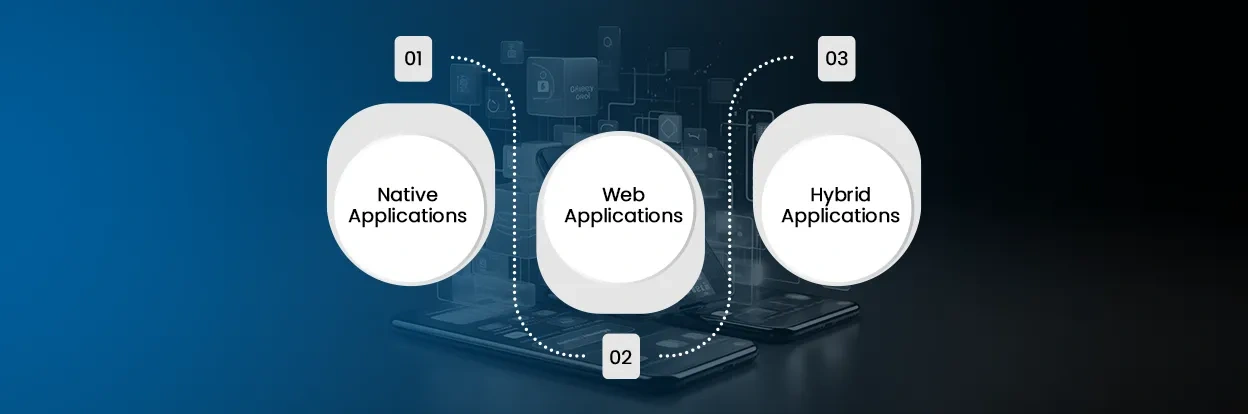
The three main types of mobile applications include:
- Native Applications: The creation of native applications involves language that is only used in specific platforms like Android and iOS.
- Web Applications: Web applications do not require any installation, and one can access them using a web browser.
- Hybrid Applications: Hybrid applications incorporate characteristics of native applications as well as web applications.
Comparison Table
| Type | Pros | Cons | Best For |
| Native | High-speed, high-performance, better user experience | Expensive, different development for each operating system | High-performance applications, games, and complex applications |
| Web App | Affordable, no installation required | Few features rely on the web browser | Informative websites, basic applications |
| Hybrid | Quick development, works across platforms | Lower performance than native applications | Start-ups, MVPs, cost-conscious projects |
Who Needs a Custom Mobile App?
Custom-made mobile applications can be considered ideal for the following types of businesses:
- Companies seeking unique shopping experiences.
- Companies operating within the service industry like healthcare, logistics, booking services, etc.
- Corporate businesses need internal applications.
Such companies will benefit from customized apps since they have unique business processes, customer interaction methods, or rely on data for decision-making.
Why It Matters: Key Business Outcomes
- Increased Income Generation
Mobile applications allow for direct income streams, in-app payments, and customized marketing strategies.
- Better Customer Interaction
Push notifications, loyalty schemes, and other things will ensure better interaction between the company and customers.
- Increased Productivity
The company gets increased productivity by making use of custom mobile apps because it improves order handling, communication, and data monitoring.
In today’s mobile world, having the appropriate application is key to staying ahead of the competition.
Why Every Business Needs a Mobile App in 2026
In today’s digital-first economy, a mobile app is no longer a competitive advantage, it has become a business necessity. Customers increasingly expect brands to offer fast, personalized, and convenient experiences, whether they’re shopping online, booking services, managing finances, or accessing healthcare. Businesses that fail to meet these expectations risk losing customers to competitors that provide seamless mobile interactions.
A custom mobile app helps businesses strengthen customer relationships by offering personalized experiences, real-time communication through push notifications, loyalty programs, and instant support. Unlike websites, mobile apps create a direct channel for users, improving engagement, increasing retention, and encouraging repeat purchases.
Beyond customer engagement, mobile applications streamline internal operations by automating workflows, enabling real-time data access, improving team collaboration, and integrating with enterprise systems such as CRM, ERP, and payment platforms. This leads to greater operational efficiency and better decision-making.
The growing adoption of AI, cloud computing, IoT, and 5G has further expanded the capabilities of mobile applications. Businesses can now leverage intelligent features such as AI-powered recommendations, predictive analytics, voice assistants, and real-time tracking to deliver exceptional user experiences.
Whether you’re a startup launching a new digital product or an enterprise modernizing existing processes, investing in mobile app development creates long-term value through improved customer satisfaction, increased revenue opportunities, stronger brand loyalty, and scalable business growth. In 2026 and beyond, mobile apps will remain one of the most effective tools for driving digital transformation and achieving sustainable competitive advantage.
Is Your Business Ready for Mobile App Development?
Before investing in mobile app development, businesses should evaluate whether they have a clear strategy and the resources needed for a successful launch. Building an app without validating the idea or defining business objectives can lead to unnecessary costs and poor user adoption.
Start by identifying the problem your app will solve and the audience it will serve. Define your goals, whether it’s increasing sales, improving customer engagement, streamlining operations, or launching a new digital product. Understanding your target users, competitors, budget, monetization strategy, and key features will help shape the development roadmap.
It’s equally important to assess your technical requirements, integration needs, and long-term maintenance plan. Businesses should also prepare for post-launch activities such as marketing, analytics, updates, and customer support.
A well-planned strategy minimizes development risks, accelerates time to market, and ensures your mobile application delivers measurable business value. Taking the time to assess your readiness before development lays the foundation for a successful and scalable mobile app.
How to Validate Your Mobile App Idea Before Development
Validating your mobile app idea before development helps reduce risks, avoid unnecessary expenses, and ensure there is genuine market demand. Rather than building a full-featured application immediately, businesses should first test their concept with real users and gather actionable feedback.
Begin by researching your target market and identifying competitors. Analyze their strengths, weaknesses, customer reviews, and feature offerings to uncover opportunities for differentiation. Next, define your unique value proposition and create wireframes or clickable prototypes to visualize the user experience.
Launching a Minimum Viable Product (MVP) with essential features allows you to collect user feedback, measure engagement, and validate assumptions before investing in full-scale development. Conduct user interviews, surveys, and usability testing to understand customer expectations and refine your product accordingly.
A structured validation process helps businesses build products that solve real problems, improve product-market fit, optimize development budgets, and increase the likelihood of long-term success after launch.
Types of Mobile Apps: Which One Does Your Business Need?
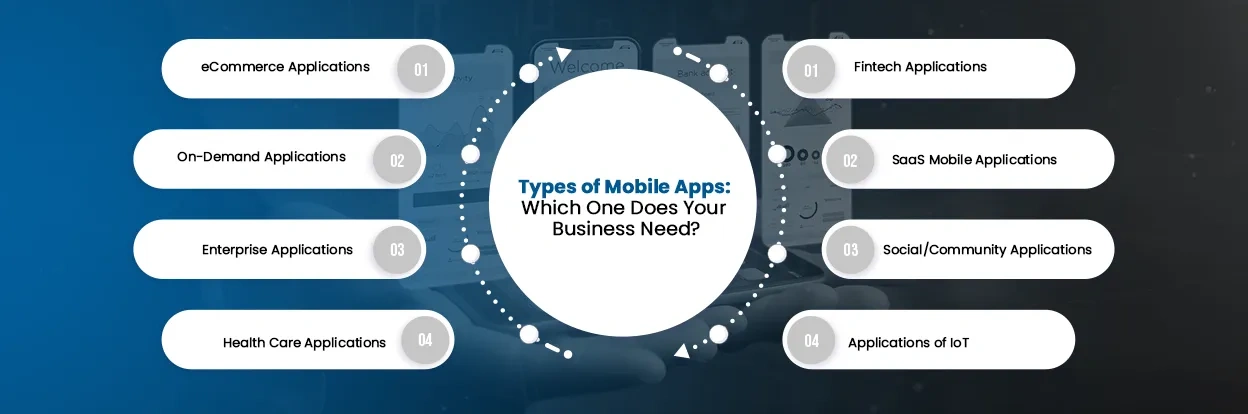
The type of mobile app that should be selected is dependent on one’s business model, target audience, and other relevant factors. Here are the different types of mobile applications:
1. eCommerce Applications
With these applications, customers can view, purchase, and manage orders from their smartphones. These include apps created by firms such as Amazon and Flipkart to facilitate mobile shopping. Important factors here include payment gateways, ease of checkout process, and recommendations.
2. On-Demand Applications
These mobile applications provide users with an easy way to book appointments for services on demand, as seen in Uber and Zomato. Such apps need to have good capabilities for tracking locations, real-time booking, and fast response times.
3. Enterprise Applications
These mobile applications are designed to be used by firms internally in order to conduct various operations. For example, enterprise applications may be used for employee management purposes and other internal operations. Security is important for such apps.
4. Health Care Applications
Health care mobile applications are important as they enable telemedicine, appointment bookings, health management, and other functions. Examples include Practo, which can provide insights into healthcare app development.
5. Fintech Applications
Fintech applications provide services related to payments, banking, investments, and financial planning—such as Paytm and Google Pay. Learn more about fintech application development here. Security, encryption, and regulatory compliance are essential.
6. SaaS Mobile Applications
These applications are the mobile versions of software as a service applications, such as Slack or Dropbox. Accessibility and synchronization with different devices are key. Cloud services and user experience are important factors.
7. Social/Community Applications
Social applications allow users to communicate and exchange information via the Internet. They are similar to Instagram and Reddit. Backend architecture, content management, and user engagement are necessary aspects.
8. Applications of IoT
IoT applications connect multiple smart devices. For example, a smart home application would involve connecting different smart home devices together. It is important to have real-time synchronization of information, connectivity and security features.
This knowledge about these applications would assist you in crafting your application strategy.
Essential Features Every Successful Mobile App Should Have
Every successful mobile application combines intuitive design with features that improve usability, security, and engagement. While feature requirements vary by industry, these core functionalities provide a strong foundation for building scalable and user-friendly mobile apps.
1. User Registration & Secure Authentication
It enable users to sign up quickly using email, phone numbers, or social media accounts while ensuring secure authentication through multi-factor authentication (MFA) and biometric login options.
2. ntuitive User Interface (UI/UX)
Create a clean, responsive, and easy-to-navigate interface that minimizes user effort, improves accessibility, and delivers a seamless experience across different devices and screen sizes.
3. Push Notifications
It keep users engaged by sending personalized notifications for promotions, reminders, order updates, abandoned carts, new features, and important announcements without overwhelming them.
4. Advanced Search & Smart Filters
Help users quickly find products, services, or content with intelligent search capabilities, category filters, voice search, and AI-powered recommendations.
5. Secure Payment Integration
Support multiple payment methods, including credit/debit cards, digital wallets, UPI, and online banking, while ensuring encrypted and PCI DSS-compliant transactions.
6. Real-Time Chat & Customer Support
Provide instant assistance through live chat, AI chatbots, in-app messaging, or help centers to improve customer satisfaction and resolve issues faster.
7. Offline Functionality
Allow users to access essential features and previously saved data even without an internet connection, ensuring uninterrupted usability.
8. Analytics & Performance Tracking
Integrate analytics tools to monitor user behavior, app performance, retention, conversion rates, and feature usage for continuous product improvement.
9. Strong Security & Data Protection
It protects sensitive user information using end-to-end encryption, secure APIs, role-based access controls, regular security updates, and compliance with data privacy regulations.
10. Third-Party Integrations
It enhances app functionality by integrating services such as CRM, ERP, payment gateways, maps, cloud storage, social media platforms, and marketing automation tools.
iOS vs Android vs Cross-Platform- What’s Best Platform
Platform selection is an important decision and would affect many things related to your application, including the distribution and cost factors involved. Nowadays, businesses have three options: to go for iOS-first, Android-first, or select the cross-platform development approach, depending on what they want to achieve.
The first platform to consider if you are planning to distribute your application among high-end users who are mostly found in places like America and Europe is iOS. This is because it consists of high-end users and is best if you intend on making a paying application or an application with monetization.
Your goal should be to target emerging markets or Asian markets since Android has the largest number of mobile users in the world.
If you want to reach more users in emerging or Asian markets, Android app development is a great choice because it has the largest mobile user base worldwide.
Cross-platform development becomes standard practice for the majority of companies by 2026. It is possible to build a single codebase for the iOS and Android platforms by utilizing the Flutter or React Native framework.
More detailed information about cross-platform development may be found in the following article Advantages of Native vs Hybrid cross-platform development include cost efficiency, shorter development times, and decreased time to market, which makes it suitable for startups and MVPs.
Why Should You Choose Native Development?
It will make sense to choose native development if you have to develop a high-performance application (e.g., video games) or if your application needs complex animations, sophisticated functionality linked to device hardware components.
Decision Table
| Scenario | Best Choice |
| Choose iOS first if… | Your target audience consists of premium members, your business focuses on revenue generated per user instead of audience numbers, and you need quick development but not many devices to be considered. |
| Choose Android first if… | You have a large, diverse target audience that includes customers from third world countries and are seeking to acquire as many users as possible. |
| Choose Cross-Platform if… | You want quicker launch, lower costs, and single codebase for both systems, which is ideal for business apps. |
Generally speaking, it all depends on how successfully you manage your resources, target audience, and business objectives. So, which platform should you launch first-iOS or Android?
Mobile App Monetization Models
Choosing the right monetization model is just as important as developing a feature-rich mobile application. A well-planned revenue strategy helps businesses generate consistent income while delivering value to users. The ideal model depends on your target audience, industry, and business goals. Many successful apps even combine multiple monetization strategies to maximize revenue and long-term growth.
1. Paid Apps
Users pay a one-time fee to download the application from the app store. This model works best for apps that offer unique features, premium content, or specialized professional tools.
2. Freemium Model
Offer the basic version of your app for free while charging users for premium features, advanced functionality, or exclusive content. This is one of the most popular monetization strategies today.
3. Subscription-Based Model
Generate recurring revenue by offering monthly or annual subscription plans. This model is widely used by SaaS, fitness, education, entertainment, and productivity applications.
4. In-App Purchases
Allow users to buy virtual goods, premium content, additional features, or digital assets within the application. This model is commonly used in gaming and content-based apps.
5. In-App Advertising
Display banner ads, rewarded videos, native advertisements, or interstitial ads to generate revenue while keeping the application free for users. This model works best for apps with high user engagement.
6. Marketplace & Commission Model
Earn revenue by charging a commission on every transaction made through the platform. This approach is widely adopted by eCommerce, food delivery, ride-hailing, and booking applications.
7. Enterprise Licensing
Businesses purchase software licenses or pay annual contracts to use enterprise mobile applications. This monetization model is ideal for B2B solutions such as CRM, ERP, healthcare, and field service management platforms.
8. Hybrid Monetization
Many successful applications combine multiple revenue models, such as subscriptions, in-app purchases, and advertising, to diversify income streams while delivering greater value to different user segments. This approach helps maximize profitability without relying on a single source of revenue.
The Mobile App Development Process: 7 Stages from Idea to App Store
Knowing about the mobile app development process, organizations may be more aware of their budget, plans, and objectives. The seven phases of mobile application development are outlined below:
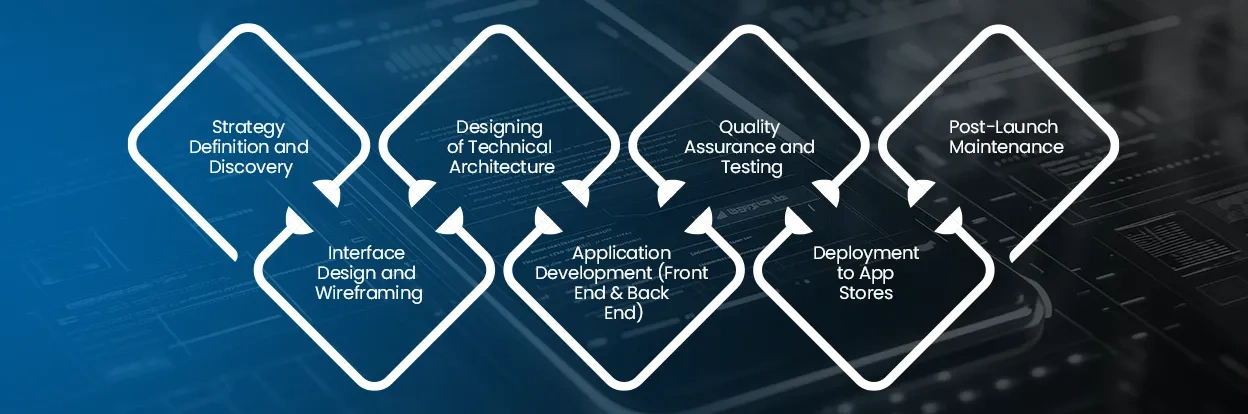
Strategy Definition and Discovery
At this stage, the objective of the application, its target audience, application features and capabilities, and business strategy are defined. Here, stakeholders, product managers, and business analysts are mentioned. The phase usually lasts from one to two weeks. During this phase, the client outlines the specifics of the application.
Interface Design and Wireframing
During this phase, designers create wireframes and interface designs of the application that illustrate its usage process. It typically lasts from two to three weeks. During this phase, customers examine the designs and give the green light to further development.
Designing of Technical Architecture
This is where software architects and developers select the technology stack for developing the application, database management systems, APIs, and any other technologies used in the development process. This step requires one to two weeks. During this step, the customer provides input concerning the technologies used.
Application Development (Front End and Back End)
This is where software engineers code the software and both the back end and front end. This step lasts six to twelve weeks, depending on the complexity involved in the development process.
Quality Assurance and Testing
Quality assurance analysts perform tests to identify bugs, performance problems, and usability issues. This step requires two to three weeks. Additionally, the customer may also perform user acceptance tests (UAT) to ensure that the quality of the final product is of high standards.
Deployment to App Stores
The software undergoes deployment to such app stores as Google Play and Apple App store. This process requires one to two weeks. During the deployment stage, the customer provides all business-related details.
Post-Launch Maintenance
Upon release, the application needs updates, maintenance, and optimization. This is a continuous process where the client plays a role in feature updates and scale expansion.
To know more about each phase, click here to see our mobile app development phases guide.
Planning a mobile app? Our team walks you through every stage – from initial discovery to App Store launch.
Mobile App Development Timeline
The timeline for developing a mobile application depends on its complexity, features, integrations, and testing requirements. While a simple MVP can be launched within a few months, enterprise-grade applications often require a longer development cycle to ensure scalability, security, and performance. Following a structured development timeline helps businesses plan resources, manage budgets, reduce risks, and launch high-quality applications faster.
Discovery & Planning (1–2 Weeks)
Define business goals, identify target users, validate the app idea, gather requirements, create a product roadmap, and finalize the project scope to establish a strong foundation for development.
UI/UX Design & Prototyping (2–4 Weeks)
Design user journeys, wireframes, interactive prototypes, and high-fidelity interfaces that deliver an intuitive, engaging, and consistent user experience across different mobile devices.
Technical Architecture & Development Setup (1–2 Weeks)
Select the technology stack, design system architecture, configure cloud infrastructure, integrate development tools, and establish secure APIs, databases, and deployment environments.
Frontend & Backend Development (8–16 Weeks)
Develop the application’s user interface, backend services, APIs, databases, authentication, third-party integrations, and core business logic while following agile development methodologies.
Quality Assurance & Testing (2–4 Weeks)
Perform functional, usability, security, compatibility, and performance testing to identify bugs, optimize stability, and ensure the application delivers a seamless user experience.
App Store Deployment (1 Week)
Prepare app store assets, complete compliance checks, submit the application to Google Play and the Apple App Store, and resolve any review feedback before public release.
Post-Launch Maintenance & Continuous Improvement (Ongoing)
Monitor application performance, release regular updates, enhance security, introduce new features, fix bugs, and use analytics to continuously improve user experience and business outcomes.
Mobile App Development Technology Stack: Which Technologies Are Used in 2026?
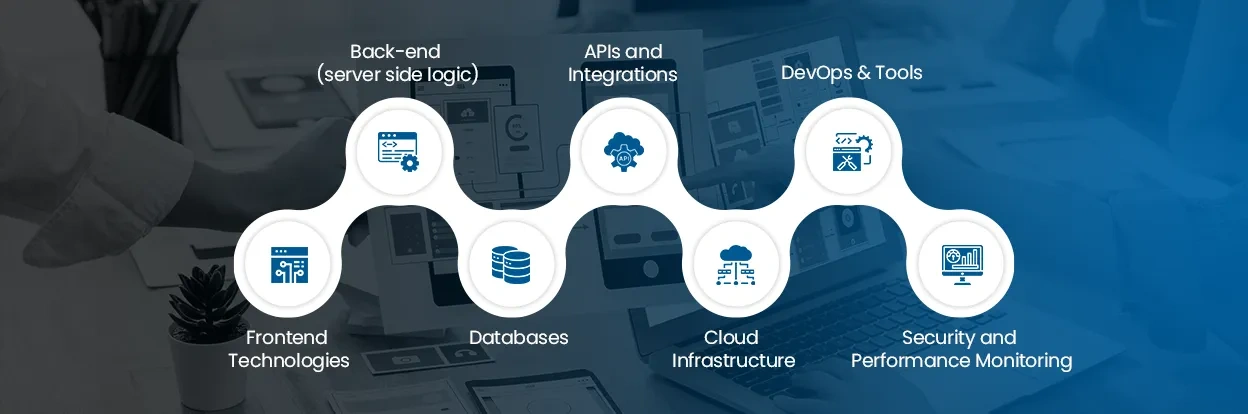
Modern tech stack refers to software used for building, maintaining, and scaling mobile applications. The tech stacks that will be used in 2026 will aim at improving efficiency and performance of applications.
Frontend Technologies
Frontend refers to the visual components of an application. Developers rely on Swift and Kotlin when developing iOS and Android-based applications respectively. Cross platform mobile app development technologies such as Flutter and React Native are also preferred because of their one code base.
Back-end (server-side logic)
This refers to the software components responsible for ensuring that applications function properly and securely. The most common back-end development technologies include Node.js, Python Django/Flask, and Java Spring Boot, among others. Server-less architecture will also be preferred in the year 2026.
Databases
These refer to storage solutions where information will be stored and managed in an app. PostgreSQL and MySQL are common database management systems, while MongoDB is suitable for scalable and flexible databases. Real-time applications can also utilize Firebase and Redis databases.
APIs and Integrations
APIs make sure that an app communicates with other external tools like payment gateways, maps, and even third-party applications. REST and GraphQL are popular options. Seamless integration can provide more functionality and increase usability.
Cloud Infrastructure
Cloud services such as AWS, Google Cloud, and Microsoft Azure allow you to deploy scalable mobile applications. These cloud providers offer storage, compute resources, and security, among others.
DevOps and Tools
Modern-day development includes continuous integration and continuous delivery tools, Git, and even automation. Docker and Kubernetes are some popular choices in deploying your apps.
Security and Performance Monitoring
It is important to have high security because there is an increase in cybersecurity threats. This means you need security measures like end-to-end encryption and biometric verification.
The selection of your technology stack will depend on the needs of your app.
How Much Does Mobile App Development Cost? (2026 Pricing Guide)
In 2026, the price of developing a mobile application will depend heavily on features and complexity, and it may be anything from $15,000 to $400,000+.
Cost Breakdown by App Complexity
| App Type | Estimated Cost | Timeline | What You Get |
| Simple App (MVP) | $15,000 – $30,000 | 2–3 months | Basic features, 3–5 screens, single platform |
| Moderate App | $30,000 – $75,000 | 3–5 months | User login, APIs, custom UI, backend |
| Complex App | $75,000 – $150,000+ | 5–9 months | Real-time features, payments, integrations |
| Enterprise-Level App | $150,000 – $500,000+ | 9–18+ months | Advanced scalability, security, AI, multi-platform |
In most cases, business apps will cost between $25,000 and $150,000, depending on features and scale.
Cost in India vs Global Market
- India (cheap market for development): ₹4,00,000 – ₹25,00,000 ($5K – $30K)
- Global software vendors (USA/Europe): $50,000 – $300,000+
The disparity is mostly down to the difference in labor prices and expenses.
Key Factors That Affect App Cost
- App Complexity & Features
More functionality means higher cost and longer development (e.g., messaging, payment, AI integration).
- Platform (single or multi-platform)
- A mobile app that works only on one platform (iOS or Android) is cheaper
- Multi-platform mobile apps can save up to 30-40% of the total budget.
- UI/UX Design
A unique and custom interface and experience increase the development budget.
- Back-end Requirements
Real-time information exchange, API, or dashboard requires additional costs.
- Team Location
India, Eastern Europe, and Southeast Asia are cheaper than the United States.
Hidden & Ongoing Costs
- Maintenance: 15–20% of initial cost per year
- Cloud hosting & APIs
- App updates & new features
- Marketing & user acquisition
Mobile App Development Trends to Know in 2026
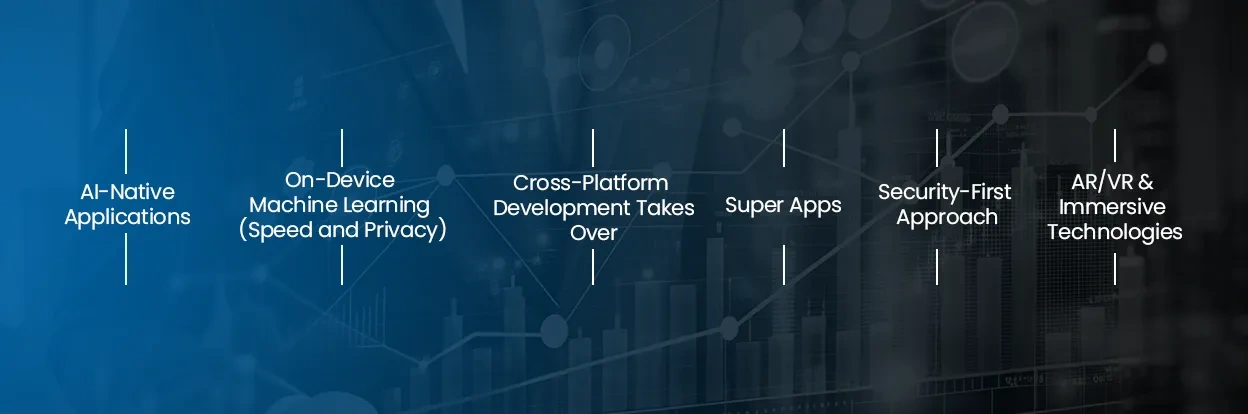
Here’s what you need to know about the state of mobile applications in 2026:
- AI-Native Applications
Nowadays, developers do not create applications that incorporate AI as a separate feature but rather create AI-native applications. Almost 90% of newly created apps will become AI-native with a focus on the application of artificial intelligence through personalization, automation, and intelligent decision-making. You may expect AI recommendations, AI-chats, and AI-powered predictions in new products.
- On-Device Machine Learning (Speed and Privacy)
The emergence of new devices with AI-friendly hardware (e.g., Apple Neural Engine and Google Tensor) leads to a tendency toward on-device machine learning applications instead of cloud-based. It results in increased speed, allows offline usage, and improves security and privacy. Some examples are instant translation, AI camera, and offline assistants.
- Cross-Platform Development Takes Over
Cross-platform solutions like Flutter and React Native have been able to reach 95%-98% performance compared to native apps with a single codebase. Companies claim that development is 40%-60% faster using these platforms.
- Super Apps
The super app phenomenon refers to the incorporation of several services like payment, shopping, and communication into one app. This has been gaining momentum worldwide as it aids in maintaining higher retention and keeps users engaged within the same ecosystem.
- Security-First Approach
Given the strictness of regulations and the growing threat of cybersecurity breaches, the design of apps starts with considering security as its backbone rather than as a mere add-on feature. Some of these applications include end-to-end encryption, serverless computing, and zero-trust architecture.
- AR/VR and Immersive Technologies
AR/VR technologies have evolved from being used exclusively in gaming to being used in industries such as retail, healthcare, and education. In particular, the forecasted revenue for the AR market alone by 2026 is expected to be above $220 billion.
How to Choose the Right Mobile App Development Company
It is imperative that you find the right development partners. Here are some useful points to guide you in selecting a suitable mobile app development agency:
Understand What You Want First
Understand what type of product you wish to create, for whom you want to develop an application, what functions it will contain, and how much budget you allocate to this process.
Your task: Create a brief.
Evaluate Their Portfolio and Relevant Experience
Check their portfolios; try to find cases relevant to your product (e-commerce apps, finance apps, healthcare apps, and many others). Having a good portfolio shows that a team understands your industry.
The main focus areas: Quality of design, functions, and performance of an app.
Explore Their Technical Skills
Learn about their experience in working with different technological stacks like Flutter, React Native, native apps development, and others. It could be useful to ask about the recommended technologies by a company.
Tip: Ask why they chose particular stacks.
Read Reviews by Clients
Read testimonials on Clutch, Google, or LinkedIn. When only good testimonials exist, think of engaging this agency.
Signs of problems: poor communication, late delivery, or extra fees.
Learn About Their Process of Development
An honest company has a structured process that covers discovery, designing, development, testing, and launch.
Questions to ask: Do they provide you with regular updates? Any milestone and demo presentations?
Communication and Transparency
Transparency is a very important factor for successful project realization. Ensure that they have a dedicated point of contact and make use of tools like Slack, Jira, and Trello.
Your task: participate actively and provide your input.
Fees & Contracts
Do not pick the cheapest vendor. Value should prevail over price when making a decision.
Watch for payment plans, deliverables, deadlines, and ownership of the software.
Post-launch Maintenance
Any app requires ongoing maintenance due to regular updates and bug fixes.
Questions: What is their maintenance strategy?
See how Markup Designs has helped businesses across healthcare, fintech, and e-commerce build apps that perform.
Why Businesses Choose Markup Designs for Mobile App Development
The company was chosen for the project due to its powerful blend of experience, innovation, and professional execution of its services. Having more than 14 years of experience in the field and working on thousands of successful projects, Markup Designs can be called a reputable developer of scalable and effective digital solutions.
The most distinctive feature of Markup Designs is its custom-first approach to working with each client. While other companies provide their clients with standard services, this team of professionals always takes into account specific business objectives of the customer and creates personalized mobile applications that increase user engagement, conversion rates, and revenue.
Another competitive advantage that makes this company unique is its cross-platform capabilities. The team specializes in developing apps for various operating systems such as iOS and Android and creating cross-platform applications for both operating systems with the help of modern technologies.
Moreover, the Markup Designs team applies the agile methodology during the process of software development. It provides faster delivery of a project, flexibility, and constant improvements of mobile apps.
Lastly, Markup Designs has a global reach and great customer relations, providing services to clients in different industries worldwide. This company is well recognized because it is innovative, places emphasis on user experience design, and creates value for its clients’ businesses.
Conclusion
Developing a mobile application for success depends not only on the process itself but also on choosing the right partner and adhering to certain steps throughout this process. From selecting the appropriate platform to taking advantage of innovative technology, every step counts towards creating an effective app.
FAQs
1. How much time does it take to develop a mobile application?
The average time frame is from 2 to 6 months. This all depends on the application’s complexity, functionality, and the selected platform.
2. How do native and cross-platform apps differ?
On average, native apps perform better and have greater performance capabilities because they are developed specifically for particular devices. Cross-platform apps are cheaper to develop.
3. Should I develop an iOS and Android application?
It will depend on your needs. Usually, cross-platform frameworks allow for developing an app for both platforms.
4. What happens with my app after its launch?
After being launched, an app needs to be updated and improved in order to remain competitive.
5. Is it possible to connect my app with third-party services?
Yes, any mobile app can be connected to a CRM, ERP, and accounting system using API integration.
6. How can I secure my app idea before I start developing it?
Signing an NDA (Non-Disclosure Agreement) with the company that develops your app is the best way of securing it. It is equally important to work with a reliable partner who will ensure confidentiality and secure handling of all information.
Author's Perspective
From my perspective, custom blockchain development is not just about adopting a modern technology trend; it’s about making strategic decisions that create real business impact. Many organizations rush into blockchain adoption without clearly defining their objectives, which often leads to underutilized solutions.
The key lies in understanding where blockchain truly adds value. Not every system needs decentralization, but for processes involving multiple stakeholders, trust gaps, or data integrity concerns, blockchain can be transformative.
Ultimately, the success of any blockchain initiative depends on balancing innovation with practicality. With the right strategy, technology, and development partner, businesses can unlock the full potential of blockchain and drive long-term growth.
Discuss Your Project NowAjit Kumar Jha
VP - Business Operations
Related Posts
How to Build an App Like Yuka: Features,...

10 Key Factors to Choose the Right Mobile...
Mobile App Development in Kuwait: Cost, Process, Features...
Insights Are Valuable & Execution is Priceless
You’ve read about the digital future. Now, let’s build the infrastructure to take you there. Move your strategy from the page to the product.
Design Your Solution Now
Contact Us
Schedule The Appointment At Your Convenience Date And Time.
30 Min
Web Conference
Time Zone
Indian standard time (08:30pm)

Thanks For Getting In Touch!
You’ve Taken The First Step Toward Transforming Your Digital Presence. Our Experts Will Reach Out Shortly To Take It Forward.
Launch Your Dream Project
Provide a brief overview of your project, and our specialists will evaluate your requirements. We will connect with you to explore how the right digital solutions can help you launch faster.