
How Much Does it Cost to Develop a Mobile App?
Building a mobile app sounds exciting-until the budgeting starts. Most businesses begin with a clear product idea but quickly get stuck on one question: “How much will this actually cost?” The answer is rarely straightforward. Two apps with similar features can differ drastically in price depending on design complexity, tech stack, development approach, and even the team’s location.
This uncertainty often leads to one of two outcomes-either underestimating the budget and running out of funds mid-development, or overestimating and delaying the project unnecessarily. Neither is ideal in today’s fast-moving digital landscape.
In 2026, mobile apps are no longer optional for businesses; they are core revenue and engagement channels. But smart investment starts with understanding where the money actually goes. From idea validation to post-launch maintenance, every stage adds a different layer of cost.
This guide breaks down mobile app development costs in a practical, structured way so you can move beyond vague estimates and build a clear financial roadmap. Instead of guessing numbers, you’ll learn how to evaluate cost based on real variables like features, platforms, technology choices, and development stages.
By the end, you won’t just know how much an app costs-you’ll understand why it costs that much and how to control it strategically.
What is Mobile App Development Cost?
In this regard, the cost involved in the development of the mobile app refers to resources used to produce a certain product, which would operate on different platforms like Android and iOS. However, this is not just one particular component of the development cost, but multiple components, whose total contribution forms the cost of the whole process.
First of all, it includes elements starting with pre-development planning, including UI/UX design, backend system development, integration of third-party services, testing, and deployment of the app. The involvement of different components means that each phase requires certain skills and hardware, which also contribute to the total development cost.
Hence, for example, the creation of a simple application with pages that are meant to be shared may include very little backend development; thus, the cost involved will not be high. In turn, more complex apps like a food ordering service or even online shopping site will involve much bigger expenses since it will have more architectural features and payment processing capabilities.
It is also vital to note that there is no universal cost for developing applications. The costs will depend on the location of the developer, the expertise of the developer, and the technologies employed in developing the app. For instance, an application that can be developed at a relatively low cost in South Asia will require significantly more resources when developed in North America.
In essence, the cost of mobile application development should not only be considered as the process of building applications but rather creating a product that functions effectively and meets business needs. Understanding this definition will assist companies to avoid ‘price hunting’ and make decisions based on real value.
Mobile App Development Cost in 2026: What to Expect
When it comes to developing mobile apps in 2026, the price will depend not on any set rates but on such aspects as the complexity of the project, scalability, and its objectives. With technology growing more sophisticated, it becomes necessary for companies to know what affects their final budget.
Average Cost Range by App Type
Depending on its category, an application can vary widely in the amount that is required to develop. Basic apps with simple functionality, for instance, require a relatively low budget as compared to others since the process involves limited screen development and little backend coding. Apps that have more functions such as user login, payments, and other forms of data management have a higher cost range due to their advanced nature. The highest cost range is attributed to apps whose development requires an advanced architecture and highly scalable code such as financial technology software, social networking sites, and on-demand platforms.
Cost Comparison by Development Region
Location is yet another factor that plays a crucial role in determining the budget that will be needed during development. Teams from North America and Western Europe, for instance, tend to charge higher rates when working on a project because of various reasons. There are better alternatives provided by teams from eastern Europe who are highly experienced but not too expensive. Other options include locations such as South Asia with India being one example.
Key Factors That Influence App Development Cost
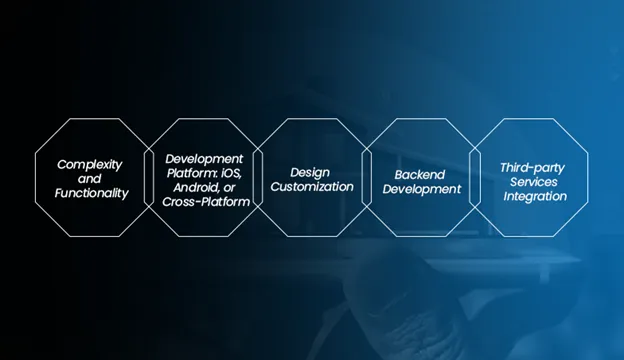
Several aspects influence the price of developing a mobile application. It is crucial to know about them if you want to budget accurately.
- Complexity and Functionality: The more complicated the app, the more costly its development. Such features as real-time tracking, user identification, and data analytics take a lot of effort.
- Development Platform: iOS, Android, or Cross-Platform: Developing apps for several platforms raises prices; however, utilizing cross-platform frameworks may help cut expenses and time.
- Design Customization: Creating custom designs with lots of interaction takes more time and resources than using pre-existing templates.
- Backend Development: Solid backend systems provide storage and user management, which is crucial when calculating costs.
- Third-party Services Integration: Connecting your app to other platforms or using APIs from outside vendors provides extra functionalities but requires more work.
Estimating Cost Based on App Features
Estimating the development cost for mobile apps is quite simple once one divides a project into its specific functions. Instead of making wild guesses about the whole cost of a project, companies need to analyze the contribution of every feature to development time and cost.
Features Every App Must Have
These features are necessary for most mobile applications to work well:
- User Account Registration/Login (via email, phone, or social media accounts)
- Account Management (personalization options like settings and preferences)
- Navigation (including menus, search, and categorization features)
- Push Notification System (alerting users about updates and other information)
- Dashboard (the main interface where the users interact with their devices)
These features are relatively standard but still require careful implementation to ensure usability and performance.
Advanced Features That Increase Cost
They do make the app more valuable, but they greatly contribute to the overall cost of development:
- Integrating a Payment Gateway (Stripe, Razorpay, In-app Purchases)
- In-app Real-time Chatting or Messaging Functionality
- Geolocation and GPS Navigation
- AI-Powered Content/Recommendation Engine (Based on Personalization)
- Multi-User Roles & Admin Panel (user, vendor, admin dashboards)
Such features require deeper backend logic, integrations, and testing, making them cost-intensive.
Feature-Based Cost Calculation Approach
A structured way of doing this is to compile all possible features and categorize them as those which are required or those which would be good to have. The essential features will be implemented for the first release (MVP), after which the additional features will be included depending upon the needs of the customers.
Cost Breakdown by Development Stages
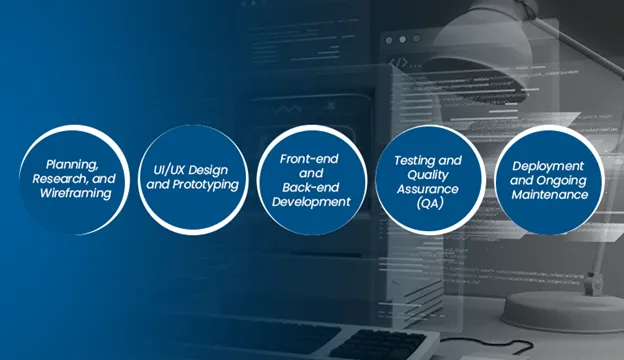
Costs of developing a mobile application are not incurred at once; instead, they are split among different stages and are associated with them in varying degrees.
Planning, Research, and Wireframing
It is a preparatory stage which is concerned with validating the idea of the app and structuring its main functions. In particular, this process covers conducting research on competitors, studying user journeys and creating wireframes. Even though there is little technical stuff going on during this stage, its importance cannot be overstated as any poor planning will reflect upon the rest of the process.
UI/UX Design and Prototyping
In this stage, the visual and interactive side of the future application is designed. It encompasses such tasks as layout design, creation of color schemes and animations as well as prototyping that makes it easier for users to interact with the app.
Front-end and Back-end Development
This is by far the most laborious part of the mobile app development process. While front-end development entails work done on the interface, back-end development concerns itself with servers and databases management. The level of features difficulty and integration directly affects cost.
Testing and Quality Assurance (QA)
Before the official launch of an application, its functionality is put under rigorous QA and testing to find any potential bugs and security vulnerabilities and optimize it for best user experience. Testing comes at extra cost but neglecting this process will make an app useless and may cost you even more in the future.
Deployment and Ongoing Maintenance
After finishing all other steps, the app is prepared for deployment via the App Store, for instance. This, however, does not mark the end of all costs associated with mobile apps development because regular app updates and maintenance are still necessary.
Hidden Costs in Mobile App Development
In addition to costs associated with design and development, there are many others that tend to be overlooked by most firms while planning their project. Such expenses can greatly affect the total budget of your project.
Maintenance and Update Costs After App Launching
When app development is finished, it does not necessarily mean that all tasks have been accomplished, because the app needs to be updated for further usage. You should spend money on bug fixing, improvements and adapting the app for future versions of OS. The annual maintenance will cost around 15-25% of development costs.
App Store Fees or Licenses for Software Used
Whenever you develop an app, there will always be fees associated with platforms used in the process. For example, in case you use Apple, you need to pay membership fees every year. Besides, any license fees will also be added to your costs.
Marketing, ASO, and User Acquisition
Even if a software application is amazing, it will never succeed until it gets noticed by somebody. Marketing-related costs can include ASO, ads, influencers, and social media marketing. User acquisition may also require regular expenditures, especially if it takes place amid high competition. There might even be instances when the cost of marketing exceeds that of development.
Proven Strategies to Reduce App Development Cost
Mobile app development cost management should not be aimed at reducing expenses by saving money. Businesses can optimize their cost much better through making the right decisions regarding various aspects of the process.
Starting the Process with an MVP Approach
In order to avoid wasting money while developing features that might not even be used, the process can start with building an MVP. Such a solution involves creating a product with just enough functionalities required to perform basic actions. Thus, the product can be improved based on the gathered feedback after testing in the market.
Choosing Cross-Platform Development
Building native versions for different mobile operating systems is a costly task since it doubles the overall cost of development. Businesses can save a lot of money by using cross-platform technologies to create one application suitable for multiple platforms at once. Though not perfect for all situations, this option proves beneficial in many cases.
Prioritization of Features According to Business Goals
Not all features are necessary for the product’s immediate success. Determining what functions affect the customer experience or income makes it easier to spend money wisely. Prioritizing impactful features allows avoiding unnecessary expenditures on things that do not contribute much to business growth.
Partner with the Right Development Agency
The selection of the right company is essential when trying to optimize costs. The right developer will help find the best technological solutions, save time, and prevent costly mistakes. It is wrong to choose the cheapest option when looking for a reliable partner in development.
Mobile App Cost Estimation Formula Explained
Estimating app development cost becomes more accurate when approached with a structured formula rather than guesswork. This helps businesses plan budgets with better clarity and control.
Basic Cost Estimation Formula
A simple way to estimate cost is:
Total Cost = Development Hours × Hourly Rate
The total number of hours depends on the app’s complexity, features, and design requirements, while the hourly rate varies based on the development team’s location and expertise. This formula provides a baseline estimate, which can be refined further.
Key Variables That Affect Total Cost
There are a number of factors that can affect the ultimate price aside from just the number of hours worked and the rate charged for each hour. These may involve the complexity of the features, the number of platforms to be used, the extent of the user interface/user experience personalization, the back-end requirements, and the third-party services involved.
Having an awareness of these different aspects helps businesses make educated decisions when considering the project budget.
Read Also: Complete Guide for Businesses to Mobile App in 2026
Real-World Mobile App Cost Examples
The cost is better understood by considering practical app categories. Various kinds of applications require varying amounts of funding depending on their functionalities, scalability, and user engagement.
E-commerce App Development Cost
An e-commerce application has many features, such as item display, search and filtering options, a shopping cart, checkout process, payment system, and order management. An app with only basic features will be cheaper, while one with extra functionalities like recommendation, multiple vendor support, and inventory control will increase the budget substantially. The price of creating an e-commerce application will generally fall within the $15,000 to $60,000+ bracket.
On-Demand App Development Cost
On-demand apps, which are more sophisticated because of their real-time nature, have functionalities like geolocation, live order tracking, payment system integration, push notifications, and multi-user roles such as customers, service providers, and administrators. Because of their complexity, the cost for developing such apps will be relatively high, ranging between $25,000 to $100,000+.
Social Media App Development Cost
High performance and real-time handling are two critical factors that should be taken into consideration while developing social media applications. User profiles, content upload capabilities, messaging services, notifications, and media upload capabilities are some features that may make it more costly to develop a social media application. On average, development of such apps costs between $30,000-$120,000+.
Why App Development Costs Vary Between Agencies
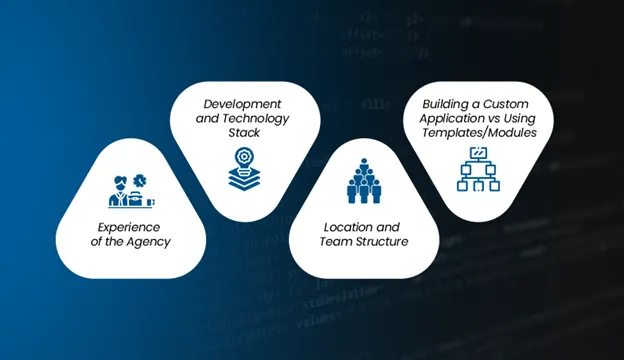
Even when there are similar demands, each agency may come up with varying costs depending on several other underlying factors.
Experience of the Agency
An experienced agency that has handled many cases will be more expensive compared to a less experienced one since it brings more value, execution, and low risks. Less experienced agencies will be cheaper, but they may not be efficient and reliable.
Development and Technology Stack
Agencies that use advanced technologies and work within optimized workflows might be costly but provide quicker services. It should be noted that the technology stack used can influence the overall price and development speed.
Location and Team Structure
Obviously, the prices for software products vary due to the location, as regions with higher costs of living might have higher rates for software development. Moreover, larger teams increase the price of service.
Building a Custom Application vs Using Templates/Modules
As opposed to pre-built products, fully custom mobile applications will cost higher because of the complexity of building such projects. Agencies that use already existing templates/modules can reduce the overall cost.
How to Get an Accurate App Development Cost Estimate
An estimate for your mobile application development price is not just making some assumptions. Instead, it is being prepared based on how clear and structured you are in explaining your requirements.
Define What You Want from Your App
First things first, you need to define what you want your application to do. Who is the intended audience, what are its primary purposes, and which functionalities does it require? Having a clear concept will help the developer determine the required efforts.
Create a List of Features for Development
Don’t just tell the developer that you want this and that. Instead, make a detailed list of all the features you are going to need to have in your app. It can include, among others, different types of login, payments, push notifications, or integration capabilities.
Make a Request for a Clear Cost Estimate
Make a request for a clear cost estimate instead of accepting just one quote from an agency. It should cover design, development, testing, and maintenance. You will have a clearer picture of how your funds will be spent and can make modifications to the scope of work accordingly.
Assess on Basis of Value and Not Only on Cost
Picking the cheapest option available may not always provide the best return on investment. Assess software agencies based on their experience, technology, and ability to scale. Paying slightly more upfront can pay off in improved performance and reduced maintenance costs.
Planning to build a mobile app but unsure about the cost? The smartest first step is getting clarity-not just a number, but a breakdown that aligns with your goals.
Whether you’re starting with an MVP or scaling an existing idea, having the right development strategy can save both time and money. Work with a team that understands your vision, prioritizes the right features, and delivers with transparency.
Ready to estimate your app cost accurately?
Get in touch with our experts and receive a detailed project breakdown tailored to your business needs
Final Thoughts: Plan Your App Budget Strategically
The process of estimating app development cost has nothing to do with getting something cheap. On the contrary, it involves making well-grounded decisions aimed at helping to achieve particular business goals, which directly affect the price.
A properly prepared budget is always a key element of efficient planning, which will allow businesses to avoid unpleasant surprises in the future and increase the flexibility of their projects. App companies, which manage to make all necessary estimates in advance, are much more likely to succeed.
Costs shouldn’t be considered a barrier but rather a powerful resource, which, when managed properly, can help save money while maximizing the ROI.
FAQs
- What are the 5 levels of cost estimation?
The five common levels include rough order of magnitude, preliminary estimate, detailed estimate, definitive estimate, and control estimate. Each level becomes more accurate as the project scope gets clearer.
- What is the minimum cost of app development?
A basic mobile app with limited features can start from around $5,000–$10,000, depending on design and functionality. However, most business apps require a higher budget for scalability and performance.
- How much does it cost to build a mobile app in 2026?
In 2026, app development typically ranges between $15,000 to $100,000+, depending on complexity, features, platform, and development team location.
- What factors affect mobile app development cost the most?
Key factors include app complexity, number of features, platform choice, UI/UX design level, backend infrastructure, and third-party integrations.
- How long does it take to develop a mobile app?
Development timelines vary from 2–4 months for simple apps to 6–12 months or more for complex applications, depending on scope and team size.
- How can I reduce the cost of mobile app development?
Starting with an MVP, prioritizing essential features, using cross-platform development, and choosing the right agency can significantly reduce costs.
- Why do different agencies quote different prices for the same app?
Pricing differences arise due to variations in expertise, development process, technology stack, location, and whether the solution is custom-built or template-based.
- What are the ongoing costs after app development?
Ongoing costs include maintenance, updates, server hosting, third-party services, and marketing, which are essential to keep the app functional and competitive.
Author's Perspective
From a strategic standpoint, the application development is no longer just about publishing content; it’s about building a digital ecosystem. In my experience, the most successful news apps are those that prioritize user experience over feature overload. Invest in personalization and AI early. Focus on long-term monetization rather than short-term gains, and continuously evolve based on user behavior and analytics.
Media companies that treat their app as a product, rather than a platform, achieve sustainable growth. The shift toward mobile consumption is not slowing down, and businesses that adapt quickly will lead the digital media space.
Discuss Your Project NowDeepak Tripathi
Product Manager
Related Posts

How Much Does It Cost to Build a...

How to Build a Secure Payment Gateway Integration...

Cost to Build a Mobile App in Qatar...
Insights Are Valuable & Execution is Priceless
You’ve read about the digital future. Now, let’s build the infrastructure to take you there. Move your strategy from the page to the product.
Design Your Solution Now
Contact Us
Schedule The Appointment At Your Convenience Date And Time.
30 Min
Web Conference
Time Zone
Indian standard time (08:30pm)

Thanks For Getting In Touch!
You’ve Taken The First Step Toward Transforming Your Digital Presence. Our Experts Will Reach Out Shortly To Take It Forward.
Launch Your Dream Project
Provide a brief overview of your project, and our specialists will evaluate your requirements. We will connect with you to explore how the right digital solutions can help you launch faster.