
In Brief
- Realise the major differences between native app development and cross-platform development.
- Analyse the functionality, budget, scalability, and user experience implications for UK companies.
- Understand the cases where native apps have advantages over cross-platform-developed products, and vice versa.
- Determine the expected development expenses and factors that affect spending on app creation in the UK.
- Find out how Markup Designs supports UK companies in the selection and creation of proper mobile solutions.
The mobile application market in the UK is flourishing as many businesses adopt digital transformation to enhance interaction with customers, optimise processes, and look for additional opportunities to generate new income. The choice between native and cross-platform app development should take into consideration such factors as app performance, development timeframes, usability, and costs of future maintenance.
While both approaches offer distinct advantages, there is no universal solution for every business. The right choice depends on your business goals, target audience, budget, feature requirements, and future growth plans.
This blog explores native and cross-platform app development in detail, compares their strengths and limitations, discusses development costs in the UK, and helps you determine which approach best aligns with your business objectives.
Native and Cross-Platform App Development: Understanding the Basics
Before analyzing Native and Cross-Platform App Development, it’s crucial to gain an insight into how either of these methods operates. Although both approaches allow companies to create applications for both iOS and Android platforms, they have significant differences in terms of the method of development, performance, pricing, scalability, and upkeep. The most suitable approach will largely depend on your goals, audience, budget, and set of functions.
Whether you’re starting a small startup MVP or developing an enterprise app, you will benefit from understanding the difference between these approaches in mobile app development in the UK.
What is Native App Development?
In simple terms, Native app development in the UK is the process of creating mobile applications for iOS and Android platforms with the use of programming languages and development tools approved by the respective platform. Since an application is created for a specific operating system, it can send requests straight to the device, which leads to improved speed, security, and user experience.
Native development is often regarded as a perfect option for applications needing high performance and complex functions.
How Native Apps Work
Native apps are built separately for iOS and Android using each platform’s SDK and APIs. This direct integration allows faster performance, smoother navigation, and full access to device features like GPS, camera, biometrics, and Bluetooth.
Programming Languages Used
- iOS: Swift and Objective-C
- Android: Kotlin and Java
These languages are officially supported by Apple and Google, ensuring reliable performance and long-term compatibility.
Famous Examples of Native Apps
Various native apps used on mobile phones include WhatsApp, Google Maps, Spotify, banking apps, and mobile-based games that require speed, security, and effectiveness.
Applicable Industries
Native apps are very popular in finance, medicine, delivery services, e-commerce, gaming, and any other areas where performance and security are important for the user.
What Cross Platform App Development Means
Cross Platform App Development in the UK enables programmers to create an app that can operate on both the iOS and Android platforms using one codebase. Therefore, the overall costs and time of application creation are reduced, together with its user experience for various platforms.
Modern technology platforms allow for quick and effective development to be carried out, which is why cross-platform solutions can be very advantageous for small companies aiming at the quick launch of their products.
How Cross-Platform Applications Work
Cross-platform applications allow the implementation of an application that operates on various platforms thanks to the use of one codebase, which improves its effectiveness and maintenance compared to separate native apps.
Popular Cross-Platform Technologies
Some of the most widely used frameworks include:
- Flutter App Development
- React Native App Development
- .NET MAUI
- Ionic
Among these, Flutter and React Native remain the most popular choices for commercial mobile applications.
Common Cross Platform App Examples
Cross-platform technology has found wide applications in industries such as e-commerce, food delivery, education, booking systems, and internal enterprise applications because of the quickness with which applications can be created.
Industries Adopting Cross Platform Development
Industries such as retail, travel, healthcare, real estate, education, and startups are major customers for cross-platform app development UK as it allows them to have an early entry into the market while maintaining reasonable prices.
Understanding the “Write Once, Run Anywhere” Development Approach
The main reason for the increasing interest in cross-platform app development UK is the “Write once, Run anywhere” (WORA) concept. Instead of creating different apps for Android and iOS, the developer can create one application that works across various platforms. Thanks to modern technologies such as Flutter app development UK and React Native app development UK, this technology has become sustainable, thus allowing companies to speed up application creation without losing quality.
This approach is particularly beneficial for startups and SMEs that want to validate an idea quickly, launch a Minimum Viable Product (MVP), or reach both Android and iOS users without investing in two separate development teams.
However, businesses should also consider its limitations. Applications requiring intensive graphics, advanced hardware integration, or complex platform-specific functionality may still benefit more from native development. While modern cross-platform frameworks deliver near native performance, they may not always match the speed and flexibility of fully native applications for specialised use cases.
Ultimately, the “Write Once, Run Anywhere” approach is the right business decision when speed to market, budget optimisation, and easier maintenance are higher priorities than platform-specific customisation.
Advantages and Challenges of Native App Development
Individuals and companies contemplating between Native and Cross Platform App Development UK will find that native attaining high performance, satisfactory user functionality, and business-level security, are still regarded as the standard. This is because native apps are made with a specific operating system in mind and enable complete exploitation of mobile device features irrespective of the operating system in use. Although this takes a lot of effort to create separate apps, the eventual returns offset the initial outlay on a feature-laden application.
Benefits of Native App Development
Native apps are compatible with their specific operating systems and thus will enable companies to create mobile applications that meet their expectations for responsiveness and scalability. Below are some of the most critical advantages of embracing Native App Development UK.
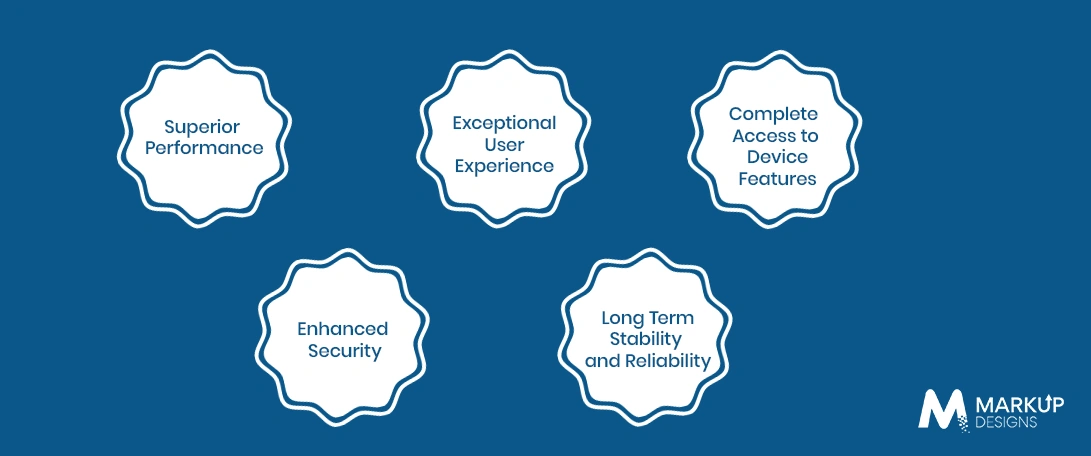
Superior Performance
Native apps directly connect to the operating system and thus guarantee reliable performance, resulting in faster processing and great graphics rendering. It makes native apps the perfect choice for gaming apps, video streaming, fintech, and other similar types of apps that need great performance.
Exceptional User Experience
Native apps adhere to design principles of both Apple and Google, ensuring that their apps have user-friendly interfaces.
The result is a highly engaging user experience that improves customer satisfaction and retention.
Complete Access to Device Features
The use of native applications gives developers unlimited access to technical functions like cameras, GPS, Bluetooth, and other functions. As a result, software developers are able to create useful applications without any compatibility problems.
Enhanced Security
Native applications utilize the security software of the platform, which allows them to improve protection of data from unauthorized access.
Long-Term Stability and Reliability
Native applications get faster updates for compatibility when new versions of the operating system are released by either Apple or Google. It is also easier to make additional improvements looking to the future by creating an appropriate architecture for the native application.
Limitations of Native App Development
Despite the fact that native application development provides a high level of quality, developers have to deal with certain drawbacks. Companies should take into consideration these factors and evaluate them along with their financial plans.
Higher Development Costs
Creating a native app calls for separate programming for both iOS and Android, which leads to increased costs of development. Native apps require bigger teams, more testing, and resources for each platform, thereby raising the initial costs as compared to cross-platform development.
Longer Development Time
Creating two separate apps requires more time than programming the code once for both platforms. Each stage from coding to release is separately executed for each platform, which increases the overall time of development.
Longer Development Teams
Native projects usually need specialized developers who are experts in Swift or Objective-C for iOS and Java or Kotlin for Android. Managing different teams increases the complexity and effort needed for project coordination.
Increased Maintenance Effort
Every feature update, bug fix, or operating system upgrade must be implemented separately for both platforms. Over time, this can increase maintenance costs and require additional development resources to keep both applications aligned.
Read Also: How to Hire Mobile App Developers in the UK
Advantages and Challenges of Cross Platform App Development
In the current landscape where businesses put importance on quick digital transformation and cost-effective development, Cross Platform App Development UK has gained popularity. Organizations can effectively create apps with less development effort by employing a common codebase for different applications.
Benefits of Cross Platform Development
Cross-platform development opens the path for faster launches of products because it allows to reduce development and maintenance costs. Below are the main benefits of Cross Platform Development.
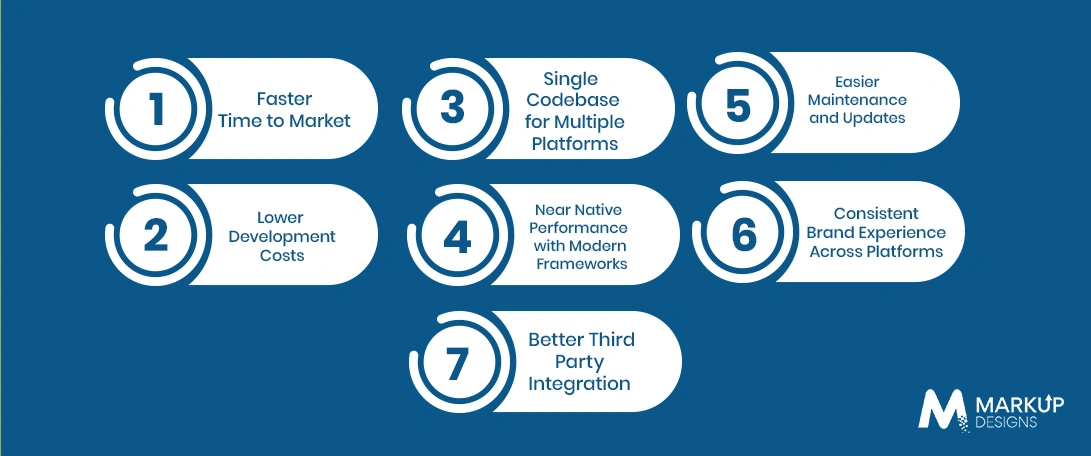
Faster Time to Market
Having one codebase for both iOS and Android apps allows developers to create, test, and launch the product more quickly. Thus, companies can get to the customers very quickly and react to market changes swiftly.
Lower Development Costs
Using one team and one codebase brings substantial savings to development. The companies also save on testing, quality checks, and future updates.
This improves development efficiency while maintaining feature consistency across devices.
Near Native Performance with Modern Frameworks
Current innovations such as React Native & Flutter ensure great performance when it comes to business applications. They are almost equivalent to native software development and guarantee smooth operations with good speed.
Easier Maintenance and Updates
Thanks to the fact that one codebase is used by developers, updates, fixes, and changes can be done at the same time on both platforms. It means less work when implementing updates and a quick launch.
Consistent Brand Experience Across Platforms
Cross-platform tools allow companies to have the same style, functionality, and customer experience when using both mobile operating systems, which helps them be recognized.
Better Third Party Integration
Most contemporary cross-platform solutions allow for fast integration with different software elements, such as APIs, payment systems, analytics tools, or cloud solutions.
Limitations of Cross Platform Development
Despite the advantages of developing Cross Platform Mobile Applications UK, not all businesses can use this Vivo X-Games development method. Being aware of its drawbacks is crucial for the successful choice of how the development has to be performed.
Limitations on Performance in Complex Applications
Complex applications that include graphics-intensive operations involved in real-time processing or special animations will not provide the best user experience compared to the original application. In some sectors such as gaming and AR or VR, the advantages of making a native application become much more significant.
Limited Access to New Devices’ Functions
While cross-platform frameworks will work with most device capabilities, making use of newly created device technology may involve the necessity of using additional native code.
Need for Framework Updates
Cross-platform applications depend on third-party frameworks. As a result, businesses have to wait for updates as long as a framework provides them.
Complexities of Customization
Although cross-platform frameworks provide uniformity, development of an interface customized to a specific platform may require additional development time and costs.
Native vs Cross-Platform Development Considerations
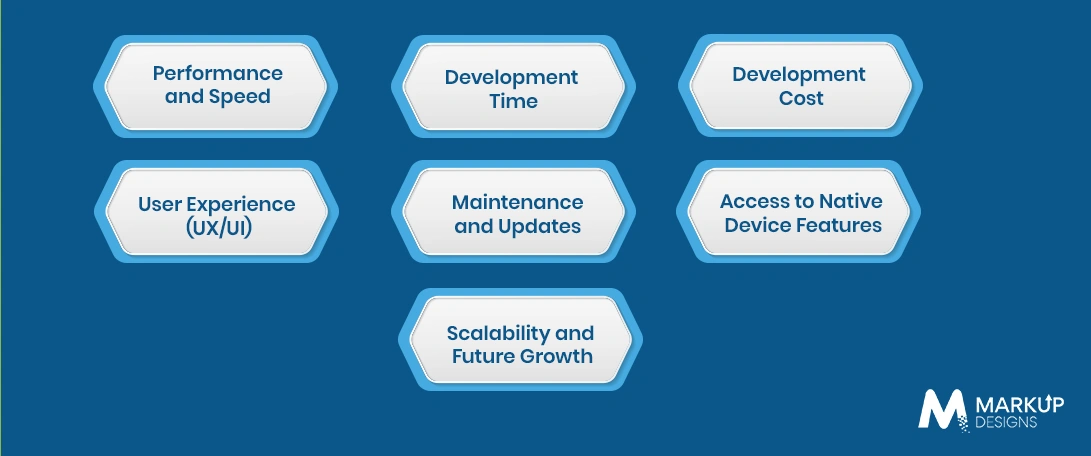
When deciding between native or cross-platform development, it is not enough to consider just the aspect of the technology. There are many other points to consider, which include the development performance, scope of finances, and speed of development.
Performance and Speed
Native applications are quicker and have better performance because they interact with the operating system. This is why native applications are always preferred for apps that put a lot of stress on graphics and need quick responses.
Development Time
Another reason for choosing cross-platform development is that it makes it possible to complete the project faster due to one code for both iOS and Android. Native development needs separate projects and builds whenever performance is more important than time to market.
Development Cost
In terms of app development cost in the UK, cross-platform projects are cheaper because they need only one team of developers and one codebase. Native development is more expensive since the apps are built and supported separately for every platform.
User Experience (UX/UI)
Native applications offer a unique look depending on the platform due to compliance with the design guidelines developed by Apple and Google. Cross-platform applications use the same interface regardless of the platform.
Maintenance and Updates
Lastly, cross-platform applications are easier to maintain since bugs and updates are only needed once for both platforms. Native applications need separate maintenance and development efforts.
Access to Native Device Features
Applications requiring deep hardware integration, advanced APIs, offline functionality, or platform-specific features benefit from native development. Cross-platform frameworks support most common device capabilities but may require additional native coding for advanced features.
Scalability and Future Growth
Both approaches can support business growth. Native development is better suited for enterprise-grade applications with evolving feature requirements, while cross-platform development provides an efficient foundation for startups and growing businesses planning future expansion.
Native vs Cross Platform App Development Cost in the UK
Budget is a major deciding factor when choosing between Native App Development UK and Cross Platform App Development UK. While costs vary depending on features, complexity, integrations, and development partner, understanding the typical investment helps businesses plan more effectively.
Average Native App Development Cost
Native applications require separate development for iOS and Android, making them more expensive.
- Simple apps: £20,000 to £40,000
- Medium complexity apps: £40,000 to £80,000
- Enterprise applications: £80,000+
Average Cross Platform Development Cost
Cross-platform apps reduce costs by using a shared codebase across platforms.
- Startup applications: £15,000 to £30,000
- Business applications: £30,000 to £60,000
- Enterprise solutions: £60,000+
Development Timeline Comparison
Cross-platform applications provide a unique quick time-to-market advantage as one application can run on multiple platforms. However, since native solutions require separate application development and testing across different platforms, they can take considerably longer to be developed.
Maintenance and Long-Term Costs
With cross-platform development, the maintenance effort is less as there is one shared code base to maintain. With native development, each application would require maintenance consistently, which would subsequently lead to higher long-term maintenance costs.
Scalability and Future Investment
Even though native development may seem costly initially, it is beneficial for businesses that need flexibility and plan advanced functionality and expansion of their business in the future. On the contrary, cross-platform development is more valuable for entrepreneurs that want to see fast results and have to stick to their budgets.
Hidden Costs Businesses Should Consider
On top of development costs, there are several costs that businesses face:
- Third-party API integrations
- Infrastructure costs and cloud hosting
- Security and compliance costs
- Costs of Apple App Store and Google Play
- Costs for performance monitoring and optimization
Which Option Offers Better ROI?
For startups and SMEs, cross-platform development often delivers a faster return on investment due to lower development costs and quicker market entry. Businesses building feature-rich, performance-driven, or enterprise applications may achieve greater long-term value through native development despite the higher initial investment.
Which Development Approach is Best for Your UK Business?
The right choice depends on your business objectives, budget, timeline, and technical requirements. Here’s when each approach makes the most sense.
Choose Native App Development If…
Native development is the right choice when:
- Performance and speed are business critical.
- Your application handles sensitive customer data.
- Advanced hardware integration is required.
- Long-term scalability is a priority.
- You want the best possible user experience.
Native Apps Are Best Suited For
Native development is ideal for:
- FinTech
- Banking
- Healthcare
- Logistics
- Gaming
- Enterprise mobility solutions
Choose Cross Platform Development If…
Cross platform development is a smart option when:
- You have a limited budget.
- Faster product launch is essential.
- You’re building an MVP.
- You want both iOS and Android apps quickly.
- Your focus is rapid market validation.
Cross Platform Apps Are Ideal For
Cross-platform development works well for:
- Ecommerce
- Education
- Food delivery
- Healthcare booking
- Travel
- Social networking
- Internal business applications
Hybrid Development Strategy for Growing Businesses
Some companies might find it worth their while to take advantage of both the native tools and the cross-platform solutions rather than concentrating on one type of technology exclusively.
What Is Hybrid Development?
The hybrid model of app development uses cross-platform technologies for basic features, while the native ones are employed for functions where performance and platform specifics matter.
When Is It Appropriate to Use It in Business in the UK?
The hybrid development model can save you precious time by enabling you to reap the benefits of mobile technologies faster while getting ready for more complex features to be implemented in the future.
Using Cross-Platform Technologies With Native Development
The modern frameworks, such as Flutter and React Native, provide their users with the opportunity to use native modules when needed.
The main advantage of hybrid development is its flexibility, since it enables you to be able to cut costs right now and to be prepared for further developments depending on the future needs of customers.
Why Choose Markup Designs for Mobile App Development in the UK?
Choosing the right development partner is just as important as choosing the right technology. At Markup Designs, we help UK businesses build secure, scalable, and high-performing mobile applications aligned with their business goals.
End-to-End Mobile App Development
From strategy and UI/UX design to app development, testing, deployment, and post-launch support, we manage the complete app development lifecycle.
Native and Cross-Platform Expertise
Our team delivers robust solutions using Swift, Kotlin, Flutter App Development UK, and React Native App Development UK, ensuring the right technology for every project.
UI/UX Focused Development
We create intuitive, user-centric interfaces that improve engagement, usability, and customer satisfaction across every platform.
Agile Delivery Process
Our agile methodology enables faster releases, continuous feedback, and efficient project execution with complete transparency.
Enterprise-Grade Security Standards
Security is integrated throughout the development lifecycle, helping businesses protect sensitive data and meet industry compliance requirements.
AI-Powered Mobile Applications
We develop intelligent mobile solutions by integrating AI-powered features such as automation, predictive analytics, chatbots, and personalised user experiences.
Long-Term Support and Optimisation
Our support extends beyond launch with continuous monitoring, performance optimisation, feature enhancements, and maintenance to keep your application future-ready.
Build the Right Mobile App for Your UK Business
Whether you need a high-performance native application or a cost-effective cross-platform solution, Markup Designs helps you choose the right technology, accelerate development, and build scalable mobile applications that support long-term business growth.

Conclusion
Selecting between native and cross-platform app development is not about identifying a universally better technology but choosing the approach that aligns with your business strategy, customer expectations, and long-term growth objectives. Native applications deliver exceptional performance, security, and user experience, making them ideal for feature-rich and enterprise-grade solutions. Cross-platform development offers faster delivery, lower costs, and simplified maintenance, making it an excellent option for startups and businesses looking to maximise return on investment.
By evaluating your business goals, technical requirements, scalability plans, and budget, you can make an informed decision that delivers lasting value. Working with an experienced technology partner like Markup Designs ensures your mobile application is built using the right architecture, modern technologies, and industry best practices to support sustainable business success.
FAQs
1. What is the difference between native and cross-platform app development?
Native app development uses separate codebases for iOS and Android, offering superior performance and hardware access. Cross-platform development uses a shared codebase to reduce development time and costs while supporting multiple platforms.
2. Which mobile app development approach is more cost-effective for UK startups?
For most startups, Cross Platform App Development UK is more cost-effective as it requires a single codebase, reducing development, maintenance, and overall mobile app development costs UK.
3. Does cross-platform development offer the same performance as native apps?
Modern frameworks like Flutter app development UK and React native app development UK deliver near native performance, but native apps remain the best choice for graphics-intensive and high-performance applications.
4. Which industries benefit most from native app development?
Native app development UK is ideal for banking, healthcare, fintech, gaming, logistics, and enterprise applications where security, speed, and advanced device integration are essential.
5. How can Markup Designs help businesses choose the right mobile app development approach?
Markup Designs analyses your business goals, budget, and technical requirements to recommend and build the most suitable native or cross-platform mobile solution for long-term success.
Author's Perspective
Choosing between native and cross-platform development should never be based solely on cost or popularity. The decision must align with your business objectives, customer expectations, operational requirements, and future scalability plans. While many businesses are drawn to cross-platform development for its speed and affordability, native development continues to deliver unmatched performance for applications requiring advanced functionality, security, and seamless user experiences. At Markup Designs, we evaluate every project from a strategic and technical perspective, helping UK businesses invest in mobile solutions that provide measurable value today while remaining adaptable for tomorrow’s digital landscape.
Discuss Your Project NowGaurav Goyal
Global Sales- VP
Related Posts

Navigation App Development Guide: Building GPS Apps Like...

iOS vs. Android App Development in Abu Dhabi:...

How AI-powered App Development is Transforming Mobile Apps...
Insights Are Valuable & Execution is Priceless
You’ve read about the digital future. Now, let’s build the infrastructure to take you there. Move your strategy from the page to the product.
Design Your Solution Now
Contact Us
Schedule The Appointment At Your Convenience Date And Time.
30 Min
Web Conference
Time Zone
Indian standard time (08:30pm)

Thanks For Getting In Touch!
You’ve Taken The First Step Toward Transforming Your Digital Presence. Our Experts Will Reach Out Shortly To Take It Forward.
Launch Your Dream Project
Provide a brief overview of your project, and our specialists will evaluate your requirements. We will connect with you to explore how the right digital solutions can help you launch faster.