

In Brief:
- The process of QA testing of mobile applications is an ongoing procedure that aims to ensure proper operation of the application, its optimal performance, security, and user experience. The procedure provides for quality assurance during all stages of the development cycle, not just before launch.
- Good mobile app QA will enable organizations to detect and fix problems early, which would result in greater stability of the app, increased security, lower costs of development, faster launches, and higher customer satisfaction.
- There are different types of testing, which include functionality, performance, security, usability, compatibility, and regression testing.
- An organized QA process, from requirements analysis and test planning to execution, bug fixing, regression testing, and validation, helps develop quality applications despite issues such as device fragmentation, operating system compatibility, network variability, and regular upgrades.
- By utilizing the services of experienced QA testers, businesses can gain long-lasting benefits through risk reduction after launching an application, improving app store ratings, building a good brand image, and releasing digital products without any hassles.
There are millions of mobile applications available and competing for users’ attention; it is not enough to release just another application. Users want an app to load quickly, work well, secure their data, and provide an outstanding experience across multiple platforms and operating systems. Just one flaw or problem with your app can cause your app to receive bad reviews, lose your user base, and miss opportunities for further growth.
Here is where mobile application QA testing comes in place. QA testing can detect problems, increase app performance, and make sure all of the features function properly before your app hits the market. The process of QA is not a final part of developing; it is something that is present throughout the entire process of making an app.
In this blog, we will look at what mobile application QA testing is, why it is the basis for any digital product, its main advantages, different types of testing, the process of QA, challenges, and tips on creating high-quality mobile applications.
Understanding Mobile App QA Testing
Mobile app QA (Quality Assurance) testing refers to a technique used to assess the quality of a mobile application development both before and after it is launched to ensure that the app meets required quality standards. In the process of testing, all aspects of the mobile application should be taken into consideration, which include functional, performance, security, usability, and compatibility aspects of the mobile application.
In contrast to simply fixing bugs in a mobile application at the final stage of its development, QA testing becomes an inseparable part of the entire software development life cycle, during which QA specialists work together with developers, designers, and product managers to find possible issues, check new features, and keep track of updates to the application.
Moreover, it is worth considering the distinction between Quality Assurance (QA) and Quality Control (QC) processes. While QA is aimed at defect prevention through improvement of the development process, QC consists of finding and fixing defects in a mobile application in its final version.
Why Mobile App QA Testing Is the Foundation of Reliable Digital Products
A reliable digital product would be the one that users would always feel comfortable using. Whether it is to pay a bill, to book a taxi, to order food, or to consult a doctor remotely via mobile apps, users expect the apps to perform without any delays or crashes or any other problems related to the security of the app.
Lack of QA testing might result in an app having various types of problems like feature breakdowns, slow operation, compatibility problems, and security risks. Not only would these problems lead to a bad impression of the app but may also cause the app users to have negative feedback about the app.
During the process of QA testing, all of the essential components of the app are validated and checked to ensure they function properly and effectively.
Healthcare, banking, e-commerce, logistics, and travel industries require QA testing since even small mistakes within the app can influence the user’s experience and the business processes themselves. With proper attention to quality in the whole process of development, companies can develop reliable, scalable, and flexible digital products.
Key Benefits of Mobile App QA Testing
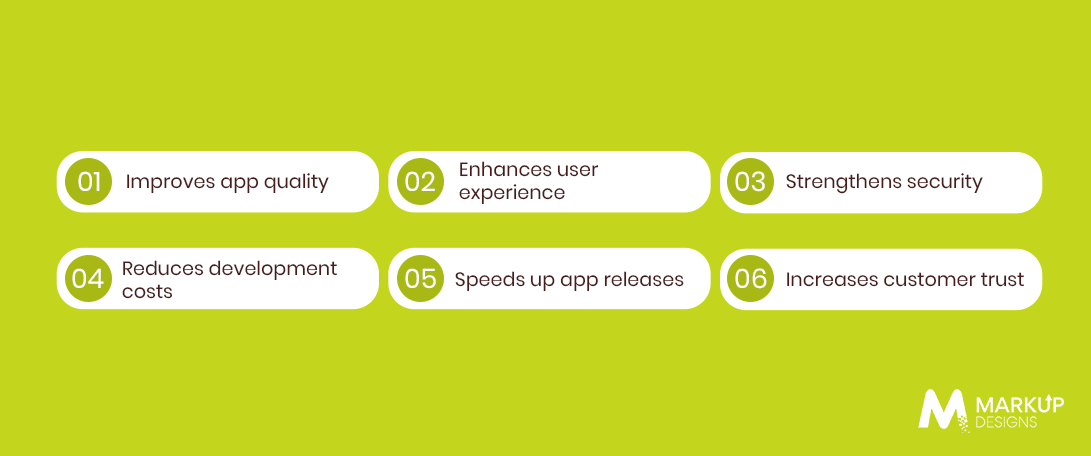
Investing in QA testing for the mobile app brings much more than just catching bugs in the software. It helps increase the quality of the application, mitigate risks in the development process, and provide users with a high-quality user experience. Here are some of the biggest benefits of implementing a strong QA testing strategy.
Improves app quality
Quality Assurance testing makes sure that all the features work properly before launching the app. It helps to find all the defects at an early stage.
Enhances user experience
An efficient and friendly app motivates users to interact with it continuously. Testing helps remove bugs, problems in navigation, and slow loading times so that users have a great experience no matter which device they use.
Strengthens security
Security testing helps find potential security holes and protect the application from any kind of cybersecurity attacks.
Reduces development costs
It is easier to fix bugs before the product goes live compared to after the product has gone live. Testing at an early stage saves on costs incurred when fixing bugs.
Speeds up app releases
A well-structured process for QA enables developers to detect and correct bugs more quickly. This leads to faster rollouts of application updates and shorter development cycles.
Increases customer trust
Customers have higher chances of continuing to use the app and recommending it if it works perfectly without any problems. Good apps get good ratings, make customers happier, and build their brands.
Types of Mobile App QA Testing
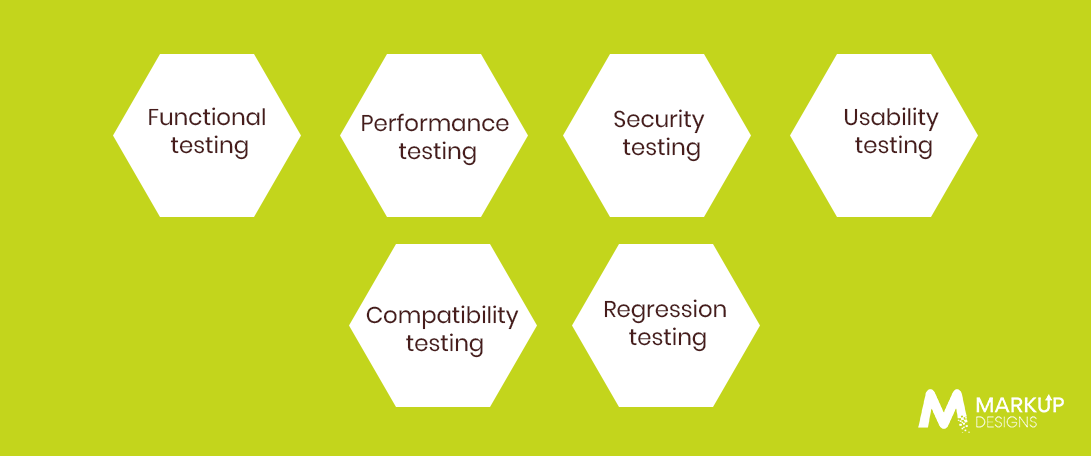
Mobile apps need to be tested for reliability in diverse environments, devices, and user activities. To ensure this, there are multiple testing procedures used in QA, each one being designed to test a certain property of the app. All of these tests combined provide the stability and security needed for the application to launch successfully.
Functional testing
It tests whether all features of the app function according to its specifications. This test checks user actions, like logging in, registering, paying, receiving notifications, and navigating around the app.
Performance testing
Performance testing involves analyzing how the application works when there is a certain workload placed on it. The performance test will involve analyzing how fast the application loads, how responsive the application is, and its stability even when many users access it.
Security testing
Security testing checks the security weaknesses that might lead to a data breach in the application. Security testing is useful in ensuring secure authentication and encryption of the data being transmitted.
Usability testing
Usability testing deals with the user experience of the application. It is concerned with testing the ease of navigating through the application.
Compatibility testing
As users use applications on a variety of mobile phones, tablets, operating systems, and different display sizes, it is important to perform compatibility testing to ensure that the app functions consistently across all devices.
Regression testing
When there are changes and updates made in the application, regression testing is done to confirm that there is no change in functionality.
Build High-Quality Mobile Apps with Expert QA Testing
Launching a successful mobile app requires more than innovative features-it requires consistent quality, security, and performance.

The Mobile App QA Testing Process
A good QA process is one that follows an organized approach that enables teams to discover problems earlier, improve the quality of the application, and deliver each release that meets the users’ needs. Although the approach varies according to the project, the following are the core steps of a successful mobile application QA testing process.
Step 1: Requirement Analysis
Requirement analysis is performed by the QA team to find out what needs to be tested and what might pose risks to the testing process.
Step 2: Test Planning
Test planning involves developing a comprehensive plan that specifies testing scope, goals, timelines, testing tools, and the approach to testing.
Step 3: Test Case Design
Test cases and scenarios are developed for testing all user journeys, application functionality, and edge cases.
Step 4: Configuration of the Testing Environment
The testing environment can be set up by configuring various devices, operating systems, browsers, and networking conditions.
Step 5: Testing Process
Testing is done by the QA engineers, where manual and automated tests are executed, results are recorded, and defects in the software are noted.
Step 6: Bug Reporting and Fixing
All bugs are reported with details and shared with the development team to fix them. After fixing the bugs, the software is retested to ensure that all bugs have been fixed.
Step 7: Regression Testing
Once bug fixing or enhancement is done, regression testing makes sure that existing features continue to work as expected.
Step 8: Final Validation Prior to Release
Finally, before releasing the application into production, validation is done to make sure that all functions are up to the mark.
Common Challenges in Mobile App QA Testing
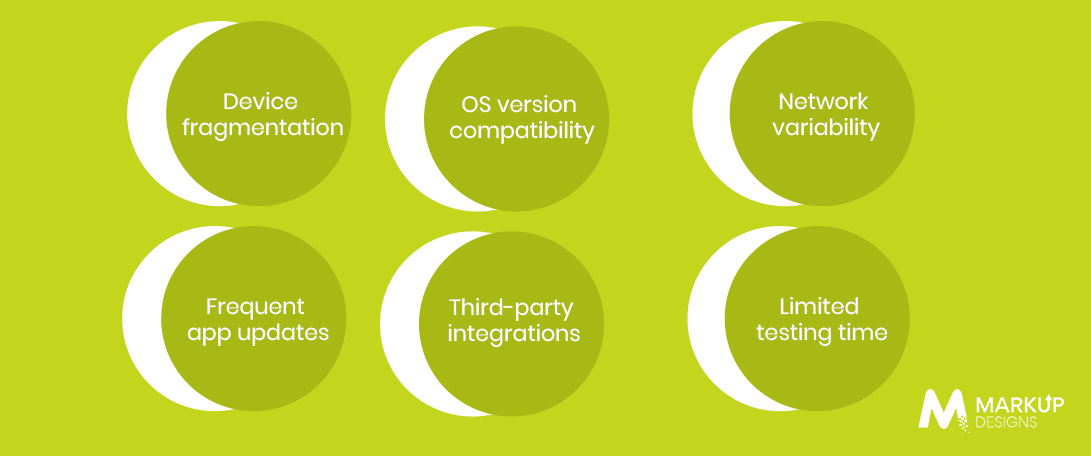
As mobile applications become more advanced, the QA testing process is becoming even more complicated. Some of the issues that should be considered when developing applications include:
Device fragmentation
The numerous smartphones and tablets that have diverse hardware configurations pose challenges when trying to deliver uniform results from all devices.
OS version compatibility
The fact that there are continuous changes in the versions of Android and iOS means that testing should be done to check the functionality of the app in these different versions.
Network variability
There are people who use Wi-Fi, 4G, 5G, and unstable networks when accessing the application. This means that the app should perform well in the different types of networks.
Frequent app updates
It becomes necessary to test the app continuously due to frequent changes in it for new features and bug fixes.
Third-party integrations
Many apps have integration with payment gateways, social media authentication, maps, analytical tools, and cloud services. It is important to test such integrations thoroughly to ensure they work flawlessly.
Limited testing time
It is difficult for QA professionals to carry out in-depth testing during the short duration allotted for testing.
How to Choose the Right Mobile App QA Testing Partner
Choosing the right QA testing partner is as important as selecting a development team. An experienced QA company will help you spot problems ahead of time and make sure that your application offers a seamless experience to users on any device. Below are several factors to take into account prior to making your choice.
Industry Experience
Go for QA professionals who are experienced in testing apps for industries such as healthcare, fintech, eCommerce, logistics, and education. Industry experience will help you understand the industry regulations and user requirements.
Skills for Manual Testing and Automation
The best partner should be able to offer both manual testing and automation. Although automation allows faster testing of tasks that need to be repeated, manual testing will help in judging the usability for users.
Real Device Testing
The use of real device testing ensures more effective results compared to the use of emulators for testing. Make sure your QA team has access to various types of devices for both Android and iOS.
Security and Compliance Knowledge
If your application involves the processing of users sensitive data, it is vital that the QA team possesses knowledge about best security practices and compliance standards.
Transparency Communication
Reports and bug reports will make the work process easier and help developers resolve issues faster.
Scalability of Testing Services
As your app grows, there will be increasing demands for testing. Choose a QA company that offers scalable testing services.
Why Investing in QA Testing Delivers Long-Term Business Value
Most companies see QA testing as an additional expense, but, in reality, QA testing is an investment that lowers risks and improves product quality. The integration of quality into the software development process allows organizations to save money after the release and give a fantastic experience to their customers.
Early testing reduces the expenses on bug fixes as bugs are discovered before they cause significant issues. Testing saves the company from downtime, prevents any negative customer reviews, and saves money on maintenance.
Stable and secure applications make customers satisfied, resulting in the retention of customers, positive app store ratings, and customer loyalty. The higher the level of stability of the application, the more likely customers will trust the application.
QA testing also helps accelerate innovations as development teams know for sure that all the functionality of the application is tested. As a result, companies can remain competitive while following high-quality standards.
Ultimately, conducting QA testing will ensure that organizations are able to produce reliable digital solutions, have a good reputation, and achieve the highest ROI from software development.
Ensure Your App Delivers a Flawless User Experience
A successful mobile app isn’t defined only by its features-it’s measured by how reliably it performs in the hands of users. With comprehensive QA testing from Markup Designs, you can launch applications that are secure, stable, and optimized for every device and operating system.

Conclusion
Testing of apps on mobile devices goes much beyond the last step before deploying a product-it is the basis of creating quality, safe, and efficient software applications. The involvement of QA in the process from the very beginning allows for the detection of problems in advance, reduces development expenses, increases customer satisfaction, and provides applications of high quality.
The entire process of QA involves all the steps that create the foundation for developing the application the user may trust, and in the era of constant improvement of mobile technologies, companies with good approaches to quality assurance have an advantage over their competitors.
FAQs
1. What is mobile app QA testing?
Mobile app QA testing is a process of testing an application for functionality, performance, security, usability, and compatibility to make sure it complies with quality standards before and after the release.
2. Why do we need QA testing for mobile applications?
It allows us to find bugs, improve user experience, increase security, reduce development costs, and make sure the application works correctly on different devices.
3. What are the main types of mobile app QA testing?
The most popular types of QA testing for mobile applications are functional testing, performance testing, security testing, usability testing, compatibility testing, and regression testing.
4. At what stage of application development should you start QA testing?
QA testing should be started at the very beginning of the software development life cycle and conducted throughout the entire development process.
5. What is the difference between QA and QC?
Quality assurance (QA) concentrates on prevention of defects in the process of development, while quality control (QC) concentrates on detection and correction of defects in product testing.
Author's Perspective
Quality is one of the biggest factors behind a successful mobile application. While innovative features attract users, a reliable and bug-free experience keeps them engaged. Investing in mobile app QA testing helps businesses deliver secure, high-performing, and user-friendly applications that meet evolving customer expectations. By making QA an integral part of the development process, organizations can reduce risks, improve product quality, and build long-term trust with their users.
Discuss Your Project NowJupinder Singh Arora
Founder and CEO
Related Posts

Navigation App Development Guide: Building GPS Apps Like...

iOS vs. Android App Development in Abu Dhabi:...

How AI-powered App Development is Transforming Mobile Apps...
Insights Are Valuable & Execution is Priceless
You’ve read about the digital future. Now, let’s build the infrastructure to take you there. Move your strategy from the page to the product.
Design Your Solution Now
Contact Us
Schedule The Appointment At Your Convenience Date And Time.
30 Min
Web Conference
Time Zone
Indian standard time (08:30pm)

Thanks For Getting In Touch!
You’ve Taken The First Step Toward Transforming Your Digital Presence. Our Experts Will Reach Out Shortly To Take It Forward.
Launch Your Dream Project
Provide a brief overview of your project, and our specialists will evaluate your requirements. We will connect with you to explore how the right digital solutions can help you launch faster.