
In Brief
- Gain insights into the way in which headless commerce in Australia is changing omnichannel retailing and the reason why it has become a priority for Australian companies.
- Understand the shortcomings of classic eCommerce app development systems and how headless system architecture tackles them by being more flexible, scalable, and through quicker development.
- Get to know the advantages of headless commerce implementation for businesses, for instance, making the customer journey seamless, enhancing efficiency, and increasing the speed of growth, among others.
- Learn the required steps, standards, and usual obstacles in the process of implementing a headless commerce solution.
- See how various technologies, such as artificial intelligence, augmented reality, voice commerce, and social networks, are shaping the future of omnichannel retailing in Australia.
Australia is changing fast in the retailing sector because of consumers’ requirements for a seamless shopping experience, not only through the companies’ websites but also via mobile apps, social platforms, online marketplaces, and stores. According to a study by KPMG, Australian shoppers are choosing omnichannel services more and more often, and almost half of them now prefer shopping using retailers’ websites as well as phone apps or through other digital channels.
Sadly, a lot of companies are still using old-school eCommerce app development systems, which cannot keep up with the new demands. This makes it hard for them to innovate quickly and create the best user experience possible.
Headless commerce is the solution for those problems because making sure that the frontend and backend work separately can offer great opportunities for businesses to deliver innovative market experiences on different platforms.
According to WP Engine’s 2024 research, almost three-quarters of businesses around the world are already using that particular approach, which is an increase from a few years ago.
In this blog, we are going to talk about how headless commerce in Australia helps retailers create omnichannel strategies and what technological advances are hurrying this new approach along.
What Is Headless Commerce?
Today’s retail environment is much more complex than solely depending on one website. Consumers can now shop and find products from a variety of platforms, and sometimes they will complete their purchases at physical shops. To provide consumers with an excellent experience on all these various channels, there is a need for a flexible, scalable eCommerce architecture that always evolves.
In a headless commerce situation, the customer-facing side of the business is separated from the commerce engine, which allows each side to evolve on its own, thanks to the use of APIs. This helps ensure that e-commerce entities provide their clients with the same experience regardless of the type of medium, be it a website, application, kiosk, or any emerging platform.
According to the 2024 Headless Report provided by WP Engine, 73% of organizations are leveraging headless commerce architecture now, which is a 40% growth since 2019, while 80% of organizations are sure that this provides them with a competitive advantage and helps them improve their digital experiences.
How Headless Commerce Works
In the case of headless commerce, the backend provides essential systems such as catalogs, inventory, pricing, ordering, customer selection, payment, and so on, while all this information comes to the frontend in the form of APIs.
The Major Components of a Headless Commerce Architecture
The architecture of headless commerce in Australia is composed of 5 main components:
- The Presentation Layer (Front-end) – It provides enough channels for fulfilling customers’ needs in every possible touch point.
- The Commerce Back-end – It is a full-blown management system of products, orders, checkout, prices, and inventory.
- The API Layer – Provides secure connectivity between the front- and back-end of the system.
- Content Management System (CMS) – Allows the marketing team to publish and manage the content on the flyer.
- Third-party Integrations – It allows all the external systems to interface with CRM, ERP, payment solutions, and inventory tracking.
The mentioned components together create a completely flexible structure, facilitating fast innovation and a seamless omnichannel approach.
The Rise of Omnichannel Retail in Australia
The Australian retail sector has changed dramatically with consumers integrating the use of websites, apps, e-commerce platforms, social media, and physical stores within their shopping habits. With this shift in consumer shopping behavior, the expectations of customers have altered. They want every touch point involved in the transaction process to be integrated, making omnichannel retailing in Australia a necessity in business and not just a plus.
If a retailer is not successful in providing integrated, seamless customer experiences, there is a danger of losing customers to companies that are able to provide an efficient purchasing and shopping process.
Evolution of Consumer Shopping Behaviour
The shopping behavior of Australians has evolved in such a way that many discovery methods of products have been developed, including being able to search on Google for products, follow up on social media platforms like TikTok for product reviews, and check retailer websites for pricing, among many others.
The change in consumer shopping behavior has prompted retailers to embrace omnichannel commerce in their businesses, as this has become common.
Current Australian Retail Trends
Industry research reflects this growing demand for omnichannel commerce. According to KPMG’s Australian Retail Outlook 2025, nearly 50% of Australian shoppers prefer omnichannel shopping experiences, highlighting the need for connected retail journeys.
To meet these expectations, retailers are investing in mobile commerce, social commerce, marketplace selling, click-and-collect services, unified loyalty programs, and personalized shopping experiences, all supported by real-time data synchronization.
Why Omnichannel Retail Is the New Standard
Today’s consumers want to see the same product details, prices, availability of goods, and the way of shopping on all different platforms. Yet, the traditional platforms can hardly provide this consistency, as on their way to integrating new platforms and updating information, a lot of time is wasted.
Headless commerce in Australia is the most effective way of dealing with such challenges. It allows different platforms to operate with the help of the same omnichannel platform, which helps to enhance customer experience and react to customers’ needs more quickly. Omnichannel retailing is gaining strength in Australia since the field of retail is actively changing the approach to modern e-commerce.
Read also: A Complete Guide of eCommerce Apps Development Trends, Costs in 2026
Limitations of Traditional E-commerce Platforms
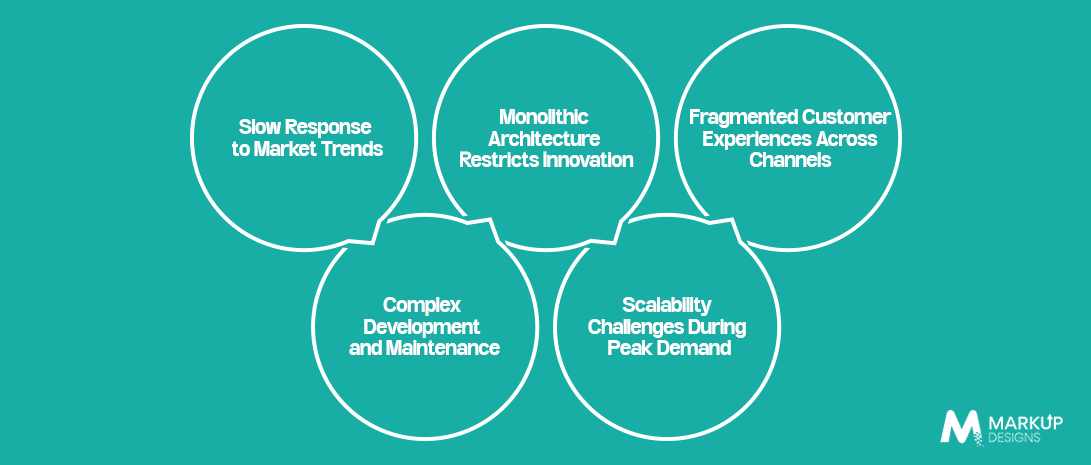
Traditional e-commerce solutions were introduced when companies normally made their sales online via the same online shop. Nowadays, when customers are looking for a less complicated way of shopping, traditional platforms fall short of becoming viable platforms for modern retailers because of the great limitations they have.
Slow Response to Market Trends
Traditional eCommerce platforms often require extensive development and testing before updates can be deployed, making it difficult to respond quickly to changing customer demands. This delays product launches, seasonal campaigns, and new feature rollouts, causing retailers to miss valuable market opportunities.
Monolithic Architecture Restricts Innovation
In a monolithic system, every component is tightly connected. Even small updates can impact the entire platform, making it difficult to introduce new features, redesign customer experiences, or adopt emerging technologies without lengthy development cycles.
Fragmented Customer Experiences Across Channels
Customers expect a consistent experience whether they shop online, through a mobile app, on social media, or in-store. Traditional platforms often struggle to synchronize customer data, inventory, pricing, and shopping carts across channels, resulting in disconnected experiences.
Complex Development and Maintenance
Maintaining legacy eCommerce systems becomes increasingly complex as businesses grow. Integrating third-party tools like CRM, ERP, payment gateways, and inventory management systems often requires significant development effort, increasing both maintenance costs and deployment time.
Scalability Challenges During Peak Demand
Major shopping events such as Black Friday, Christmas, and Boxing Day can generate sudden traffic spikes. Traditional platforms often find it difficult to scale efficiently during these periods, leading to slower website performance, checkout delays, and potential revenue loss.
Headless Commerce vs Composable Commerce vs Unified Commerce
| Feature | Headless Commerce | Composable Commerce | Unified Commerce |
| Definition | Separates the frontend (presentation layer) from the backend commerce engine using APIs. | A modular approach where businesses assemble best-of-breed commerce services (e.g., CMS, payments, search, checkout) to create a customized ecosystem. | Integrates all retail channels, customer data, inventory, and business operations into a single centralized platform. |
| Architecture | Decoupled, API-first architecture. | Modular, microservices-based, API-first architecture. | Centralized and integrated architecture. |
| Primary Focus | Flexibility in customer experience across multiple digital touchpoints. | Maximum flexibility by allowing businesses to choose and replace individual components. | Delivering a seamless and consistent experience across online and offline channels. |
| Frontend & Backend | Frontend and backend operate independently. | Every component (CMS, search, checkout, payments, etc.) can operate independently. | Frontend and backend are tightly integrated within a unified ecosystem. |
| Customization | High frontend customization without affecting backend operations. | Extremely high customization across every commerce capability. | Moderate customization, depending on the platform. |
| Integration | Connects with third-party systems through APIs. | Connects multiple independent services through APIs and microservices. | Built around a single platform that unifies ERP, CRM, POS, inventory, and commerce. |
| Scalability | Highly scalable for digital channels and customer experiences. | Highly scalable, with each service scaling independently. | Scalable across retail operations but may depend on the platform’s capabilities. |
| Best For | Businesses are looking to modernize customer experiences across web, mobile, and emerging channels. | Large enterprises require maximum flexibility, rapid innovation, and best-of-breed technology stacks. | Retailers are aiming to unify online and offline operations, customer data, and inventory management. |
| Advantages | Faster deployment, better performance, omnichannel consistency, improved developer flexibility. | Greater agility, vendor independence, easier upgrades, and future-proof architecture. | Real-time inventory, unified customer profiles, consistent pricing, and streamlined operations. |
| Challenges | Requires API expertise and integration planning. | Higher implementation complexity and governance requirements. | May offer less flexibility than headless or composable architectures and can involve significant migration efforts. |
| Popular Platforms | Shopify Hydrogen, BigCommerce, Adobe Commerce, Salesforce Commerce Cloud, commercetools. | commercetools, Elastic Path, Fabric, Contentful, Bloomreach. | Salesforce Commerce Cloud, SAP Commerce Cloud, Oracle Retail, and Microsoft Dynamics 365 Commerce. |
How Headless Commerce Powers Omnichannel Retail
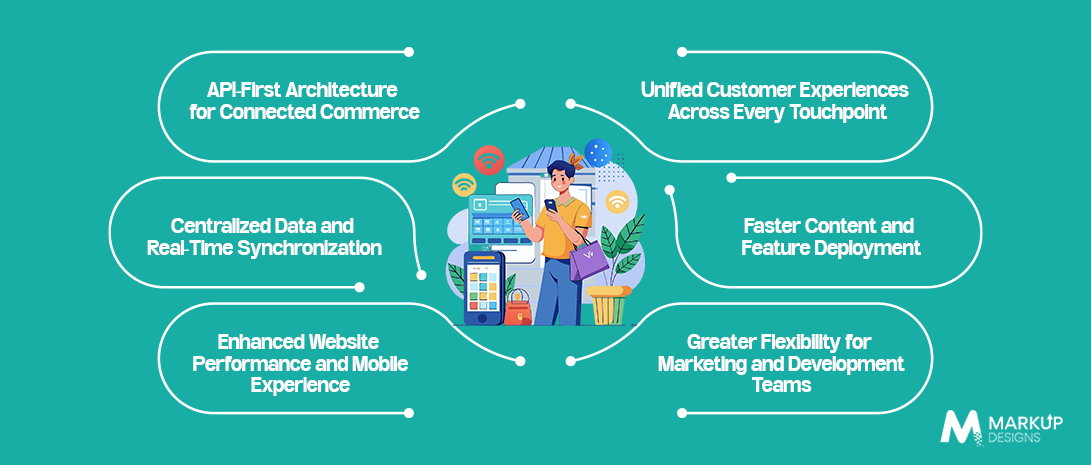
Headless commerce in Australia enables retailers to deliver seamless shopping experiences by separating the frontend from the backend and connecting every customer touchpoint through APIs. Unlike traditional systems, it allows businesses to update digital experiences without disrupting core commerce operations, making it ideal for today’s omnichannel retail environment. According to WP Engine’s 2024 Headless Report, 73% of organizations have adopted headless architecture, while 80% believe it gives them a competitive advantage in delivering superior digital experiences.
API-First Architecture for Connected Commerce
APIs act as the bridge between the frontend and backend, enabling websites, mobile apps, marketplaces, POS systems, and social commerce platforms to communicate with a centralized commerce engine.
Unified Customer Experiences Across Every Touchpoint
Whether customers shop through a website, mobile app, Instagram Shopping, TikTok, or a physical store, headless commerce ensures consistent pricing, inventory, promotions, and customer experiences.
Centralized Data and Real-Time Synchronization
Customer profiles, product catalogs, inventory, and orders are updated in real time, helping retailers reduce inconsistencies and improve operational accuracy.
Faster Content and Feature Deployment
Marketing teams can launch campaigns or update content independently, while developers work on backend improvements simultaneously, significantly reducing time-to-market.
Enhanced Website Performance and Mobile Experience
A decoupled architecture enables faster page loads, improved responsiveness, and better SEO performance, contributing to higher customer satisfaction and conversions.
Greater Flexibility for Marketing and Development Teams
By separating content from commerce functionality, businesses can innovate faster while reducing dependencies between technical and marketing teams.
Business Benefits of Headless Commerce
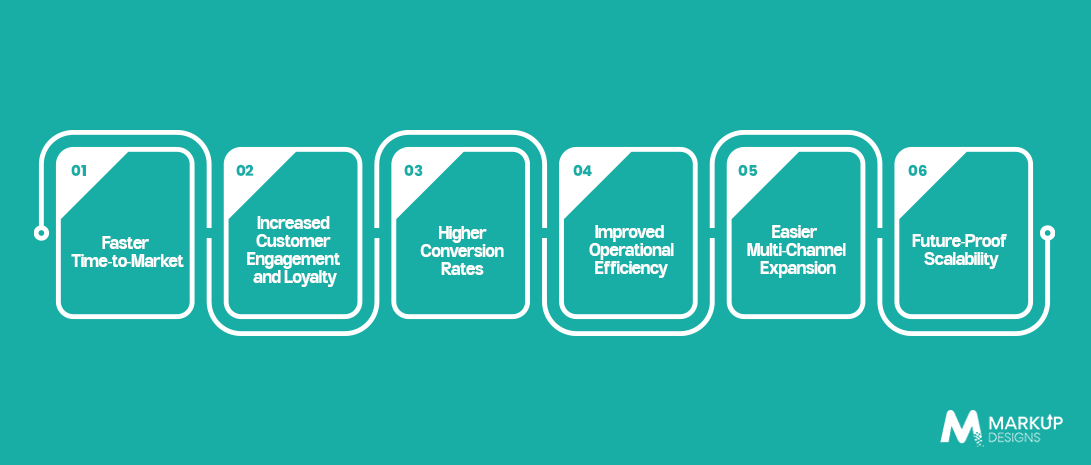
Headless commerce helps retailers adapt quickly to changing customer expectations while supporting long-term business growth.
Faster Time-to-Market
New features, campaigns, and sales channels can be launched more quickly without rebuilding the entire platform.
Increased Customer Engagement and Loyalty
Personalized experiences and consistent interactions across channels encourage stronger customer relationships and repeat purchases.
Higher Conversion Rates
Faster websites, streamlined checkout experiences, and improved mobile performance contribute to better conversion rates.
Improved Operational Efficiency
Centralized commerce operations reduce manual processes and simplify integrations with CRM, ERP, payment gateways, and inventory systems.
Easier Multi-Channel Expansion
Retailers can expand into marketplaces such as Amazon Australia, eBay, and social commerce platforms without major architectural changes.
Future-Proof Scalability
Headless commerce is designed to support business growth, seasonal traffic spikes like Black Friday, Christmas, and Boxing Day, and the adoption of emerging technologies.
Real-World Applications of Headless Commerce in Australian Retail
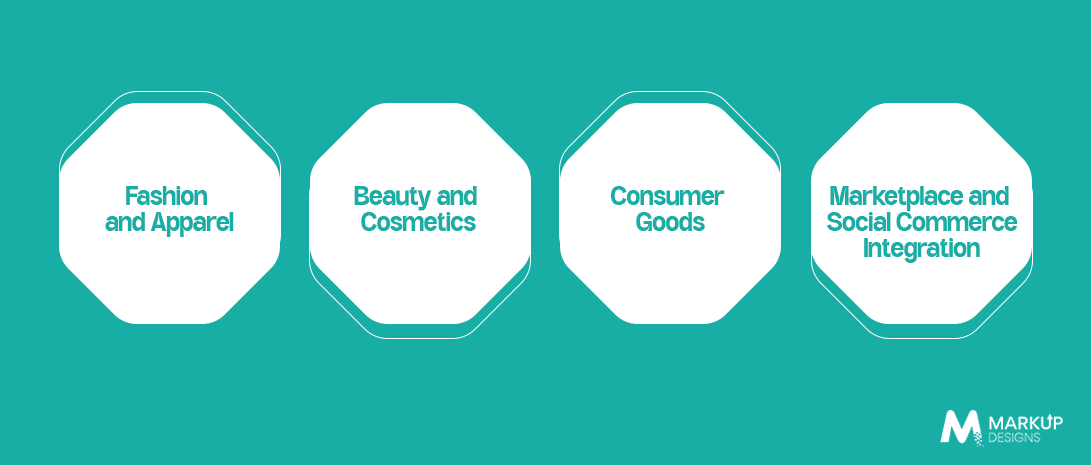
Australian retailers are increasingly adopting headless commerce to enhance customer experiences and streamline operations.
Fashion and Apparel
Brands like Cotton On and THE ICONIC leverage modern commerce architectures to deliver consistent shopping experiences across digital and physical channels.
Beauty and Cosmetics
Companies such as Bondi Sands use omnichannel strategies to provide personalized shopping journeys and strengthen customer loyalty.
Consumer Goods
Retailers benefit from real-time inventory visibility, faster product launches, and seamless integration between online and offline sales.
Marketplace and Social Commerce Integration
Headless commerce enables businesses to sell efficiently across marketplaces and social platforms while maintaining centralized product and customer data.
Emerging Technologies Driving the Future of Headless Commerce
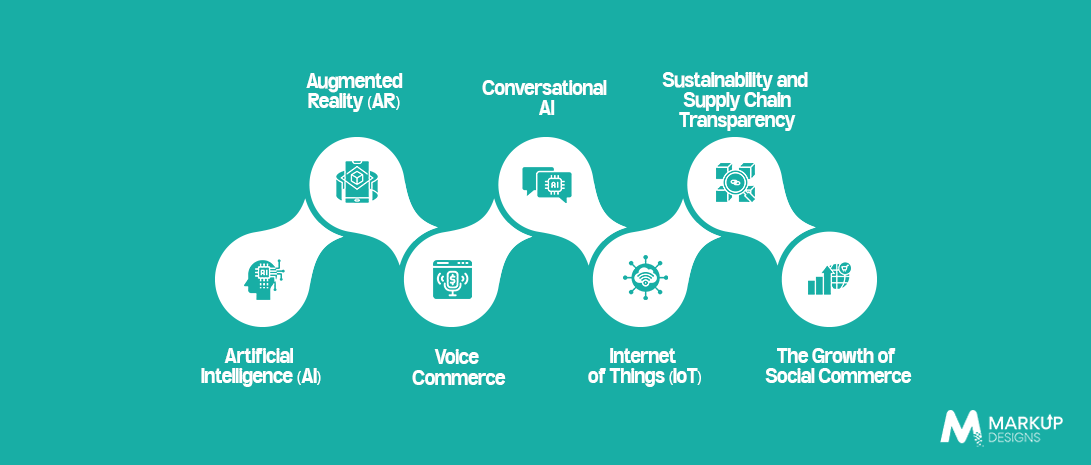
Headless commerce has made it possible to take advantage of the newest technologies that are impacting retail.
Artificial Intelligence (AI)
Innovation can also help brands understand customer preferences and buying trends.
Augmented Reality (AR)
Use of AR allows customers to visualize products before buying.
Voice Commerce
Today, it is possible for clients to use voice assistants for purchases.
Conversational AI
Brands can utilize chatbots to answer questions and assist customers.
Internet of Things (IoT)
The implementation of the Internet of Things (IoT) will provide a seamless shopping experience.
Sustainability and Supply Chains
The necessity to work with the supply chain has increased.
The Rise of Social Commerce
The new reality includes social media platforms like Instagram and TikTok.
How to Successfully Implement Headless Commerce
Custom Headless Commerce Solutions: Create flexible API-based commerce platforms customized to fit your individual business needs and customer requirements.
Effortless System Integration: Link your eCommerce system to customer relationship management (CRM), enterprise resource planning (ERP), and other service providers like payment processors and inventory solutions in order to operate as a unified platform.
Quicker Innovations in the Digital World: Implement a flexible headless system architecture that helps roll out new solutions and sales channels faster while customizing customer interaction.
Professional Support from Strategy to Execution: Markup Designs supports retailers through every phase, from consulting services to execution.
Common Challenges and Best Practices
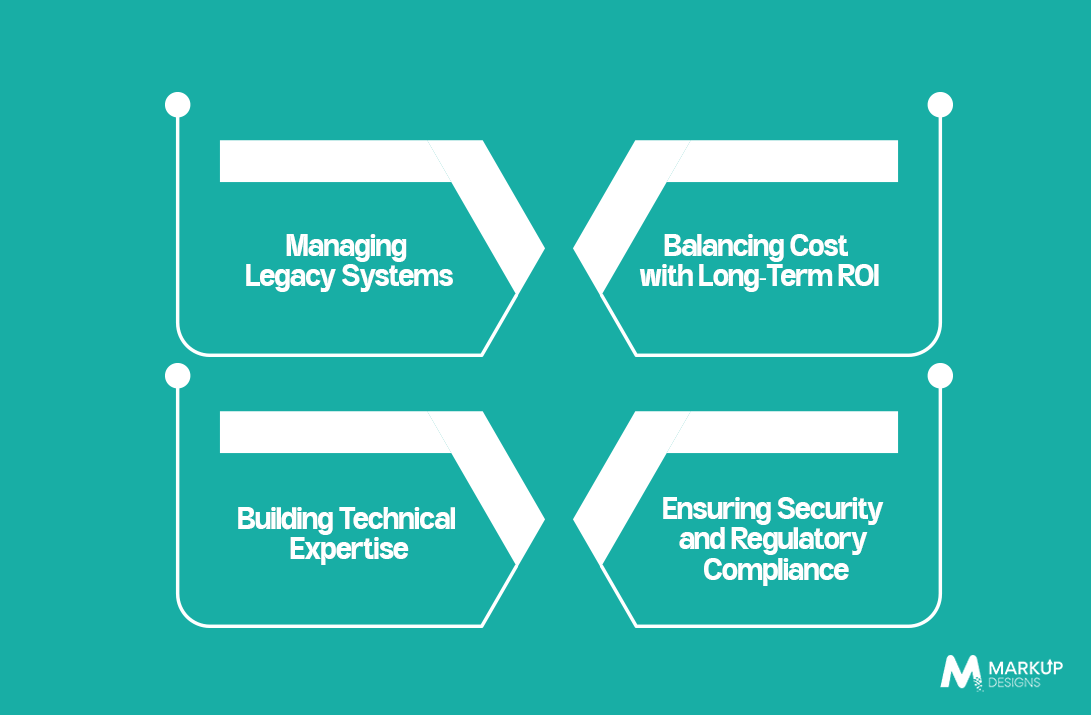
Even though headless commerce brings many advantages, its implementation requires careful planning. If challenges are identified sooner during the entire process, companies can achieve maximum benefits from the implementation.
Managing Legacy Systems
For many companies, it is not possible to get rid of legacy systems at once, so a gradual transition may turn out to be a much more efficient way of handling the headless commerce implementation.
Balancing Cost with Long-Term ROI
Despite these benefits, WP Engine’s 2024 Headless Report found that 73% of Australian businesses cited budget constraints, while 74% identified organizational barriers as key implementation challenges.
Building Technical Expertise
Adopting headless commerce requires expertise in APIs, integrations, and cloud-native technologies. Partnering with an experienced development company can simplify implementation while ensuring a scalable and future-ready architecture.
Ensuring Security and Regulatory Compliance
As businesses integrate multiple systems, securing APIs and protecting customer data become critical. Retailers should follow strong cybersecurity practices and ensure compliance with Australia’s Privacy Act 1988 and other applicable data protection regulations.
Why Australian Businesses Should Invest in Headless Commerce Now
Australian retail is becoming increasingly digital, with customers expecting consistent experiences across every shopping channel. According to KPMG’s Australian Retail Outlook 2025, nearly 50% of Australian shoppers prefer omnichannel experiences, reinforcing the need for connected commerce strategies. Combined with WP Engine’s finding that 73% of organizations have already adopted headless architecture, it’s evident that businesses investing in flexible, API-first commerce platforms will be better positioned to innovate, scale, and remain competitive in an evolving retail landscape.
Why Choose Markup Designs for Headless Commerce Development?
At Markup Designs, we help businesses build scalable, future-ready commerce solutions tailored to their unique retail goals. From strategy and architecture planning to custom development, API integrations, platform modernization, and ongoing optimization, our team delivers solutions that enable seamless omnichannel experiences.
Whether you’re migrating from a legacy platform or building a new digital commerce ecosystem, we focus on creating secure, high-performing, and scalable headless commerce solutions that support business growth, improve customer experiences, and prepare your business for the future of Australian retail.
Transform Your Retail Business with Future-Ready Headless Commerce
Deliver seamless omnichannel experiences, accelerate innovation, and build a scalable digital commerce ecosystem with Markup Designs. Whether you’re modernizing an existing eCommerce platform or planning a complete digital transformation, our experts can help you create a solution tailored to your business goals.
Get in touch today to build a smarter, more agile retail experience.

Conclusion
As Australian consumers continue to embrace omnichannel shopping, retailers can no longer rely on traditional commerce platforms that limit flexibility and innovation. Headless commerce offers a modern, API-first approach that enables businesses to deliver consistent customer experiences, integrate emerging technologies, and scale efficiently across multiple channels.
While the transition requires strategic planning and technical expertise, the long-term benefits—including faster time-to-market, improved customer engagement, and greater operational agility—make it a worthwhile investment. By adopting headless commerce today, Australian retailers can position themselves for sustained growth and remain competitive in an increasingly digital marketplace.
FAQs
1. How does headless commerce improve speed to market?
Headless commerce separates the frontend from the backend, allowing developers and marketing teams to work independently. This enables businesses to launch new features, campaigns, and customer experiences much faster without affecting core commerce operations.
2. Which Australian businesses benefit most from headless commerce?
Headless commerce is ideal for retailers operating across multiple channels, including fashion, beauty, consumer goods, electronics, furniture, B2B commerce, and businesses looking to expand into marketplaces or social commerce while delivering seamless omnichannel experiences.
3. How much does headless commerce implementation cost?
The cost depends on factors such as business size, existing infrastructure, platform selection, integrations, customization requirements, and project complexity. While the initial investment may be higher than traditional platforms, the long-term ROI comes from greater scalability, faster innovation, and reduced maintenance costs.
4. Can existing eCommerce platforms migrate to headless architecture?
Yes. Most existing eCommerce platforms can transition to a headless architecture through a phased migration approach using APIs. This allows businesses to modernize their customer experience without replacing their entire commerce infrastructure at once.
Author's Perspective
Australian retail is entering a phase where customer experience has become just as important as the products themselves. As shopping journeys continue to span websites, mobile apps, marketplaces, social platforms, and physical stores, businesses need technology that can adapt quickly to changing consumer expectations. Headless commerce provides that flexibility by enabling retailers to innovate faster, deliver consistent experiences, and prepare for future technologies without being constrained by legacy systems. For businesses planning long-term digital growth, investing in a scalable, API-first commerce architecture is no longer just an upgrade—it’s a strategic advantage.
Discuss Your Project NowJupinder Singh Arora
Founder and CEO
Related Posts
Custom Software Development Cost in Bahrain: Factors, Benefits,...
How Much Does Healthcare Software Development Cost in...
How to Build Compliance Software for Australian Businesses:...
Insights Are Valuable & Execution is Priceless
You’ve read about the digital future. Now, let’s build the infrastructure to take you there. Move your strategy from the page to the product.
Design Your Solution Now
Contact Us
Schedule The Appointment At Your Convenience Date And Time.
30 Min
Web Conference
Time Zone
Indian standard time (08:30pm)

Thanks For Getting In Touch!
You’ve Taken The First Step Toward Transforming Your Digital Presence. Our Experts Will Reach Out Shortly To Take It Forward.
Launch Your Dream Project
Provide a brief overview of your project, and our specialists will evaluate your requirements. We will connect with you to explore how the right digital solutions can help you launch faster.