
Automotive App Development: Connected Cars & Smart Mobility
The automotive industry is going through a major digital transformation. Vehicles are no longer just machines that take people from one place to another; they are becoming intelligent, connected systems powered by software. Automotive app development is at the center of this transformation, enabling connected cars, smart mobility solutions, and enhanced user experiences.
For businesses, this shift presents both an opportunity and a challenge. Companies must adapt quickly, invest in scalable technologies, and build applications that align with evolving customer expectations. From real-time vehicle tracking to remote control functionalities, automotive apps are redefining how users interact with their vehicles.
In this blog, we will explore the key aspects of app development, including connected cars, essential features, IoT integration, development costs, and the opportunities ahead.
Rise of Connected Cars
Connected cars are vehicles equipped with internet connectivity and the ability to communicate with external systems such as smartphones, cloud platforms, and other vehicles. This concept has become a cornerstone of modern automotive innovation. The rise of connected cars is driven by several factors:
- Consumer demand for convenience: Users expect seamless digital experiences, similar to what they experience on mobile apps.
- Advancements in IoT and cloud computing: These technologies enable real-time data exchange and analytics.
- Focus on safety and efficiency: Connected systems help reduce accidents and improve vehicle performance.
Connected cars allow drivers to access features such as navigation, diagnostics, entertainment, and remote monitoring through mobile applications. For businesses, this means creating platforms that not only enhance user experience but also provide actionable insights through data.
Moreover, connected vehicles play a critical role in smart city ecosystems. They can communicate with traffic systems, reduce congestion, and contribute to more efficient urban mobility.
Key App Features
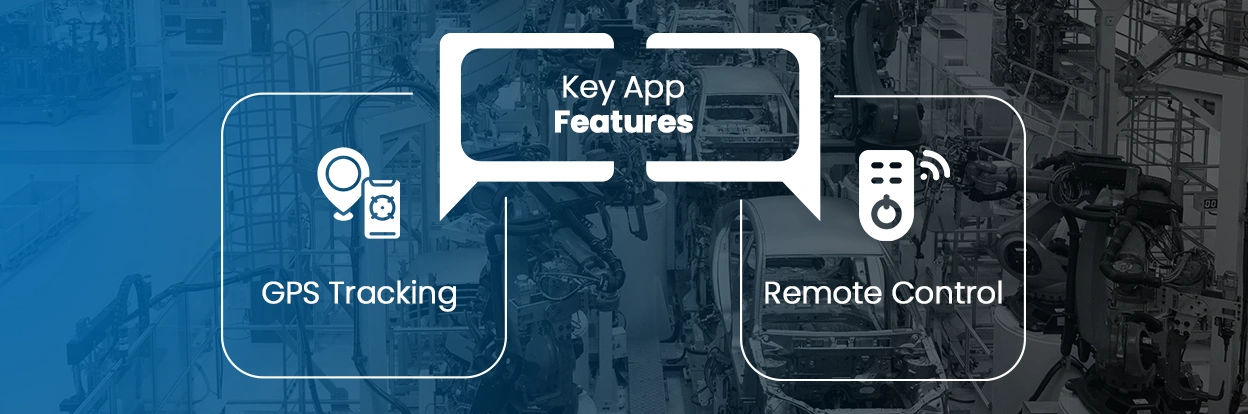
Automotive applications must be designed with both functionality and usability in mind. The right set of features can significantly improve user engagement and overall value.
GPS Tracking
GPS tracking is one of the most essential features in automotive applications. It allows users to monitor the real-time location of their vehicles, which is especially useful for fleet management, logistics, and personal use.
Key benefits include:
- Real-time vehicle tracking
- Route optimization
- Improved fleet efficiency
- Enhanced security through location monitoring
For businesses, GPS tracking provides valuable data that can be used to improve operations and reduce costs. For example, logistics companies can optimize delivery routes and minimize fuel consumption.
Additionally, GPS-enabled apps can integrate with mapping services to provide traffic updates, estimated arrival times, and alternative routes, ensuring a smoother driving experience.
Remote Control
Remote control functionality is another critical component of automotive apps. It allows users to control certain aspects of their vehicles directly from their smartphones.
Common remote features include:
- Locking and unlocking doors
- Starting or stopping the engine
- Climate control activation
- Vehicle diagnostics and alerts
These features not only enhance convenience but also improve safety. For instance, users can remotely lock their vehicles if they forget to do so, or start the engine to pre-condition the cabin temperature.
From a business perspective, implementing remote control features requires strong backend infrastructure and secure communication protocols. Ensuring data privacy and system reliability is essential when dealing with such sensitive functionalities.
IoT in Automotive Apps
The Internet of Things (IoT) plays a vital role. It connects vehicles with sensors, devices, and cloud platforms, enabling real-time data exchange and intelligent decision-making.
IoT integration allows automotive apps to:
- Monitor vehicle health in real time
- Predict maintenance needs
- Provide usage analytics
- Enable vehicle-to-vehicle (V2V) communication
- Support vehicle-to-infrastructure (V2I) systems
For example, IoT-enabled sensors can detect issues in engine performance and notify users before a major breakdown occurs. This predictive maintenance capability reduces downtime and enhances customer satisfaction. IoT also enables advanced features such as:
- Smart parking solutions
- Automated toll payments
- Real-time traffic management
Businesses can leverage IoT data to create new revenue streams. For instance, insurance companies can offer usage-based policies based on driving behavior collected through automotive apps.
However, IoT integration requires a robust architecture that can handle large volumes of data while maintaining security and performance. Cloud platforms, edge computing, and AI-driven analytics are often used to support these capabilities.
Development Cost
The cost of developing an automotive app can vary significantly depending on several factors. Understanding these factors helps businesses plan their investments more effectively.
Key cost factors include:
- App complexity : Basic apps with limited features cost less, while advanced apps with IoT integration, real-time analytics, and remote control capabilities require a higher investment.
- Platform selection: Developing apps for multiple platforms (iOS, Android, web) increases overall cost. Cross-platform solutions can help optimize budgets.
- Technology stack:The choice of technologies, including cloud infrastructure, APIs, and third-party integrations, impacts development expenses.
- UI/UX design: User-friendly design is crucial for automotive apps. Investing in intuitive interfaces improves adoption but adds to the cost.
- Security requirements: Automotive apps handle sensitive data, making security a top priority. Implementing encryption, authentication, and compliance measures increases development efforts.
- Maintenance and updates :Post-launch support, updates, and feature enhancements are ongoing costs that businesses must consider.
| App Type | Estimated Cost Range | Description |
| Basic Automotive App | $25,000 – $50,000 | Includes core features like GPS tracking, basic UI, and limited integrations. |
| Mid-Level App with IoT Integration | $50,000 – $120,000 | Covers advanced features such as real-time data, IoT connectivity, and analytics. |
| Advanced Connected Car Platform | $120,000+ | Fully scalable solution with AI, cloud infrastructure, remote control, and high security |
Note: These estimates are indicative. The actual cost may vary based on your project scope, feature complexity, technology stack, and business requirements.
Challenges in Development Cost
Automotive app development comes with its own set of challenges, but it also offers significant opportunities for businesses willing to innovate.
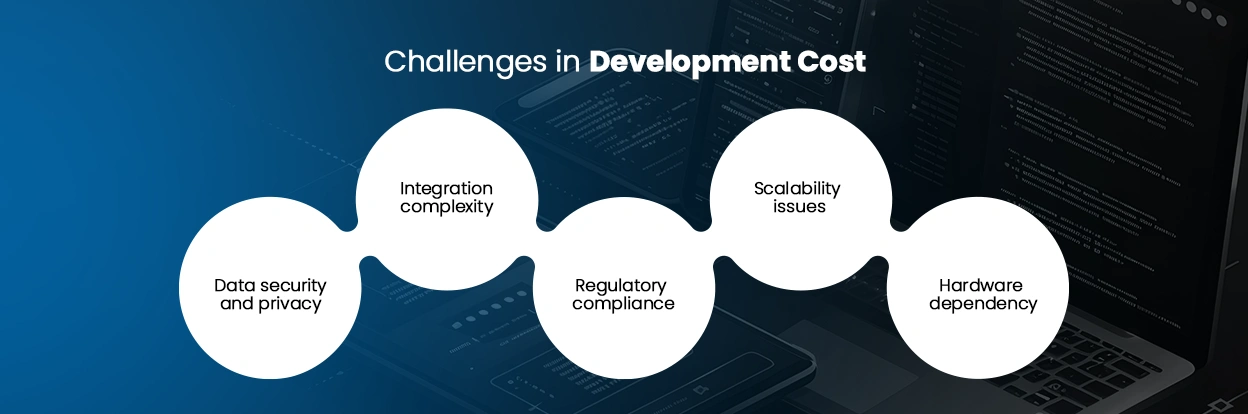
Key Challenges
- Data security and privacy: Automotive apps handle sensitive user and vehicle data. Ensuring secure communication and data protection is critical.
- Integration complexity: Connecting multiple systems, including IoT devices, cloud platforms, and third-party services, can be complex.
- Regulatory compliance: Automotive and data regulations vary across regions, making compliance a challenge for global applications.
- Scalability issues: As the number of connected vehicles increases, apps must handle large volumes of data without performance issues.
- Hardware dependency: Automotive apps often depend on vehicle hardware, which can vary across manufacturers.
Opportunities in Development Cost
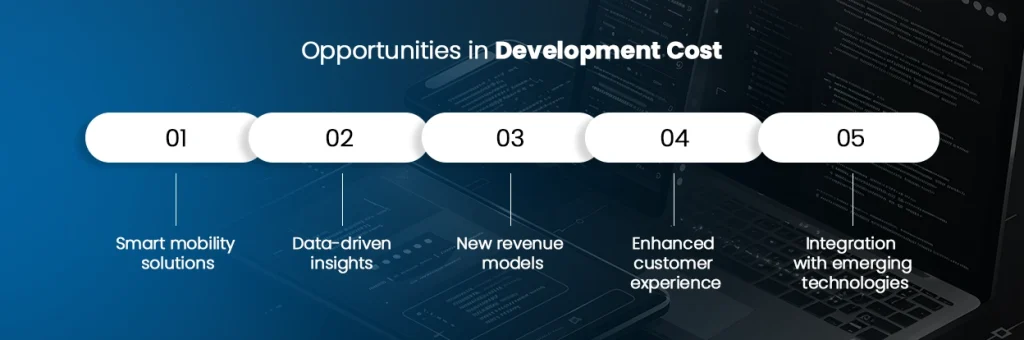
- Smart mobility solutions
Businesses can develop apps for ride-sharing, car-sharing, and fleet management, contributing to smart city ecosystems. - Data-driven insights
Automotive apps generate valuable data that can be used for analytics, personalization, and business optimization. - New revenue models
Subscription-based services, in-app purchases, and data monetization create new income streams. - Enhanced customer experience
Providing seamless, intuitive experiences helps businesses build stronger customer relationships. - Integration with emerging technologies
AI, machine learning, and blockchain can further enhance automotive applications, opening new possibilities.
Why Partner with Markup Designs?
Choosing the right development partner is essential for building scalable and reliable automotive applications. At Markup Designs, we focus on delivering solutions that align with your business goals and industry requirements.
Industry-Focused Expertise
We understand the complexities of automotive technology and build solutions that meet industry standards and user expectations.
End-to-End Development
From initial concept and design to development, deployment, and maintenance, we manage the entire lifecycle of your application.
Custom Solutions
Every business is different. We create tailored automotive apps that match your specific needs, whether it’s fleet management, a vehicle tracking app, or mobility platforms.
Advanced Technology Stack
We leverage modern technologies such as IoT, cloud computing, AI, and real-time analytics to build future-ready applications.
Scalable Architecture
Our solutions are designed to grow with your business, ensuring performance and reliability even as user demand increases.
Security-First Approach
We prioritize data protection and implement robust security measures to safeguard user and vehicle information.
By partnering with Markup Designs, businesses can accelerate their digital transformation and stay ahead in the competitive automotive landscape.
FAQs
1. What is automotive app development?
It refers to the process of creating mobile or web applications that connect with vehicles to provide features like tracking, diagnostics, remote control, and smart mobility solutions. These apps enhance both driver experience and vehicle performance.
2. How do connected car apps work?
Connected car apps use internet connectivity, IoT sensors, and cloud platforms to communicate with vehicles in real time. They collect and process data from the vehicle and allow users to access features such as location tracking, vehicle status, and remote operations.
3. What are the must-have features in an automotive app?
Some essential features include GPS tracking, remote vehicle control, real-time diagnostics, push notifications, route optimization, and integration with IoT devices. These features improve convenience, safety, and efficiency.
4. How much does it cost to develop an automotive app?
The cost depends on the complexity of the app, features, technology stack, and platforms. A basic app may cost around $25,000, while advanced connected car platforms with IoT integration can exceed $120,000.
5. What role does IoT play in automotive applications?
IoT enables vehicles to connect with sensors, devices, and cloud systems. It allows real-time data collection, predictive maintenance, and smart features like vehicle-to-vehicle and vehicle-to-infrastructure communication.
6. Are automotive apps secure?
Yes, automotive apps can be secure if built with proper encryption, authentication, and data protection protocols. Security is a top priority because these apps handle sensitive vehicle and user data.
7. What challenges do businesses face in application development?
Common challenges include data security concerns, system integration complexity, regulatory compliance, scalability issues, and dependency on vehicle hardware.
8. Why should businesses invest in application development?
Businesses can improve customer experience, create new revenue streams, leverage data insights, and stay competitive in the evolving mobility ecosystem by investing in automotive applications.
Author's Perspective
Automotive app development is no longer a niche segment; it is becoming a core component of the mobility ecosystem. As vehicles become smarter and more connected, the role of software will continue to grow. From my perspective, the biggest shift we are witnessing is the transition from hardware-driven innovation to software-driven experiences. Today, users expect their vehicles to function like smart devices, offering personalization, real-time insights, and seamless connectivity.
Another key observation is the growing importance of data. Automotive apps generate vast amounts of data that can be used to improve services, enhance safety, and create new business models. Companies that effectively leverage this data will have a significant competitive advantage. However, success in this space requires a strategic approach. Businesses must focus on scalability, security, and user experience while keeping up with evolving technologies.
Ajit Kumar Jha
VP - Business Operations
Related Posts

Navigation App Development Guide: Building GPS Apps Like...

iOS vs. Android App Development in Abu Dhabi:...

How AI-powered App Development is Transforming Mobile Apps...
Insights Are Valuable & Execution is Priceless
You’ve read about the digital future. Now, let’s build the infrastructure to take you there. Move your strategy from the page to the product.
Design Your Solution Now
Contact Us
Schedule The Appointment At Your Convenience Date And Time.
30 Min
Web Conference
Time Zone
Indian standard time (08:30pm)

Thanks For Getting In Touch!
You’ve Taken The First Step Toward Transforming Your Digital Presence. Our Experts Will Reach Out Shortly To Take It Forward.
Launch Your Dream Project
Provide a brief overview of your project, and our specialists will evaluate your requirements. We will connect with you to explore how the right digital solutions can help you launch faster.