
In Brief
- A safe payment gateway integration involves integrating an application with payment providers to conduct financial transactions securely through the web.
- The key steps of payment gateway integration comprise defining payment gateway needs, determining the proper gateway, deciding on the suitable integration approach, setting up a secure architecture, integrating APIs/SDKs, and testing transactions prior to launching an application.
- The important security aspects include PCI DSS compliance (if necessary), usage of HTTPS/TLS, tokenization, authentication, API security, secure server-side verification of transactions, and transaction monitoring.
- Payment gateway integration approaches may involve using hosted payment pages, SDKs for mobile applications, API integration, embedded checkout, and payment subscriptions. It is essential to choose an appropriate integration approach depending on the objectives of an application, supported payment options, security aspects, and the needed level of control.
- It is vital to pay attention to possible threats such as the leakage of payment data, API vulnerabilities, fraud, duplicate transactions, webhook attacks, and inaccurate payment status handling.
With mobile applications, payments have become more convenient and faster. Regardless of whether users shop online, order food from restaurants, make healthcare appointments, or perform other transactions, they want to pay for services and products through an application. Nevertheless, providing an easy-to-use payment process is not enough. Applications have to guarantee the safety of their financial data and secure each payment.
Therefore, secure payment gateway integration becomes one of the crucial steps in building the application. It provides secure payment processing for the application and helps to provide easy transactions. A good choice of payment gateways, securing sensitive data, and correct verification of payments can have a huge impact on the payment process.
In this blog post, we will tell you how to implement a payment gateway integration for your application, what payment gateway security should be implemented, what methods of integration are available, and what problems should be considered before implementing the payment system.
What is Payment Gateway Integration?
Integration of a payment gateway is a process of linking an application with a payment solution that will manage all the transactions on the Internet in a secure manner. This feature enables the users of the app to make payments for goods and services via credit/debit cards, digital wallets, UPI, and other available payment instruments without the need to leave the app unnecessarily.
A payment gateway can be described as middleware that connects the application, payment provider, and banks involved in a transaction. Once the payment is made by the user, the payment gateway processes it securely, assists in transaction verification, and notifies the app about the transaction status.
For example, once the customer makes a purchase of a good via an e-commerce application, the payment gateway will process the payment and notify the application if it was completed successfully or declined.
The secure integration involves the implementation of encryption, multi-factor authentication apps, and transaction validation features depending on the payment instrument and integration technique used.
To put it simply, integration of a payment gateway enables an application to accept payments online in a safe, reliable, and convenient manner.
How Does a Secure Payment Gateway Work in an App?
A secure payment gateway works by connecting the app, its backend system, and the payment provider to complete a transaction. This includes making sure that the transaction between the app, the backend system, and the payment provider is completed securely. This is very crucial for both payment security and getting accurate payment statuses for the app.
Here is how the process works:
- Payment Initiation by User: The user will pick the products or services that they want, go to the checkout page, and select the method they will use to make the payment.
- Sending the Payment Request by App: The app captures all the necessary payment details and sends the request to the backend system or the payment provider.
- Encryption or Secure Payment Components: This makes sure that sensitive data is kept secure through encryption or secure payment components, while tokenization helps prevent exposure of actual card details to the app.
- Payment is Verified: The gateway talks to the necessary parties involved in making payments.
- App Gets Payment Status: Backend verifies the outcome using gateway responses from sources that can be trusted and webhooks when available.
- Order Status is Updated: After the payment verification, the status of the order changes, and a message is shown to the user accordingly.
Following this process helps reduce payment errors, prevent unauthorized transactions, and give users a more reliable checkout experience.
Read Also: Digital Payment App Development: A Complete Guide for Businesses
How to Build a Secure Payment Gateway Integration for Your App
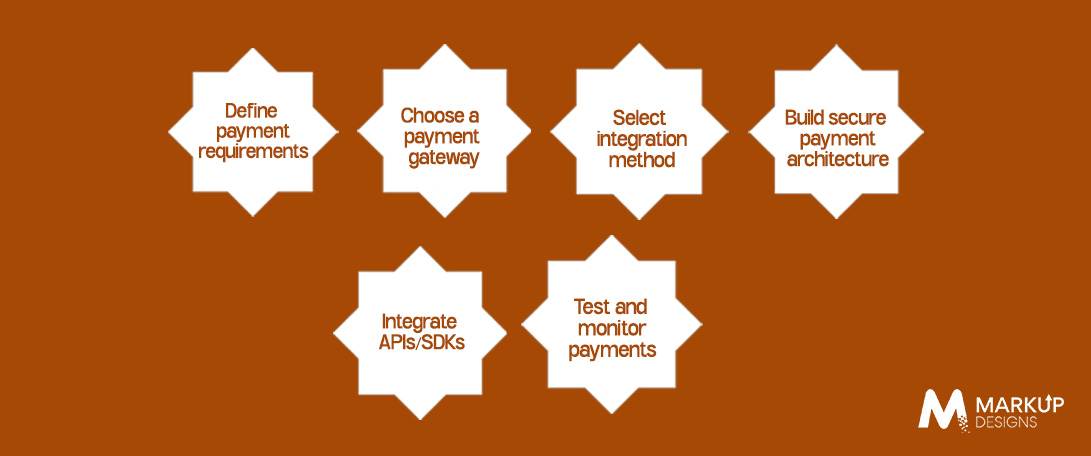
Developing a secure integration of a payment gateway needs more than just linking an API. You need to select the right payment provider, secure sensitive information, and ensure every transaction is verified. The following are important things to consider.
Step 1: Define payment requirements
You will begin by identifying what types of payment methods your users want, like credit cards, debit cards, UPI, or wallets. Take into consideration where you want to sell your product and other issues like your transaction volumes, currencies, etc.
Step 2: Choose a payment gateway
Compare different payment providers based on security, transaction costs, types of payments, documentation, and integration capabilities with your application. This step is very crucial in ensuring you use the right payment method for your business.
Step 3: Select integration method
Select either a hosted checkout page, a mobile SDK, or a direct API integration. Using the hosted checkout may decrease the amount of payment information that you have to store in your mobile app, whereas SDKs and APIs provide different flexibility options.
Step 4: Build secure payment architecture
Place sensitive payment operations in the backend and not only in the mobile application development. Utilize encryption, validate requests, protect your API credentials, and use other access control methods to block all unauthorized actions.
Step 5: Integrate APIs/SDKs
Use the official payment provider’s documentation to integrate its APIs or SDKs into the app. Tokenize the information if it is possible; do not keep credit card numbers, and do not expose your secret API keys in the mobile app code.
Step 6: Test and monitor payments
Verify successful payments, transaction rejections, refunds, network errors, and duplications in the payment provider sandbox. Before going live, make sure that the statuses of payments can be checked on the server and set up secure webhooks if it is possible. After the launch, monitor suspicious activities and transaction errors.
Following these steps helps create a payment experience that protects user information while keeping transactions smooth and reliable.
Essential Security Features for Payment Gateway Integration
To integrate a payment gateway in your application securely, certain security features should be provided in order to protect customers’ data and decrease the probability of fraud.
- PCI DSS Compliance: Adhere to the Payment Card Industry Data Security Standard (PCI DSS) guidelines required for your payment structure to ensure protection of the cardholders’ data.
- HTTPS and TLS Encryption: Utilize HTTPS with the proper TLS settings for encryption of the data transmitted between the application, backend, and payment gateway.
- Tokenization: Tokenize sensitive card details where available to minimize the processing of the actual payment details by the application.
- Strong Customer Authentication: Apply the proper security methods like 3D Secure for the relevant card payments and MFA when necessary.
- Secure API Authentication: Protect your API credentials, validate requests, enforce access controls, and hide secret keys from your app’s client-side code.
- Server-Side Validation and Monitoring: Validate payment status via reliable server-side validation, validate webhook signatures, and monitor for suspicious transaction patterns.
Implementing these features from the beginning makes security part of your payment architecture rather than something you add after problems appear.
Looking to Add Secure Payments to Your App?
Make online payments safer and easier for your users with the right integration approach. Markup Designs can help you build a secure payment experience that supports your app’s needs and future growth.

Payment Gateway Integration Methods for Apps
The selection of an appropriate integration method will have a bearing on the security of your app, the quality of the checkout experience, and the efforts required in development. The best choice will be based on how much control you want to have over the entire payment process and how you intend to secure the data of your users.
1. Hosted Payment Page
A hosted payment page is an approach that sends users to the payment provider’s checkout page. In most cases, the payment provider will take care of collecting much of the payment data.
2. Mobile SDK Integration
A mobile SDK comes with pre-built functionality and makes it easy to add payments in Android and iOS apps.
3. Direct API Integration
Direct API integration integrates the back end of your application with that of the payment gateway using its APIs.
4. Embedded or iFrame Checkout
In this case, the payment form is shown inside the web-based checkout process of your application. The level of convenience and handling of card data depends on the payment provider and specific implementation.
6. Recurring Payment Integration
The integration of recurring payments enables automatic payments for subscriptions, memberships, and other similar services. Such integration involves handling billing permissions, payment tokens, cancellations, and payment failures.
Which method should you choose? The hosted payment pages and payment providers’ SDKs can become a good solution for many applications. If the app needs more control, API integration might work better, but only if your team is ready to handle all security concerns related to it.
Payment Gateway Integration for Different Types of Apps
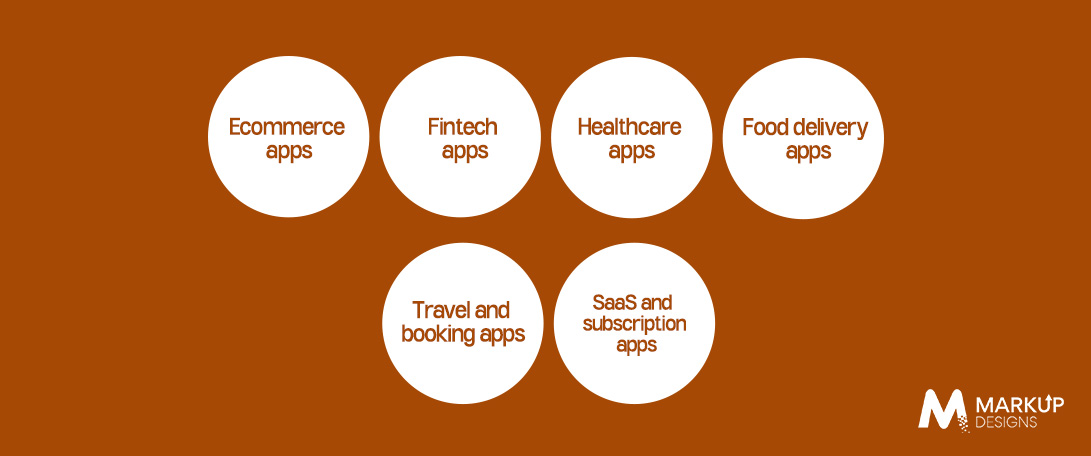
Different apps have different payment needs. Whereas one application may be concerned with fast checkout processes, another application will have to deal with secure service payments or recurring billing processes. The requirements enable the selection of the appropriate payment system.
Ecommerce apps
Provide support for credit card payments, UPI, digital wallets, refunds, and a secure checkout facility.
Fintech apps
Utilize secure authentication, secure API, transaction monitoring, and relevant identity verification for securing financial transactions.
Healthcare apps
Facilitate secure payments for consultations, appointments, and healthcare services.
Food delivery apps
Provide multiple payment solutions, fast transactions, refunds, and real-time payment status updates for deliveries.
Travel and booking apps
Facilitate advance payments, cancellation payments, refunds, and multi-currency payments wherever required.
SaaS and subscription apps
Facilitate recurring billing, secure payment tokenization, subscription renewal, and notifications for unsuccessful payments.
The right integration should be compatible with the payment flow of your application and comply with any security standards relevant to your industry.
How to Choose the Right Payment Gateway
Selection of a payment gateway is an important task since it can influence security, experience, and operational costs of transactions. Instead of picking a popular payment gateway, compare its capabilities against your needs in the app.
- Security Options: Make sure the gateway offers appropriate encryption, tokenization, anti-fraud tools, and compliance with relevant standards.
- Payment Methods: Ensure that the gateway supports the methods preferred by your customers, such as cards, UPI, digital wallets, or bank payments.
- Transaction Fees: Estimate setup fees, transaction fees, currency conversion fees, and fees related to refunds.
- International Support: In case your app targets an international audience, you should pay attention to the supported regions, currencies, and payment methods.
- API and Mobile SDK Support: Find out how well a payment gateway fits into your application by analyzing its APIs and mobile SDKs.
- Transaction Reliability & Scalability: Search for transaction reliability, support, and scalability in case your payment volumes increase.
Payment providers like Stripe, PayPal, Adyen, and Razorpay provide different features depending on their market and intended use cases. You need to compare the features and regional availability to make your choice.
Common Security Challenges in Payment Gateway Integration
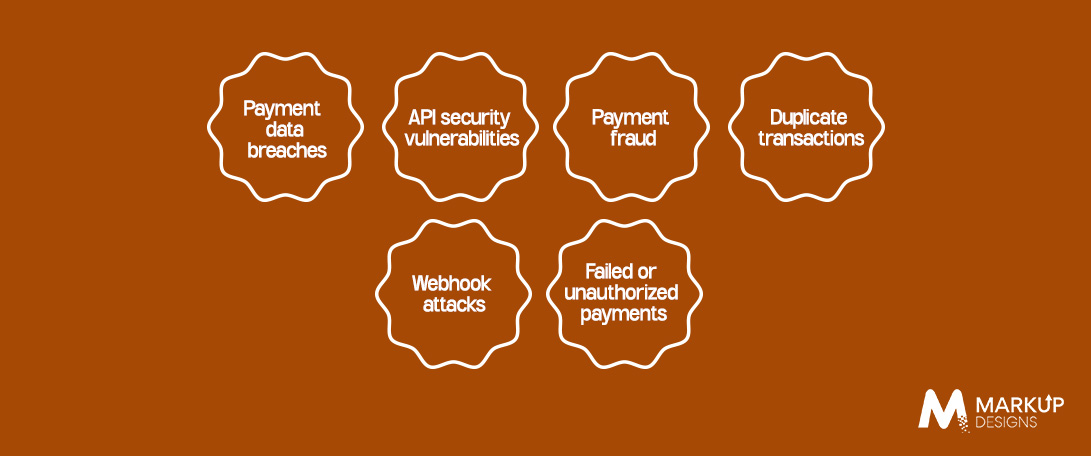
The integration of a payment gateway will ease the process of transactions, but security threats can lead to the exposure of user information and compromise the entire business operations. It is important to anticipate security challenges to build strong measures that will protect your application.
Payment data breaches
Lack of proper storage or data security measures can cause exposure of personal information. It is important to use safe payment methods and prevent any unnecessary storage of cards.
API security vulnerabilities
Weak authorization measures or exposing API keys and unvalidated requests can give room for exploitation. It is advisable to protect credentials and validate requests on the server side.
Payment fraud
Payment fraud involves the theft of personal details that can lead to financial risks. It is advisable to use risk-based authentication and fraud detection tools.
Duplicate transactions
This can be caused by network interruptions and other factors. It is advisable to use idempotency keys.
Webhook attacks
False or altered webhooks might result in the application registering the order as being paid even when it is not. Signature verification of webhooks must be performed.
Failed or unauthorized payments
Mismanagement of statuses will confuse the user about whether the payment was completed. The confirmation of payments must be done via server checks.
Overcoming these difficulties in the process of developing the application will decrease security problems.
Why Choose Markup Designs for Payment Gateway Integration?
Creating a secure payment experience involves adopting the right technology, testing, and understanding the needs of your app. Markup Designs helps companies implement Payment Gateway API and SDK integration depending on the needs of the app.
We take into consideration the implementation of suitable security controls, providing a variety of payment options and creating payment functionality for different industries, including ecommerce, healthcare, fintech, and subscription models. We also test different payment scenarios, including successful payments, failed payments, and refund payments, to find possible bugs and errors.
In addition, our company provides ongoing maintenance and support to make sure that the payment gateway implementation will be kept up to date with the time and needs of the app
Ready to Build a Secure Payment Gateway for Your App?
Give your users a safer way to pay with a payment gateway that fits your app’s needs. Markup Designs can help you plan, integrate, and test your payment solution.

Conclusion
Payment gateway integration is one of the aspects that must be paid attention to while developing a reliable application. In addition to the protection of payment data and a decrease in transaction risks, this solution brings about additional security to the whole of implementing online payments.
There are many aspects that can affect the choice of an appropriate way of implementing payment functionality into the application. E-commerce, fintech, healthcare, and subscription-based applications can have different requirements concerning the integration of payments into the apps, but each of them should go through certain implementation and testing processes.
Securing the payment process should not be done only once. It is important to constantly monitor and update the payments in order to ensure the reliability of the solution.
In case you decide to add payments to your application, collaboration with a professional team of developers will help you to make the right technical choices and create a convenient checkout process.
FAQs
1. How do I integrate a payment gateway into my app?
Start by defining your payment requirements, choosing a suitable provider, and selecting an integration method. Then connect the provider’s SDK or API, implement security controls, test transactions, and verify payment status on the server before launching.
2. What is the most secure payment gateway integration method?
A hosted payment page or a provider-managed SDK can reduce your app’s direct exposure to sensitive card data. However, security depends on the provider, implementation, configuration, and applicable compliance requirements.
3. How much does payment gateway integration cost?
The cost depends on the integration method, app complexity, payment options, security requirements, and third-party services. Additional expenses may include provider transaction fees, testing, maintenance, and compliance-related work.
5. Is PCI DSS compliance required for mobile apps?
PCI DSS requirements depend on how the app handles cardholder data and how the payment environment is structured. Using a third-party payment provider may reduce your compliance scope, but it does not automatically remove every PCI DSS responsibility.
6. Can an app support multiple payment gateways?
Yes. An app can integrate multiple payment gateways to support different payment methods, regions, or backup processing options. However, this requires additional work for routing, transaction tracking, refunds, reconciliation, and security.
Author's Perspective
Secure payment gateway integration is about building trust as much as processing transactions. A well-planned approach helps protect user information, reduce payment errors, and create a smooth checkout experience. Businesses should consider security from the beginning instead of treating it as a final development step. Choosing the right payment provider, following appropriate standards, and testing different transaction scenarios can help create a more reliable payment system. As apps continue to support more digital transactions, investing in secure and scalable payment integration can help businesses meet user expectations and prepare for future growth.
Discuss Your Project NowAjit Kumar Jha
VP - Business Operations
Related Posts

Cost to Build a Mobile App in Qatar...

How Much Does It Cost to Build an...

How to Build a Car Wash App: Development...
Insights Are Valuable & Execution is Priceless
You’ve read about the digital future. Now, let’s build the infrastructure to take you there. Move your strategy from the page to the product.
Design Your Solution Now
Contact Us
Schedule The Appointment At Your Convenience Date And Time.
30 Min
Web Conference
Time Zone
Indian standard time (08:30pm)

Thanks For Getting In Touch!
You’ve Taken The First Step Toward Transforming Your Digital Presence. Our Experts Will Reach Out Shortly To Take It Forward.
Launch Your Dream Project
Provide a brief overview of your project, and our specialists will evaluate your requirements. We will connect with you to explore how the right digital solutions can help you launch faster.