

In Brief
- When developing apps and software platforms in Saudi Arabia, companies have to look beyond functionality and performance by taking care of aspects like privacy, cybersecurity, data management, cloud infrastructure, and compliance with particular industries.
- The list of possible compliance frameworks and standards might involve PDPL, NCA Essential Cybersecurity Controls, SAMA Cybersecurity Framework, NCA Cloud Cybersecurity Controls, PCI DSS, and requirements from ZATCA, depending on the type of platform being developed, industry, data, and provided services.
- Security has to be embedded into the platform from scratch through encryption, multi-factor authentication, role-based access control, secure APIs, auditing, monitoring, data backup, and disaster recovery.
- In order to develop the platform in a compliance-driven way, it is necessary to identify the relevant regulations, map out data, plan for secure architecture, follow secure development practices, conduct security tests, validate deployment, and continuously monitor the platform.
- Depending on platform complexity, data, industry, cloud infrastructure, integration, testing, and monitoring, the process of compliance can influence the cost of development.
Saudi Arabia is rapidly moving towards a digital economy where mobile applications, software-as-a-service (SaaS) platforms, marketplaces, fintechs, and enterprise software are widely used in the course of business activity. At that, with more and more organizations adopting digital technology and solutions, the issues of user data protection, transaction security, and reliability of digital infrastructure become important.
For any organization developing a mobile application or software platform for the Saudi Arabian market, development should include not only features, design, and performance aspects but also security and regulatory compliance issues, since certain regulations, cybersecurity standards, cloud infrastructure standards, as well as industry-specific frameworks may affect the process of collecting, storing, processing, and transferring personal data.
In this blog, you will find out the main compliance requirements to consider when building secure digital platforms in Saudi Arabia, security features to consider, industry-specific regulations, common compliance problems, cost aspects of development, and a compliance checklist for the Saudi Arabian market.
Why Compliance Matters for Digital Platforms in Saudi Arabia
Developing a digital platform for the Saudi market requires not only ensuring that there is a good user experience. Applications and software platforms often store personal data, financial transactions, business information, and any other data that can be classified as confidential information. This data must be safeguarded by all parties involved.
Compliance ensures the establishment of proper data handling policies. It assists the developers in identifying the legal standards needed before the software platform is developed.
For companies operating in Saudi Arabia, compliance can also support:
- Improved security of customer and company information
- Higher security in apps, APIs, databases, and cloud
- More visibility into the processing of personal data
- Reducing the risks of security and compliance breaches
- Alignment with specific industry standards
- Greater ease of dealing with customers and enterprise partners
However, the critical aspect is that compliance should not be viewed as an ultimate tick-the-box exercise just prior to going live.
Key Saudi Compliance Requirements for Apps and Software
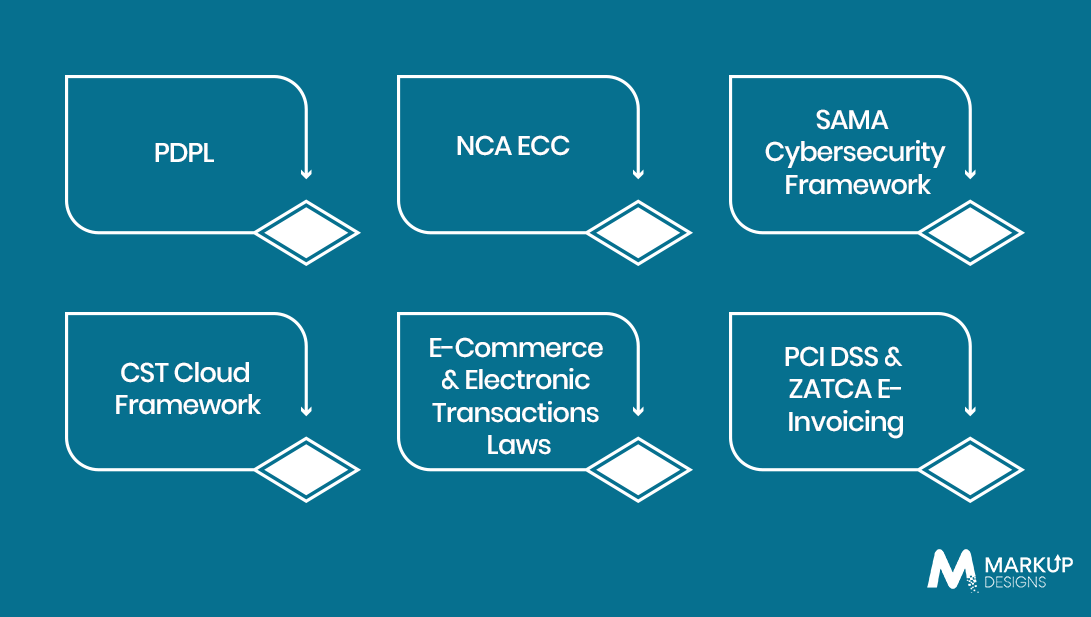
Saudi Arabia has several regulations that could have an impact on the collection, processing, storage, and protection of information by digital platforms. Regulations vary depending on the particular platform, industry, type of information, and services. Early understanding of these requirements would allow developing teams to choose appropriate technological approaches to start with.
PDPL
PDPL regulates personal data processing and includes such areas as data collection, consent, purposes of processing, rights of users, data retention, and transfer of data. This regulation is of primary importance for platforms dealing with customers’ or employees’ personal information.
NCA ECC
Essential Cybersecurity Controls (ECC 2-2024) issued by the National Cybersecurity Authority are required by entities listed in scope and include cybersecurity controls necessary for protecting information and technology assets.
SAMA Cybersecurity Framework
For financial platforms under the supervision of the Saudi Arabian Monetary Authority, there is a requirement to comply with the SAMA Cybersecurity Framework. Areas regulated by this framework include cybersecurity governance, risk management, application security, identity and access management, and third-party security.
CST Cloud Framework
For cloud-based platforms, NCA’s Cloud Cybersecurity Controls cover the cybersecurity needs of cloud service providers and tenants, such as data protection and cloud security.
E-Commerce & Electronic Transactions Laws
For platforms that enable online shopping and/or electronic transactions, there may be specific requirements to consider in Saudi Arabia regarding digital transactions, customer data, electronic documents, and online business activities.
PCI DSS & ZATCA E-Invoicing
For platforms that process credit card payments, PCI DSS requirements must be taken into account, and businesses subject to Saudi Arabia’s electronic invoicing requirements need to consider ZATCA requirements regarding invoicing functionality.
The key takeaway is that compliance requirements must be mapped to the platform prior to the development of the product.
Industry-Specific Compliance Requirements
Not all digital platforms in Saudi Arabia have to meet the same compliance obligations. Compliance requirements may vary based on the industry, the kind of data the platform handles, and the services provided. Knowing these requirements is crucial for developing the necessary security and compliance controls from the outset.
Fintech and Banking
Financial platforms may have to comply with SAMA cybersecurity requirements, PDPL, PCI DSS, strong authentication, transaction security, and monitoring.
Healthcare
Healthcare platforms handle personal data of patients, which makes data privacy, access controls, encryption, secure storage, and audit logging important.
E-Commerce
E-commerce apps and platforms have to consider PDPL, electronic transactions, payment processing, customer data protection, and e-invoicing.
Government and Public Sector
Government platforms generally require cybersecurity controls, identity management, data protection, access governance, and continuous monitoring.
Education
Educational platforms will process the personal data of students, parents, teachers, and educational institutions. Access controls, authentication, access management, and proper data retention will be crucial.
Logistics and Enterprise Software
Logistics and enterprise platforms will involve integration with many users, systems, APIs, and third-party services. Secure integrations, data protection, access control, and monitoring can help to ensure the safety of operational data.
Essential Security Features for Saudi Digital Platforms
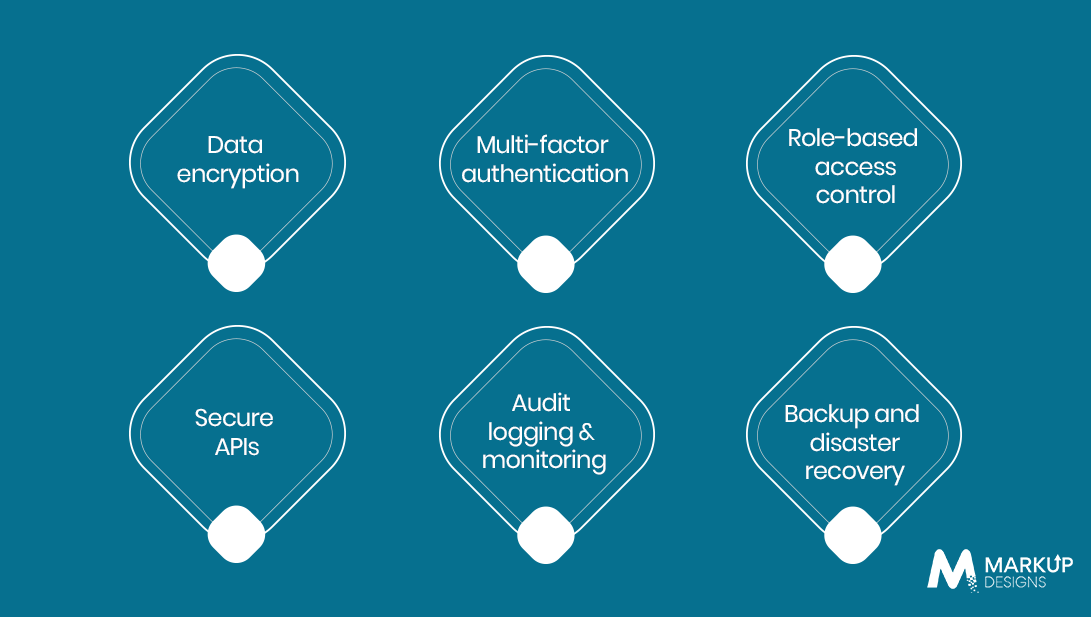
While compliance defines the framework, security measures implement those requirements. When developing an application or software platform for the Saudi Arabian market, security measures should be incorporated into the development process instead of applying them just before release. Suitable controls could help ensure the protection of personal information, business data, transactions, and connected systems.
Some of the key security controls that should be considered include:
- Data encryption: It helps protect confidential data both when it is stored and transferred through the platform.
- Multi-factor authentication: It adds an extra layer of verification to mitigate unauthorized access to accounts.
- Role-based access control: Only give users and employees access to necessary data and functions.
- Secure APIs: Protect the communication among applications, databases, payment processing, and third parties.
- Audit logging and monitoring: Help log activities and monitor any abnormal activity or security incidents.
- Backup and disaster recovery: Help provide backup and recovery procedures to enable business continuity after incidents or failures.
These controls should be selected according to the platform’s data, users, integrations, industry, and applicable Saudi regulations.
Want to build a secure digital platform for the Saudi market?
Building a compliant platform is easier when security and regulatory requirements are considered during the early planning stages. Connect with Markup Designs to discuss your app or software development requirements.

How to Build Compliance Into the Software Development Lifecycle
The most effective way to implement compliance is to have it embedded in the development process. Businesses will no longer need to look at regulations only before going live, but rather incorporate security and privacy requirements throughout the entire development cycle.
- Discovery and Compliance Assessment
First, one needs to determine who the platform users are, what kinds of data it uses, what business processes occur, what integrations take place, and what Saudi regulations apply to the platform.
- Secure Architecture Design
Build database design, application programming interfaces (APIs), cloud architecture, authentication and authorization procedures, and all aspects of data flows based on security and compliance requirements.
- Secure Development
Develop the platform using secure code techniques, encryption technologies, appropriate authentication and authorization methods, and privacy policies.
- Security and Compliance Testing
Test for vulnerabilities, weaknesses in the API, issues with access control, data exposure, and other security risks.
- Deployment and Validation
Prior to launching the platform, check all cloud configurations, permission settings, logging, backup routines, and other controls related to data processing.
- Continuous Monitoring
This process does not stop after implementation, and security testing, monitoring, updating, and risk assessments are some actions that can be undertaken.
Common Compliance Mistakes to Avoid
Most companies recognize the need for compliance, but experience issues since the aspects of security and compliance are considered too late. There are some typical errors that will complicate, increase costs, and make development management harder.
- Treating Compliance as a Final Step
Compliance controls added at the last minute will mean making changes to the existing architecture. Consider compliance planning early on in the discovery phase.
- Excessive Collection of Information
The collection of unnecessary personal information will make it more likely to face privacy and security risks. Only collect and retain information that is necessary.
- Not Addressing Data Transfers
Data transfers between countries, clouds, and third-party services, without considering any applicable requirements, may result in compliance issues.
- Poor Access Controls
Permissions granted to employees/users might result in data leaks. You need to implement role-based access controls and proper authentication methods.
- Ignoring Third-Party Integration
There are numerous integrations that could pose security threats: payment gateways, APIs, cloud services, analytics tools, among others
- Skipping Regular Security Testing
Platforms that were considered to be secure at the launch point can become vulnerable over time.
How Compliance Impacts Digital Platform Development Costs
The requirement for compliance may affect the total cost associated with the development of a digital platform in Saudi Arabia due to security, privacy, infrastructure, testing, and regulatory issues that may require extra development efforts. However, the cost itself will depend on the platform, not on the compliance issues.
Among the possible issues are:
- Platform Complexity: A straightforward business application might not need as many controls as a complex SaaS or enterprise platform.
- Data Types: Certain types of data (such as personal or sensitive data) would require more controls.
- Industry Issues: Some industries, like fintech, healthcare, and government, among others, might have their own sets of issues.
- Cloud Infrastructure: This includes hosting options, security settings, backup, and management of data.
- Third-party Integrations: Payment gateways, identity providers, APIs, and other third-party systems would require security controls.
- Testing and Monitoring: Penetration testing, vulnerability assessment, logging, monitoring, and maintenance would be needed as well.
Incorporating compliance into the architecture at the very beginning of development could also save money in the future by avoiding costly changes and remediation. The ideal option is to identify all the requirements in advance and incorporate them into the initial budget of development.
Saudi Digital Platform Compliance Checklist
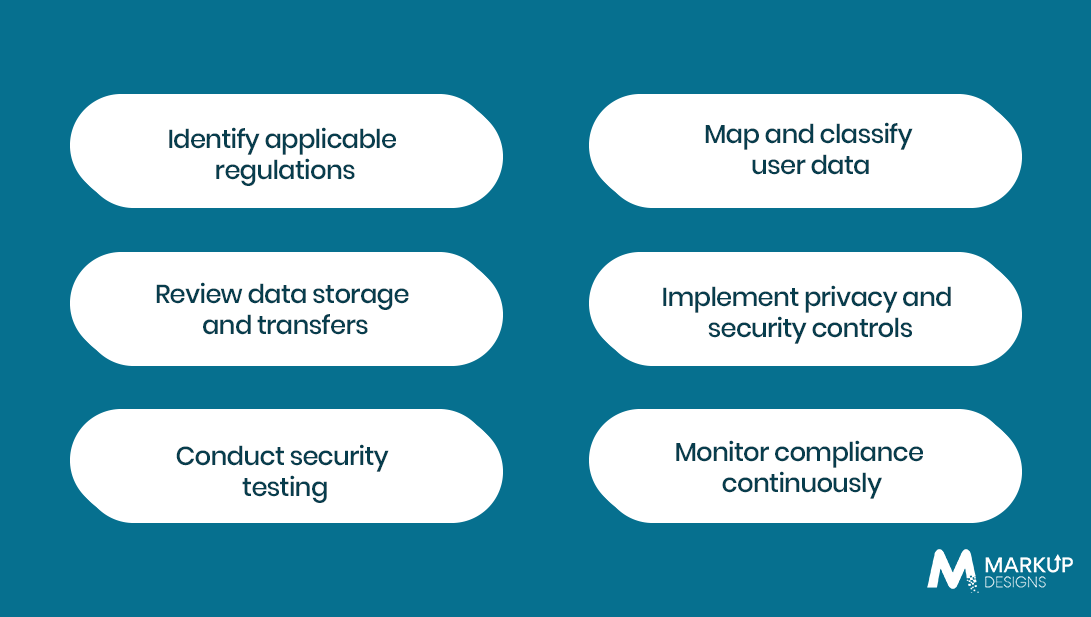
Before launching an app or software Development in Saudi Arabia, companies need to examine the various privacy, cybersecurity, infrastructure, and industry regulations applicable to the software. A practical checklist will be helpful for identifying these requirements before the development of the software takes place.
Identify applicable regulations
Examine the relevant Saudi regulations and frameworks applicable to the platform.
Map and classify user data
Identify what type of personal, sensitive, financial, or business data is collected by the software platform.
Review data storage and transfers
Identify where this data is stored and how it flows across different components.
Implement privacy and security controls
Implement security measures such as encryption, authentication, access control, secure API design, and others.
Conduct security testing
Perform security tests, including vulnerability scans, penetration tests, etc.
Monitor compliance continuously
Examine security controls, regulations, third-party services used by the platform, and others.
Build a Secure Digital Platform With Markup Designs
The development of a digital platform in Saudi Arabia needs more than just robust development skills. It needs a profound insight into security, privacy, infrastructure, and the regulatory environment in which the digital platform should operate.
Markup Designs assists businesses in designing and building scalable and secure apps and software platforms tailored to a particular industry. From architecture to development and all the way up to integration, testing, deployment, and maintenance, the development process could be built around the specifics of the platform.
Regardless of whether you are planning to develop a SaaS product, an enterprise platform, a marketplace, a fintech product, or an application for customers, the technical foundation of your digital platform will help with this process.
Have an app or software idea for the Saudi market?
Talk to Markup Designs about building a secure, scalable, and compliance-aware digital platform designed around your business requirements.

Conclusion
Creating secure digital platforms in Saudi Arabia entails more than just functionality and UX. All the aspects related to privacy, cybersecurity, cloud infrastructure, data handling, and sector-specific requirements must be taken into account during development.
PDPL, NCA cybersecurity controls, SAMA requirements, CST cloud controls, PCI DSS, and ZATCA requirements may become relevant in particular circumstances. It is necessary to assess the exact compliance scope based on the characteristics of the platform and the business itself.
The most practical way is to integrate compliance at the beginning stage, include security into the system design, perform thorough testing of the platform, and monitor it afterwards. Such an approach will allow businesses to create more secure digital platforms.
FAQs
1. What compliance requirements apply to digital platforms in Saudi Arabia?
The requirements depend on the platform and industry. They may include PDPL, NCA cybersecurity controls, SAMA requirements, CST cloud controls, PCI DSS, ZATCA e-invoicing, and other applicable regulations.
2. Is PDPL relevant to mobile apps and software platforms?
Yes, when a platform processes personal data within the scope of PDPL. Development teams should consider requirements around data collection, processing, privacy, retention, and transfers.
3. What security features should a Saudi digital platform have?
Important controls can include encryption, multi-factor authentication, role-based access, secure APIs, audit logging, monitoring, backups, and disaster recovery.
4. Does every digital platform need to follow SAMA requirements?
Not necessarily. SAMA requirements are relevant to entities and platforms that fall within the Saudi Central Bank’s applicable regulatory scope, particularly in financial services.
5. How does compliance affect software development costs?
Costs can increase based on platform complexity, data sensitivity, industry requirements, infrastructure, integrations, testing, and ongoing monitoring.
Author's Perspective
Saudi Arabia’s digital transformation is creating opportunities for businesses to build apps, SaaS products, marketplaces, and enterprise platforms across industries. However, long-term platform success also depends on how effectively security, privacy, and regulatory requirements are addressed. A compliance-first approach helps development teams make better architectural decisions, protect valuable data, and reduce avoidable risks. For businesses entering the Saudi market, treating compliance as an ongoing part of product development-not simply a launch requirement-can create a stronger foundation for sustainable digital growth.
Discuss Your Project NowAjit Kumar Jha
VP - Business Operations
Related Posts
FinTech Cybersecurity: Essential Controls for Secure Financial Applications
Cybersecurity Risk Management: Strategies, Frameworks, and Best Practices
Cybersecurity in Banking: Challenges, Best Practices, and Future...
Insights Are Valuable & Execution is Priceless
You’ve read about the digital future. Now, let’s build the infrastructure to take you there. Move your strategy from the page to the product.
Design Your Solution Now
Contact Us
Schedule The Appointment At Your Convenience Date And Time.
30 Min
Web Conference
Time Zone
Indian standard time (08:30pm)

Thanks For Getting In Touch!
You’ve Taken The First Step Toward Transforming Your Digital Presence. Our Experts Will Reach Out Shortly To Take It Forward.
Launch Your Dream Project
Provide a brief overview of your project, and our specialists will evaluate your requirements. We will connect with you to explore how the right digital solutions can help you launch faster.