

In Brief
- Effective mobile application development begins with conducting extensive market research, knowing what customers require, what your organization seeks to achieve, and what the competitive landscape looks like.
- Making an informed choice regarding the technology stack to use from the very beginning can be of great importance in boosting app efficiency and performance.
- User experience must always be among top priorities when developing an application, since the quality of design and performance determines how many customers will stay loyal and engaged.
- A mobile application cannot be considered successful until it is updated regularly, maintained, and equipped with new features in order to keep users active.
- Nowadays, personalization and a friction-free customer journey have become key components of any app development strategy.
- When combined with good business planning and innovation, they ensure high performance and success of the created application.
Developing an app is a complex process and involves a number of stages like planning, design, development, testing, and launch, among others. At each stage, there are many different tasks involved, and any slight inefficiency or error during any stage could impact the effectiveness of the resulting product.
For instance, if you are a startup company or an individual developer, you might find the process of developing an app a bit more challenging than you had initially thought. Developing a great mobile application calls for several skills, strategy, creativity, and optimization, but all of that is well worth it when your app becomes highly efficient and provides a great user experience.
As an aspiring mobile developer, if you are looking to learn from some of the best companies offering top-notch app development services, here are some mobile app development best practices that you should be aware of.
10 Proven Practices for Building High-Performance Mobile Apps
It is evident that the process of developing a mobile application takes much time and consists of various small steps. Every step requires making a lot of decisions, and there are things that seems insignificant but actually becomes the key issue for the whole development process.
Some of the best practices for the mobile app development process are as follows:
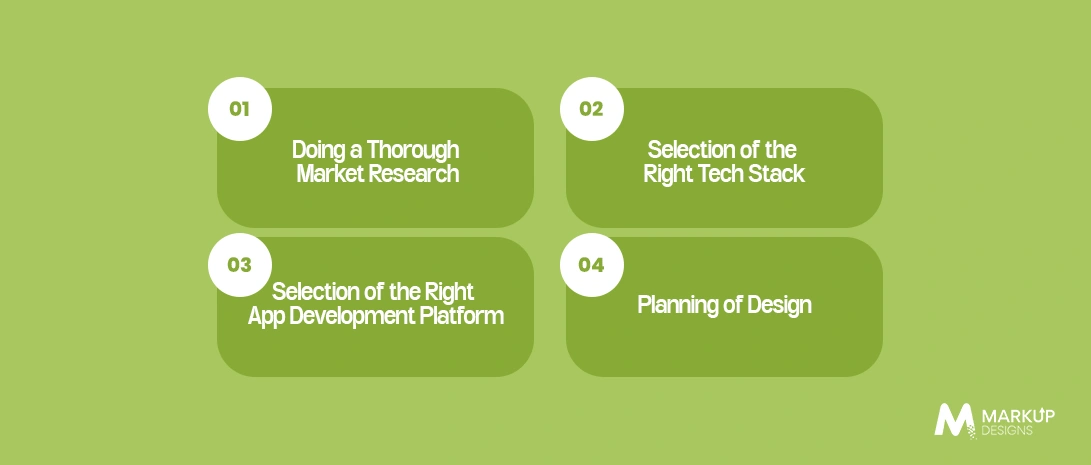
1. Doing a Thorough Market Research
In order to embark on the process of developing your mobile app, one should first conduct extensive research. To ensure the success of your product, you need to know your target audience, their demands, the competition, and the benefits that your application will provide to them. Conducting extensive research enables you to be prepared for everything.
These early realisations help organizations to come up with a proper plan, utilize resources effectively, and avoid any risks that may arise. This approach makes application development easier for organizations and improves their chances of creating a successful and high-quality app
2. Selection of the Right Tech Stack
Subsequently, after conducting research, comes the part where it will be necessary to conduct the selection of the appropriate development technology when it comes to achieving success in developing the desired mobile application. There are different kinds of technology. The developers may opt for the following kinds of app development technology: Native, Hybrid, Cross-Platform, or Progressive Web App Development, depending on their specific needs and budgets.
Considering these kinds of things while still planning will make sure that there is an alignment between the chosen technology and the process of developing the app itself. This will help make an informed decision with regard to technology, which may help increase efficiency and effectiveness.
3. Selection of the Right App Development Platform
Selecting the proper platform is a crucial step in developing applications. As far as platforms are concerned, organizations must decide beforehand on which platform their application will be released.
Having selected the appropriate platform for development, teams are able to manage their resource allocation and prioritize certain features accordingly. By choosing the appropriate platform beforehand, organizations can ensure a more efficient development process and provide users with a seamless experience.
4. Planning of Design
The key to developing a high-performing mobile application is good design. When embarking on the development process, it is necessary to establish what the app will be used for, who the target audience is, what their journeys are, and what its functionalities are. Having a solid design plan will enable businesses to develop apps that have intuitive interfaces and navigation.
Design planning entails creating wireframes, mockups, and user journey diagrams, among others. Through this, it is easy to determine any problems that could hinder the usability of the application before even starting its development. Businesses will save on costs, and their users will benefit greatly as a result of such an approach.
Ready to Build a Better Mobile App?
Following the right development practices can help you create a secure, scalable, and user-friendly application. Whether you’re planning a new app or improving an existing one, a well-structured development strategy can set the foundation for long-term success.

5. Paying Attention to User Experience
Ultimately, the successful implementation of this strategy will depend on that your application meets all the expectations. A well-designed user interface, intuitive navigation, and fast response times can significantly improve user satisfaction and engagement. Regularly gathering user feedback and making continuous improvements also helps ensure long-term app success.
In order to create such an application, developers will have to focus on three major things: convenience, performance, and user experience. The app should provide the necessary things to deliver a positive user experience with each use.
6. Follow Platform Guidelines
The developers must adhere to the particular guidelines and requirements of an app store before releasing their applications. This is especially important whether one intends to release an app through the Google Play Store or the Apple App Store. It becomes easy for such developers when they are aware of the requirements beforehand.
Having prior knowledge of the requirements will save startups and other novice developers from facing problems and revisions. This is because most applications will be launched on both the Android and iOS stores. The earlier a developer adheres to such recommendations, the lower the chances of rejection and the faster their application gets into the market.
7. Future Updates and Maintenance Plan
The release of an application marks the first step. Updates are crucial to keep the user’s interest and ensure that everything runs well. Whether there are bugs to be fixed or additional features to be added based on feedback, these updates will either improve existing features, make the application more secure, or enhance functionality.
Having a strategy for post-release updates will help businesses manage their maintenance and avoid unexpected costs. By planning for maintenance and having adequate funding for it, you will not only maintain an efficient application but also satisfy users in the long run.
8. Developing a Personalized Experience
Today’s users expect applications to understand their preferences and tailor itself to meet their needs. Personalization is one of the important aspects in the design and development of mobile apps for business. Businesses can provide the necessary content, offers, and features tailored to the needs and interests of their users through personalization.
Businesses can use data such as browsing habits, interests, user actions inside the app, and other such factors to provide content or offers that interest the user. Shopping apps, for instance, can suggest products based on the browsing and purchase history of the user; accordingly, the user will show a high interest in the apps.
9. User Friction Reduction
An application for mobile devices needs to have a simple design and a user-friendly interface. The simplicity in navigating the application would ensure that users are able to access different features in the application with ease.
Make the navigation simple, speed up page loads, provide simple workflows and interfaces, and reduce friction. By making the process smooth and eliminating unnecessary steps, users get their work done faster and become satisfied.
10. Designing for Interruptions
The mobile app user is likely multitasking throughout their day when the developers uses these applications. They could receive a phone call, send or receive an SMS, switch from one application to another, or switch away from the application for other purposes temporarily. The user will come back, and they need to start exactly where they have stopped without losing any context.
The software developers need to make sure that applications are designed in a manner to cope with interruptions smoothly. By automatically saving the user’s work, maintaining active sessions, and preserving user context, the application becomes much easier and smoother to use for end users.
Common Mobile App Development Mistakes to Avoid
As technology evolves, the dynamics between the end user and the business change. Indeed, there is no doubt that applications that are developed for use on mobile phones have become an essential part of life. Many businesses, whether large corporations or consumer goods providers, usually prefer using mobile applications to be more effective.
However, there is no doubt that far more work must be done to create a quality mobile application than just coming up with an amazing idea. The creation of an application consists of many steps that interact with one another. One mistake may lead to unpleasant results at other stages.
In order to have a smooth ride through application development and increase the probability of success, it becomes necessary to understand the most common mistakes that are made while developing mobile applications.
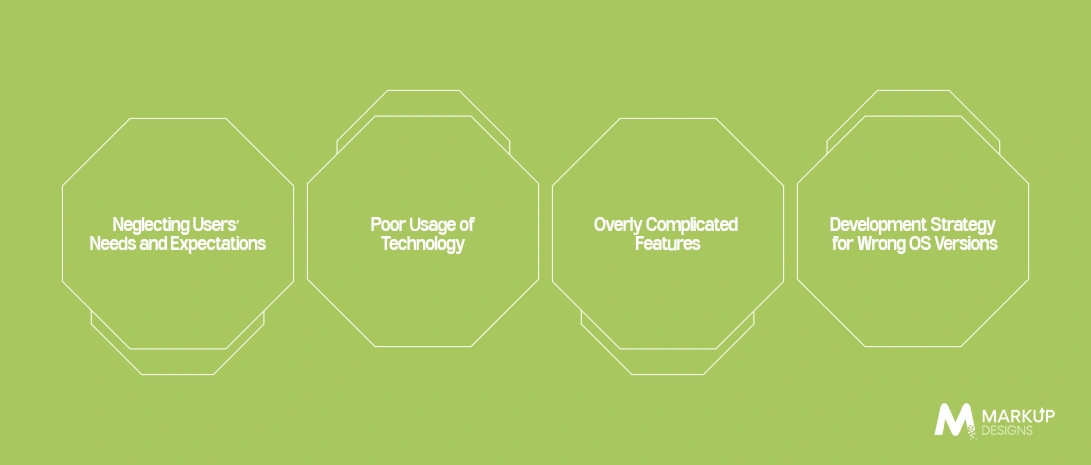
Neglecting Users’ Needs and Expectations
One of the major mistakes businesses make while creating applications is failing to understand what customers require. Since the end customer is the one who ultimately determines whether an application is successful or not, it is very important to understand what solution the application is intended to provide to the end user.
Nowadays, there are so many applications available to the customer that it will not take long before it stops using the particular application if he feels that it does not satisfy his requirements. An application should give something that customers would value.
Poor Usage of Technology
Choosing the appropriate technology might be important for your success, but its right implementation is equally important. No matter how advanced the technologies you have at your disposal, incorrect utilization will definitely influence the effectiveness of your application negatively.
Overly Complicated Features
The issue of having too many complex features happens when software engineers try to make their programs stand out from other programs available in the market. Even though creativity is important in application development, the team must consider the fact that, at the end, the application is being used by consumers.
Development Strategy for Wrong OS Versions
It should be noted that not all operating systems are capable of carrying out all functions. Thus, designing an application regardless of the abilities of different operating systems can result in inefficiency of the application. It is for this reason that developing applications requires up-to-date operating systems, but at the same time, independent from other versions.
Build a Mobile App Designed for Success
Creating a successful mobile application requires the right strategy, technology, and user-focused approach. By following proven development practices and avoiding common mistakes, businesses can build apps that deliver exceptional user experiences and long-term value.

Conclusion
The creation of mobile apps can be regarded as a challenging process that requires proper planning, reasonable decision-making, and optimization at all stages. From market research and choosing the right technology stack to creating a great user experience and planning future updates, every step is important for the success of the app.
Nevertheless, making mistakes while creating an application may lead to undesirable results. The lack of consideration of user needs, overloading the application with unnecessary features, or the absence of a good backend may impact its successful development.
FAQs
1. What is the most important step before starting mobile app development?
Conducting thorough market research is one of the most important steps before beginning mobile app development. It helps businesses understand their target audience, identify market gaps, analyze competitors, and define the value their application will offer.
2. How do I choose the right technology stack for my mobile app?
The right technology stack depends on factors such as project requirements, budget, scalability needs, target platforms, and expected user experience. Businesses can choose between native, cross-platform, hybrid, or web app development based on their goals.
3. Why is user experience (UX) important in mobile app development?
A positive user experience helps improve user engagement, retention, and satisfaction. Even feature-rich applications can struggle if they have complicated navigation, poor performance, or confusing interfaces.
4. Should I develop my app for Android, iOS, or both?
The choice depends on your target audience, business objectives, and budget. Many businesses opt for cross-platform development to reach users on both Android and iOS while reducing development time and costs.
5. How often should a mobile app be updated after launch?
Mobile apps should be updated regularly to fix bugs, improve security, introduce new features, enhance performance, and maintain compatibility with evolving operating systems and devices.
6. What are some common mistakes to avoid during app development?
Some common mistakes include neglecting user requirements, choosing the wrong technology, creating overly complex features, ignoring platform guidelines, and failing to plan for future maintenance and updates.
7. How does personalization improve mobile app performance?
Personalization helps deliver relevant content, recommendations, and experiences based on user behavior and preferences. This can increase user engagement, satisfaction, and long-term retention.
8. Why is reducing user friction important in mobile apps?
Reducing friction allows users to complete tasks more efficiently. Simplified navigation, faster load times, and streamlined workflows contribute to a smoother user experience and higher customer satisfaction.
9. What role does app maintenance play in long-term success?
App maintenance ensures that the application remains secure, functional, and aligned with changing user expectations. Regular maintenance helps prevent technical issues and extends the app’s lifecycle.
10. How can businesses build a high-performance mobile application?
Businesses can build high-performance mobile applications by conducting proper research, selecting the right technology stack, prioritizing user experience, following platform guidelines, optimizing performance, and planning for continuous updates.
Author's Perspective
Mobile applications development is no longer just an issue of how an idea can become a practical and useful application. It is now about strategy, design, and the choice of proper technology and optimization. Organizations that put effort into knowing their users, choosing the right technology for the project, and putting emphasis on user experience are those that have a better chance of succeeding. Technologies may advance, but the basic concepts of creating efficient, secure, and useful applications stay the same. Thus, combining innovation with effective application development processes will bring better results.
Discuss Your Project NowAjit Kumar Jha
VP - Business Operations
Related Posts
How to Hire Mobile App Developers in the...

How Much Does It Cost to Build a...

How to Build a Secure Payment Gateway Integration...
Insights Are Valuable & Execution is Priceless
You’ve read about the digital future. Now, let’s build the infrastructure to take you there. Move your strategy from the page to the product.
Design Your Solution Now
Contact Us
Schedule The Appointment At Your Convenience Date And Time.
30 Min
Web Conference
Time Zone
Indian standard time (08:30pm)

Thanks For Getting In Touch!
You’ve Taken The First Step Toward Transforming Your Digital Presence. Our Experts Will Reach Out Shortly To Take It Forward.
Launch Your Dream Project
Provide a brief overview of your project, and our specialists will evaluate your requirements. We will connect with you to explore how the right digital solutions can help you launch faster.